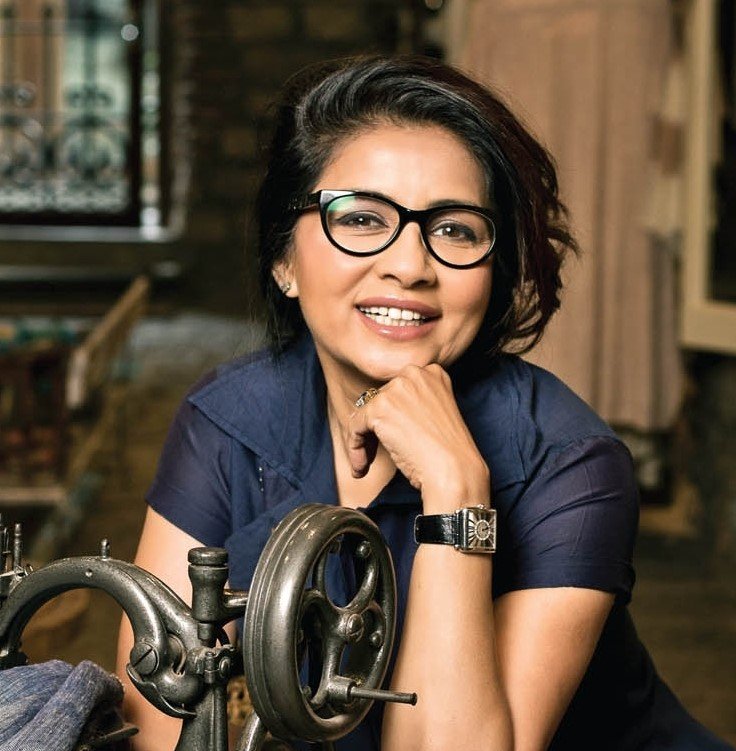
She is the ‘OG’ pioneer of sustainability… and the unsung hero who fought all odds to put ‘eco-friendly’ on the design map and make India aware of the beauty of its natural fabrics. Meet the super effervescent and passionate Sangita Kathiwada, who started the luxe stand-alone store Mélange in Mumbai’s Altamount Road way back in 1993.
Trending – Sustainibility
Today, the buzzword is sustainability… and designers and entrepreneurs are on an overdrive emphasizing hashtags and trends about it. But it was the dynamic Sangita Kathiwada who propagated and urged people thirty years ago to walk this magical path… and that was even before anybody in India knew or understood what “sustainability”, “organic” or “eco-friendly” was all about.
TheGlitz Meeting
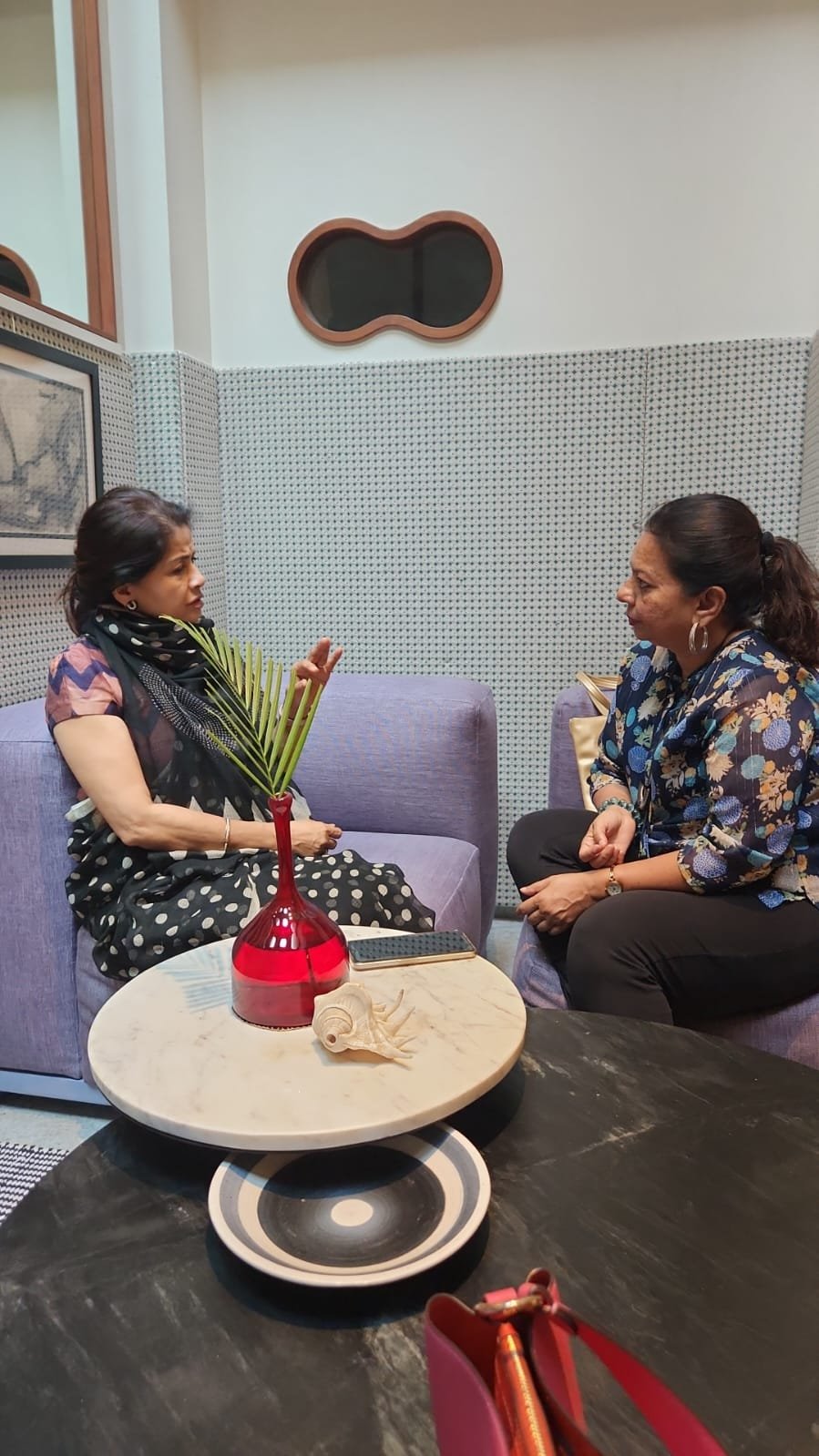
Sangita and I met up at Sangita’s elegant Kathiwada City House dubbed as “A co-working space, rejuvenation haven, and in-city mini-getaway, all rolled into one building in Worli, Mumbai,” where a brilliant ceramic show by renowned Pune-based artist Ruby Jhunjhunwala was on display. Sangita was all praises for the talented artist. As for a conversation with TheGlitz… Sangita was articulate, passionate and a sheer delight to talk to. So read on… as I, Sumita Chakraborty, Editor-in-chief, TheGlitz, speak to the amazing Sangita Kathiwada about her magical journey, challenges and more…
Over To Sangita Kathiwada
You’re the pioneer who propagated sustainability for thirty years, today, everybody is following the same path. What is the secret behind your magical journey?
The only reason I get out of bed is because I think of creating something new every day. I’m always very curious and aspire to do something interesting and novel every single moment. I would say some of it is genetic because my mother was very aesthete and so was my grandmother. Education also honed my creativity – I studied design for six years – after that, I tried to channelize creativity to be recognised as commerce because at that point creativity was not given commercial importance. I wanted people to be aware that creativity can pay rich dividends too.
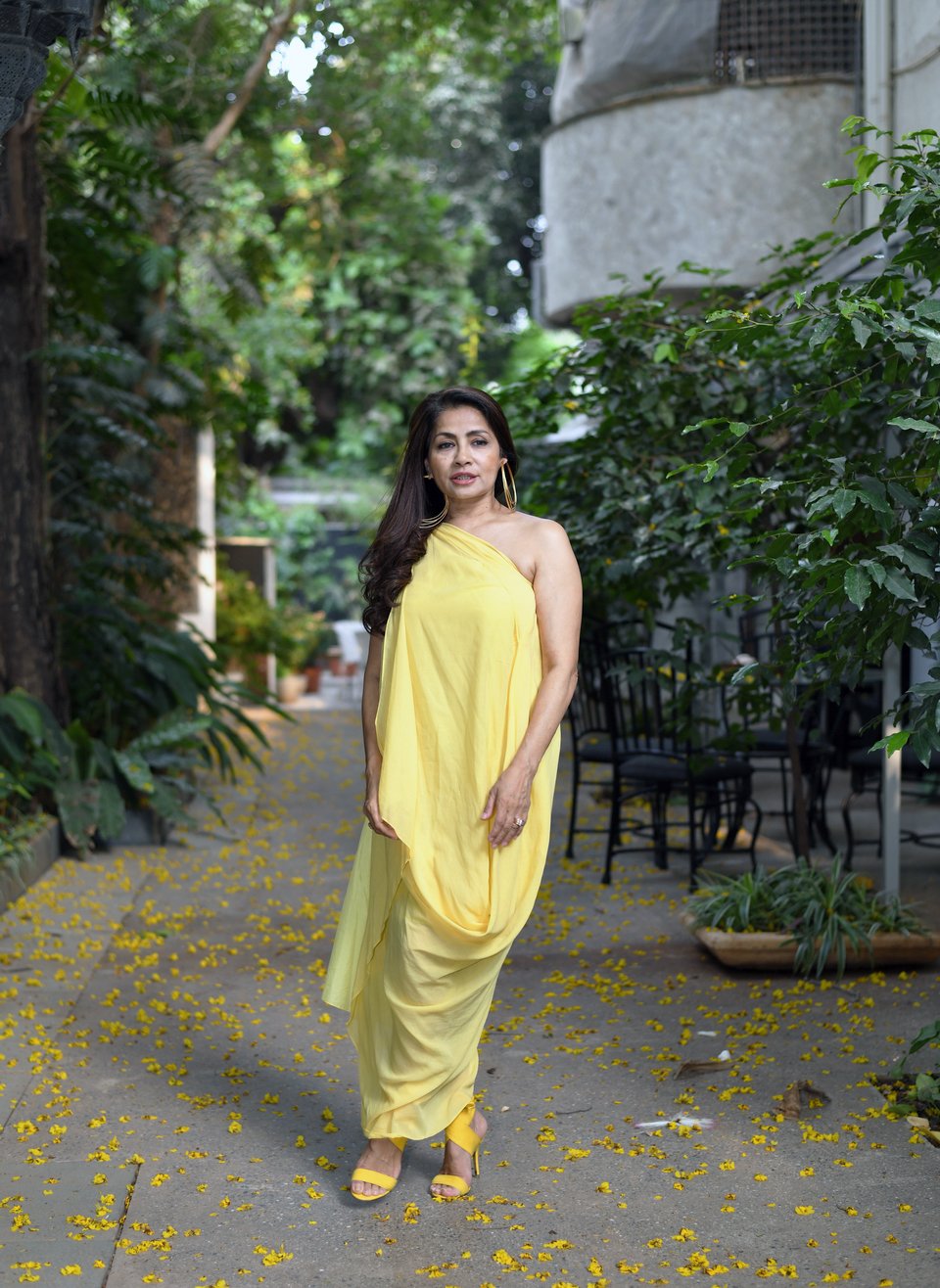
Mélange had labels that included Abraham & Thakore, James Ferreira, Raw Mango, Pero by Aneeth Arora, Savio Jon, Narendra Kumar, Anuradha Vakil, Sabyasachi, Aki Narula…
I started Mélange thirty years and at that time there was no foundation for designers. The word “sustainability” started just 10 years ago. But I was urging people humbly to follow the path of ‘sustainability’ 30 years ago. People didn’t even know what eco-friendly was. But I said at that point, never mind if nobody understands what ‘eco-friendy’ is, I will not use plastics. I am going to use only recycled things. I grew up in a family which did not believe in waste. It wasn’t that I just got up and started doing this. No, I just lived the life I grew up in. People questioned me at that time. They asked me why was I advocating natural fabrics, natural dyes etc? Clients would not buy it.
But I was firm and said, ‘No! We will use only natural fabrics’. Slowly, we managed to convert people to buy our stuff. Synthetic saris at that time were so popular – they were called ‘French chiffon’ – all the rich were buying them. But there were so many beautiful Indian fabrics like Chanderi, Kota or Maheshwari – all were light-weight and stunning. In those days, you were spending Rs 10,000 on a French Chiffon and these beautiful Indian fabrics cost merely about Rs 2000.
“I grew up in a family which did not believe in waste. It wasn’t that I just got up and started doing this. No, I just lived the life I grew up in.”
Sangita Kathiwada
At that point, we were not organised about fashion as we are today. The concept of designers wasn’t there – it was all about cloth making. I realised that creativity should be encouraged so wherever I found creative people, I would persuade them to share their art, craft and designs so more awareness is created. Even today, I’m like that – like for this exhibition, I went after Ruby and told her she must exhibit her ceramic art. I am passionate about everything – from fashion to designs to furniture to fabric to spaces. All the mediums are different – but I found that they are all trying to express something.

At that point, people were not aware about fashion, sustainability, eco-friendly, mindful fashion… but you never gave up. You continued your passionate pursuit of all such creative art. What were the challenges you faced?
I think at that point it was more about logistics and time. For instance, if we wanted Manipur hangers, it took us six months to get it. Today, it takes just 10 minutes to order online. Even for basic amenities I would run around for months to get a landline connection on Malabar Hill, today I get it almost instantly. Those were huge challenges. Today when I look back, I don’t even know how we lived through such huge challenges. But I was so passionate about my work…. nothing mattered but the creativity behind it all.
Your face lights up when you talk about your creative arts. I can see how passionate you are about it still. Could you list three milestones that you are extremely proud of…
-The first and biggest milestone would be setting up Mélange in 1994.
-The second: I founded the Morarka Centre for Craft Foundation at NCPA for my uncle Kamal Morarka. We supported weavers, artisans and craftsmen from rural areas.
– The third milestone would be redesigning Kathiwada Raaj Mahal. I never had to deal with chauvinism all my life but at the age of 44, I had to deal with that. I was restoring the Raaj Mahal and my husband had already passed away. It was a herculean task. But I stood my ground and oversaw the restoration from scratch. I was even riding tractors on my fields in the harsh sunlight. Today, my son and daughter-in-law have started the Kathiwada Foundation and are looking after that.
You are a strong woman who has held her ground despite the odds. Can I call you the OG feminist?
You can call me a ‘strong woman who stood her ground’. I don’t agree with being called a feminist because when you say that it means that you are agreeing that women are lesser than men. I don’t have to shout on rooftops to say ‘I’m stronger than men’. I’m a woman who has stood her ground and I continue to do so.
If there was one line or quote to describe you, what would you like it to be…
I don’t think a line or quote matters to me But I go with the adage: ‘What has to be done eventually, should be done immediately’. I think I was 14 when I learned this from my father. This is what I keep telling my young colleagues that everything should be done systematically and immediately.