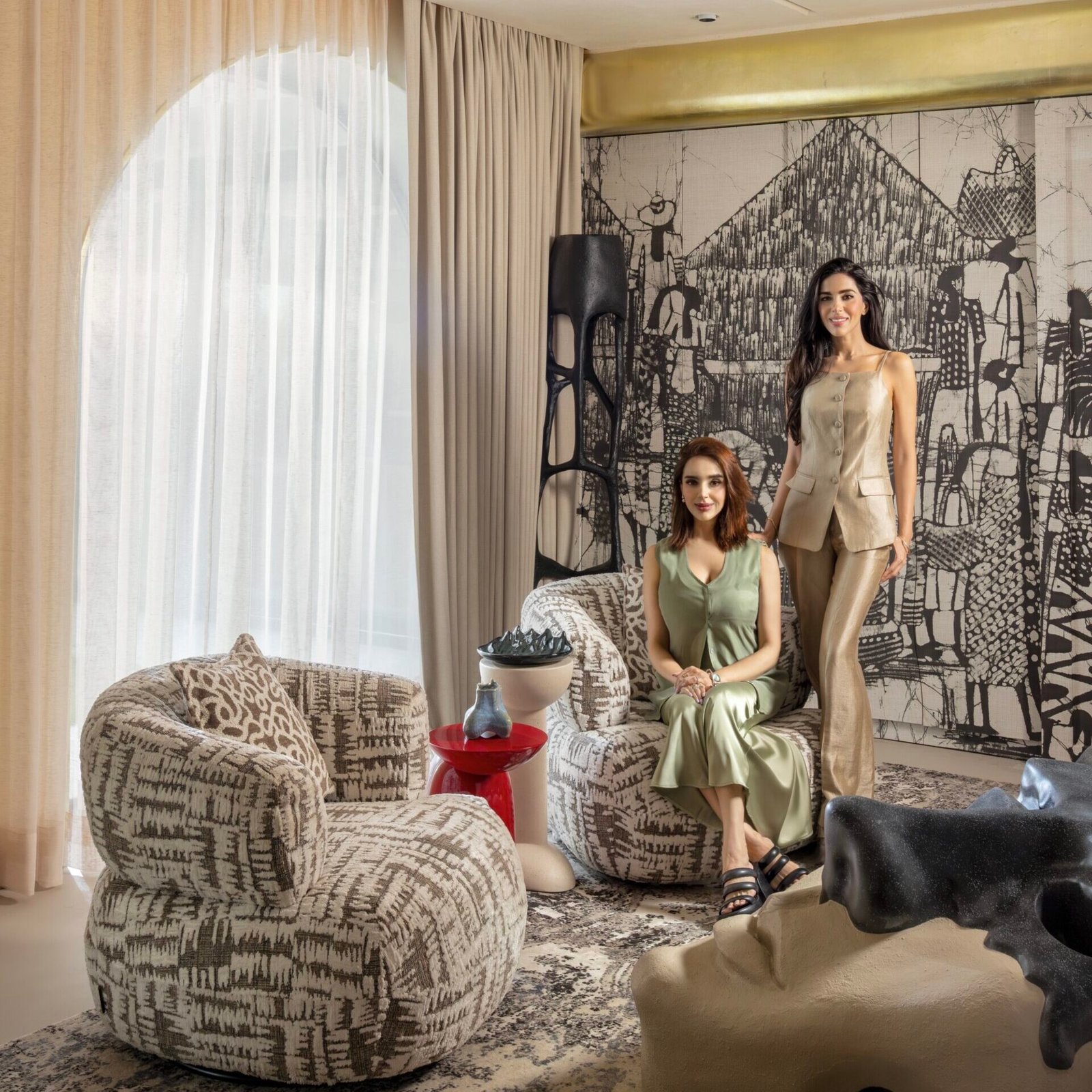
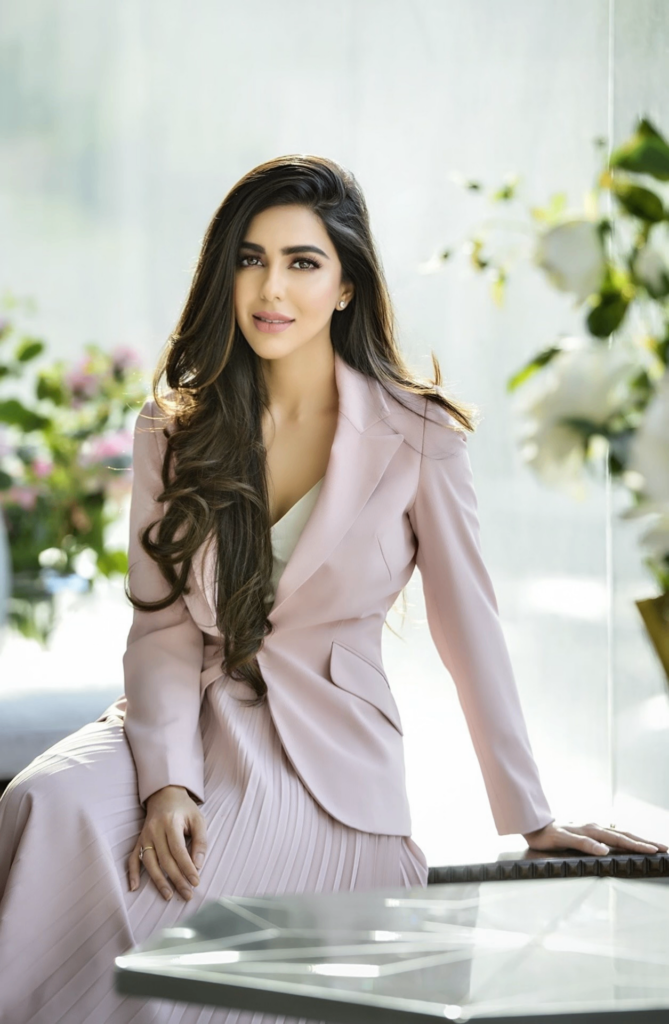
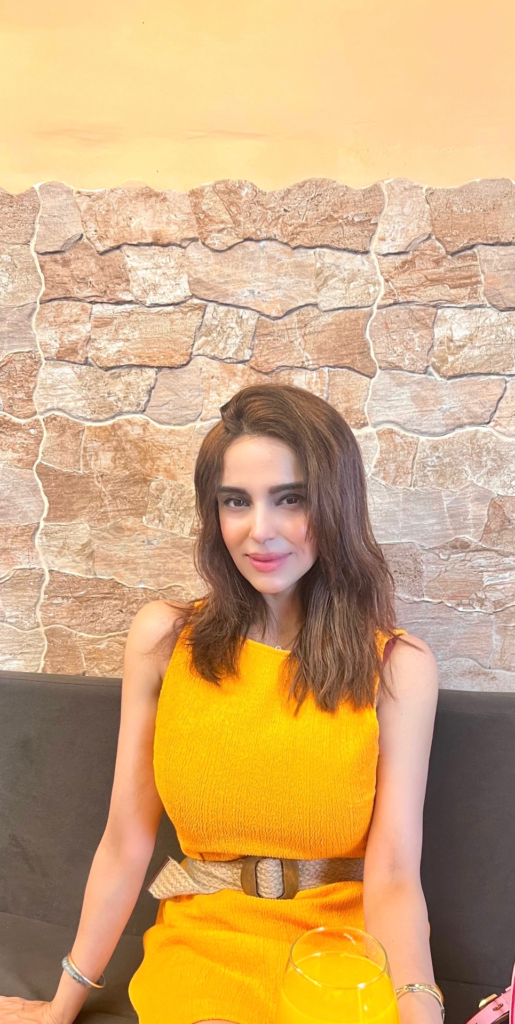
Bahaar and Nikhaar Dhawan, Founders, AARQE9
At a time when luxury interiors are often synonymous with muted palettes and minimalist restraint, Bahaar and Nikhaar Dhawan, founders of AARQE9, are making a compelling case for maximalism. Think unapologetic colour, statement art, bespoke furniture, tactile textures and handcrafted details, all orchestrated into spaces that are as individual as the people who inhabit them. Their ultra-luxury residence in Delhi’s prestigious Golf Links is a celebration of this more-is-more philosophy, where abundance meets artistry and opulence has a distinctly personal point of view.
For Bahaar Dhawan Rohatgi and Nikhaar Dhawan, Founders of AARQE9, interiors are not just about decorating a room; they are about creating an experience. Their creative partnership, shaped by years of working across art, fashion and design, stems from a shared conviction that a home should never resemble a showroom assembled from predictable trends. It should reveal something about its inhabitants… their passions, personalities, curiosities and the objects they choose to surround themselves with.
That philosophy lies at the heart of AARQE9. With Bahaar bringing her artistic sensibility and ability to translate ideas into tangible outcomes, and Nikhaar contributing a discerning eye, an instinct for detail and a decisive aesthetic vision, the sisters have developed a collaborative language that is expressive yet meticulously considered. Their complementary strengths allow bold ideas to find form without losing their original spark.
Their approach to maximalism is particularly compelling because it is not about excess for excess’s sake. Rich colours, bold patterns, sculptural lighting, statement artworks and custom-designed furniture command attention, but each element has a role in the larger composition. There is an underlying rhythm to the abundance—a considered interplay of proportion, texture, colour and light that allows diverse design languages to coexist without descending into visual chaos.
The Golf Links residence in New Delhi is a vivid expression of this sensibility. Conceived as a series of distinct experiences rather than identical rooms dressed in a uniform aesthetic, the home moves through different moods while retaining a cohesive identity. Bespoke furniture and lighting, handcrafted details and contemporary elements lend the interiors an individuality that feels opulent yet unmistakably lived in.
The sisters bring distinct creative journeys to this shared vision. A NIFT graduate, Nikhaar has nearly two decades of experience spanning fashion, film, costume and avant-garde visual design. Her work across Bollywood, Tollywood and Kollywood, as well as Hollywood–India collaborations and French theatre, has earned her a State Award and nominations for several National and State Awards. These experiences have sharpened her understanding of proportion, movement, layering, colour and material… instincts she now translates into spatial design.
Bahaar’s journey has been equally distinctive. After spending more than seven years practising law, she transitioned into art in 2015, building a practice spanning painting, curation and creative storytelling. Her works feature in more than 500 homes and collections, including those of the royal family of Abu Dhabi, DLF and Hindustan Times. Recognised as the SAARC Best Emerging Artist in 2017, she represented India at Art Laguna in Venice in 2018, alongside receiving several other accolades.
Her artistic practice informs AARQE9’s belief that artwork should shape a space from the outset, rather than appear as an afterthought. Their creative vocabulary is also informed by India’s extraordinary design heritage. Rather than relying on obvious traditional motifs, they interpret its richness through materials, textures, artisanal details and unexpected contemporary combinations. The result is a design language that feels culturally connected without being predictable, and modern without sacrificing depth.
Based in New Delhi, AARQE9 is already extending its footprint beyond the capital, with a completed project in Dubai and a 1,225-square-metre villa underway in Goa. The sisters lead every project themselves, working with a trusted network of craftsmen, artisans and specialist consultants according to each brief. Much of their practice has grown organically through referrals.
Here, in an exclusive interview with Sumita Chakraborty, Founder and Editor-in-Chief, TheGlitz, Bahaar Dhawan Rohatgi and Nikhaar Dhawan, Founders of AARQE9, discuss AARQE9, their creative partnership, the art of mastering maximalism, the evolving meaning of luxury and why the most memorable homes are those that dare to be unapologetically individual.
Over to Bahaar and Nikhaar Dhawan, Founders, AARQE9
Bahaar and Nikhaar, could you tell us about your AARQE9 journey. How did it start?
AARQE9 grew out of something quite personal: our shared love for transforming spaces and discovering how profoundly our surroundings influence the way we live, feel and interact with the world. We found ourselves drawn to doing up our own spaces, experimenting with art, objects, colour and furniture, and gradually realised that this was more than a shared interest. It was a natural meeting point for our creative instincts.
With our individual backgrounds in art, design and creative projects, we felt there was a significant gap between designing a beautiful space and truly understanding the people who inhabit it. Technical knowledge can be acquired, but the ability to intuitively understand emotion, aesthetic sensibility and the nuances of how someone lives comes from a deeper place. For us, that understanding has always been central to the process.
AARQE9 was born from the desire to bring these perspectives together—to create spaces that are individual, art-led and deeply personal. We see it as a natural extension of our creative worlds, where art, design, objects and interiors come together to create an experience rather than simply a finished room.
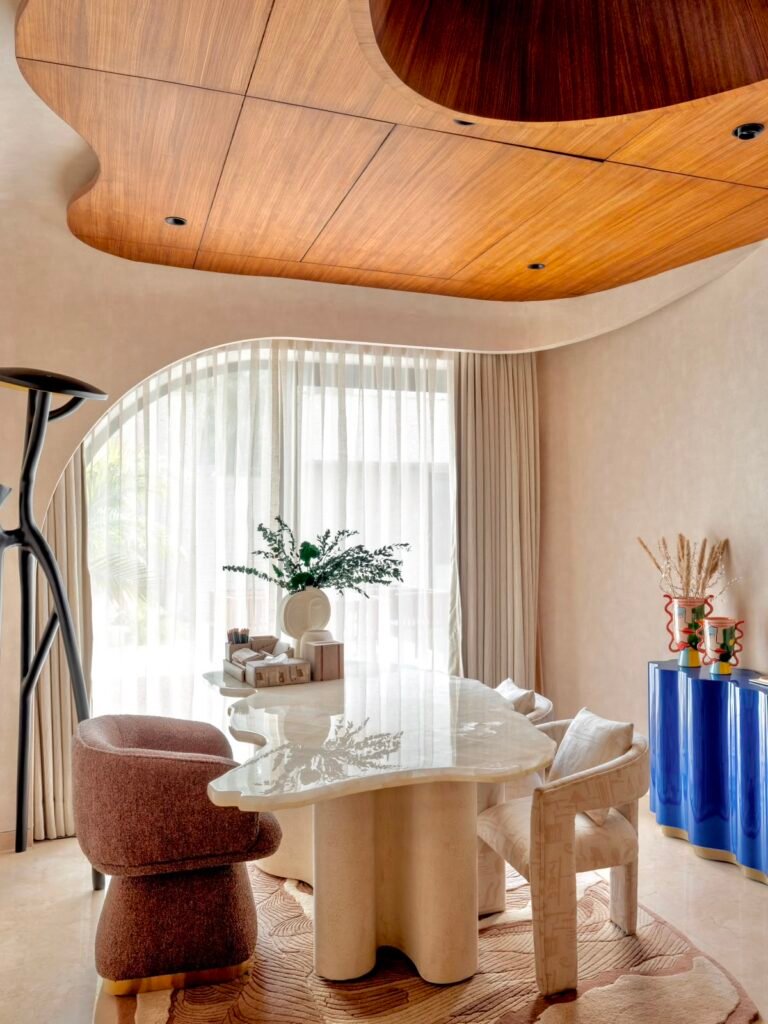
What are the challenges you have faced, and what are three milestones you consider your biggest achievements?
One of our biggest challenges has been translating an overarching creative vision into a cohesive, fully realised space. Understanding how people actually use their homes, how different members of a family interact with their surroundings, and what makes a space feel intuitively right requires a great deal of observation and thought. The challenge is to bring all these individual needs together without diluting the character of the design.
Quality control is another significant aspect, particularly when multiple teams and specialists are involved. The more a project is delegated, the more important it becomes to maintain the integrity of the original vision through every stage of execution. We have learnt that the smallest details can have a disproportionate impact on the final experience.
Our three most meaningful milestones have been, first, establishing a design philosophy that puts the individual and their lived experience at the centre; second, creating bespoke spaces and pieces that are conceived specifically for a project rather than sourced from a predictable design vocabulary; and third, learning to bring aesthetics and functionality together without treating them as opposing priorities.
For us, the ultimate achievement is when a space feels unmistakably personal, works effortlessly for the people living in it, and has a visual identity that could not have been replicated elsewhere.
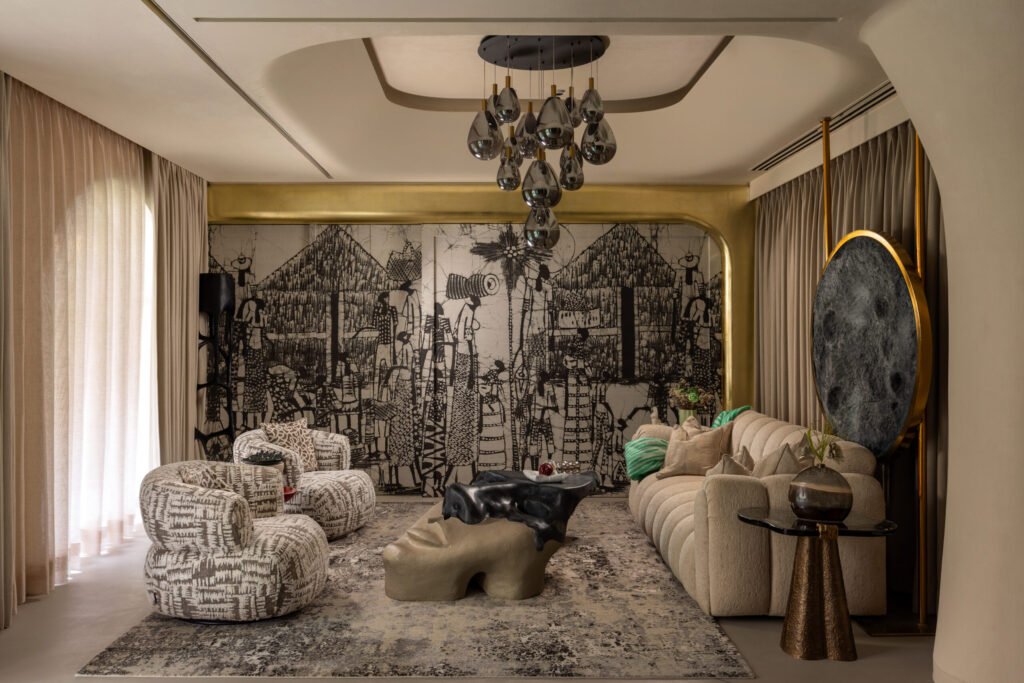
What brought the two of you together as creative partners, and how has your individual design sensibility evolved since founding AARQE9?
Our partnership is rooted in years of collaborating across different creative fields, from art and fashion to design and, now, spatial experiences. Working together came naturally because, despite our individual approaches, we have always shared a fundamental belief that design should have a point of view and never feel run-of-the-mill.
Nikhaar brings an exceptionally discerning eye, a keen attention to detail and a decisive sense of aesthetics. Bahaar brings her experience as an artist, along with a strong professional sensibility and the ability to translate ideas into a tangible, well-executed outcome. Our strengths complement one another: one perspective sharpens the vision, while the other helps carry it through with clarity and conviction.
Since founding AARQE9, we have become increasingly confident in trusting our instincts and allowing each project to evolve on its own terms. We are not interested in imposing a signature look on every space. Our signature lies in the thought, research and individuality behind it. We want every project to have its own identity, while retaining the depth, character and artistic sensibility that define our approach.
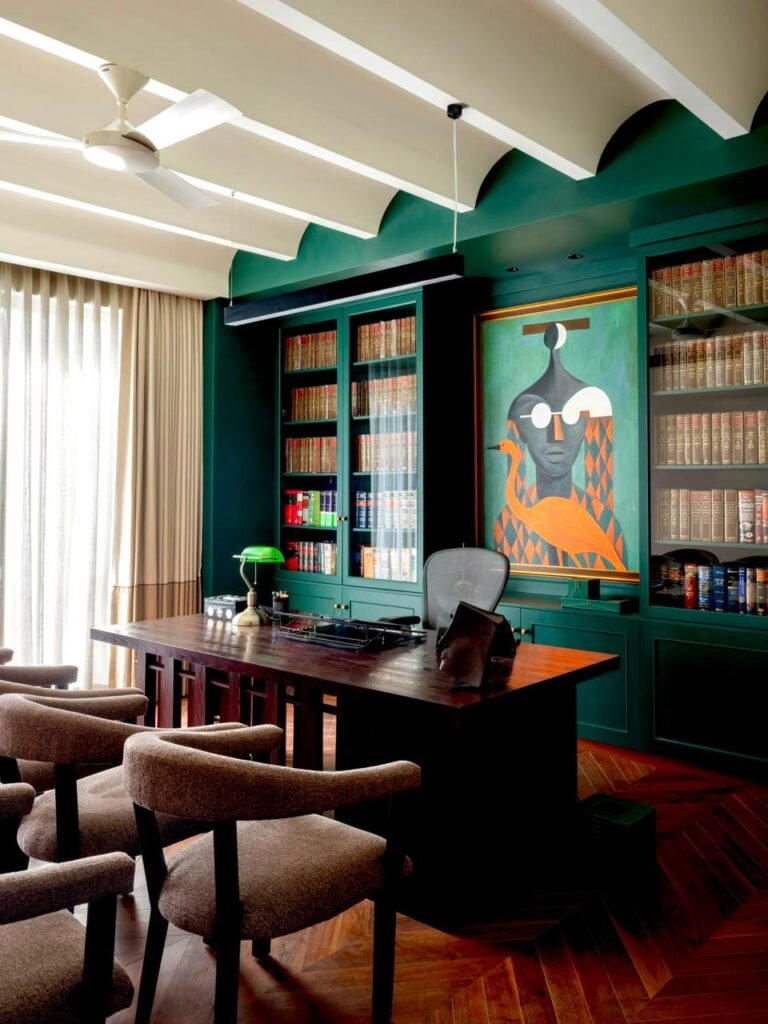
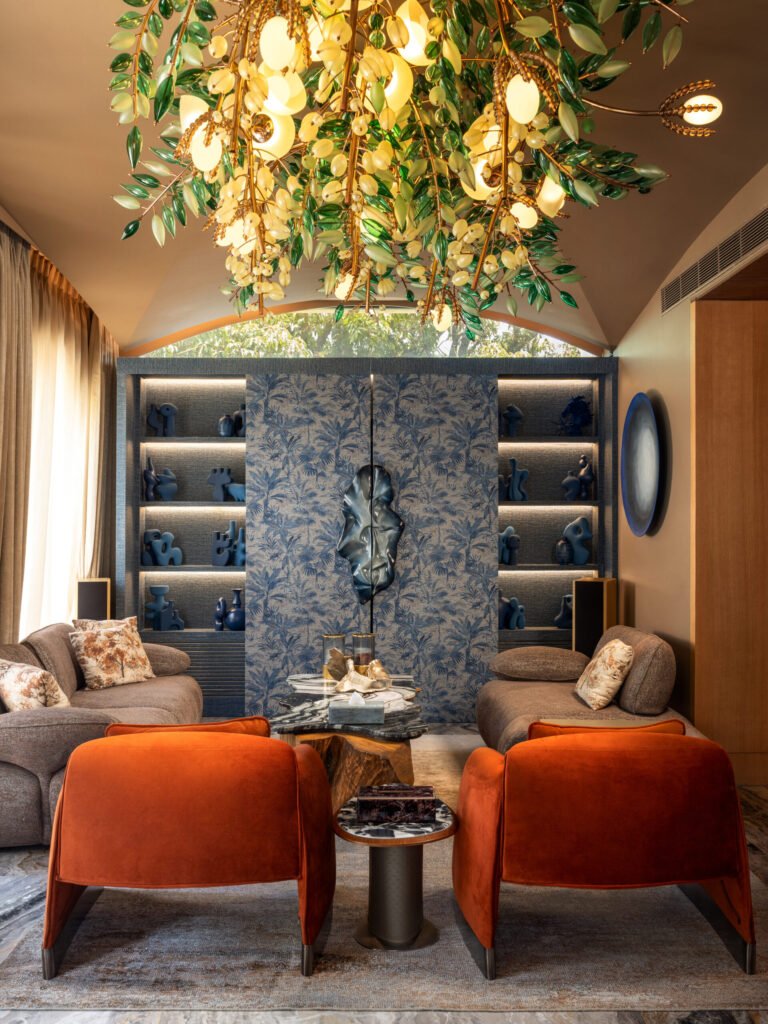
AARQE9’s work has a distinct sense of drama, colour and individuality. What does luxury mean to you today, and how has that definition changed over the years?
For us, luxury today is less about the price or provenance of an object and more about the thought, intention and individuality behind it. It is the freedom to create a space that reflects who you are, rather than conforming to a prescribed idea of what a luxurious home should look like.
We believe a home should engage with you on multiple levels. It should elevate your mood, offer comfort and balance, inspire you, and also give you moments of calm. Luxury can be dramatic and expressive, but it must also feel intuitive and effortless to live with.
Our understanding of luxury has evolved towards a more personal and considered approach. We value bespoke design, exceptional craftsmanship, meaningful objects and the interplay of art, texture, colour and light. We are drawn to spaces that have a sense of discovery—where every corner reveals something new, yet the overall experience feels harmonious.
Ultimately, luxury is the ability to live with things that resonate with you, in a space that feels entirely your own.
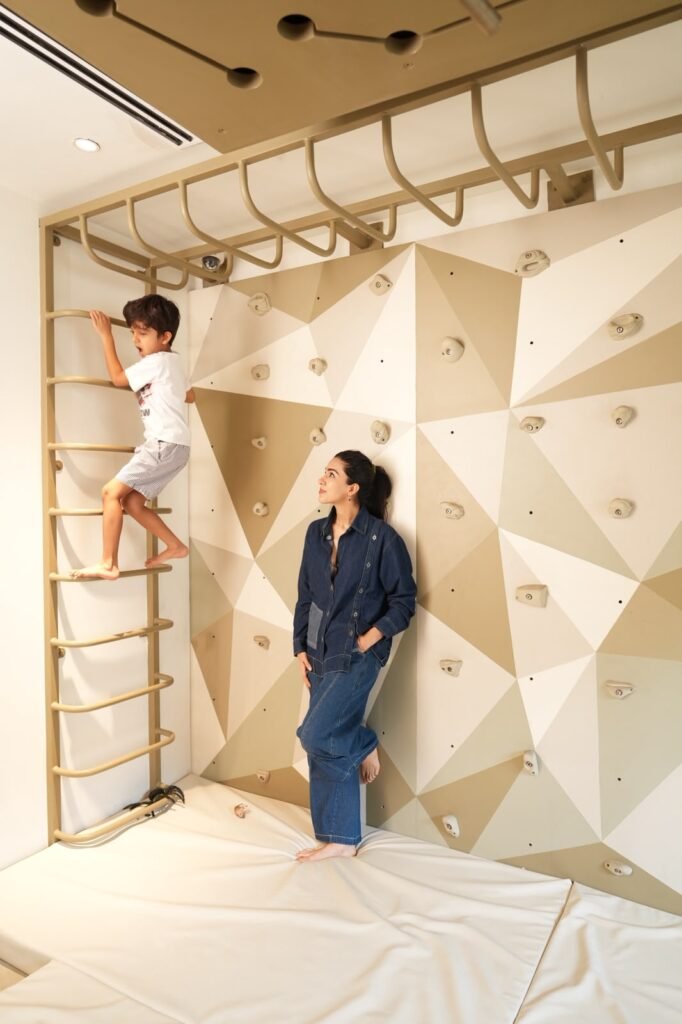
Your Golf Links home embraces a confident ‘more is more’ aesthetic. What was the starting point for creating a home this layered, colourful and unapologetically opulent?
The starting point was the belief that a home should be an expression of the people who live in it, not an exercise in following a particular style. We have never believed that a space needs to be restrained or neutral to feel sophisticated. Colour, pattern, texture, art and ornament can coexist beautifully when they are brought together with intention.
Our Golf Links home was also a natural extension of the creative conversations Nikhaar and I have shared over the years. Having collaborated across art, fashion and design, moving into the world of interiors felt instinctive. We approached the residence as an opportunity to bring these different creative languages together and create an immersive, highly individual environment.
The intention was to create a home that felt expressive and opulent without losing its sense of comfort or livability. We wanted the spaces to evoke different moods, to feel engaging rather than static, and to offer both visual excitement and a sense of retreat.
For us, maximalism is not simply about adding more. It is about allowing a space to hold more emotion, more character and more of the people who inhabit it. When every element has a reason to be there, abundance can feel as considered as restraint.
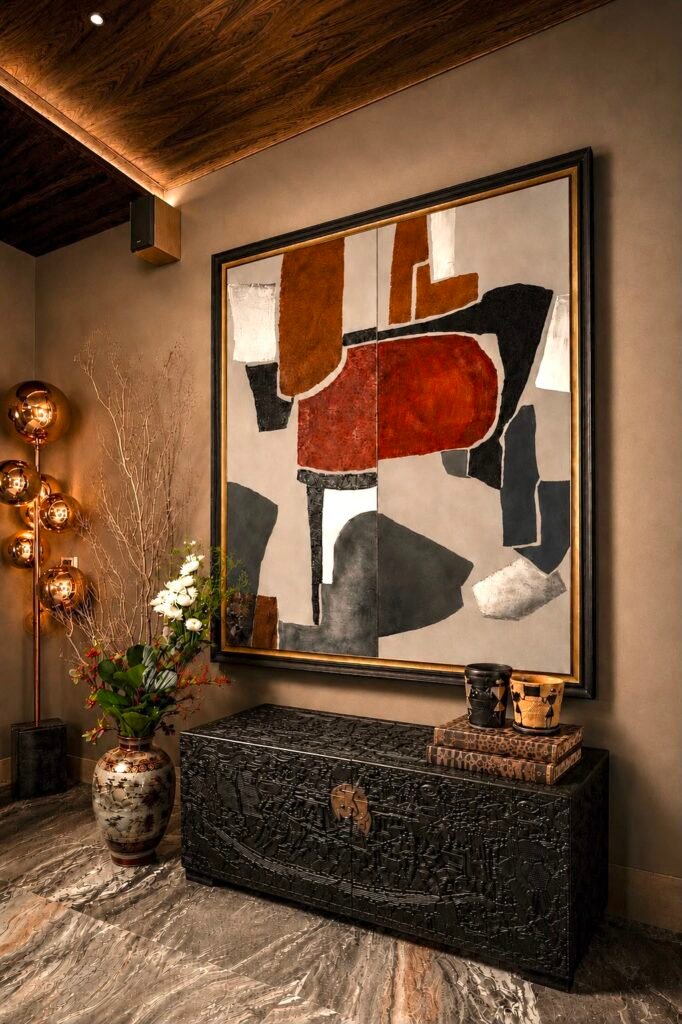
From statement art and custom furniture to bold patterns and rich textures, there is a lot competing for attention, yet nothing feels overwhelming. What is your secret to making maximalism feel curated rather than chaotic?
The secret is to approach maximalism through curation rather than accumulation. A layered space needs an underlying logic—an understanding of proportion, visual rhythm, colour relationships, materiality and how the eye moves through a room.
We begin by considering the experience we want a space to create. Certain elements may command attention, while others provide balance or allow the eye to rest. Art, furniture, lighting, patterns and textures each have a role to play. They can be individually striking, but they must also contribute to a larger composition.
We also believe that every object needs to earn its place. We do not approach a project by assembling a collection of references from a mood board and attempting to recreate the look. Our process involves research, intuition and the development of elements that respond specifically to the space and the people who will inhabit it.
The balance between drama and comfort is particularly important. A home should invite you in, not exhaust you. When aesthetics, functionality and emotional resonance are considered together, maximalism becomes a coherent design language rather than visual excess.
The home brings together handcrafted details, contemporary elements and highly bespoke pieces. How important are craftsmanship and customisation to AARQE9’s approach to luxury interiors?
Craftsmanship and customisation are fundamental to our approach because they allow us to create something that is genuinely individual. We see every piece—whether a furniture design, a lighting element or a decorative detail—as an opportunity to contribute to the identity of the space.
We believe that where the predictable ends, research begins. Rather than relying on readily available products or reproducing familiar Pinterest references, we investigate materials, forms, techniques and possibilities until we arrive at something that feels right for the project. Many of the lighting and furniture elements in the residence were conceived and designed from scratch, with each detail considered in relation to the larger composition.
For us, bespoke design is not customisation for its own sake. It is about creating pieces that belong to a particular environment and could not simply be transplanted into another home without losing some of their meaning.
We want every element to feel considered, almost like a work of art in its own right, while remaining comfortable and functional. The real luxury lies in that combination: individuality, craftsmanship and purpose, brought together in a way that feels seamless.
Luxury today is increasingly about personal expression rather than simply expensive materials. How did you translate the homeowners’ personalities, passions and lifestyles into the design of this residence?
Our process begins with listening, observing and understanding how people live. We are interested not only in their aesthetic preferences, but also in their habits, their relationships with objects, the way they use their spaces and the emotions they want their home to evoke.
We work in a responsive and intuitive manner, recognising that every member of a household brings a different set of needs and sensibilities. The challenge is to honour these individual perspectives while creating a cohesive environment that reflects the household as a whole.
At Golf Links, we approached the residence as a collection of distinct experiences rather than a series of rooms that needed to look alike. Each space called for its own treatment, atmosphere and visual language, while contributing to the larger identity of the home.
We were creating moods and experiences, not simply furnishing interiors. The emphasis on bespoke furniture, distinctive lighting, art and carefully considered details allowed us to develop a home with its own character. The intention was never to impose a ready-made aesthetic, but to create a setting that feels personal, expressive and lived in.
There is a growing appetite for Indian craftsmanship, artisanal techniques and culturally rooted design. How do you incorporate India’s rich design vocabulary without making a space feel predictable or overtly traditional?
India has an extraordinary design vocabulary, spanning materials, craft traditions, architectural details, textiles, ornamentation and an intuitive understanding of colour. We believe these influences are most compelling when they are interpreted with sensitivity rather than used as literal references.
Our approach is not to make a space look traditionally Indian simply by incorporating recognisable motifs or materials. Instead, we explore how the richness of Indian craftsmanship and its underlying sensibilities can find expression through contemporary forms, unexpected combinations and highly individual design decisions.
We also believe that cultural rootedness does not need to be overt to be meaningful. It can emerge through a material, a texture, a handcrafted detail, a particular use of colour or the way an object is made. The context and the people living in the space determine how these elements should be interpreted.
At AARQE9, we are particularly interested in creating our own visual language rather than following a cookie-cutter approach. Every project demands a different response, and we want the resulting furniture, lighting and objects to feel as though they belong to that particular space. The goal is to create interiors that feel contemporary and distinctive while retaining a sense of depth, craftsmanship and cultural connection.
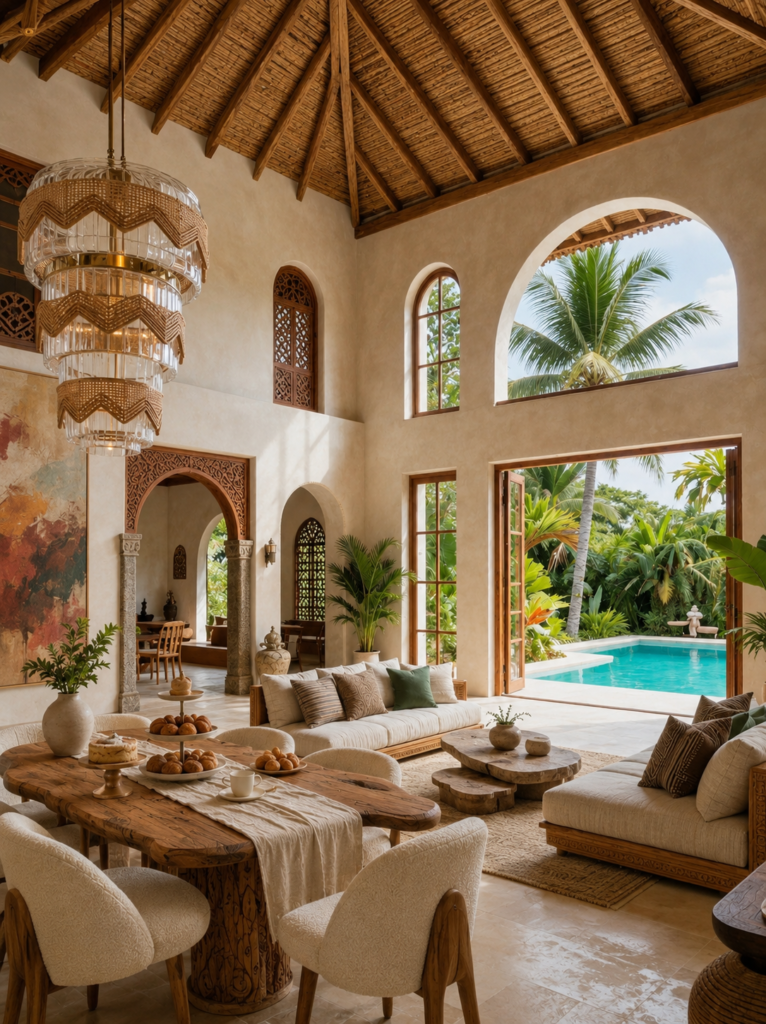
Looking ahead, where do you see AARQE9 going next? Are there new design territories, materials, collaborations or formats you are excited to explore?
We see AARQE9 growing into a design house that creates deeply individual spaces in India and internationally. We are particularly drawn to the idea of designing homes that feel like a collector’s haven—spaces that bring together art, furniture, objects and meaningful discoveries in a way that is personal rather than prescriptive.
We want to explore how a home can be expressive and stimulating while also evoking harmony, relaxation and a profound sense of belonging. For us, the most exciting spaces are those that reveal something about the people who inhabit them: their interests, their experiences, the things they value and the objects they choose to live with.
We are equally interested in extending our creative practice beyond interiors into bespoke furniture, lighting, collectible objects and collaborations that bring together different disciplines. The possibilities are exciting because we do not see art, design and spatial experiences as separate worlds.
While Bahaar’s work in art and creative collaborations continues to open up new conversations, our shared ambition for AARQE9 is to create spaces with a distinct identity—spaces that feel collected over time, even when every element has been carefully conceived. Ultimately, we want to create environments that do more than look beautiful: we want them to inspire, comfort and move the people who live in them.
TheGlitz Take
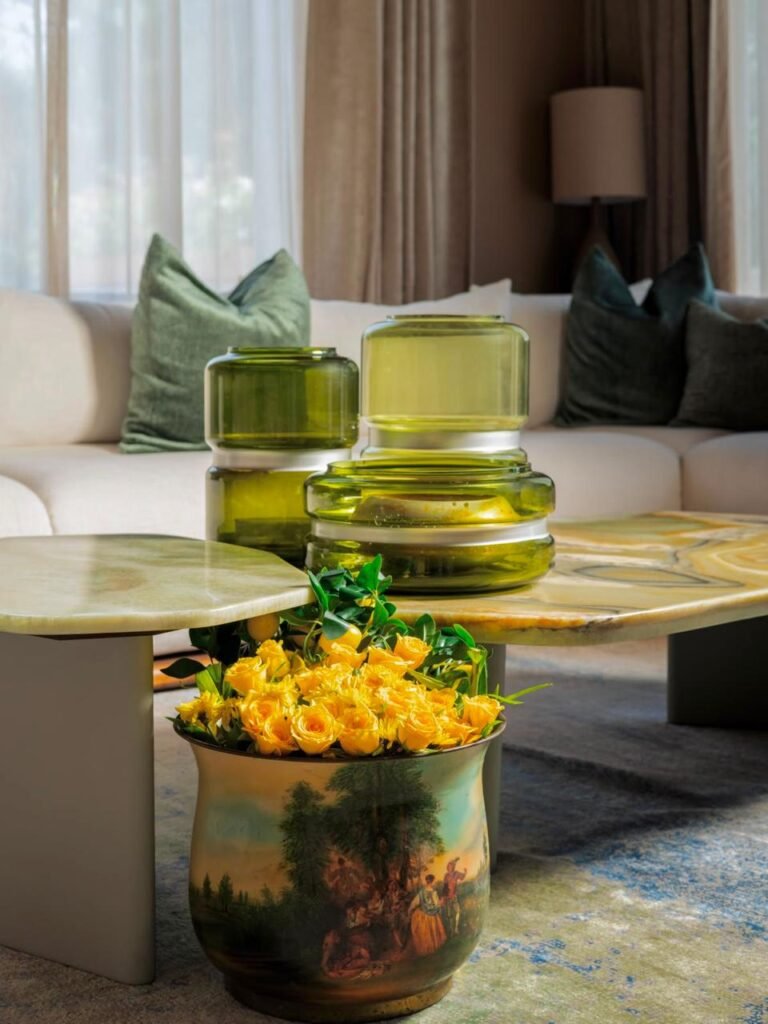
In an era when luxury interiors are increasingly beginning to look like carbon copies of one another, Bahaar Dhawan Rohatgi and Nikhaar Dhawan dare to break the beige mould. Their maximalism has a point of view: it is bold without being brash, opulent without being ostentatious, and layered without lapsing into visual excess. What makes AARQE9 compelling is its refusal to treat a home as a showroom or art as an afterthought. Here, individuality trumps Instagram trends, craftsmanship matters more than conspicuous consumption, and every corner has a story to tell. That’s because true luxury isn’t about how much you can put into a room… it’s about how much of yourself you dare to put into it.