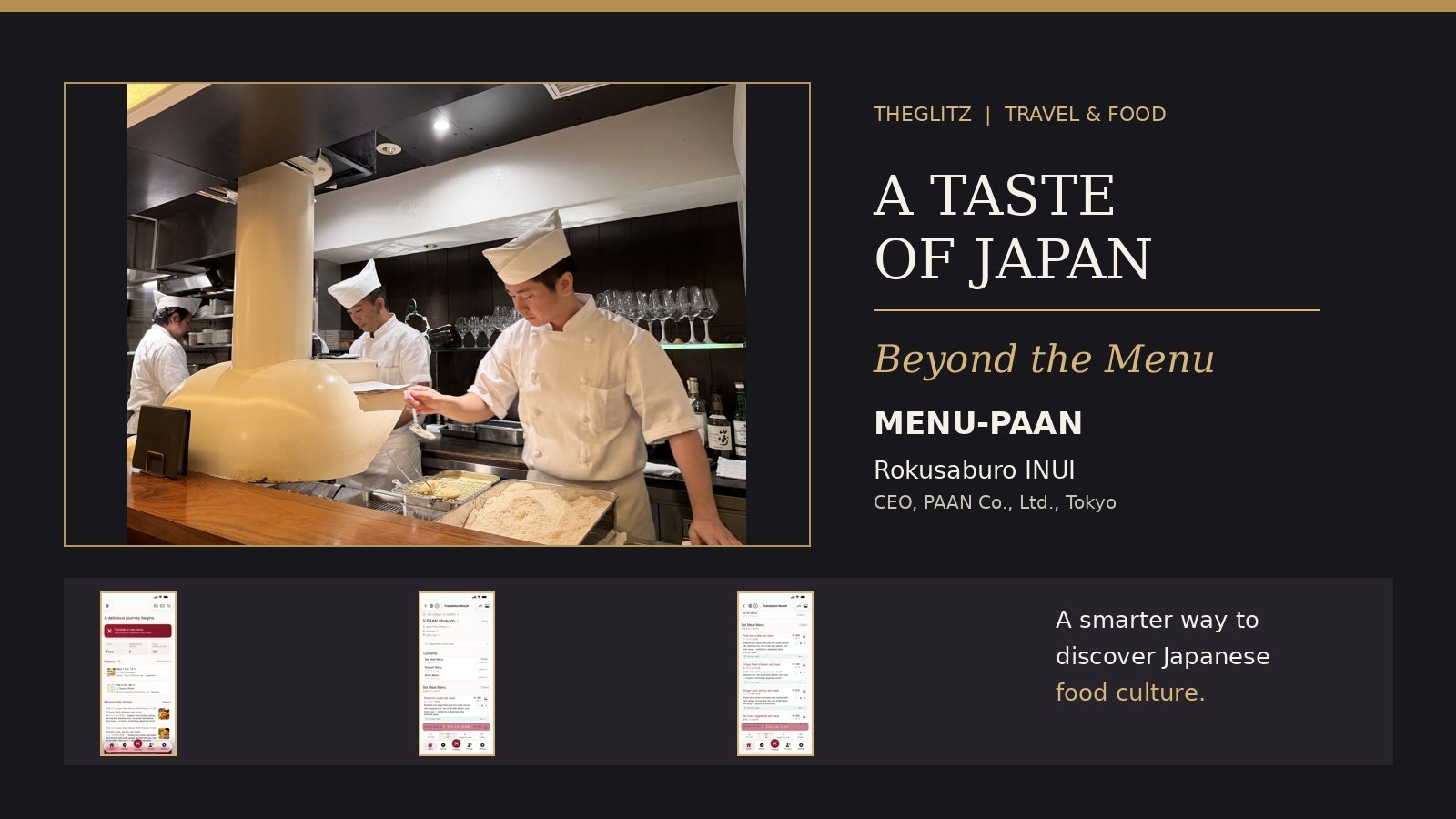
Rokusaburo INUI, Co-Founder & CEO, MENU-PAAN
Japan’s culinary magic often begins where the language barrier ends. Tucked away in narrow alleyways, tucked behind unassuming doorways or nestled in quaint neighbourhoods, some of Japan’s most extraordinary dining experiences come with menus that are handwritten, vertically scripted, and entirely in Japanese. For the curious traveller, that can turn the promise of an unforgettable gastronomic adventure into a game of guesswork.
But what if you could decode the menu, understand the dish, discover its ingredients and even place your order in Japanese, all with a simple photograph? That is precisely the idea behind MENU-PAAN, a food-tech innovation that is making Japan’s culinary landscape more accessible, one menu at a time.
At the helm of this ingenious idea is Rokusaburo INUI, Co-Founder & CEO of PAAN Co., Ltd., Tokyo, and a fourth-generation member of the family behind Kushinobo, a celebrated kushikatsu restaurant brand with a 75-year legacy. Inui’s inspiration wasn’t born in a technology lab, but on the restaurant floor, watching international guests struggle to make sense of menus, often settling for familiar dishes or pointing at something and hoping for the best.
Having experienced the frustration of navigating foreign menus himself during his four years in London as a Japanese diplomat, he understood the problem from both sides of the dining table. The result is MENU-PAAN… an app that doesn’t merely translate words but explains dishes, their ingredients, preparation, cultural nuances and how they are traditionally enjoyed.
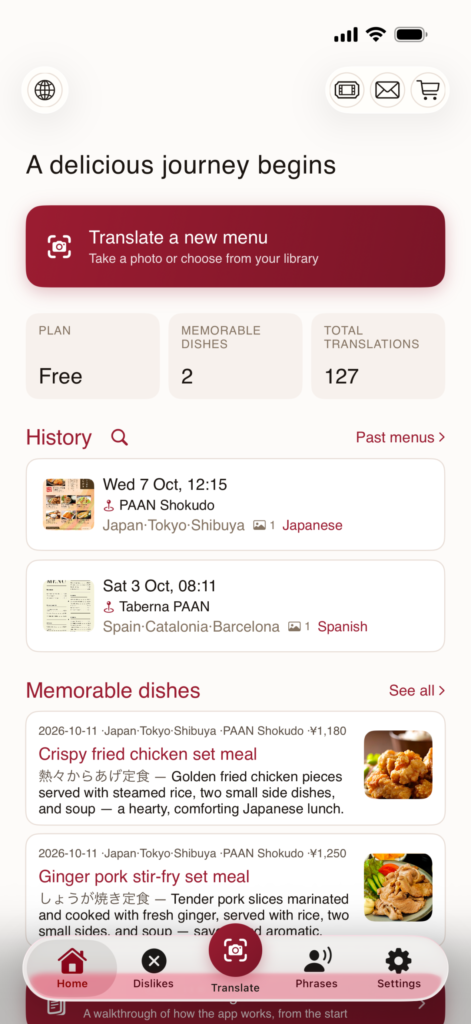
Powered by AI, MENU-PAAN takes on the often-daunting task of interpreting handwritten and vertical Japanese menus, helping diners move beyond the familiar and embrace the unfamiliar with confidence. From understanding the nuances of chawanmushi to discovering regional specialities tucked away in neighbourhood eateries, the app aims to make food discovery a far more immersive experience.
It also allows travellers to communicate specific requests in Japanese, making dining more personal and accessible, while acknowledging that technology must always work alongside the human warmth and expertise of restaurant staff.
For Rokusaburo Inui, however, the bigger ambition is not simply to eliminate a language barrier; it is to open doors… quite literally, to culinary discoveries that travellers might otherwise miss.
Here, in an exclusive conversation with Sumita Chakraborty, Founder and Editor-in-Chief, TheGlitz, Rokusaburo INUI, CEO of PAAN Co. Ltd., Tokyo, talks about the inspiration behind MENU-PAAN, the intersection of AI and food culture, the art of hospitality, and why the best travel experiences often begin with the courage to order something you’ve never tried before.
Rokusaburo INUI, CEO of PAAN Co. Ltd. Tokyo
The inspiration behind MENU-PAAN
You come from the fourth generation of a family associated with Kushinobo, a restaurant brand with a 75-year legacy. Was witnessing international guests struggle with Japanese menus the moment that inspired MENU-PAAN? Tell us about the experience that led you to create the app.
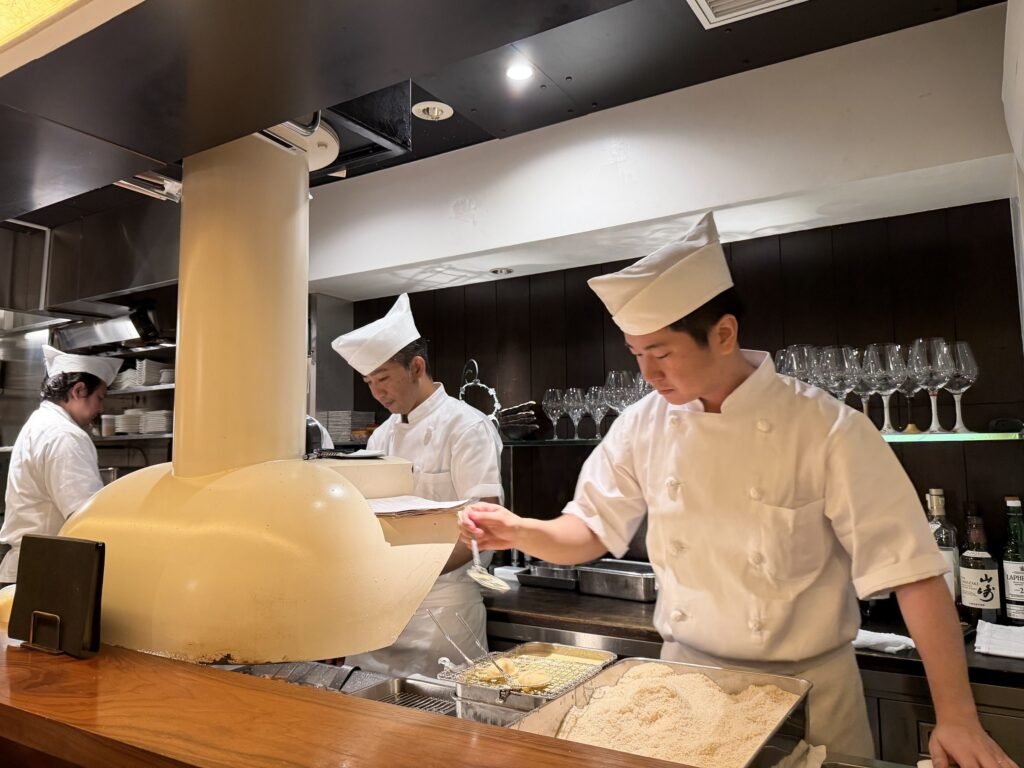
Yes. My family has run Kushinobo, a kushikatsu restaurant, for 75 years, and I am the fourth generation. In our restaurants I often saw guests from abroad looking at the menu for a long time and then ordering the one dish they recognised, or pointing at a photo and hoping for the best.
A word-for-word translation does not really help: knowing that a dish is called “kushikatsu” or “chawanmushi” tells you very little. I had the opposite experience too. I lived in London for four years as a Japanese diplomat, and often could not make sense of the menu myself. So I wanted an app that tells travellers what a good waiter would tell them, so that they can order with confidence.
Decoding Japan, one menu at a time
Japanese menus can be handwritten, vertical and filled with culinary references that are difficult for visitors especially Indian visitors to understand. How does MENU-PAAN go beyond literal translation to explain a dish’s ingredients, cooking techniques and the way it is traditionally eaten?
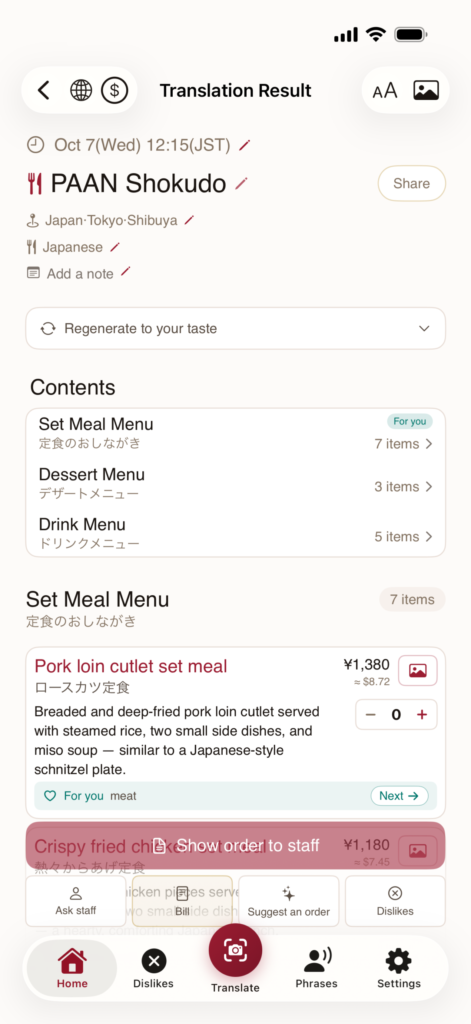
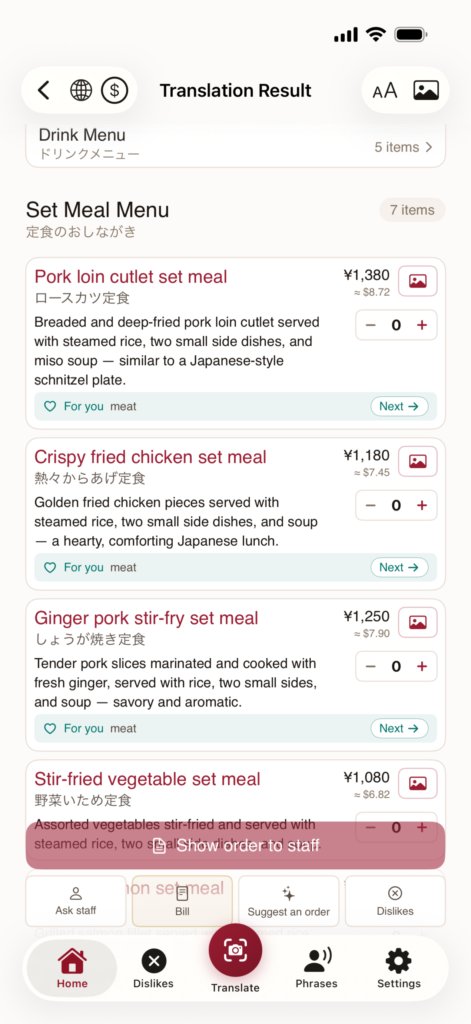
Translation apps replace words; MENU-PAAN explains dishes. If a menu says “chawanmushi”, a translation gives you “steamed egg in a tea bowl”. MENU-PAAN tells you that it is a savoury egg custard, usually with prawn, chicken and ginkgo nuts, eaten with a spoon early in the meal. For each dish it explains what is in it, how it is cooked and how it is usually eaten, and it adds a note when there is a local way to enjoy it. The dishes you choose then become an order in Japanese, which you simply show to the staff.
Technology meets culinary culture
What makes it technically challenging to recognise handwritten and vertically written Japanese menus? How does the app interpret these formats accurately, and what role does AI play in making the experience seamless for international diners?
Many menus in Japan are handwritten, written from top to bottom, with dish names in a cursive style or with no explanation at all, and prices and dishes are not always neatly lined up. The app first reads the whole page as a menu, working out which words are dishes, which are prices and which are section headings, and then explains each dish. AI makes it possible to read these formats and to explain a dish rather than translate a name. But AI is not perfect, so we keep checking real menus ourselves, from our own restaurants and from users, and improve the app step by step.
Beyond translation: making dining personal
One of MENU-PAAN’s features allows users to flag ingredients they avoid and communicate specific requests, such as asking for no ice, in Japanese. How important was it to build these practical, personalised features into the app, and how do they help bridge the communication gap between diners and restaurant staff?
These features came straight from the restaurant floor. Travellers often have small requests, such as no ice, less spice or no onion, and some avoid certain foods, such as meat, pork or alcohol. You can register foods you prefer to avoid, and the app highlights them in the explanations and adds a polite request in Japanese to your order. The explanations come from AI and cannot be guaranteed, and Japanese stock often contains fish, so for anything that matters to your health or beliefs, please always confirm with the staff. The app helps you ask that question politely in Japanese, and staff are usually glad to help a guest who asks.
Preserving the joy of food discovery
Travellers often stick to familiar dishes because they are unsure what an unfamiliar menu item contains. Do you believe MENU-PAAN can encourage visitors to step outside their culinary comfort zones and discover regional Japanese specialities, hidden food gems and lesser-known dishes?
I believe so, and it is the reason we made the app. Some of the best meals in Japan are in small local restaurants with handwritten menus and no English. When you know what a dish is and how it is eaten, an unfamiliar menu becomes an invitation rather than a risk. I would love Indian travellers to walk into a small restaurant in Osaka or a country town, order a regional speciality with confidence, and leave with a favourite they would never have found otherwise.
A restaurateur’s perspective
Being part of a family with a 75-year restaurant legacy must give you a distinctive understanding of the hospitality business. How has your experience with Kushinobo influenced the development of MENU-PAAN? And how have Japanese restaurants responded to a technology that makes their menus more accessible to international visitors?
Running restaurants taught me that hospitality is about understanding the guest in front of you. The explanations in MENU-PAAN are written the way our staff would explain a dish: what it is, and how to enjoy it. Restaurants have responded warmly. Many owners want to welcome guests from abroad but worry that they cannot explain their dishes. For them we also built RESTO-PAAN, which helps restaurants create explained menus in many languages for their guests.
The future of food and travel technology
MENU-PAAN is available in 12 languages across iPhone, Android and the web. What are your ambitions for the platform? Could you see it expanding beyond Japan to help travellers navigate restaurant menus across other countries, and what role do you believe AI will play in transforming the global dining experience?
MENU-PAAN is now available in 14 languages, on iPhone, Android and the web. Although it was built for Japan, it already reads menus in 105 countries and regions, and people have used it in more than 40 countries and regions so far. Our aim is to open the way to dishes yet unknown, wherever people travel. I believe AI will change dining by removing the language barrier, so that guests and restaurants can meet over the food itself. But the warmth of a restaurant still comes from people, and technology should help that meeting, not replace it.
TheGlitz Take
Japan’s culinary charm isn’t just about the food; it’s about the stories, traditions and little discoveries that make every meal an experience. But when a menu looks like an indecipherable scroll of Japanese characters, even the most intrepid foodie can suddenly become rather conservative with their ordering. Rokusaburo INUI’s MENU-PAAN is a clever antidote to that culinary hesitation. What makes it interesting isn’t merely its AI-powered translation capability, but its attempt to bridge the gap between understanding a dish and actually experiencing a food culture.
By explaining what is on the plate, how it is prepared and how it is traditionally enjoyed, it nudges travellers beyond the predictable and towards the deliciously unfamiliar. And that, frankly, is where some of the best travel memories are made. Technology may be doing the translating, but the real magic lies in encouraging people to explore, taste, ask and discover. …Because when you’re travelling, the best souvenir may just be a dish you didn’t know existed until you dared to order it.