
That’s why my ears perked up with interest when Serbia Tourism asked me if I would like to visit Serbia. …Of course, I would love to and so I found myself on a comfortable five-hour ‘FlyDubai’ flight from Dubai to Serbia.
Serbia, the little jewel in the Eastern Europe vista has always been shrouded in mystery. It was earlier a part of Yugoslavia which broke down during the war into six countries – Serbia, Slovenia, Montenegro, Macedonia, Croatia and Bosnia. In the ‘90s, war-scarred Serbia fought many a bloody battle with its Bosnian neighbours, but now peace has reigned for more than decades. Unlike other European countries which have been over-exposed in terms of tourism, Serbia is still largely untapped and so can easily end up becoming a hot favourite with ‘footloose wanderers’ like me who enjoy losing their way through the colourful byzantine streets and lanes to discover quaint cafes and bars, museums, locale hue and a slice of history. Serbia is a typical European country but has a personality of its own, thanks to the many influences (Serbia has been invaded many times).
So I arrive one wonderful clear morning at the Belgrade Nikola Tesla Airport. On arrival, there is a ‘visa on arrival’ programme – Indians are however exempted from any visa fees. But I believe this has been revised – Indians too now need to get visa on arrival.
Serbia is a history buff’s ‘dream come true’ as there are many historical iconic monuments, statues and various remnants of the past. In contrast, Serbia also has a throbbing modern side, especially in the cities including Belgrade, the capital of Serbia, with its hip clubs with eclectic music culture, standalone designer stores, bustling malls and food paradises.
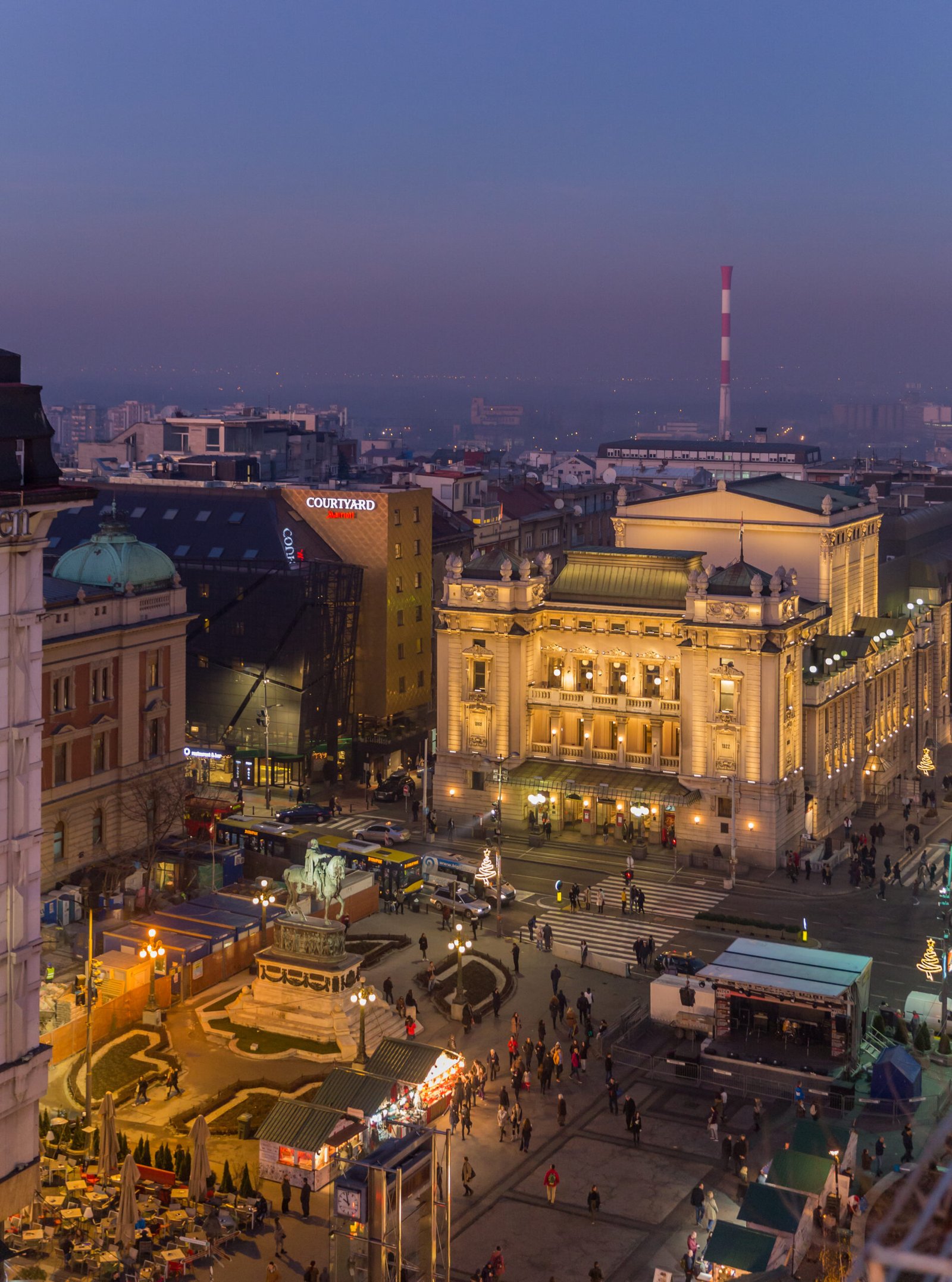
Belgrade is very chic with its sleek polished roads, manicured vast gardens, tall European-styled buildings, pretty cafes, designer brands, cobbled streets with waterfall squares, numerous uptown restaurants including the swish restaurant called ‘Novak’ owned by Serbia’s national pride, tennis star Novak Djokovic. I stay at Hotel Museum which is bang opposite the city museum, plumb in the midst of a nerve of shopping centres and cute cafes, interspersed with national monuments.
The iconic Republic Square in the middle of the city is said to be the ‘on point’ meeting place for tourists and locales in Belgrade and there is a lot to do here. During my visit to the square, there was an interesting art display of large sculptures made of war weapons. Nearby the square, there are tons of shops and places to dine or grab a beer. This square is also a prime people-watching location.
From there, I head off to the iconic Belgrade Fortress which is a short walk to the municipality of Stari Grad, on the confluence of the Sava and Danube rivers, and consists of the old citadel (Upper and Lower Town) and Kalemegdan Park (Large and Little Kalemegdan). It was declared a monument of culture of exceptional importance in 1979 and admission there is free – it is the most visited tourist attraction in Belgrade. The next stop is the fascinating Saint Sava church – one of the largest Orthodox churches in the Balkan, and it has 49 bells and 18 gold-plated crosses – and the church is painted in gold, with the ceiling done up with frescos and mosaics. Truly awesome
We’ve heard so much about Nikola Tesla, the father of electricity so it was indeed fascinating visiting the Nikola Tesla Museum which is dedicated to honoring and displaying his life and work – it is his final resting place too. Nikola Tesla, the father of electricity, is the pride of Serbia and the science museum is replete with induction engines and electricity, and holds more than 160,000 original documents, over 2,000 books and journals, over 1,200 historical technical exhibits, over 1,500 photographs and photo plates of original, technical objects, instruments and apparatus, and over 1,000 plans and drawings. This is indeed a must-visit.
The Tito’s Museum too is fascinating. Josip Broz Tito was the late president of Yugoslavia and the museum houses his grave along with rich remnants of his vast personal property and even the gifts he has received from dignitaries across the world including India.
From there, I am whisked off to Belgrade’s most romantic Zemun district which is replete with quaint cafés with terraces and colourful flowers. There are musicians playing all over and the vibe here is almost magical. The bohemian district of Skadarlija is romantic, fun and magical with its amazing street music, delectable local food and the perfect ambience for love. As I walk back through the cobbled paths back to my hotel across the famous ‘horse’ square still bustling with energy, I know that I am in love with Serbia.
The next morning, way from the bustling city, I go to the countryside to visit the quaint Sremski Karlovci town which houses an Orthodox church, a school, Art square and even a little place where pigeons’ are fed.
From there, the coach revs up to Zivanovik vinery, a family-owned museum of beekeeping and a wine cellar. The wines keep coming – from the robust red wines, delicate floral white wines to even a mild rose –and of course, honey flows close behind.
Nova Sad, the second largest city in Serbia, is my next destination. This place has been the location for many Serbian films as it is rich in history and every nook ‘n’ corner including its clear blue lakes, towering fortresses or marbled monuments with names of its heroes, evokes memories of yore.
The weather is truly magical and as I head to the vast Zlatibor mountains, I can feel the pure mountain air cleanse my lungs. The ride is long but on the way, I stop at the ethno Sirogojno open-air museum nestled in the womb of the mountain that pays homage to 19th-century authentic houses. From there, I climb many steep steps to the Stopica cave. Said to be millions of years old, this limestone cave has an underground waterfall and is indeed impressive. My next stop is Mokra Gora with its fabulous wooden village called Kustendorf – many film festivals have happened here, and this resort is fab to soak in the mountainous ambience, go for walks or just enjoy nature. From there, it is a fun ride on the Sargan Eight narrow track steam train ride through the mountains. I refuse to cage myself inside the sitting carriage and instead stand out next to the door to enjoy the passing view of the quaint steam engine huffing by cute stations.
The Tara National Park is our next destination. I clamber up the narrow mountain track over craggy rocks for over an hour – even to get lost at a spot which said ‘wild animals are here’ but luckily, I head back on the trail to gasp at the emerald green river Perucac separating Serbia and Bosnia. I get a better view of it when we are taken for a boat ride across the river – in fact, Bosnia seemed so close, I could even see the smoking chimneys from the houses there.
Let’s talk about the food. Unlike so many European countries, there is a delectable menu for vegetarians too in Serbia, be warned, food is served in large portions. I remember being invited for huge sumptuous lunches which included sarma (a mix of ground meat with rice rolled in leaves of cabbage), gibanica (an egg and cheese pie made with filo dough), ćevapi (grilled meat), paprikaš (a soup made of paprika), gulaš (soup of meat and vegetables). The desserts made of berries, cakes, baklava and so many other delights were also truly delectable. I also tried out the amazing Serbian Ajvar which is essentially a paste of peppers and is like a chutney, and find it extremely flavourful. The wines and drinks are plentiful – the Serbian local drink Rakija definitely packs a punch.
The weather especially in Belgrade is warm more like an Indian summer but not as humid. Though if you go further into the countryside, it gets colder and that’s when you need your thick woollens. But all in all, the weather is great though you do get the moody rains acting spoilsport once in a while. The Serbian dinar is accepted all over and so are Euros. Incidentally, though my phone was not on roaming mode, surprisingly, I did receive a couple of calls but I was warned it would be very expensive to take them. So for tourists, perhaps a local number would work best. All in all, my trip to Serbia was super magical and fun… like I said, a must-visit!