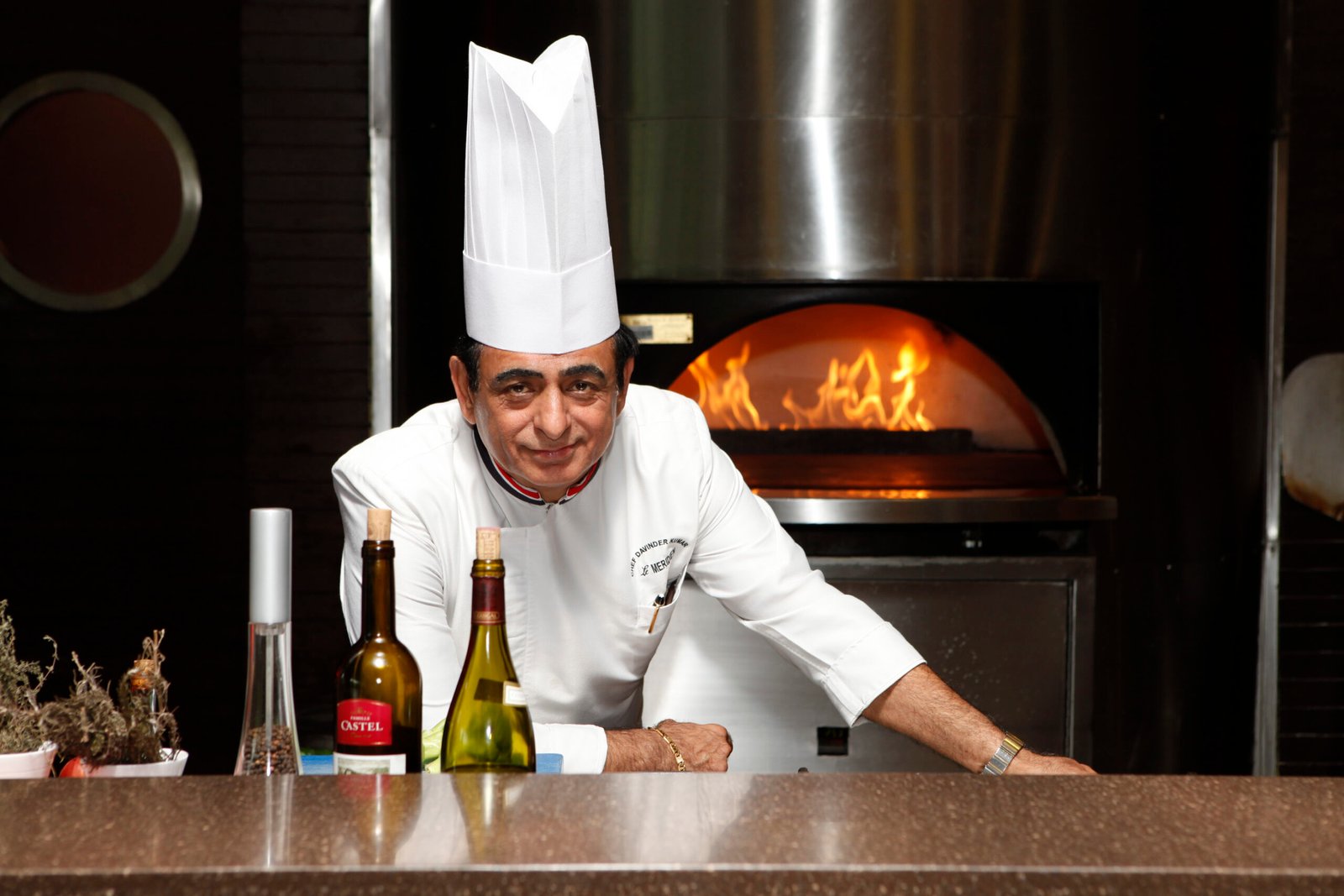
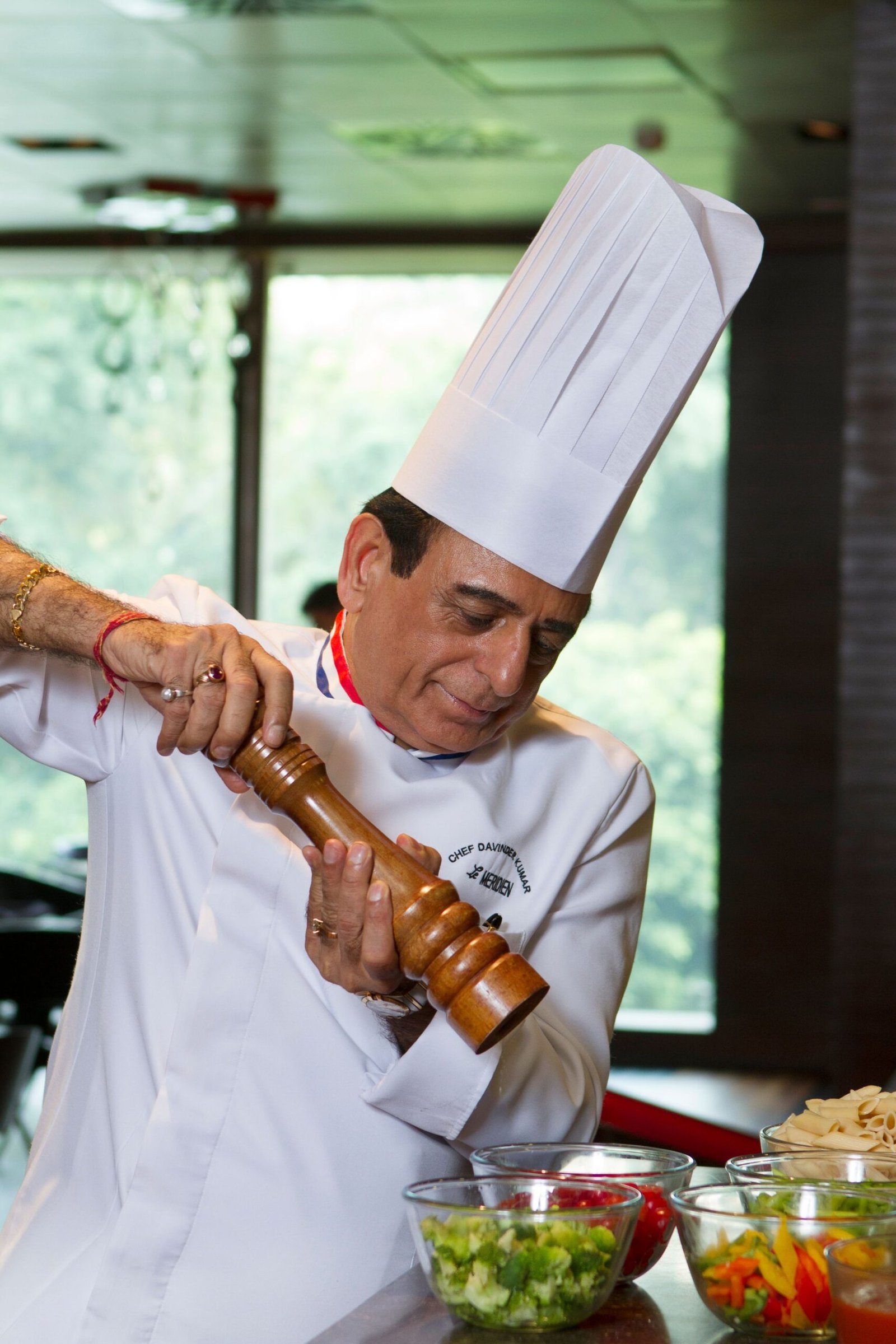
Chef Davinder Kumar is a culinary maestro whose passion for food has taken him on a five-decade journey across the globe. With a career that reads like a gastronomic adventure novel, Chef Davinder Kumar has not only mastered the art of cooking but has become a true ambassador for Indian cuisine worldwide. As the sole Indian representative, he was the first to bring home a gold medal from the International Cooking Festival in Tokyo way back in 1983. But his accolades don’t stop there. The Ministry of Tourism crowned him the Best Chef of India and adorned him with the prestigious Golden Hat Award, solidifying his status as a culinary icon.
Chef Kumar’s expertise isn’t confined to the kitchen. As an author, he’s penned several cookbooks, sharing his wisdom on everything from kebabs to salads. As President of the Indian Culinary Forum (ICF) for over 20 years, he’s been instrumental in elevating chefs’s status and promoting Indian cuisine globally. Currently serving as VP of F&B (Production) and Executive Chef at Hotel Le Meridien, New Delhi, he’s also dedicated to helping the underprivileged through MUSKRAHAT. Chef Kumar embodies the belief that following one’s passion leads to success.
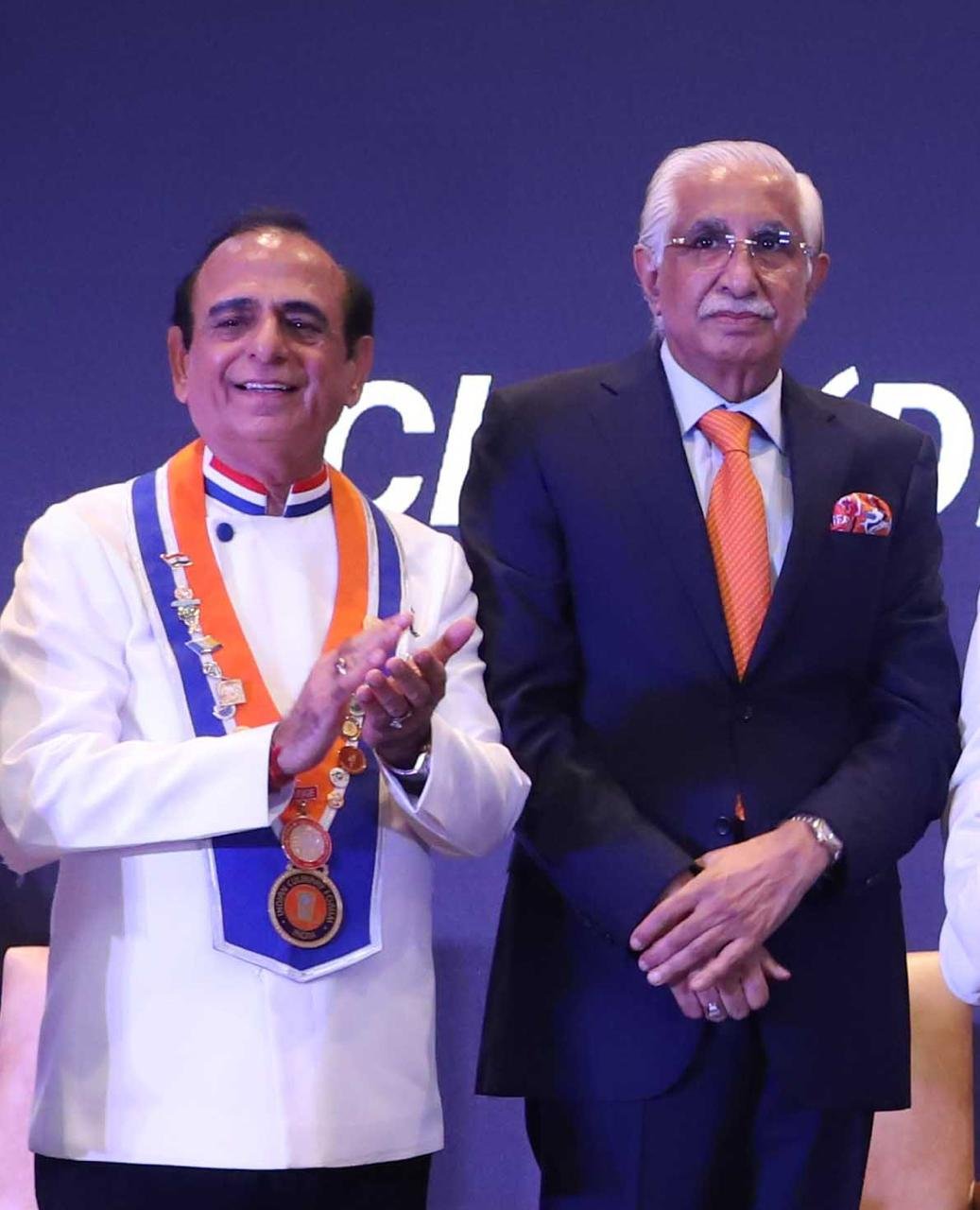
Recently, Rajeev Mokashi, Co-founder, TheGlitz interviewed him during the 21st Chef’s Awards, celebrating both emerging and seasoned chefs in India.
MEET Chef Davinder Kumar
Rajeev Mokashi: Chef, tell us about your remarkable journey from studying Commerce to becoming a top chef by 29, especially how you overcame the challenges in an era when foreign chefs dominated the kitchen?
Chef Davinder Kumar: After completing my Bachelors in Commerce, I was searching for a professional course that would suit my strong aptitude and grasping power. A friend introduced me to the hospitality industry, and my first job at the Royal Continental Hotel sparked my interest in culinary arts as a career.
Choosing this path in the 1970s was unconventional and challenging. While my peers were pursuing engineering, accounting, or medicine, I opted for a profession that was undergoing significant transformation. Society, including my parents, struggled to accept my choice, often referring to me as just a “cook” rather than a chef.
The journey from cook to chef has been long and rewarding. We faced numerous challenges, including foreign domination in the industry, limited expertise, and scarce resources. Maintaining international culinary standards was difficult as we had to import many ingredients that are readily available today. A turning point in my career was the opportunity to work in France for two years, where I honed my culinary skills. This experience not only enhanced my expertise but also gave me quick recognition in the field. Interestingly, I had to learn French as a prerequisite, which has set me apart in the industry. In my five decades of experience, I’ve yet to meet another chef who can speak, write, and read as proficiently.
Looking back, I’m grateful for the path I chose and how the culinary world has evolved. It’s been a transformative journey, both for me personally and for the profession as a whole.
How has your vision transformed the ICF Chef Awards into a major event celebrating culinary excellence, and what inspired you to elevate these awards to their prestigious status?
The ICF GCN Awards were established in 2004 under the visionary leadership of late Shri Anil Bhandari. Our mission was twofold: to elevate chefs’ knowledge and skills and to promote culinary arts globally. Starting as an annual event, these awards have evolved significantly. Initially, we faced challenges gaining recognition in the hotel industry, largely due to the lack of a unified culinary organization. However, the industry’s support has grown tremendously over time, allowing us to improve and expand the awards each year.
What sets these awards apart is their unwavering commitment to transparency and integrity. Winning isn’t easy, which is precisely why these awards have endured for two decades—a feat unmatched by any other culinary award in the country, barring civilian honours.
We pride ourselves on consistency, clarity, and adaptability. As global culinary trends evolve, so do our standards. We’re constantly refining our criteria to stay at the forefront of the industry. Our ultimate goal is to elevate these to the status of a national award. We’ve come a long way from being unrecognised to being celebrated, and we’re committed to pushing the boundaries even further.
What are the current major trends in the culinary industry, especially regarding the increasing global popularity of Indian flavours?
Reflecting on the past five decades, Indian cuisine has gained global recognition, largely thanks to leading chefs who have taken it to new heights, including earning Michelin stars. In my opinion, this shift means Indian food is now seen as more than just tikka masala; it showcases the diverse and rich culinary traditions of India. Not to forget, the increase in awareness, supported by the government, industry leaders, and media, has led to a surge in Indian restaurants worldwide. Indian cooking has more than two dozen documented cuisines and is not only celebrated for its health benefits and depth, making it a popular choice for global travellers eager to explore its variety.
How does the 12th Knowledge Summit’s focus on “Culinarians in the AI Era” address the challenges and opportunities facing today’s culinary world?
The 12th Knowledge Summit’s focus on “Culinarians in the AI Era” addresses the intersection of tradition and modern technology in today’s culinary world. Where innovation and creativity have pushed Indian cuisine to a competitive global level, technology has streamlined processes, enhancing efficiency and sustainability. Post-COVID, it’s more important than ever for chefs to embrace technological advancements to stay relevant. Though AI offers support, it can never replace the essential human touch in cooking. In my view, chefs must balance tech with their unique artistry, ensuring a bright future for the culinary industry.
What steps do you believe are essential for promoting environmental responsibility and sustainability within the culinary industry.
The key to success in our industry is mindset. We focus on educating our diverse team, emphasising fresh, seasonal produce and sustainable cooking practices. It’s crucial to adapt and evolve, not just in our kitchens but also in educating our clients. I’m a strong advocate for the farm-to-home concept, which avoids preserved foods and those that have travelled long distances. We stay informed about global trends and incorporate sustainable practices accordingly.
Recently, I launched my book “Second Meals,” which explores cooking with food scraps. It addresses the often overlooked issue of food waste. Just as bran is crucial for health when refining flour, we’re now focusing on the nutritional value of parts typically discarded. The book’s tagline, “Maximise nutrients to minimise food waste,” encapsulates our approach. We’re utilising peels, stalks, and stems—parts usually thrown away but rich in nutrients. It’s imperative for chefs to adopt these practices.
Ultimately, our goal is to ensure we leave behind a healthy planet. By rethinking our approach to ingredients and waste, we’re taking steps towards a more sustainable culinary future.
Could you describe your cooking philosophy and approach, particularly your efforts to mentor future chefs through the ICF?
My culinary philosophy boils down to simplicity and freshness. I’m a firm believer in the ‘bottom-up’ approach—my pots are done. It’s not just about the food; it’s about creating an experience. I strive to infuse warmth into every dish, aiming to evoke powerful emotions with each plate. Whether it’s comfort, joy, or nostalgia, the goal is to stir something in the diner.
Quality is non-negotiable for me. I have zero tolerance for subpar ingredients or execution. My commitment is unwavering: I deliver exactly what I promise, no compromises. This dedication to excellence is the cornerstone of my cooking philosophy.
What qualities do you consider essential in aspiring chefs, and how would you like to be remembered in the culinary world?
I always emphasise the five pillars (5P) of success: passion, patience, pride, positivity, and persona. Losing any one of these can hinder your growth. I tell aspiring chefs that this profession demands passion; it’s a tough, backbreaking job without glamour, holidays, or regular shifts. Despite the hardships, we’ve revolutionised this profession and elevated its status.
My generation—the sharks, like I call them—has transformed the role of chefs, gaining respect and recognition. There was a time when we were not allowed to enter a restaurant lobby as chefs. Today we have, and I’ve had the privilege of sitting next to the cabinet minister and top officials. I aim to be a role model for future chefs, showing that dedication and resilience lead to success.
Lastly, how have your travels influenced your cooking style, and can you share a specific experience from abroad that significantly shaped your culinary perspective?
Back in the ‘70s, my exposure to French cuisine was transformative. Today, food has evolved into both an art and a science. Working in France, especially at Paul Ducu’s restaurant, was foundational for me. It was mind-boggling to see that every dish that left the kitchen was photogenic. A visual masterpiece, perfectly blending flavours, textures, and colours. The chef who would call me DK and say,” If you want to be successful, make sure every dish creates that ‘wow’ factor.”
Let me share a recent highlight: I had the privilege of cooking for G20 leaders, including presidents and prime ministers. They were eager to try authentic Indian dishes, not just what’s available in their countries. One president (and I won’t name) asked about Appam, curious about its uniqueness. This experience highlighted how chefs now interact with guests, explaining dishes and showcasing regional flavours. Chefs have moved beyond the kitchen, sharing the story behind each dish. This approach not only enhances the dining experience but also promises the richness of Indian cuisine.
You Might Also Like: Chef DK’s Tasting Series