Ski(e)n: Re-membering through Performance and Thread at Dhoomimal Gallery
Dhoomimal Gallery is hosting something different this season. From December 6, 2025, to January 5, 2026, the Connaught Place gallery presents work by Royal College of Art alumni Abhijna Vemuru Kasa and Insha Manzoor called Ski(e)n: Re-membering through Performance and Thread.
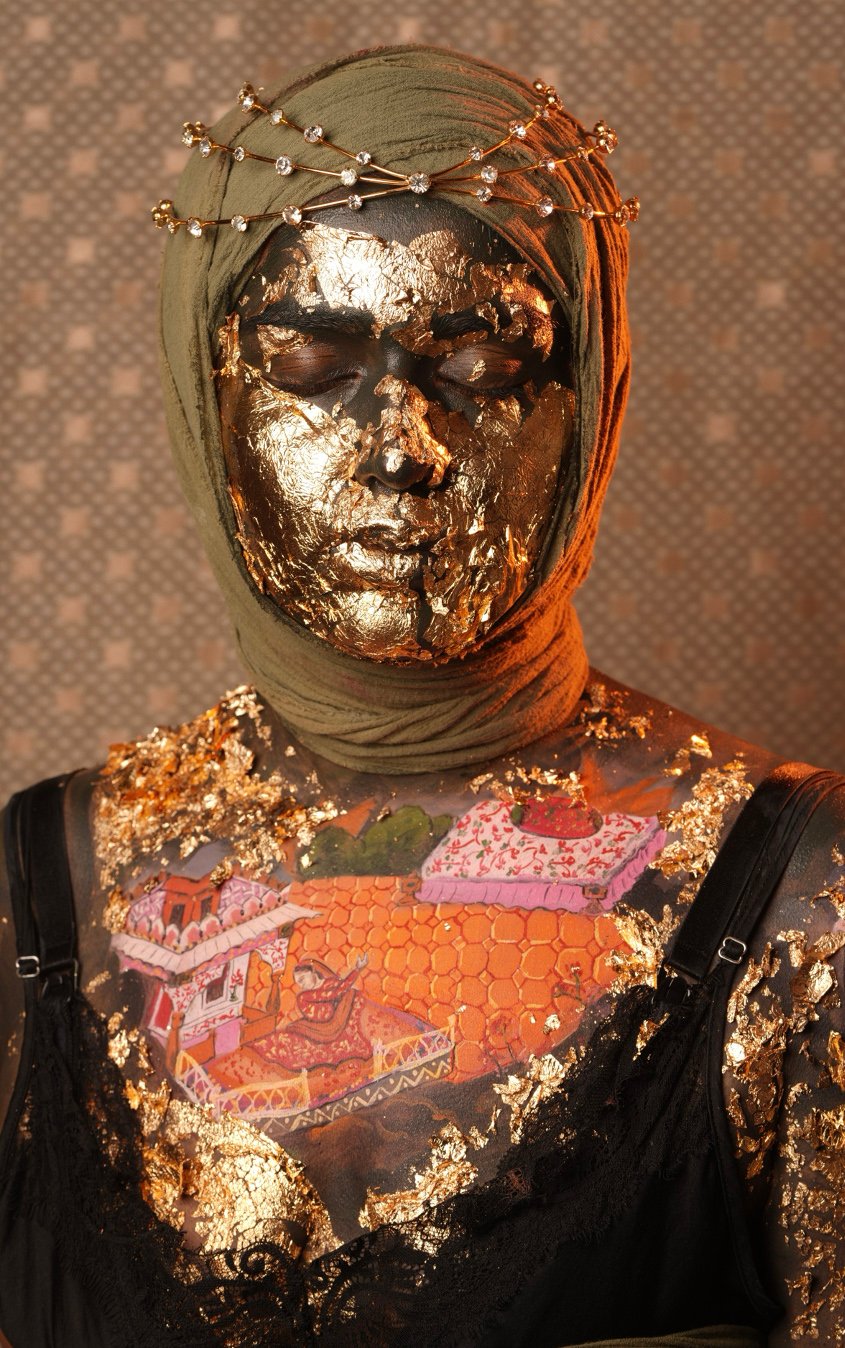
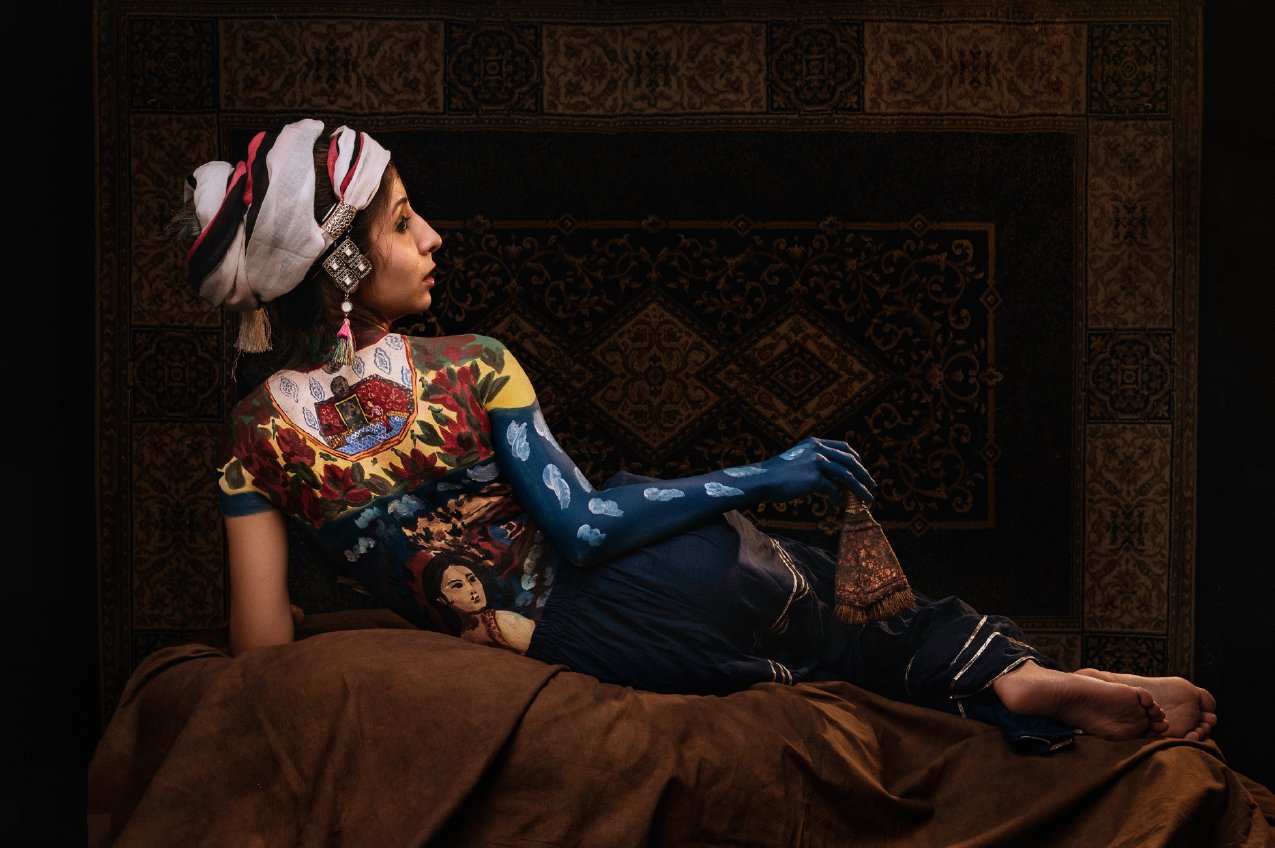
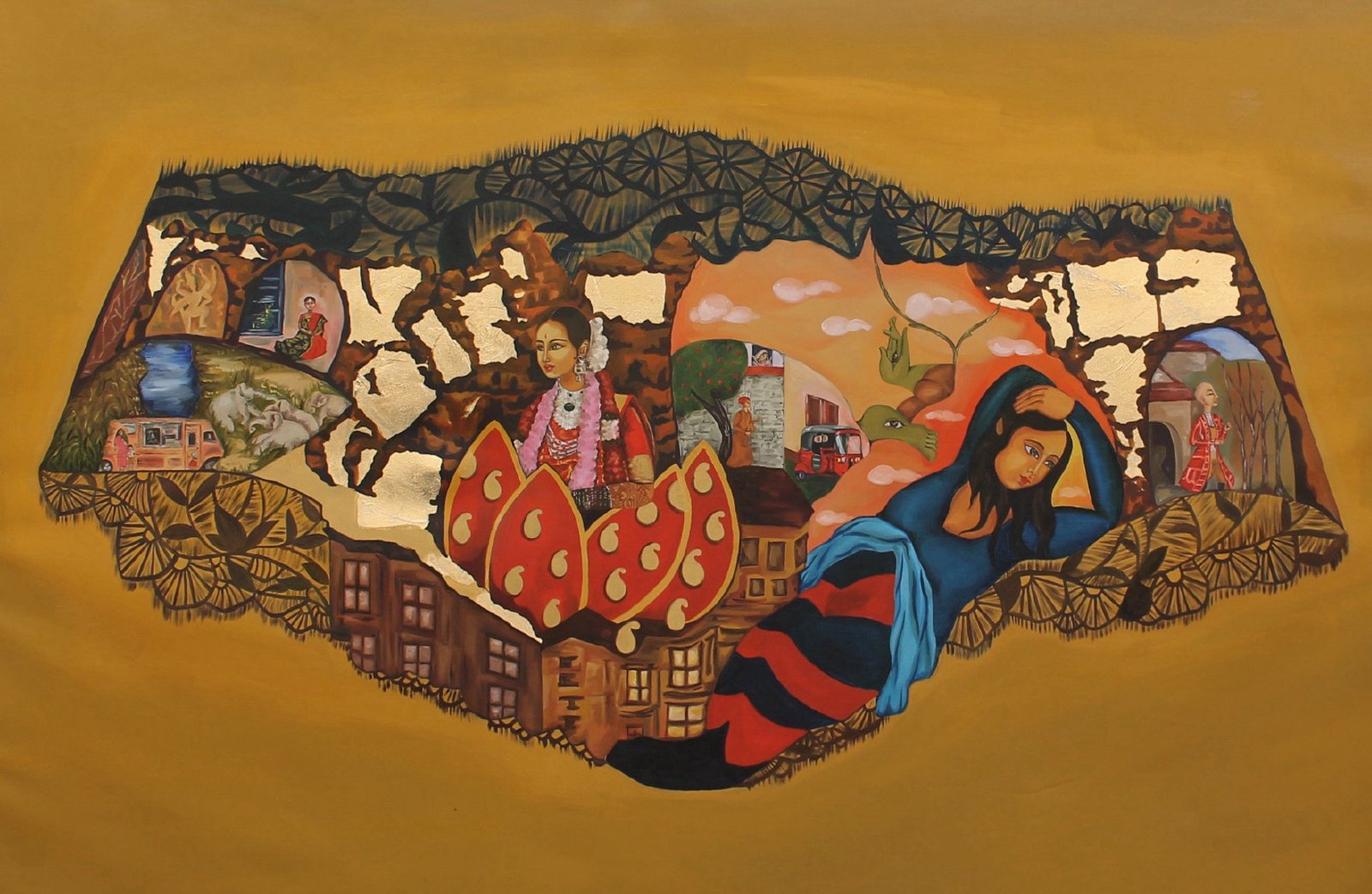
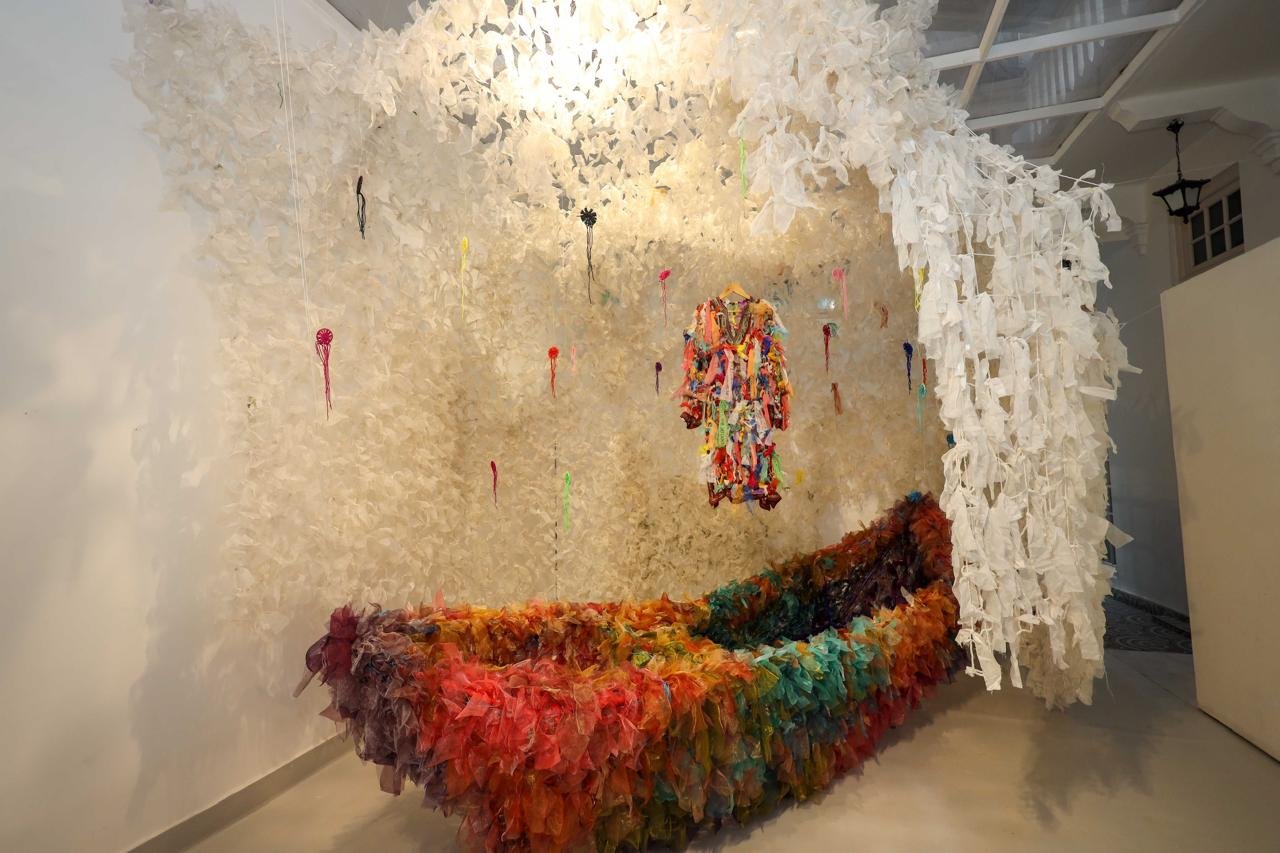
Curated by Jyoti A Kathpalia, the exhibition pairs two artists working in completely different ways but asking similar questions. Abhijna paints directly on skin, her own and others’, using performance photography to rethink how femininity and postpartum life get talked about (or don’t). Insha works with textiles from her Kashmiri roots: embroidery, weaving, the kind of craft passed down through generations. For her, thread isn’t just material; it’s a way to hold onto identity when everything else feels uncertain. What she creates becomes both memory and quiet defiance. Both artists are looking at how women are written into culture, and how that script might be rewritten.
The exhibition brings together oils, acrylics, mixed media, wool, thread, fabric, installation art, and performance photography.
Rajeev Mokashi, Co-founder at TheGlitz sat down with Abhijna Vemuru Kasa, who moves between Hyderabad, Delhi, and San Francisco, to talk about painting on skin, rewriting myths, and making art while dealing with motherhood and mental health. Over to Abhijna…
TheGlitzMedia: Three cities, three art worlds – Hyderabad, Delhi, and London. Could you please share where the real Abhijna resides when she is not engaged in creating art?
Ahijna: My journey in art started very early, at the age of 7. I was born and brought up in Hyderabad, and then art took me to Chicago, where I did my undergraduate degree at the School of the Art Institute of Chicago. After that, I moved to London to pursue my master’s at the Royal College of Art. Following graduation, I was in San Francisco, where I continued to practice my art.
I returned recently to practice art while also juggling motherhood. But wherever I go, be it Chicago, London, San Francisco, or Delhi, my heart stays with each city through my art. Hyderabad is my hometown, but currently I move between Delhi, Hyderabad, and San Francisco through my practice.
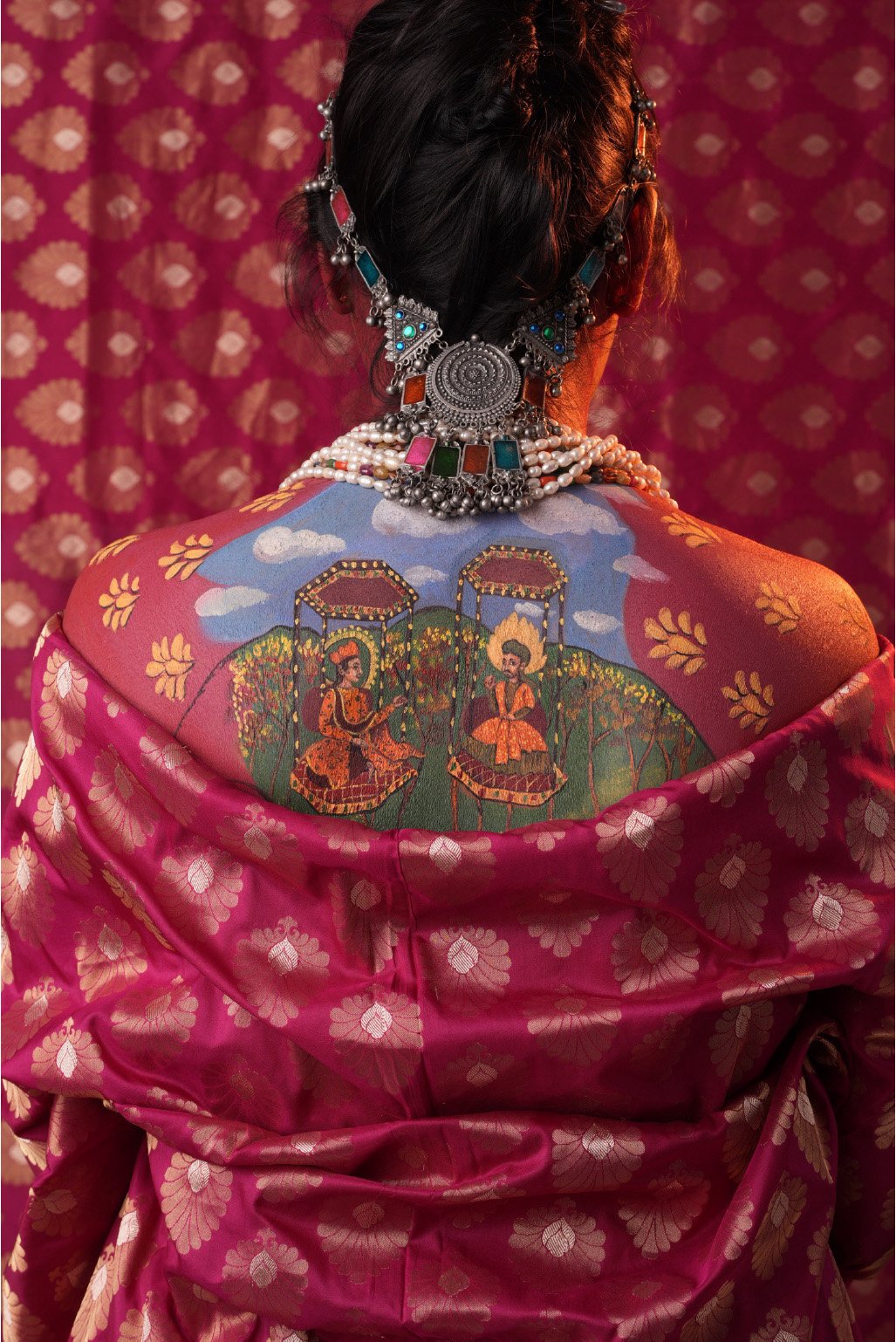
You’ve used the body as a canvas. What changes when skin becomes the surface – versus linen, versus paper?
Skin speaks the truth of our fleeting, organic nature. It is so personal and reflects the reality of our identities. When I paint on my skin, it’s a performance of reflecting my identity while also washing it away, as if I’m erasing it to make space for something new. The process goes on and on, much like our ever-changing lives.
Indian mythology, Persian narratives, and Renaissance palettes – how do you decide which tradition wins when they contradict each other?
I think every tradition in this world shares a commonality that becomes visible through our perspective. Whenever I read a story, reference a painting, or explore poetry from different cultures, I always look through a feminine lens. I focus on characters and rituals of femininity. My exposure has been heavily influenced by Indian traditions and mythology, along with Persian art and the Renaissance. What ultimately wins here is the feminine.
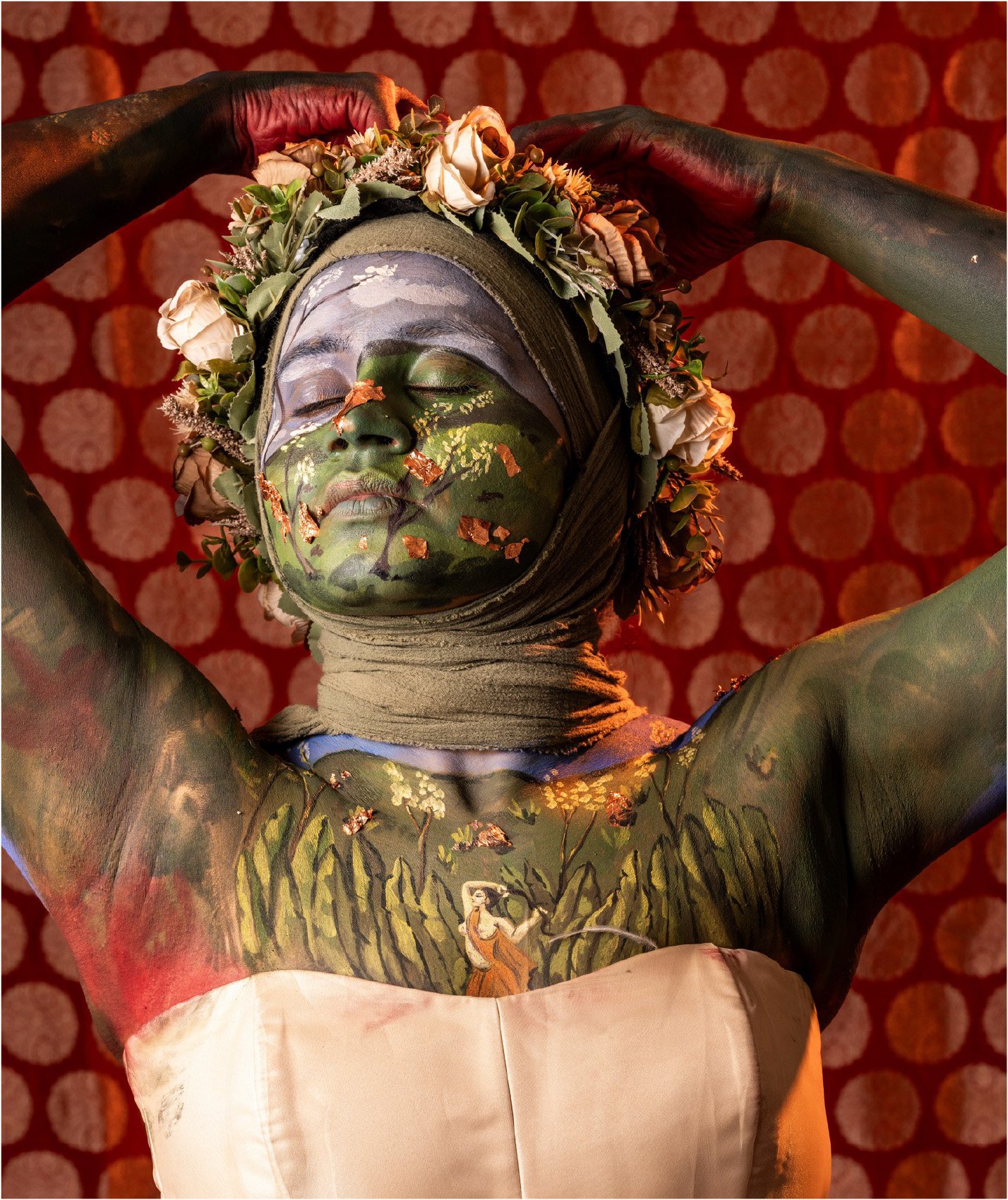
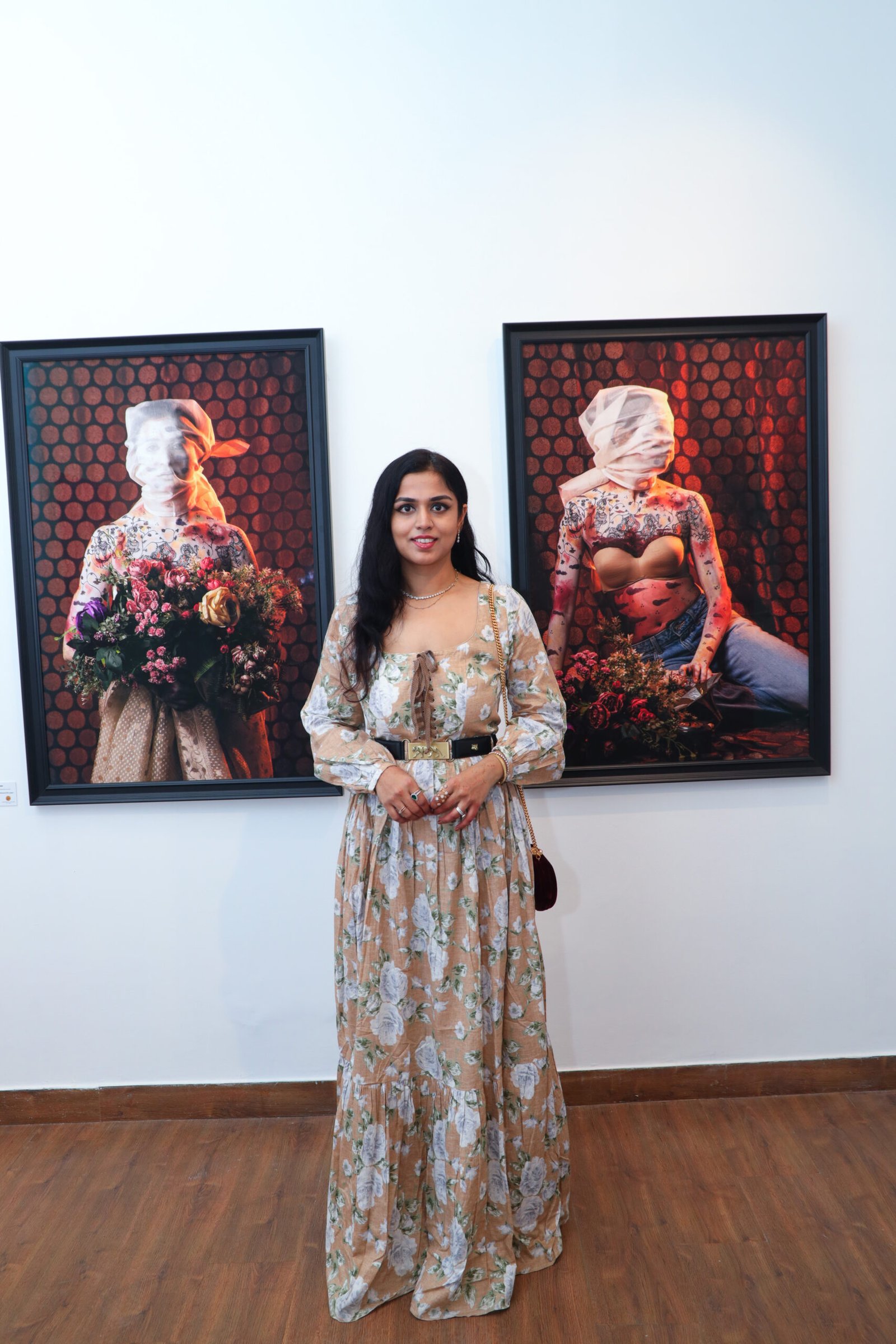
‘The Feminine’ uses performance photography. What can a photograph capture about femininity that painting can’t – or won’t?
I don’t think paintings fail to capture femininity. In fact, the process of painting itself is very feminine. When I photograph, I try to capture the emotion of the performance, but what I love most is the process – painting on human skin and witnessing the interaction between paint and skin.
You work across three cities. Does femininity change addresses, or is that the comfortable lie we tell ourselves?
I would rather say society and its perspectives change addresses, but not femininity. Femininity is a character within that one simply has to recognize and embrace.
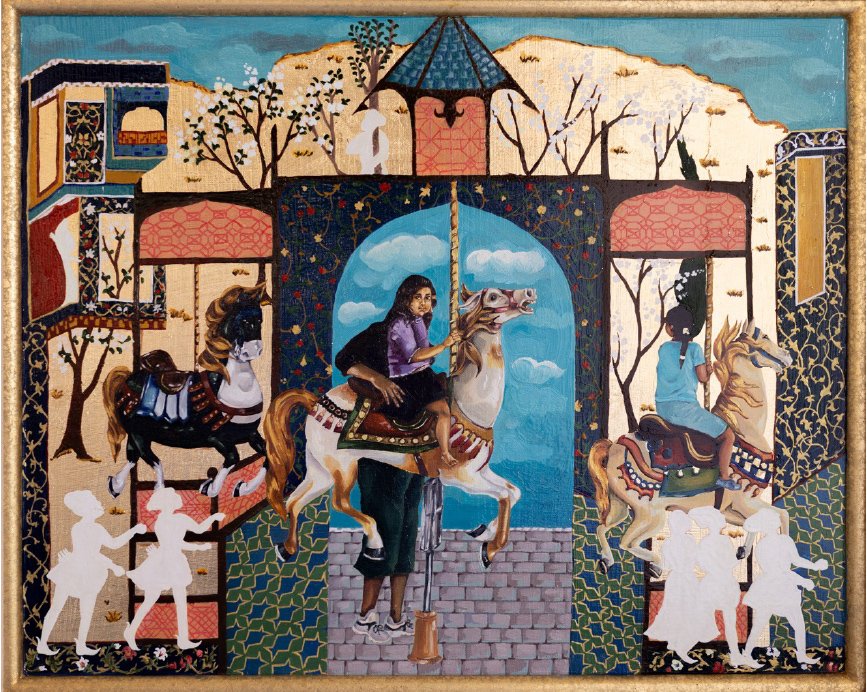
Feminism and mythology don’t always shake hands politely. Which mythological figure would you rewrite entirely if you could?
Feminism and mythology have a very tricky relationship. There have been characters that celebrated feminism, and at the same time, characters and stories that have been deeply misogynistic. Often, the latter is portrayed as the main character saving the world. However, if we celebrate these unsung feminist heroes who spoke about changing the world rather than merely saving it – that’s where the real power lies. My process often involves exploring these characters rather than focusing on just one in particular.
Your exhibition opens on December 5th at Dhoomimal Gallery, New Delhi. What’s the one piece you’re nervous about people seeing – and why that one?
I am excited, eager, and nervous about the conversations my art will bring to viewers during the exhibition, which runs from December 5th to January 10th 2026 at Dhoomimal Gallery, New Delhi. I wouldn’t pick one piece, but rather the series on postnatal mental health, which is quite personal and addresses an important, often unspoken truth in life.