Shaheen Akhtar
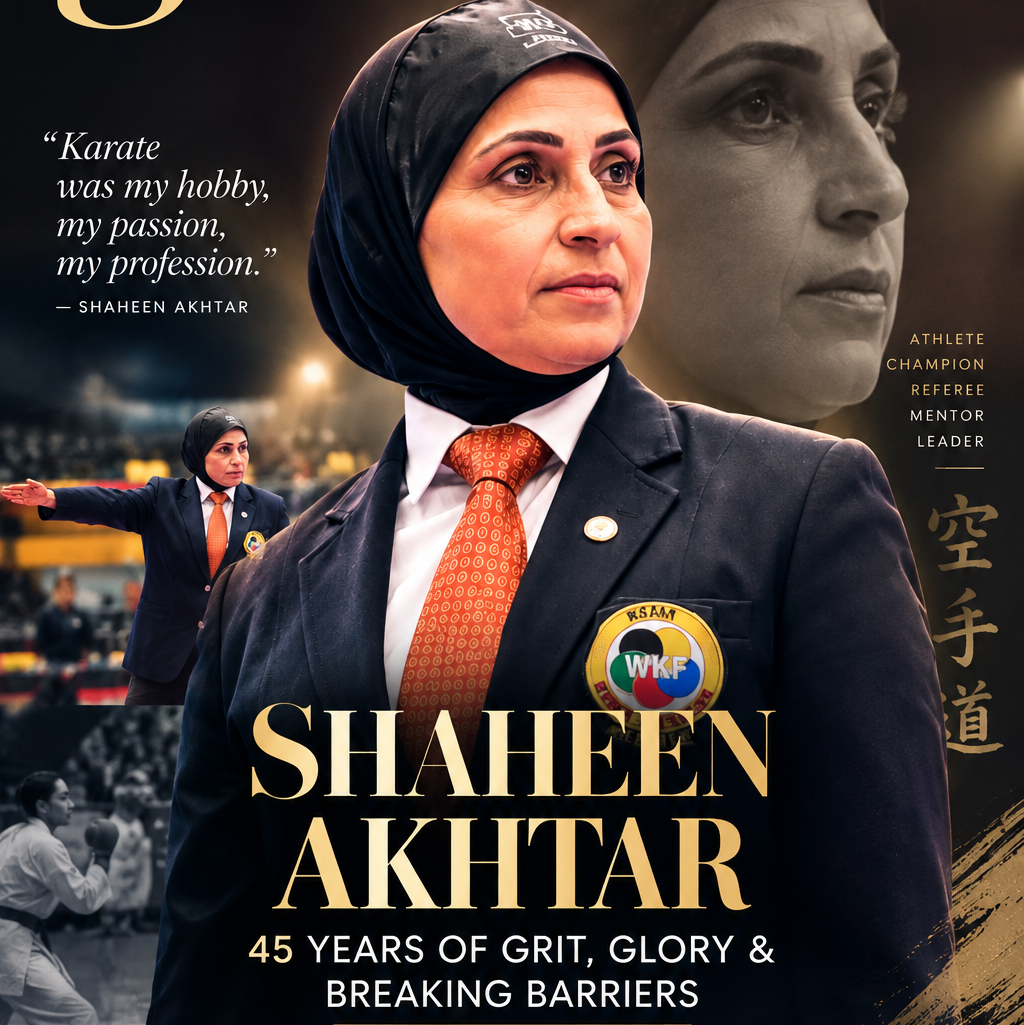
For 45 years, Shaheen Akhtar has stayed on the karate mat — first as an athlete, then as a champion, referee, mentor and now an eighth-degree Black Belt. In a sporting world that has historically been dominated by men, she didn’t simply find a place for herself; she fought for it, earned it and ultimately redefined what that place could look like for an Indian woman. Her journey from a schoolgirl who was introduced to karate as an extracurricular activity to becoming one of India’s most accomplished women in the sport is a remarkable story of discipline, resilience and sheer staying power.
Today, Shaheen stands at another extraordinary milestone. She is the only Indian woman to serve as an Officiating Referee (ITO) at the 2026 Asian Games in Japan… a distinction that places her once again at the very highest level of international karate. But for Shaheen, the achievement is about far more than a title. It carries the weight of responsibility: of being watched, of being followed and, most importantly, of becoming a benchmark for young women who are still deciding whether they belong in spaces traditionally occupied by men.
Her story is particularly inspiring because the barriers she encountered were not always outside the country. Shaheen speaks candidly about having to overcome resistance to women entering officiating and proving that a woman could not only stand on the other side of the mat, but perform better than her male counterparts. There was no shortcut to acceptance. There was simply years of work, consistency and excellence. “Our work spoke for us,” is the philosophy that seems to define her journey.
And perhaps that is what makes Shaheen Akhtar such a powerful inspiration for women across India. She represents the idea that breaking a glass ceiling isn’t always one dramatic moment. Sometimes it is 45 years of showing up. It is choosing discipline when doubt is easier, continuing when recognition is slow, and quietly becoming the person younger generations can look up to. Today, she is not merely competing in a male-dominated arena; she is helping create a larger arena for the girls who will follow. Through SAMA — Shaheen’s Academy of Martial Arts — she is actively training the next generation and championing karate as a serious and viable career.
In this exclusive interview with Sumita Chakraborty, Founder & Editor-in-Chief, TheGlitz, Shaheen Akhtar opens up about her extraordinary 45-year journey in karate, breaking barriers in a male-dominated sport, the challenges facing young Indian karatekas, and why she believes the next generation of girls can take Indian karate to even greater heights. Hers is a story of courage, conviction and an unwavering belief that sometimes the most powerful way to inspire women is simply to keep going — until the world has no choice but to notice.
Over To Shaheen Akhtar
Shaheen, you have dedicated 45 years of your life to karate… as an athlete, champion, referee and mentor. How did your journey begin in this sport? What first drew you to karate, and what has kept you committed to it for so many decades?
I was introduced to karate in my school but it was like an extracurricular activity. However, it was my father who actually forced me to join the sport, saying, ‘If you join karate, probably you’ll learn how to kick and punch’. That’s because I was basically a tomboy when I was a child. And then eventually, slowly and steadily – I didn’t even realize it – in a matter of time and over the years – my hobby turned into my passion and my profession.
So it’ became something that I am very passionate about that ultimately, got me professionally committed. I don’t think I’ve ever looked back and rued my decision – when you enjoy what you’re doing, it’s something you thrive on.
You are the only Indian woman to serve as an Officiating Referee (ITO) at the Asian Games 2026. What went through your mind when you realised you were once again breaking this barrier on such a prestigious international platform?
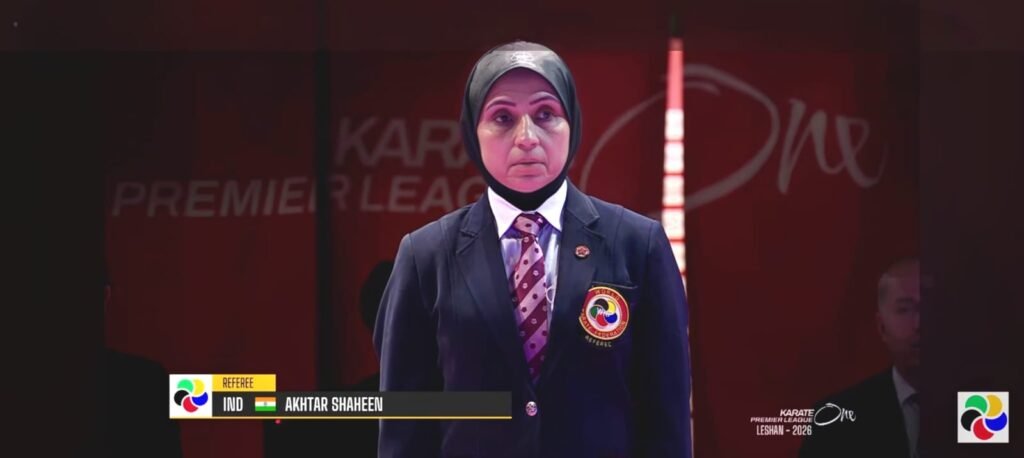
Yes, serving as an ITO at the Asian Games was a very special moment for me. I was extremely happy when I learned that I would be taking on this position for the second time as the only Indian woman to hold this role.
But more importantly, it gave me a tremendous sense of responsibility. I knew that I was setting an example and becoming a role model for the younger generation, particularly for the young women of our country. I understand that they look up to me and that, through my work, I am setting standards for what they can aspire to achieve.
So, while the position brought me immense joy and pride, it also came with a great deal of responsibility.
You also made history as the first and only Indian woman ITO at the previous Asian Games in China. How has that journey changed you, both professionally and personally, and what does it mean to return to the Asian Games in this role?
Yes, being selected as an ITO for the Asian Games in 2022 was historic. I was the only woman from India and South Asia to reach that standard and level of international competition.
It has definitely changed me over the years because I realised that I was shouldering a lot more responsibility with the position I had taken on. There were many people looking up to me and following my journey.
Of course, I had to be very, very particular about everything I did. Every match I officiated was monitored and viewed by millions of people in India and across South Asian countries. I knew they were watching me, and knowingly or unknowingly, I had become a mentor and role model for many of them.
That meant I had to be extremely professional in everything I did and, most importantly, in the way I conducted myself on the field of play.
It is wonderful news that I have been selected again. Going to the Asian Games is one of the biggest achievements for an Indian athlete or official. It is considered the highest level of competition after the Olympics.
Since karate is not currently part of the Olympics, the Asian Games is the highest platform for my sport. So, I am truly honoured and humbled to be going there once again as the only woman ITO representing India.
As a woman in what has often been a male-dominated sporting arena, what were the biggest challenges you faced in establishing yourself internationally — and did you ever have a moment when you considered giving up?
Yes, karate is absolutely a male-dominated sport. There were a lot of challenges, although I would say they were not so much international as they were within my own country.
As you know, there are still many male chauvinistic attitudes in our society, and for some people, accepting a woman into their field was not easy.
Before I entered officiating and began standing on the other side of the mat, people were not ready to accept me in that position. They could not believe that a woman could stand on the mat and perform as well as or even better than a man.
But eventually, slowly, they began to understand and realise that it wasn’t only men who could hold these positions. Women could do it too, and they could do an equally good, if not better, job.
Internationally, there were women officials, but there were far fewer than there are today. I was among those few women. In some ways, we did have a little bit of an advantage because we were considered the weaker section and there was an effort to promote women.
Nevertheless, women were still viewed as the weaker section of the sport. Eventually, when women began proving themselves, our work had to speak for us.
Acceptance didn’t come automatically. We had to work our way through it. And our work spoke for us.
Whatever respect we receive today, and whatever respect I receive today, is truly because of the work I have put in over the years.
You have experienced karate from both sides of the mat… as a national champion and international athlete, and now as an 8th Degree Black Belt and senior referee. How has being an athlete shaped the kind of referee you have become?
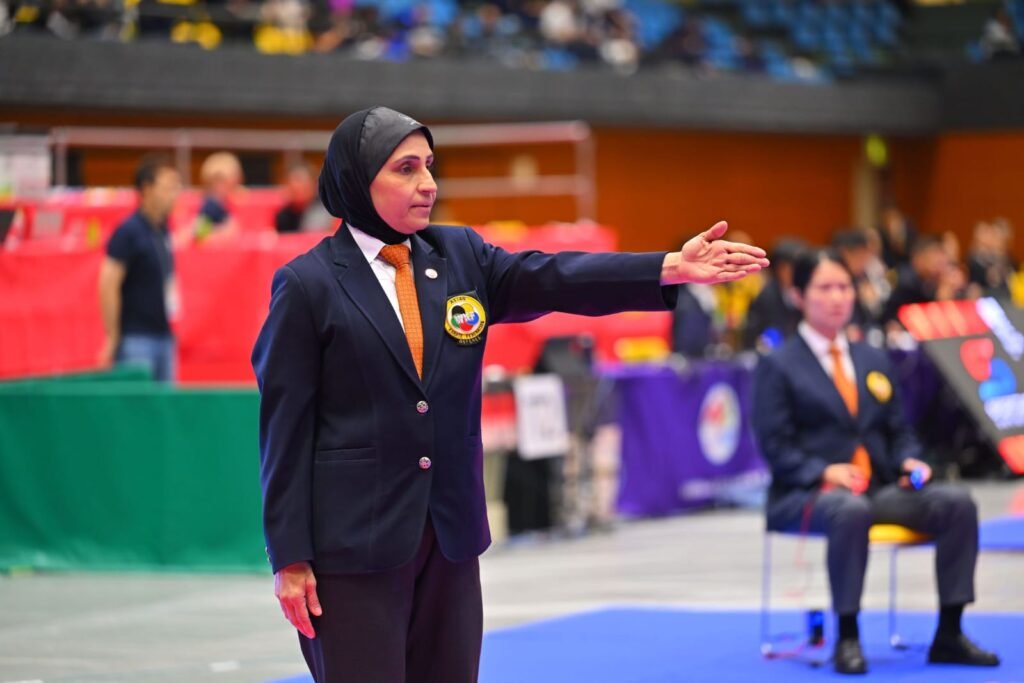
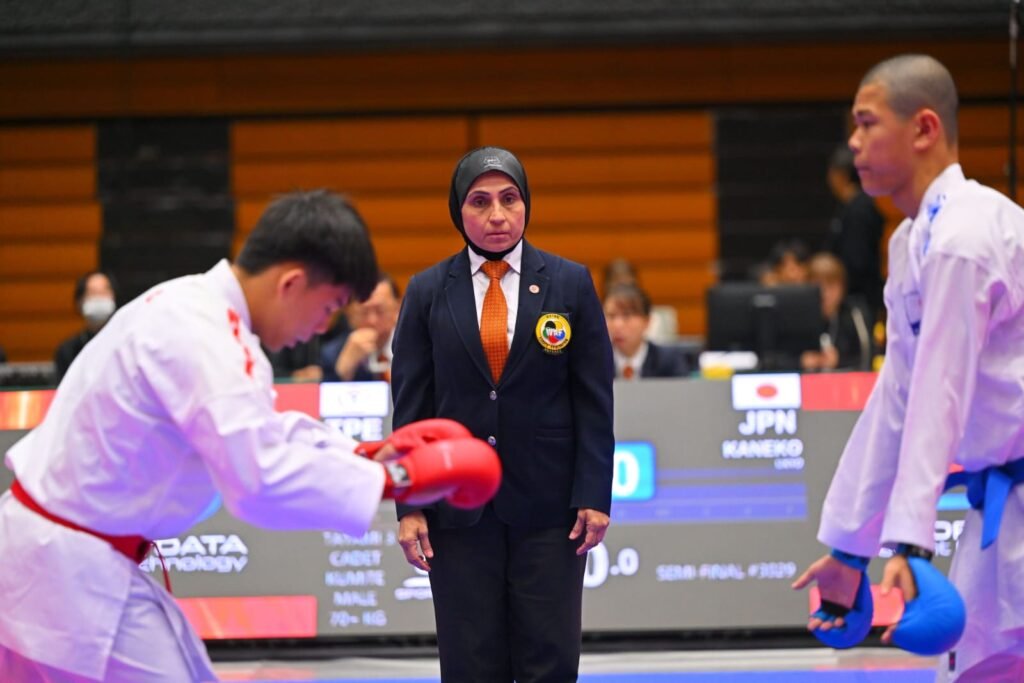
Initially, being an athlete and now taking up refereeing as my professional career has really helped me because, when I am on the mat, I truly understand what an athlete feels.
I understand what constitutes a score. I understand when something is an exaggeration. I can recognise when an athlete is genuinely hurt and when they may be feigning an injury. So, in many ways, I feel the match. I feel the sport. I feel the game.
That experience has really helped me. If I hadn’t been an athlete, I wouldn’t always know whether something qualified as a score or whether it met all six scoring criteria. Officiating is very different from competing, but having been an athlete gives you an important advantage when you are refereeing.
Personally, I feel that if you want to become a good referee, you have to be a good athlete too. You don’t necessarily have to be a national champion or a world champion, but you should have been an athlete and experienced karate at some point in your life.
For me, that experience is very, very important because you understand the game from the inside. You feel the game. You feel the match. And that understanding makes you a better referee.”
You have said that India has tremendous untapped potential in karate. What needs to change in India for talented young karatekas — especially girls — to see the sport not just as a passion, but as a serious and viable career?
Yes, indeed. We have a tremendous amount of untapped talent in our country. I was recently in Jordan for the AAKF Championship for Cadets, Juniors and Under-21 athletes, and, for the first time in history, India won multiple silver, gold and bronze medals.
We missed out on gold in some very close finals, but our athletes performed extremely well despite having limited support from the government and without access to professional international training or international coaches. We have our own in-house coaches… Indian coaches who were themselves former champions… and they have been doing a tremendous job training these athletes.
These young athletes are training in different parts of the country, and I have seen so many girls coming up with incredible zeal and energy. Their determination and energy levels are unmatched. In fact, I feel that many of our girls are capable of achieving even more internationally than their male counterparts.
But for that to happen, they need support.
I would really like the Government of India and the Sports Authority of India to take a more active interest in karate and support these young athletes. There are talented youngsters who come from financially weaker backgrounds. Even after winning at the national level, they are unable to travel to international tournaments simply because they cannot afford the expenses involved.
Our federation does support students and athletes to the maximum extent possible, but there are still significant costs involved… equipment, travel and, importantly, professional training from international coaches. Not every family can afford these expenses.
Government involvement and support are therefore extremely important. If we can provide these young athletes with the right training, resources and opportunities, I truly believe India has the talent to make a much bigger mark on the international karate stage.
Through SAMA, you are now shaping the next generation of karate practitioners. If you could give one piece of advice to a young girl who dreams of reaching the international stage someday, what would you tell her?
I would tell them to believe in themselves and to continue doing what they are doing. But there is one line I would really want them to believe and adhere in: If you are persistent, you will get it. But if you are consistent, you will keep it.
If you remain consistent in whatever sport you pursue, especially karate, you will eventually excel. You may not be naturally talented or gifted in the beginning, but hard work can eventually overtake talent when talent doesn’t work hard.
At the end of the day, it is about putting in the hard work, staying consistent in whatever you do and, most importantly, truly believing in yourself. Do your best, stay committed to your journey and leave the rest to God.
THEGLITZ TAKE: She Didn’t Just Break the Glass Ceiling — Shaheen Akhtar Stayed, Slayed, Raised the Bar & Changed the Game of Karate
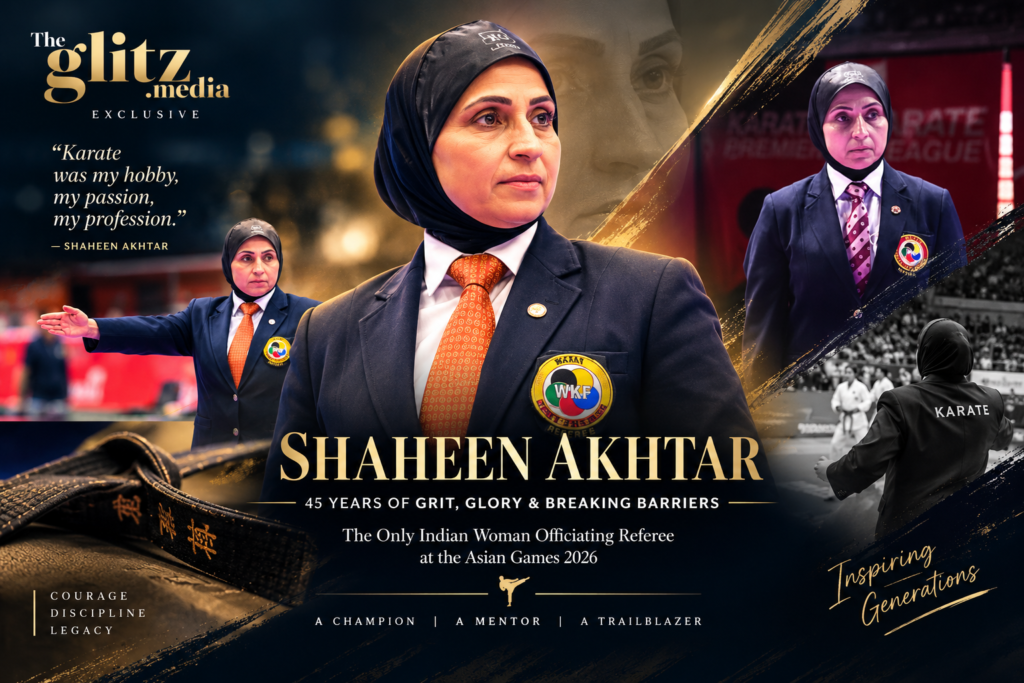
Shaheen Akhtar’s story is not simply about medals, black belts or an extraordinary 45-year career. It is about what happens when a woman refuses to be told that a space is not meant for her. In a sport where acceptance had to be earned, Shaheen let her work do the talking… and then kept raising the volume.
From champion to referee, from being questioned to becoming the benchmark, she has transformed every barrier in her sport into another reason to push forward. And perhaps her greatest victory isn’t standing on the international karate mat herself, but showing countless young Indian girls that they belong there too.
Our verdict? Shaheen Akhtar didn’t just break barriers in the sport of Karate. She left the door open for the women coming behind her. And that may be her most powerful legacy yet.