
Zahan Sawhney
A community of fewer than 100,000 people. A legacy that helped shape a nation. And a curious young mind determined to uncover the story behind it.
Researcher, writer and deep thinker Zahan Sawhney is exploring a remarkable chapter of India’s history: the extraordinary contribution of Parsi philanthropy to the country’s social, educational, scientific and institutional landscape.
What makes a relatively small community leave such an outsized imprint on a nation’s destiny? How did its philanthropists transform wealth into hospitals, universities, research centres and civic infrastructure that would serve generations?
For Zahan, these are not simply historical questions; they are an inquiry into vision, responsibility and the enduring power of giving. Currently studying at Tonbridge School in the UK, he is bringing together history, economics and public policy to examine not just what the Parsi community built, but the remarkable philosophy that made its legacy last. And, perhaps more importantly, what the world today can learn from it.
His curiosity deepened while working on a documentary about Mumbai Samachar, Asia’s oldest continuously running newspaper. The project revealed to him the close relationship between journalism, public service and philanthropy in nineteenth-century Mumbai. It also prompted a deeper investigation into how figures such as Sir Jamsetjee Jejeebhoy and Jamsetjee Tata viewed wealth not simply as personal success, but as a responsibility towards society. This exploration culminated in his research paper, Thy Name Is Charity, which examines the history and economics behind this remarkable tradition of giving.
What makes Zahan’s work particularly compelling is his focus on the philosophy behind the philanthropy. He highlights how Parsi benefactors supported not only hospitals, schools and research institutions, but also essential civic infrastructure, including public water systems, bridges and local clinics. More importantly, he points to the community’s distinctly non-sectarian approach to giving: creating institutions and public resources that served people regardless of religion, caste or background. For Zahan, this was philanthropy at its most transformative—not merely offering immediate relief, but creating opportunities for generations to come.
In an exclusive interaction with Sumita Chakraborty, Founder & Editor-in-Chief, TheGlitz, Zahan Sawhney discusses the legacy of Parsi philanthropy, the enduring power of institution-building, and why the lessons of the past could help shape a more equitable, technology-enabled future for India.
Over To Zahan Sawhney
Discovering a Legacy:
What first sparked your interest in researching Parsi philanthropy? Was there a particular personality, institution or historical event that made you curious about how a relatively small community has made such a significant contribution to India’s social and institutional landscape?
What originally caught my attention was a simple numbers question: how did a group of under 100,000 people globally end up building so much of India’s foundational social and industrial infrastructure? Growing up, you see names like Tata Memorial Hospital, TIFR, or IISc Bangalore everywhere, but looking at them as a researcher made me realise how rare that level of long-term giving really is.
My interest deepened when I was making a documentary on Mumbai Samachar, Asia’s oldest running newspaper. Working on that project showed me how closely journalism, public service, and giving were connected in 19th-century Mumbai. When figures like Sir Jamsetjee Jejeebhoy funded hospitals and schools in the 1800s, or when Jamsetjee Tata planned technical universities, they weren’t just handing out extra cash. They were building the core institutions the country needed. That inspired me to write my paper, “Thy name is Chariíy”, to understand the history and economics behind how this tradition took root.
Philanthropy That Built Institutions:
Parsi philanthropy has played an important role in shaping India’s educational, healthcare, cultural and civic institutions. What are some of the most significant contributions that you believe deserve greater recognition, and what made this community’s approach to giving distinctive?
Everyone knows the major research centres and university endowments, but I think their work on basic city infrastructure gets overlooked, things like public water systems, bridges, local clinics, and spaces like the NCPA in Mumbai. These were everyday public goods that completely changed how people lived and moved around the city.
The most distinctive feature of Parsi giving was that it was non-sectarian. In 19th-century India, most charitable giving was kept strictly within one’s own religious or caste group. Parsi donors broke away from that early on. They explicitly set up their trusts to help anyone who needed it, regardless of background or community. Their goal wasn’t to create dependence on charity but to build facilities that helped ordinary people support themselves.
Beyond Charity:
Creating Lasting Impact: There is a difference between philanthropy that addresses immediate needs and philanthropy that creates institutions capable of serving generations. How did prominent Parsi philanthropists approach this distinction, and what can modern philanthropy learn from their model?
Jamsetjee Tata put it best when he pointed out that basic charity keeps someone afloat today, but building institutions gives them the means to lift themselves out of poverty permanently. Parsi donors treated giving like a long-term investment in society rather than a quick fix for an immediate problem.
They set up independent trusts, bought physical land, and put clear rules in place so these places could survive wars, economic crashes, and changing governments. Today, a lot of modern giving gets tied up in short-term projects, annual charity drives, or quick social media campaigns. The Parsi model shows that if you actually want to fix a problem for good, you have to commit to building things that might take decades to fully pay off.
The People Behind the Legacy:
Figures such as Jamsetjee Jejeebhoy, Jamsetjee Tata and other Parsi philanthropists helped shape India’s industrial and social development. Which historical personalities have particularly influenced your research, and what aspects of their vision or values do you find most relevant today?
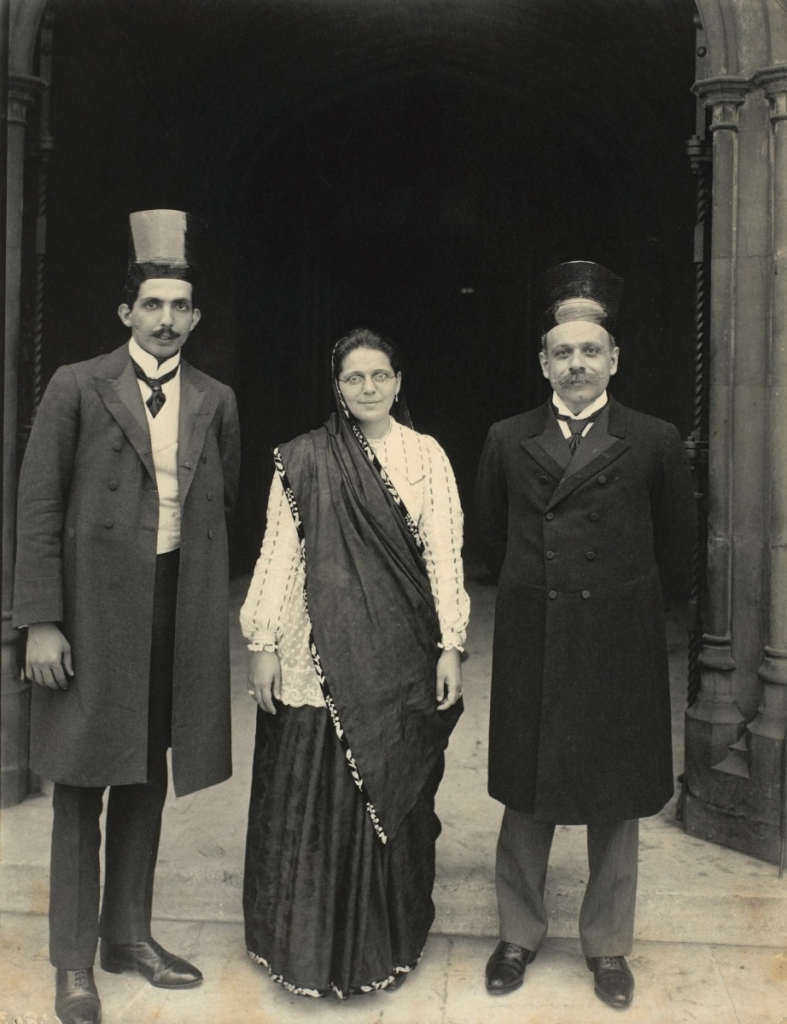
Sir Jamsetjee Jejeebhoy stands out to me because of where he started. He began as an orphaned bottle seller and worked his way up to becoming one of the most successful traders in the country. But instead of just hoarding his fortune, he treated his wealth like something he held in trust for the public. When the government fell short on public services, he stepped in and built them himself.
Jamsetjee Tata is another major influence because he understood that India couldn’t be truly independent without its own industry and scientific research. That’s why he pushed so hard for an institute like IISc. What impresses me most about both of them is how they balanced a global business mindset with a real sense of local responsibility.

A Young Researcher’s Perspective:
As a student at Tonbridge School in the UK, you are examining an important chapter of India’s history from an international academic environment. Has this perspective changed the way you understand India’s philanthropic traditions? Have conversations around economics, public policy and global affairs influenced your research?
Studying in the UK definitely gives you a different vantage point. When you compare early Indian philanthropy to European history or modern Western foundations, you start to appreciate just how far ahead of its time the Indian approach really was.
It has also helped me look at history through a broader lens. Rather than just writing about history as a series of old events and famous names, my classes in economics and policy make me ask practical questions: How did trade routes influence where money went? How were these trusts legally protected? How can we use those same economic frameworks to solve problems today?
Philanthropy in the 21st Century:
How do you see the principles of traditional Parsi philanthropy translating into today’s world, where social challenges include unequal access to education, healthcare, technology and opportunity? Can the institution-building approach of earlier generations offer a useful framework for contemporary philanthropists?
The core issues haven’t really changed, just the tools. Unequal access to technology or clean energy today is very similar to what unequal access to basic schooling or clean water was 150 years ago.
The old Parsi approach of building lasting institutions gives us a solid blueprint for these modern problems. Instead of spreading funds thin over dozens of small, short-term projects, major donors today should focus on creating permanent, open-access resources, like public digital infrastructure or affordable online learning platforms. If earlier generations built physical hospitals and colleges to open up opportunities, today’s donors should focus on building the technological systems that help everyone compete in a modern economy.
Economics, AI and the Future:
Your interests extend beyond history into economics, public policy and emerging technologies, and you were a finalist in the Northeastern AI Futures Challenge. How do you see technology, particularly artificial intelligence, transforming research, public policy and the future of philanthropy? And what would you like to explore next?
AI is changing how we handle complex data across almost every field. In historical research, machine learning lets us process massive amounts of old records and economic data to spot patterns that would take human researchers years to catch. In philanthropy and public policy, smart data tools can help pinpoint exactly where aid is needed most and route resources there without unnecessary waste.
Taking part in the AI Futures Challenge showed me that tech by itself isn’t a silver bullet; it needs good government policy around it to actually do good. Going forward, I want to keep studying the crossover between public policy, technology, and economics, particularly looking at how we can use AI to build fairer public services and better social infrastructure.
TheGlitz Take

Philanthropy is often measured by the money given away. But its true legacy lies in what it leaves behind. The Parsi community understood this long before nation-building became fashionable terminology. Its greatest philanthropists did not simply write cheques; they built institutions, created opportunities and invested in a future that would outlive them. From healthcare and education to scientific research and civic infrastructure, their contributions remind us that generosity, when guided by vision, can transform the destiny of a nation.
What makes Zahan Sawhney’s research particularly compelling is that he is not looking at this legacy through the rose-tinted lens of nostalgia. He is questioning its economics, examining its philosophy and connecting its lessons to contemporary challenges such as unequal access to technology, education and public services.
His proposition is both powerful and timely: perhaps the philanthropy India needs today is not another round of short-term interventions, but the courage to build enduring institutions for tomorrow. At a time when instant impact often commands more attention than lasting change, Zahan’s exploration offers a compelling reminder that the greatest gift one can leave a nation is not wealth itself, but the infrastructure, knowledge and opportunity that allow generations to flourish.