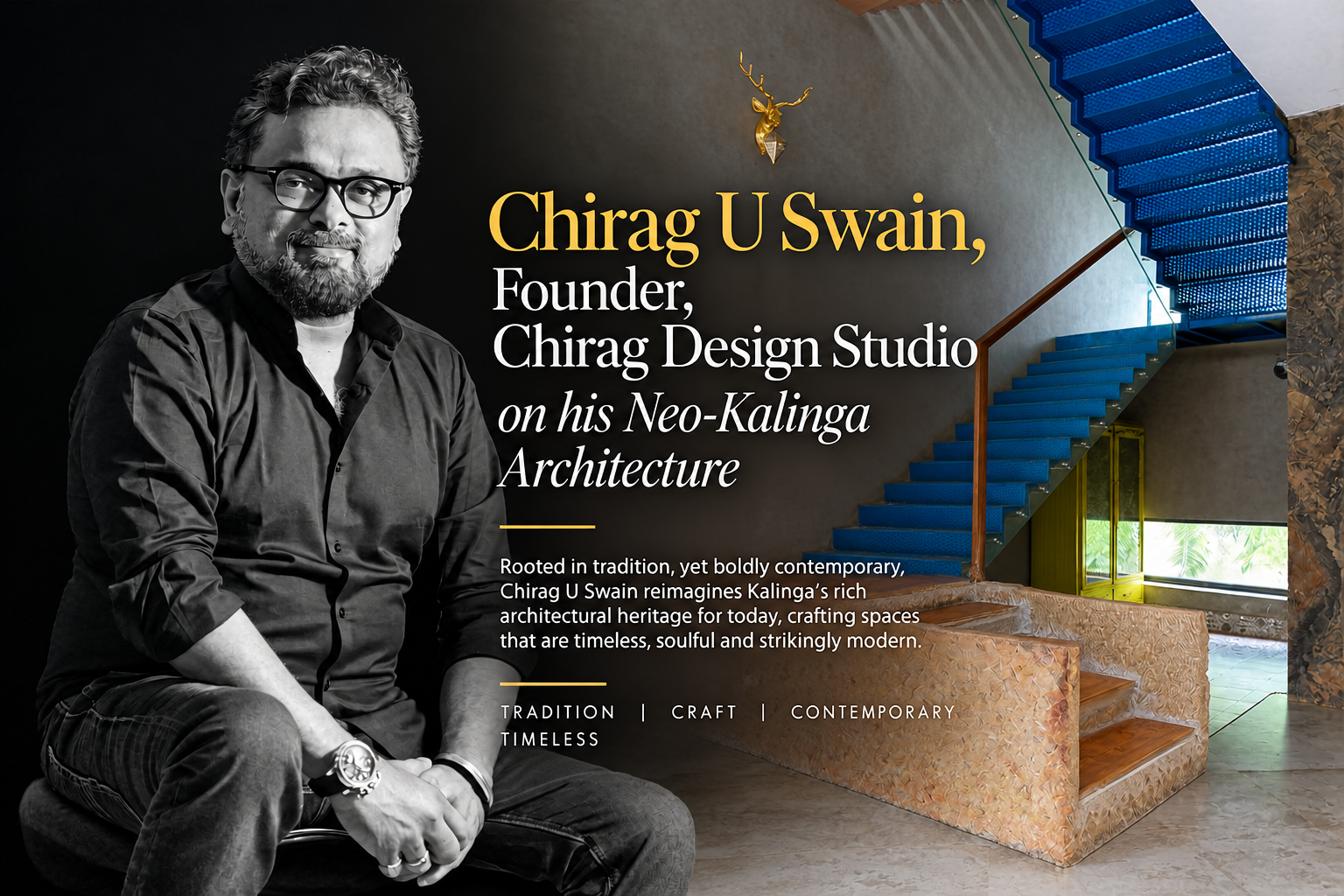
Chirag U Swain, Founder, Chirag Design Studio
What if the future of Indian luxury architecture doesn’t lie in looking just at the West… but in finally looking inward?
For years, luxury homes in India have borrowed their visual vocabulary from global design: Italian marble, European furniture, restrained palettes and the polished grammar of international minimalism. Chirag U Swain is challenging that formula. At the helm of Chirag Design Studio (CDS), the architect and designer is building something far more rooted, yet distinctly contemporary… a design language he calls Neo-Kalinga Architecture.
For Chirag, Neo-Kalinga is not about recreating Odisha’s past or turning heritage into ornament. It is about taking the essence of Kalinga architecture… the proportions, geometry, scale, colour, stonework, craftsmanship, indigenous materials and cultural memory, and translating it for the way we live today. His work makes a compelling case for a new kind of Indian luxury, one where exclusivity is not necessarily about imported labels or astronomical price tags, but about craftsmanship, provenance, individuality and the human hand.
And the results are striking. At Gyanaranjan Villa in Bhubaneswar, a monumental central staircase was sculpted from a single sandstone block by a craftsman rather than assembled by a mason. At Ripul’s Lounge, the electric palette and rhythm of Lord Jagannath’s Rath Yatra have been distilled into a sophisticated contemporary entertainment space. His design vocabulary has also travelled beyond private residences into public architecture, including the Babasaheb Ambedkar Bhubaneswar Bus Terminal, with projects such as Nandankanan Zoo and the Harekrushna Mahtab State Library further expanding the canvas.
What makes Chirag’s philosophy particularly intriguing is that he isn’t arguing against global luxury… he is arguing for an India confident enough to stand beside it with an identity of its own. As he puts it, the future of Indian design need not become less Indian to become more global. Perhaps, in fact, our individuality is precisely what can make us globally relevant.
In an exclusive conversation with Sumita Chakraborty, Founder & Editor-in-Chief, TheGlitz, Chirag U Swain, Founder of Chirag Design Studio, opens up about Neo-Kalinga Architecture, the evolving meaning of luxury, the power of indigenous craftsmanship and why the next great chapter of Indian design may be written in its regional roots.
Over To Chirag U Swain, Founder, Chirag Design Studio
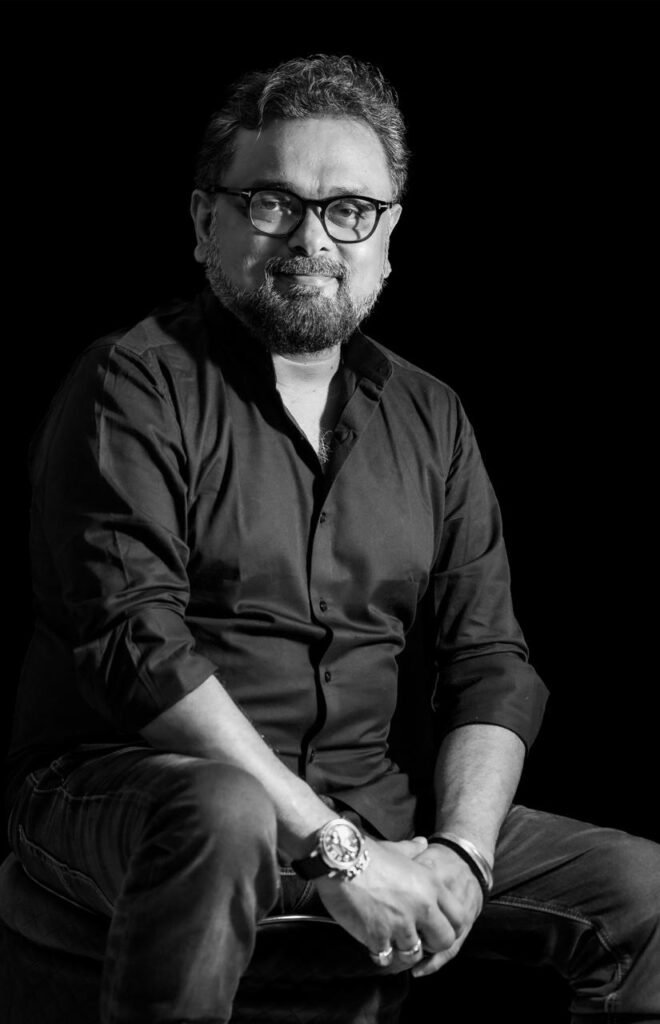
You have coined the term “Neo-Kalinga Architecture.” What exactly does it mean to you, and when did you realise that the architectural language of Odisha could become the foundation of a contemporary design movement?
For me, Neo-Kalinga is not about recreating traditional Kalinga architecture. It is about understanding its core principles—its form, shape, scale, proportions, colours, geometry, stonework, craftsmanship, locally available materials and, most importantly, the history and cultural context of Odisha—and translating them for the way we live today.
I began to see its potential when I realised that Odisha has an incredibly rich architectural identity, but we rarely interpret it in a contemporary way. We either preserve it as heritage or reproduce it quite literally. I felt there was an important space in between.
Neo-Kalinga came from that thought: Can we create something that is unmistakably rooted in Odisha, yet completely relevant to the present?
That is the direction we are trying to build through our work.
Luxury homes today often gravitate towards global minimalism. You are doing almost the opposite — bringing temple carving, hand-chiselled stone, indigenous craft and festival colours into contemporary spaces. Why did you feel India’s luxury architecture needed to look back before it could move forward?
For a long time, luxury in India was often associated with something imported—Italian marble, European furniture or an international design language. All of that is beautiful, but somewhere along the way, I felt we were losing the confidence to tell our own stories.
India has extraordinary materials, craftsmen and architectural traditions. Looking back does not mean becoming traditional. The real challenge is to understand that knowledge and reinterpret it in a way that feels contemporary.
For example, we may place a hand-carved sandstone center table beside a very clean modern sofa, and introduce subtle Ikat detailing through the upholstery. Or we may take a traditional pattern and simplify it into a much more refined architectural detail. For us, the balance is very important—it should feel rooted, but never overly literal.
For me, the future of Indian luxury is not about rejecting global design. It is about being confident enough to stand alongside it with an identity of our own.
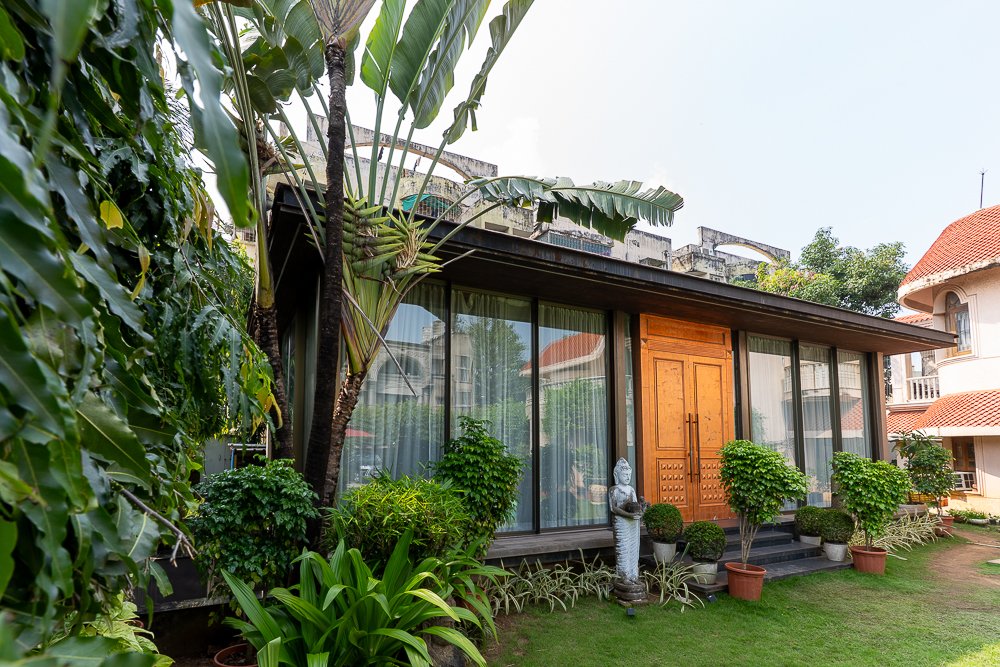
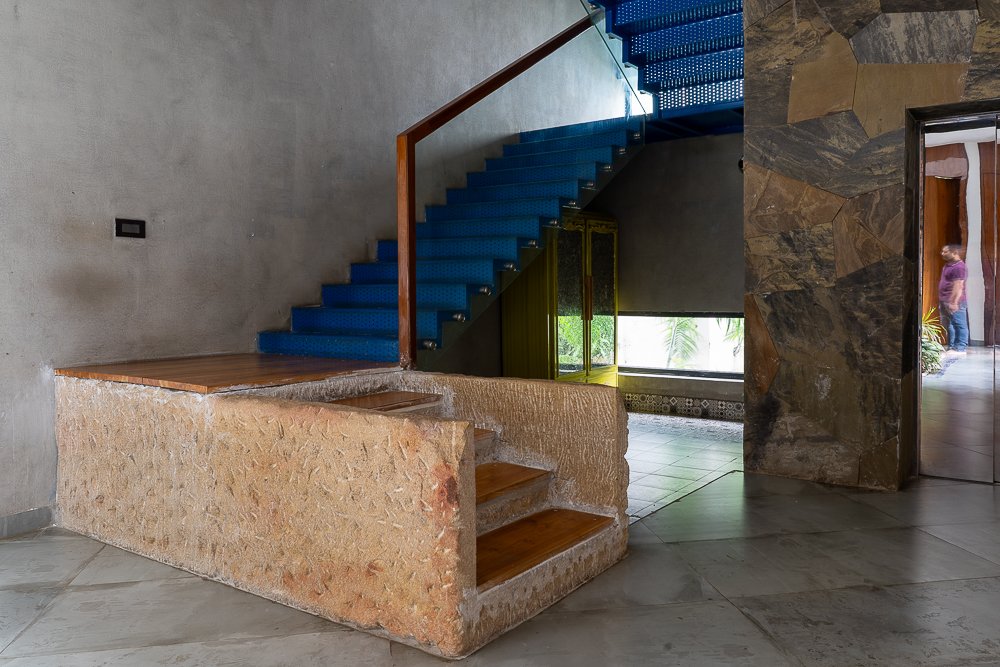
Take us inside Gyanaranjan Villa. The central staircase was hand-carved from a single sandstone block by a sculptor rather than constructed by a mason. What was the thinking behind creating such an extraordinary piece of craftsmanship and what does it tell us about how you define luxury?
The staircase was conceived as more than a functional element. We wanted it to feel almost like a sculpture occupying the heart of the house.
So instead of treating it as something assembled on site, we approached it as a piece of craftsmanship. A sculptor worked on the sandstone, and that completely changed the character of the element. You can see the human hand in it.
That, for me, is luxury.
Luxury is not necessarily about how expensive something is. It is about the time, thought, skill and human effort behind it. When somebody spends weeks or months shaping something specifically for one space, it develops a character that a mass-produced element simply cannot have.
The imperfections and the marks of the craftsman actually become part of its beauty.
At Ripul’s Lounge, you translated the colours of Lord Jagannath’s Rath Yatra into a private entertainment space. How do you transform something as culturally specific and emotionally charged as a festival into a sophisticated contemporary design language without turning it into mere decoration?
With Rath Yatra being one of the world’s most recognised and extraordinary public festivals, and such a deeply emotional part of Odisha’s cultural identity, we were interested in capturing its vibe—the energy, colours, rhythm, layering, movement and sense of celebration—not in placing obvious religious symbols throughout the space.
We extracted a colour palette from the festival and introduced it in a controlled way through materials, upholstery, artwork and smaller architectural details, while keeping the overall space contemporary and refined.
That distinction is very important to us. Culture should influence the design; it should not feel like decoration added on top of it.
If you understand the underlying character and vibe of something, you can reinterpret it without directly reproducing it. Ideally, someone from Odisha should feel a sense of familiarity in the space even before they consciously understand where that feeling is coming from.
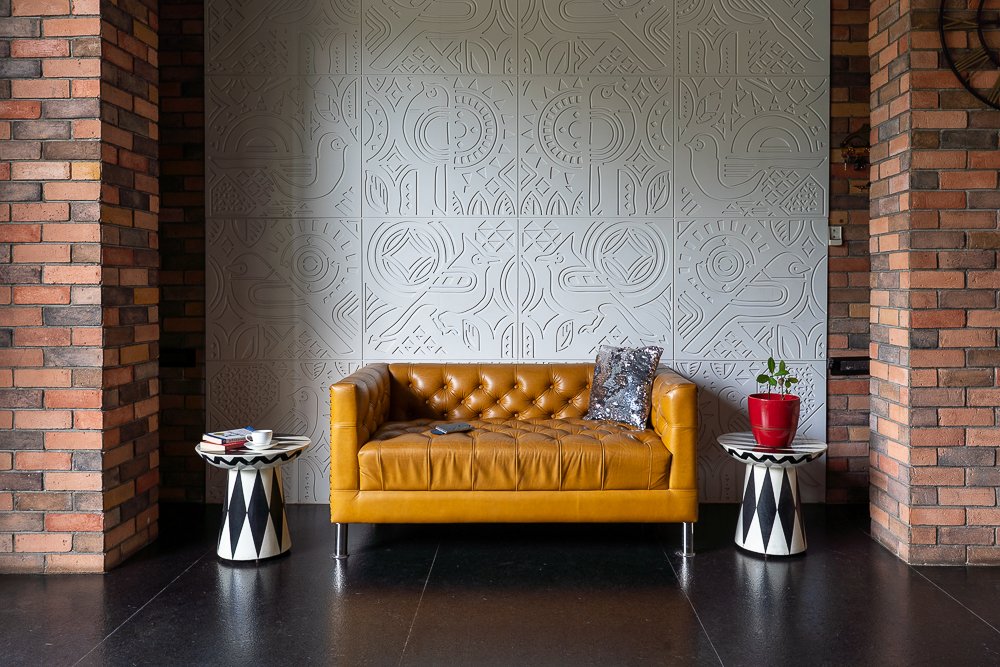
You work with HNI and industrialist families who could essentially commission any design language from anywhere in the world. What are discerning private clients in India asking for today — and has the meaning of luxury itself changed for them?
Definitely.
Clients are far more exposed today. They travel, they understand international design, and they have access to almost every global luxury brand. Because of that, simply using an expensive material or imported furniture is no longer enough.
Increasingly, they want homes that feel personal.
They want something that reflects their family, where they come from, their art, their travels and sometimes even memories from their childhood.
So the conversation around luxury is changing. Exclusivity today can come from something being specially made, locally crafted and impossible to replicate, rather than simply being expensive.
For many of our clients, the question has moved from “What brand is this?” to “What is the story behind this?”
I think that is a very positive shift.
You have moved from private residences and entertainment spaces into major public projects, including the Babasaheb Ambedkar Bhubaneswar Bus Terminal, Nandankanan Zoo and the Harekrushna Mahtab State Library. How different is it designing for the public from designing for an HNI family — and what responsibility comes with bringing your design philosophy into public spaces?
When we design public spaces, our responsibility towards the project changes completely.
In a private residence, you are designing very specifically around one family—their habits, preferences and lifestyle. A public project, on the other hand, belongs to thousands of people from very different backgrounds, so the way we think about the space has to change.
Functionality, durability, maintenance, accessibility and movement become extremely important. But at the same time, public architecture also has a much larger opportunity to create identity and a sense of place.
A bus terminal, a library or a zoo should not feel like it could have been built anywhere in the world. It should have some relationship with the city, the region and the people who use it.
The challenge is to bring that regional character into the project without compromising functionality, and without turning the architecture into a replica of something historical.
For me, if people can use a completely contemporary public building and still feel that it belongs to Odisha, then the architecture has achieved something meaningful.
If Neo-Kalinga is ultimately your attempt to give Odisha a contemporary architectural voice, where do you see it going next? Do you see Chirag Design Studio building not just projects, but an architectural vocabulary that could put Odisha — and Indian regional design — firmly on the global luxury map?
Yes, I sincerely believe this can happen, but it has to happen organically.
I see Neo-Kalinga as the beginning of a much larger idea—what I would call a kind of Neo-Bharat design language, where India’s regional identities begin to find a confident place in contemporary luxury architecture.
I don’t want Neo-Kalinga to become a fixed style where every project has the same arches, carvings or motifs. The moment that happens, it becomes formulaic. I would rather see it develop as a vocabulary—a way of thinking about materials, craftsmanship, proportion, landscape, colour, history and culture that can keep evolving.
There is enormous design intelligence within India’s regional traditions. Odisha is the landscape we understand most closely, so that is where our exploration began. But now, we also want to go deeper into other regional traditions—to understand their craftsmanship, materials, art forms and architectural thinking, and reinterpret them in a contemporary way.
I genuinely believe the future skyline of Indian architecture will have much more regionalism embedded within it—not as decoration, but as part of its identity. The same will happen with our interiors. They will become more connected to nature, local materials, craftsmanship and colour.
This is where our history, art and craft become extremely important. India has such a rich architectural and visual vocabulary that we should not be afraid to express it boldly.
For a long time, global luxury has been dominated by a more restrained and monochrome language. India has the opportunity to offer something different—through its richness of colour, craftsmanship, materiality, history and cultural depth.
The larger idea is simple: Indian contemporary architecture does not have to become less Indian in order to become more global. In fact, I believe our individuality is what can make us globally relevant.
If we can create spaces that are deeply rooted in where they come from, while still meeting the highest standards of contemporary architecture and luxury, I believe Indian design can stand at the forefront of global luxury rather than simply follow it.
I once came across a line that stayed with me: “Why do we always look towards the West when the sun rises in the East?”
For me, that thought captures where we want to take the studio.
TheGlitz Take
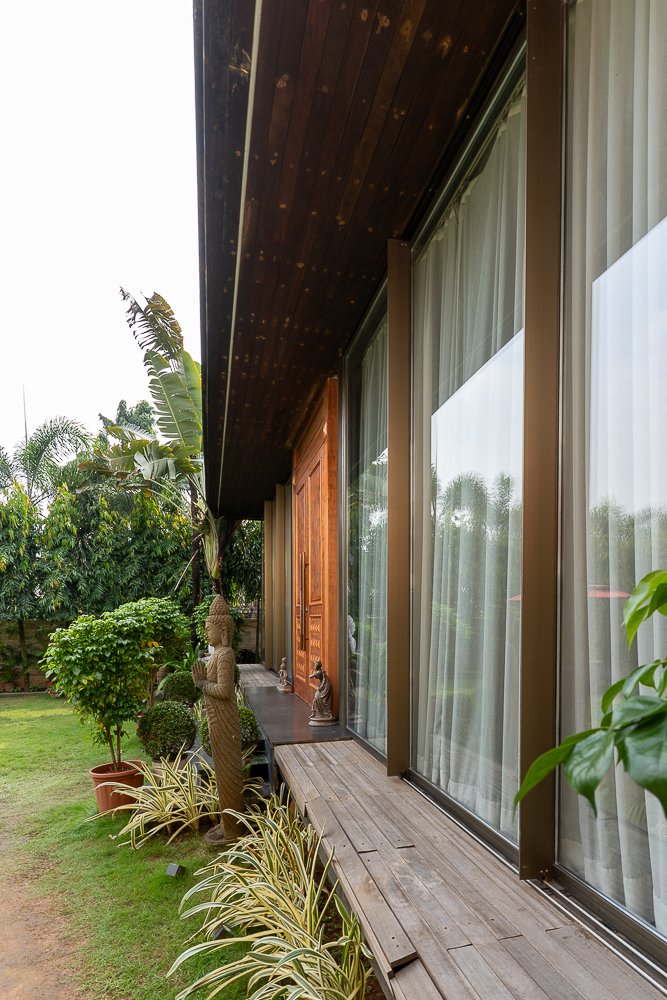
Luxury doesn’t need to shout. It needs to mean something. Chirag U Swain’s Neo-Kalinga philosophy lands at a time when Indian luxury architecture risks becoming a glossy remix of global trends. His work makes a more provocative point: the ultimate luxury may be having an identity no one else can replicate.
A hand-chiselled staircase, a colour drawn from Rath Yatra, a material carrying the memory of a region… these aren’t decorative flourishes. They are design with a sense of place. And that is where Indian luxury gets interesting: not when it imitates the world, but when it has the confidence to show the world what is uniquely ours.
TheGlitz verdict? The next big thing in Indian luxury may not be more minimal, more maximal or more international. It may simply be more Indian.