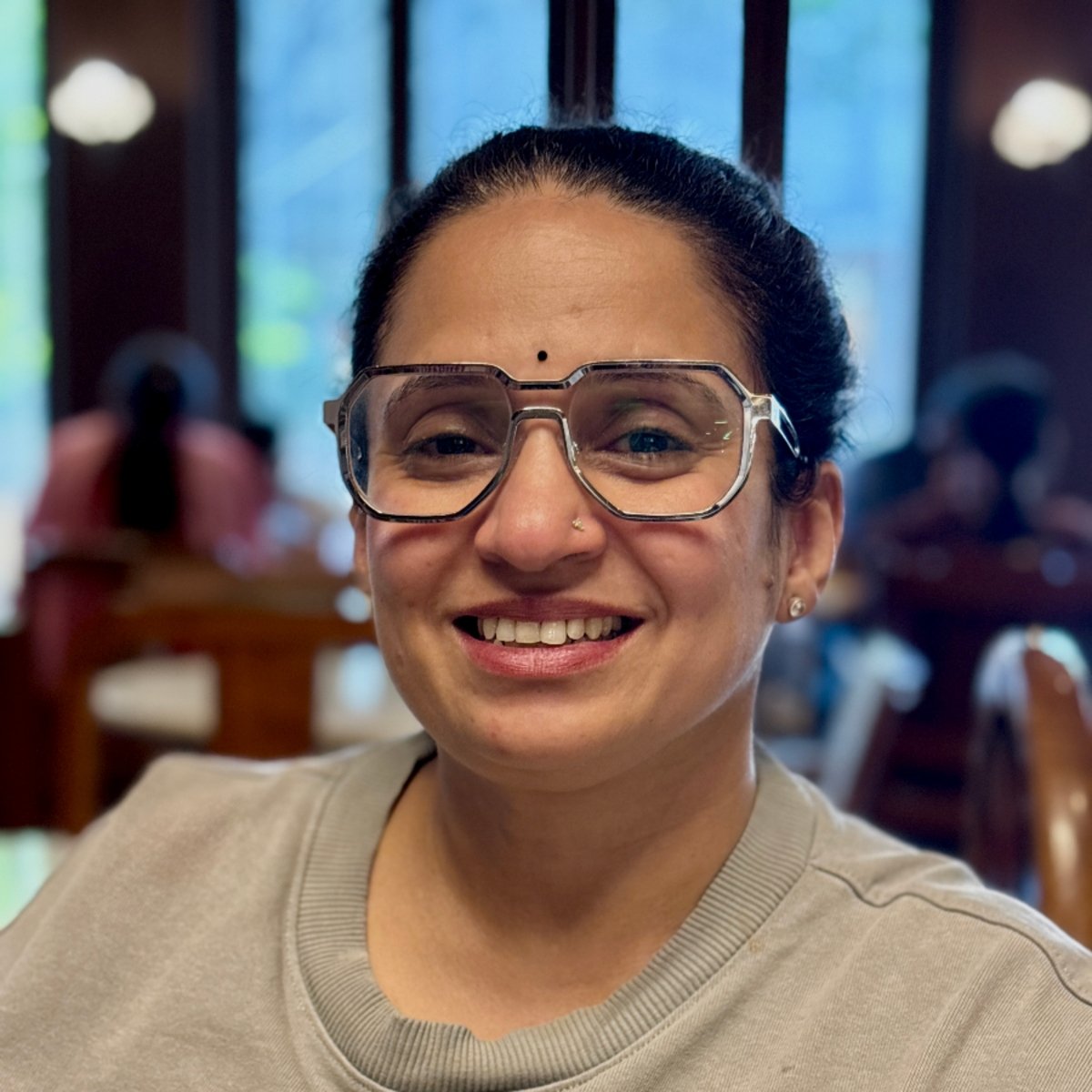
Eatinn’ Love Trattoria is a vegetarian Italian restaurant in Jayanagar, Bengaluru, and its founder, Niharika Peri, came to the kitchen by a longer road than most.
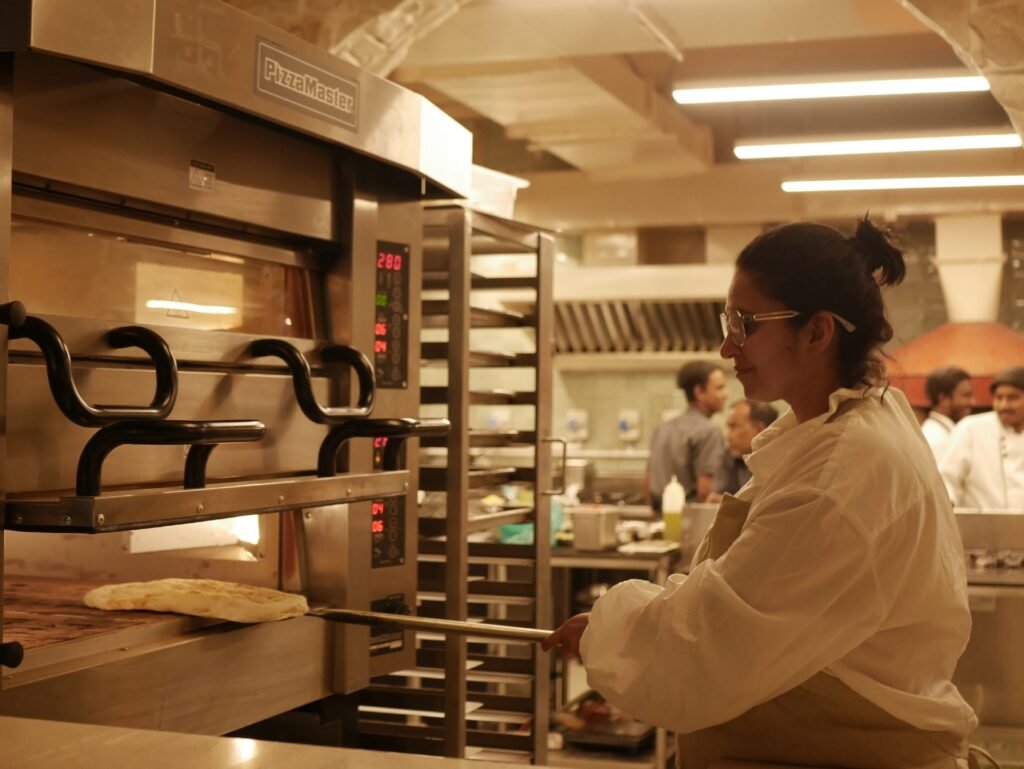
She did not begin in a kitchen. She began in an editor’s chair at Arts Illustrated in Chennai, where the work was deciding, issue after issue, what deserved a reader’s attention. After moving to Bengaluru, she started selling freshly made batters, which is a modest way to discover that people will happily pay you to feed them.
Batter led to bread, bread to fermentation, and fermentation to pizza. She learnt pizza-making from Chef Antonio in Pondicherry and sourdough from Daniel at Bread & Chocolate, and she speaks respectfully of both. She then spent years working out what to keep from them and what to change.
In 2018 she opened Eatinn’ Love on Sarjapur Road with a plain aim: vegetarian Italian food made properly, without compromise on ingredients, technique or flavour. A franchise in Taiwan followed, and later a Jayanagar branch. The restaurant is now a trattoria, and Pala Romana, the Roman-style pizza, marks its next chapter.
Her cooking is Italian in method and shaped by the Andhra food she grew up with, and she believes the two can share a table. There is also a childhood flavour she has spent years trying to recreate, without success so far. She hopes to build more around Pala Romana and to make room for teaching and for new food entrepreneurs.
In her words: “I don’t just cook food. I create reasons for people to come to the table.”
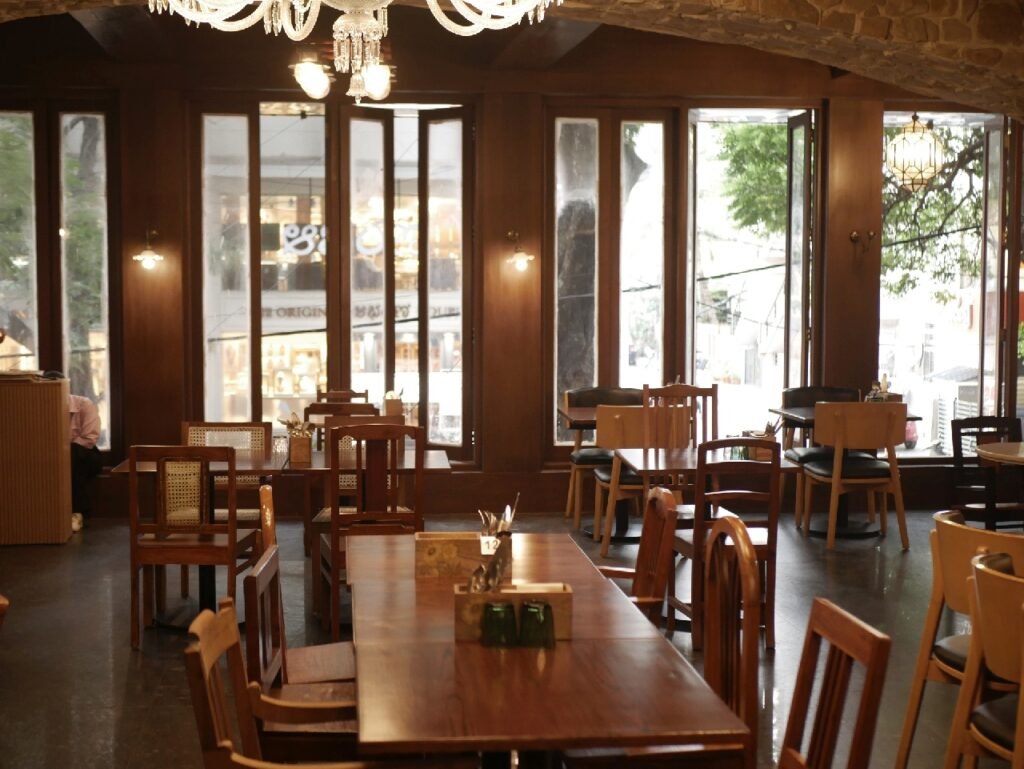
Rajeev Mokashi sat down with Niharika to hear how it all began, starting with the name on the door.
Eatinn’ Love is a name people remember. How did the name come about, and why the extra “n” and the apostrophe?
We originally started as Eating Love. The name came quite naturally to me because, for me, feeding people has always been an expression of love.
In Indian homes, that’s how we show affection, isn’t it? We feed people. And then we feed them a little more. There’s always that extra helping, that insistence that you eat something more. That’s how I understand love, and that’s what I wanted the restaurant to represent.
The extra “n” and the apostrophe came later, for numerological reasons.
We added Trattoria because the restaurant itself had evolved. We began with sourdough Neapolitan pizzas, but over time, I wanted to create something more expansive: a small, warm, welcoming place where people could come and eat every day.
A trattoria, to me, represents that kind of comfort. Today, our focus extends beyond pizza to vegetarian Roman cuisine, while keeping the same philosophy of feeding people with love.
You edited an arts magazine before you cooked professionally. Does the editor in you still show up in the kitchen?
Oh, absolutely. The editor in me is very much alive in my kitchen, every single day. When I was editing Arts Illustrated, which was a bimonthly magazine, every two months I had to think of something interesting, something creative, and most importantly, who the audience was.
I think that’s a question every artist or performer must ask: Who am I creating this for?
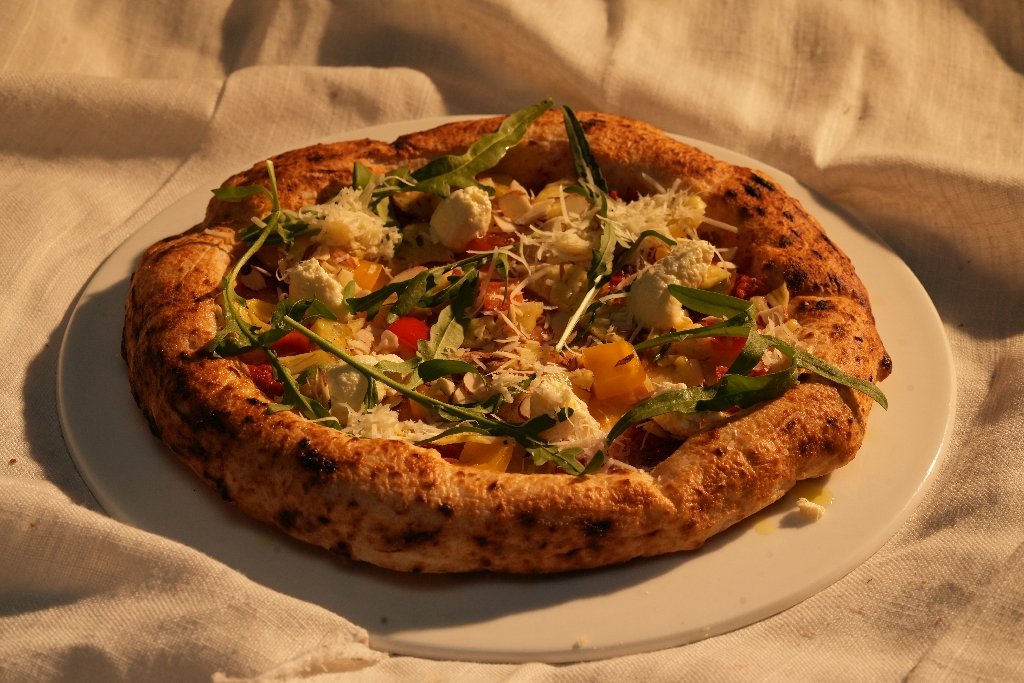
When I started making pizzas, I found myself asking exactly the same question. The precision, the colours, the combinations, the visual alignment, all of that comes from my years working with art and design. I pay a lot of attention to how my pizzas look. You’ll notice plenty of greens, different colours and carefully considered combinations.
For me, the visual experience matters enormously. A dish should appeal to the eyes first, and then, of course, the flavours must live up to that expectation.
I don’t think I ever stopped being an editor. I simply found a different medium.
Chef Antonio and Daniel each taught you something different. What did each give you, and what did you quietly decide not to copy?
Daniel taught me precision and discipline. Antonio taught me something equally important: that making pizza need not be complicated. But I also realised quite early that I didn’t necessarily want to follow every recipe exactly as I was taught.
Take tomato sauce, for instance. I was taught a method where onion and garlic were first fried in oil, followed by tomatoes, and then everything was cooked together. Personally, I don’t enjoy the lingering flavours of cooked onion and garlic, particularly after a few hours. I find that they can overpower the freshness of the tomatoes and make it difficult to appreciate the basil and olive oil.
So I decided to simplify it completely.
My tomato sauce is just tomatoes, fresh basil, extra virgin olive oil, salt, pepper and a little sugar. No onion, no garlic, and no cooking. It’s simpler, fresher, and allows the ingredients to speak for themselves. My caramelised onion recipe is also very different from what I was taught, as is my dough.
I would say nearly 90 percent of my recipes have evolved from my own experiments, ideas and inspirations rather than being direct reproductions of something I learnt. I respect what my teachers gave me enormously. They taught me the foundations. But I think it’s important to eventually develop your own understanding of what you’re cooking.
At what point did the Neapolitan pizza stop being something you were taught and become yours?
I think it took about three years.
During those first three years, I was constantly listening to my guests, observing how they responded to the pizzas, and experimenting with the dough and ingredients. One of my biggest concerns was finding a balance between lightness and fibre.
Traditional Neapolitan pizza is often made using refined flour, which has relatively little fibre. On the other hand, when you make sourdough using a high proportion of whole wheat flour, the result can become quite dense.
I wanted to find a middle ground.
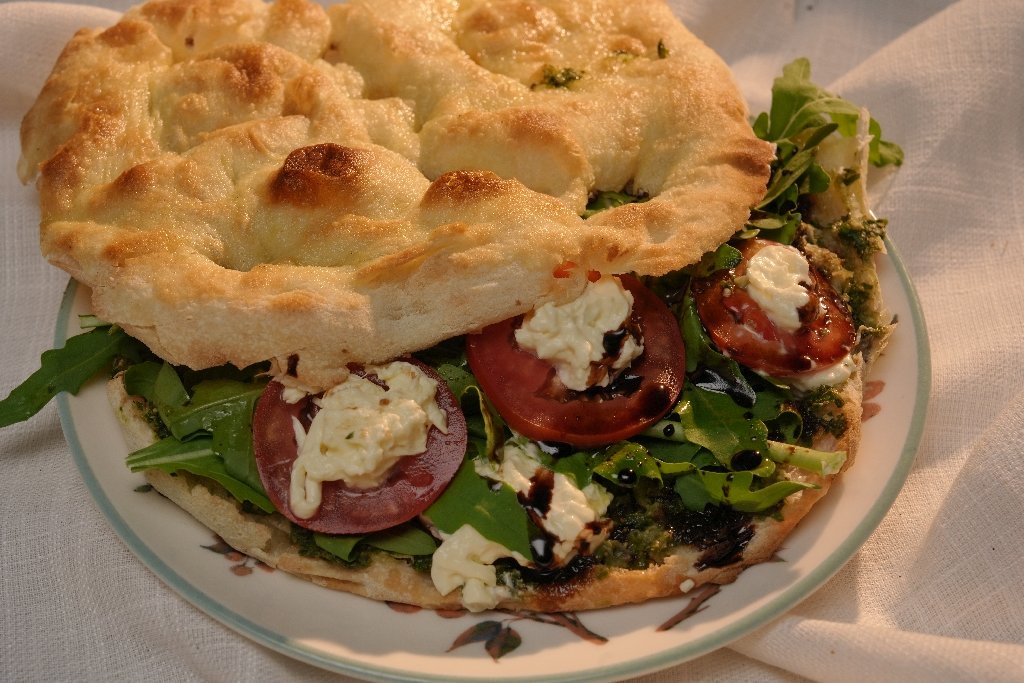
Eventually, I developed my own dough recipe with measured fibre and 70 percent hydration. That was an important moment for me because I felt I had found a balance that worked for the kind of pizza I wanted to serve. The toppings evolved too.
Many of my flavour combinations are inspired by my childhood, my regional food memories, the chillies and spices I grew up with. But I never wanted to move so far away from Italian cuisine that the original dish lost its identity. I wanted to respect the Italian classics while bringing in different cheeses, seasonal ingredients and flavours that felt natural to me.
Another important decision was freshness. I didn’t want a kitchen where sauces and preparations were made once a week, frozen or stored for days, and repeatedly used. I wanted recipes that were practical enough to prepare fresh, without unnecessary complexity.
Once all of these things came together—the dough, the flavour combinations, the ingredients and the way we worked in the kitchen—I felt that these were no longer simply Neapolitan pizzas I had learnt to make.
They had become Eatinn’ Love pizzas.
Every sourdough baker has a disaster story. What’s yours?
Oh, I certainly have one!
When I first learnt sourdough from Chef Daniel in Pondicherry, he gave me some of his starter to take back to Bengaluru. I brought it home very carefully and followed every instruction he had given me. At every stage of the fermentation, I would take pictures and send them to Daniel.
And he would reply, “Oh, beautifully risen! Beautifully done!”
Everything seemed to be going perfectly. Until I tried making my first sourdough pizza ball. I think I had made a mistake somewhere in my measurements and calculations, because the dough was so difficult to handle that I couldn’t even lift it properly.
I couldn’t understand what had gone wrong. So I thought, perhaps adding more flour would solve the problem.
Well, that made things even worse! The dough became brittle and started breaking apart.
I was completely confused. Here I was, having learnt everything properly in Pondicherry, having made the dough successfully in front of Daniel, and now I couldn’t even get a pizza ball right in my own kitchen.
Daniel was trying to help me figure it out through the photographs I kept sending him.
But the learning process was far from over. It took me more than six months to understand the starter’s pH, the fermentation and the consistency I needed. Sometimes the dough wouldn’t rise at all. Sometimes it would rise too much and then collapse or break.
And to make matters worse, I eventually ruined the original starter Daniel had given me! I actually had to travel all the way back to Pondicherry to get another starter from him.
So yes, that was definitely my sourdough disaster. But looking back, I think those six months were among the most important parts of my learning. They forced me to understand fermentation for myself, rather than simply follow instructions. And that gave me a foundation I still rely on today.
What is the one flavour from your childhood you’ve never managed to put on a plate here?
Bonny Mix!
I don’t know how many people remember it, but when I was a child, there was this porridge called Bonny Mix. It came in two flavours, chocolate and vanilla. Vanilla was always my favourite, but strangely, it’s the chocolate Bonny Mix that has stayed in my memory.
I can still remember its taste and its aroma so clearly. Over the years, I’ve made all kinds of desserts and even sweet pizzas, and I’ve tried to recreate that particular flavour. But somehow, I’ve never been able to get it quite right.
It’s fascinating how a taste from childhood can stay with you for so many years, and yet be so difficult to reproduce. I still wish somebody would start making Bonny Mix again. I’d be very happy!
How did a Bengaluru pizzeria end up with a franchise in Taiwan?
It is a little unexpected, isn’t it?
The story is actually quite simple. There was a couple who were regular customers at my restaurant. The woman was Taiwanese and her partner was South African. They loved our pizzas and wanted to start a pizza business in Taiwan.
At that point, I wasn’t offering franchises, and even today, franchising isn’t something I’ve been actively pursuing. But they were genuinely interested in taking our pizzas there, and that’s how the conversation began.
What made Taiwan particularly interesting was its vegetarian food culture. There are Buddhist communities where vegetarian food is an important part of everyday life, and certain traditions avoid onion and garlic while still using ingredients like mushrooms. Taiwan also has a fascinating relationship with tofu and plant-based food. I felt there was a natural connection between those food traditions and what we were doing at Eatinn’ Love.
On a more personal level, I also associate Taiwan with a certain honesty and spirituality, qualities that I try to bring into my cooking. Perhaps that’s why our pizzas found their first international home there. But the simplest and most truthful answer is that they were my customers, they loved the food, and they wanted to take it home.
Of all the pizzas in Italy, what pulled you towards Pala Romana?
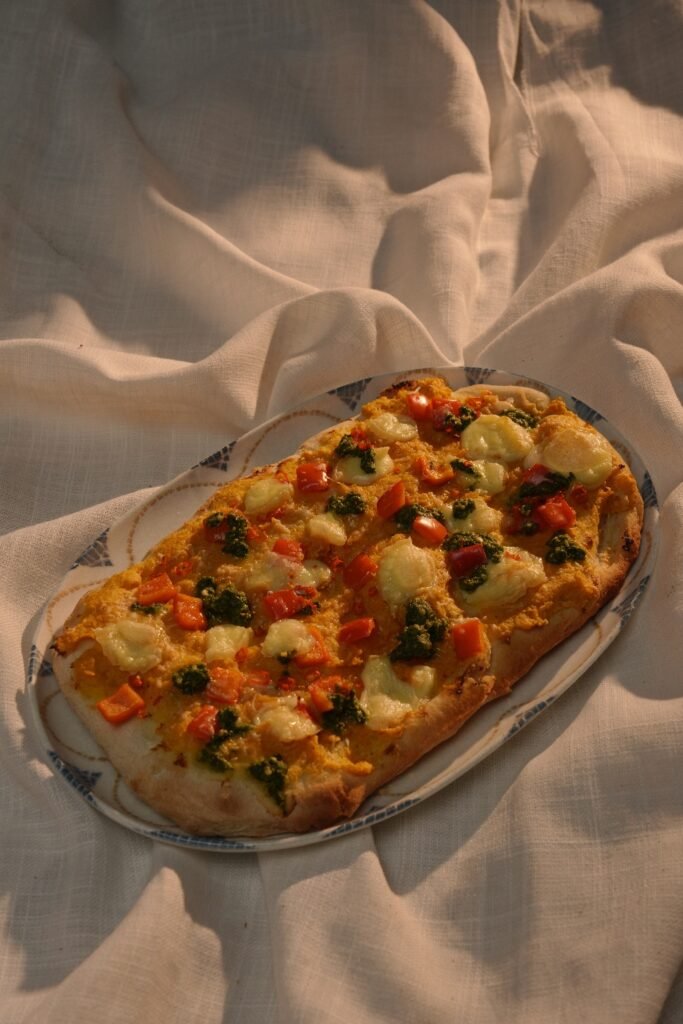
My first experience of Pala Romana was actually in Delhi, at AAHAR, where Chef Riccardo was making it during an event associated with Le 5 Stagioni flour and Saksham.
I remember taking my first bite, and it was quite extraordinary. The crust was beautifully crisp, but the moment I bit into it, it almost melted in my mouth. That contrast between the crispness and the lightness was something I hadn’t experienced quite like that before. I couldn’t forget it.
From that moment, I kept thinking, “I want to make Pala. I want to make Pala!” So I approached Chef Riccardo and asked if he could train us. He told me he wouldn’t have any time until August because he was travelling all over the world.
And I remember asking, “Can we do it in April?”
He said, “No, I really don’t have the time!”
But I was determined to learn. Eventually, things fell into place, and Riccardo came to Bengaluru and gave us the training we needed to make Pala Romana. For me, it began with that one unforgettable bite in Delhi.I had tasted something that surprised me, and I knew I wanted to understand how to make it myself.
Be honest: when you plate a dish, who are you plating for, the guest or the phone?
The guest. One hundred percent the guest!
In fact, I’m quite terrible at documenting my own food. Sometimes I’ll make something, and a few days later I’ll ask my staff, “Do you remember what I made the other day?”
Because I haven’t photographed it. I haven’t written it down. I haven’t posted it anywhere. Very often, I’m so involved in making the dish and serving it that taking out my phone to photograph it doesn’t even occur to me.
Of course, I care enormously about how the food looks. Presentation is very important to me. But that visual experience is for the person sitting at the table. It’s not created for a photograph. I want the guest to enjoy the dish when it’s fresh, at the moment it is meant to be eaten.
So yes, absolutely, I plate for the guest. Always.
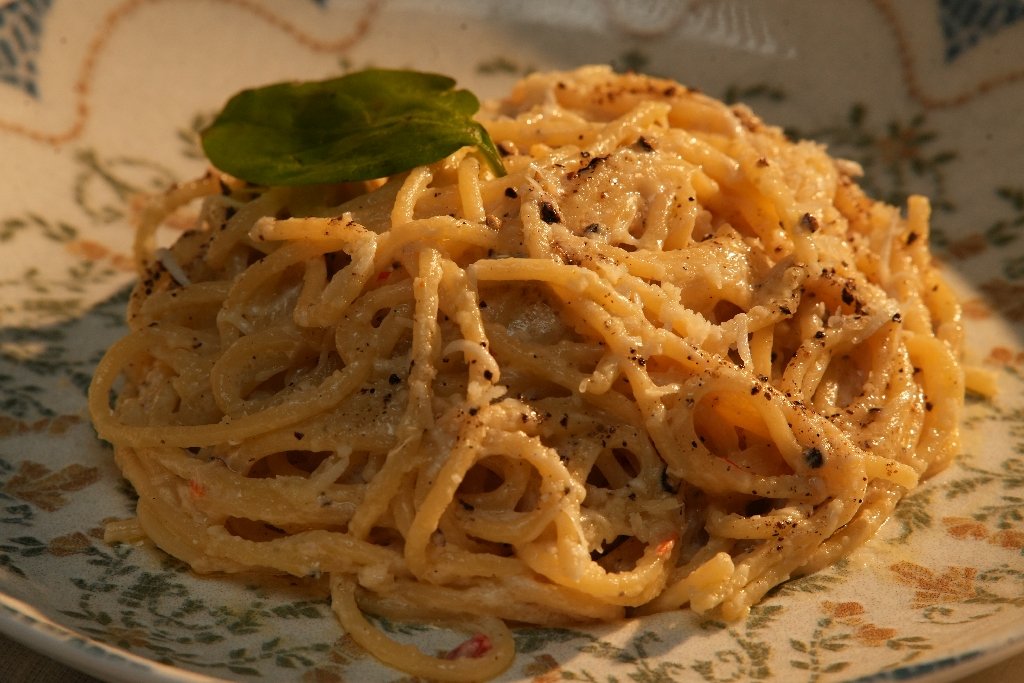
One order to understand you: what goes on the table, and what stays off it?
I would probably begin with something as simple as our bruschetta.
For me, that dish explains a lot about how I approach cooking. We don’t chop the tomatoes in the morning, mix everything together and leave it in the refrigerator until somebody orders it.
When the order comes in, that’s when we cut the cherry tomatoes, chop the Kalamata olives and basil, and combine everything with olive oil.
I want the guest to experience the freshness of those ingredients at that very moment.
The same philosophy applies to everything else. If something has been left uncovered, has been sitting for too long, or has lost its freshness and vibrancy, it doesn’t belong on my plate. I also believe in respecting classic recipes while allowing myself a little freedom.
Take Cacio e Pepe, for instance. It’s a beautiful Roman dish built around pasta, Pecorino Romano, black pepper and pasta water. I respect that simplicity enormously. But because I’m cooking in Bengaluru, for an Indian audience, I might introduce a very subtle touch of spice. Not enough to change the identity of the dish, but just enough to make it speak to the people I’m serving.
That’s how I approach Italian food. I don’t want to disrespect its traditions, but I also don’t want to cook without bringing something of myself into it.
So, what goes on the table?
Fresh ingredients, honest flavours, respect for tradition and a little bit of my own personality.
And what stays off it? Anything that has lost its freshness, anything unnecessarily complicated, and anything I wouldn’t be happy eating myself.
For more features like this, stay tuned to TheGlitz.