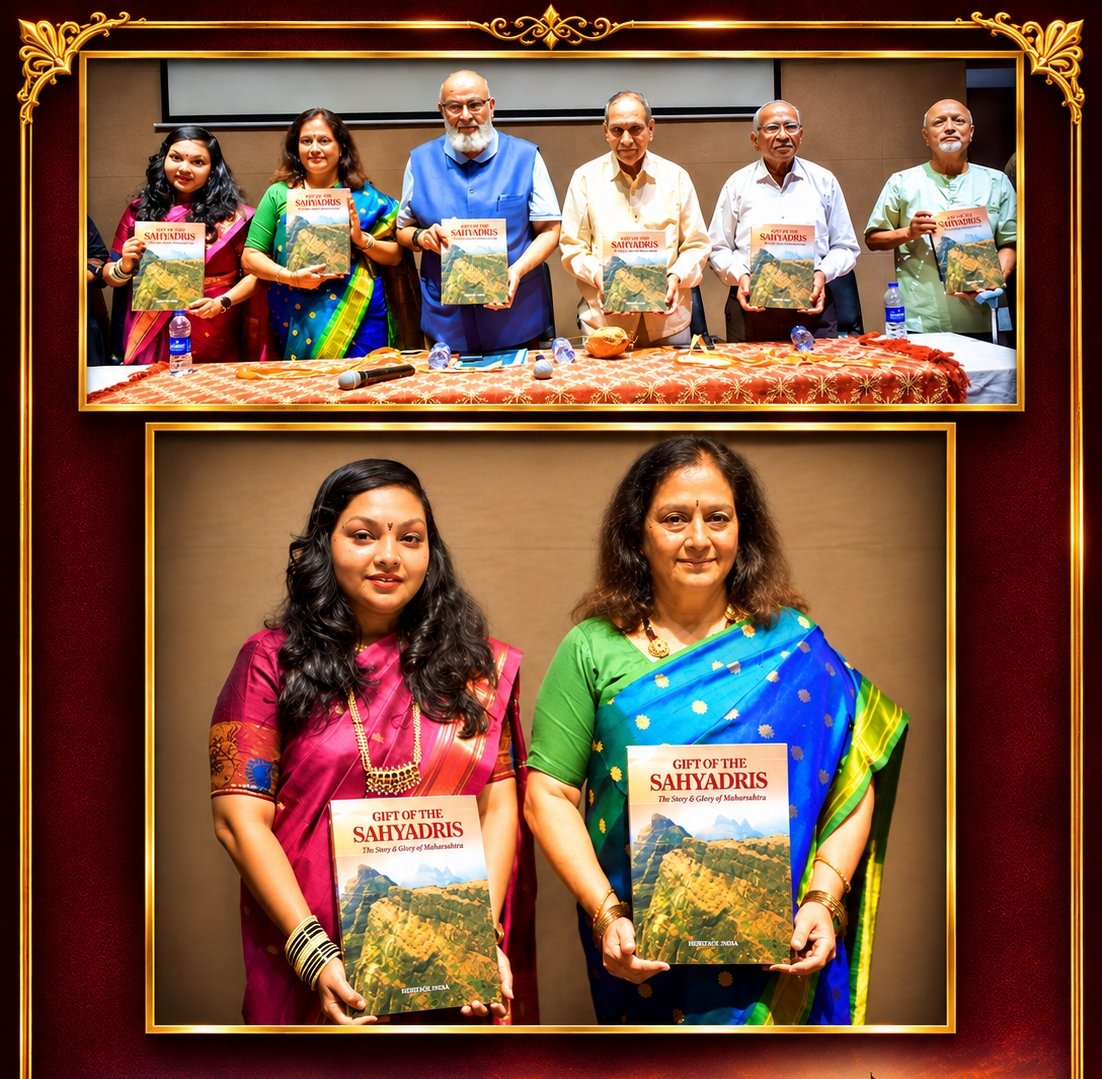
Gift of the Sahyadris: The Story and Glory of Maharashtra by Journalist and author Kalyani Sardesai
What do the ancient caves of Ajanta and Ellora, the mighty forts of Chhatrapati Shivaji Maharaj, the reform movements that reshaped society and the birth of modern Maharashtra have in common?
They are all part of an extraordinary story that deserves to be told, celebrated and passed down generations. And now, it has found a rather spectacular home between the covers of a lavish new coffee-table book Gift of the Sahyadris: The Story and Glory of Maharashtra unveiled by Dr Abhay Firodia. TheGlitz reports…
History, they say, is written by the victors. But sometimes, it is also written by those who believe that a civilisation’s greatest treasure is the story of where it came from. Enter Gift of the Sahyadris: The Story and Glory of Maharashtra, a magnificent 280-page coffee-table book by journalist and author Kalyani Sardesai that promises to take readers on an epic journey through the state’s fascinating past, from the dawn of civilisation to the formation of Maharashtra on May 1, 1960.
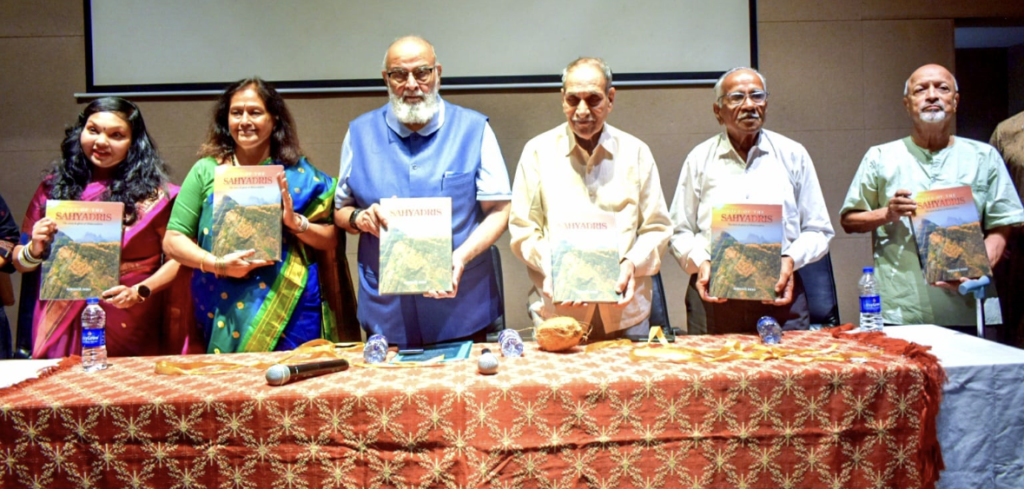
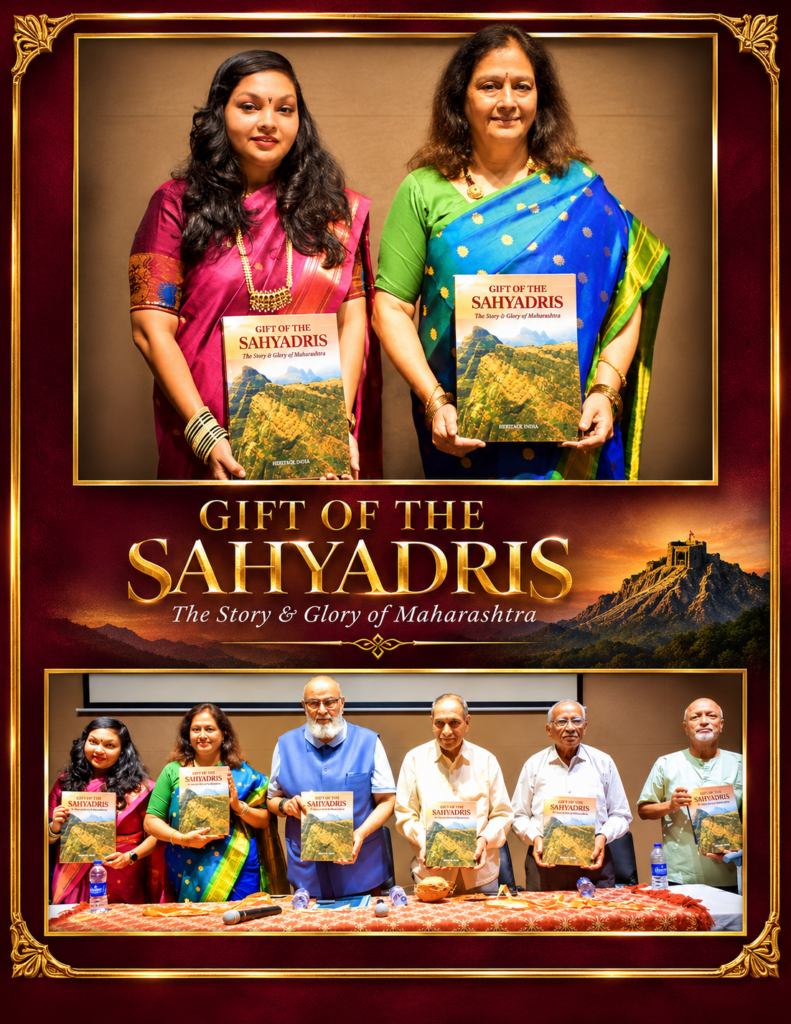
Unveiled by Dr Abhay Firodia, Chairman of Force Motors Ltd, the book was launched at a well-attended ceremony at the Navalmal Firodia Auditorium of the Bhandarkar Oriental Research Institute (BORI), Pune. Published by Heritage India Communications Pvt Ltd, the launch brought together distinguished historians, archaeologists, academics and cultural enthusiasts.
Dr Firodia, who also chairs BORI’s Regulating Council, was the Chief Guest. Eminent archaeologists and Indologists Dr G.B. Deglurkar, former Chancellor of Deccan College, Pune, and Dr A.P. Jamkhedkar, former Chairman of the Indian Council of Historical Research and currently Chancellor of the Sir JJ School of Art, Architecture and Design, Mumbai, graced the occasion as Guests of Honour.
More Than a Book, A Celebration of Maharashtra
At a time when Maharashtra’s heritage is receiving international recognition, the book arrives with impeccable timing. In 2025, twelve forts belonging to the Maratha Military Landscapes earned a place on UNESCO’s World Heritage List, joining the celebrated Ajanta and Ellora caves.
But Gift of the Sahyadris isn’t content with merely showcasing monuments and architectural marvels. It attempts something considerably more ambitious: telling the story of the people, ideas, movements and extraordinary events that shaped Maharashtra.
Speaking at the launch, Manjiri Khandekar, CEO of Heritage India, articulated the philosophy behind the publication.
“A society that does not know where it comes from cannot know where it is going. For nearly two decades, Heritage India has worked to give people that sense of rootedness, through our tours, our magazines and our books. We have always believed that history belongs not in locked archives but in living rooms, classrooms and everyday conversation.
“Our last work Punyakatha: Pune’s Story of a Million Years showed us how warmly readers respond when depth is matched by beauty. So, when Kalyani, the writer of Punyakatha, who has been writing for us for the last 12 years, proposed telling 2,000 years of Maharashtra’s story, there was no question of doing it in a small way. We decided to do it as a coffee-table book rigorous in its scholarship, generous in its visuals and a pleasure to hold.”
History With Drama, Poetry and Feeling
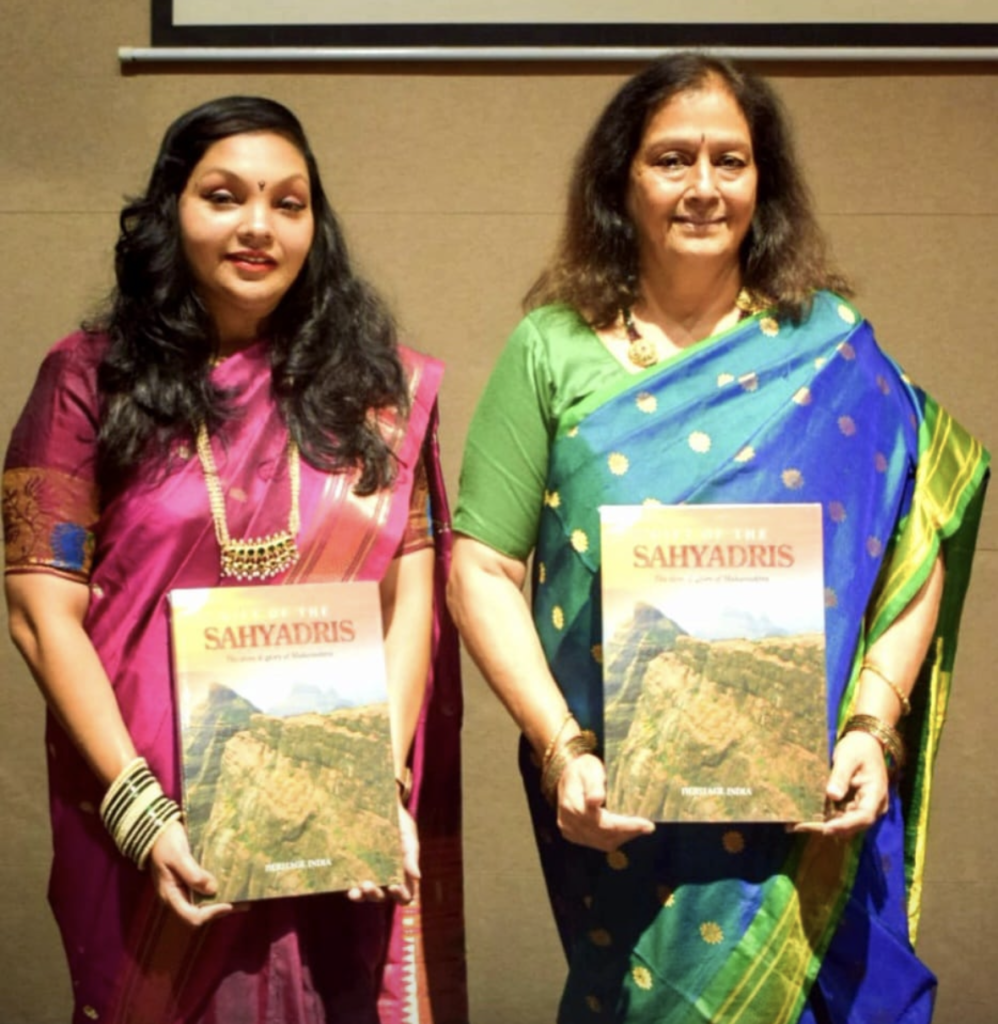
Journalist and author Kalyani Sardesai, who wrote and creatively visualised the book, wanted to take history out of academic corridors and bring it closer to ordinary readers.
“For too long, history has been treated as the property of specialists, shut away in footnotes and seminar rooms. But history is the story of the farmer and the soldier, the saint and the reformer, and the ordinary families whose choices, over centuries, shaped the world we live in.
“This book is our attempt to return that story to its rightful owners. We did not want to write one more textbook. We wanted to tell Maharashtra’s story the way it deserves to be told, with drama, poetry and feeling, without bending the facts. Thus, every page was researched, debated, rewritten and checked with scholars until we were sure it was both true and alive.”
Sardesai also emphasised Maharashtra’s distinctive cultural identity, describing it as a region that belongs neither to the North nor the South, but possesses a character, history and cultural vocabulary entirely its own.
The Sahyadris: Where Geography Meets Glory
At the heart of this sweeping narrative are the Sahyadris, the majestic mountain range that has shaped Maharashtra’s geography, culture and destiny.
Part of the Western Ghats, one of the world’s most biodiverse regions, the Sahyadris are far more than a picturesque backdrop. Their slopes capture the monsoon, nourish mighty rivers such as the Godavari, Krishna and Bhima, and provided the perfect setting for extraordinary rock-cut cave monasteries.
Centuries later, these very mountains became formidable natural bastions for Chhatrapati Shivaji Maharaj’s Swarajya. It is this fascinating relationship between landscape and history that gives the book much of its narrative richness.
Speaking at the launch, Dr Abhay Firodia offered an interesting perspective on the relationship between knowledge, commerce and prosperity.
“When we write about history, we must remember that it was not knowledge alone, but trade, that made India one of the world’s foremost economies for nearly 5,000 years. Right up to 1750, India’s per capita income was among the highest in the world, and trade had much to do with it. In the same way, Maharashtra’s prosperity today rests on industrialisation, enterprise and skill-building. Ultimately, knowledge and culture must be buoyed by trade and expansion.”
Dr G.B. Deglurkar praised Heritage India for its efforts to bring history to everyday readers, while Dr Arvind Jamkhedkar observed: “A book like this is essential to narrate Maharashtra’s journey to the common man.”
From Ancient Civilisations to a Modern State
The book takes readers through Maharashtra’s ancient, medieval and modern eras, beginning with prehistory and the Adivasis, the first people of the land.
It explores the state’s extraordinary caves and forts, the rise of Chhatrapati Shivaji Maharaj, the evolution and eventual decline of the Peshwai, and Maharashtra’s emergence as a centre of education, journalism, social reform, cosmopolitanism and innovation.
The narrative culminates with the Samyukta Maharashtra Movement and the creation of the state on May 1, 1960.
Adding scholarly depth is a research panel comprising historians Dr Ajit Apte, Prof. P.K. Ghanekar and Dr Manjiri Bhalerao. The publication is further enriched by illustrations from Rahul Deshpande, Anant Dere, Tejas Modak and Madhumita Shinde.
Designed for readers aged ten and above, this is a publication intended to travel beyond the coffee table. It is equally suited to family libraries, school collections and anyone with an interest in understanding Maharashtra’s extraordinary journey.
A Collector’s Edition With a Cultural Conscience
Priced at Rs 2,500, Gift of the Sahyadris: The Story and Glory of Maharashtra is positioned as a collector’s item and an especially meaningful festive gift. But its real value lies in its ambition to make history accessible, visually engaging and relevant to younger generations.
Book Details
- Title: Gift of the Sahyadris: The Story and Glory of Maharashtra
- Publisher: Heritage India Communications Pvt Ltd
- Pages: 280
- Price: Rs 2,500
TheGlitz Take
Let’s face it. We live in an age where attention spans are shrinking, history is often reduced to bite-sized social media trivia, and younger generations can identify a trending celebrity faster than they can identify the historical significance of the forts standing in their own backyard. Which is precisely why a coffee-table book like Gift of the Sahyadris: The Story and Glory of Maharashtra by Kalyani Sardesai matters.
This is not merely another handsome coffee-table book meant to occupy a place of honour in an affluent living room. It is an amazing attempt to reclaim history from the dusty shelves of academia and put it where it belongs: in the hands of people.
What makes the initiative particularly commendable is its ambition to combine scholarship with visual storytelling. Maharashtra’s legacy is far too magnificent to be confined to a few familiar chapters about the Marathas or a handful of celebrated monuments. Its story encompasses ancient civilisations, indigenous communities, trade, architecture, social reform, intellectual movements and the making of a modern state.
Our one strong opinion? If this beautifully produced coffee-table book can make a ten-year-old curious about Shivaji Maharaj, the Sahyadris, Ajanta or the Samyukta Maharashtra Movement, it has already achieved something remarkable.
After all, the greatest gift we can give the next generation isn’t just a legacy to inherit. It is the knowledge to understand it.