
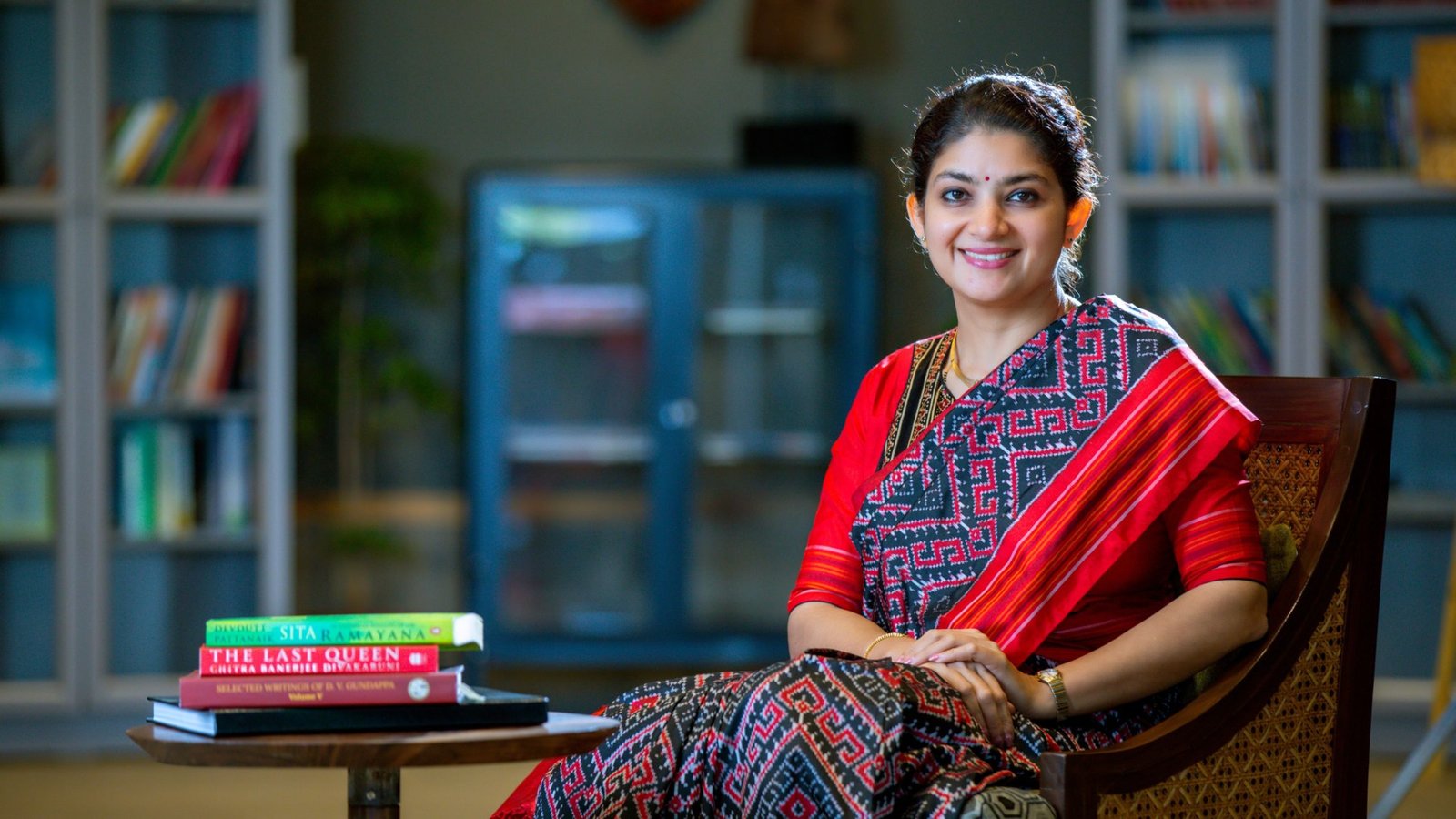
As director, Shraddha Amith is the key architect of Kshemavana’s strategy and success. leads the health and wellness evolution from the front. Driven and passionate about empowering and nurturing the leadership skills of rural women in Karnataka, her efforts have driven change in the villages by educating and uplifting women’s lives.
Shraddha Amith, director, is someone who has carved out a niche for herself by making her own decisions to get to where she is now. Shraddha, a focused, committed, and inspiring individual from Dharmasthala, is the daughter of Dr. D. Veerendra Heggade and Maatrushree Hemavathi V. Heggade. Shraddha has a Master’s degree in psychology, but she also has interests and skills in effective communication and organisation.
Before taking over Kshemavana to lead it entirely, Shraddha was an ardent social worker. Her eagerness and interest in the pursuit of manifesting a better world for rural women in Karnataka have driven positive transformation in the rural areas of the state. Over the years, through her work and contribution, Shraddha has continued to ensure sustainable development. She became a pioneer of progressive initiatives aiming at women’s empowerment through her ideas and activities, reflecting her true spirit in nature.
One among many other initiatives is Jnanavikasa, a YouTube channel she incepted under the guidance of Dr. D. Veerendra Heggade and Maatrushree Hemavathi V. Heggade. Shraddha is the director at Siri Gramodyoga Samsthe and the director of Jnanavikasa Jnanakendra Bangalore. Shraddha strongly believes in empowering women by nurturing their leadership skills, which, in the long run, becomes extremely crucial for economic productivity. Her spirit is best defined in the work of a passionate woman who, despite several obstacles, has redefined and transformed the lives of several other women.
When not at work, Shraddha loves reading, travelling, and has a keen interest in observing different cultures and traditions, which she brings back and implements the best of those elements in Dharmasthala for notable social impact. TheGlitz has more…
Your journey has had many momentous milestones. Could you tell us about the life-changing milestones that have moulded you into what you are today?
Certainly! Reflecting on my journey, there have been several pivotal milestones that have significantly shaped the person I am today. Each of these moments has contributed to my growth, resilience, and success.
My interest in the pursuit of manifesting a better world for rural women has driven positive transformation in the rural areas of the state. Be it Siri Gramodyoga Samsthe or Jnanavikasa Jnanakendra, I strongly believe in empowering women by nurturing their leadership skills, which in the long run will become extremely crucial for economic productivity.
At Kshemavana, I have been entrusted with leadership roles that have allowed me to inspire and empower others. Whether leading teams, mentoring colleagues, or advocating for causes I believe in, these opportunities have enabled me to make a meaningful impact and foster positive change.
What are the setbacks you have faced? How did you tackle these setbacks or challenges? And what lesson have you learned from it?
As a woman entrepreneur, navigating the path to success has involved overcoming various setbacks and challenges. Each of these experiences, while difficult at the time, has offered valuable lessons and opportunities for growth. Here are some of the setbacks I’ve faced, the strategies I used to tackle them, and the lessons they’ve taught me:
Building the Right Team: Finding individuals who not only possessed the right skills but also shared the vision and culture I wanted to build for my company was another significant challenge.
Lesson Learned: The right team is not just about skill sets; it’s about shared values and vision. Invest in people who believe in the journey as much as you do.
Work-Life Balance: As my business grew, so did the demands on my time and energy, making it increasingly challenging to maintain a healthy work-life balance.
Lesson Learned: Achieving work-life balance is an ongoing process that requires setting clear boundaries and trusting your team. It’s essential for long-term success and personal well-being.
On a concluding note, each setback has been a stepping stone to greater resilience and insight. The key lessons revolve around persistence, flexibility, the importance of a shared vision, and the crucial balance between professional and personal life. Embracing these challenges as opportunities for growth has been instrumental in shaping my journey as a female leader.
When you look back, what are the three qualities in you that have helped you become what you are today?
Patience, Modesty, Passion

Who are the people who have been the wind behind your wings?
The people who have been the wind beneath my wings, offering unconditional support, guidance, and encouragement throughout my journey, are undoubtedly my parents and my husband. Each of them has played a unique and pivotal role in shaping the person I am today and in contributing to my successes, both personally and professionally.
Lastly, if there was a quote to define you, what would it be?
Be the change that you wish to see in the world – MK Gandhi