
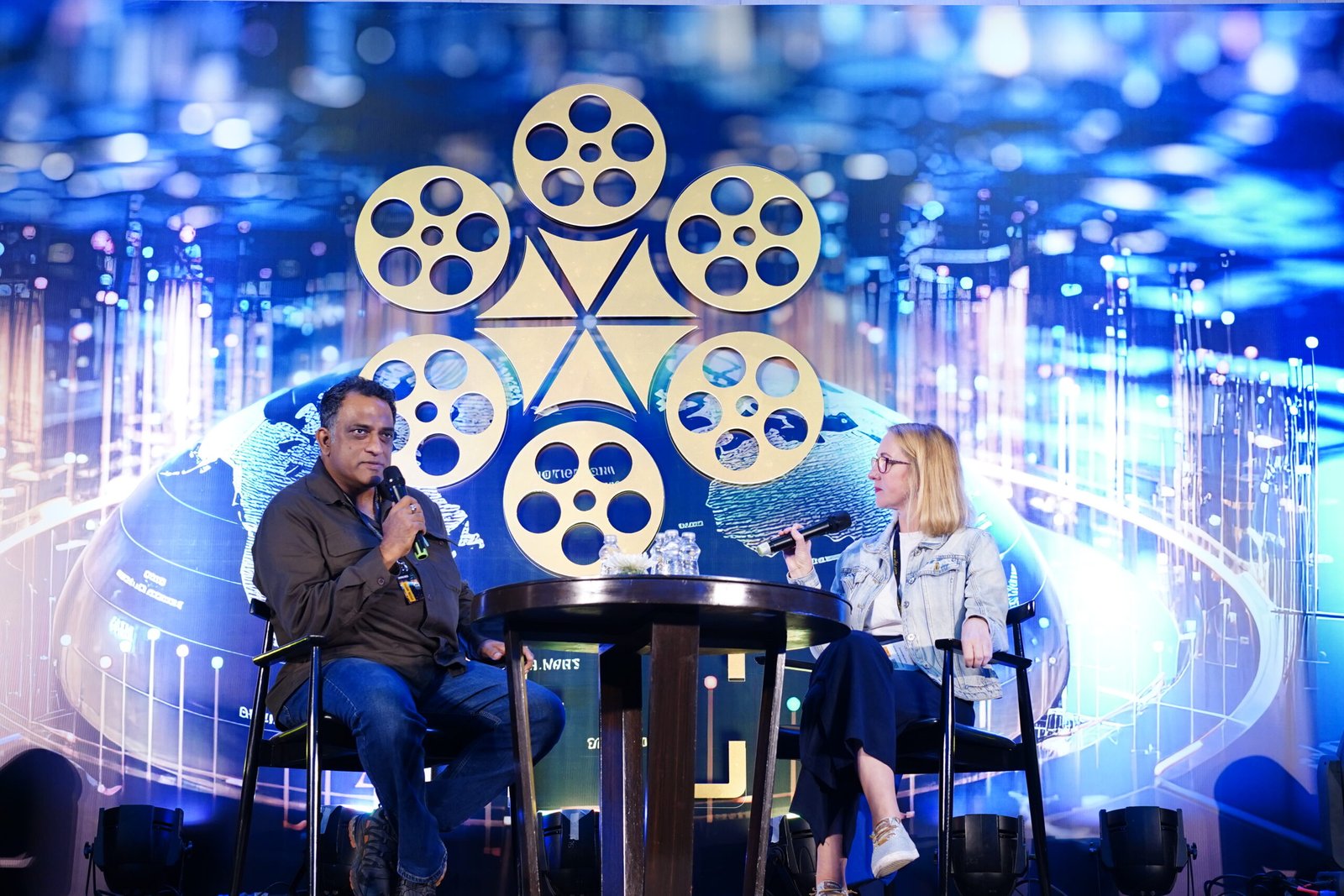
Anurag Basu’s journey through the ever-evolving landscape of storytelling is nothing short of extraordinary. From crafting thousands of soap opera episodes to becoming one of India’s most celebrated filmmakers, Basu’s rise is a masterclass in creativity, adaptability, and unwavering dedication to his craft. At the 11th edition of the India International Film Tourism Conclave (IIFTC), in an engaging fireside chat with Zuzana Bielikova—Film Commissioner of the Slovak Film Commission and EUFCN Board Member—Basu shed light on his remarkable evolution from television to cinema. TheGlitz reports.

Anurag Basu: The Early Days: A Foundation in Television
Anurag Basu’s entry into the world of Indian television saw him carve out a niche in the soap opera genre, directing beloved shows like Tara and Koshish… Ek Aashaa. Reflecting on his time in television, Anurag Basu recalls the relentless pace of producing quality content: “Directing soap operas was like being in a whirlwind. You learn to think fast and adapt quickly.” His early television experience honed his ability to build narratives, pace storylines, and develop characters that audiences would grow deeply attached to.
“Television is a very personal medium,” Basu noted. “You connect with viewers on an intimate level, making them emotionally invested in your characters’ lives.” This intimate understanding of audience engagement would later become one of the cornerstones of his success in cinema.
The Big Leap: Anurag Basu – From Television to Film
As his reputation in the world of television grew, so did Basu’s desire to tell bigger, more complex stories. “Moving to cinema was a creative leap I had to take,” Basu admits. “I wanted to create films that would linger in people’s minds long after the credits rolled.”
His cinematic debut, Murder, marked the beginning of this bold new chapter. While the film garnered him attention, it was his later projects, like Gangster and the critically acclaimed Barfi!, that cemented his place as a visionary filmmaker. “Each film is an opportunity to learn and grow,” Basu shared, “and as a director, you must constantly evolve.”
A Signature Style: Mastering Character and Complexity
Basu’s formative years in television continue to influence his work in cinema, particularly in his approach to character-driven stories. “Whether in television or film, the goal is always to captivate and connect,” Basu explained. His knack for weaving emotional depth into complex narratives has become his signature style.
Known for creating characters that stay with audiences long after the film ends, Basu’s ability to build emotional layers stems from his early experiences where tight scripts and quick decisions were paramount. “Television taught me efficiency, but cinema allowed me to dive deeper into storytelling,” he said.
A Visionary Approach: Blending Genres, Cultures, and Innovation
Basu’s filmography is a testament to his versatility and willingness to push the boundaries of storytelling. From romantic dramas to thrillers and even musical comedies, he’s never shied away from exploring new genres. “I draw inspiration from everything around me—different genres, cultures, and experiences,” Basu mused, “and I try to blend these elements to create stories that resonate with diverse audiences.”
His film Jagga Jasoos showcased this innovative spirit, incorporating animation and new technology, further solidifying Basu as a director unafraid to take risks. “Art is about evolution,” he asserts. “It’s about creating films that entertain, challenge, and engage.”
A Team Built on Trust and Growth
While Basu’s storytelling has evolved, one thing has remained constant: his core team. “My team has been with me for over 20 years,” Basu proudly stated. “We all started our careers together, and we’ve grown together. It’s a bond built on trust, creativity, and shared experiences.”
This camaraderie and collective growth have become a vital part of Basu’s filmmaking process, ensuring that each project is the result of long-standing collaboration and mutual understanding.
Bringing Indian Cinema to Global Audiences
Basu is passionate about taking Indian cinema to the world stage. “Most of our films are still targeted at the Indian diaspora,” he observed. “But we’re hoping that, just like the world developed a taste for chicken tikka, they’ll develop a taste for our movies.” Basu referenced the Korean film industry’s global success, emphasizing the potential for Indian films to find a larger, more international audience.
Breaking Away from Reality Shows
In a lighthearted moment, Basu recounted why he chose to step back from judging reality shows. “One day at a mall, a family approached me for a selfie,” he shared with a smile. “After the picture, the mother asked, ‘Sir, where is your dance class?’ That’s when I realized I needed to move away from reality shows!” The audience burst into laughter, appreciating Basu’s candidness.
Conclusion: A Journey of Mastery and Evolution
Anurag Basu’s journey from the world of soap operas to becoming a cinematic maestro is a story of persistence, growth, and unrelenting passion for storytelling. His early television experiences laid the foundation for his unique filmmaking approach—one that resonates deeply with audiences while continuously pushing the boundaries of creative expression.
“Mastery is a journey, not a destination,” Basu reflected. “I’m excited for all the stories yet to be told.”
Basu’s story is an inspiring reminder that artistic greatness often begins in the most unexpected places. From soap operas to cinematic triumphs, Anurag Basu’s legacy is a beacon of creativity in Indian cinema—a storyteller who’s always ready to embark on the next chapter.