
Rina Dhaka
The Comeback Queen of Couture Returns to the Global Stage
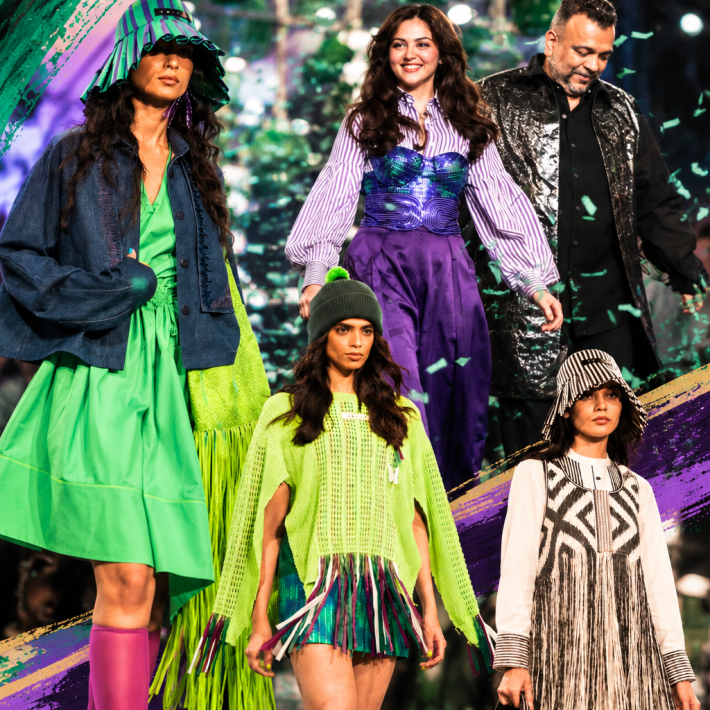
After captivating runways from London to New York for over a decade, Rina Dhaka, often hailed as one of India’s most avant-garde fashion voices, is back! And, in signature style. Marking her much-anticipated return to the global spotlight, Rina Dhaka’s showcase at The AFRA World in Dubai wasn’t just a comeback, it was a sartorial statement sashayed in elegance with her signature style.
Having spent the last decade nurturing India’s dynamic fashion scene and redefining prêt-à-porter sensibilities, Rina Dhaka steps once again onto the international runway, not from absence, but from evolution. With her signature blend of bold silhouettes and cultural depth, she returns to a global stage that’s finally ready to embrace the richness and rhythm of South Asian fashion.
Her designs speak a language where heritage whispers through contemporary cuts, and every garment tells a story rooted in identity yet tailored for the world. In this new chapter, Dhaka isn’t just walking back into the spotlight, she’s tailoring it to fit her vision.
At The AFRA World, her collection felt less like a return and more like a renaissance, one that stitched together tradition, modernity, and a powerful vision of fashion as both art and unity. In this exclusive conversation, Sumita Chakraborty, Editor-in-Chief, TheGlitz, speaks to the legendary Rina Dhaka about her comeback, couture, and why fashion, like all great stories, is best when it dares to evolve.
Over To Rina Dhaka

Rina, you’re making a remarkable return to the global stage through The Afra World in Dubai. What does this comeback mean to you personally and professionally?
I was actively participating in London Fashion week until 2010-12. Post that, my work has been primarily focused on the burgeoning fashion scene in India, as well as on organising shows in global fashion capitals such as New York and London. As a result, I’ve not had the bandwidth to host major shows and showcases in Dubai. The last show I hosted here was for a private client about five or six years ago. It was a beautiful show at the Armani Hotel at Burj Khalifa.
Why this hiatus… why haven’t we seen you on the global stage for so long?
I wouldn’t necessarily consider this a hiatus—the markets change with time, and we have recently begun looking more at growing in the ready-to-wear markets and on building our presence in exhibitions. And so, we’re excited to be a part of a young platform like this again.
As one of India’s most renowned fashion designers, how do you feel about the evolving global perception of South Asian fashion, and what role do you think you play in this transformation?

I think South Asia, or even Asia as a whole for that matter, is very vast in terms of its contributions to the fashion landscape. The history we have—from the history of costume in our art, theatre and cinema, or the influences of tribal art and attire, which has influenced trends across the world. A lot of the incredible potential of the South Asian or Asian fashion industry is still untapped, in terms of its growth and cohesiveness. Asia is currently rising in prominence as a major fashion market, which designers and brands are vying to tap.
This journey of brining talent from South Asia to Dubai, in many ways, underscores what Dubai really is—a melting point or a meeting point for cultures from across the world, and to declare Asia as a major force. I think this unites us all on a wonderful platform. I also believe that such confluences reflect peace and harmony because when culture prospers, peace will invariably prevail.