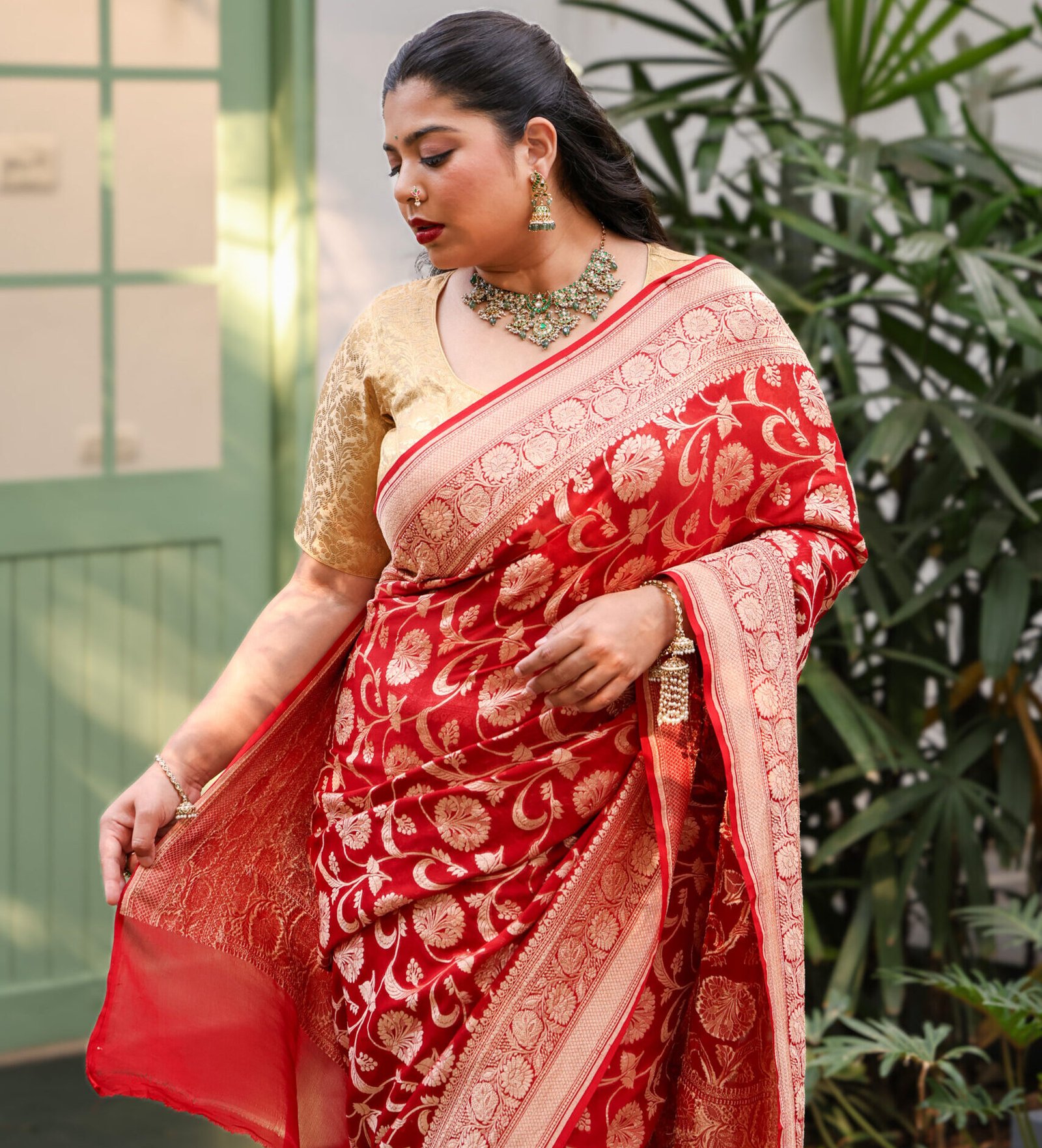
Banarasi saree
At TheGlitz, we’re passionate about celebrating India’s extraordinary legacy of craftsmanship… an enduring tapestry woven with heritage, artistry and timeless elegance. Across the country, we’ve discovered remarkable creations crafted by gifted artisans whose hands transform tradition into wearable masterpieces. Yet, amidst this dazzling panorama of Indian textiles, one icon continues to reign supreme: the Banarasi saree.
A Banarasi saree is more than a piece of clothing, it carries a symbol of India’s rich heritage and timeless craftsmanship. Known for its luxurious silk, detailed handwoven design, and that kind of regal appeal people notice right away. An authentic Banarasi saree carries a beauty that is passed down through generations as precious family heirlooms. However the demand in the market is rising, flooded with machine made replicas that can look surprisingly similar to the original.
A Banarasi saree is an investment, you must know how to identify an authentic one before making your purchase, otherwise it’s easy to end up disappointed. So this guide covers everything you should consider before making the right choice.
Why Authentic Banarasi Sarees Are Highly Valued
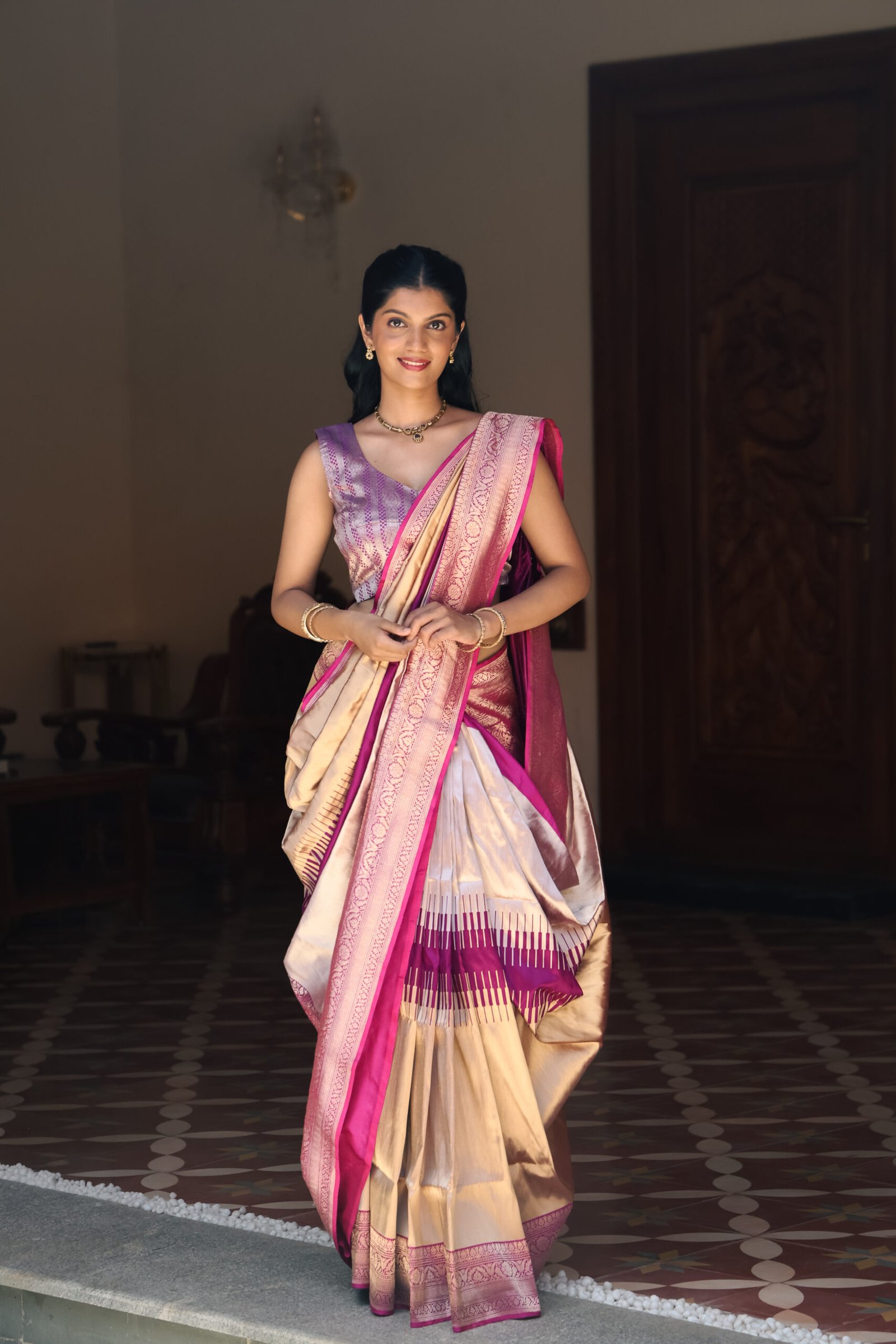
Genuine Banarasi sarees are very much loved for their unmatched workmanship and deep cultural heritage they represent. Every saree reflects the patient effort and careful dedication of skilled artisans, they might work for days, or even months on one masterpiece. And unlike mass produced options, each saree have its own sort of distinctive charm, that’s why people choose them for weddings, festivals, and also to keep as family heirlooms.
Their durability, luxurious feel, and timeless elegance make them worth the investment in a way that replicas usually don’t.
The Heritage of Banarasi Silk Weaving
Banarasi silk weaving has pretty deep roots, going back many centuries in Varanasi. For generations, artisans kept the traditional techniques running, kind of like a living thread, and they made sarees with really intricate patterns. You’ll often spot designs that feel inspired by Mughal art, floral motifs, and even small echoes of Indian architecture, somehow it all gets stitched together in one piece, not too neatly, but in a beautiful way.
Even today Banarasi weaving is still among India’s most celebrated textile traditions. It blends heritage with exceptional craft, and that’s a major reason people keep admiring it, again and again.
Why authenticity matters when buying a Banarasi saree
If you buy a truly authentic Banarasi saree, you’re basically putting money into genuine artistry, not some copy. Real Banarasi sarees typically have better fabric quality, more careful detailing, and a kind of timeless beauty that can be cherished for years.
By choosing an authentic Banarasi saree, it also supports the skilled artisans and weaver communities who preserve this timeless craft and pass it on to future generations.
What makes a Banarasi saree authentic?
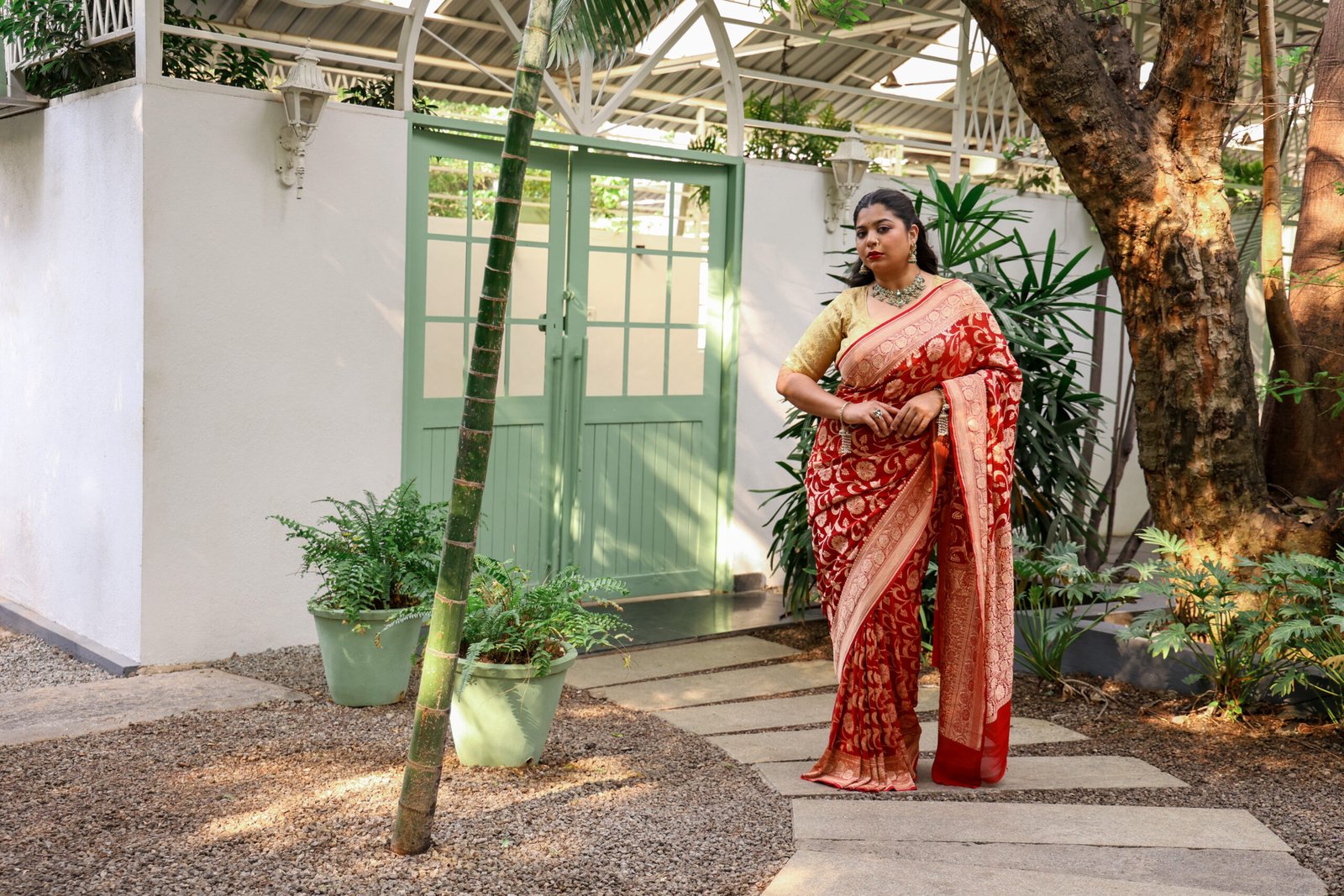
There are a few clear signs that usually help separate an authentic saree from an imitation.
Pure silk fabric
A traditional Banarasi saree is made with premium silk, it feels smooth, and it has that natural sheen. The richness of the fabric gives a graceful drape, it looks more elegant over time, and in a way becomes a lasting treasure.
Handwoven craftsmanship
An authentic Banarasi saree is woven on handlooms, carefully done by skilled artisans. You might notice minor irregularities in the pattern, and that can actually be a good sign, it suggests genuine craftsmanship, not a defect.
Traditional Banarasi weaving techniques
Authentic Banarasi sarees show centuries-old methods. These methods create texture and detailed designs, instead of simply sticking prints on top of the fabric like a quick finish.
Genuine zari work
Original Banarasi sarees use high-quality zari, often with silver or gold-coated thread. Those metallic threads give the saree its signature richness, and the elegant shine.
GI tag and authenticity certification
Many real Banarasi sarees include a Geographical Indication, GI tag and a Silk Mark certificate. Ensuring the saree truly comes from the traditional weaving region, and that it’s using genuine silk.
Different Types of Authentic Banarasi Sarees
Different kinds of genuine Banarasi sarees, you know they come in so many fabrics, each one showing its own particular charm.
Katan Silk Banarasi Sarees
Katan silk is often seen as the most refined form of Banarasi weaving. Using pure silk threads, these sarees feel super special, they’re luxurious, long-wearing, and really suits for weddings and big occasions.
Organza (Kora) Banarasi Sarees
Organza Banarasi sarees are light on the body, and yes, they can be a little sheer too. You get delicate floral patterns, plus detailed zari work. That makes them a solid pick for festivities, and for that classy night wear moment, where the outfit should still look airy.
Georgette Banarasi Sarees
Georgette Banarasi sarees mix age-old weaving methods with a lighter fabric. The benefit is you can wear them for long stretches without feeling weighed down, while still keeping a tidy, elegant appearance.
Tissue Banarasi Sarees
Tissue Banarasi sarees are made by weaving silk together with zari, and the result is a sort of shimmering finish. Because of that shine, they’re commonly chosen for receptions, parties, and festive get-togethers, especially when you want the drape to catch attention.
10 Ways to Identify an Authentic Banarasi Saree
1. Look closely at the fabric quality
Pure silk usually feels smooth, soft, and truly rich. It has a natural luster instead of that artificial gloss people often see in synthetic materials.
2. Check the other side of the saree
Handwoven Banarasi sarees often have loose or floating threads on the backside, behind the motifs. In contrast, machine-made sarees usually look neat, as if everything was finished in a single pass.
3. Pay attention to the handwoven motifs
Classic designs like paisleys, flower creepers, lotus, and Mughal inspired patterns are woven with careful accuracy. Those tiny details are hard, very hard, to recreate using machines.
4. Inspect the zari threads
Genuine zari looks metallic and deep, it doesn’t appear extremely shiny. Low-grade imitation zari tends to look bright.
5. Verify the Silk Mark Certification
Check the Silk Mark label and, if it’s there, the GI tag too. These things give a bit more confidence that what you’re getting is genuine silk.
6. Assess the Weight and Texture
Real Banarasi sarees are usually heavier, because of the rich silk and zari weaving. Even though it’s heavy, they still feel soft and easy to drape, not stiff.
7. Observe the Borders and Pallu
Take a good look at the borders and pallu. You have to see detailed weaving, plus symmetrical patterns and consistency in design.
8. Compare the Price with Market Standards
An authentic Banarasi saree has lots of manual work, which costs more than machine made replicas. If the price seems almost unbelievable, then it’s a good idea to do a quick double check on authenticity before you commit.
9. Purchase from a Trusted Heritage Brand
Try to purchase with an established seller who is known for authentic handloom collections. This one step reduces the chances of fakes a lot. Also, trusted brands usually have better transparency about the materials, and about the craftsmanship details.
10. Request Product Details Before Buying Online
If you’re shopping online, then ask questions first. You should get clarity on silk composition, the weaving method, the zari quality, any certifications, and the return policy. Real sellers are generally open to share everything, without dodging the same questions again and again.
How To Spot A Fake – Common Signs of Fake Banarasi Sarees
Knowing the usual imitation methods can help you choose more wisely, and not get fooled.
Machine-Made Designs
Machine-woven sarees often show patterns that are too perfect and uniform, no subtle changes, like you’d see in handmade weaving.
Synthetic Fabrics Sold as Silk
Silkthat’s actually artificial silk, or polyester blends, may look nice at first, but it often misses the real softness, durability, and overall elegance that genuine silk actually has.
Printed Motifs Instead of Woven Patterns
Authentic Banarasi designs are woven into the fabric, not simply printed on the surface. Printed designs can usually be identified by closely looking at the texture and often feels less alive.
Low-Quality Metallic Threads
Imitation zari loses its shine very fast, and it might start tarnishing over time, unlike the genuine metallic threads that keep their charm for years, even with regular care.
Where to Buy an Authentic Banarasi Saree
Choosing Trusted Online Stores
Pick online shops that specialise in handloom or heritage textiles. Good stores have clear product descriptions, detailed photographs that show the actual weave, and they should offer authenticity guarantees. These things are kind of a green signal.
Questions to Ask Before Purchasing
Before you place your order, ask straight up if the saree is handwoven, and if it’s pure silk. Also check what type of zari has been used, and whether an authenticity certificate is included with it. Checking Customer Reviews and Certifications
Customer reviews can give you genuine insights about product quality and customer service. Verified certifications also add extra weight to your confidence in the purchase.
How to Care for an Authentic Banarasi Saree
Proper Storage Tips
Store the saree in breathable cotton or muslin cloth, not plastic covers. Refold it every few months too, so you don’t end up with permanent creases, and so the zari doesn’t get stressed.
Cleaning and Maintenance
For cleaning, dry cleaning is the safest choice for Banarasi silk saree. Try to avoid harsh detergents, and don’t wash it at home, because that can damage both the silk and the zari.
Preserving the Silk and Zari
Keep the saree away from direct sunlight and excessive humidity during storage. Also don’t spray perfumes straight onto the fabric. Handle it gently so it keeps its natural shine, and