Atelier Ajanta
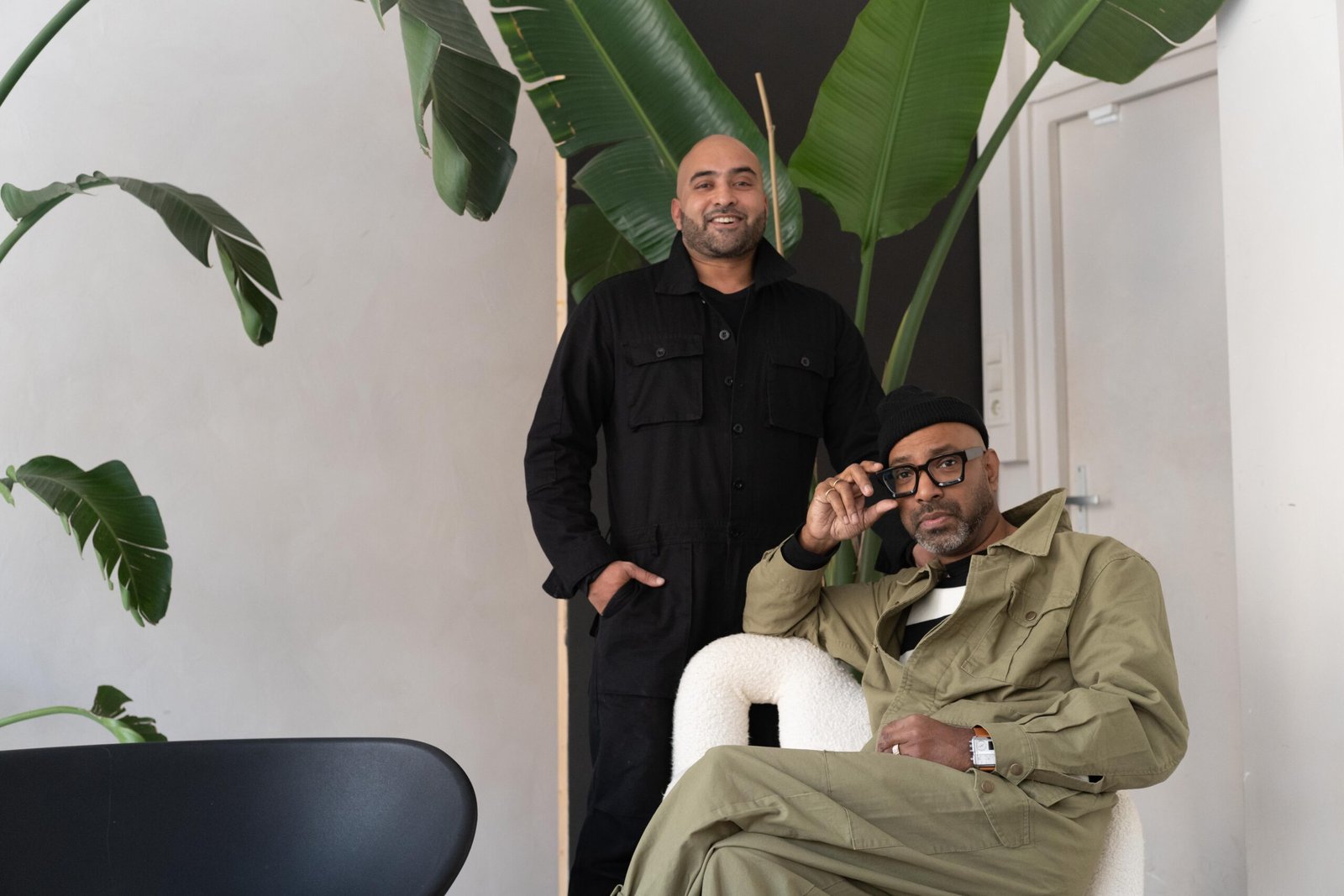
When artistry meets architectural flair, and legacy meets innovation, the result is nothing short of extraordinary. Enter Hans and Jerrel Goedoen, the dynamic duo behind Atelier Ajanta, design-forward brand redefining luxury with a distinct global-meets-Indian aesthetic.
In this exclusive spotlight, TheGlitz turns its lens on the Goedoen brothers, celebrating their unique creative synergy and timeless design language. From bold material choices to soulful storytelling through space, they share what drives their vision and why design, for them, is deeply personal.
In an exclusive conversation, Hans and Jerrel Goedoen talk to TheGlitz about their creative journey, the art of collaboration, and what it means to build a brand that’s as thoughtful as it is trend-setting.
Over To Hans and Jerrel Goedoen, Founder, Atelier Ajanta
What was the core inspiration behind creating Devon Ke Dev Mahadev and how did you translate spiritual symbolism into a form that speaks to modern aesthetics and interiors?
The core inspiration behind Devon Ke Dev Mahadev was the desire to reimagine Hindu spirituality in a way that resonates with today’s generation. Traditional Hindu sculptures often follow classical design principles, which, while timeless, may not always connect with younger audiences or suit contemporary interiors.
By blending spiritual symbolism with urban design aesthetics, we aimed to create an iconic piece that is not only meaningful but also relevant—making spirituality feel fresh, culturally engaging, while integrated into modern urban design sensibilities.
In a world of mass-produced decor, why did you choose to focus on a single, powerful sculpture and what message are you hoping to convey through its singularity?
In a world flooded with mass-produced decor, we intentionally chose to focus on a single, yet powerful sculpture to highlight the relevance of modern urban art within the context of an ancient culture. This piece was thoughtfully crafted to carry emotional and spiritual depth—far beyond what a collection of generic objects could offer.
By channeling our creative energy into one singular form, we invite undivided attention. Multiplicity, in this case, would only dilute the impact and blur the message. Our goal was to create a lasting impression—something that sparks reflection, commands presence, and becomes a meaningful focal point in any space. Again, we would like to highlight the relevance of modern urban art within the context of an ancient culture – something not done before.
Its singularity is what makes it iconic. It stands not as one among many, but as the statement: here is an icon.

Balance, strength, and positivity are central to the sculpture’s ethos. How do these values manifest in its form, material, and presence?
Just look at it—it radiates. You can sense the cosmic energy flowing through it, subtly illuminating the entire room. Its presence isn’t something to be described in words; it’s something to be felt, experienced on a deeper, almost intangible level.
What kind of emotional or psychological impact do you hope Devon Ke Dev Mahadev has on those who experience it in their living or working spaces?
It sits there in quiet stillness, a gentle reminder to turn inward—towards your core, where everything begins or everything can be changed for the good. Its presence is meant to evoke reflection, to stir something deeper within. It asks, without words: Who am I? Really, who-am-I?
Spiritual art often runs the risk of being cliché or overly traditional. How did you strike a balance between reverence and reinvention?
Striking the balance between reverence and reinvention was at the heart of our creative process. We approached the subject with deep respect for its spiritual roots, ensuring that the essence and symbolism remained intact.
At the same time, we challenged ourselves to reimagine how that essence could be expressed through a modern lens—clean lines, contemporary forms, and minimalism that aligns with today’s aesthetic sensibilities.
Urban art played a key role in this transformation. Its boldness, raw energy, and ability to communicate culture in public and personal spaces gave us the language to bridge ancient tradition with modern expression.
The goal was never to dilute the tradition, but to distill it—honoring the sacred while making it accessible, relevant, and resonant for a new generation living in urban, design-forward environments.
While the world has embraced urban art through icons like Bearbrick, KAWS, and artists like Banksy, the phenomenon remains relatively unfamiliar within India—especially in the context of Hindu culture.
However, as the younger generation in India begins to connect with contemporary art forms, Atelier Ajanta steps in to meet them at that intersection—where tradition meets bold, modern expression.
Could you walk us through the craftsmanship process… from design to final finish… and what sets this apart in terms of artistry and technique?

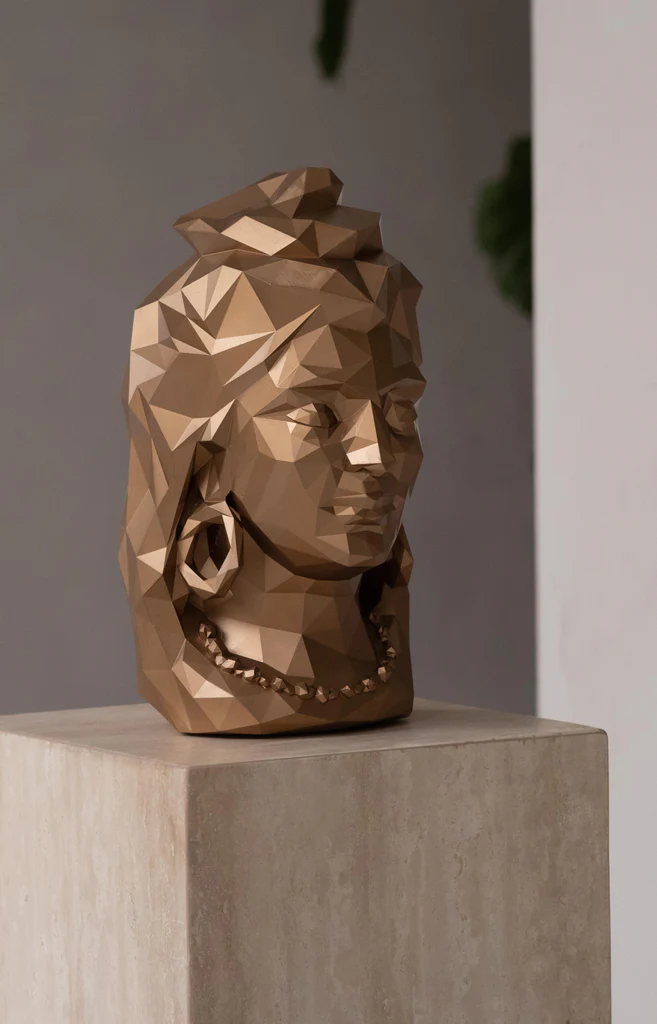
We began with the core concept, translating it into a 3D visual through computer-generated design. This digital model was then brought to life using a 3D printer. Once printed, we made careful modifications to refine the form—sharpening lines and smoothing surfaces to achieve the precise look we envisioned.
From the final prototype, we created a mould, which was then used to cast the sculpture in epoxy resin. The process involved mixing resin with a hardener, pouring it into the mould, and allowing it to cure. After curing, each piece was carefully sanded to perfect the surface and eliminate any minor imperfections.
Once the form was ready, we applied a rich, old-gold finish spray, enhancing its presence and radiation. We chose epoxy resin specifically for its ability to capture sharp details and clean edges—qualities essential to the design’s modern and urban aesthetic. No other material could reach this outcome.
How has the market responded so far? Are your patrons viewing it as an artistic statement, a spiritual symbol, or an investment piece or perhaps all three?
In fact, we see it as an artistic statement that’s becoming increasingly rare to find. The market response has been both encouraging and diverse—some patrons are drawn to its aesthetic value, appreciating it as an urban, contemporary art piece.
Others connect with it on a deeper level, seeing it as a spiritual symbol that brings a sense of calm and meaning into their space. And for a growing number, it’s also seen as a collectible—an investment in a limited, thoughtfully crafted work that carries emotional and artistic significance. Ultimately, it speaks differently to each person, which is exactly what we hoped to achieve. But for us, it is a bold artistic statement that is becoming increasingly rare to find.
What’s next for Atelier Ajanta? Will you continue to focus on singular spiritual sculptures, or is this part of a larger artistic narrative you plan to expand on?
The vintage gold color is the iconic piece that profiles our project. Once it is profiled and known, and this is going faster than we expected, we would like to widen the range into different colorways and textures. The iconic design will not change. And it will remain a singular design as an ode to Lord Shiva but it will come in different varieties of colors and textures. Similar to what artists like Bearbrick, Andy Warhol or Kaws are doing with their iconic design, Atelier Ajanta connects urban street art to an ancient culture.