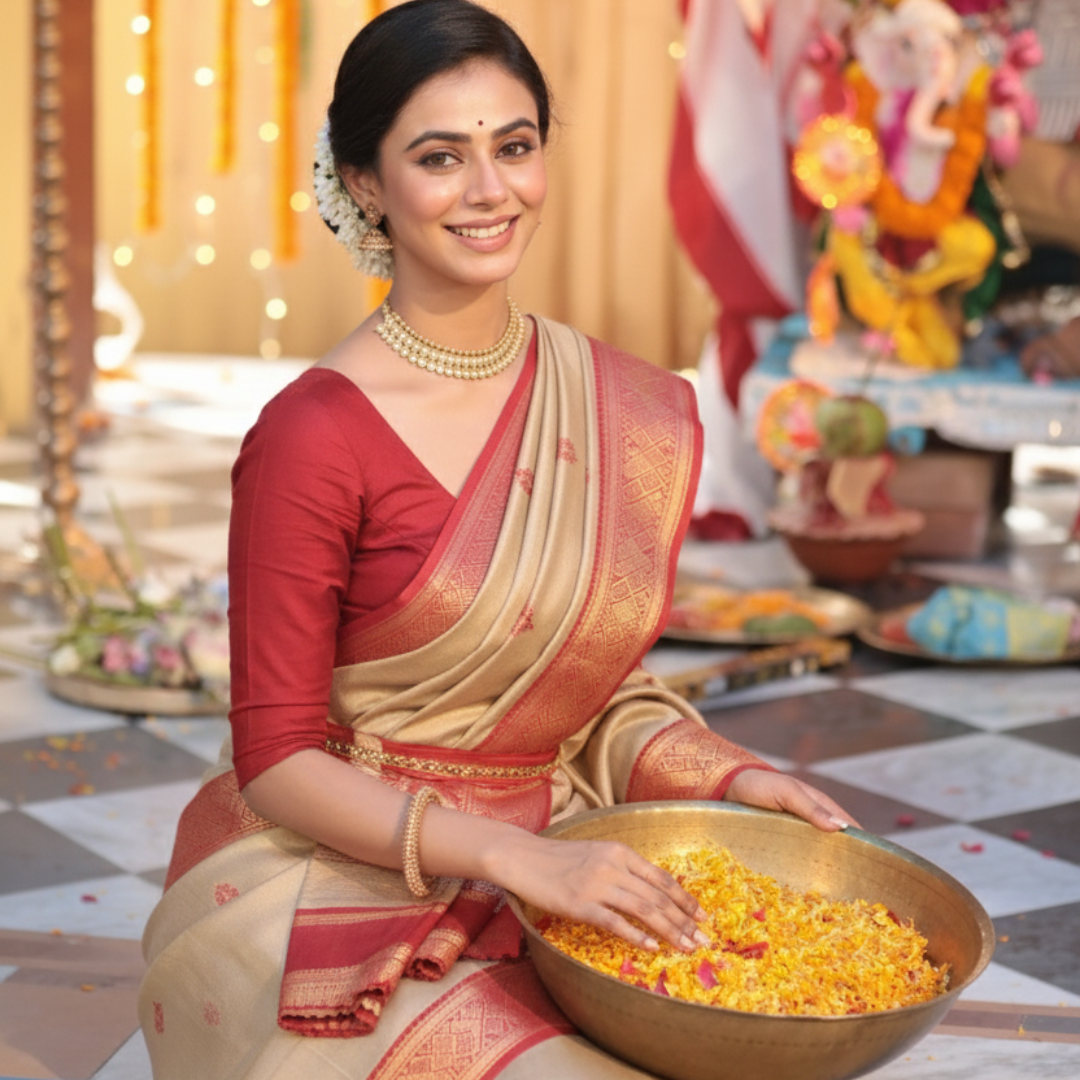
Saree drapes
Across India, harvest season signals more than the arrival of grain… it marks a celestial pause, a moment when the sun shifts its course and the country collectively turns towards gratitude, renewal, and abundance. Makar Sankranti is among the rare festivals that transcends geography. Known as Pongal in Tamil Nadu, Magh Bihu in Assam, Poush Sankranti in West Bengal, and celebrated alongside Lohri in Punjab, it unfolds differently in every region, yet remains bound by a shared cultural rhythm.
What unites these diverse celebrations is not just ritual or cuisine, but dress… specifically, the saree. During harvest festivities, the saree is not merely worn; it is chosen with intention. Its fabric, weave, colour, and drape reflect the land it comes from, the season it honours, and the community that sustains it. In this moment of transition between seasons and cycles, the saree becomes a living archive, bridging ancestral custom with contemporary life. TheGlitz revels in the beauty of the saree, this festive season.
Assam: Magh Bihu and the Grace of Saree Simplicity
In Assam, Magh Bihu marks the conclusion of the harvest and is celebrated through communal feasts, bonfires, and shared joy. The sarees worn here mirror the spirit of the land… unpretentious, elegant, and deeply rooted in everyday life. Lightweight silks and handwoven drapes dominate, designed for ease and movement. These are sarees meant to be lived in… worn while gathering, cooking, and celebrating together. Their quiet beauty reflects Assam’s agrarian ethos, where abundance is shared and simplicity is revered.
West Bengal: Poush Sankranti and the Power of Handloom
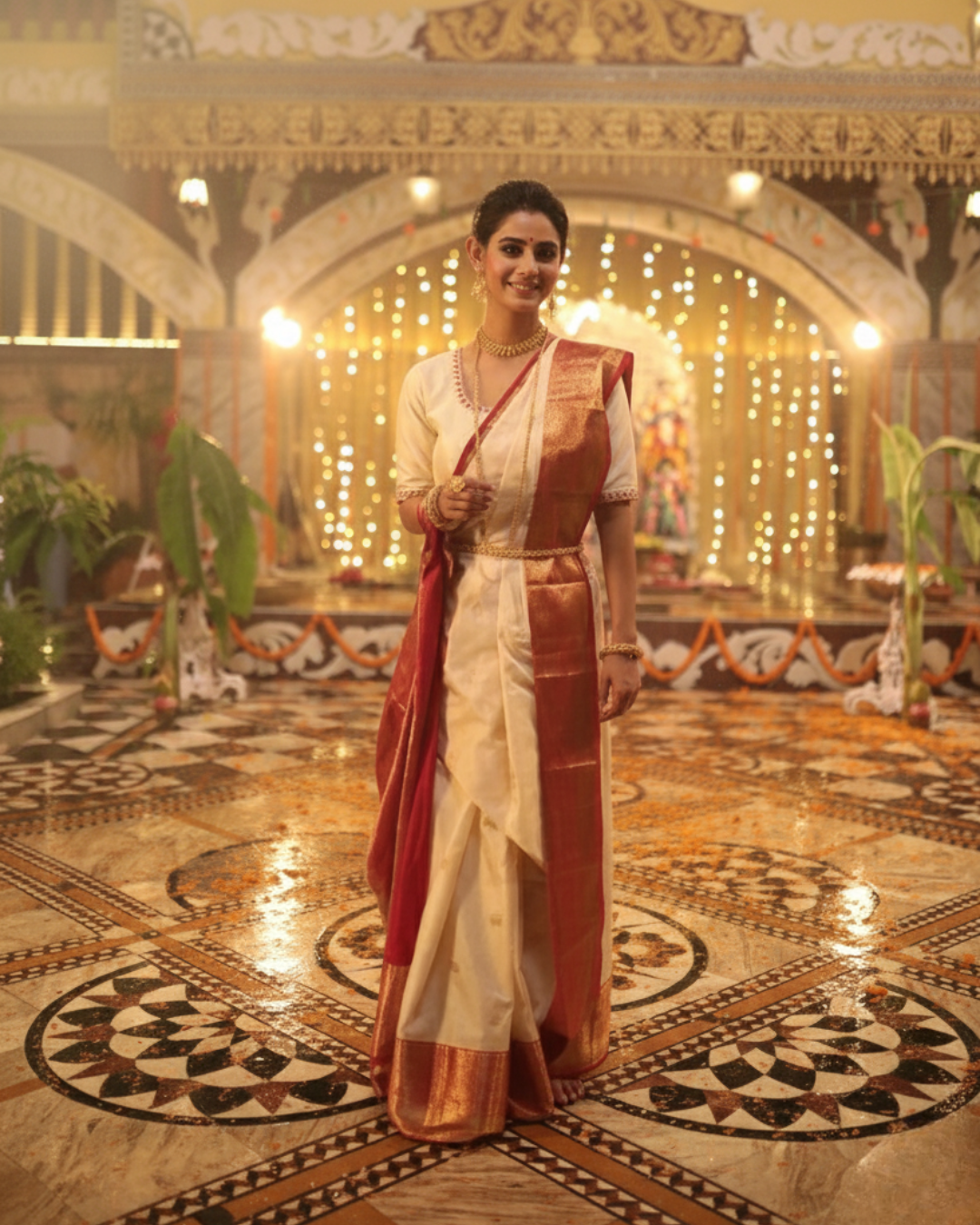
In West Bengal, Poush Sankranti unfolds with early-morning rituals, river-side prayers, and seasonal fairs. Handwoven sarees take centre stage, carrying the weight of Bengal’s rich textile heritage. Each weave speaks of time-honoured craftsmanship, where motifs and textures are inseparable from memory and place. Worn during pujas or village melas, these drapes are intimate yet authoritative… an assertion of tradition that continues to evolve while remaining deeply rooted.
Gujarat: Uttarayan and the Joy of Colour
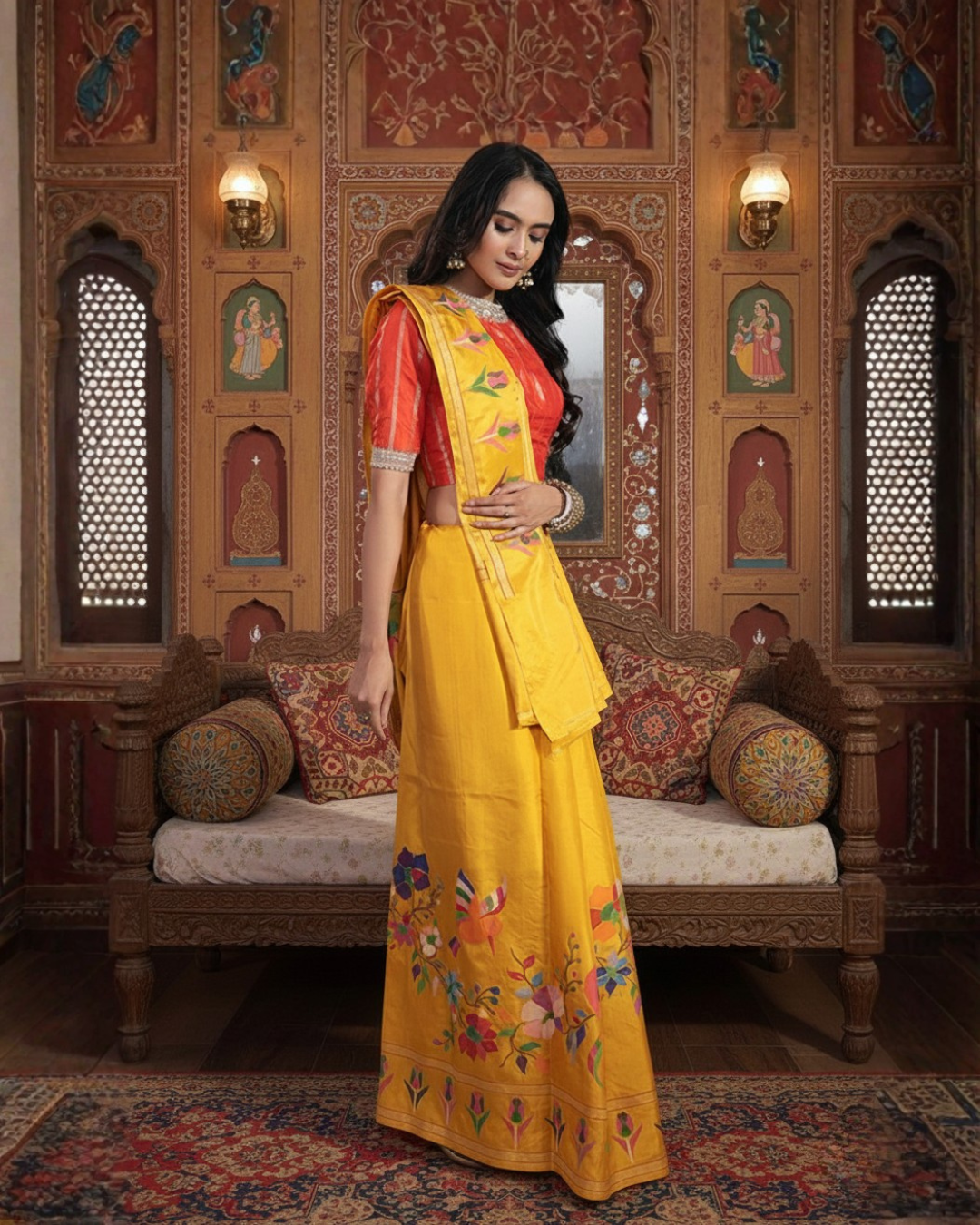
Gujarat celebrates Makar Sankranti as Uttarayan, a festival that spills onto rooftops and terraces as skies fill with kites in brilliant motion. The energy is infectious, social, and exuberant. Sarees chosen for Uttarayan reflect this celebratory spirit… bright hues, lightweight fabrics, and expressive pallus that move freely with the body. These drapes balance festivity with practicality, allowing for movement while retaining visual drama. Tradition here is playful, alive, and joyously communal.
Tamil Nadu: Pongal and the Language of Silk
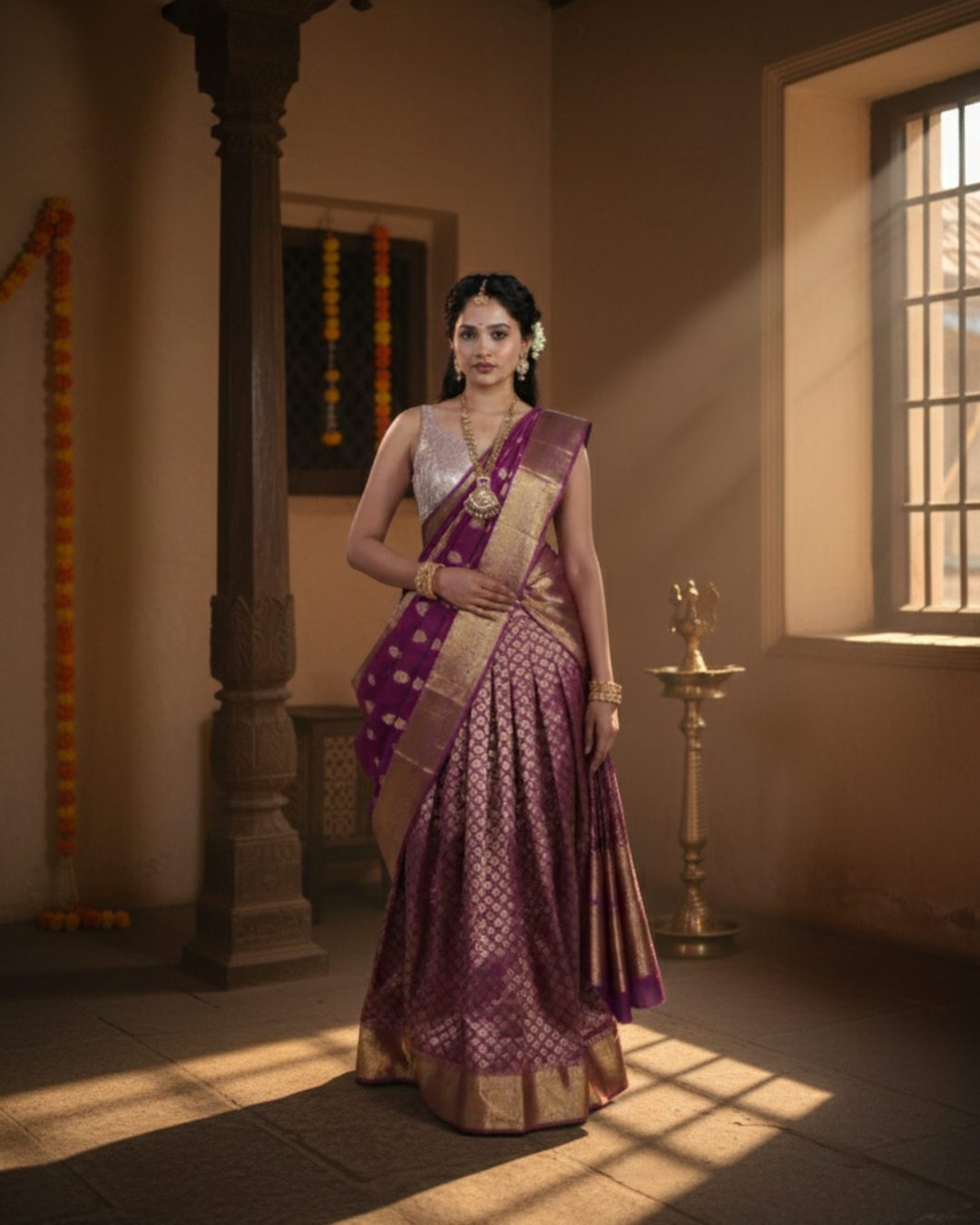
In Tamil Nadu, Pongal is a sacred expression of thanksgiving. Homes are cleansed, kolams bloom at thresholds, and temples become the heart of celebration. Women traditionally wear silk sarees in auspicious shades… golden yellows, deep reds, luminous greens… each symbolising renewal and prosperity. With their ceremonial weight and radiant texture, these silks align seamlessly with the spiritual cadence of the festival, embodying reverence as much as celebration.
Kerala: Makara Vilakku and Quiet Devotion
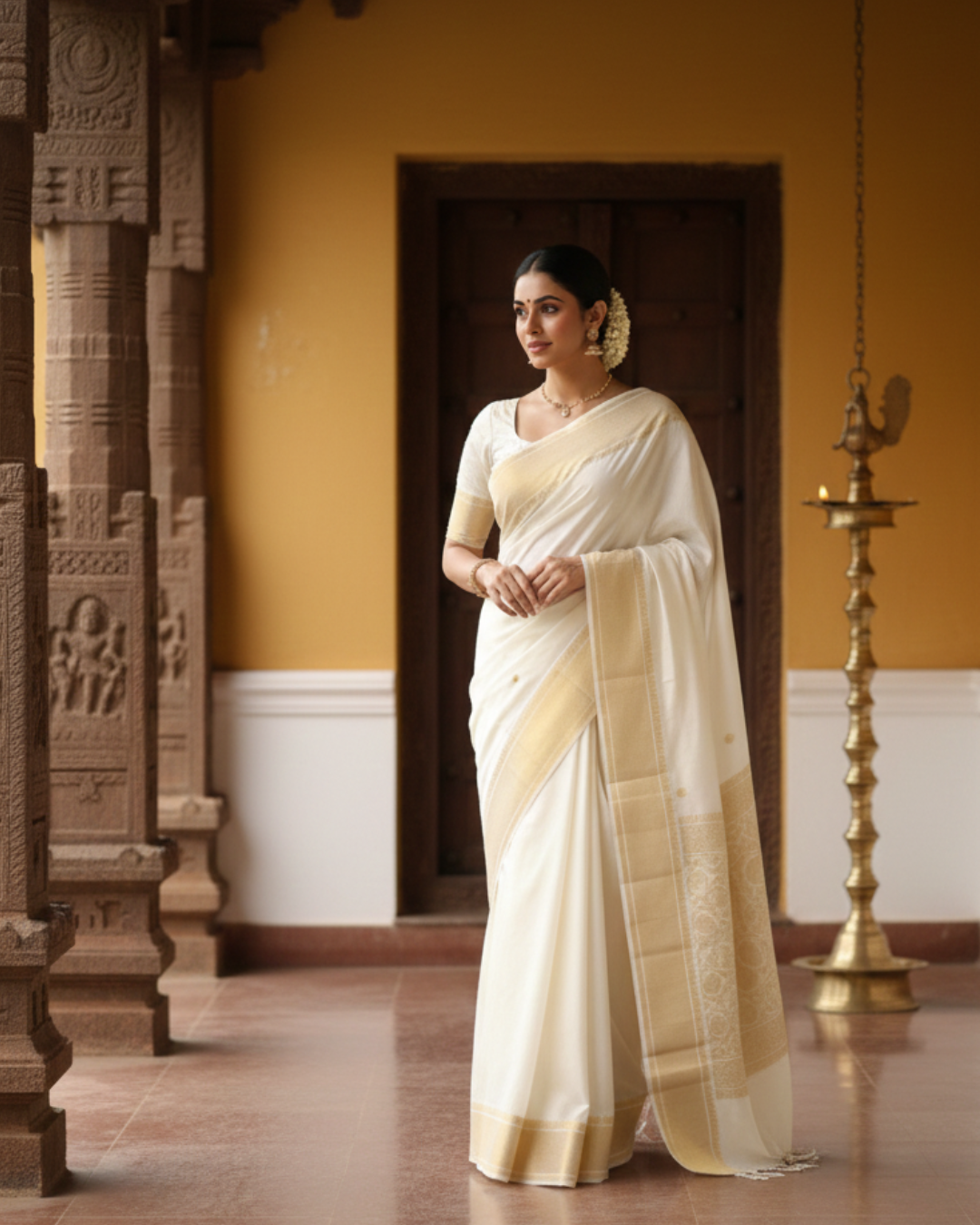
In Kerala, the Sankranti period aligns with Makara Vilakku, closely associated with the Sabarimala pilgrimage. Attire during this time reflects restraint and devotion. White and off-white sarees, often edged with subtle gold borders, dominate… symbols of purity, discipline, and spiritual focus. These understated drapes echo the contemplative mood of the season, where faith takes precedence over adornment.
Where Tradition Finds Its Drape
It is within this spectrum of expression… so varied yet unified… that India’s textile legacy continues to thrive. For over five decades, Indian Silk House Agencies has engaged deeply with these regional traditions, curating sarees that remain faithful to their cultural origins. Working with over 15,000 artisans across 60+ weaving clusters, the brand plays a vital role in preserving the many ways harvest is celebrated across India… through textiles that are worn, cherished, and passed down.
As Makar Sankranti unfolds across the country, the saree remains its quiet constant. Draped differently in every state, worn for rituals both sacred and celebratory, it carries the same underlying spirit of gratitude and renewal. In its threads lie the essence of the festival itself… diverse, grounded, and enduring.