Sikh farmers & parmesan in Italy
In the lush dairy belt of northern Italy, amid the foggy flatlands of the Po Valley and the echo of cowbells at dawn, something unexpected is bubbling in the cheese vats. It’s not just milk and rennet.. it’s tradition, migration, and a big dash of Punjab. While the world knows Parmesan as Italy’s proud culinary crown jewel, few realize that behind this prized product are the strong, calloused hands of Sikh farmers. TheGlitz spotlights the quiet revolution reshaping Italy’s most famous cheese led by the hardworking Sikh community, one milking session at a time.

Sikh “Cheese” Revolution – From Punjab to Parmigiano
Back in the ’80s, young Italians were leaving the countryside for the tall towers of the bustling cities, uninterested in the demanding work of dairy farming. Enter the Sikh community, many from farming families in Punjab, who arrived in Italy seeking better opportunities. When they looked out at the foggy fields of Novellara and Reggio Emilia, they saw something familiar: fertile land, early mornings, and the dignity of manual labour.
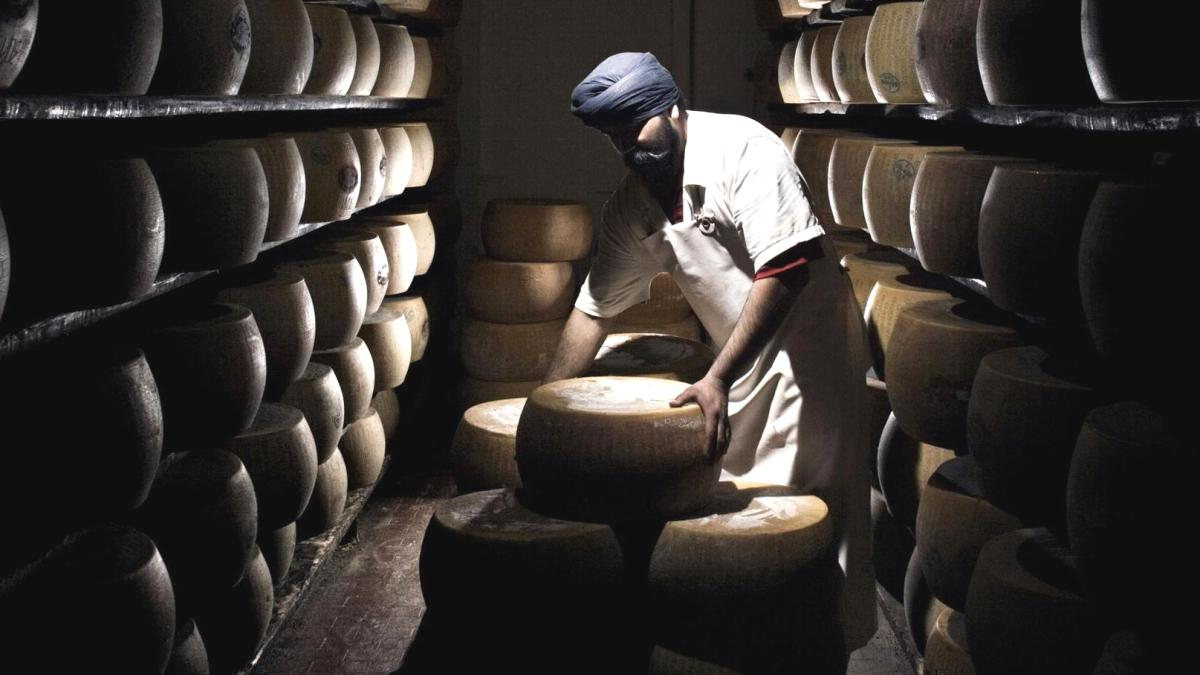
Their transition from wheat fields to whey was almost poetic. Sikhs began taking up jobs in local dairies, managing the hard, unglamorous work of milking cows, work that’s crucial to the production of Parmigiano Reggiano but was being abandoned by locals. Though they rarely handle the cheese-making itself (a process still guarded by local artisans), it’s their meticulous care for the cows that ensures the milk is top-tier.
“Italians didn’t want to do this work anymore,” says Graziano Cacciali, a dairy farmer from Zibello. “We’re lucky we found people who do.” Lucky indeed, because without these tireless immigrants, Italy’s most famous cheese might just have curdled into crisis.

Langar & Lasagna: A Cultural Fusion
But the story doesn’t end with cheese. In towns like Novellara, the Sikh community isn’t just working… they’re thriving. They’ve built homes, raised families, and even erected one of Europe’s largest Gurdwaras in 2000. In fact, it’s not uncommon to hear Punjabi dishes aromas wafting through the streets alongside the smell of espresso and fresh bread.
When the region was rocked by devastating earthquakes in 2012, it wasn’t just the government that stepped in, it was the Sikh community that fired up langars (community kitchens) and served thousands of hot meals, true to their tradition of seva (selfless service). In doing so, they not only supported their neighbours… they won their hearts.
Their kids, now fluent in both Punjabi and Italian, straddle cultures like pros… attending school and conversing in Italian in the morning and helping with milking in the evening, all while navigating WhatsApp in two languages. Some are studying to become engineers or doctors; others are staying on the farms, proud to carry forward both their heritage and their adopted homeland’s cheese legacy.

Moo-ving Toward the Future
The Parmesan industry is now facing a happy twist in its tale: it has become a true melting pot. Or perhaps, more accurately, a melting cheese pot.
While Italy protects the “Parmesan” label with rigorous regulations and sacred geographic status, it’s also learning that the future of tradition might wear a turban and speak two languages. As Parmigiano Reggiano continues to claim its space on cheese boards across the globe, it does so thanks in part to the unsung heroes from Punjab.
Their work goes beyond farming… it’s about building bridges, one mozzarella-curdled handshake at a time.
…So the next time you grate Parmesan over your pasta or break off a nutty, crystal-flecked shard with a glass of red, remember this: that cheese didn’t just come from a cow in Reggio Emilia. It came from the early-morning devotion of a Sikh farmer, thousands of miles from home, milking heritage and hope into every drop.
…Because sometimes, the most Italian thing about your cheese… might just be a little bit Punjabi.
Only at TheGlitz, where heritage meets haute.