Sudev Nair
There is something refreshingly unvarnished about the very charming Sudev Nair. An actor who won the Kerala State Film Award for Best Actor for his very first Malayalam film, he could easily have allowed that early recognition to define him. Instead, he has spent the years since challenging himself across Malayalam, Hindi, Telugu and Kannada cinema — building a body of work that refuses to sit comfortably on one shelf.
Now, as Karmadi in Toxic: A Fairy Tale for Grown-Ups, directed by Geetu Mohandas and headlined by the indomitable Yash, Sudev finds himself part of one of Indian cinema’s most anticipated pan-Indian productions. But scale, he insists, isn’t what makes an actor. For him, the real test is whether a role demands something he hasn’t discovered in himself yet.
And perhaps that is the most compelling thing about Sudev today: he has stopped apologising for his ambition. He speaks candidly about years of being advised to keep his head down, not to make others uncomfortable with his ability, and the quiet realisation that he had been overcompensating for being good at what he does. Now, he wants more — not simply bigger films, but the opportunity to carry one on his shoulders.
His experience on Toxic appears to have sharpened that conviction. Geetu Mohandas, he says, brought out his “swag”, while working alongside Yash gave him a different perspective on ambition, courage and self-belief. He is equally unapologetic about what comes next: a leading role, a film that demands everything he has built, and, intriguingly, the chance to show audiences his comic side.
For an actor who has spent years refusing to be defined by conventional moulds, Sudev Nair now seems ready to define his own.
In this exclusive conversation with Sumita Chakraborty, Founder & Editor-in-Chief, TheGlitz, the unstoppable Sudev Nair talks about Toxic, Geetu Mohandas, Yash, breaking out of industry boundaries, owning his ambition — and why the next Sudev Nair we see on screen might just surprise us all.
Over To Sudev Nair
From winning the Kerala State Film Award for Best Actor to being part of a large-scale pan-Indian film like Toxic, your journey has been wonderfully varied. How has your understanding of yourself as an actor evolved through these very different experiences?
The award came for my first Malayalam film, which is a strange way to start. You get handed the verdict before you’ve done the work. Everything since then has been me finding out whether they were right.
What has actually changed is that I stopped being apologetic about being good at this. For years I was advised, by almost everybody, to keep my head down. Don’t say out loud that you’re here to become something, somebody powerful might take it badly. So I spent a long time overcompensating, making sure nobody was uncomfortable around my own ability. I only realised I was doing it recently, which tells you how deep it goes.
Scale had nothing to do with fixing that. A big film doesn’t teach you anything a small one can’t. What a big film does is remove your excuses. There is nowhere to hide on a set that size, so you find out very quickly what you actually have.
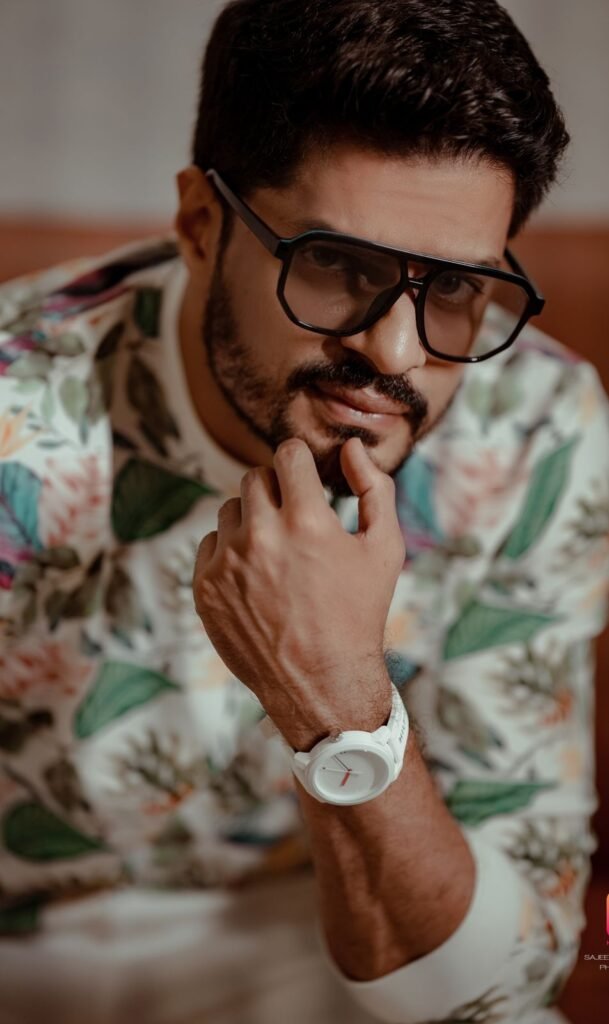
Karmadi is a distinctive character within the world of Toxic. What was it about the character that immediately drew you to the role, and how did you approach creating someone who feels memorable within such a large ensemble?
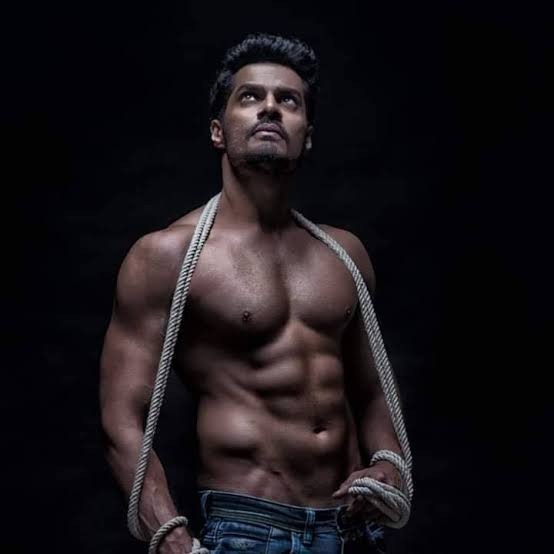
I’ll be honest, I said yes before I knew much of anything. Geetu gave me fragments. That was the entire pitch. And I took it, because when a filmmaker like that says she has been waiting years to work with you, you don’t ask for a synopsis.
As for making him memorable, I don’t think that’s a thing you can aim at directly. The moment an actor sets out to be memorable, he starts performing at the audience, and everybody can smell it. What I did was much more boring. I made sure he was completely specific. Where he looks, what he does with his hands, how long he waits before he answers. Specific people are memorable. Interesting people are usually just loud.
What I can tell you is that he is very quiet on the outside. Everything else, watch the film. I’m not doing the trailer’s job for it.
Working with Geetu Mohandas must have been particularly interesting, given her reputation for creating emotionally layered and unconventional cinema. What did her direction bring out of you as an actor that perhaps surprised you?
She got the swag out. That’s the honest answer and it surprised me completely.
I expected the emotional excavation, that’s what she’s known for. What I did not expect was a director spending two years pulling out the thing that makes an actor watchable rather than just accurate. The style, the charisma, the ‘X’ factor, whatever you want to call it. Most directors either assume you have it or assume you don’t. She treated it as something that could be built.
Here’s the funny part. She thinks she failed. Not because of anything in the film, but because she didn’t make me work as hard as Rajiv Ravi, her husband and our DOP in Toxic did in Thuramukham, his own directorial. It had me playing three ages, going from carrying a flabby paunch to completely ripped in twenty days, the whole ordeal. With her I had an effortless run, and she has decided that means she didn’t get my full capacity and therefore I didn’t get hers. Somehow this counts as a failure in her book.
I’ve told her this makes no sense. If an actor floats through something that difficult, surely that’s the bigger achievement, not the smaller one. Straining is not the same as succeeding. She isn’t buying it, and she has concluded I secretly rate her husband the better director. She can keep campaigning. The answer isn’t coming out.
You share the screen with Yash in Toxic, a film that comes with enormous scale and expectations. What was it like stepping into Yash’s cinematic world, and what did you observe about him as a performer and collaborator?
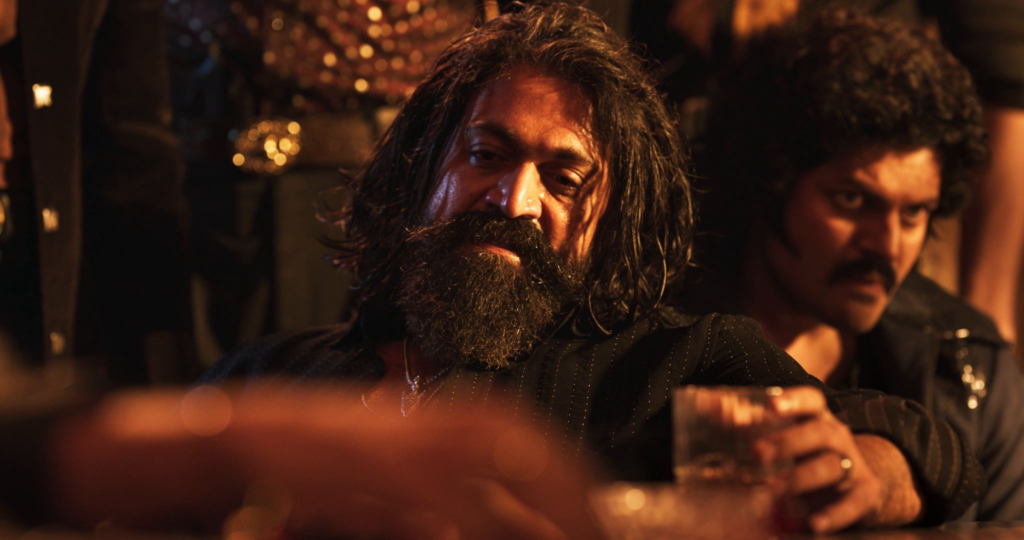
I’ll admit I’m a difficult person to impress. I have a healthy opinion of my own work, which is a polite way of saying looking up to other actors isn’t something I do on a regular basis.
With every star you meet, you can usually point to one thing alongside the hard work. A film family. A godfather. A moment of luck that landed on the right head. With him, none of it applies. There’s no lineage, no benefactor, no story about the universe arranging itself in his favour. It’s work, courage and conviction, and that’s genuinely all it is. That changed something for me, because until then my position was that I’d do my best and wait for the light to find me. He’s proof you don’t have to wait.
As a collaborator, he gives away the secrets of his own craft, which only a very secure human being can do. He’d ask my opinion on his takes. He made sure I never felt one level below him, and that’s how he is with everyone. On the closed set of Toxic you’d genuinely forget what this man is out in the world.
Then at some point he called me aasthana kalavida, which means something like the highly dependable, permanent fixture, the go-to artist, the one you can always count on. I’m going to be carrying that one for a while.
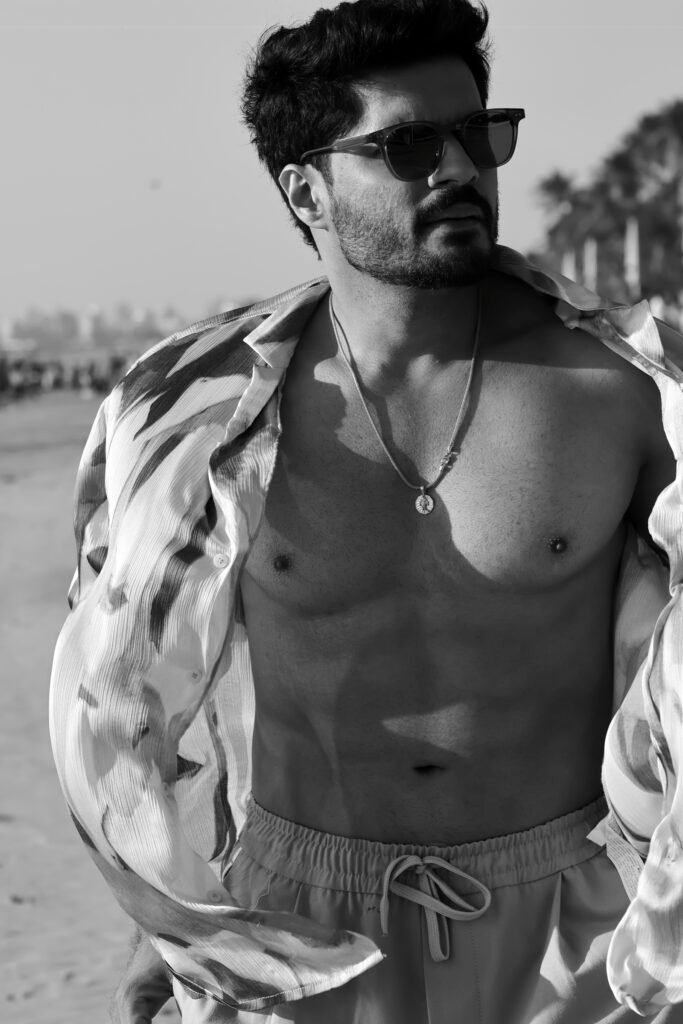
You’ve worked across Malayalam, Hindi, Telugu and Kannada cinema, moving comfortably between different industries and languages. Does working across Indian cinema today feel like the boundaries between regional industries are finally disappearing, or are there still significant differences in how actors work?
For the audience, the borders are gone. Nobody is checking a film’s passport anymore, they’re just deciding whether it’s good. A film doesn’t get subtitled now, it gets adopted.
For the actors, the differences are real but they’re not artistic ones. They’re scale and logistics. Telugu works at a size Malayalam simply doesn’t attempt, and Malayalam takes creative risks that a film carrying that budget can’t afford to take. Different problems, not different crafts. The work in front of the camera is identical everywhere, which people always find disappointing when I say it.
The genuinely new thing is that an actor no longer belongs to one industry. My identity in Telugu became as strong as my identity in Malayalam, and nobody asked permission for that to happen. That’s the actual dividend of all this.
You’ve consistently gravitated towards roles that don’t necessarily fit a conventional hero or leading-man mould. How important is it for you to surprise yourself with a character, and what makes you say yes to a role today?

I’d push back on the premise slightly. I’ve never avoided the leading man. I’ve been building the equipment to carry one, and the correct one, which is a different thing entirely.
There’s a habit in this country of deciding early which shelf an actor belongs on, and then everyone politely keeps him there while calling it praise. I stepped back from Malayalam for a stretch precisely to get out of that, and I stacked up work elsewhere instead. So it isn’t that conventional leading man roles don’t appeal to me. It’s that I wasn’t interested in doing a small version of one.
What makes me say yes now is simple. Who is directing, and does the part require something I don’t yet know I have. If a role is asking for what I already do well, that’s a job. Fine, but it’s a job.
After Toxic, what are you looking for in your next phase as an actor? Is there a particular kind of character, filmmaker or genre you haven’t explored yet that you are hungry to take on?
The next phase is the obvious one. A film on my shoulders. That was always where this was going, the only real question was when, and I’d rather arrive there with the equipment already built than turn up early and hope.
I’m not in a hurry about it either. The first one you carry is the one people remember, so it’s worth being patient about which film gets that. Right now I’m being fairly ruthless about what I say yes to, which is a nice position to be in.
Genre-wise, I want something with real charm in it. Everyone has seen me be dangerous. Almost nobody has seen me be funny, and I think that’s the most underrated thing I own.