
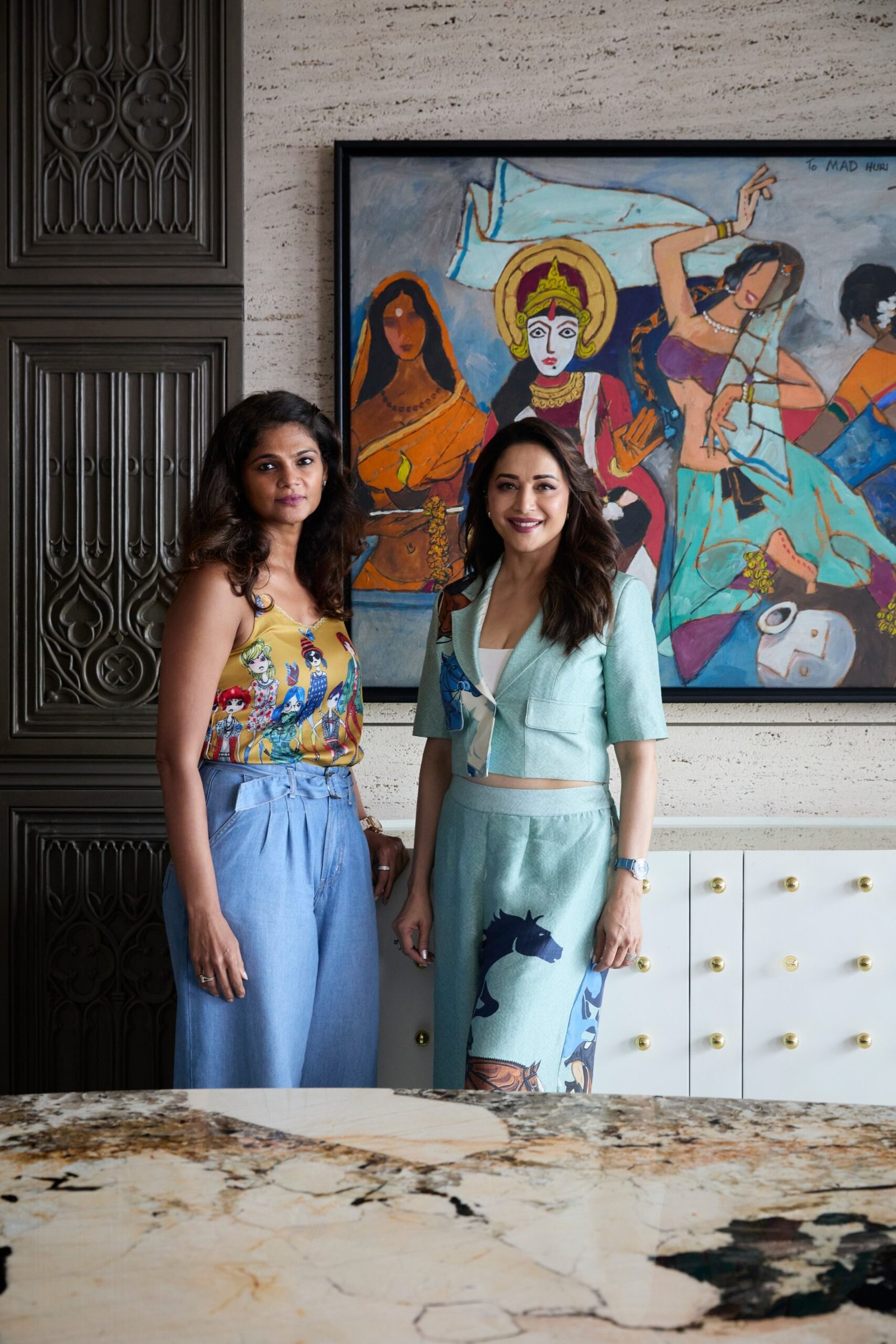
Architect Apoorva Shroff, Founder and Principal Designer at Lyth Design
As the world steps into a new design decade… one defined by emotion-led spaces, mindful luxury, and climate-conscious innovation, few voices capture the pulse of this transformation as eloquently as Architect Apoorva Shroff. Founder and Principal Designer at Lyth Design, Apoorva Shroff has carved a reputation for crafting environments that are not just built, but deeply felt… spaces that breathe, adapt, and resonate with the people who inhabit them.
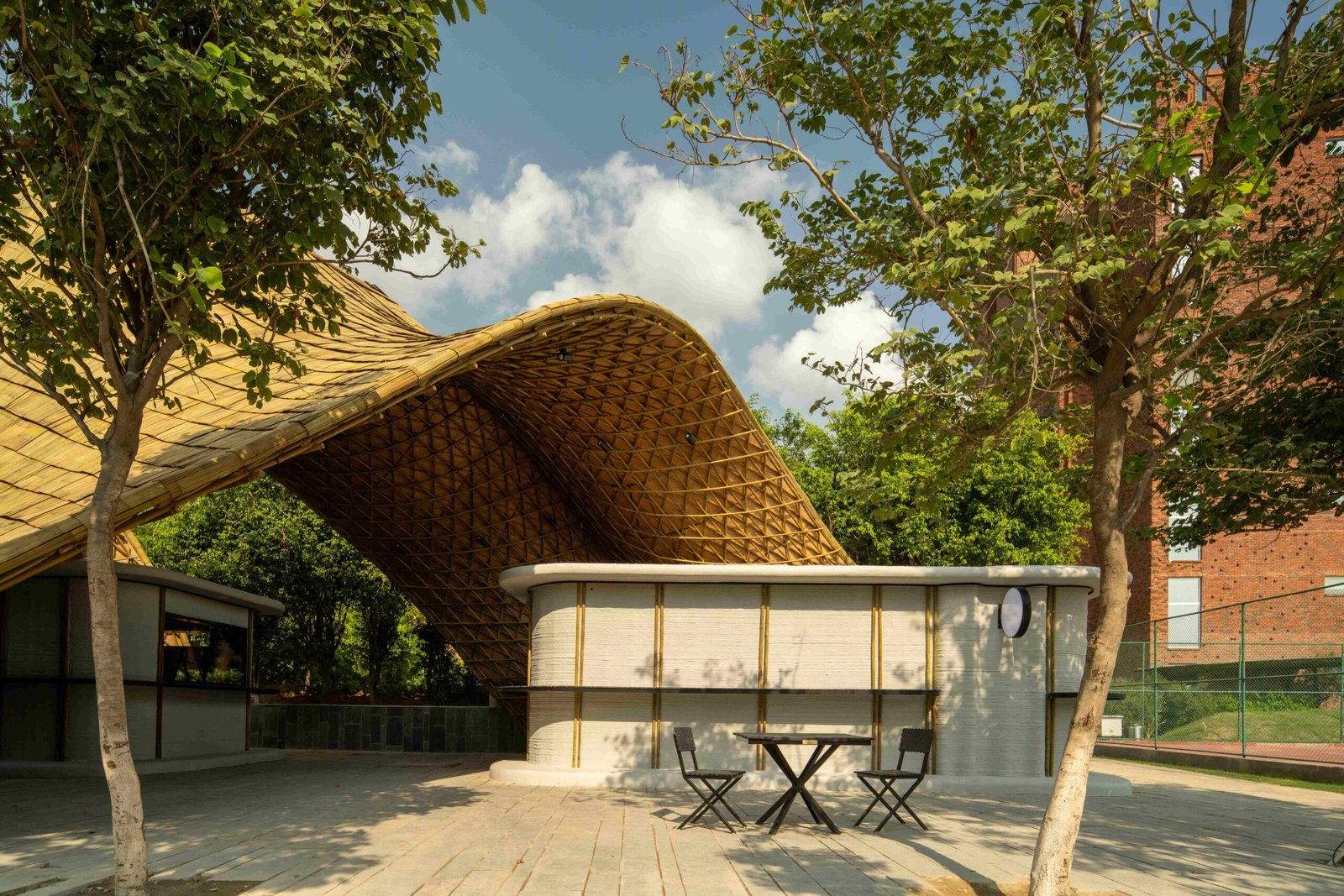
With a portfolio that gracefully spans continents and contexts, Apoorva Shroff’s work is a masterclass in balance between restraint and richness, global refinement and rooted identity, technological intelligence and human warmth. From designing Bollywood icon Madhuri Dixit Nene’s Mumbai residence, to infusing Japanese subtlety into SoftBank’s 54,000 sq. ft. Menlo Park office, to engineering the whimsical, architecturally daring The Hungry Caterpillar pavilion at Ashoka University, her projects reflect versatility anchored in vision.
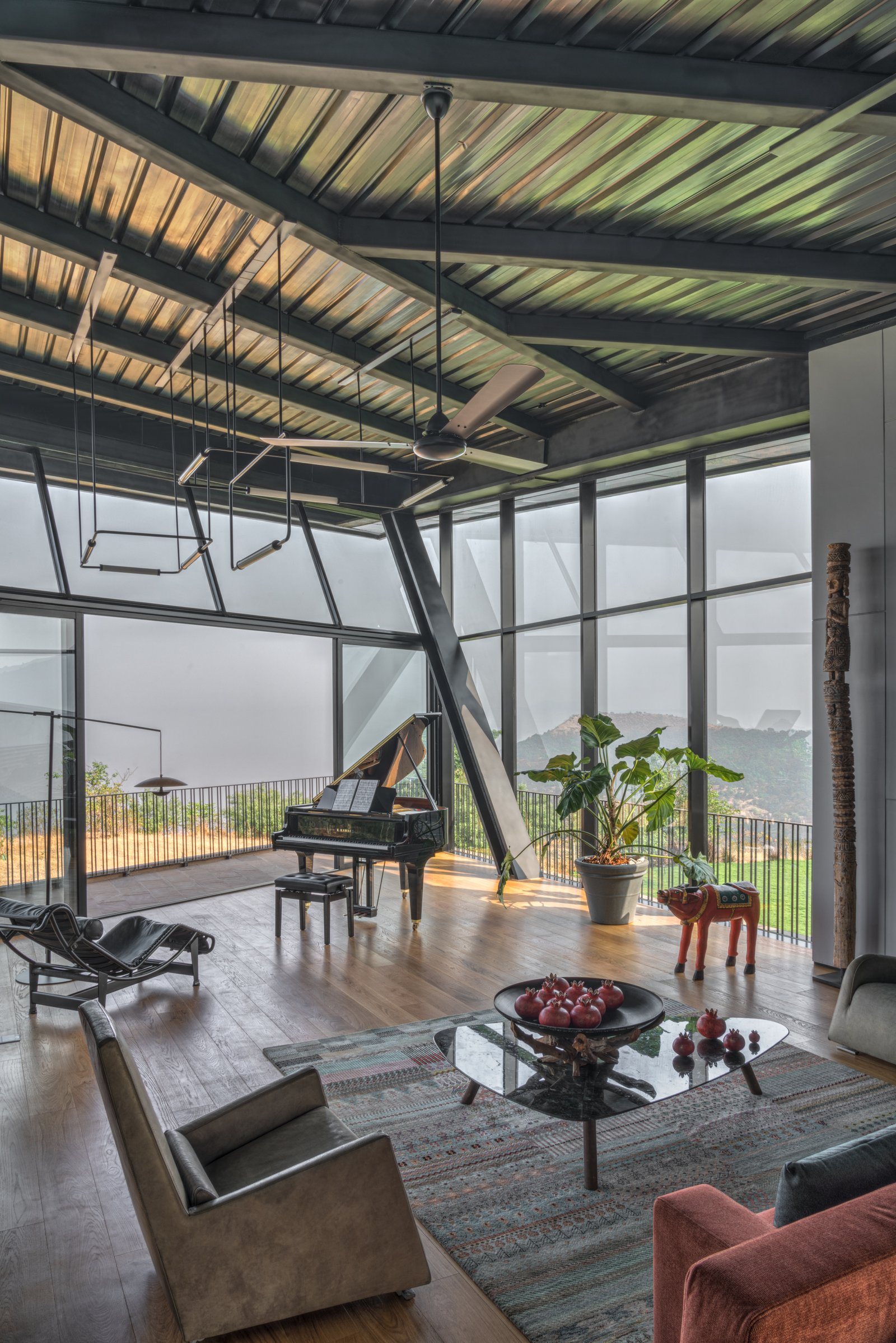
Even her personal residence, Airavat… a meditative, nature-embracing home that seamlessly dissolves into the landscape… earned a nomination as a finalist at the World Architecture Festival, a testament to her ability to translate philosophy into form at the highest global level.
As 2025 draws to a close and we look toward 2026, Apoorva Shroff stands at the forefront of conversations shaping the next era of architecture and design. Whether it’s the rise of human-centric homes, the evolution of workplaces into fluid social ecosystems, or the quiet power of conscious opulence, she brings a rare clarity: design is no longer just about aesthetics, it’s about emotion, behaviour, memory, and meaning.
In an in-depth interview with Sumita Chakraborty, Founder & Editor-in-chief, TheGlitz, Apoorva Shroff shares deep insights about residential design, workplace evolution, hospitality experiences, large-format architecture and year-end reflections.
Over To Apoorva Shroff, Founder and Principal Designer at Lyth Design

As we step into 2026, what are the most powerful architectural shifts you predict will redefine residential and commercial spaces globally?
Apoorva Shroff – In my opinion, as we move into 2026, architecture is becoming increasingly human-centric. We’re seeing a shift from purely aesthetic ambitions to spaces that support wellness, adaptability and emotional balance. Homes are evolving into multi-functional ecosystems, places where we live, work, recharge and connect. Commercial spaces, on the other hand, are moving toward hybrid, hospitality-inspired formats that encourage fluidity rather than rigid zoning. Globally, I see biomaterial adoption, tech-enabled personalisation and climate-responsive design transitioning from trends to baselines.
You often speak about emotion-led design. How do you translate feelings like comfort, aspiration, or nostalgia into tangible architectural elements? We are curious, how did your journey into the world of Architecture and design begin?
Apoorva Shroff – Design begins with empathy. I spend a lot of time understanding what a space should feel like for its inhabitants. Comfort might translate into softer edges, warm finishes, and diffused light; aspiration takes shape through scale, expression, and curated luxury; nostalgia could emerge through local materials, handcrafted elements, or reinterpreted vernacular forms. For me, emotions become- the brief and the architecture is the medium through which those emotions are spatially articulated.
To answer the second part, my mother was a banker, and many of her clients were architects. She would often tell me about their profession — how it allowed them to travel, see the world, and experience beautiful monuments and diverse cultures. As a young girl, that idea fascinated me. I was drawn to the possibility of a career that combines creativity with exploration. Over time, what began as a curiosity for travel and design evolved into a deeper passion. I realised that architecture isn’t just about creating structures, but about shaping experiences, building communities, and leaving behind spaces that people connect with on an emotional level. That sense of purpose continues to inspire me today.
Minimalism and maximalism continue to tug at opposite ends of design. How do you find the perfect balance between restraint and richness, especially for Indian homes?
Apoorva Shroff – Indian homes have always celebrated layers of culture, colour, craft and memory. But today’s lifestyle demands clarity and calm. The sweet spot lies in controlled maximalism: celebrating richness without overwhelming the senses. I often use restrained architectural shells that allow art, heirlooms, textures and personal objects to shine. It’s about curation rather than accumulation, creating environments that feel both expressive and breathable.
If you had to pick three design movements or innovations that truly dominated 2025, what would they be and why?
Apoorva Shroff – I would pick:
1. Biophilic immersion: not just adding plants, but designing spaces that behave like natural ecosystems.
2. Hyper-local materiality: from bamboo composites to waste-wood terrazzo, 2025 was the year local materials truly became aspirational.
3. AI-assisted design: particularly in prototyping, parametric optimisation, and visualisation, it drastically accelerated creative exploration.
Each of these movements pushed us to rethink how architecture can be more intuitive, responsible, and future-aware.
Sustainable luxury is becoming a major conversation point. What does ‘conscious opulence’ look like in architecture today and what trends are you seeing among high-end homeowners?
Apoorva Shroff – Conscious opulence is luxury with intention. It’s about choosing materials that age gracefully rather than those that merely impress on day one. It’s about craftsmanship that supports local communities, technologies that reduce energy loads, and spatial planning that minimises waste. High-end clients today are asking for homes that feel indulgent yet responsible, spaces that reflect their values as much as their tastes.
Your projects often respond deeply to context, culture, climate, community. How do you ensure that a space remains rooted while still feeling contemporary and global?
Apoorva Shroff – I believe that contemporary design doesn’t mean abandoning one’s roots; it means reframing them. I start by understanding the cultural nuances, climatic behaviours and community stories tied to a site. These cues inform material choices, spatial strategies and even micro-interventions. The contemporary layer comes from clarity, refinement and technology. When the two meet, you get spaces that feel globally relevant yet unmistakably grounded.
With your portfolio spanning workplaces, hospitality, and large-format spaces, what are the biggest shifts you’re seeing in how people want to interact with built environments post-2025?
Apoorva Shroff – There’s a strong desire for spaces that offer choice and fluidity. Workplaces are behaving more like living rooms; hospitality spaces are integrating wellness; large-format environments are becoming more participatory and less monolithic. People want environments that adapt to their rhythms instead of dictating them. Functionality is important—but sensorial memory, emotional comfort, and intuitive navigation are becoming equally crucial.
From designing Madhuri Dixit Nene’s home to global corporate spaces, your work spans varied personalities. How do you capture a client’s identity and translate it into a space that feels authentically ‘them’? Could you tell us a bit about your experience designing Madhuri Dixit Nene’s Mumbai residence, SoftBank in California, The Hungry Caterpillar at Ashoka University and other notable projects.
Apoorva Shroff – For me, the ability to design for vastly different personalities and contexts really comes from one simple practice: listening. I pay attention to what the client is asking for and what they need. So, you’re able to predict the problems that they cannot foresee and solve for that even before the problem even arises.
The minute you start listening to the client, automatically their personality starts getting infused into the project subconsciously and then it’s my aesthetic that then ties it all together, creating a balance between who they are and what the space demands. That’s why I’m able to shift from designing a school to designing a home for someone like Madhuri Dixit Nene because every project starts with studying the context, environment and purpose.
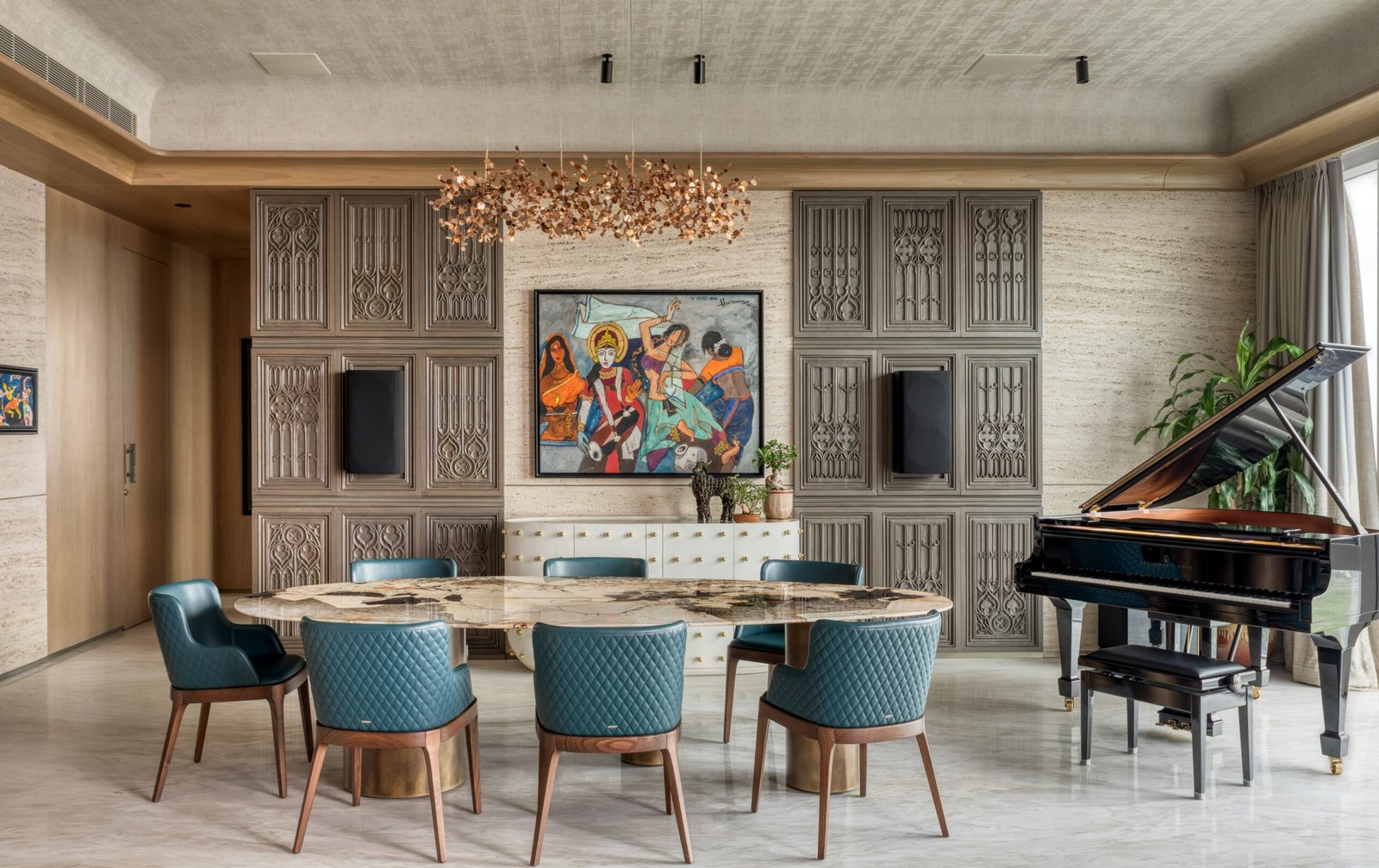
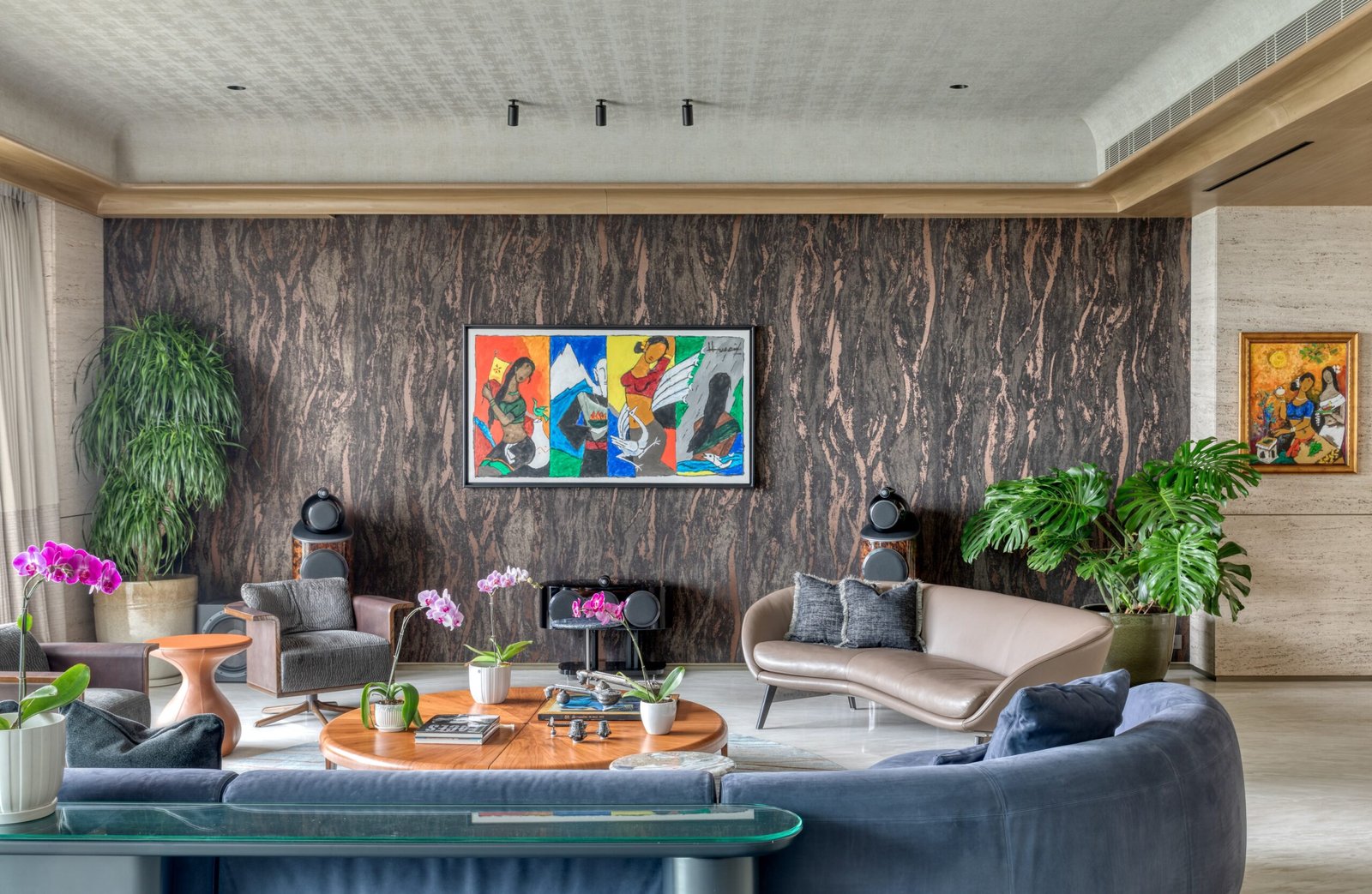
Designing Madhuri and Shriram Nene’s Mumbai residence was a great example of this. Madhuri and I were very aligned in terms of aesthetic, which made the process intuitive. Shriram required a bit more convincing initially, but once he saw the direction I proposed, he was then open to experimenting and trusting the design process. The project was technically challenging as well.
Shriram had an extensive team and it truly took collective inputs from everyone involved to bring the house to life. With several challenging aspects from the intricate sound system to sound cushions on all the walls, we had to collaborate closely with multiple consultants to ensure every technical element blended seamlessly into the overall design. Achieving that level of integration was, I believe, the quiet victory of the project- and truly a team effort.
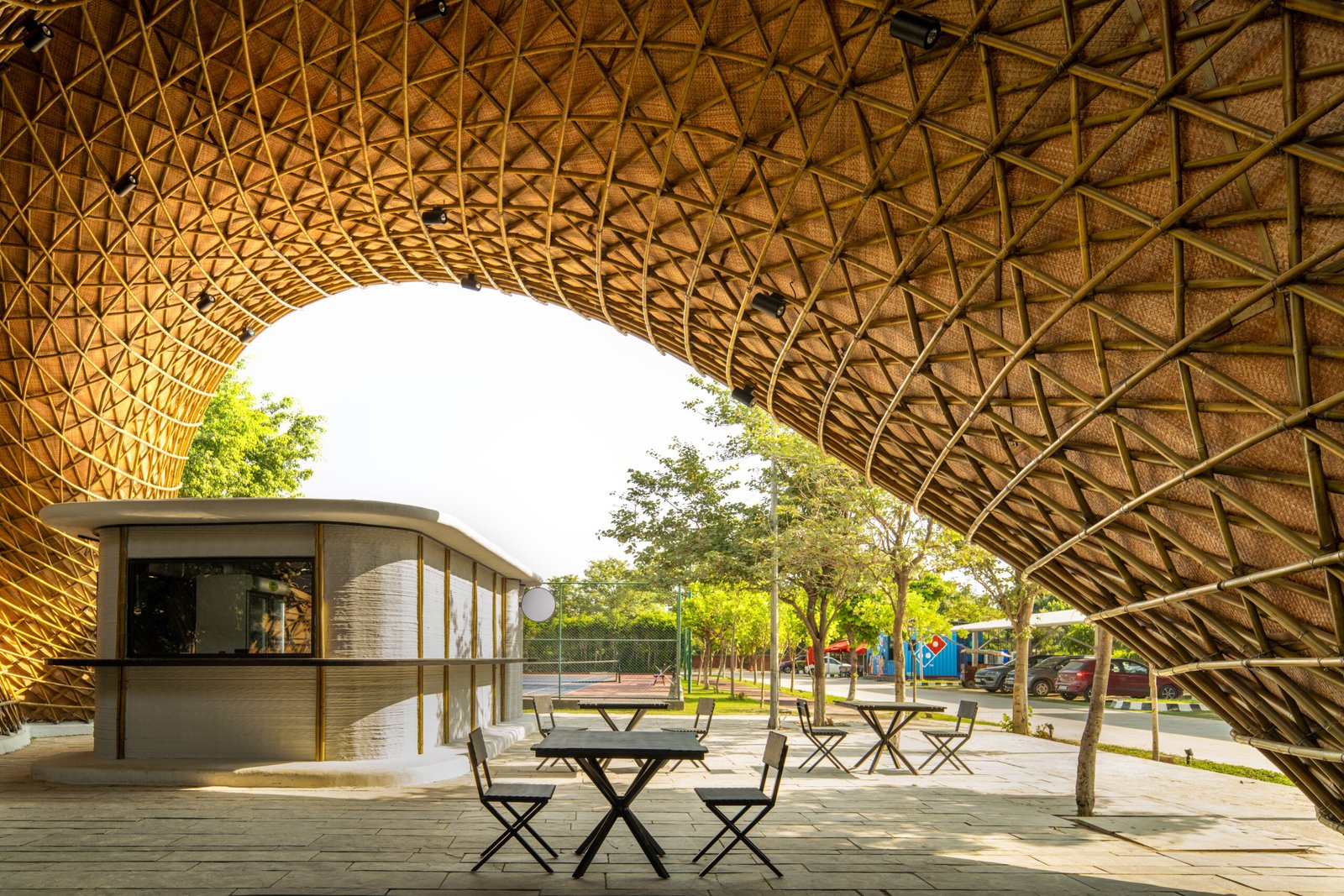
The Hungry Caterpillar at Ashoka University brought an entirely different set of challenges. The project had never been attempted before, and the people involved were scattered across the world—the structural engineer in London, the manufacturer in Goa and our team in Mumbai, and the site was in Haryana. Coordinating with them over zoom calls was quite difficult but watching everything come together seamlessly was very rewarding.
SoftBank in California was another unique experience. I designed the space here, while the local team executed it, which meant constant coordination across continents. The building was a massive 54,000 sq. ft. space in Menlo Park, an area defined by a Spanish–Hacienda architectural vibe. But SoftBank, being a Japanese institution, wanted its cultural identity to subtly flow through the interiors. Blending these two contrasting aesthetics- introducing a quiet Japanese sensibility into a predominantly Spanish context was quite a challenge but it came together smoothly.
Your own family home, Airavat, was nominated as a finalist at the prestigious World Architecture Festival. Tell us a little bit about that.
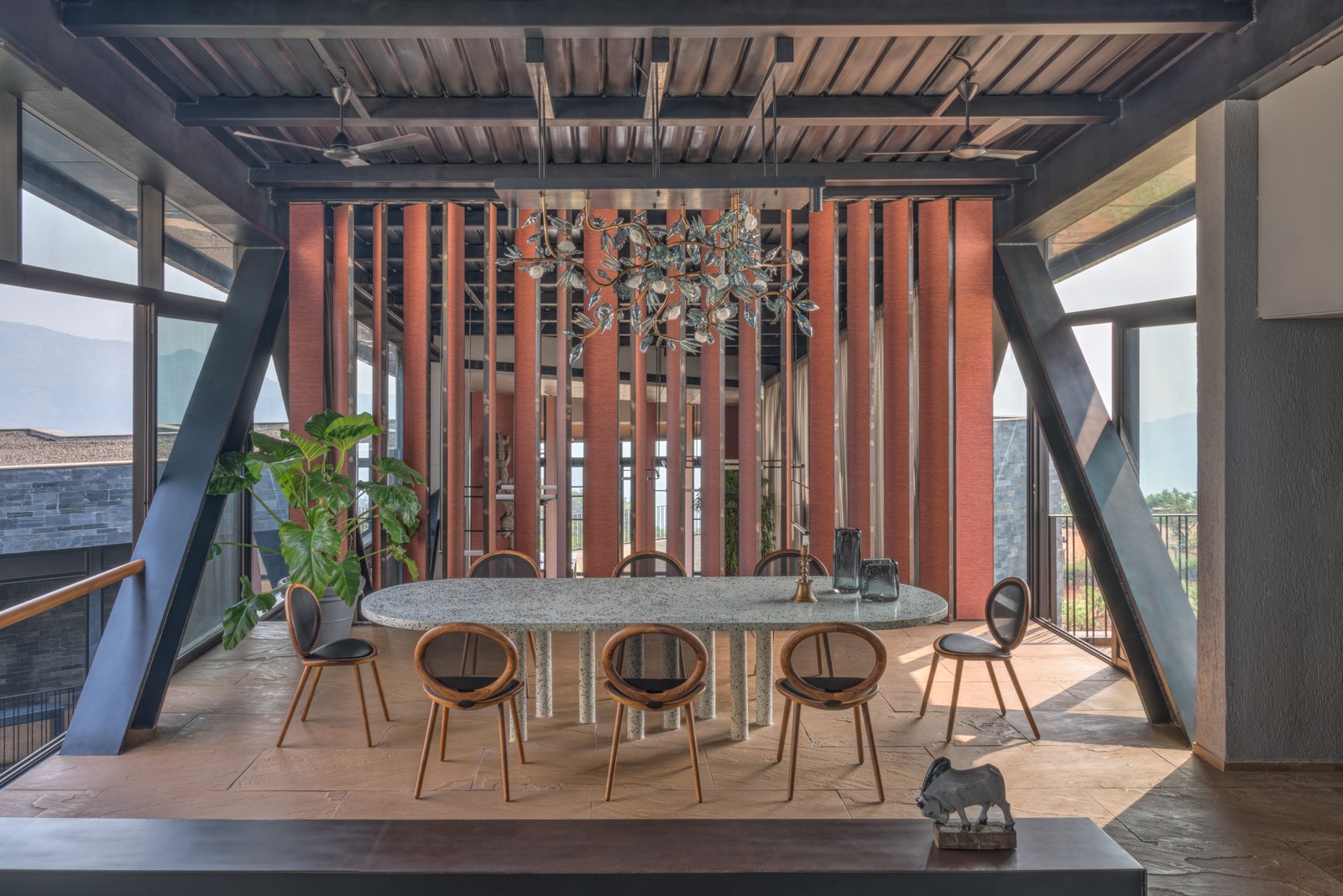
Apoorva Shroff – Airavat, my family home, which I designed and built from the ground up. Airavat means Indra’s elephant, and the name felt fitting for the home because of its scale and presence. I began building it in 2018, and it was completed in 2021. The site was extremely challenging: there was no direct road access, and water had to be brought in from afar. These constraints made sustainability not just a design choice, but a necessity.
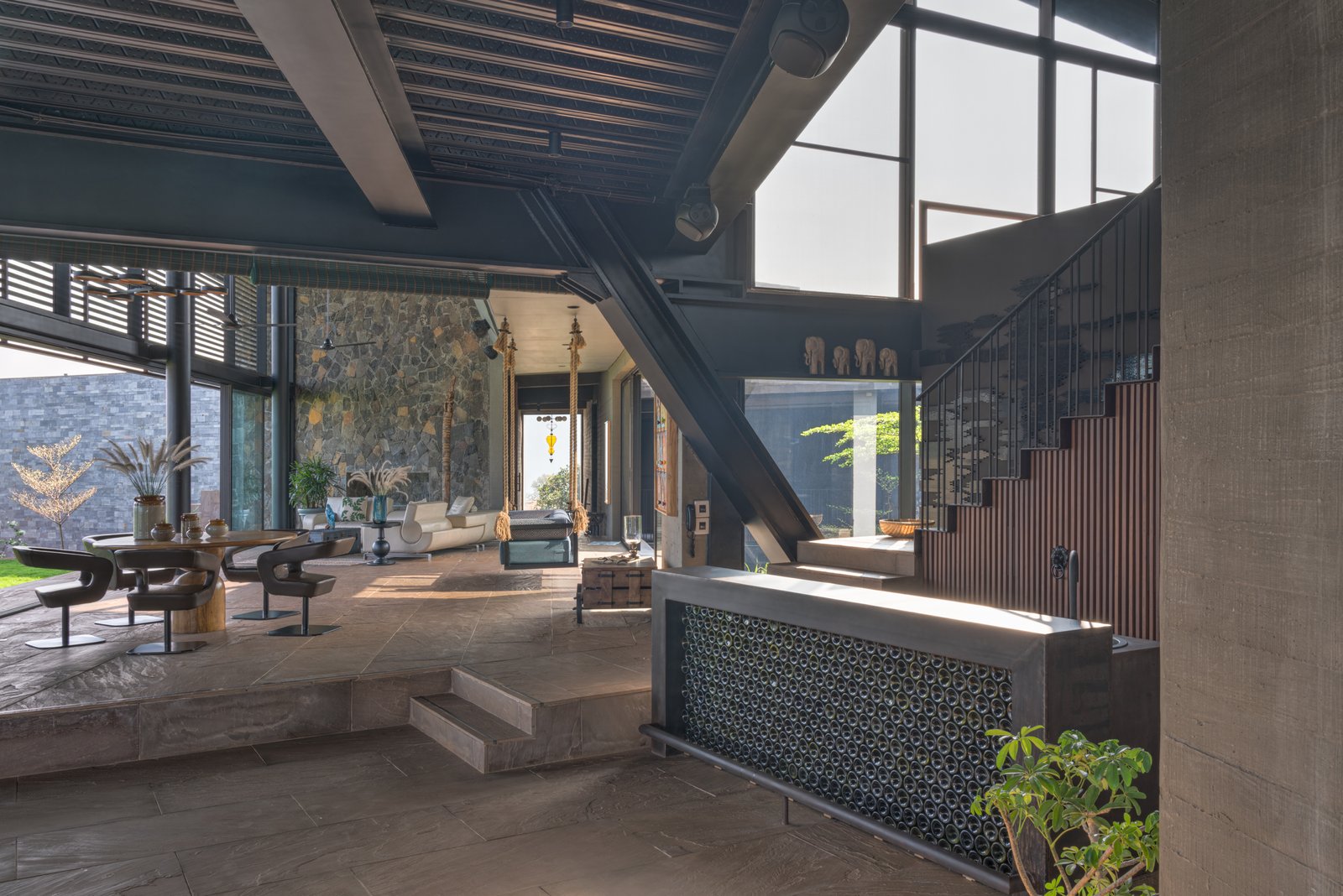
We incorporated natural ventilation and passive cooling strategies so the home remains comfortable with minimal reliance on artificial systems. The design itself was guided by the philosophy of staying connected to nature and to one another. No matter which room you are in, you get a framed view of the surrounding landscape. I planted large trees within the home, creating a green spine that ties the spaces together and keeps the family connected, even across such a large structure.
From the house, you can see Duke’s Nose in the distance, and during the monsoon, nearly seven or eight waterfalls cascade down the valley – it’s a breathtaking experience that constantly reminds us of the harmony between design and nature. The home went on to be selected as a finalist at the World Architecture Festival, which was a proud moment.