
TheGlitz ‘Super Woman’ Komal Hiranandani’s desire to bring sustainability and socially conscious spending to the mainstream and etch them in the minds of many is what made her start SaltScout, a social enterprise. Being a development economist, she has always been passionate about putting her marketing and business acumen to good use. This is evident in the resounding success of Dolce Vee, a store for thrift and vintage finds that is also a brand of SaltScout.
Many Bollywood A-listers, including Bhumi Pednekar, Priyanka Chopra, Anushka Sharma, Arjun Kapoor, Sonam Kapoor, and Deepika Padukone, have collaborated with the store on numerous occasions due to its commitment to sustainability. “As a woman, I take pride in the fact that many women are stepping up and taking the lead to fight against climate change and spreading awareness about sustainability. These are the women who inspire me to do more and never give up hope,” TheGlitz ‘Super Woman’ Komal says.
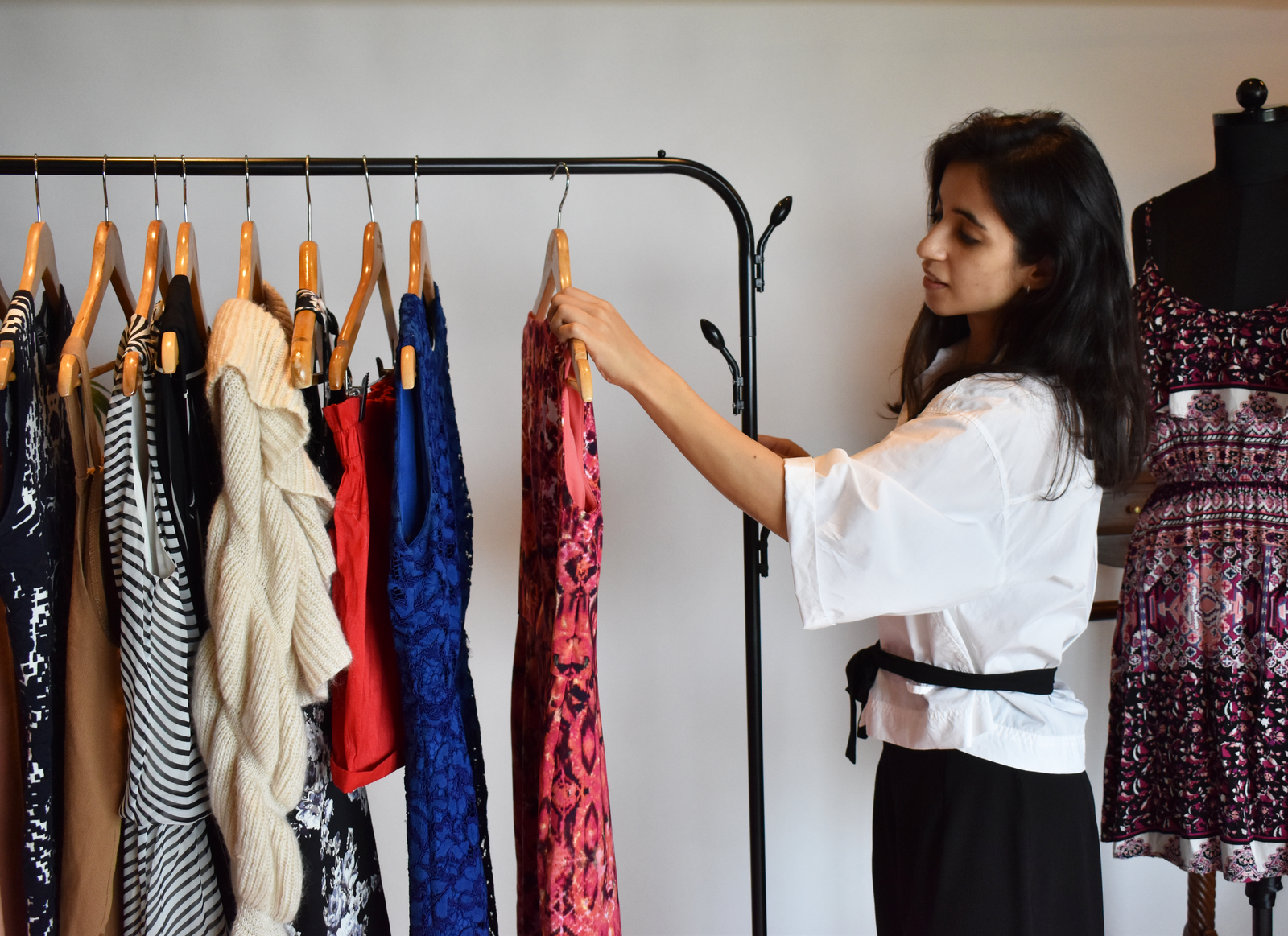
Your journey has had many momentous milestones. Could you tell us about your life-changing journey that has molded you to be what you are today?
I have only ever been involved in the development sector, and was lucky that our school made us engage with social service at an early age. Since then, whatever work I did, it always been rooted in this field. My training in economics had over time convinced me that for some systemic and foundational changes, market-based approaches are key. During my time as an urban development researcher, I learned about the surprising levels of pollution attributed to clothing production, and so began thinking about the remarkable impact each person can have by opening their hearts and their closets to preloved. Since then, I became obsessed with applying all I had learned in behavioral economics, data analytics, and forecasting to fine-tune how to get the Indian mass market excited about preloved fashion. That is how Dolce Vee was born.
Could you list 3 of your major achievements?
Harking back to my time in research, completing my Applied Economics Thesis on urban governance in India is a moment close to my heart because of how much work, thought, sleepless nights, and of course guidance from incredible mentors, had gone into it. The next biggest achievement I felt was when Dolce Vee launched India’s First Clothing Environmental Footprint Calculator in partnership with CERE, giving people in India a way to learn more about the resources that go into making their clothes for the first time. The next was when the Dolce Vee community crossed the landmark of 1 crore liters of water saved through pieces sold being purchased preloved over newly manufactured!
What are the setbacks you have faced? How did you tackle these setbacks or challenges? And what lesson have you learned from it?
I think any startup team can tell you – the ups and downs are real! The biggest shock most of us faced of course came with the pandemic – for both personal and professional reasons. On the work front, there was so much uncertainty. Launch plans were delayed, bills kept rolling in, and all sales had stopped cold. We quickly pivoted to do new temporary activities within the social sector to make sure the team was engaged, morales were kept up, and overhead costs were covered. Managing logistics at that time was a herculean task, but once you’ve dealt with that, you realize you can deal with anything!
When you look back, what are the three qualities in you that have helped you become what you are today?
Hard work, stamina, ambition.
Who are the people who have been the wind behind your wings?
Too many to name. I’ve been blessed with family and friends who are always there when times get tough, and very importantly, are understanding when you miss gatherings because of work!
Lastly, if there was a quote to define you, what would it be?
No one ever changed the world without taking a big leap.