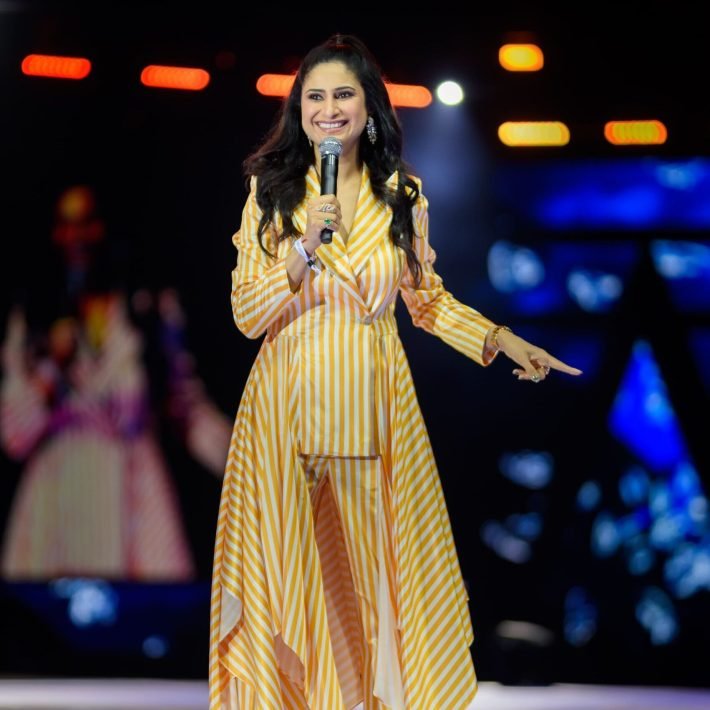
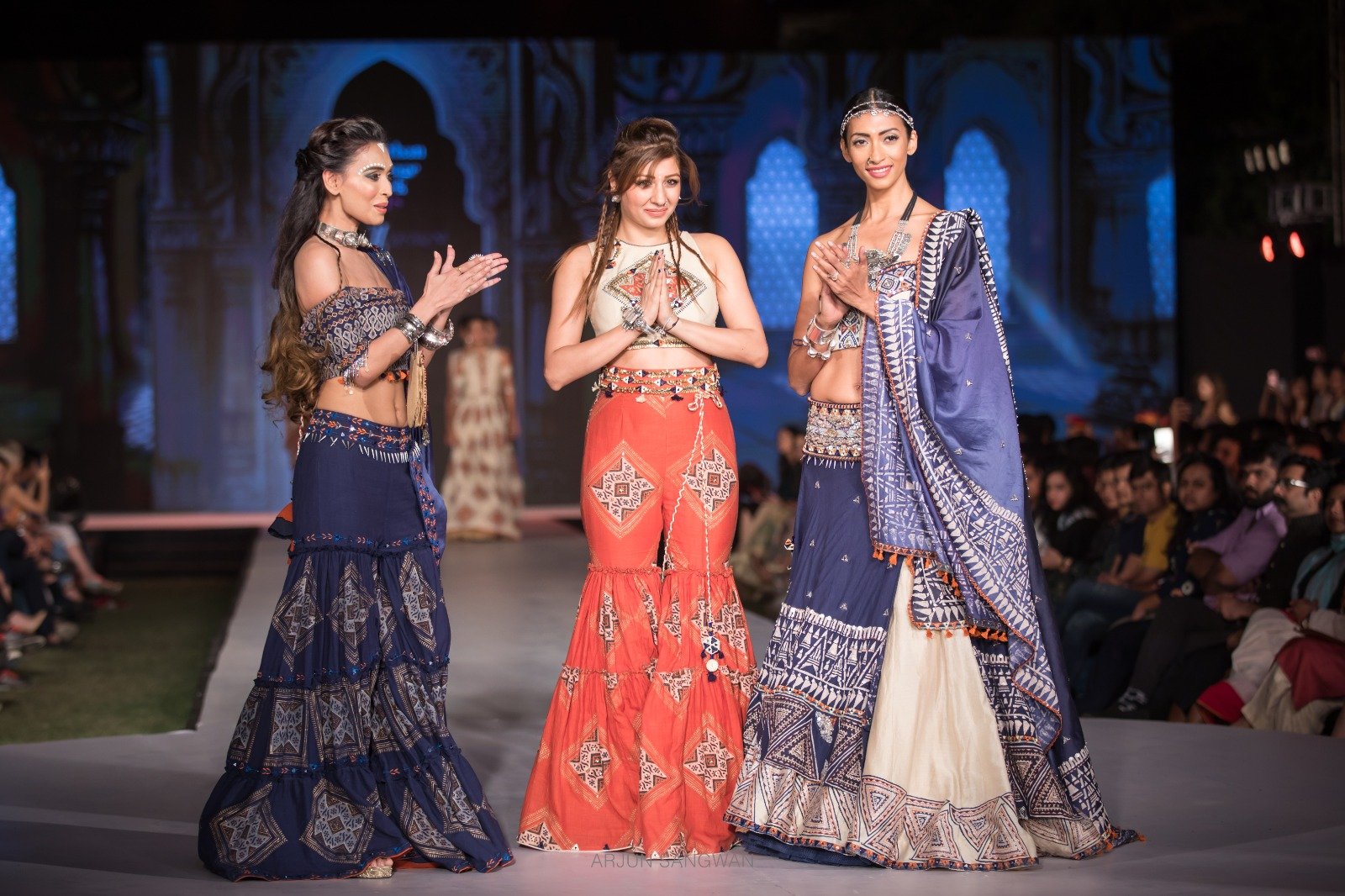
Sixteen years in fashion, and Ashna Vaswani, the Jaipur-based designer has been staging quiet rebellions with fabric. Denim at weddings? Naturally. Khadi as couture? Why not. Tribal art embroidered onto butter-soft Kota Doria? Of course, that’s just Tuesday.
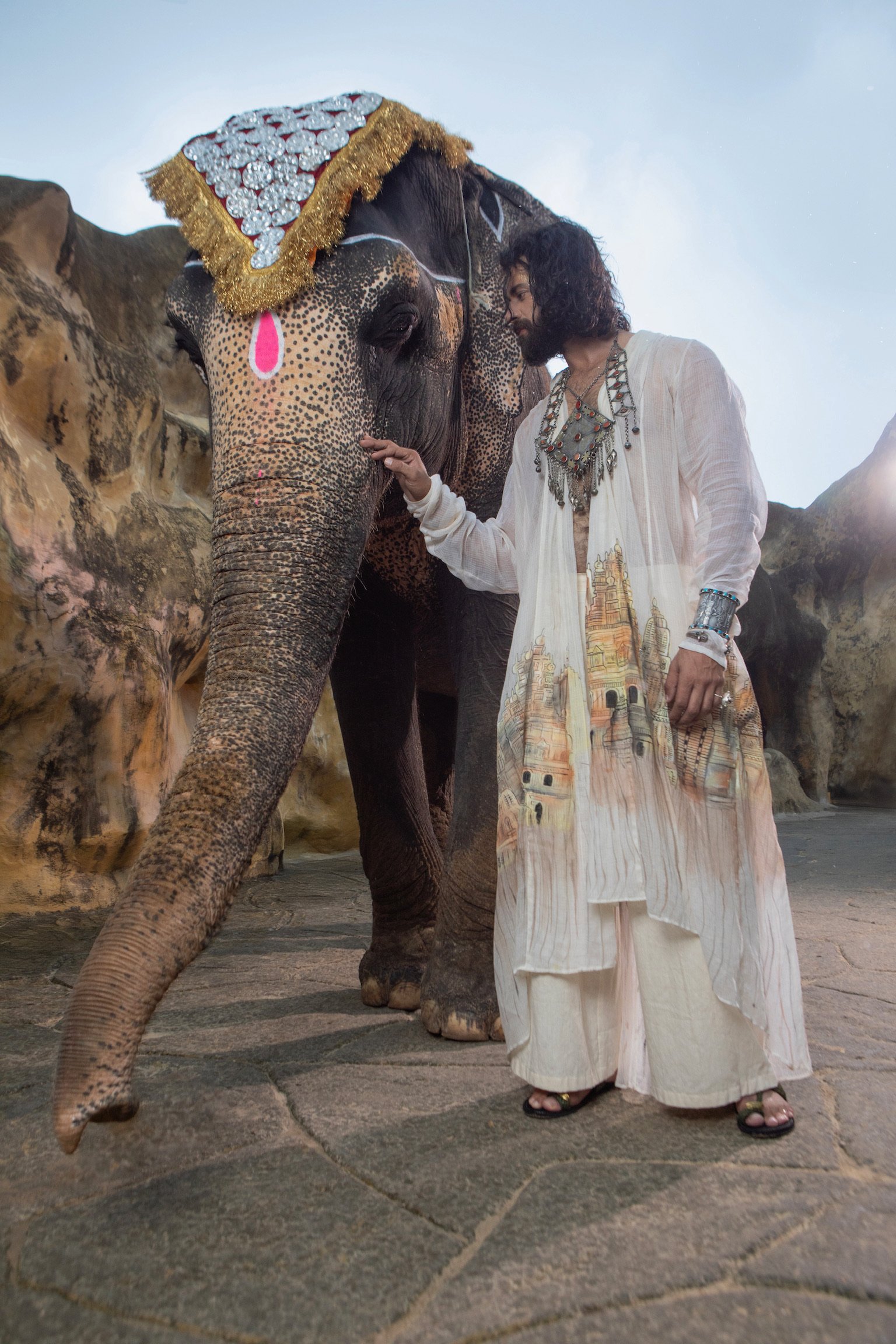
Her new Khadi collection: A Contemporary Ode to India’s Most Iconic Fabric isn’t some earnest ode to heritage. It’s a calculated coup. While others treat Gandhi’s cloth like a museum piece, Ashna drapes it on brides, structures it into armour-shouldered jackets, hand-paints it with metallic chains through hand spun cotton. She’s taken India’s most politically loaded textile and made it irresistibly chic.
“I don’t believe in overdoing it,” she tells me, which is rich coming from a woman whose signature move is pairing gold tribal embroidery with denim corsets. But that’s her genius: maximum impact through ruthless editing. She calls it KISS: Keep It Simple and Stylish. The fashion press calls it genius.
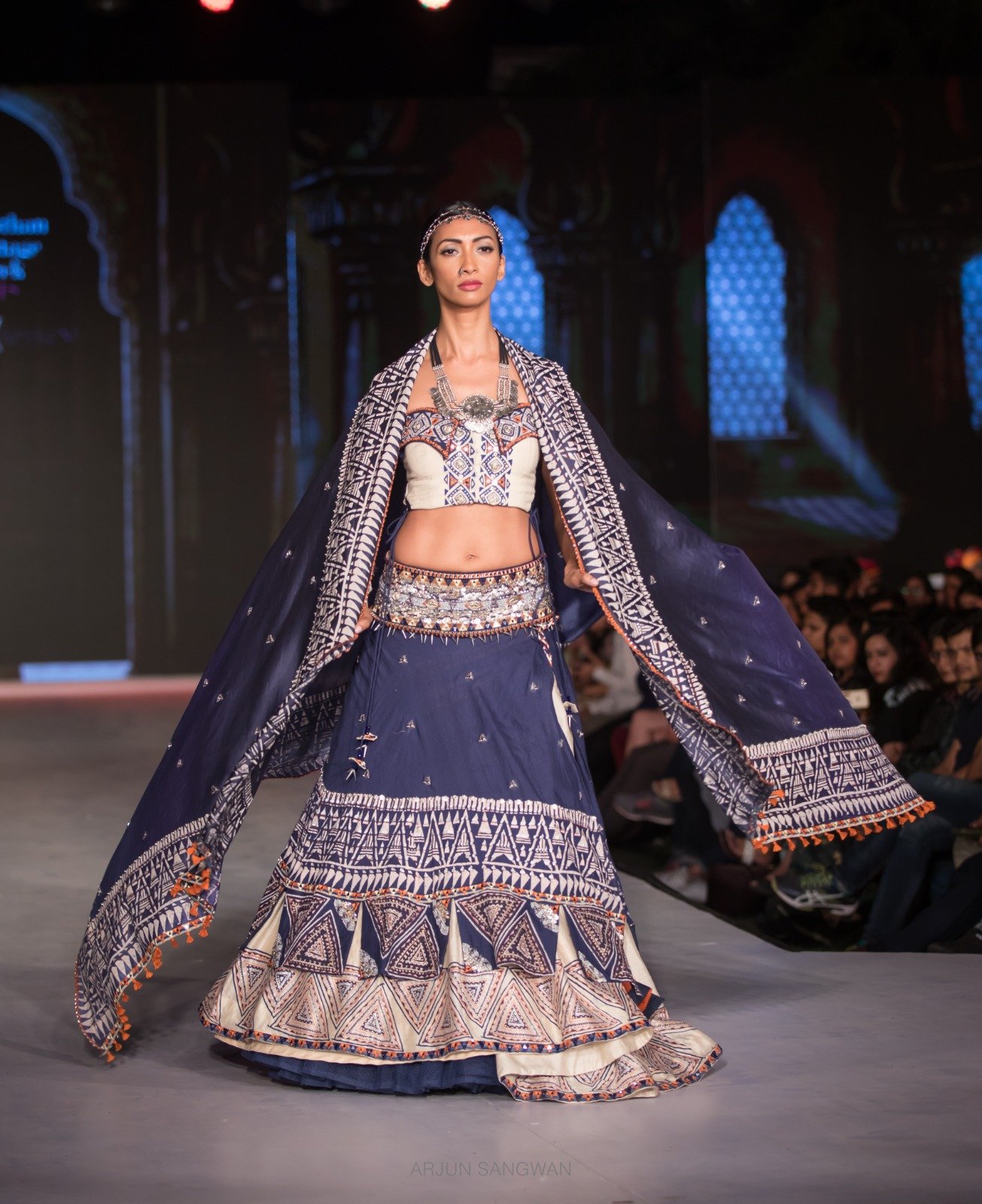
Her résumé reads like a fashion atlas: Lakmé, India Fashion Week, Vancouver runways, Rajasthan Heritage Week. She’s dressed Shilpa Shetty, Sunny Leone, Gauhar Khan. Her pieces command real estate at Pernia’s Pop-Up Shop, Vesimi Dubai, White Mansion Mumbai.
But what captivates is watching her work both sides of the brain: artist and CEO, dreamer and dealmaker. She’s evolved from passionate designer into something rarer: a businesswoman who hasn’t sacrificed an ounce of creative fire. Her next collection, “Into the Wild,” already simmering in her Jaipur atelier, mixes Khadi with Chanderi and denim.
We settle in for a proper chat. The studio workshop hums with renovation activity, her assistant fetching pieces mid-sentence. Tailors execute her vision stitch by exacting stitch. She’s three collections ahead mentally. That restlessness? That’s the real luxury.
In conversation with Ashna Vaswani…
RM: Sixteen years designing. What surprised you most about the woman you’ve become?
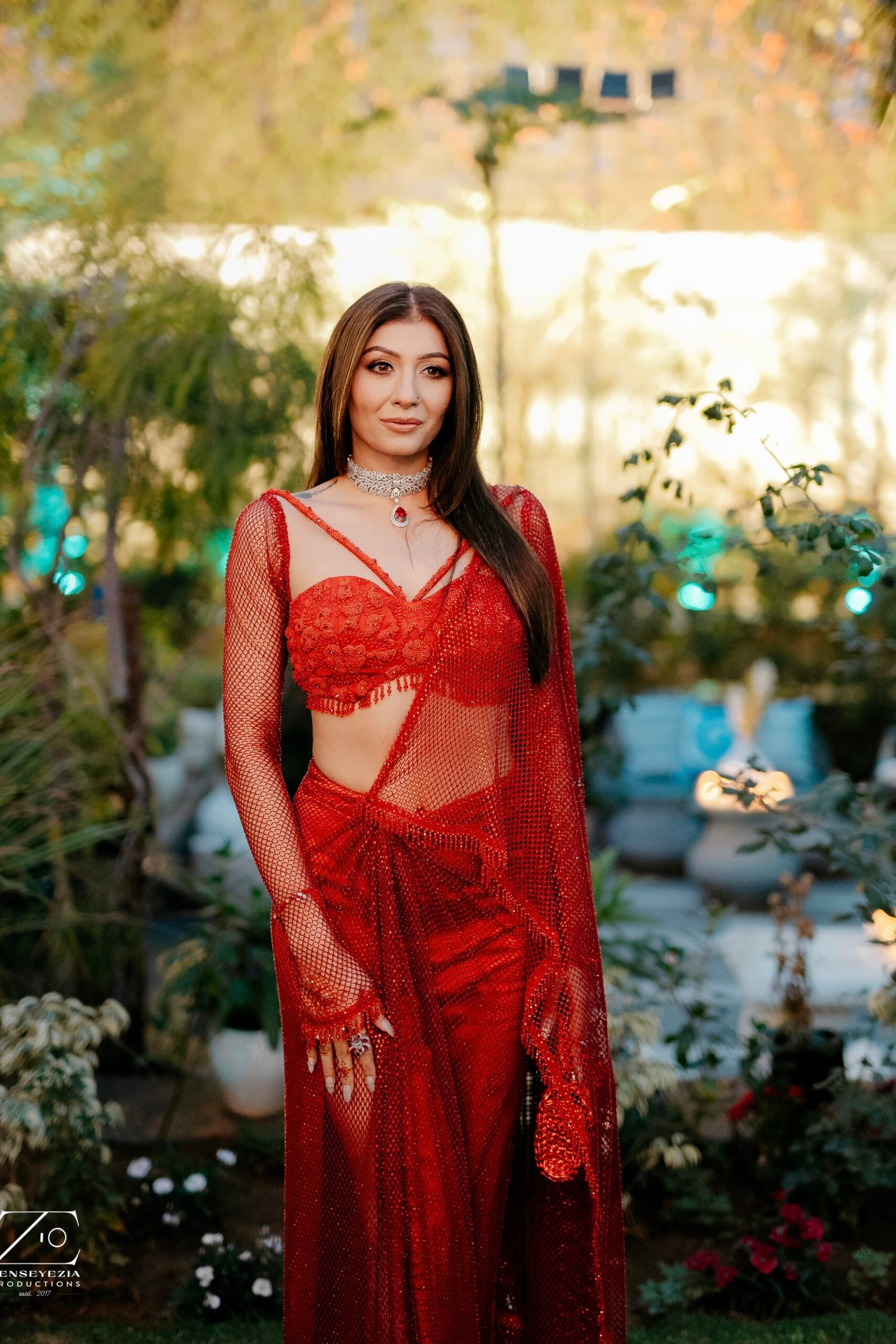
AV: The businesswoman part. That genuinely shocked me. I never thought I could hold both identities: designer and entrepreneur, artist and CEO. I knew I was passionate about design, obsessive even, but discovering I had this sharp business brain? That was the plot twist. Now I navigate both worlds naturally, and honestly, I quite like this version of myself.
RM: TELL US …. Tribal art, gold, and denim – three strong voices. How do you make them speak as one?
AV: Very carefully. (laughs) Look, I love making statement pieces. Fashion that turns heads, demands attention. But combining these three incredibly strong elements without screaming at each other? That took time.
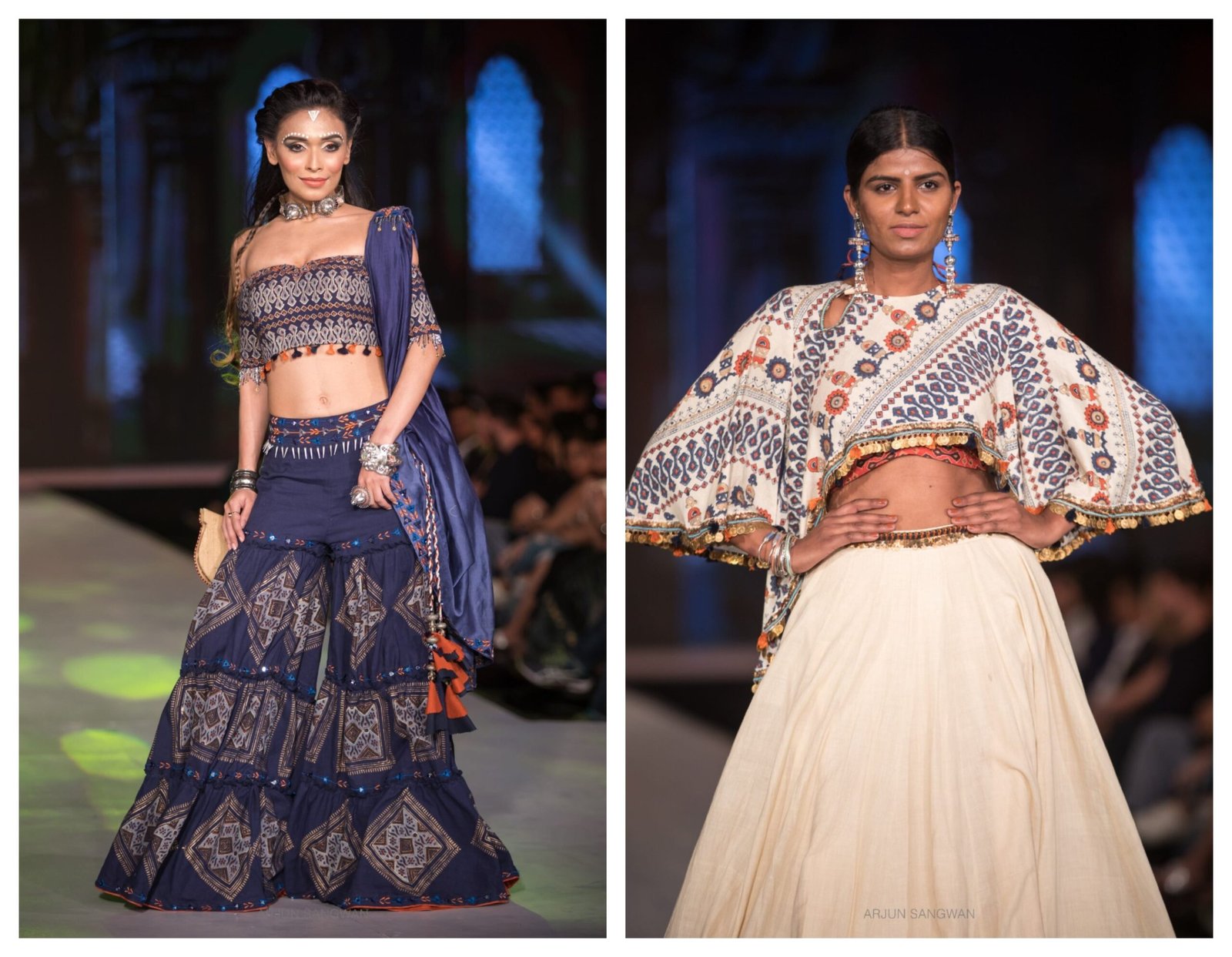
Denim is aggressive, tribal art is intense, gold is… well, gold. Finding that balance where they enhance rather than compete was the real work. But once we found it, we couldn’t stop: Devi Drape, Devi Drape 2.0, Devi Drape Couture. We even have Kutta Couture now. Dog Couture, because why not? Good things are worth the wait.
RM: The KISS collection – minimal elegance. Your other work – maximum impact. How do both come from the same designer?
AV: KISS stands for Keep It Simple and Stupid, which I rather like. (smiles) Even my boldest pieces follow this rule: I never overdo it. If the structure is strong and the silhouette is clean, then your embellishment, your craftsmanship becomes the statement. I refuse to throw everything at one garment. Restraint is power. Simple execution, maximum impact. That’s the philosophy behind everything I create.
RM: You design for women who ‘lead, dare, and inspire’. What do you design for women who just want to feel beautiful on a Tuesday?
AV: But isn’t that woman inspiring too? Think about it. Choosing beauty on an ordinary Tuesday, without occasion or audience. That’s radical in its own way. She’s giving permission to others to do the same. Every woman inspires someone, even if she doesn’t realize it. Our icons differ, our definitions of aspiration vary. Maharani Gayatri Devi in those stunning chiffon sarees. She made that her signature when no one else dared. That’s Tuesday inspiration right there.
RM: Coming to your newest collection, Khadi, Khadi carries so much weight – Gandhi, independence, sacrifice. What does it mean to you when you say contemporary Khadi?
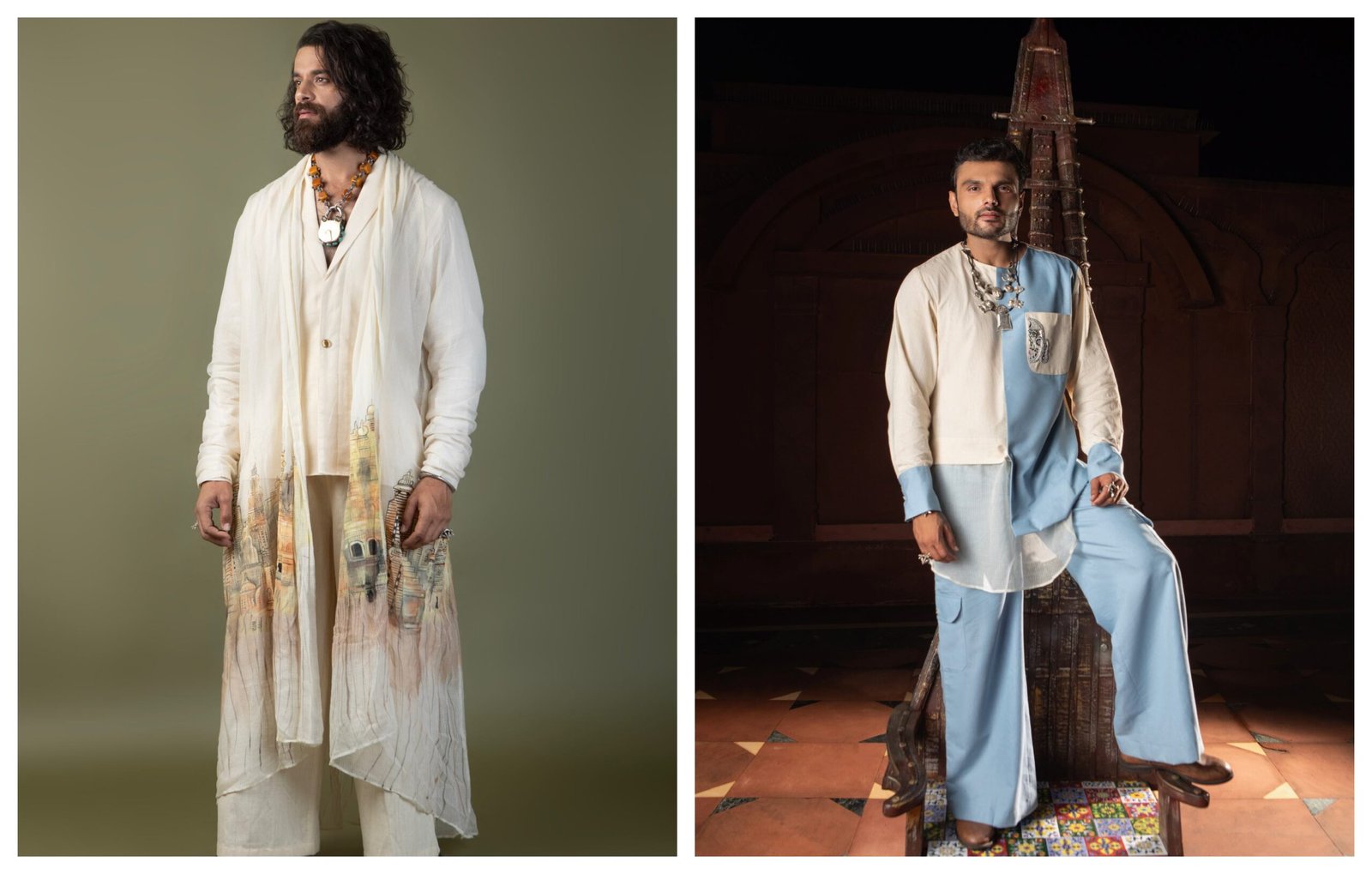
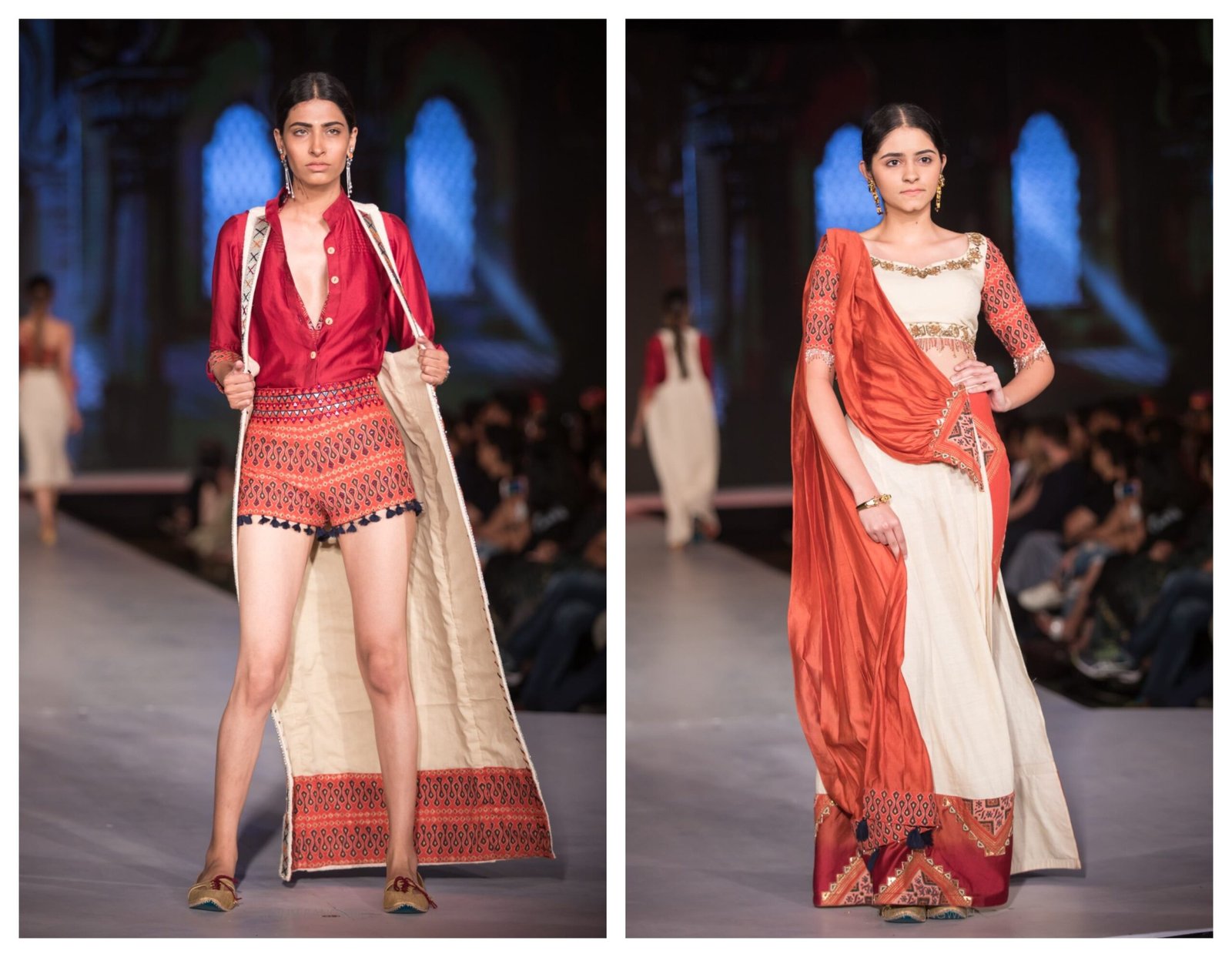
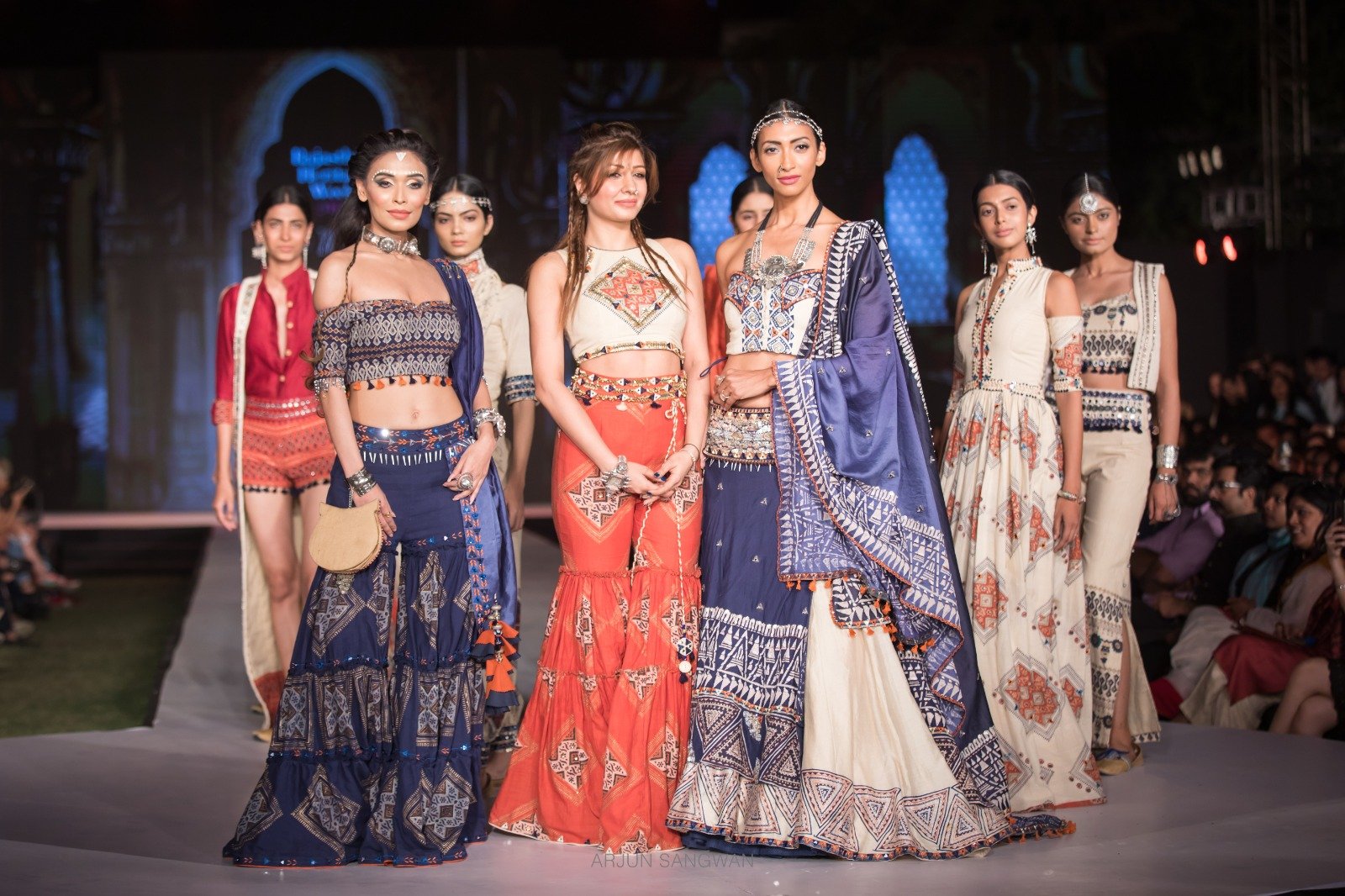
AV: It means liberating Khadi from the casual wear category forever. For decades, Khadi meant simple kurtis, everyday garments. Nothing elevated, nothing special. We rejected that completely. We launched it at Rajasthan Heritage Week in Jaipur and it was well received. We used Khadi for couture pieces, applied block printing, created garments brides wore for mehendi and pre-wedding functions. Nobody had positioned Khadi there before.
I’m drawn to unconventional fabric choices. Denim wasn’t bridal wear either until designers like me insisted it could be. These challenging materials force innovations. Right now, we’re working on “Into the Wild.” Khadi, denim, and Chanderi as our key fabrics. It’s that challenge, that newness, that excites me. Khadi deserves couture treatment, and we’re giving it exactly that.

RM: Structure with sensuality. Show us what that actually looks like in one piece.
AV: Let me show you precisely. We create many blazers and waistcoats: strong, architectural pieces. But we always pair them with something soft: Kota Doria, silk, delicate weaves. That’s the secret. Women love this because the garments feel powerful without feeling masculine. Strength with femininity intact.
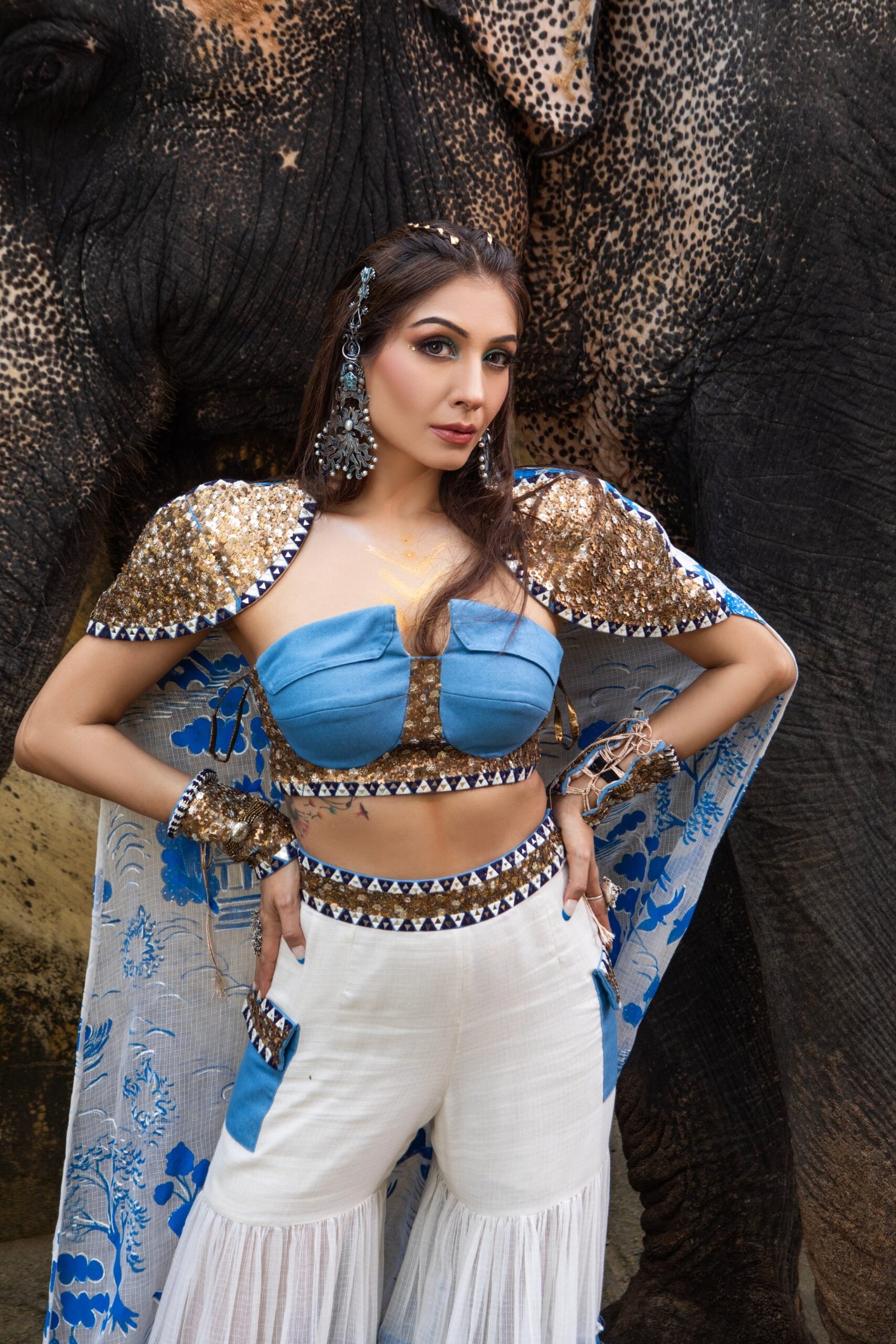
This denim bustier, for instance. Functional pockets, corset structure, armor-inspired padded shoulders. Pure strength. Then we layer this hand-painted Kota Doria cape over it, and suddenly you have fluid movement, delicacy. Underneath, a sharara with denim pockets. Again, that structural punch. But the cape breathes, flows. Everything is hand-painted. Structure supporting sensuality, not fighting it.
And here. Khadi and denim with hand-painted beads and metallic chains woven through. Real metal, real weight. But the Khadi keeps it wearable, livable. That’s the balance we’re always chasing.
RM: You’ve dressed Bollywood stars. Does celebrity change how you see your own work?
AV: Absolutely. When Shilpa Shetty or Sunny Leone or Gauhar Khan chooses your work, it’s validation on the biggest stage. There’s pride, certainly, and a feeling of wider acceptance. Fashion needs to be seen, and in India, Bollywood is that platform.
Think about it. Bollywood defined Indian fashion long before Fashion Week existed. We described style through “Madhuri’s blue blouse” or “Sridevi’s saree design.” Those were cultural moments. Even now, clients arrive referencing “Alia’s blouse” or “Deepika’s gown.” Bollywood and fashion are tied together in India. That’s where an entire generation learned to dream about clothes. That influence hasn’t faded. If anything, it’s grown stronger.

NOW FOR THE FUN PART: THE QUICK-FIRE ROUND
Bold or simple – which one is really you? Bold
Heritage through modern eyes… What stays, what goes? Heritage stays
Hand-painting Kota silk at midnight… Love or madness? Madness
Women who lead and dare. Do you design for them or as one of them? As one of them
Shilpa Shetty or Sunny Leo ne – who understood your vision better? Sunny Leone
You dress icons. Who dresses you when it matters? Myself. Always.
Pernia’s and White Mansion stock you. Do you ever shop sale racks? Always. If I love the piece, I don’t care where I find it. And as a designer, you instinctively calculate garment costs. (laughs) So yes, I hit the sales rack first. Professional habit.
Bold silhouettes, powerful drapes. What do you wear to disappear? Disappear? Wrong designer for that question. (laughs) I don’t do invisible. Even off-duty, I’m making some kind of statement. It’s who I am.
For more stories like this, stay tuned to TheGlitz