
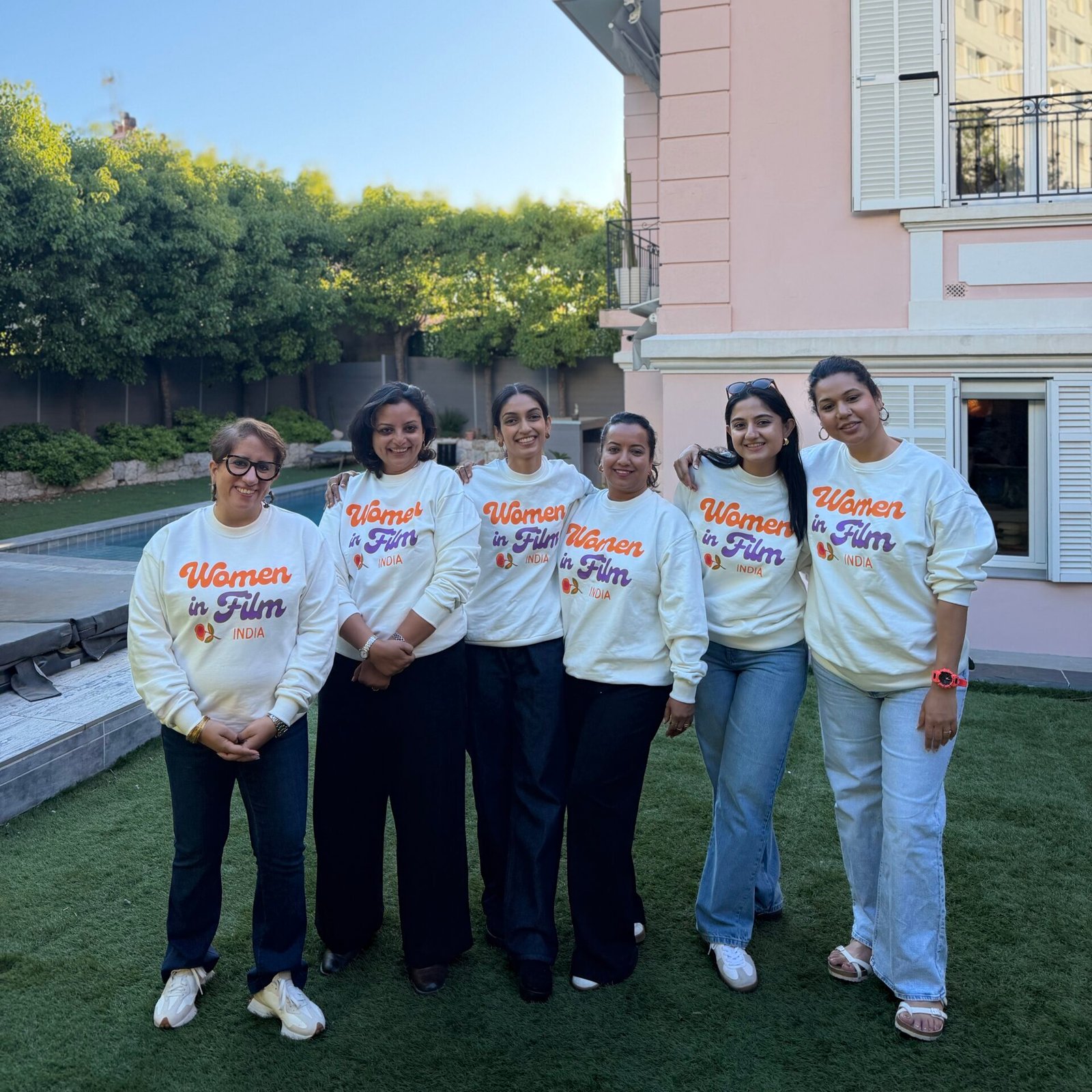
Women in Film India L-R: Guneet Monga Kapoor, Suruchi Sharma, Molshri Singh, Archana Borhade, Jasmin A. Singh, Rabia Chopra
At Cannes, dreams often arrive draped in couture and camera flashes. But sometimes, the most powerful stories unfolding on the Croisette are not just the ones playing on screen — they are the ones quietly changing who gets to stand behind the camera in the first place.
One year after its landmark launch at the Cannes Film Festival in 2025, Women in Film India returned to Cannes 2026 with purpose, momentum, and something even more meaningful: continuity. In an industry where access has historically remained elusive for women creators, the organisation’s growing presence at the world’s most influential film festival signals something far bigger than representation alone. It signals structural change.
This year, Women in Film India brought its second Cannes cohort to the festival through scholarship initiatives for the prestigious Cannes Producers Network and Cannes Impact Lab — creating pathways for emerging Indian women filmmakers to access one of the most important global platforms in cinema.
And history was quietly made along the way.
For the very first time, India secured two entries into the highly selective Cannes Impact Lab — a global cohort that accepts only 8–10 participants worldwide. In a festival ecosystem where visibility often translates into opportunity, this was not merely symbolic. It was transformative.
Building Access Beyond the Red Carpet
The 2026 delegation included producers Molshri, Jasmin Singh, Suruchi Sharma, and Archana Borhade — women selected through nationwide contests conducted by Women in Film India and evaluated by industry juries alongside the Marché du Film selection process.
But what makes this initiative deeply impactful is that it extends beyond simply flying filmmakers to Cannes.
Because Cannes can be overwhelming, intimidating, and inaccessible — particularly for first-time attendees navigating the world’s largest film marketplace. Women in Film India recognised that true inclusion is not just about entry, but empowerment.
The initiative focused heavily on mentorship, guidance, community-building, and helping filmmakers understand how to meaningfully occupy these global spaces with confidence.
This year’s delegation became not only a networking opportunity, but a support system.
A reminder to women filmmakers that they do belong in these rooms.
The Women Rewriting the Narrative

Behind the initiative stands Academy Award-winning producer Guneet Monga Kapoor, whose own journey through global cinema has often reflected the very barriers she is now working to dismantle for others.
Speaking about the initiative, Guneet who is also the Founder of Women in Film India, said, “When I first came to Cannes fourteen years ago, nobody handed me a playbook. That is exactly what we are building now. Rareism made it possible to bring this entire cohort here, and that kind of support is what turns a good idea into something that actually reaches people.
Reflecting on the larger vision behind the delegation, Rabia Chopra, Head of Programs and Strategy at Women in Film India, said, “One year after launching Women in Film India at Cannes, we are back with our second cohort. That continuity matters.”
Adding, “Access is the starting point, but what we are really building is the support and community that helps filmmakers actually use that access. We are grateful to Rareism for making that possible.”
And perhaps that is what makes this movement so powerful. It is not about token visibility. It is about creating systems, mentorship, access, and infrastructure that ensure women filmmakers are no longer navigating the industry alone.
Equally instrumental in this year’s initiative were official partners Rareism and The House of Rare, who supported the Cannes delegation through their broader vision of investing in women shaping culture and storytelling.

Akshika Poddar, Co-Founder, The House of Rare & Rareism, averred, “What I love about both fashion and film is that the final creation is only the visible tip of something much larger. Behind every beautiful garment and every memorable film are years of thought, experimentation, setbacks, and an enormous amount of unseen work.”
She continues, “We enjoy the finished story, but rarely pause to consider how many hands and minds brought it to life. Women have always been a powerful part of that journey, yet they are still underrepresented where the biggest decisions are made. Our partnership with Women in Film India at Cannes reflects what we believe through Rare Tomorrow, in recognizing and celebrating women who are not just contributing to culture, but shaping where it goes next.”
A New Era for Indian Women in Cinema
What unfolded at Cannes this year was not simply a delegation. It was a statement.
That Indian women filmmakers are no longer waiting quietly for permission to participate in global cinema conversations. They are entering those spaces with confidence, talent, and growing institutional support behind them.
And perhaps most importantly, they are building pathways for others to follow.
Because the future of cinema will not only be shaped by the stories we watch — but by who gets the opportunity to tell them.
And at Cannes 2026, Women in Film India ensured that India’s women storytellers were not standing at the sidelines of that future.
They were helping define it.
Why TheGlitz Thinks This Matters
…Because real change in cinema doesn’t begin only on screen — it begins in the rooms where decisions are made, stories are funded, and voices are finally given access.
What Women in Film India is building at Cannes goes far beyond representation. It is creating infrastructure, visibility, mentorship, and global access for Indian women filmmakers who have historically had to navigate the industry without the networks, privilege, or institutional backing often available to others.
TheGlitz believes this moment feels especially significant because it reflects a larger cultural shift — one where Indian women are no longer waiting for permission to occupy global creative spaces. They are arriving prepared, ambitious, and determined to shape the future of storytelling on their own terms.
The fact that India secured its first-ever double entry into Cannes Impact Lab is not merely symbolic; it signals that Indian creative voices are becoming impossible to ignore at the world’s most influential film platforms.
At a time when conversations around inclusion often remain performative, initiatives like Women in Film India offer something far more meaningful: tangible opportunity, long-term support, and a genuine pathway for emerging filmmakers to move from aspiration to international recognition.
And perhaps most importantly, it sends a powerful message to young women across India — that their stories deserve global stages too.