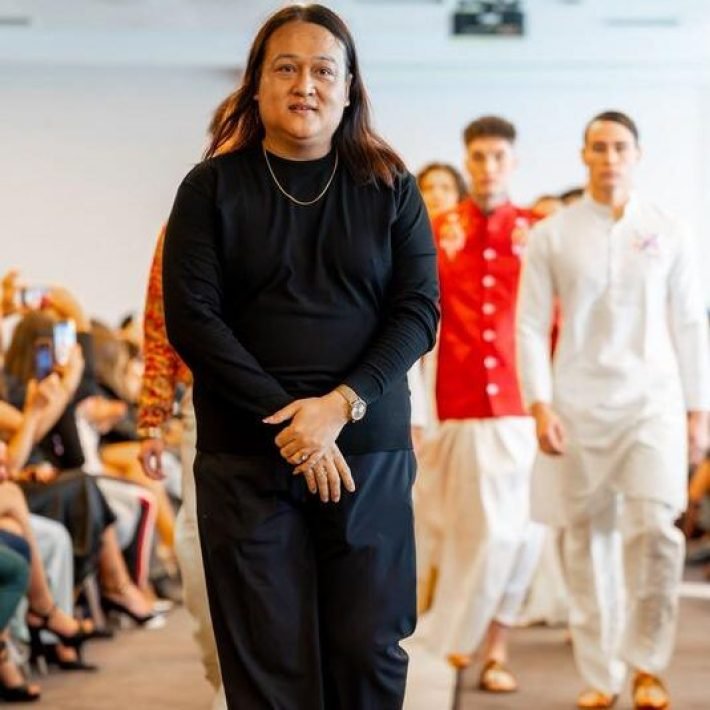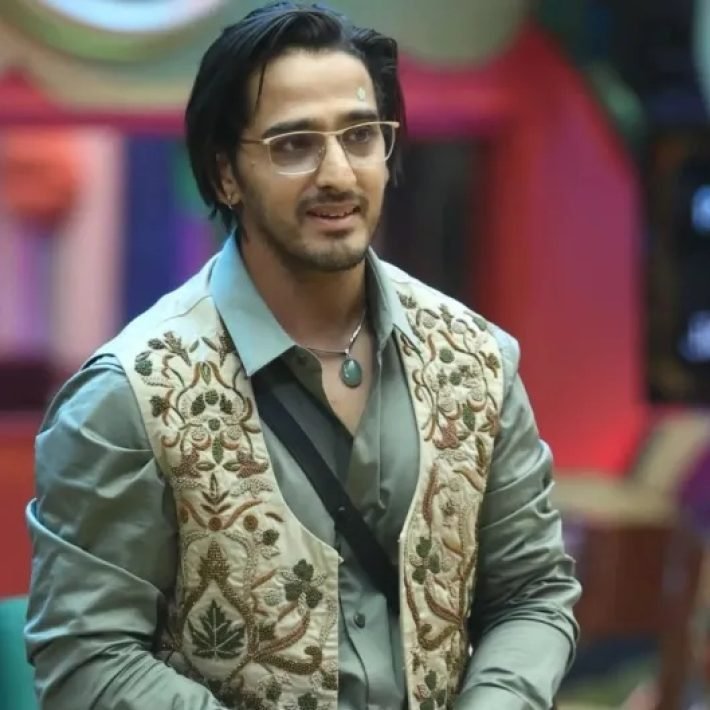
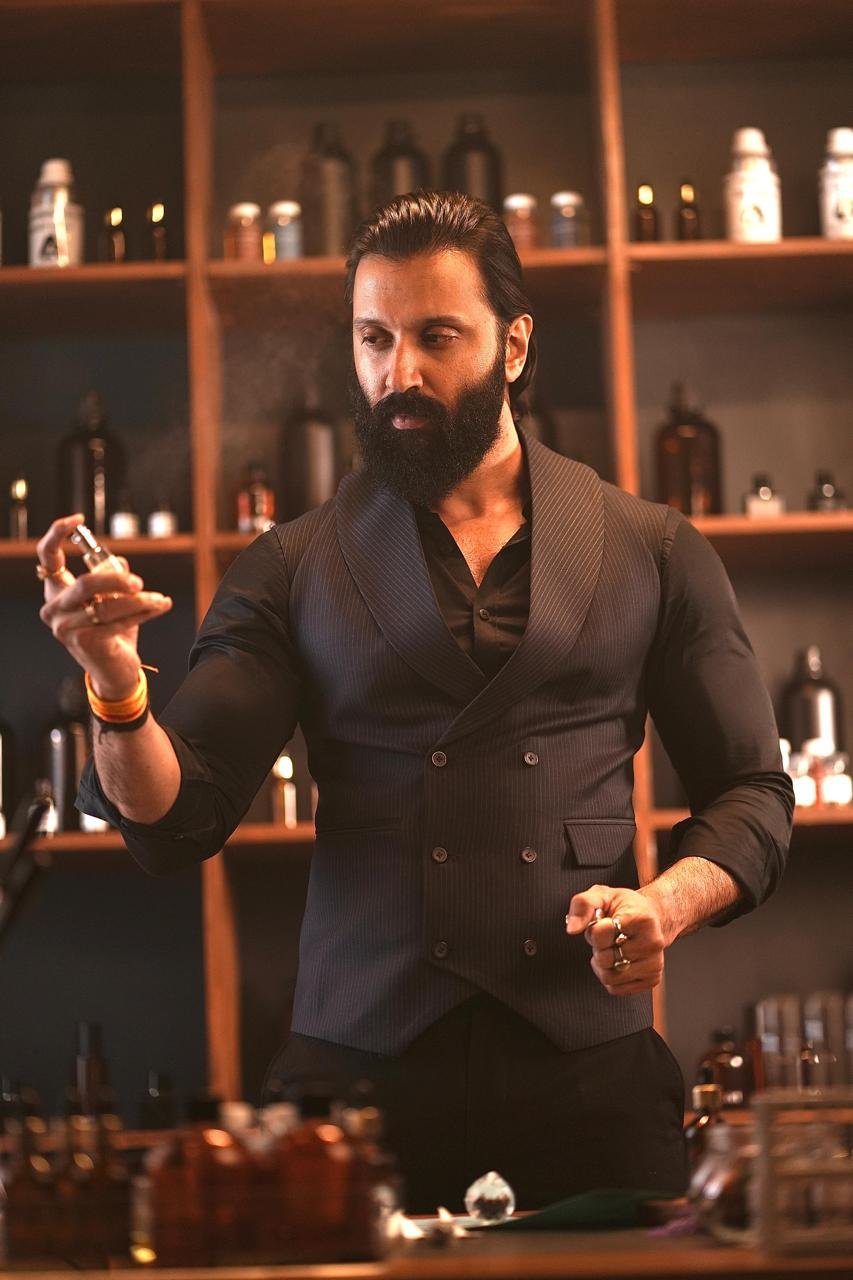
He stopped on a New York pavement in 2013, chased a fragrance back to its source and never quite returned to the life he had before. Rishi Chhabria, Founder of Aerome and India’s pioneering scent marketing and ambient scenting company, is the Scent Architect rewriting how brands connect emotionally with consumers through fragrance branding, bespoke scent identity and experiential spaces across hospitality, retail, aviation and luxury.
There is something slightly absurd about interviewing a man over Zoom when the entire language of his life’s work is something a screen can never carry. Rishi Chhabria trades in the invisible. He builds experiences you cannot photograph, cannot touch and cannot quite put into words. And yet, the moment his face appeared on my screen, something came through anyway. A warmth. An ease. The quiet confidence of a man who faced every door the market shut in his face after he started Aéromé, and simply kept walking.
He mentioned early on that he had read some of my previous interviews. A Capricorn thing, I thought — they do their homework quietly and they notice what others walk past.
Rishi is the Founder and Managing Director of Aéromé, one of India’s most pioneering ambient scenting and fragrance branding companies. Since he started it in 2016, he has done something that very few entrepreneurs ever actually manage. He has not just built a company. He has built a category.
Scent branding did not exist in India in any meaningful way before he arrived. It exists now because he refused to let it not exist. He has created signature scent identities for luxury hotels, premium malls, international airports, corporate spaces and experiential destinations across the country. The industry calls him the Scent Architect of India. After speaking with him for the better part of an hour, I understand completely why.
We started, as all good conversations should, at the very beginning. What follows is that conversation, exactly as it happened, with nothing smoothed over and nothing left out.

Rajeev Mokashi: Rishi, before the world had a word for “scent marketing” — what was the moment you realised a fragrance could be as powerful as a logo?
Rishi Chhabria: He smiled before he even started. “It’s strange you asked me this because internally we actually call it an olfactory logo. Just like a visual logo represents a brand visually, fragrance can represent a brand emotionally and subconsciously.”
It was 2013. New York. Walking down a street with his wife when a drift of fragrance stopped him mid-step. He made her walk back. The doors of a store opened and there it was. Abercrombie and Fitch. “Every corner of that store smelled exactly the same,” he said. “Uniformly diffused, subtle, not overpowering but emotionally present everywhere. That was the exact moment something clicked.”
He spent the next three years researching across Hong Kong and Singapore, studying who was doing this and how. Then he looked at India and found no one. “That’s when I said to myself, there’s a massive opportunity here.”
Aéromé was born in 2016 — was it a leap of faith, or did the market whisper to you first?
“The market absolutely whispered to me first,” he said. But seeing the opportunity and building a business around it are two very different things. He drew the Aéromé logo himself. “People still tell me it’s basic. I always laugh and say of course it is. I drew it myself.”
Then came the door to door. The presentations. The same sentence in every boardroom. “We already use air fresheners. Why do we need you?” He kept explaining. “If a customer walks into your store and experiences a signature fragrance, then walks into another branch months later and smells the same thing, that triggers brand recall and emotional memory. That is brand loyalty.” Nobody understood it.
The entire first year, two clients. One of them a school friend who paid him half of what he asked. “That client is still with me today. Ten years later. I never went back asking for more because I value the fact that somebody believed in me when nobody else did.”

When a brand comes to you, how does a signature scent for their space actually come to life?
He leaned forward. “We don’t operate like a fragrance catalogue where you open a briefcase and ask a client to pick something. That’s not us at all.” Every fragrance is entirely customised, three to six weeks minimum, because before a single note is considered, they go deep into the brand itself. “We study everything. Their story, values, visual identity, architecture, lighting, even how the staff talks to people. Sometimes we walk into the store pretending to be customers just to observe.”
He smiled. “I’ve had brands tell me, Rishi, we didn’t know this much about our own brand until you explained it to us.” For Bengaluru Airport Terminal 2, the Terminal in a Garden, the fragrance had to hold every human emotion at once. “People are anxious, excited, emotional all at once. Some are first-time travellers scared to step onto an escalator. We used fresh uplifting notes to create welcome, then layered in calming elements to reduce anxiety. That’s how we construct fragrance. Scientifically, emotionally and psychologically.”
India’s retail and hospitality landscape were largely unscented when you arrived — what did you have to teach the market before it could even appreciate what you were selling?
He laughed.
A real one. “Humein aapka air freshener nahi chahiye.” He shook his head. “Our first job wasn’t selling fragrance. It was educating people.” He placed machines and fragrances at client locations for months without charging a rupee. Six months sometimes. “My wife would ask, what are you doing? You’re investing in machines, fragrances, manpower, for free?” He held his ground every time.
“I would tell them, don’t pay me right now. Use it first. If it changes your space, we’ll work together. Otherwise I’ll take everything back.” He said the next part quietly. “I genuinely believe that manifestation played a role in this journey. When nobody believed in the idea, I still believed I could make it happen.”
You’ve scented hotels, airports, retail floors — which space gave you the most creative freedom, and which one kept you up at night?
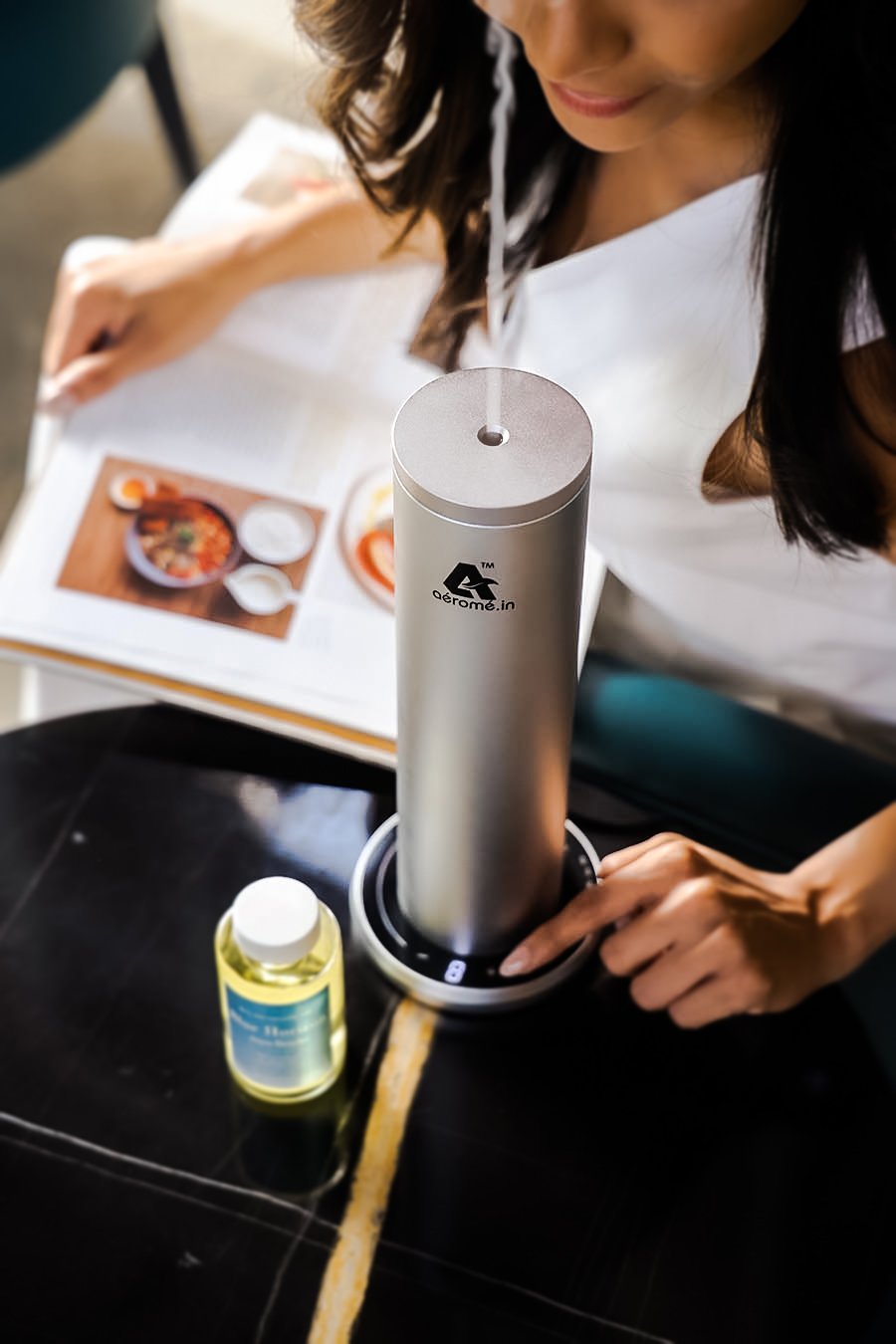
“We’ve been very fortunate because our clients place enormous trust in us,” he said. “Most give us a brief and then say, you know best.” Palladium Mumbai, Jio World Drive and Jio World Plaza are the spaces that have stayed with him most. After Palladium, other mall groups called immediately wanting the same.
But Bengaluru Airport Terminal 2 is what visibly moves him. “Passengers actually ask airport staff if they can buy the fragrance and take it home.” He stopped for a moment. “That means people are emotionally connecting with the space through scent.”
The airport team even discussed merchandising the fragrance with proceeds going to charity. “That kind of response makes you step back and feel yes. This is exactly what I set out to build.”
Luxury clients are famously exacting — how do you convince a boardroom that their brand’s next competitive edge… is invisible?
“Today clients don’t just ask for fragrance,” he said. “They ask for differentiation. They tell us, we don’t want to do this for the sake of it. We want it to feel unique to us.” That shift in the question, he said, changes the entire conversation.
“Scent is invisible. You cannot touch it or see it, but its impact is immediate and subconscious. A customer may forget what music was playing or what colour the walls were. But the way a space made them feel, that stays.”
When Aéromé works with a luxury brand, fragrance never becomes an accessory. “It becomes part of the brand architecture itself.” And results built the credibility. “One successful project led to another. People started saying, if you want the best scent experience, go to these guys because they understand brand storytelling.”
“Fragrance is memory. Fragrance is emotion. And all I want is for India to have a scent identity the world remembers.”
Rishi Chhabria
“The Scent Architect of India” — did that title find you, or did you quietly build toward it?
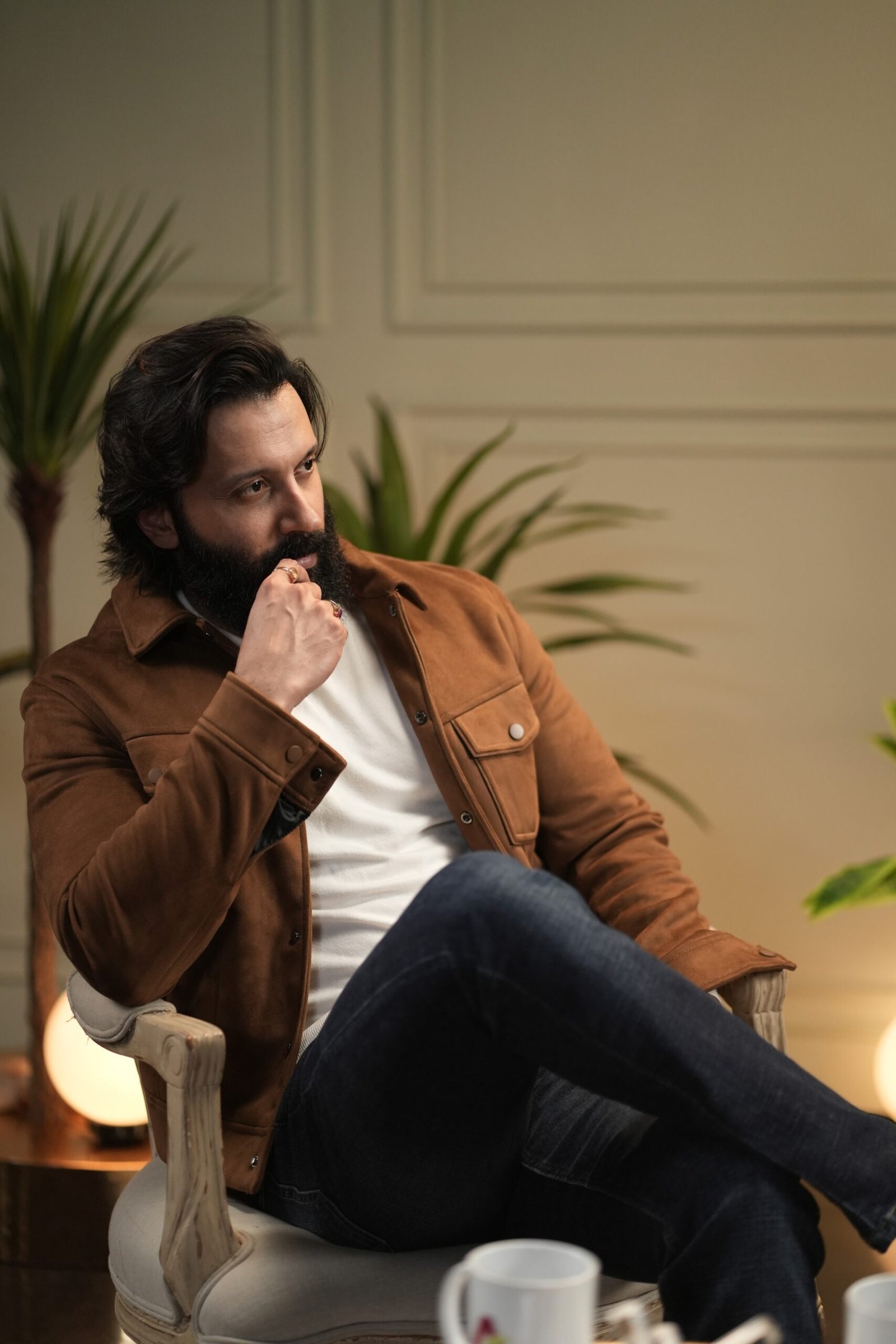
He paused before answering. “I honestly think I walked halfway and the title found me halfway. I never sat down saying I want to become the Scent Architect of India.” When he started in 2016, people were calling them air freshener suppliers. “The journey from there to here has been extremely emotional for me.”
Recognition, he said, came through consistency alone. “Every project was deeply thought through. We never took shortcuts. Everything was always curated.” Over time clients stopped seeing Aéromé as a vendor. “They started seeing us as creative partners shaping how their spaces emotionally felt.
That’s when the title started coming naturally from the industry itself.” He smiled quietly. “I’m just very grateful to the universe for where the journey has reached today.”
What was the hardest chapter of this journey that nobody sees from the outside?
“The hardest chapter was definitely the uncertainty,” he said. Two clients in the first year. An entirely new category in a country where nobody understood what he was doing. Then, just when things had started scaling, COVID. “It felt like building a pack of cards and watching everything collapse overnight.”
He made one decision immediately. “I would not lay off a single employee. I felt responsible not only for my team but for their families.” Survival came through his team’s idea. “We already had fragrance infrastructure and raw materials so we started producing signature scented sanitisers and hygiene products for our clients.” It kept them connected through the shutdown. When spaces reopened, those same clients called Aéromé first.
“The same people who once said we don’t need fragrance suddenly realised how much atmosphere and scent influence emotion and comfort.” He paused. “It was almost poetic. That entire phase taught me resilience.”
Where does scent branding go next — and is Aéromé already there?
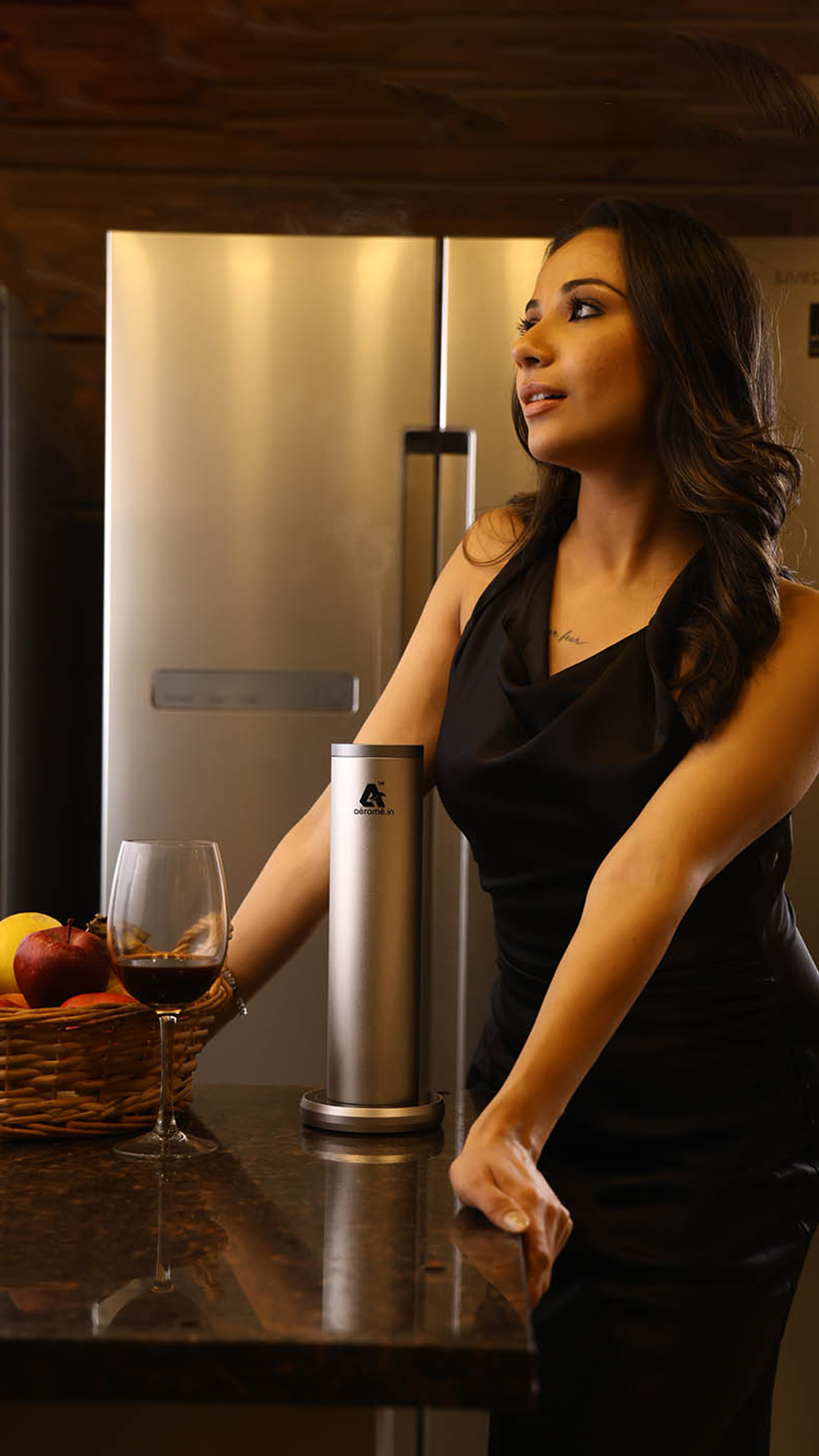
“Scent branding is no longer the future,” he said immediately. “It is the present.” But India’s industry is still in its birth stage. “The future lies at the intersection of scent, wellness and neuroscience.” For the past year and a half, he has been collaborating personally with neuroscientists from the University of Geneva.
“We have MRI scans showing how certain fragrances trigger calmness, focus, joy, confidence and emotional upliftment.” He leaned forward. “People today are anxious, overstimulated, mentally exhausted. Fragrance can genuinely become a wellness tool.” He calls the project Aéromé Neuro.
The second frontier is more intimate. “I strongly believe people will start treating fragrance as an extension of identity. Your home fragrance, your car fragrance, these become deeply personal expressions of lifestyle and emotion.” Aéromé, he said, is already there. “We’ve launched products in these categories and we’re continuing to innovate very aggressively.”
If you could leave every room in India with one feeling — not a scent, but a feeling — what would it be?
He asked if he could answer very candidly. I told him that is the only kind of answer worth having. “I want to change the way India smells,” he said. India stands proudly on the global map today, he said, yet despite having some of the finest fragrance raw materials on earth, jasmine, oud, agarwood, nobody speaks of India as a fragrance powerhouse.
“My dream is to eventually create a signature scent for India itself. A fragrance that emotionally represents this country. Its culture, warmth, richness and diversity.” He looked straight at the screen. “We have the ingredients. We have the stories. We have emotional depth.” The one feeling he would leave in every room across this country would be pride. “An emotional connection to who we are as a country.
Rapid fire – Because One Round Was Never Enough
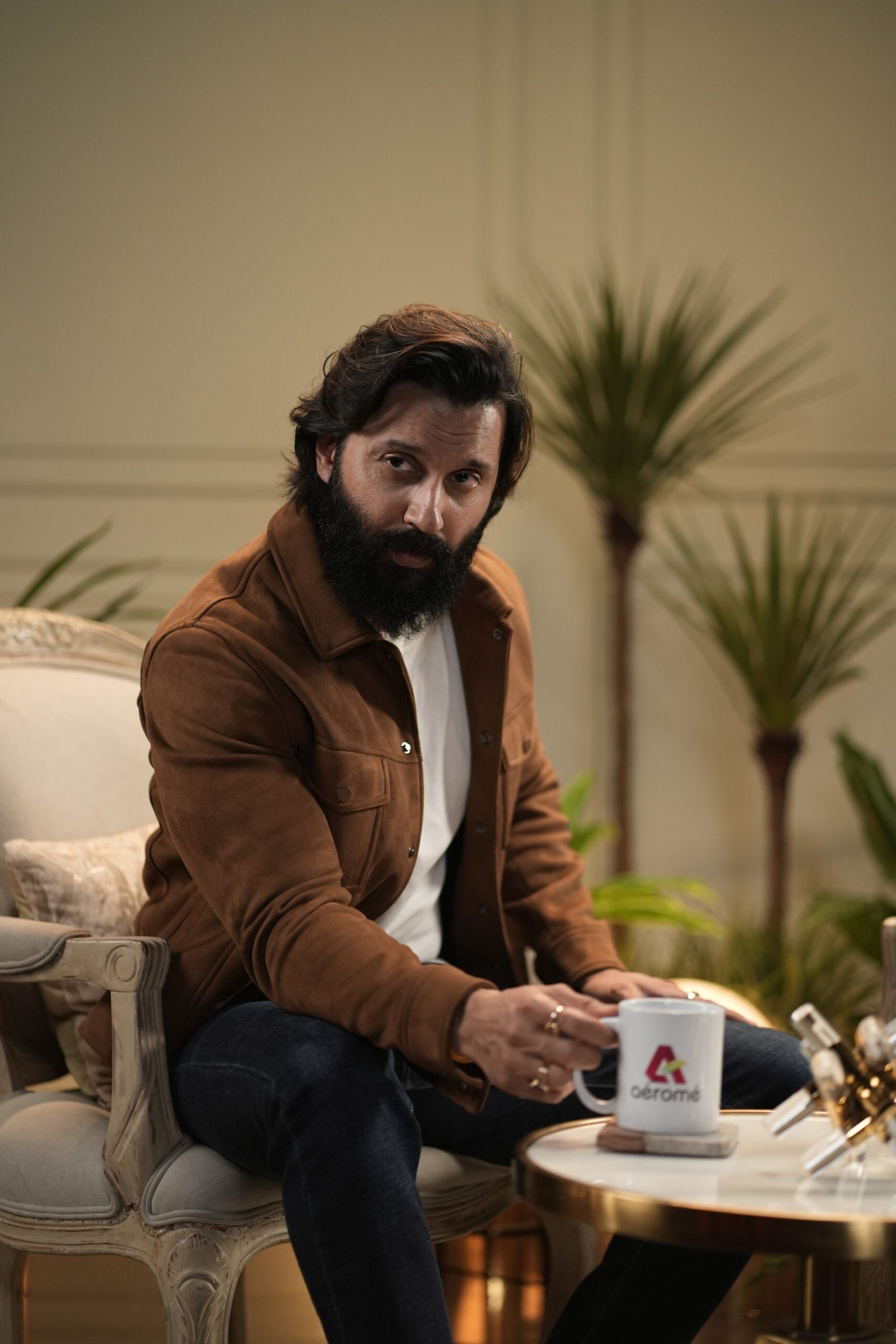
The one industry in India that desperately needs scent branding but hasn’t woken up yet is… Corporate offices. Because if you walk into work every day, shouldn’t you feel motivated, energised and inspired the moment you walk through the door?
If Aerome were a city in the world, it would smell exactly like… India. There isn’t a city in the world that captures what we do. Our vision is too large for one city
My worst day as a founder didn’t involve money or clients – it involved… The challenge of scaling without losing the very thing that made people trust you in the first place.
A client who trust you completely, or a client who challenges every choice? The one who challenges every choice. Always. Challenges drive innovation. Comfort does not.
A single iconic space that the world talks about forever, or a hundred spaces that quietly change how India lives and shops? A hundred spaces. Impact matters more to me than fame.
Being first in India, or being the best in Asia? First in India. Being first means building a category from nothing. That journey is irreplaceable.
Rishi the founder, or Rishi the Scent Architect – which one gets out of bed first in the morning? The founder. He wakes up first because there is always something to build. The Scent Architect follows immediately after.
What’s the scent of ambition – just one – which one would you say the world needs most right now? Ambition isn’t a fragrance for us. It’s a mindset. And yes, it’s in the DNA of every single person in that office.
If you had to scent one emotion the world needs most right now – just one – what would it be? Joy. When you live in joy today, you create joy tomorrow. That’s how positive energy multiplies.
Ten years from now, when someone walks into a beautifully scented space anywhere in Asia – what do you want them to unknowingly absorb? The essence of the brand and the emotion it intended to create. The beauty of scent branding is that nobody has to explain it to you. You simply feel it, carry it and never quite know why.
The call ended. Some conversations leave you with a feeling you did not arrive with. Rishi Chhabria, naturally, would know exactly what to call it.
For more stories like this, stay tuned to TheGlitz.