
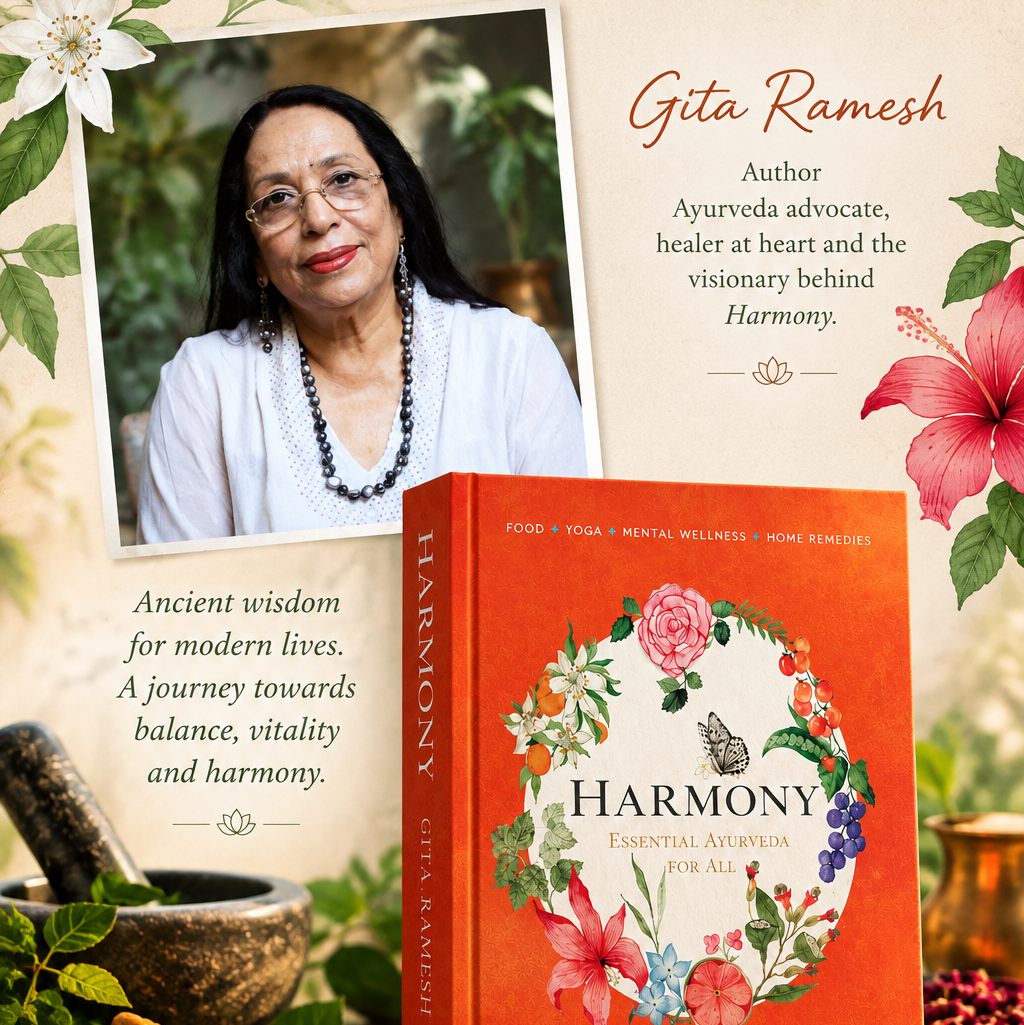
Harmony by Gita Ramesh
Wellness today can sometimes feel like a competitive sport. Count your steps, track your sleep, eliminate something from your diet, add another supplement… and repeat. Against this increasingly complicated landscape comes Harmony: Essential Ayurveda for All by Gita Ramesh, published by Roli Books: a thoughtful, accessible exploration of Ayurveda that brings ancient wisdom into the rhythms of contemporary life.
This very insightful book was sent to TheGlitz for review, and it proved to be an especially timely read in a world increasingly searching for more meaningful ways to live well. At its heart is a simple proposition: wellbeing isn’t about perfection; it is about balance.
The Author Behind the Wisdom

Let’s start with the author Gita Ramesh who brings decades of experience to the subject. As Joint Managing Director of the Kairali Ayurvedic Group, she has been closely involved in taking Ayurveda beyond its traditional boundaries and presenting it as a holistic approach to modern wellbeing. Harmony therefore feels less like a theoretical exercise and more like the distillation of years of experience with Ayurveda, food, wellness and mindful living.
We seriously loved the book more so as Gita Ramesh’s approach is refreshingly inclusive. The book isn’t written exclusively for Ayurveda experts or wellness devotees. It seeks to make the principles understandable to the everyday reader… and even introduces age-appropriate ideas for children.
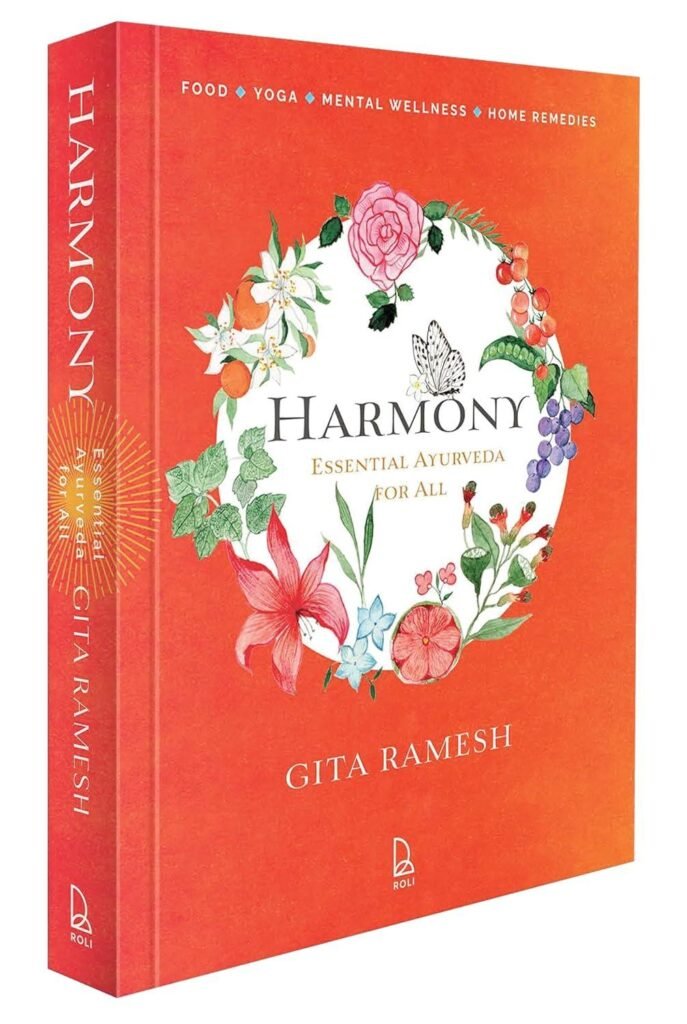
Food: Your Plate, Your Constitution
One of the book’s most engaging segments is its exploration of food through the Ayurvedic understanding of Vata, Pitta and Kapha. Rather than treating healthy eating as a universal formula, Gita Ramesh explores the idea that our bodies and constitutions are individual.
The book moves from understanding doshas to practical dietary guidance, meal plans and recipes. This is where Ayurveda becomes wonderfully tangible: not something confined to a consultation room, but something that can begin in the kitchen.
The emphasis is less on deprivation and more on awareness… understanding what we eat, why we eat it and how food can support balance.
Yoga: Beyond the Asana
Harmony also recognises that wellness cannot live on the dinner plate alone. Its yoga segment brings movement into the larger Ayurvedic framework, connecting physical practice with constitution and balance.
The inclusion of yoga practices alongside Ayurvedic guidance makes the book particularly relevant to readers who already see movement as part of their wellbeing routine. It turns yoga from an isolated fitness activity into another tool for cultivating awareness.
Mental Wellness: The Quiet Centre
Perhaps the most relevant conversation in the book is its attention to mental wellbeing. In a world where overstimulation has become almost normal, Harmony makes space for meditation, mindfulness and stress management.
The book’s approach is not about chasing constant happiness. Instead, it encourages readers to understand themselves, recognise imbalance and create routines that support greater calm. Yoga and meditation resources, including QR-enabled content, further help take these ideas from the page into practice.
Home Remedies: Ayurveda in Everyday Life
Then comes the wonderfully familiar territory of home remedies… the kind of practical wisdom that has traditionally travelled through Indian families and kitchens.
Here, Ayurveda feels particularly intimate. The book explores simple remedies and everyday approaches alongside discussions around digestion, immunity and self-care. It reinforces the idea that wellbeing isn’t always about dramatic interventions; sometimes it begins with paying attention to small, consistent habits.
Of course, home remedies should complement…not replace… appropriate medical care, particularly for persistent or serious symptoms.
Beauty, Rituals & The Art of Self-Care
Another charming layer of Harmony is its exploration of beauty rituals through an Ayurvedic lens. Gita Ramesh brings skin and hair care into the larger conversation around wellbeing, with dosha-specific practices involving herbal infusions, oils and masks. It is a refreshing approach in a world of increasingly complicated beauty routines, reminding us that self-care can also be about slowing down, understanding what suits us and reconnecting with traditional rituals. The book makes beauty feel less like another item on the wellness checklist and more like an extension of harmony… inside and out.
The Bigger Picture
What makes Harmony work is the way its different segments speak to each other. Food, yoga, mental wellness, meditation, home remedies and lifestyle aren’t presented as disconnected wellness trends. They become parts of one larger conversation about balance.
And that is perhaps Gita Ramesh’s most valuable contribution: she makes Ayurveda feel less like a complex ancient subject to be studied and more like a living philosophy to be explored.
TheGlitz Take
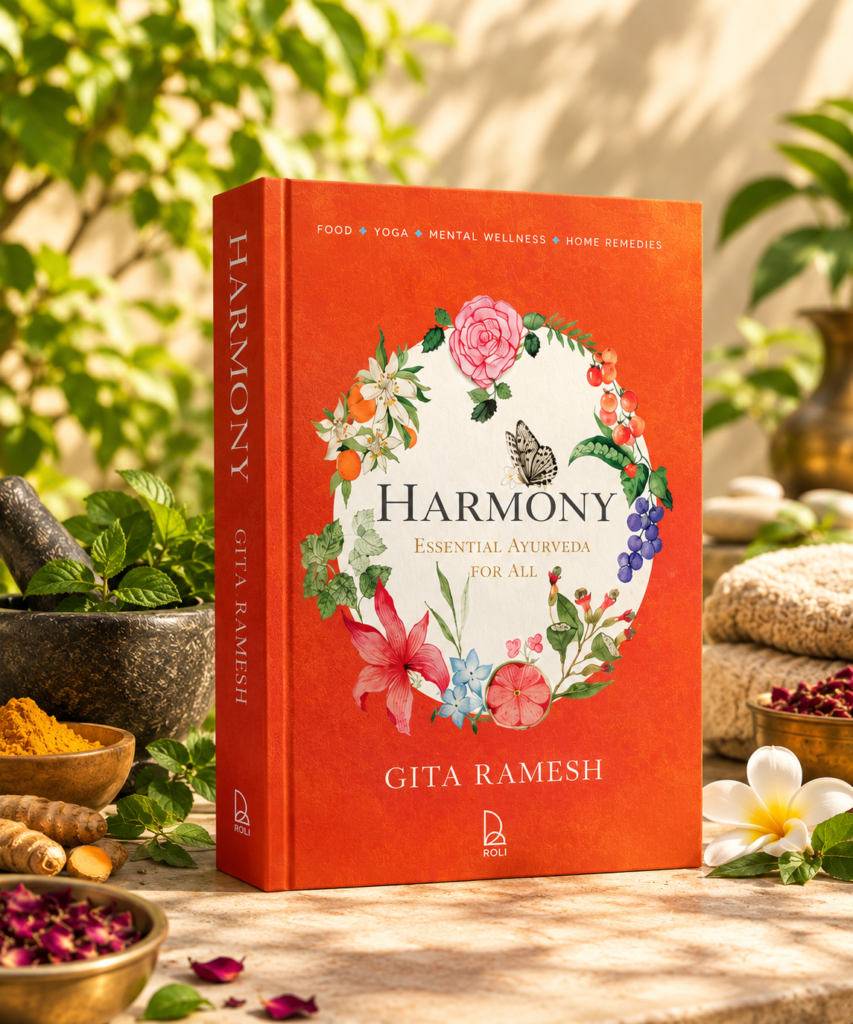
Harmony is a beautiful reminder that wellness doesn’t necessarily require a reinvention of your life. Sometimes, it simply requires listening to it a little more carefully. We especially loved the chapter on how to deal with stress… in this chaotic world where stress is a buzzword in everybody’s life, this is a positive, well-written, practical and deeply Indian guide to finding your own version of balance. So, if you want to know the many facets of Ayurveda, this book is definitely for you! We strongly recommend!