Shehla Khan
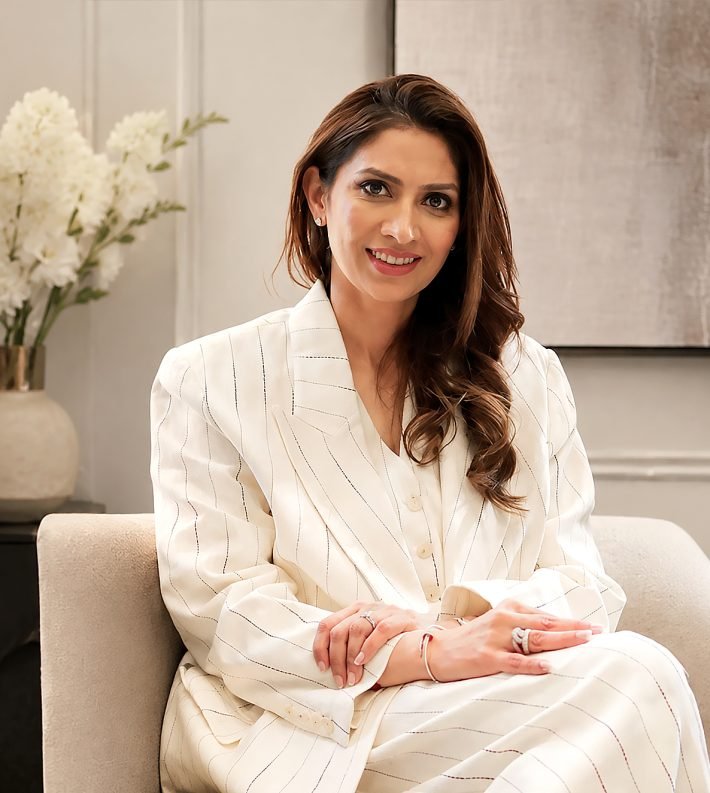
For celebrated and multi-talented designer Shehla Khan, fashion was never an acquired fascination; it was part of her inheritance. Growing up surrounded by the intricate craftsmanship of her family’s embroidery business, she was introduced early to the world of international fashion and the work of houses such as Dior, Valentino, Armani and Gianfranco Ferré. That early exposure to couture, craftsmanship and design quietly planted the ambition to create something of her own.
London and Milan later sharpened that instinct, while her stint with Manish Malhotra offered an intimate look at the Indian fashion industry. A few custom creations for a friend would eventually become the catalyst for something far bigger… the launch of her eponymous label in 2011.
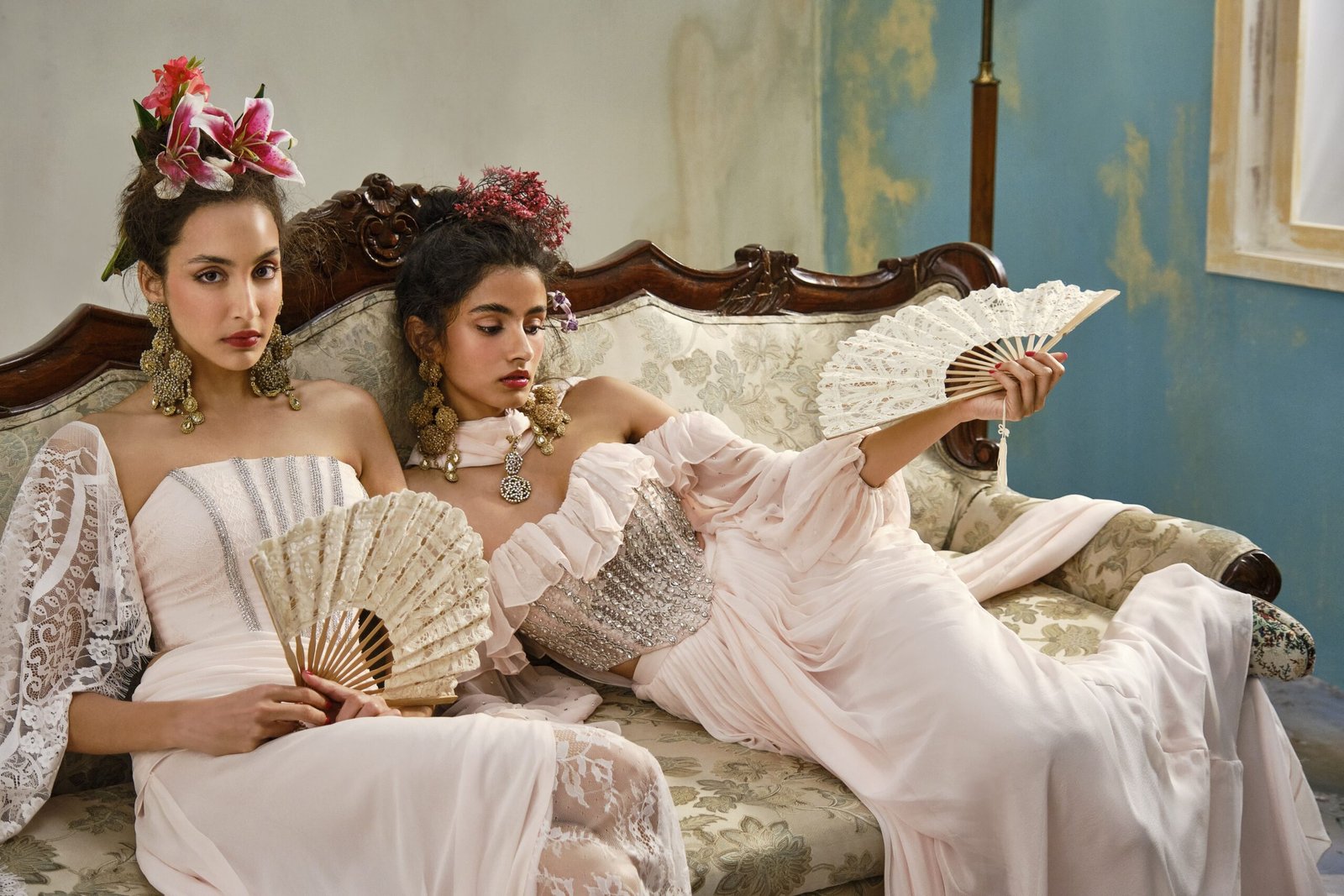
More than a decade on, Shehla Khan has built a distinctive fashion vocabulary that brings together the refinement of Western silhouettes and the richness of Indian craftsmanship. Chikankari, zardozi and hand painting find new expression through corsetry, fluid draping, lace and contemporary proportions. The result is quintessentially feminine without being predictable… glamorous, sophisticated and designed for a woman who appreciates tradition but refuses to be defined by it.
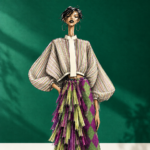
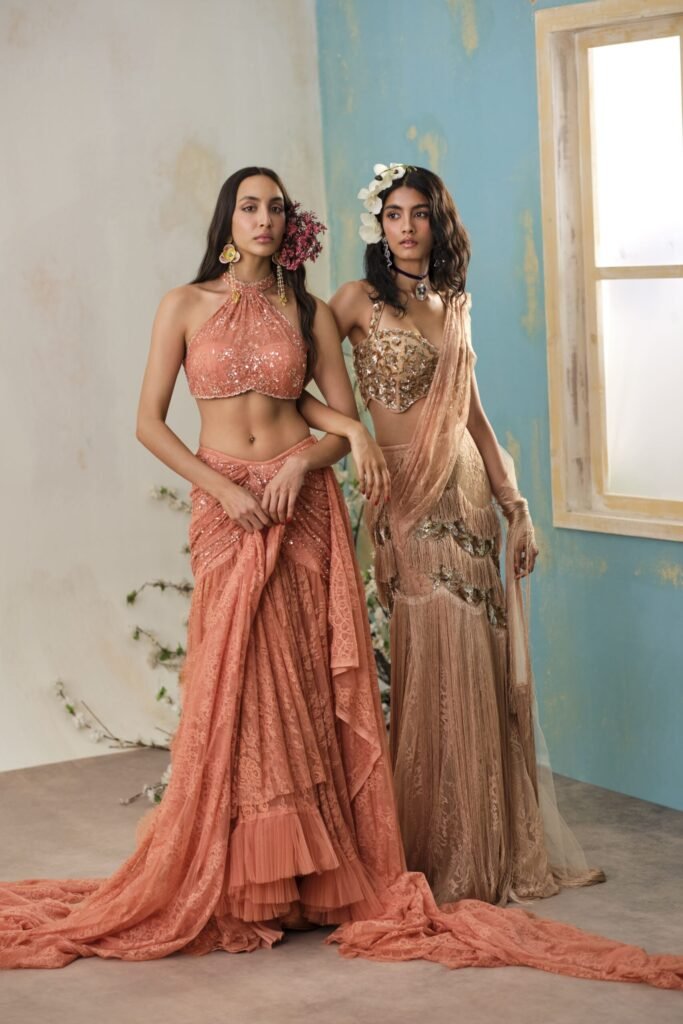
Her latest collection, Ukiyo Bloom, takes that vocabulary somewhere more poetic. Inspired by a springtime journey through Japan, the collection is an ode to the beauty found in fleeting moments and exquisite details. Florals, embroidery, lace, draping and sculptural construction become the language through which Khan translates that experience into fashion. But beneath the romance is something more enduring: her belief that a beautifully crafted garment should make a woman feel not merely dressed, but beautiful, confident and special.
What is particularly compelling about Shehla Khan’s journey is the balance between evolution and identity. Her early fashion show, the support of actor and India’s biggest fashion icon Sonam Kapoor and her sister, and the global visibility that came with Cannes helped propel the label forward. Yet Shehla Khan’s ambition has never been simply to create clothes for a moment. She speaks instead of longevity… of pieces that can be remembered, revisited and worn differently long after a season or red-carpet appearance has passed.From Indian Craft to a Global Stage
Today, the much-in-demand designer is looking beyond familiar fashion territories. Her ambition is to take Shehla Khan couture to a larger international platform, whether through Paris Couture Week or an independent global showcase, while preserving the aesthetic and craftsmanship that have defined the label.
In an exclusive conversation with Sumita Chakraborty, Founder & Editor-in-Chief, TheGlitz, designer Shehla Khan talks about growing up around fashion, finding her own design language, the women and moments that shaped her label, the enduring power of Indian craftsmanship, and the inspiration behind Ukiyo Bloom.
Over To Shehla Khan
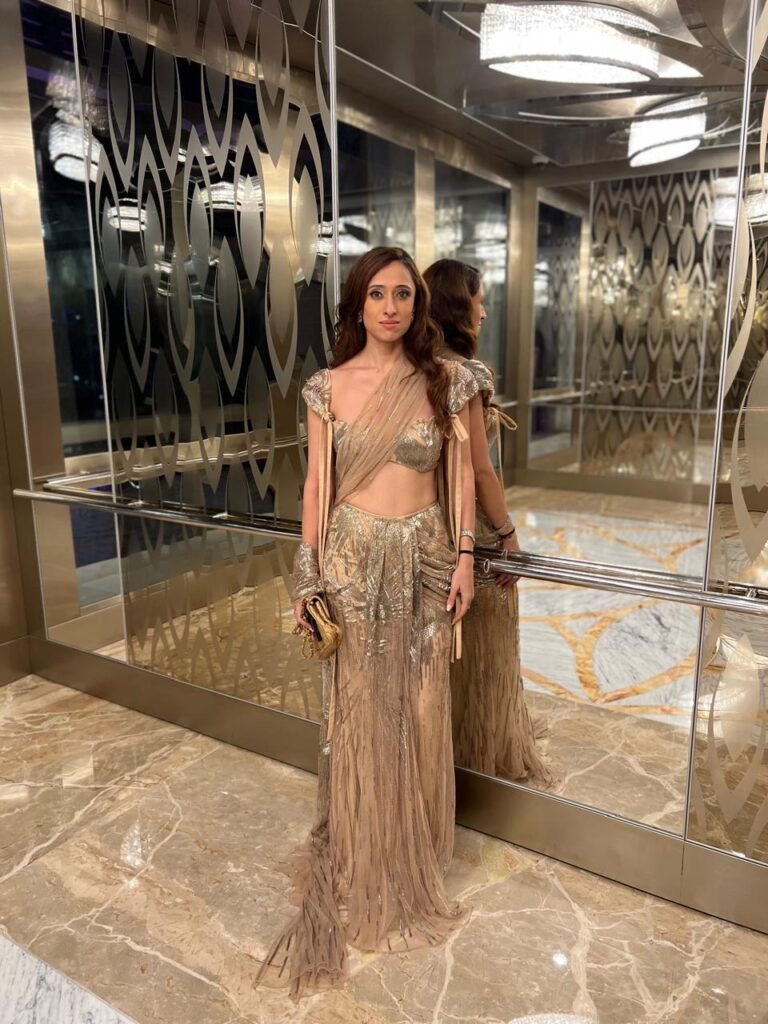
Let’s go back to the beginning. You entered the fashion world quite early and eventually launched your own label in 2011. What drew you to design, and what was that first leap into building Shehla Khan the label really like?
I was exposed to the world of international fashion from a very young age. Growing up, I was familiar with the work of fashion houses such as Gianfranco Ferré, Armani, Dior and Valentino, particularly because my family business, which my father was handling at the time, specialised in creating embroideries for high-fashion and eveningwear labels. Being surrounded by that level of craftsmanship and design had a very strong influence on me, and I knew quite early on that I wanted to be a part of this world in some way.
I later went to London and Milan to pursue courses specialising in design and styling, and when I returned to India, I worked with Manish Malhotra for a while. I was also exploring opportunities in styling when I happened to create a few custom designs for a friend. The response to those pieces gave me the confidence to take design more seriously and ultimately encouraged me to start my own label in 2011. It was a very organic progression from growing up around fashion and craftsmanship to eventually finding my own design language and building something of my own.
Starting an eponymous fashion label is one thing; sustaining and growing it for over a decade is another. What were some of the biggest challenges you faced in those early years, and what did they teach you about the business of fashion?
The early years were definitely easier in some ways. The fashion industry has always been very welcoming to new talent, and when I started, there were also fewer platforms and considerably less competition. As the industry has expanded, the real challenge has been to constantly evolve and remain relevant while still staying true to my own design identity.
I don’t necessarily see that as a negative, though. In fact, it pushes me to reinvent myself, explore new ideas and continue learning with every collection. Fashion is constantly changing, whether it is in the way people dress, consume or discover brands, and being able to adapt to that change while retaining the essence of the label has been one of my biggest learnings over the years.
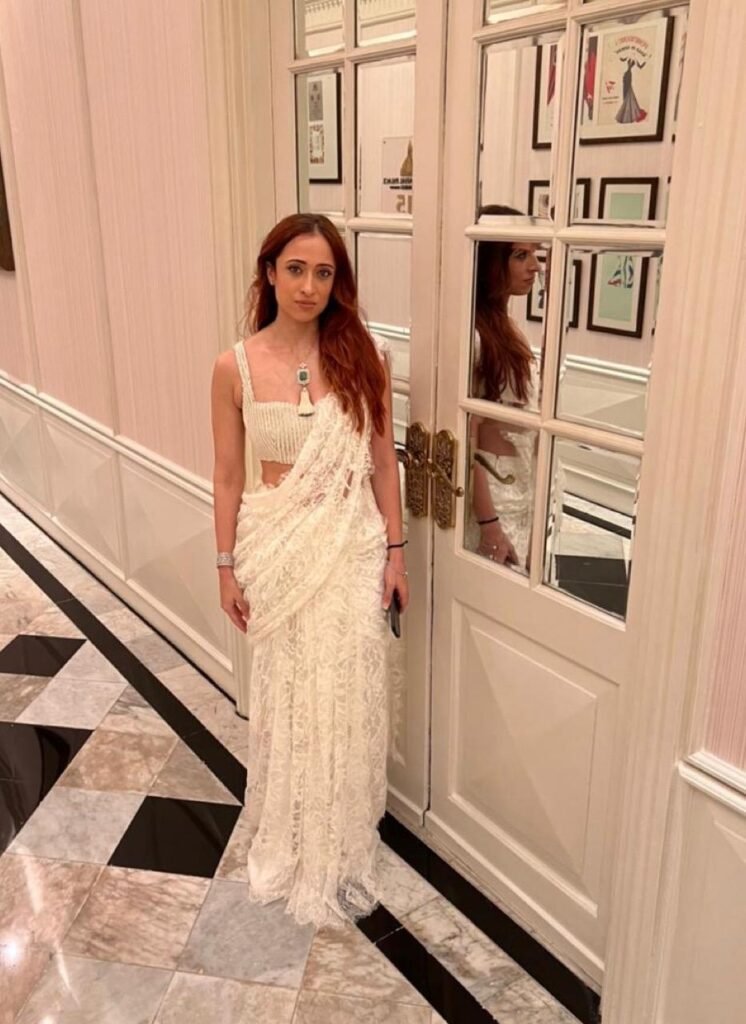
From establishing your design language to showcasing at platforms such as Lakmé Fashion Week and dressing some of India’s most recognisable names, there have been several milestones along the way. Which moments genuinely changed the trajectory of your brand?
I’ve been very fortunate to have friends such as Sonam Kapoor and her sister, who believed in my work from the very beginning. They wore my designs for significant occasions and also supported me through some of my initial campaigns, which gave the label valuable visibility at an early stage.
My first fashion show was another defining moment. The collection received immense appreciation because, at the time, it presented a relatively new aesthetic within Indian fashion. That response gave me a great deal of confidence in my design language and helped establish the identity of the brand.
Cannes was also an important milestone. At the time, it was a far more exclusive global platform, and seeing my designs represented there helped amplify the reach of the label while communicating its essence to a much wider audience. These moments, particularly in the early years, played an important role in shaping the trajectory of the brand.
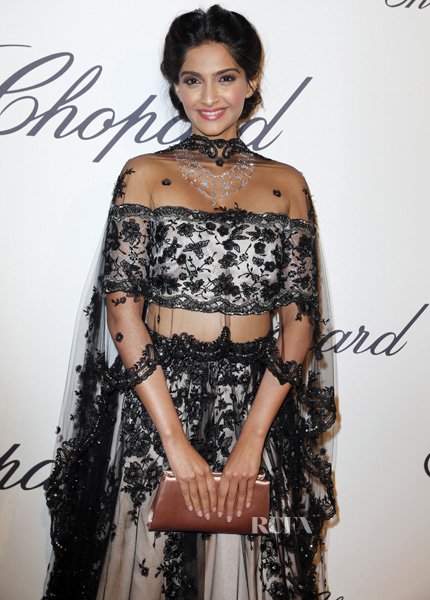
You have created everything from bridal and couture to red-carpet looks, including Sonam Kapoor’s appearance at Cannes. How has dressing women in such high-visibility moments influenced the way you approach design today?
It definitely inspires me to approach every collection with the intention of creating something significant and impactful. When you see your designs being worn by beautiful women at prestigious events and on global platforms, it encourages you to keep pushing yourself creatively and to create pieces that can make an impression beyond a single moment.
It has also made me think about longevity in design. I want the pieces I create to feel special enough to be worn, remembered and revisited rather than being relevant only for a particular season. Those high-visibility moments have certainly motivated me to keep evolving while creating collections that can continue to make an impact.
Your aesthetic has often brought a Western sensibility into Indian couture while retaining the glamour and craftsmanship of the occasionwear tradition. How has that design philosophy evolved since you started, and what does the modern Shehla Khan woman look like today?
My design philosophy has largely remained the same over the years. I have always been drawn to bringing a Western sensibility to Indian couture, particularly through silhouettes, while retaining the craftsmanship and detailing that are so integral to Indian fashion.
What has evolved is the way I bring these two worlds together. I often incorporate distinctly Indian techniques, whether it is chikankari, traditional zardozi or hand painting, and merge them with silhouettes that are not conventionally Indian. I enjoy that contrast because it allows the clothes to feel rooted in craft while still being contemporary and versatile.
The modern Shehla Khan woman reflects that balance. She appreciates tradition and craftsmanship, but she is also confident in experimenting with how she wears them. She is feminine, glamorous and individualistic, and does not feel the need to define herself through one particular style or aesthetic.
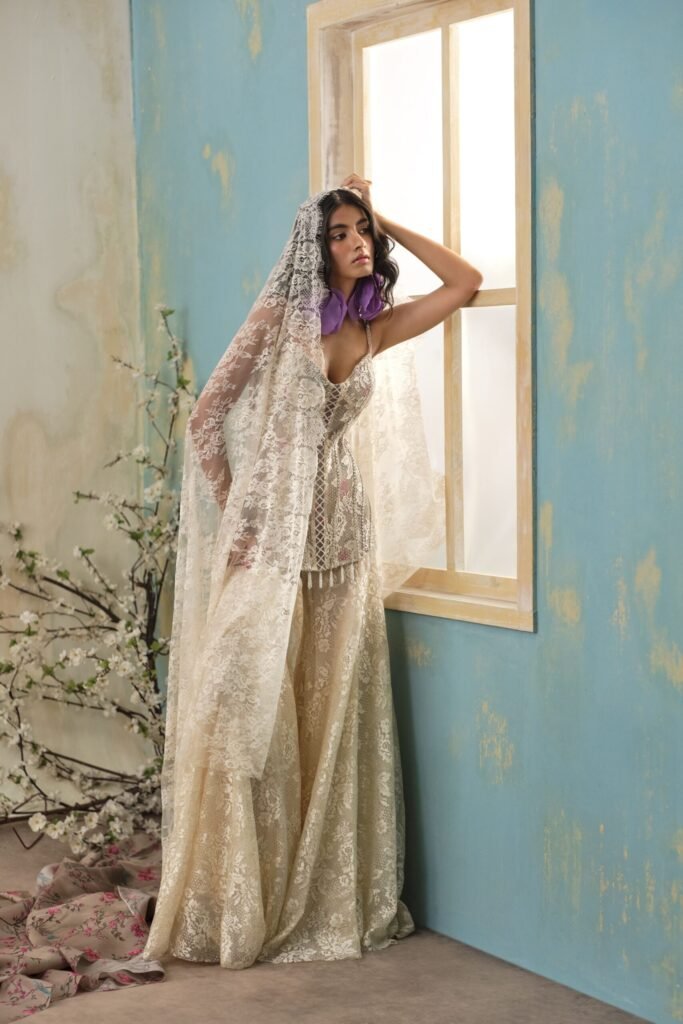
Let’s talk about your new collection, Ukiyo Bloom. The idea of Ukiyo… the appreciation of beauty in a fleeting moment feels particularly poetic for fashion. What inspired you to explore this idea, and what did you want women to feel when they wear the collection?
The inspiration really came from my trip to Japan during the peak of spring. There was this astounding beauty in every small detail I experienced while I was there. Of course, Japan is incredibly modern in terms of its fashion and culture, but it was really nature and the people that stayed with me and inspired me the most.
I wanted to bring that feeling into the aesthetic of my own brand and create a collection that was very focused on detail. With Ukiyo Bloom, there is beauty to discover in every element, whether it is the embroidery, florals, lace, draping or the construction of a silhouette. Ultimately, I wanted that attention to detail to translate into how a woman feels when she wears the collection beautiful, confident and, most importantly, special.
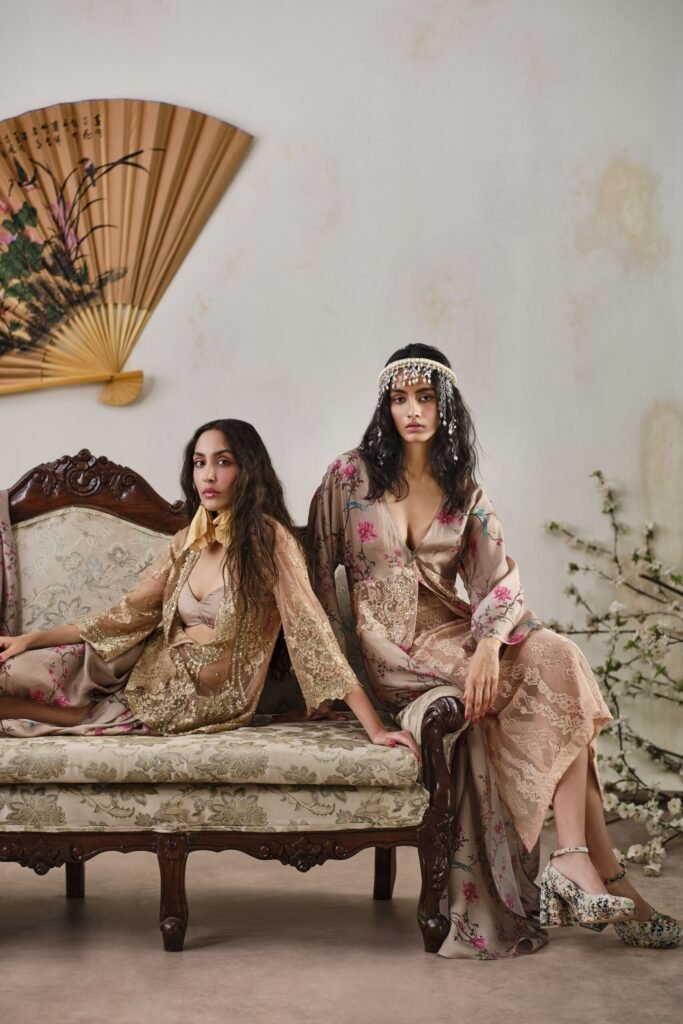
There is a beautiful tension in Ukiyo Bloom between softness and structure… fluid drapes and cascading ruffles alongside sculpted corsetry, lace and intricate embellishment. What does this contrast say about how you see femininity today?
I wouldn’t necessarily call it a contrast because, to me, femininity itself doesn’t really change trends. There are certain elements of fashion that remain timeless regardless of what is happening in a particular season, and I think a beautifully made, classic piece will always have relevance.
That is something I wanted to reflect through Ukiyo Bloom. Corsetry, lace, draping and ruffles may be interpreted differently with changing trends, but they have existed in fashion for generations. A classic piece can be styled differently, repurposed and even revisited years later. For me, femininity is similar; its expression may evolve with time, but its essence remains.
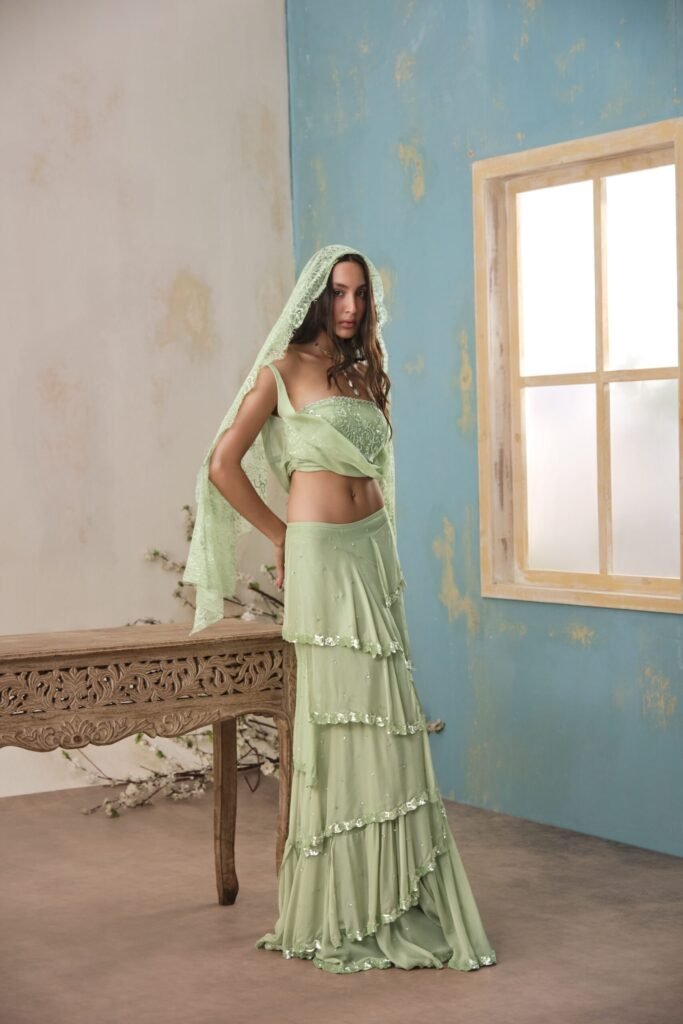
Florals, spring and romance are perennial fashion themes, yet Ukiyo Bloom gives them a more contemporary language through its silhouettes, colour palette and craftsmanship. What did you consciously do to ensure the collection feels fresh rather than familiar and where do you see Shehla Khan couture going next?
For me, the freshness of a collection always comes through the silhouettes. I often take inspiration from both vintage and contemporary trends and styles, and then merge the two to create something that feels unique and statement-making while still having a classic quality. With Ukiyo Bloom, the florals and romance may feel familiar, but the way they are expressed through corsetry, draping, proportions and detailing gives them a more contemporary identity.
Looking ahead, I would definitely like to take Shehla Khan couture to a larger global platform, whether that is Couture Week in Paris or an independent international showcase. The ambition is to expose the brand and its design language to audiences around the world while continuing to create collections that remain true to our aesthetic.
TheGlitz Take
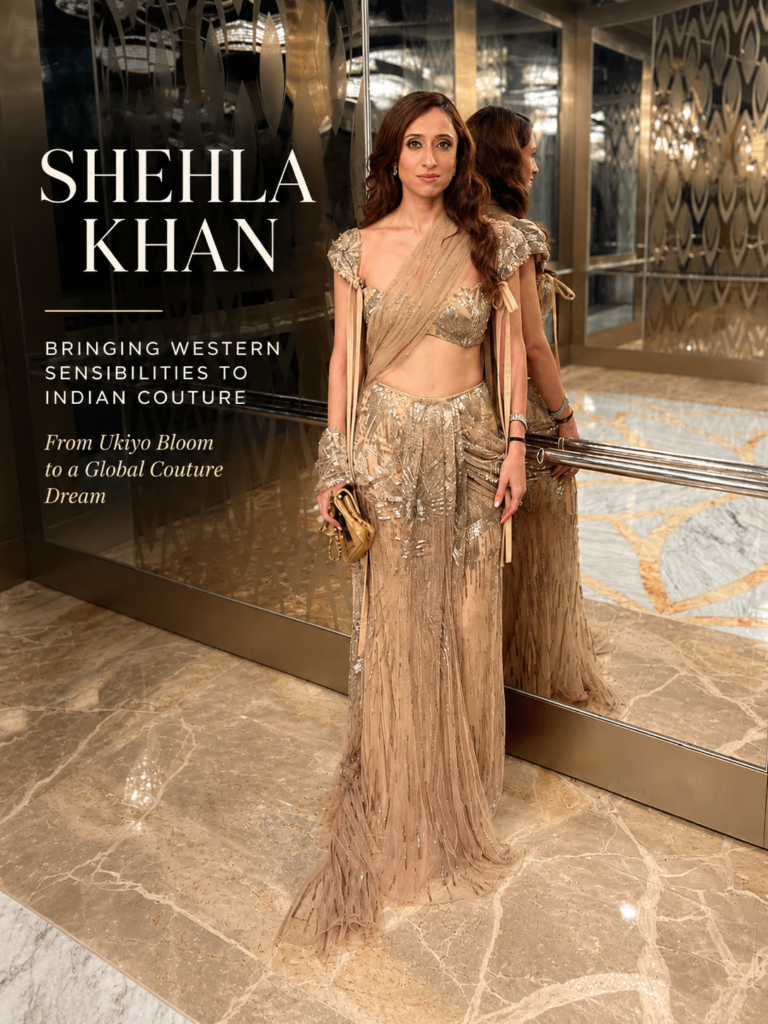
Shehla Khan, as an intelligent and creative designer, understands that trends fade, but a strong design language endures. Her real strength lies in marrying Indian craftsmanship with contemporary silhouettes without diluting either. Ukiyo Bloom continues that conversation… romantic, intricate and unapologetically feminine, but with enough modernity to travel beyond the Indian fashion vocabulary. The next frontier for Shehla Khan isn’t reinvention; it is taking this distinctly Indian design sensibility to the world.