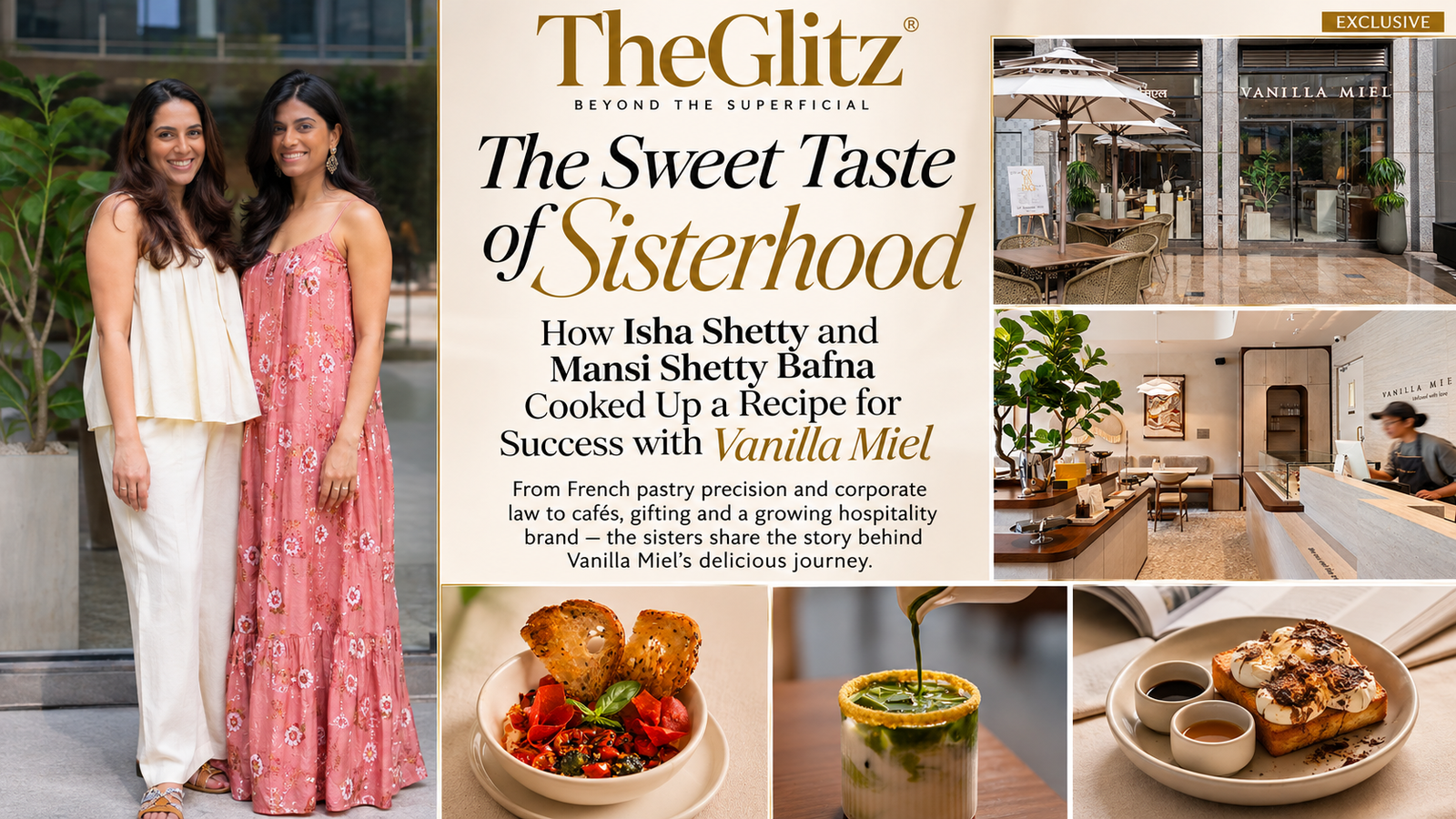
Vanilla Miel x Founders Isha Shetty and Mansi Shetty Bafna
One sister mastered the delicate art of French pastry; the other traded corporate law for the challenging business of building a food brand. Together, Isha Shetty and Mansi Shetty Bafna have turned a shared dream into founding Vanilla Miel, a growing patisserie and café venture where culinary craftsmanship meets entrepreneurial courage.
Not every great business story begins in a boardroom. Some begin with flour-dusted hands, a passion for creating something extraordinary and the audacity to take a leap into the unknown. The story of Vanilla Miel is one such deliciously compelling tale. At its heart are sisters Isha Shetty and Mansi Shetty Bafna, two women from distinctly different professional worlds who found a common recipe for success.
Isha, trained at the prestigious Le Cordon Bleu Paris, with professional experience in Switzerland and Melbourne, returned to India with a vision to make fine pastry more accessible, bringing international techniques together with flavours that resonate closer to home. Mansi, armed with a legal background and experience in mergers and acquisitions at AZB & Partners, brought the commercial sharpness and strategic thinking needed to transform that culinary vision into a sustainable business.
What began in 2018 as a delivery-led venture, operating out of borrowed kitchens, has steadily evolved into a multifaceted hospitality brand encompassing a patisserie, gifting business, central production kitchen, catering operation and cafés in Bandra and Lower Parel.
Today, with a team of 70, Vanilla Miel is no longer just a passion project; it is a testament to what happens when creativity meets business discipline. Yet, perhaps the most fascinating ingredient in this success story is the sisterhood itself. Their contrasting strengths, candid conversations and shared determination have helped them navigate the unpredictable realities of entrepreneurship without losing sight of the craft that started it all.
Here, in an exclusive interview with Sumita Chakraborty, Founder and Editor-in-Chief, TheGlitz, sisters Isha Shetty and Mansi Shetty Bafna talk about building Vanilla Miel from the ground up, the leap from French pastry kitchens and corporate law into entrepreneurship, the business of indulgence, and the art of scaling a brand without compromising its soul. They also reveal how sibling chemistry, creative instinct and commercial pragmatism have become the secret ingredients behind their journey.
Over To Isha Shetty & Mansi Shetty Bafna

Two Sisters, One Sweet Ambition:
Isha, you came from an international pastry background, while Mansi, you transitioned from corporate law and M&A at AZB & Partners into entrepreneurship. How did the idea of Vanilla Miel take shape, and what convinced you that your very different skill sets could come together to build a successful business?
Isha: Vanilla Miel was my food blog first. I used it to log what I was eating, what I was testing, and what I was getting wrong. When I came back from Melbourne, the sensible plan was probably to join our father, who has been in this industry for over 45 years. But I’d spent years getting good at one specific thing, and I wanted to see what it looked like in my own language. When it came to naming the business, we didn’t want to start from scratch, so we kept the name and decided to see where it went.
Mansi: I had no hospitality training. I was doing M&A at AZB, and on paper I had no business being in a kitchen. What convinced me was watching Isha work. The product was clearly there. What it needed was someone to work out pricing, contracts, compliance, and all the unglamorous things that decide whether a good idea survives its second year. That happened to be exactly what I’d been trained to do.
We didn’t sit down and decide our skills were complementary. We found out by doing it. Isha would make something, I’d ask what it cost and how it would travel, and we’d go back and forth until it worked on both counts. Eight years later, that’s still more or less how we operate.
From Le Cordon Bleu to Bandra:
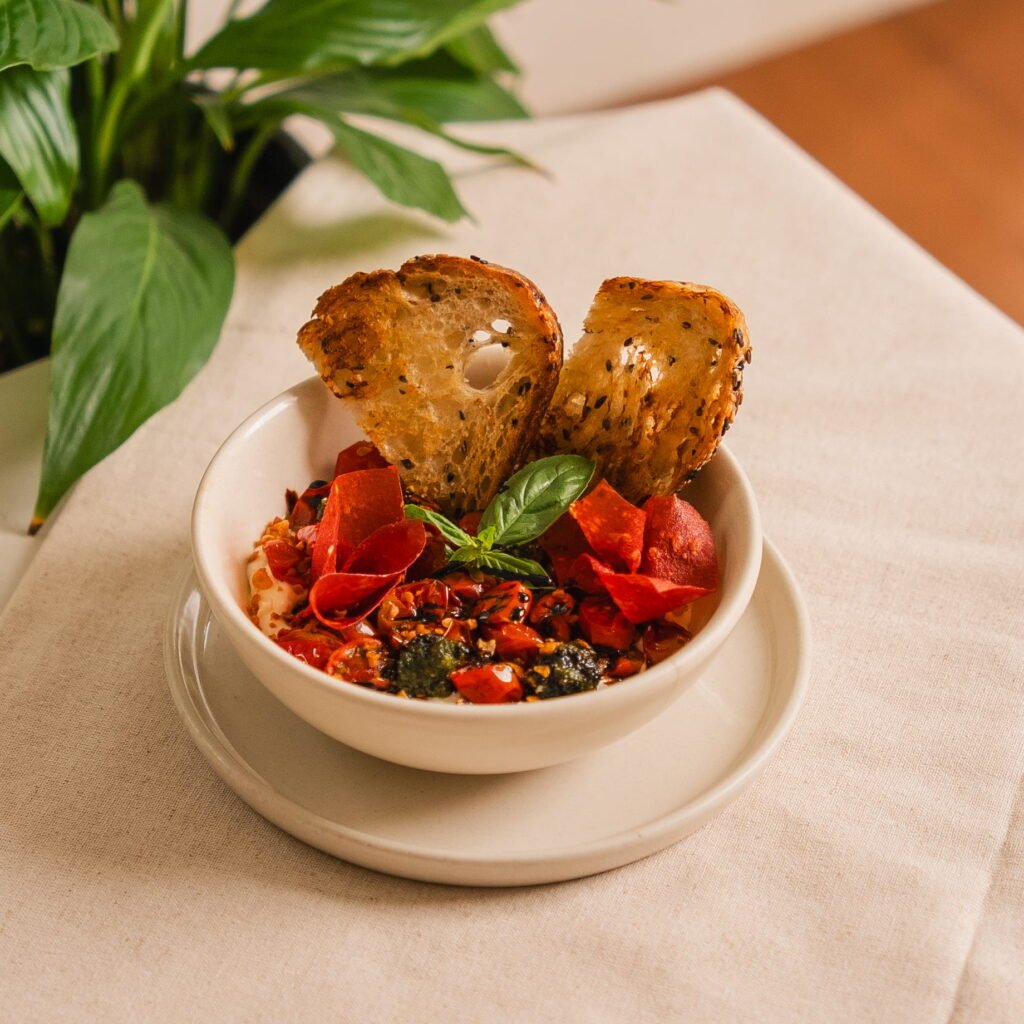
Isha, your training at Le Cordon Bleu Paris and experience in Switzerland and Melbourne exposed you to different pastry cultures and techniques. When you returned to India, what was your vision for Vanilla Miel? How did you set about balancing international pastry craftsmanship with Indian tastes and familiar flavours?
Each place gave me something different. Paris gave me the foundations and taught me that pastry doesn’t forgive guesswork. Taillens, a house that’s been running since 1943, showed me how much discipline it takes to make the same thing perfectly every single day. Melbourne was where I learned you can be technically serious and still play with flavour and form.
When I came back, good pastry here felt like something reserved for occasions, mostly at a hotel or a birthday. I wanted it to be something you could come back to on an ordinary weekday, made with exactly the same care.
The balance I look for is starting from something people already know and giving it more depth. The technique is French, but the memory belongs to you. I don’t think Indian flavours need to be dressed up to be taken seriously. They need to be treated with the same precision you’d give anything else. If I had to put it in a line, it’s familiar, but never forgettable.
From Borrowed Kitchens to Café Culture:
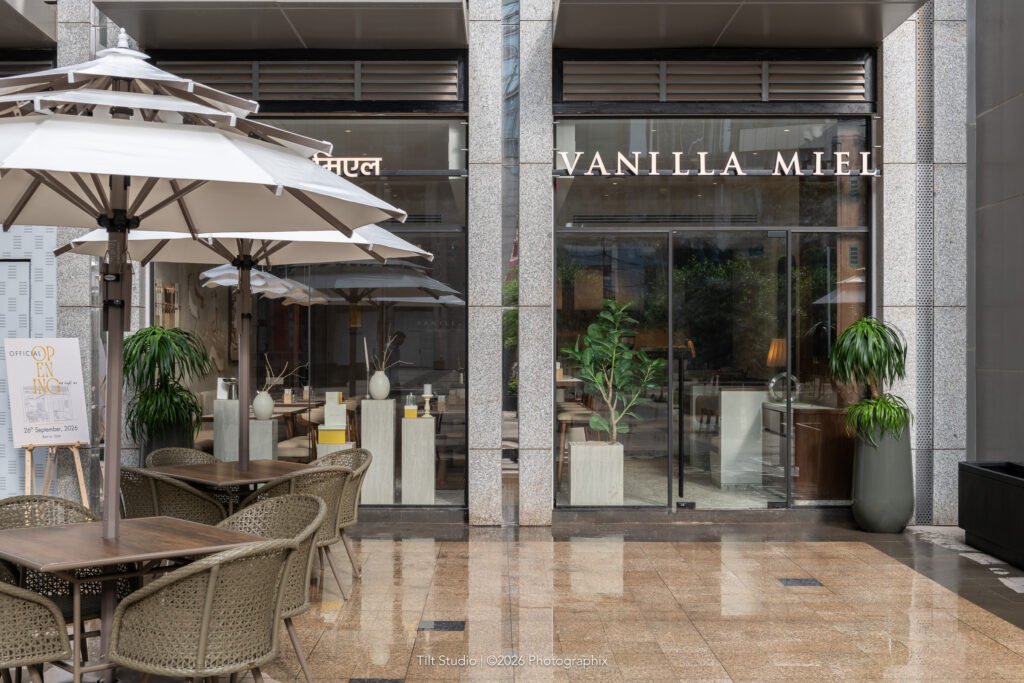
Vanilla Miel began as a delivery-led venture operating out of borrowed spaces and has since grown into a patisserie, gifting business, production kitchen, catering arm and cafés in Bandra and Lower Parel. What were the defining turning points in this journey, and which milestone made you realise that Vanilla Miel was becoming much more than a passion project?
We started in 2018 as a delivery-only kitchen and stayed that way for about two years, moving equipment from one borrowed space to the next. Then lockdown happened, and almost overnight we became a gifting brand. People couldn’t see each other, but they still wanted to celebrate with each other, and a box at the door became the way to do it. We refused to cut corners on how those boxes looked and felt, even when the margins said we should, and that loyalty is what everything since has been built on.
The production kitchen came next. Most of the women who joined that team had never worked in a professional kitchen. Some of them are now training the people who joined after them, which we’re quietly very proud of.
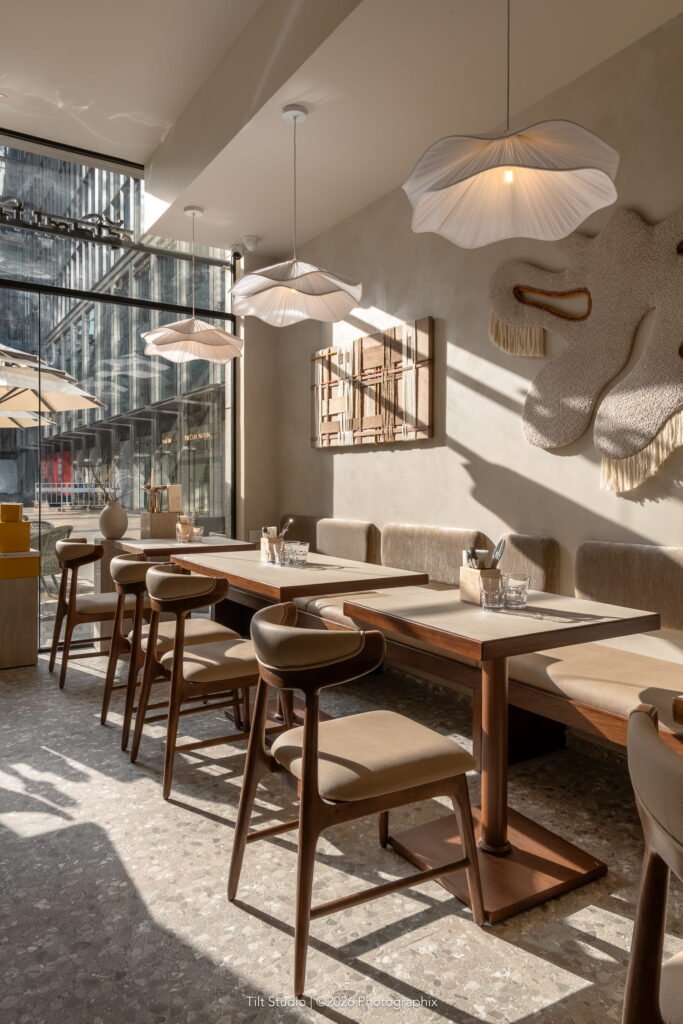
Bandra was an accident in the best way. We were looking for a 300 sq ft cake shop. We saw 80 spaces, and the broker’s 81st was a hidden 1,000 sq ft space that pushed us into a full café, with a savoury menu and a specialty coffee programme. Catering grew alongside that, with large weddings and thousands of chocolates for brands like Jimmy Choo and Bottega. Lower Parel opened on 26th September this year.
Mansi: For me, the moment it stopped being a passion project was when we were responsible for other people’s livelihoods. Once the team grew past a handful of people, every decision we made landed on someone’s family as well as on us. We’re 70 people now. You don’t get to treat that as a hobby.
The Business of Indulgence:
Mansi, moving from mergers and acquisitions into the food and hospitality business must have been quite a leap. What were the biggest lessons from your corporate career that helped you build Vanilla Miel? How do you balance financial discipline, operational complexities and expansion with the creative demands of a premium patisserie?
It was a leap, and a lot of it was learned the hard way. But M&A trains you to do a few things that turned out to matter enormously. You read the fine print. You think about what could go wrong before it does. You negotiate without taking it personally. Whether it’s a lease, a vendor agreement or a wedding for a thousand guests, those habits come up every week. The biggest one, though, is making decisions without the full picture. In a deal you never have every piece of information, and running a food business is exactly the same.
On balance, I don’t see my job as saying no to Isha’s ideas. My job is to make sure her best ideas can afford to exist. That means knowing our numbers closely, building the systems that hold everything together, from the central kitchen to batch traceability to how each café reports back, and being honest about what a new product or location really costs.
Expansion is where that discipline matters most. We’ve chosen to grow carefully, because the fastest version of this business would also be the one most likely to lose what makes it Vanilla Miel. Creativity and discipline only feel opposed when one of them is missing. When both are there, they make each other better.
Can Creativity Survive Scale?
Isha, as Vanilla Miel expands across cafés, catering and gifting, how do you ensure that the quality, precision and craftsmanship of your pastries remain consistent? Is there a tension between a pastry chef’s instinct to experiment and the commercial need for standardisation, scalability and customer expectations?
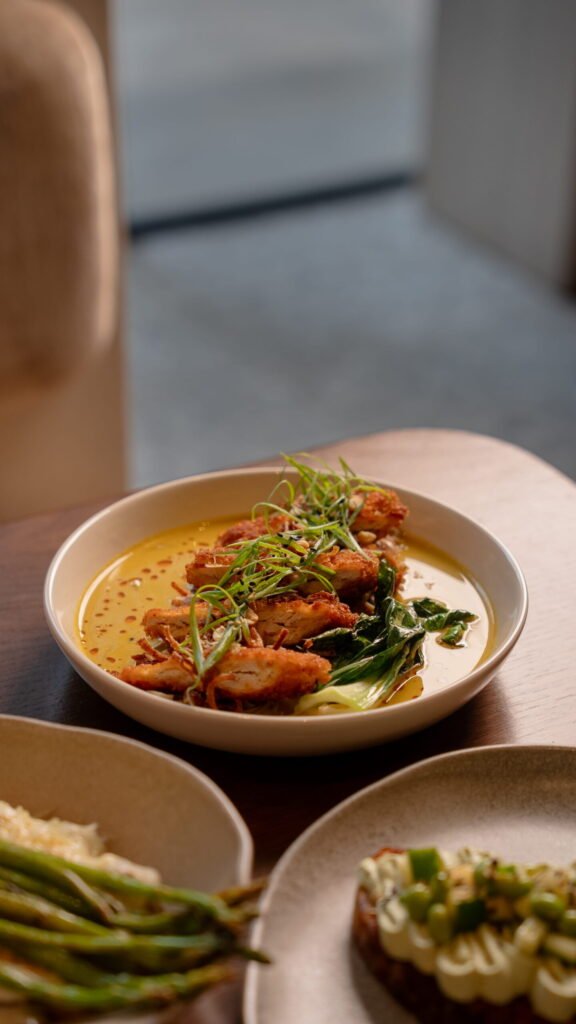
Consistency starts with where things are made. Everything comes out of our central kitchen in Saki Naka, so a dessert at a table in Bandra, on a counter in Lower Parel or at a wedding has gone through the same hands, recipes and checks. Our recipes are written down to the gram, and the kitchen is HACCP certified with full batch traceability. But honestly, consistency lives in the team more than in any document. You can hand someone a recipe, but they also need to understand why each step is there.
Is there tension? Of course. My instinct is always to change something, add something, make it a bit more interesting. But I learned at Taillens that making the same thing well a thousand times is the real skill. So every new idea has to survive the production kitchen. It has to be consistent, it has to hold its shape and shelf life, and it has to travel well in a box. It also has to be something people will actually love, as opposed to something only I’m excited about.
The café helps me with that. Plated desserts that only exist at the table give me room to play in a way a gift box never could. So the experimenting has a home, and the classics stay exactly as people remember them. Creative, never precious.
The Sisterhood Equation:
Working with a sibling can be both a tremendous advantage and a challenge. How do you divide responsibilities, navigate disagreements and make important business decisions together? Have your different personalities and professional backgrounds ever led to creative clashes—and how do you turn those differences into an advantage?
The lanes are clear. Isha owns product, brand and coffee. Mansi owns the commercial side, from systems and legal to the P&L. Day to day, we generally know whose call something is. The big decisions are different. Those have to be unanimous. Neither of us gets to simply overrule the other, so we keep talking until we’re both genuinely on board.
Isha: Working with your sister means there’s no polite version of a conversation. Things get said directly and dealt with, which is honestly a relief. Mansi is the yang to my yin. Her sense of organisation is what gives me room to be completely free creatively. She’s the sense to the madness.
Mansi: Our biggest clash was Bandra. Isha wanted a cake shop and nothing else. I believed we could become something bigger, with coffee, food and an experience built
around the desserts. For her, that meant giving up some control over a kitchen that had always been entirely hers, and I understood why that was hard. What settled it was seeing that a café could give the pastry more room instead of less.
The difference is the advantage. Creativity without structure is a nice idea that never scales, and structure without creativity is a business nobody falls in love with. We need each other’s instincts.
The Next Course for Vanilla Miel:
The Indian patisserie and premium dessert market is evolving, with consumers becoming more adventurous about flavours, presentation and experiences. Where do you see the biggest opportunities for Vanilla Miel? Do you envision expanding the café footprint, growing the catering and gifting business, experimenting with new pastry concepts or taking the brand into new markets?
The diner has changed a lot, even in the eight years we’ve been doing this. People have travelled, eaten well and seen good pastry around the world, so they’re curious and they notice detail. At the same time, they’re more interested in flavours that come from here. That combination is exactly where we’ve always wanted to work, so we feel the timing is on our side.
Catering and events are a big part of what’s next. Weddings and celebrations are where pastry gets to be the centrepiece, and that’s work we love doing. Gifting will keep growing too, both for people and for brands, since it’s where we started and it’s still close to our hearts.
We also want the cafés to be more than places you pass through. As for more cafés, yes, but in our own time. We’d much rather open a few that feel completely right than a lot that feel like copies. New markets will come when the brand is ready to travel without losing itself. For now, there’s a lot of Mumbai left to win over.
TheGlitz Take
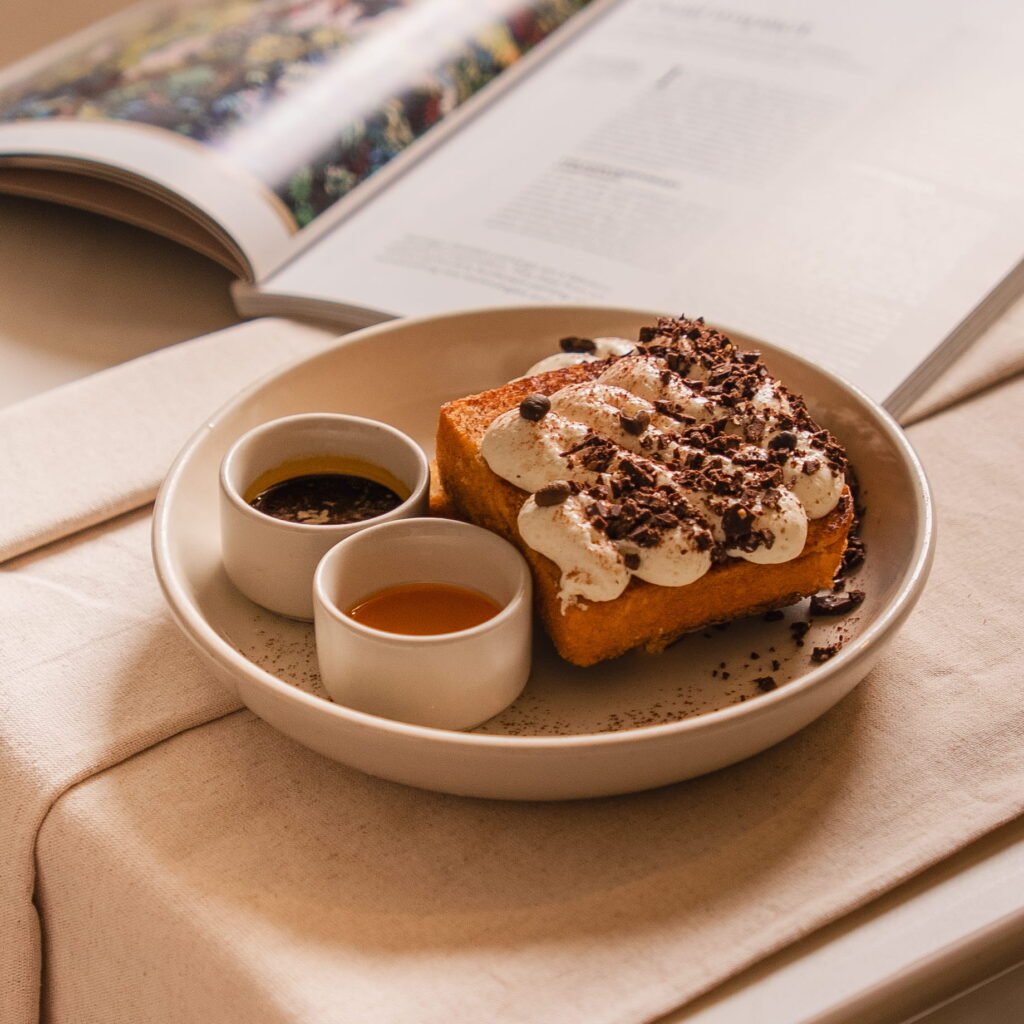
Vanilla Miel is proof that a successful food business needs more than beautiful desserts and Instagram-worthy cafés. It needs vision, discipline and the courage to evolve without losing its soul. What makes Isha Shetty and Mansi Shetty Bafna’s story particularly refreshing is the way they have turned their contrasting strengths into a genuine business advantage.
One guards the dessert artistry; the other ensures the numbers add up. And that is no small achievement in an industry where creativity can easily get swallowed by commercial pressures. We love that they are choosing thoughtful expansion over the temptation to grow at breakneck speed. …Because in the business of indulgence, just like pastry, the finest results cannot be rushed. The sisters have certainly found their secret ingredient: each other.