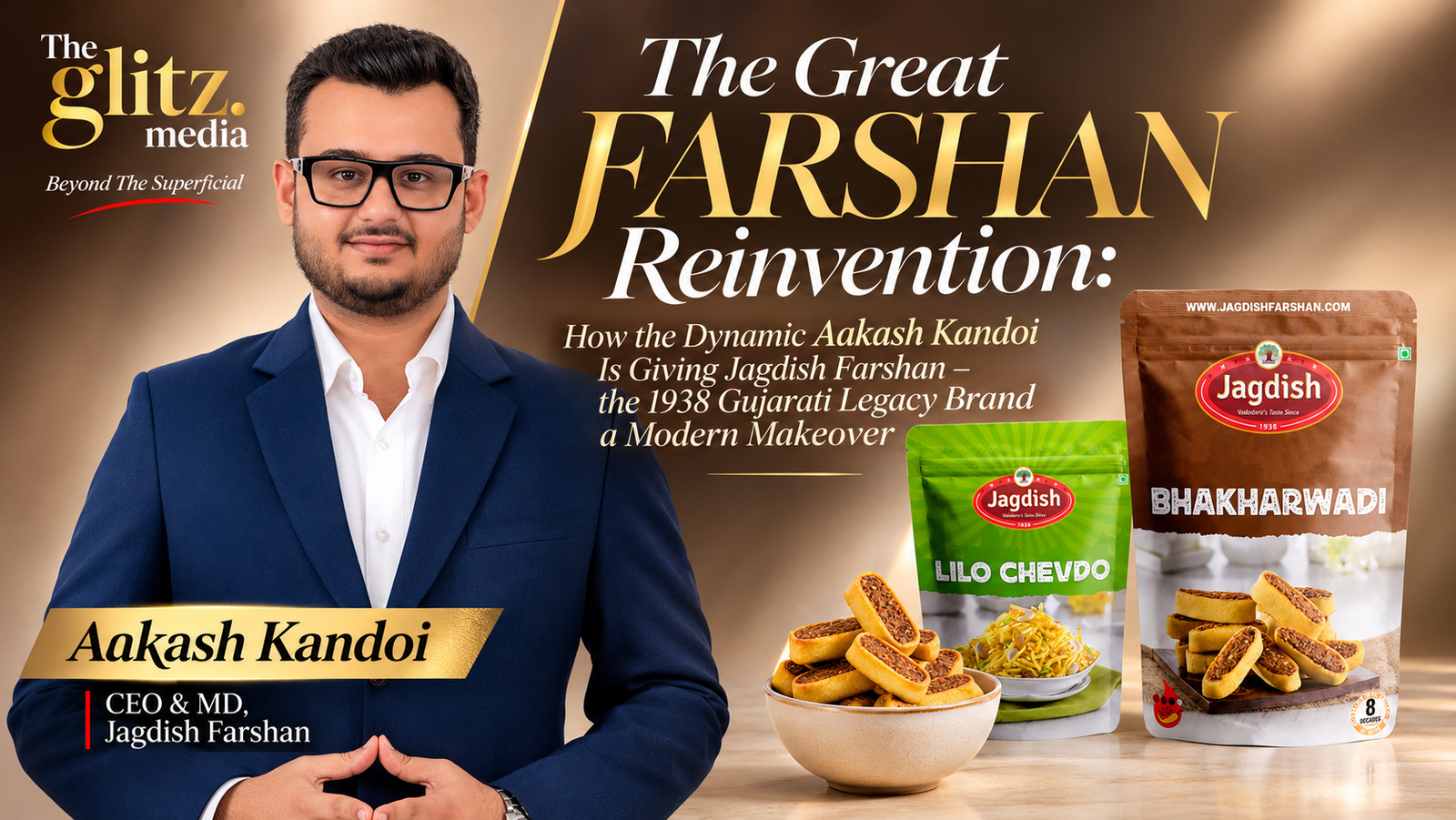
Aakash Kandoi, CEO & MD, Jagdish Farshan
From the irresistible crunch of a Gujarati namkeen to the sweet indulgence of mithai, India’s food culture is steeped in nostalgia. But nostalgia alone doesn’t build a modern food empire. It takes vision, an appetite for experimentation and the courage to take a legacy beyond its comfort zone.
Enter the dynamic Aakash Kandoi, fourth-generation entrepreneur, trained chef and CEO and Managing Director of Jagdish Farshan, the Vadodara-born food brand that has been serving up Gujarati flavours since 1938. What began as a family-run farshan enterprise has evolved into a professionally managed food business with over 500 SKUs across namkeens, farshan, sweets and contemporary offerings, while steadily expanding its retail and international footprint.
At the helm, Aakash Kandoi is navigating the deliciously complex intersection of heritage and modernity… preserving the soul of traditional Indian snacks while reimagining them for a consumer who is increasingly adventurous, curious and discerning.
With a culinary background shaped by professional chef training and experience with leading hospitality brands, Aakash brings a distinctive lens to the business of food. Innovation, for him, isn’t about abandoning tradition. He prefers to give it a contemporary twist… whether through new ingredients, evolving snack formats, an avocado-oil-based namkeen range or fusion mithai that nudges traditional indulgences into exciting new territory.
Here, in an exclusive conversation with Sumita Chakraborty, Founder and Editor-in-Chief, TheGlitz, Aakash Kandoi, CEO and Managing Director of Jagdish Farshan, talks about the evolution of Jagdish Farshan – from a 1938 legacy to now, the business of Indian snacking, culinary innovation, changing consumer tastes, scaling a heritage enterprise and his vision for taking a homegrown Gujarati food brand to newer markets.
Over To Aakash Kandoi, CEO & MD, Jagdish Farshan

Legacy and Leadership:
Jagdish Farshan’s journey began in 1938, and today you are steering a fourth-generation family business. What has been your vision for the brand?
Taking forward a business that has been built over nearly nine decades is both a privilege and a responsibility. When I joined Jagdish Farshan in 2015, I saw an opportunity to build on its strong legacy and take the brand to a wider audience without losing the authenticity that had earned it consumer trust over generations.
My vision has been to evolve Jagdish Farshan from a regional favourite into a professionally managed, nationally recognised and globally relevant Indian food brand. For me, legacy is not about preserving the past exactly as it was; it is about carrying forward its values while adapting to changing consumer expectations.
We want to retain the taste, recipes and cultural identity that define us, while building the capabilities, products and distribution networks needed for the next phase of growth. Ultimately, I want Jagdish Farshan to become one of the most trusted and beloved names in Gujarati ethnic foods, both in India and internationally.
Business Transformation:
How have you transformed a traditional farshan business into a professionally managed food brand?
When I joined Jagdish Farshan in 2015, it was essentially a single-store operation with a strong reputation but considerable untapped potential. I recognised early that scaling the business would require more than expanding our retail footprint. We needed to build an organisation with the manufacturing capabilities, systems and processes to deliver consistent quality across markets. We therefore focused on modernising manufacturing, strengthening quality control and investing in technology.
The introduction of Modified Atmosphere Packaging (MAP), along with advanced imported German and Italian machinery, helped us improve product freshness, consistency and shelf life without compromising on taste. We also expanded beyond traditional retail into packaged foods, modern trade, e-commerce and quick commerce.
Today, we have a portfolio of over 450 products, manufacturing capacity of 15 tonnes per day and more than 24 retail outlets. The transformation has been about building a scalable business while ensuring that the consumer experience remains consistent, whether someone buys our products in Vadodara, another Indian city or overseas.
Culinary Expertise:
How has your culinary education and hospitality experience influenced product development?
My culinary education and professional experience have fundamentally shaped the way I approach food and product development. I hold a Bachelor’s degree in Culinary Arts from ITM School of Culinary Arts and began my career in professional kitchens, including Taj Fort Aguada in Goa. I also had the opportunity to work on consultancy assignments for hospitality brands such as Four Seasons, Marriott and Taj Mumbai.
These experiences taught me that great food is about much more than flavour. It involves understanding ingredients, respecting preparation techniques, maintaining consistency and creating an experience that consumers remember.
I bring that perspective into Jagdish Farshan by looking at our products through both a chef’s and an entrepreneur’s lens. While our traditional recipes remain our foundation, I believe there is always room to experiment with ingredients, textures and formats. This allows us to innovate thoughtfully while ensuring that the quality and authenticity of the final product remain uncompromised.
Changing Consumer Preferences:
How are evolving preferences shaping Jagdish Farshan’s product portfolio?
Consumer preferences are evolving rapidly, particularly among younger consumers who are more conscious of ingredients, quality and the overall food experience. We see this as an opportunity to reimagine traditional snacking rather than move away from it. At Jagdish Farshan, we have responded by introducing products that address emerging consumption trends.
For instance, we pioneered a range of traditional namkeens made using avocado oil, alongside sugar-free and gluten-free offerings in our sweets portfolio. We have also invested in contemporary product formats that appeal to consumers looking for something different. However, our approach is not to innovate simply for the sake of novelty. Every new offering must deliver on taste, quality and consumer relevance.
We want to demonstrate that traditional Indian foods can evolve with changing preferences without losing the flavours and familiarity that make them special.
Tradition and Experimentation:
How do you balance classic farsan with newer offerings such as fusion mithai?
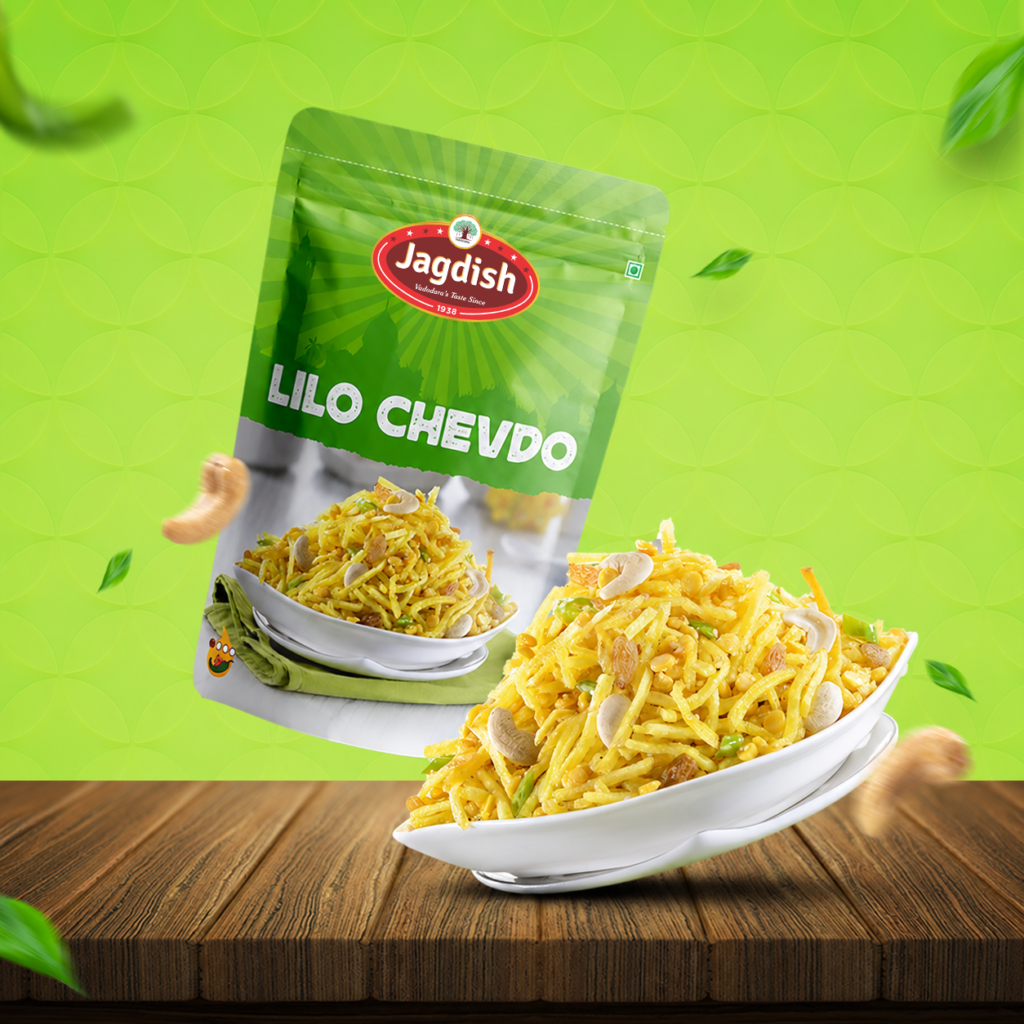
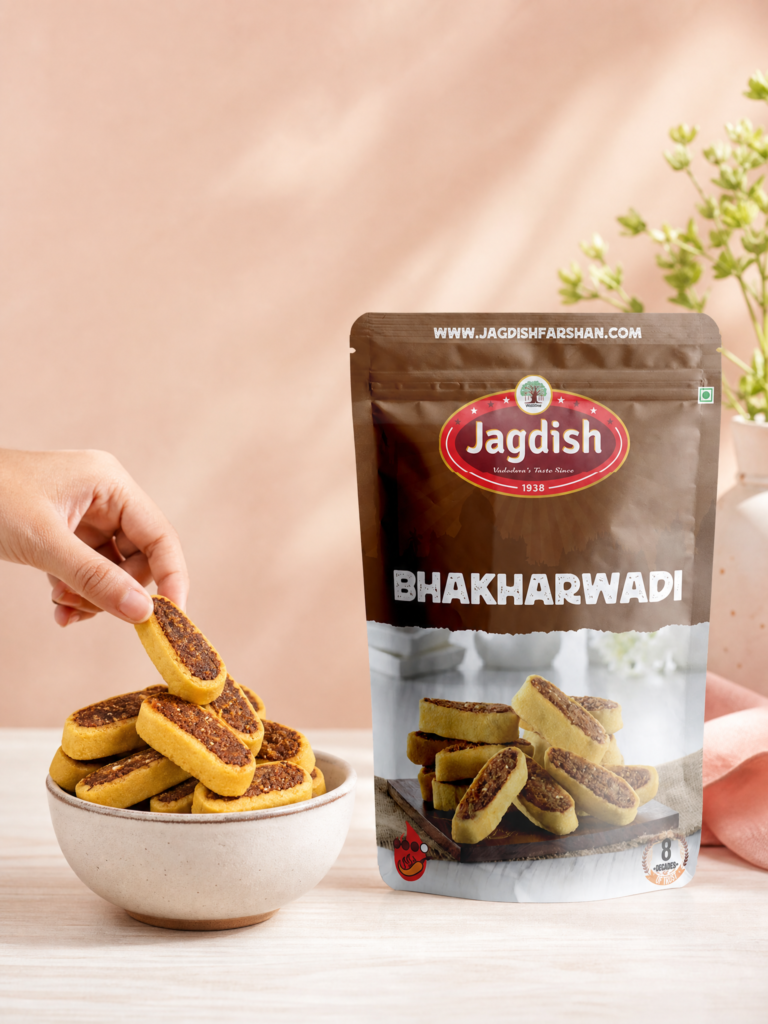
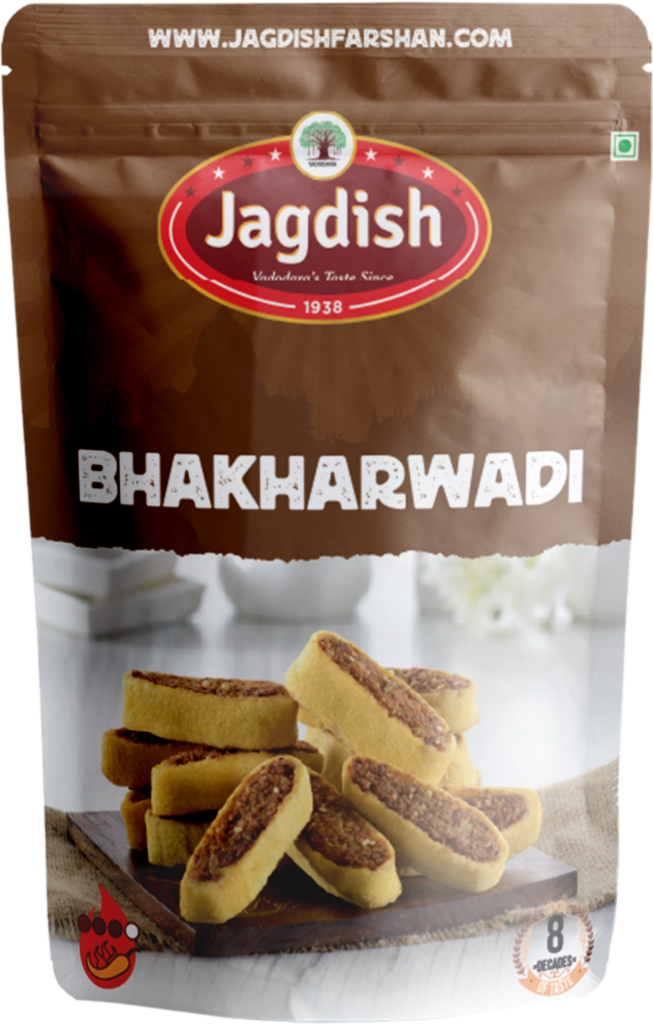
For us, tradition and innovation are not opposing ideas; they complement each other. Our traditional products, such as Bhakharwadi and Lilo Chevdo, represent the culinary heritage and consumer trust that the brand has built over generations. That foundation gives us the confidence to experiment. When developing newer offerings, we start with familiar Indian formats and explore how contemporary ingredients and flavour profiles can enhance the experience.
Products such as Matcha Barfi and Blueberry Kaju Katli, along with experiments involving Biscoff, Nutella and Wasabi, reflect this approach. The intention is not to change the identity of traditional Indian sweets but to introduce new experiences that encourage younger consumers to discover and engage with them. I believe the future of ethnic foods lies in respecting their origins while remaining open to new influences. Innovation works best when consumers can recognise the tradition behind it, even as they experience something new.
Expansion and Markets:
What is your approach to expanding beyond Gujarat and strengthening international markets?
Our expansion strategy is built around disciplined growth rather than simply increasing our geographical footprint. Gujarat remains our core market, where we want to deepen our presence and strengthen our leadership. From there, we are identifying opportunities in other West and North Indian markets that share similar food preferences and consumer demographics. Internationally, we see considerable potential for authentic Indian ethnic foods, particularly among diaspora communities that have a strong emotional connection with regional cuisines.
We have expanded our export presence to more than 20 international markets, including the US, UK, Canada, Australia and several European and Asian markets. An important shift in our international strategy has been moving beyond exports towards establishing a direct consumer-facing presence. Our US manufacturing and retail operations, along with our Brampton outlet in Canada, are steps in that direction.
Going forward, our focus will be on building market-specific capabilities, strengthening distribution and ensuring that our products deliver the same quality and experience across geographies. We want to take the taste of Gujarat to the world while building a sustainable international business.
Long-term Ambition:
What is your vision for Jagdish Farshan over the next few years?

My long-term ambition is to establish Jagdish Farshan as one of India’s most recognised and trusted ethnic food brands, with a meaningful presence in international markets. I believe Indian regional foods have enormous potential to evolve into globally relevant categories, provided we invest in the right combination of product innovation, manufacturing excellence, quality and distribution.
Over the coming years, we want to strengthen our packaged foods business, expand our retail presence in strategically identified markets, deepen our digital and quick-commerce channels, and grow our international operations. Equally important is building an organisation that can sustain this growth without becoming disconnected from its roots.
As a fourth-generation entrepreneur, I see my responsibility as creating a business that is not only larger but also stronger, more professionally managed and better equipped for the future. For me, success would mean that Jagdish Farshan continues to evoke the same trust and familiarity it has built since 1938, while becoming a brand that consumers across generations and geographies can proudly associate with authentic Indian food.
TheGlitz Take

A legacy is not measured by how long it survives, but by how boldly it reinvents itself without losing its soul. Jagdish Farshan’s journey is a delicious reminder that heritage brands don’t have to choose between tradition and transformation; they can have both, and quite spectacularly. It’s dynamic MD Aakash Kandoi’s challenge is not merely to preserve the taste of 1938, but to give it a contemporary twist… through innovation, smarter business practices, changing consumer preferences and a willingness to experiment without losing the soul of the brand.
From classic farshan to fusion mithai and modern snacking, the real art lies in knowing what to reinvent and what must remain sacred. And if Jagdish Farshan can turn nearly nine decades of Gujarati food heritage into a brand that speaks to a new generation while travelling beyond India’s borders, then that’s not just business expansion… that’s a legacy with a rather appetising future.