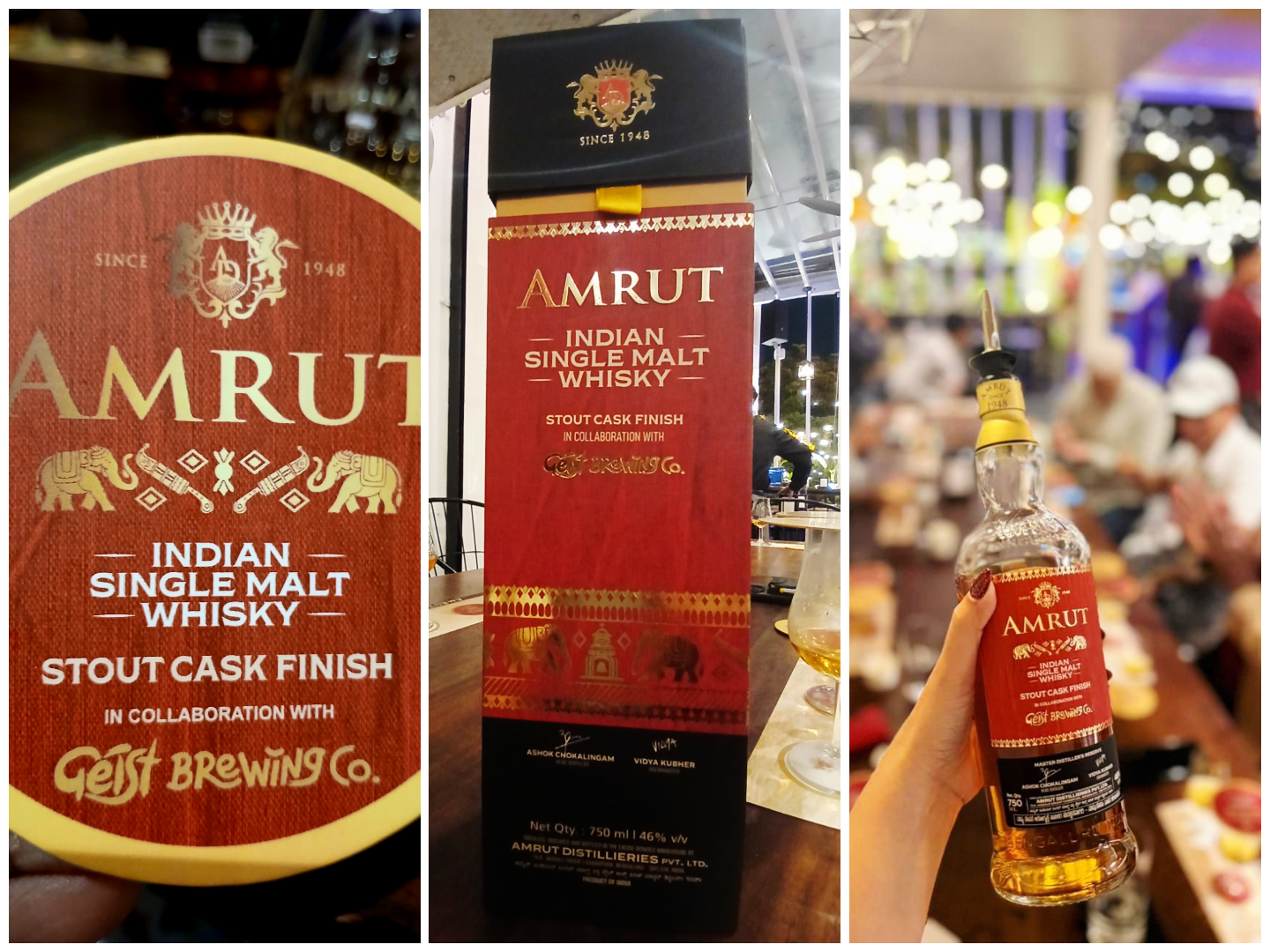
Amrut Distilleries x Geist Brewing Co. Stout Cask Finish Indian Single Malt Whisky
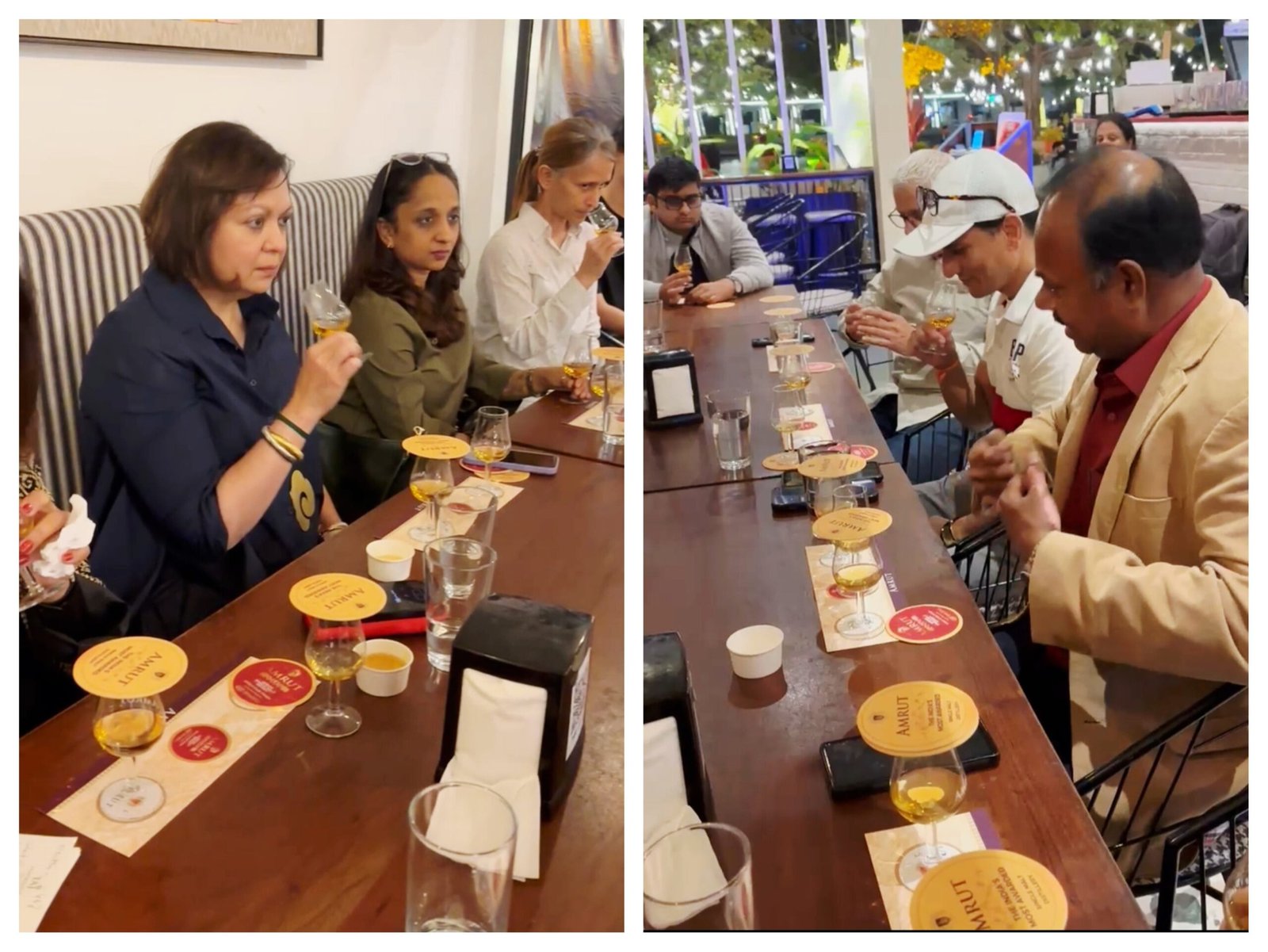
On a Tuesday evening at Geist Brewing Co., Rajajinagar, with winter’s slight nip in the air, Ashok Chokalingam, sat at the center of a select gathering of writers and media. The crowd in the main bar was buzzing, but our corner was intimate, facing the bar, away from the noise. The chairs were wrought iron with cushions, the tables wood, the lighting warm enough to see your whisky properly. The vibe was cheerful without being chaotic. Three tasting glasses waited in front of us, filled and covered: Amrut Amalgam on the left, Amrut Fusion on the right, and in the center, India’s first stout cask whisky.
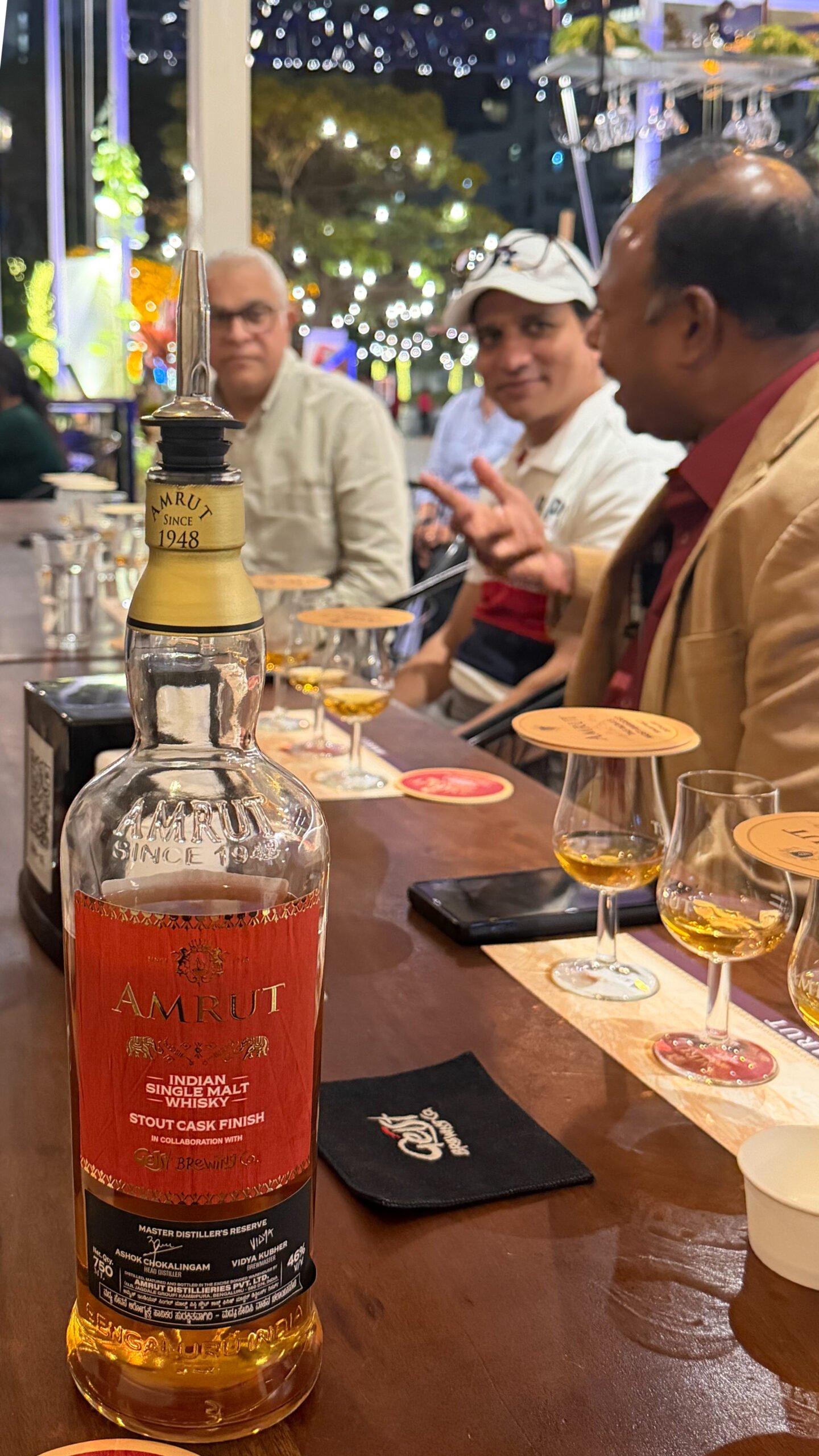
Ashok Chokalingam, Amrut’s master distiller, talks the way he distills: with enthusiasm and zero pretense. He made sure I was seated right beside him, with Narayan Manepally, Geist Brewing Co. CEO, on my other side. Vidya Kubher, head brewer, Geist Brewing Co. sat across from us, quiet but observant. This wasn’t a formal tasting. It felt more like three friends explaining how they accidentally made something extraordinary.
“One fine day I got a phone call from Narayan,” Ashok began. Narayan needed a whisky barrel to mature his beer. Ashok agreed and sent one. Then Vidya entered the picture. Geist’s master brewer, soft-spoken but precise, convinced Ashok to send six ex-bourbon casks, freshly emptied from Amrut’s entry-level single malt. The barrels still carried all the whisky flavour inside them.
Vidya filled those casks with imperial stout, a high-strength brew built to survive the intensity of whisky-soaked wood. She and Ashok tasted at intervals: three months, six months, and eight months. At six months, the beer tasted terrible. Narayan admitted they almost dumped it. But Vidya suggested waiting. At eleven months, something shifted. The stout turned Christmassy, layered with vanilla, chocolate, and whisky notes, and a fruitiness that hadn’t been there before. It sold out in three weeks, the fastest any stout had moved at Geist.
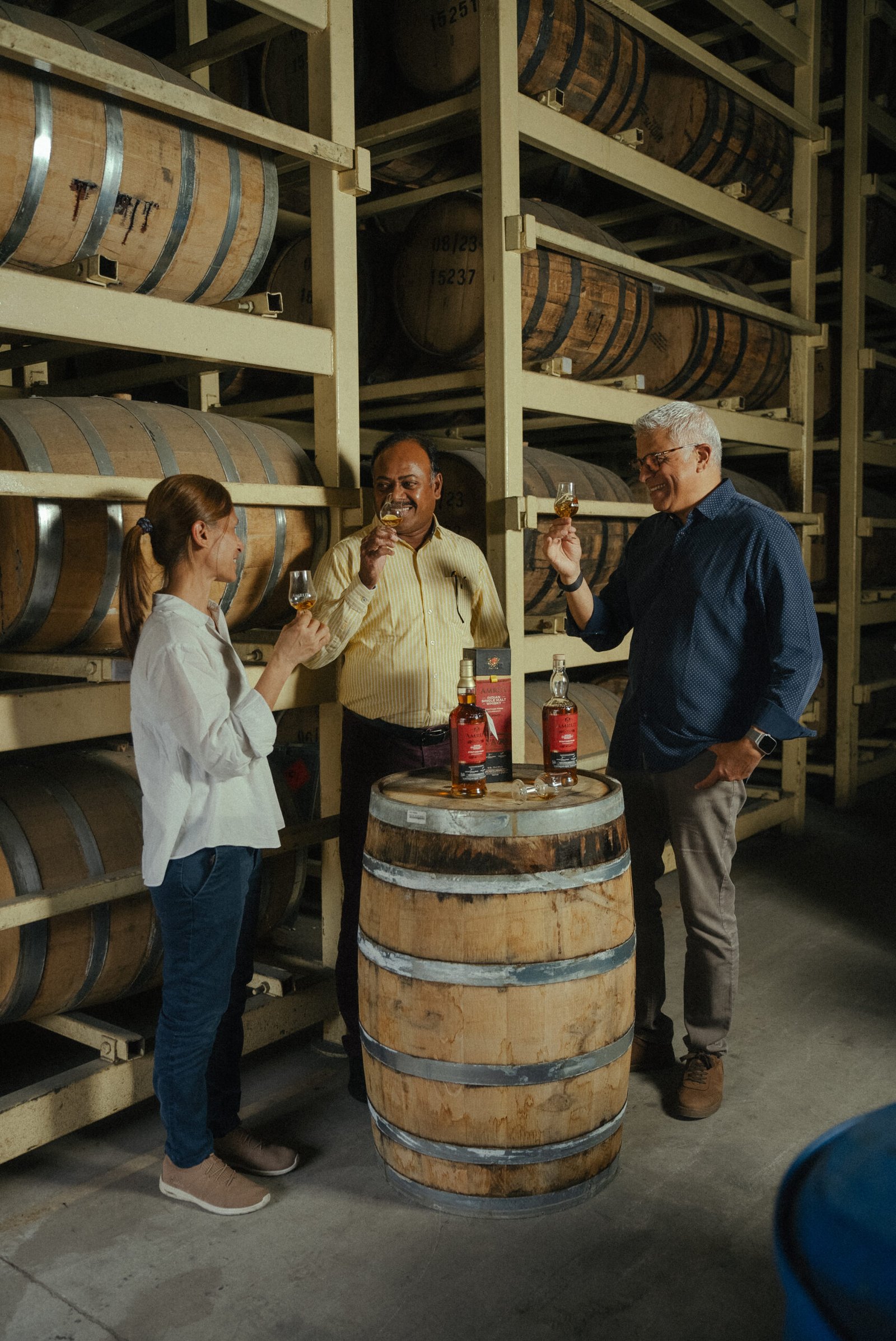
That’s when Ashok called. The barrels had done their job beautifully. Could they send them back?
What he did next borders on instinct. He filled those ex-stout casks with his matured unpeated single malt and waited eight months. One day, while selecting his annual Master Distiller Reserve, he nosed this particular cask and stopped. The rose petal (gulkand) note hit him immediately. He’d never encountered it in any of his whiskies before. He called it love at first nose.
That evening at Geist, we swirled, sniffed, and sipped. The first thing that arrived was milk chocolate, unmistakable and heavier than Ashok’s usual whiskies. A big boy feel at 46% ABV, he called it. Then came the floral note, subtle but persistent, tucked beneath the chocolate. On the palate, the gulkand bloomed properly. Dark chocolate, a touch of nuttiness, wheat, and that rosy warmth carrying through to the finish.
This whisky, Ashok explained, isn’t filtered. He compared it to drinking rasam two ways: scooping the clear liquid off the top or stirring everything together and tasting the full depth. This was the second kind. He added water over 24 hours, one drop at a time, bringing the whisky from cask strength to 46% ABV without shocking it. Then he hand-bottled it. 224 bottles from the first cask. Gone in two days. A second cask followed three weeks later. Now everyone’s asking for a third.
Vidya, seated across from us, spoke when it mattered. The stout, she said, had to be imperially strong to hold its own in those whisky barrels. The ageing process became a conversation between beer, wood, and yeast. Re-fermentation happened inside the casks. Flavors developed and shifted.
At three months, it tasted overwhelmingly of whisky. By eleven months, balance arrived. When they sent the barrels back to Ashok, they kegged the stout the same day to keep everything fresh.
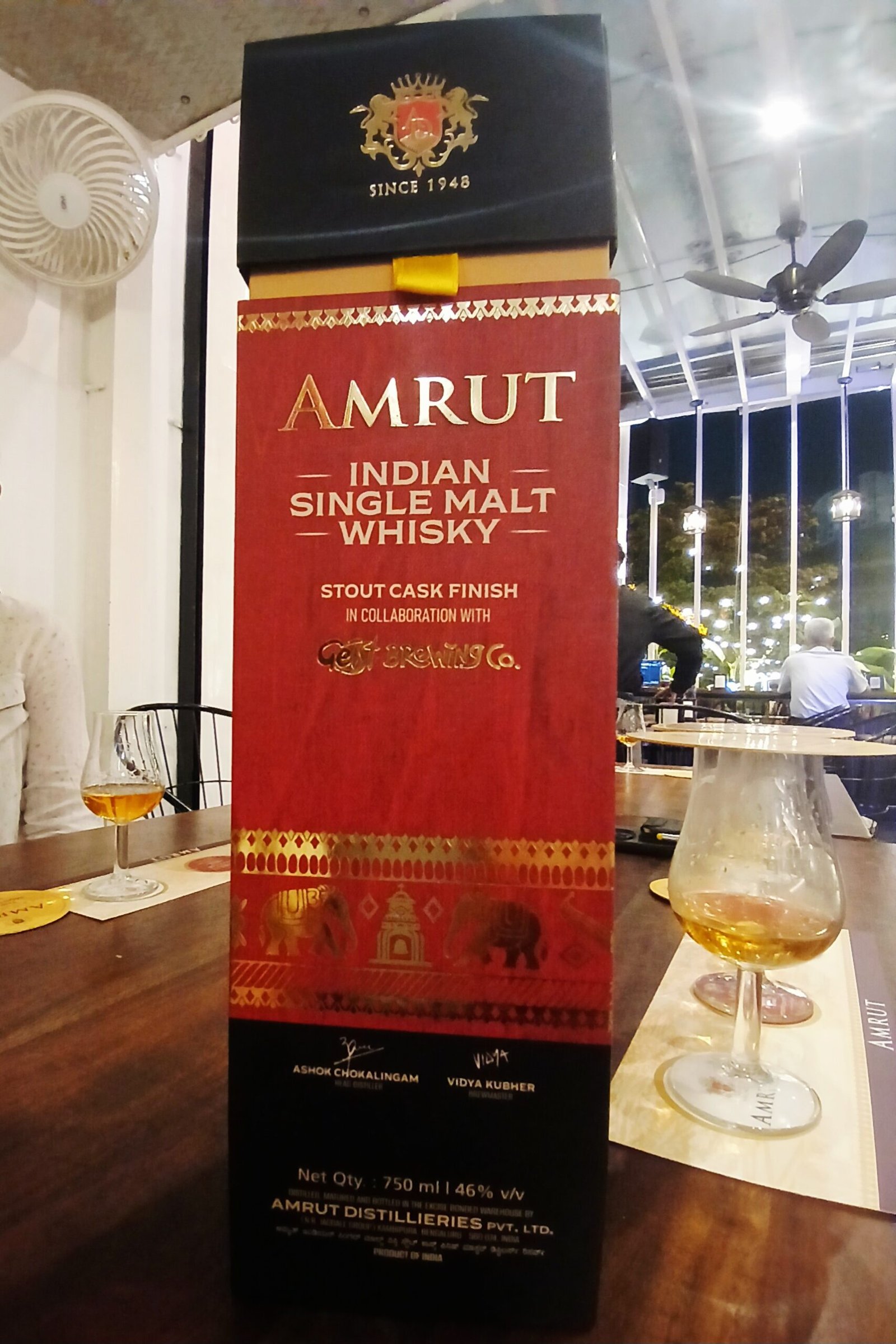
The collaboration between Amrut and Geist wasn’t carefully strategised. It started with a phone call and turned into something neither Ashok, Vidya, nor Narayan had mapped out. Two local makers, both from Bangalore, experimenting without overthinking it. The result proved that when craft respects craft, good things happen. The label design came from Narayan’s vision: Mysore’s raw silk sarees, Kodava sickles, and Dasara elephants. Gold, red, and black. A tribute to Karnataka, bottled.
When I asked Ashok what surprised him most about the stout cask, he didn’t hesitate. “That gulkand note. I never expected it.” The whisky hadn’t lost anything in those casks. It had found something. Like catching a mango at the exact moment between tart and overripe. Timing, he said, is everything. Now he and Vidya know precisely when to pull the liquid. Ten months, maybe less. Any longer and the stout’s influence drowns.
Narayan leaned forward when I asked about risk. “If you’re willing to drink it yourself, your customers will appreciate it,” he said. He called Bangalore the California of India, a city of immigrants bringing their best selves, a place that rewards innovation. This whisky, he added, proves that people would rather drink something world-class from here than pay triple for something shipped from Scotland.
The evening wound down with one last question: if this bottle could talk, would it identify as beer or whisky? Narayan smiled. “A human being with split personalities, but both pleasant.”
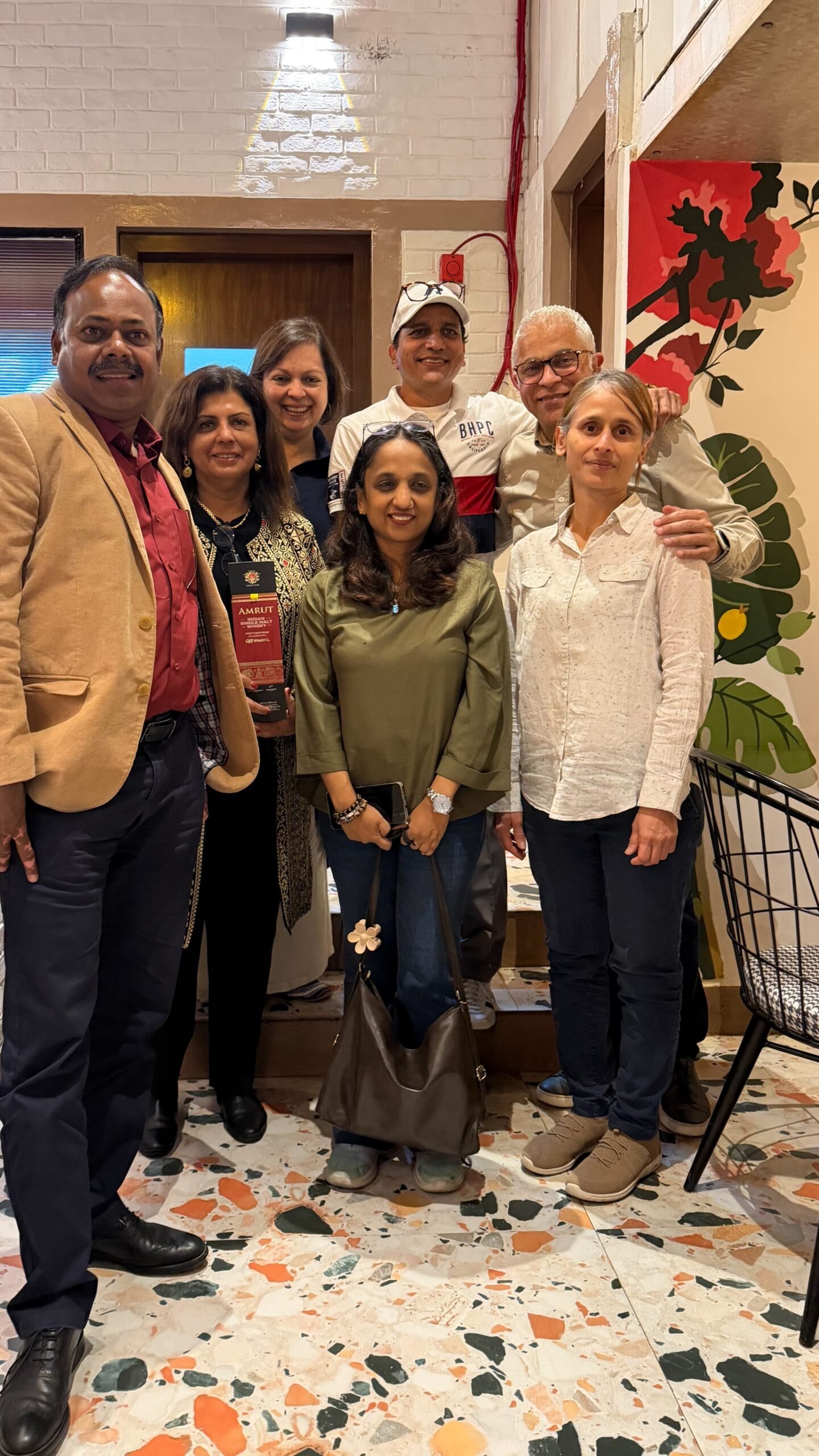
India’s first stout cask whisky didn’t happen in a boardroom. It happened because someone needed barrels, someone else said yes, and three people decided to see what would unfold. What emerged was proof that the best collaborations often begin as accidents and end as something worth celebrating. Ashok, Vidya, and Narayan didn’t force it. They let it breathe, trusted the process, and bottled the result. Bangalore, as it turns out, knows a thing or two about happy accidents.
For more stories like this, stay tuned to TheGlitz