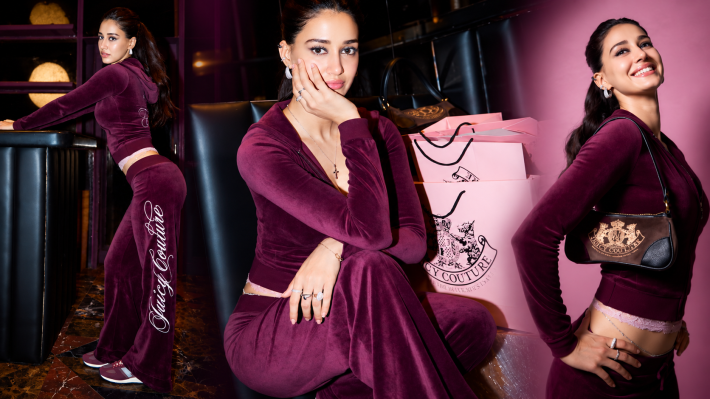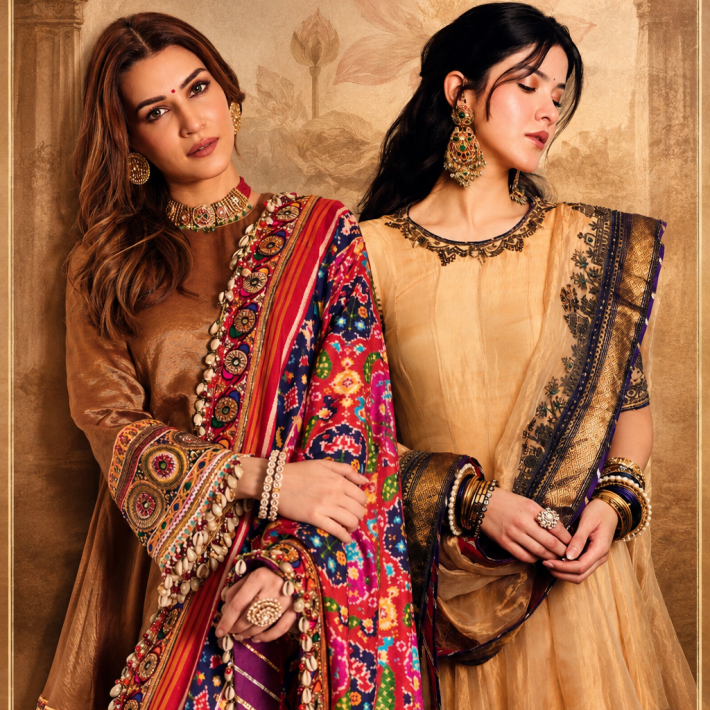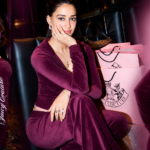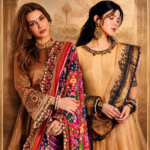
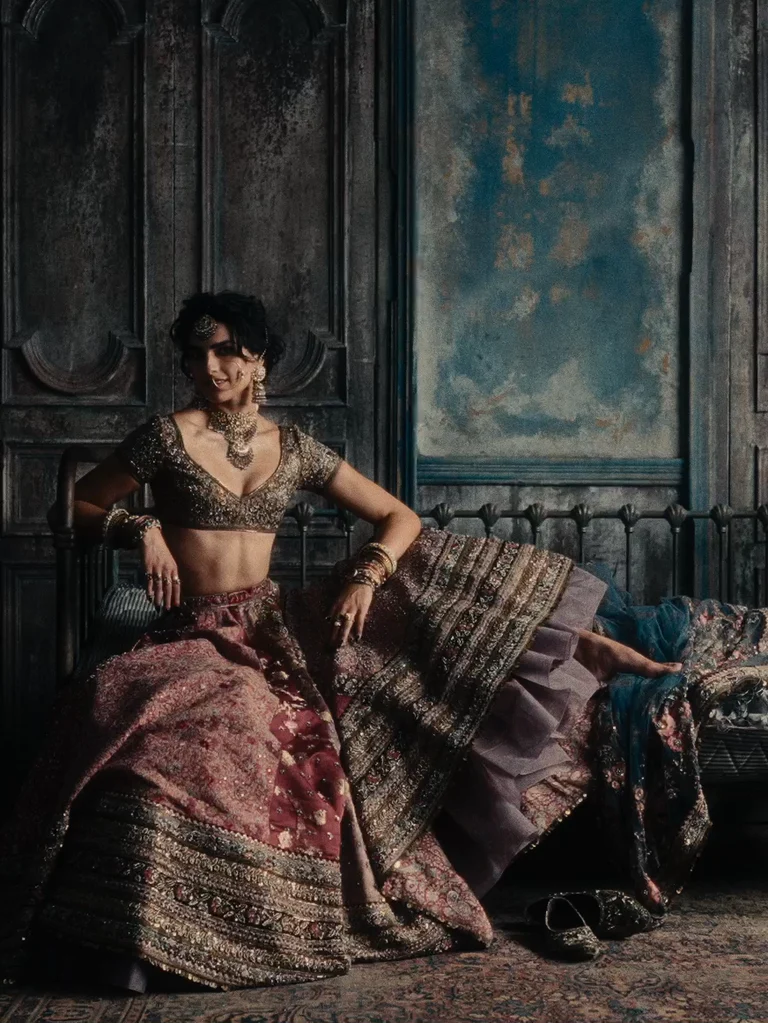
Welcome to the dazzling, chaotic, and fabulously eclectic world of Indian fashion, where trends are as diverse as the country’s street food and as vibrant as a Holi festival. Here, sartorial rules are meant to be broken, and yes, you might just spot a sequined sari paired with sneakers. Buckle up; we’re about to take ride through the vibrant land where haute couture meets street style, with a sprinkle of Bollywood glam. Sumita Chakraborty, Editor-in-chief, TheGlitz, explores the stylish vibrant realm where haute couture collides with street style, unraveling the colorful chaos of India’s fashion scene. Join her on a cheeky stroll through a world where tradition and trendsetters blend in a dazzling sartorial dance.
Indian Fashion
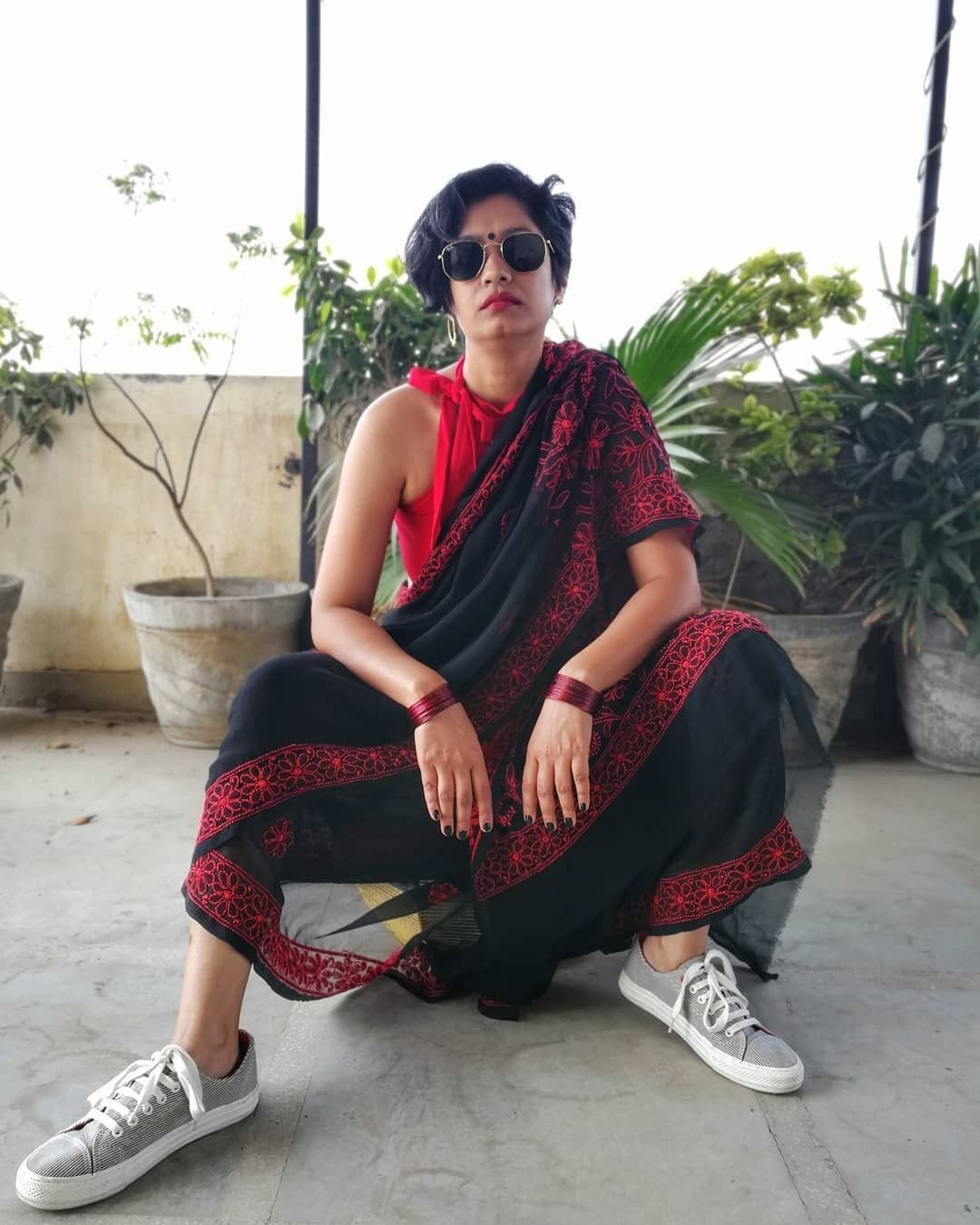
The Sari Saga: A Love Story
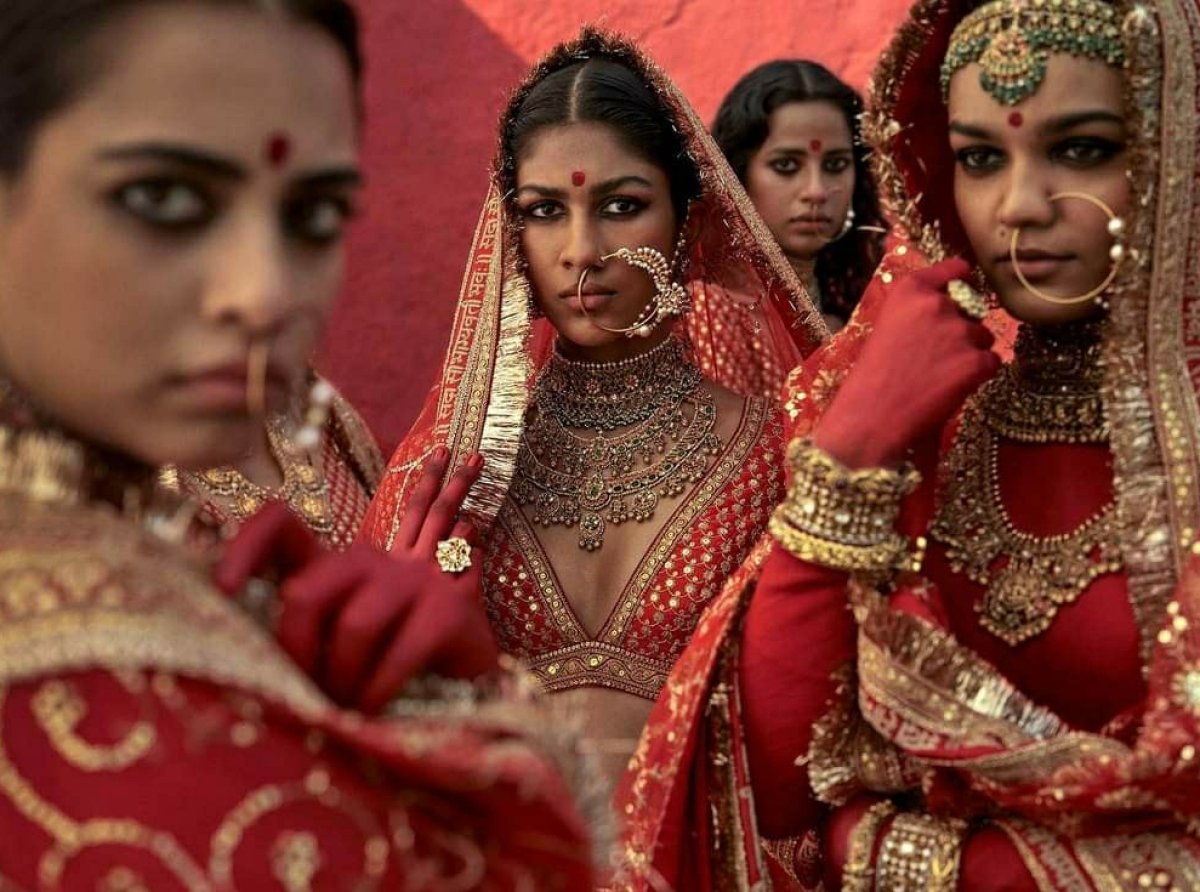
Let’s talk about the sari. It’s the classic piece that refuses to stay in the past, despite being an ancient wardrobe staple. While other garments have come and gone, the sari is like that one friend who always shows up to parties looking effortlessly chic—draped in elegance and a touch of drama. Designers like Sabyasachi Mukherjee and Manish Malhotra have made the sari an icon of modern glamour.
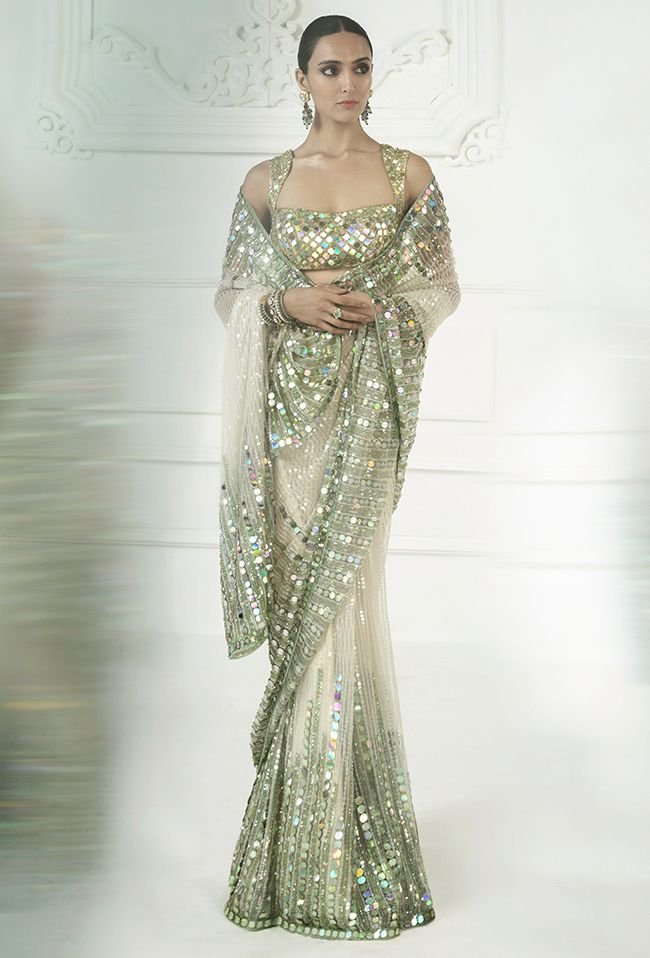
Celebrities like Deepika Padukone and Priyanka Chopra regularly flaunt these luxurious drapes, proving that the sari can be as versatile as it is timeless. It’s also the only outfit that doubles as a beach towel if you’re feeling particularly daring. When it comes to versatility, the sari has it all, and yes, it can also be your fashion fail-safe for both boardroom meetings and wedding bashes.
Bollywood Bling: The Larger-than-Life Trend
Bollywood is to fashion what popcorn is to movies: an essential, sometimes excessive, but absolutely entertaining combo. Designers like Abu Jani Sandeep Khosla and Falguni Shane Peacock are known for their extravagant creations, turning every red carpet into a runway.
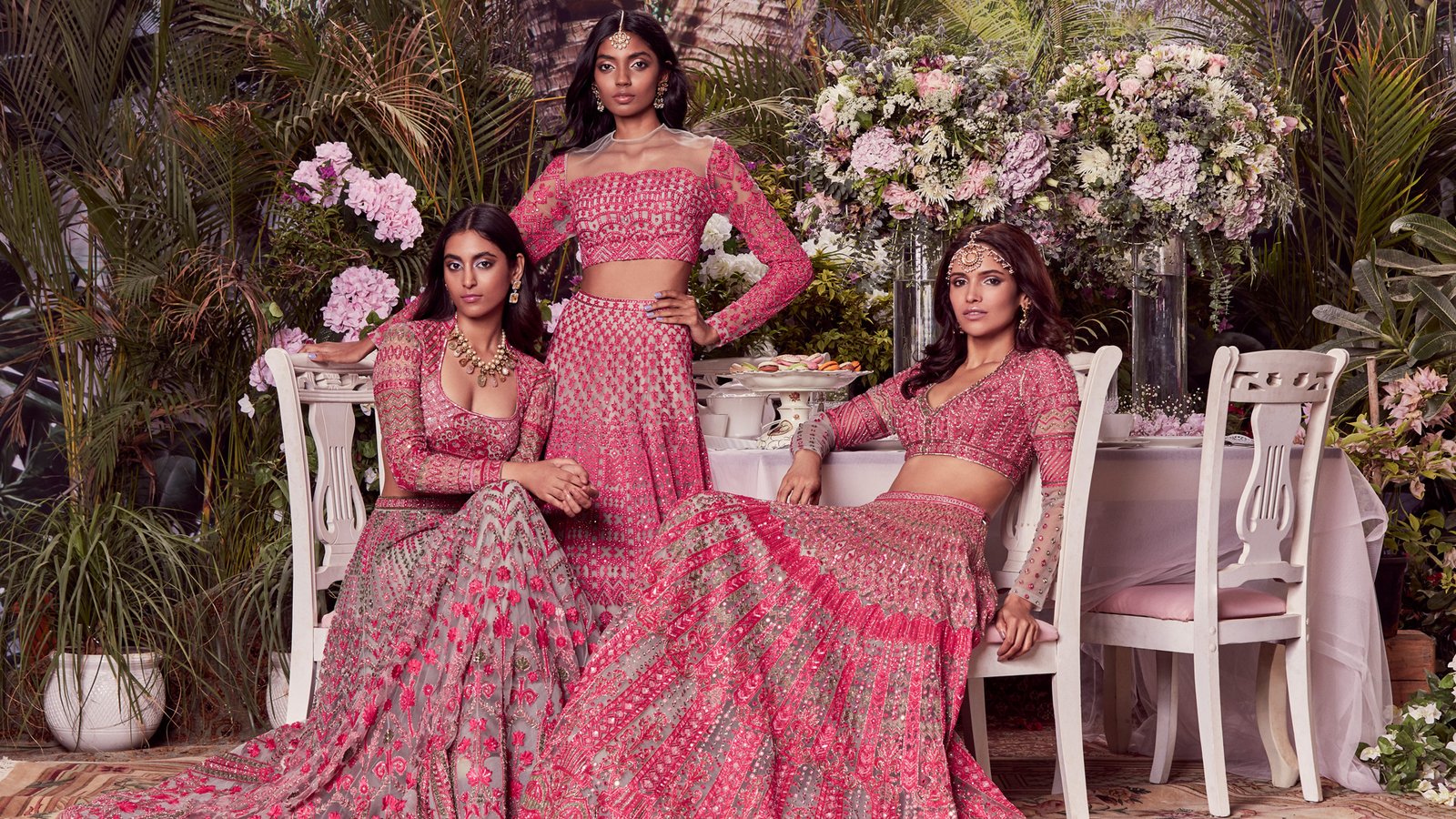
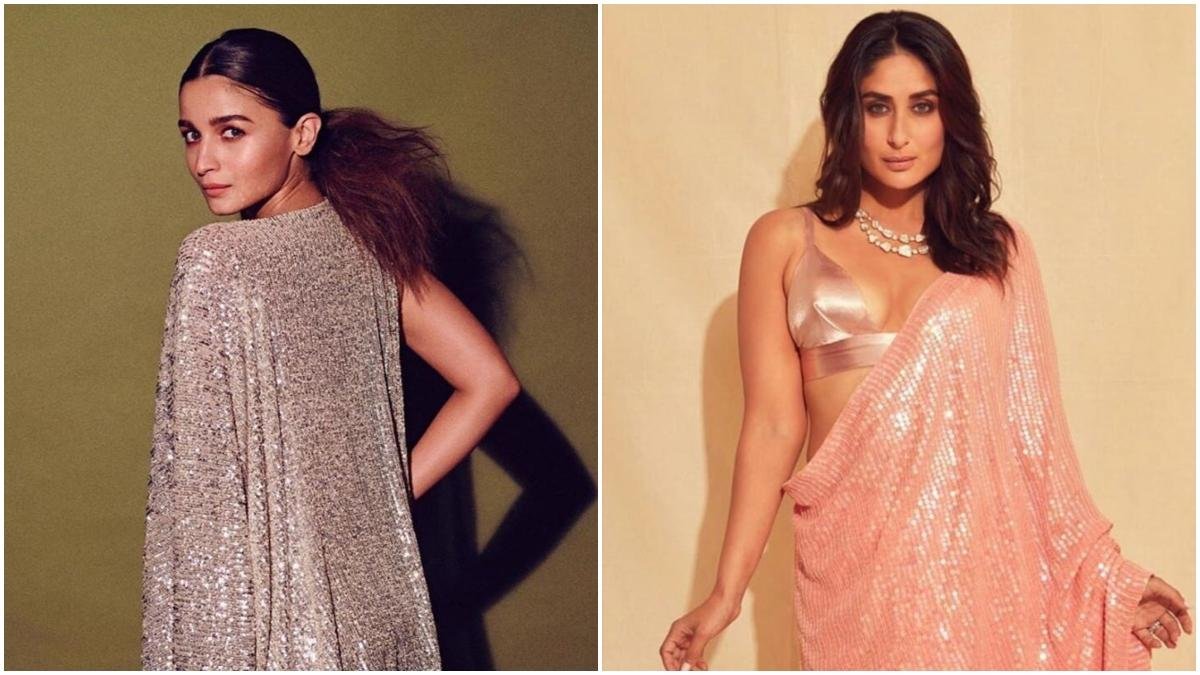
Celebrities like Alia Bhatt and Kareena Kapoor Khan don these high-octane ensembles, sparkling in sequins, feathers, and exaggerated hemlines. Why go for understated elegance when you can bedazzle like there’s no tomorrow?
Street Style: Where High Fashion Meets Humble Origins
On the streets of Mumbai, Delhi, and Bangalore, you’ll find fashion that’s a bit like a culinary fusion dish—unexpected but delicious. Here, you’ll see traditional kurtas paired with denim shorts, and juttis (traditional footwear) getting a high-fashion makeover with metallic threads.
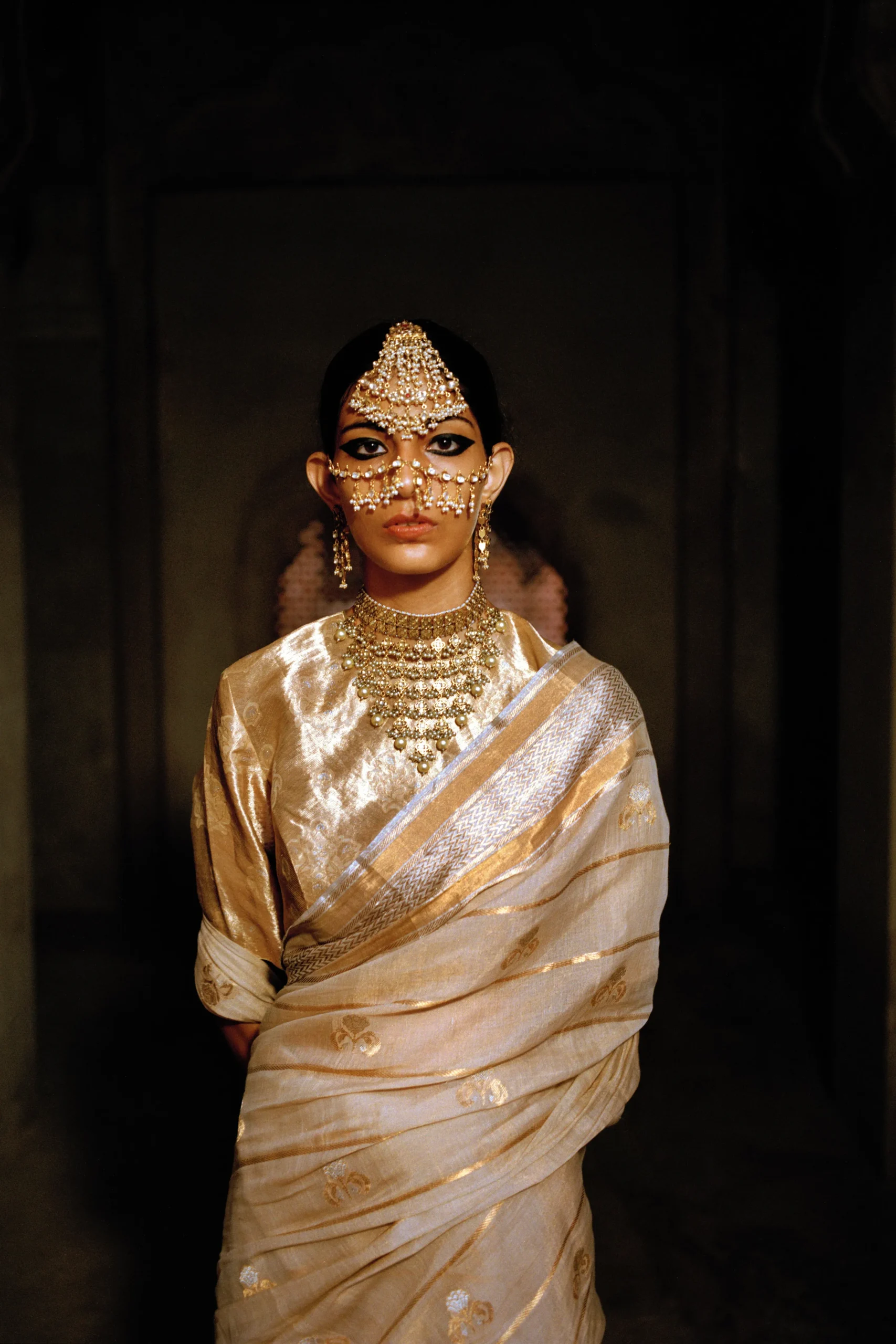
Designers like Anita Dongre and Raw Mango blend traditional techniques with contemporary flair, making traditional wear feel fresh and innovative. It’s like the fashion gods had a party, and everyone’s invited. The result? A melting pot of styles that are as eclectic as a DJ’s playlist.
Designer Dilemmas: Who Needs Rules?
In India, fashion designers play by their own rules—or rather, no rules at all. Why follow a trend when you can set one? Indian designers like Tarun Tahiliani and Abu Jani Sandeep Khosla are notorious for mixing the old with the new, turning a simple dupatta (scarf) into a statement piece.
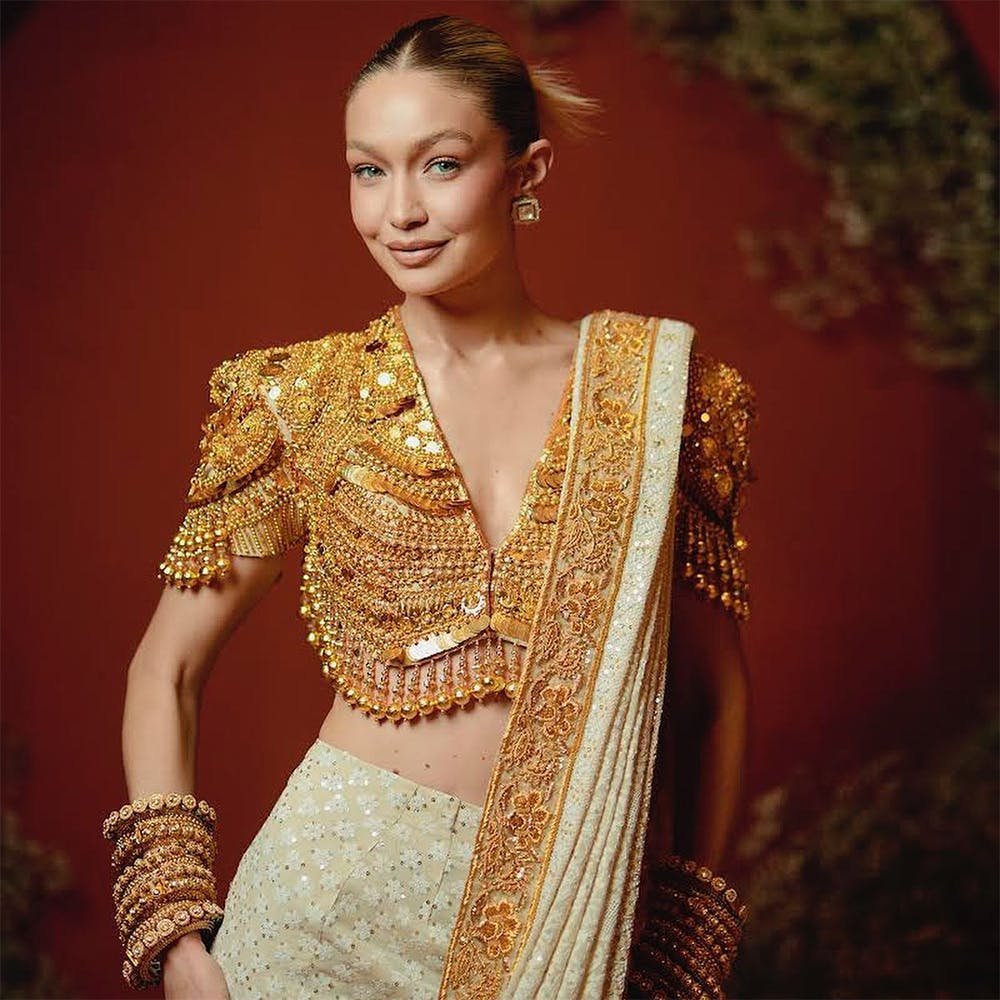
And let’s not forget the ongoing quest for the perfect blend of comfort and couture. Who knew that a traditional lehenga could come with pockets? Now that’s what we call progress.
Fashion Faux Pas: Because Perfection is Overrated
In the world of Indian fashion, faux pas are merely a suggestion. Wear leopard print with polka dots? Why not. Rock a neon pink kurta to a daytime wedding?
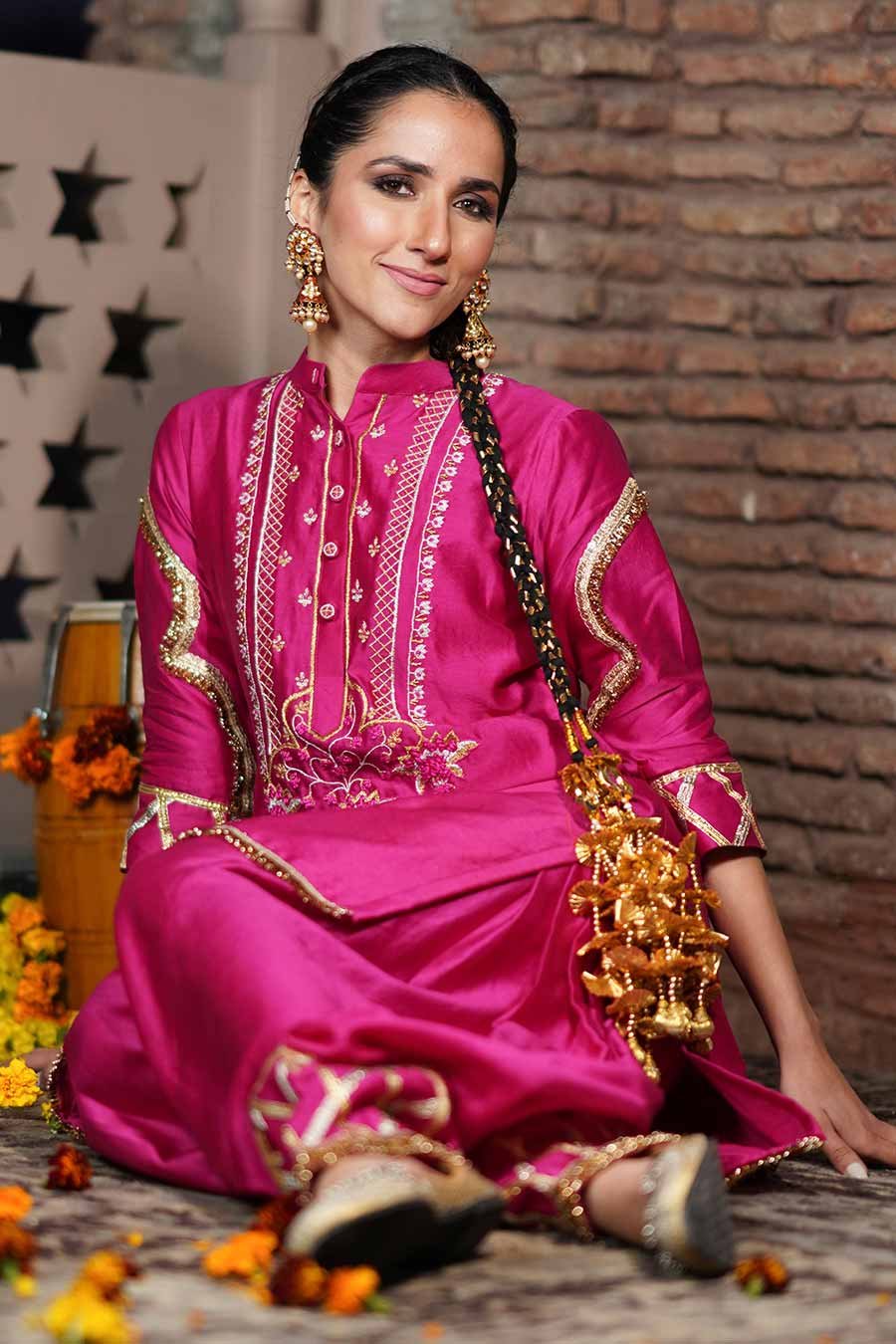
Absolutely. Fashion is about expression, not conformity. And let’s face it, when your fashion mistakes look this good, are they really mistakes? Stars like Kangana Ranaut and Sonam Kapoor often prove that breaking fashion norms can lead to stunning results.
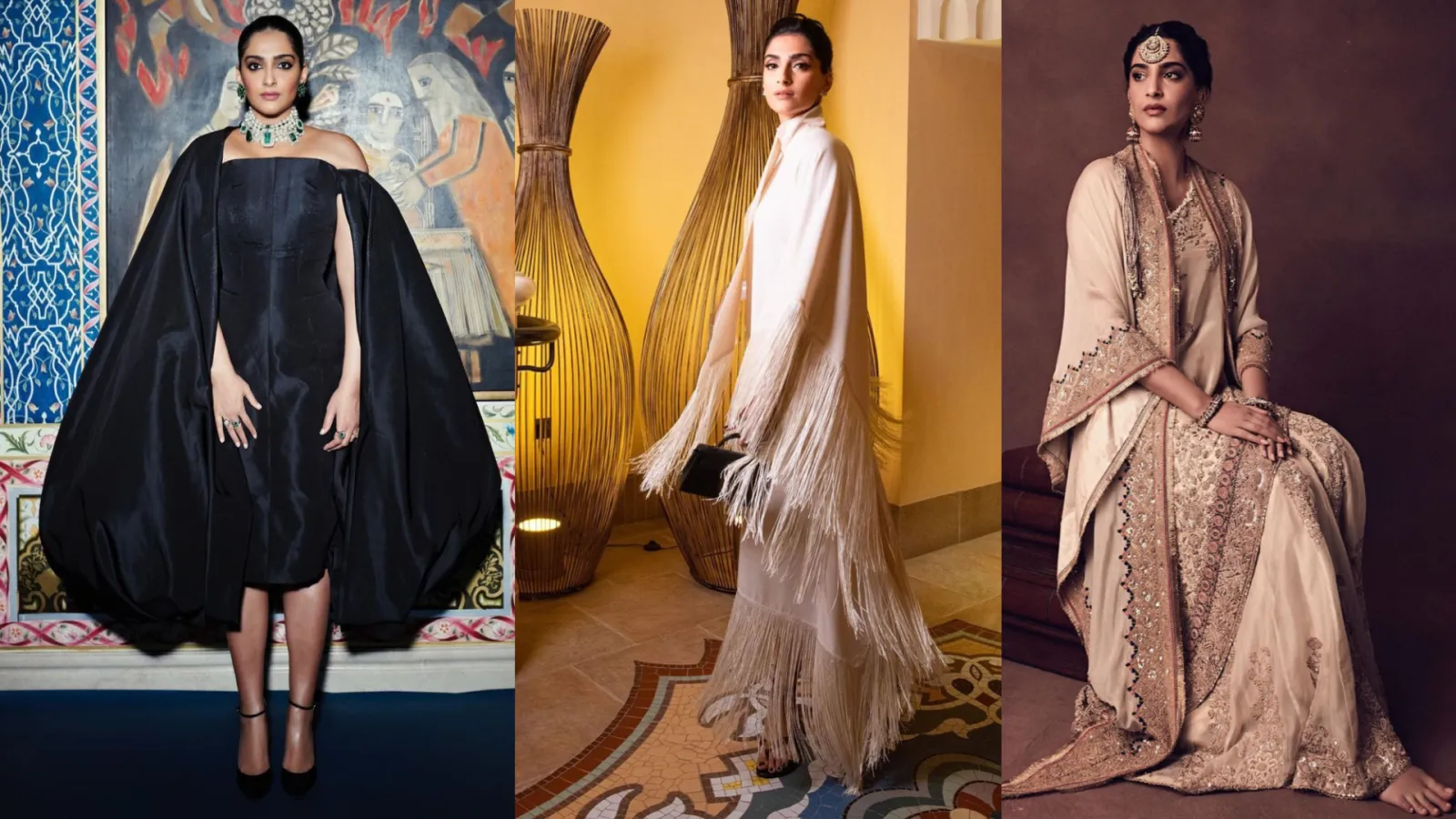
The Future: Fashion Forward
Looking ahead, Indian fashion promises to continue its reign as a trendsetter on the global stage. With sustainability on the rise and a new generation of designers like Falguni Shane Peacock and Pankaj & Nidhi blending traditional techniques with modern sensibilities, the future is as bright as a Diwali celebration.
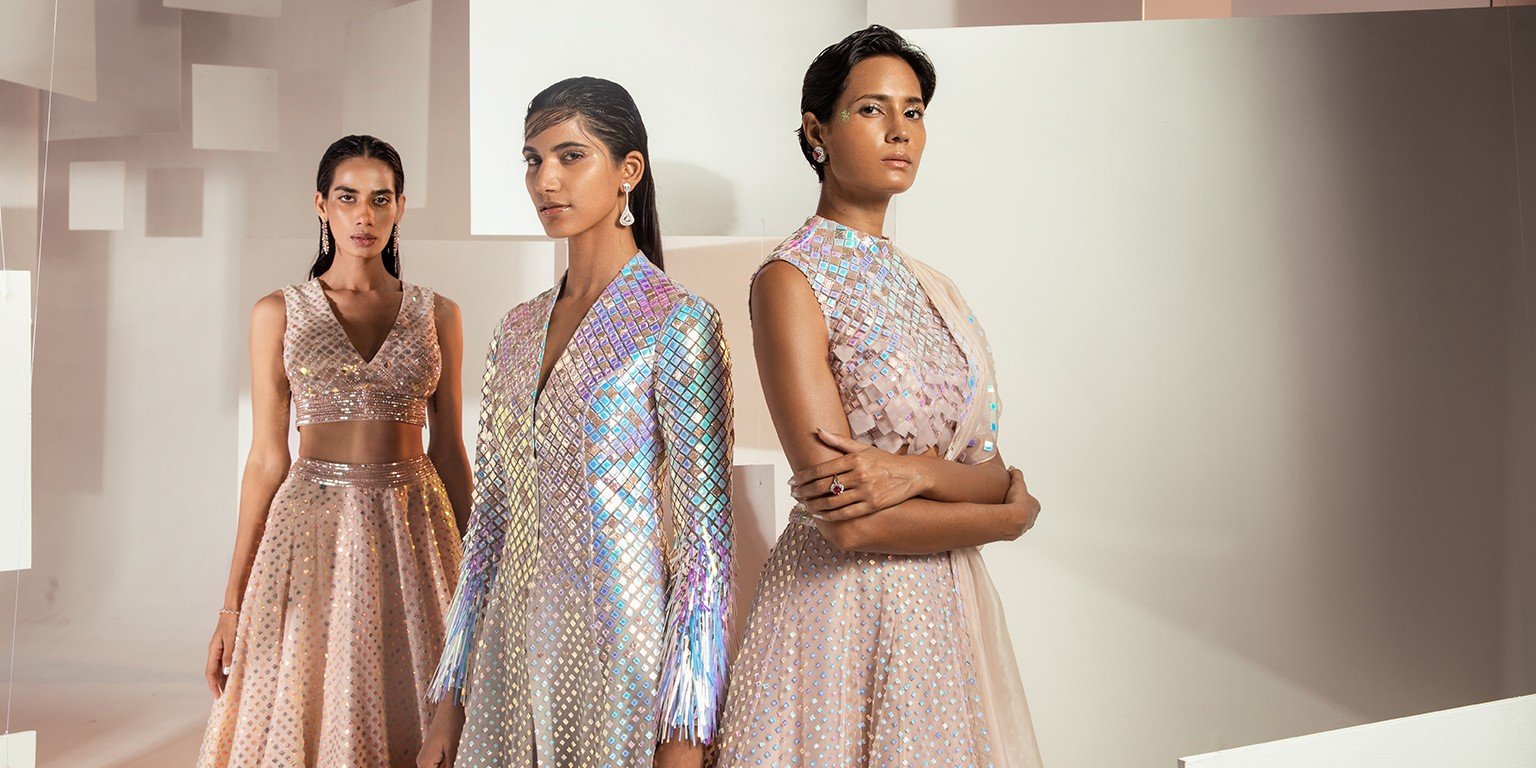
And who knows? The next big fashion trend might just be an ancient art form reimagined for a new era, proving once again that in India, history and haute couture walk hand in hand.
So, here’s to Indian fashion—where the only thing more dazzling than the clothes are the personalities wearing them. Keep an eye out, world; India’s fashion scene is not just making waves; it’s creating its own fashion tsunami. Sari, not sorry!