
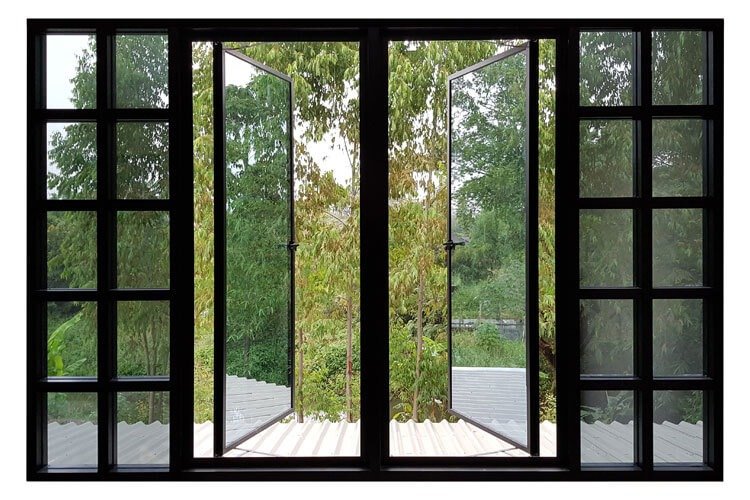
Founded in 1996, Shankar Fenestrations & Glasses India Pvt. Ltd. (SFGI) has become a leading name in the manufacturing of uPVC and aluminum doors, windows, fixed louvers, and designer sections. With three production lines in a 3500-square-meter facility, SFGI produces an impressive 100,000 square meters of doors and windows annually. Operating out of the Ghaziabad industrial area, the company has expanded its expertise with the SFGI Aluminum Architectural division, specializing in high-end architectural solutions such as aluminum doors, windows, curtain walls, structural glazing, composite panels, and more.
SFGI Exclusive
In an exclusive interview with TheGlitz, Dinesh Chandra Pandey, the visionary founder of SFGI, shares insights into his journey, the growth of the company, and the future of fenestration and architectural innovation in India.
How has Shankar Fenestrations evolved since its inception in 1996, and what have been the key milestones in your journey?
Shankar Fenestrations has grown from a small business to a pioneer in architectural fenestration since 1996. We began with simple aluminum window systems and have since grown into unitized façades, structural glazing, and high-performance curtain walls. Establishing our innovative manufacturing facility in 2005, increasing production capacity in 2015, and collaborating with international companies for improved solutions are some of our major achievements. Our current priorities are still creativity, accuracy, and producing iconic projects that uphold sustainability and architectural integrity.
With such a wide array of products, from curtain walls to specialized aluminum architectural products, what innovations are you currently most proud of?
Our innovative curtain wall systems and high-thermal-performance windows stand out among our extensive product line. These developments satisfy the energy efficiency and design flexibility requirements of contemporary architecture. By combining insulation and solar shading technologies, our unitized façades save energy consumption and promote sustainable building. For us to make sure that our goods are the best in terms of appearance, robustness, and energy efficiency, we also constantly investigate automation in design and production.

What challenges do you face in meeting large-scale production demands, and how do you maintain quality across your three production lines?
Although it can be difficult to oversee three manufacturing lines for large-scale production, we place a high value on effectiveness and quality. Strict quality control checkpoints, automated equipment, and experts are all part of our procedure to guarantee accuracy in each product. Our in-house testing lab confirms adherence to industry standards, and lean manufacturing methods save waste. We are able to meet increasing demand while upholding the highest standards of quality across all product lines by investing in cutting-edge technology and training.
Sustainability is a big focus in architecture today. How does Shankar Fenestrations incorporate eco-friendly practices in its manufacturing process?
Our production is centered on sustainability. To reduce our goods’ negative effects on the environment, we use eco-friendly materials like recyclable aluminum and low-emission glass. As a means to conserve resources, our facility uses water recycling and energy-efficient equipment. We give top priority to building designs that increase thermal efficiency, which lowers overall energy usage. Other than helping the environment, our dedication to green manufacturing supports our clients’ sustainability objectives.
What upcoming trends do you see shaping the future of the fenestration industry, and how is your company preparing to stay ahead of the curve?
Sustainable materials, energy efficiency, and smart technology will all influence fenestration in the future. The need for intelligent façades that adapt to changing environmental conditions is expected to grow. To get ready, Shankar Fenestrations is spending money on research and development for adaptable window systems and incorporating IoT technologies to track building performance. We are dedicated to leading the industry in creative, sustainable solutions that satisfy changing architectural demands, with an emphasis on automation and energy-efficient designs.