In the dazzling world of diamonds, Solitario Lab-Grown Diamonds is rewriting the rulebook with a fresh sparkle. Led by visionary CEO and Co-founder Ricky Vasandani alongside co-founders Vivek Oberoi and Satish Daryanani, this trailblazing brand is making waves in the luxury market by proving that style and sustainability are a match made in heaven. With a presence in 18 stores across 8 countries, including hot spots like Dubai, Barcelona, and Mumbai, Solitario has indeed become a force to be reckoned with.
What sets them apart? It’s their mission to blend exquisite craftsmanship with a near-zero environmental footprint – making sure every glittering gem carries no bad karma, only timeless beauty. The Bling Boys – Ricky Vasandani, Vivek Oberoi and Satish Daryanani, are redefining luxury by offering bespoke, high-end jewellery that speaks to the heart – and conscience – of the modern consumer.
In an exclusive conversation with Sumita Chakraborty, Editor-in-Chief, TheGlitz, CEO and Co-founder Ricky Vasandani shares insights on how lab-grown diamonds are not only redefining the future of luxury but also shaping a more sustainable and ethical industry.
The Solitario Story: With Ricky Vasandani
Solitario has been at the forefront of blending luxury with sustainability. What inspired you to venture into lab-grown diamonds, and how do you think this innovation is reshaping the traditional diamond industry?
Ricky: Honestly, as a diamond seller for many years, the first time I came across a lab-grown rough, I cut and polished it. I’ve mentioned this in many of my interviews – the beauty of the stone made me fall in love with it. The type of cut, the clarity, the color, all of it was extraordinary.
For me, it was love at first sight. Of course, the sustainability aspect is critical, as we’re using solar energy in our production process and making our factory more eco-friendly. But first and foremost, I fell in love with the product itself. The fire and life it had was unparalleled. That’s how my journey into lab-grown diamonds began.
Do you think this innovation will reshape the traditional diamond industry?
Ricky: Absolutely. You know, traditionally, diamonds have always been tied to emotional milestones, like a father buying one for his daughter’s wedding because it’s rare and lasts forever. Well, lab-grown diamonds also last forever. But more than that, they offer variety and affordability. In the past, women would have the same engagement ring for decades. Now, with lab-grown diamonds, they can experiment with different shapes and sizes.
It used to be that a one-carat diamond stud was a dream for many women. Now, with lab-grown diamonds, it’s more affordable. Women can buy their own jewelry without waiting for a special occasion or a husband’s approval. They can treat themselves, and that’s empowering. Lab-grown diamonds have brought luxury within reach for more people, and that’s reshaping the industry.
Solitario is now in 18 stores across 8 countries and has made a global mark very quickly. To what do you attribute this rapid growth, and what are the next big markets you’re eyeing for expansion?

Ricky: It’s been a tough journey, but we’ve had a strong team from the start. My core team comes from a mall background, all of whom helped us grow across India. They were instrumental in our leasing, business development, and operations.
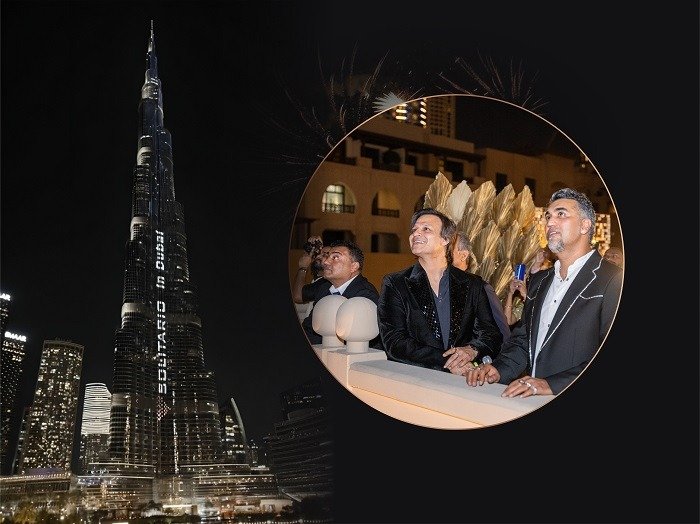
We’ve also been fortunate to have incredible co-founders like Vivek Oberoi, who helped us expand into Dubai. We were the first lab-grown diamond brand to have our logo projected on the Burj Khalifa, and we opened a flagship store in the Dubai Mall. My other co-founder, Satish Daryanani, helped us expand into the Bahamas and Caribbean, where we now have a store in Atlantis Hotel. Our growth has been a mix of relationships, timing, and our passion for the brand.

As for the future, we’re aiming for 20 stores next fiscal year. We’re looking at key markets like the US and Europe, and further expansion into the Middle East.
You have partners like Vivek Oberoi and Satish Daryanani, which shows that you have a strong vision for responsible luxury. How do you collaborate with them to maintain this vision, and how has your leadership style shaped the brand’s direction?
Ricky: Responsible luxury for us is not just about sustainability; it’s also about ensuring that our workers are treated ethically and that we’re doing everything we can to minimize our carbon footprint. In the lab-grown industry, the biggest energy consumer is electricity, so we’ve invested heavily in solar power to reduce our environmental impact.
My leadership style has always been hands-on. I’ve worked closely with my team and co-founders to ensure that we’re not just creating beautiful products but doing it in the most responsible way possible. That’s a core part of our brand.

What challenges have you faced along the way? Can you name three significant ones?
Ricky: One of the biggest challenges was getting placed in malls in India. Many malls didn’t have space available for us. Even today, we have a waiting list to open in places like DLF or Phoenix malls.
Another challenge was educating people about what lab-grown diamonds really are. When we first launched, people thought lab-grown diamonds were a mystery – something they’d heard about but never seen. It took time and effort to explain that these are real diamonds, just grown in a lab rather than mined. Luckily, when Prime Minister Modi gifted a lab-grown diamond to Jill Biden and the finance minister spoke about them during the budget, that helped raise awareness.
The third challenge was overcoming skepticism from traditional diamond buyers. They needed to see for themselves that lab-grown diamonds are just as luxurious and beautiful as natural ones.
How do you convince traditional diamond buyers that lab-grown diamonds can be just as luxurious and meaningful?

Ricky: Honestly, I don’t have to convince them anymore. The diamonds speak for themselves. When you put a lab-grown diamond next to a natural one, the sparkle, the fire, the life in the stone is undeniable. People are now seeing the difference between an E color diamond and an H color diamond, which they never would have considered before.
We’ve also empowered customers by increasing their knowledge about diamonds – cuts, colors, and clarity. That’s something the traditional diamond industry never focused on. With lab-grown diamonds, people are getting more educated, and it’s changing how they shop.
What are your long-term goals for Solitario?

Ricky: Honestly, we’ve just scratched the surface of what I want to achieve. In the short term, we’re focusing on expanding to 20 stores globally in the next fiscal year. But beyond that, I want Solitario to continue being a brand that blends luxury with responsibility. We want to be known not just for our products but for the values we uphold – sustainability, ethical sourcing, and empowering customers. There’s still so much more to do, and I’m excited for the journey ahead.