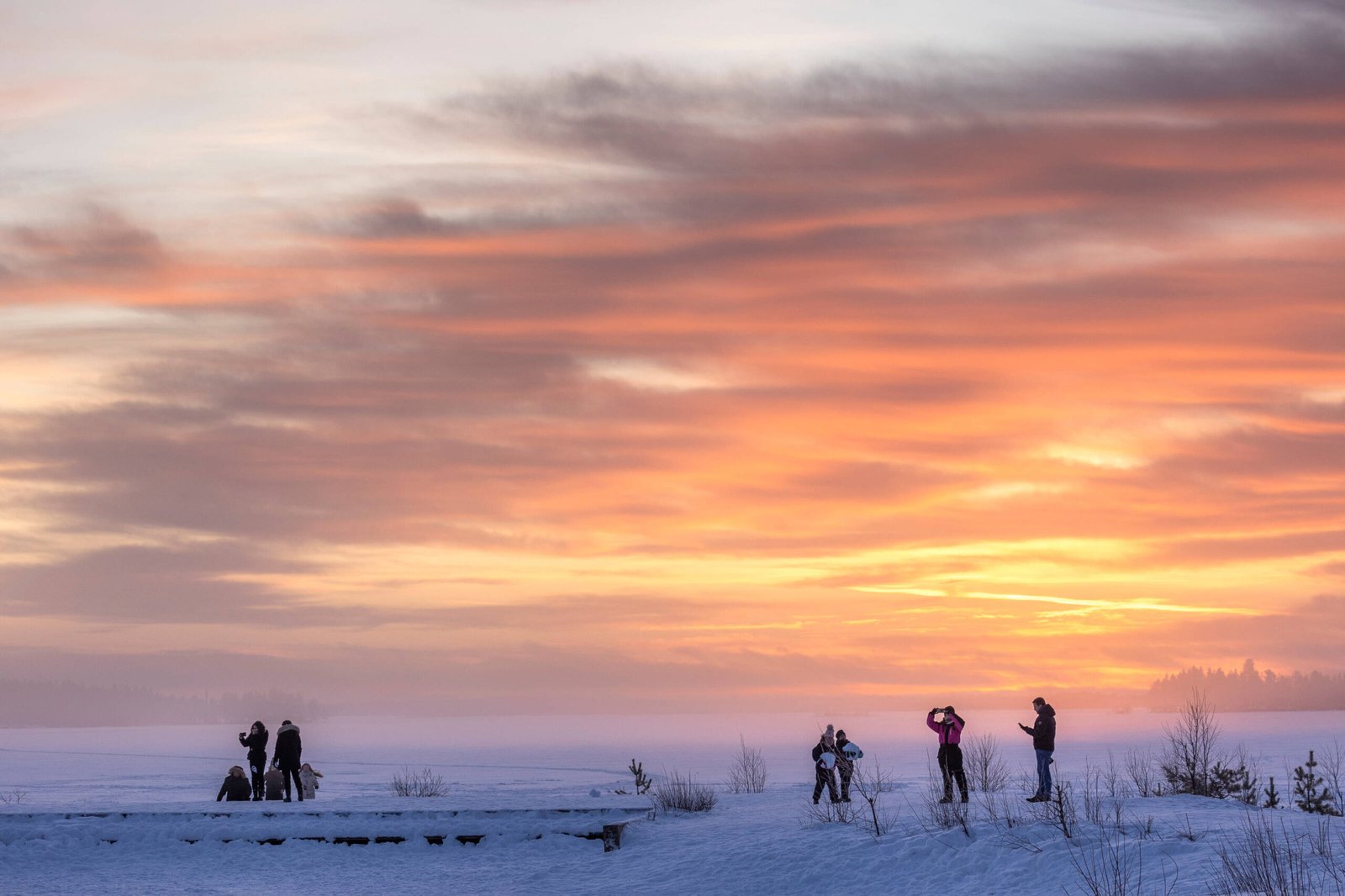
Anti-Itinerary
Following a set itinerary is beginning to feel strangely exhausting. The colour-coded schedule. The 1.15 pm restaurant reservation. The museum at three. The sunset viewpoint at six. The obligatory photograph at the “must-see” landmark. One experience neatly slotted after another, until the journey itself begins to resemble a particularly demanding to-do list.
We have become so determined to see everything that we sometimes forget the simplest pleasure of travel: soaking in the atmosphere, noticing the rhythm of a place and simply being there, without having to be anywhere else.
There is a particular kind of fatigue that comes from travelling perfectly. You arrive in a beautiful city and immediately start racing through it… ticking off monuments, chasing recommendations, navigating maps, calculating the next meal. Somewhere between the airport transfer and the final checkout, you realise you have photographed the destination rather more than you have actually experienced it.
Perhaps, then, the next great luxury in travel isn’t another spectacular suite, a private jet transfer or an impossible-to-get reservation. Perhaps it is time. Unscheduled, unhurried, gloriously unproductive time.
As I, Sumita Chakraborty, Founder & Editor-in-Chief, TheGlitz, see it, the rise of the anti-itinerary is less a travel trend than a quiet rebellion against the pressure to experience everything. It is about leaving a morning deliberately blank. Taking the wrong train. Turning down an unfamiliar lane simply because something caught your eye. Sitting beside a harbour long after you have finished your coffee. Discovering a little restaurant because you happened to smell something wonderful drifting through an open door. Getting lost… and realising you aren’t particularly interested in being found.
Some of my most memorable travel moments have happened precisely this way: when I wasn’t following a plan, when a wrong turn became an unexpected discovery, when the most spectacular view wasn’t on the list at all.
So welcome to anti-itinerary travel — the art of wandering with intention, without insisting on knowing exactly where you are going. And if there are destinations that lend themselves beautifully to this slower, more instinctive way of seeing the world, I would choose three: Finland, Norway and Belgium.
Three countries, three very different landscapes, and countless reasons to put the itinerary away, step outside and simply follow the road…wherever it happens to lead.
Finland: Where Getting Lost Feels Like You’ve Found Yourself
I truly believe there is so much more to discover in Finland when you stop trying to discover it all at once. This is a country that rewards the curious traveller… the one who is willing to lace up her trekking boots, leave the well-trodden path behind and follow a trail simply because it looks inviting. There is something wonderfully rebellious about choosing a forest path over a tourist queue, a lakeside afternoon over a checklist of attractions, or an unnamed little café over the restaurant everyone told you to book.
In Finland, I found that some of the most beautiful moments begin precisely when you stop looking for them.
My Finnish journey began in Helsinki, where the Baltic Sea, cool northern light and distinctly Nordic architecture create a cityscape that feels almost impossibly composed. Helsinki is stark without being severe, minimalist without being cold. I love the way the city seems to breathe… its clean-lined buildings, quiet waterfronts, pockets of green and beautifully restrained design all coexisting without ever competing for attention.
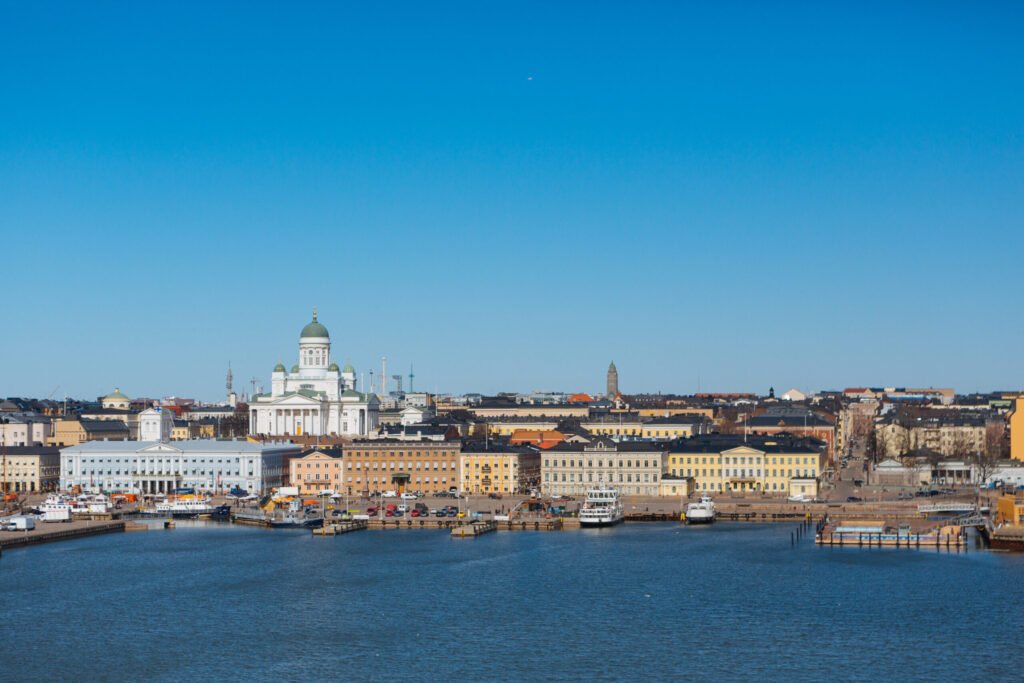
You can wander through the Design District, duck into a gallery and muse over the eclectic art, linger over piping hot, aromatic coffee and some delectable, yummy cinnamon buns… and yes, allow the city’s elegant architecture and waterfront promenades to set the pace. Helsinki doesn’t demand that you conquer it; it invites you to inhabit it.
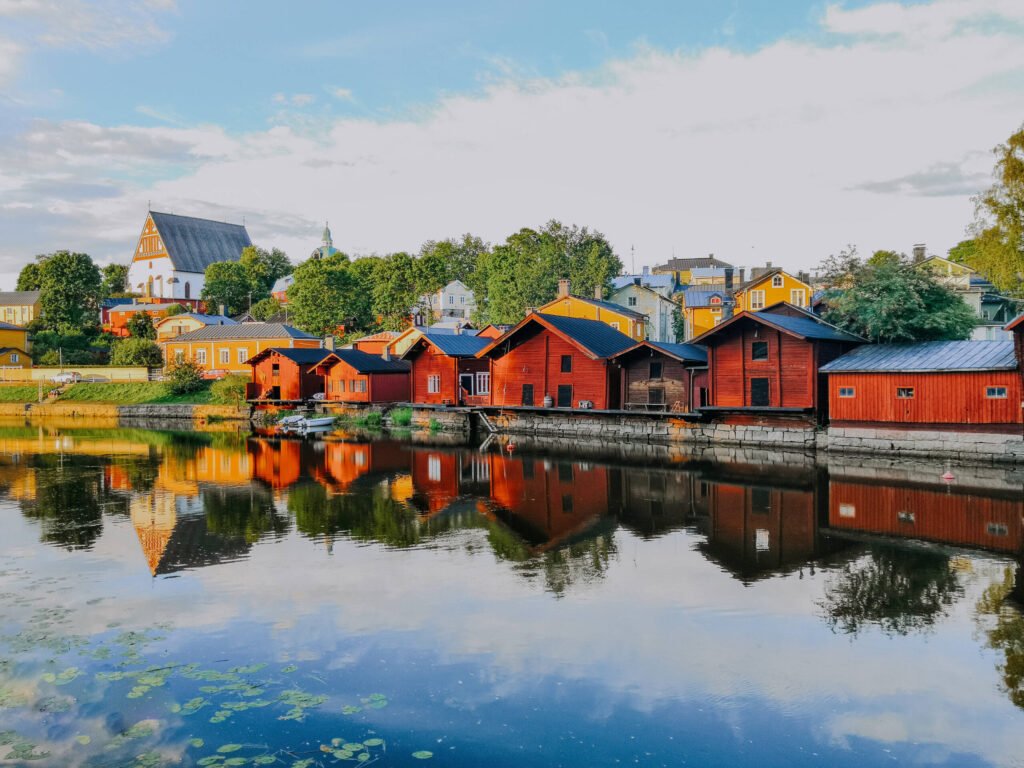
Finland-Porvoo-warehouses-Visit-Porvoo Courtesy Visit Finland
Then perhaps take a detour to Porvoo, one of those delicious little places that seems designed for wandering. Cobblestone lanes, colourful wooden houses, riverside cafés and tiny boutiques appear around corners almost begging to be discovered. Here, abandoning the map feels entirely natural.
But Finland’s true anti-itinerary, I believe, begins when you leave the cities behind.
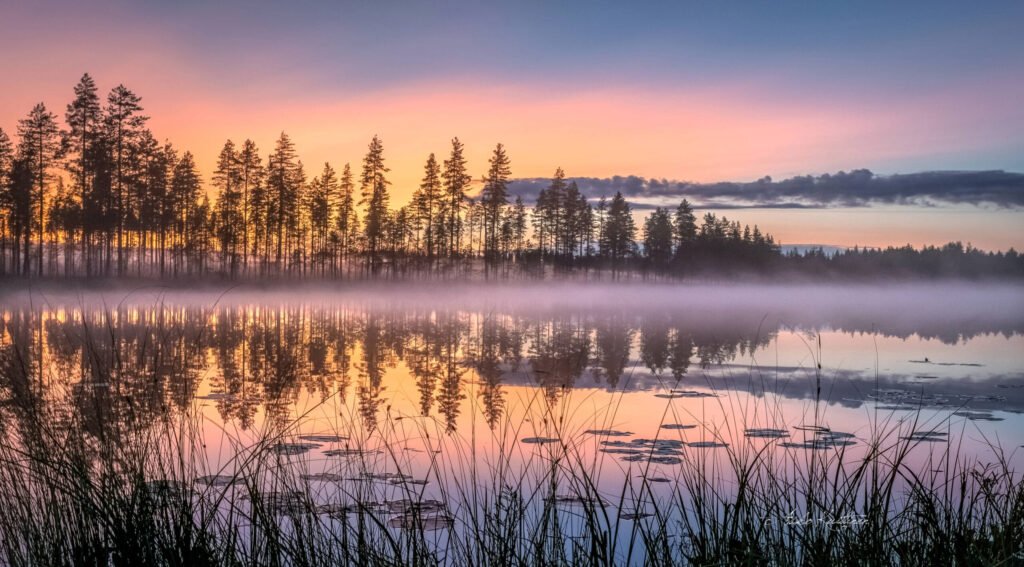
In Finnish Lakeland, the world becomes wonderfully quiet. Imagine a picturesque wooden cabin beside a glassy blue lake, a sauna warming up nearby, a little rowing boat at the jetty and dense green forests stretching for miles towards the horizon. There is no urgency here. You can swim, walk, read, row… or do absolutely nothing.
For a dose of wilderness without venturing too far from Helsinki, Nuuksio National Park offers pine forests, rocky trails and tranquil lakes. And if you want to venture further north, Rovaniemi opens the door to the vastness of Finnish Lapland, where Arctic landscapes and extraordinary northern light create a world that feels far removed from everyday life.
In Finland, doing less doesn’t feel like missing out. It feels like arriving.
Norway: Follow the Landscape
Norway is a country I haven’t yet visited, but one I have read about extensively… and somehow, even from a distance, it feels made for travellers like me. The solo traveller who believes the journey deserves as much attention as the destination. The kind who would rather take the longer road because the view looks better, stop because a landscape demands a photograph, or change plans simply because something along the way looks too beautiful to ignore.
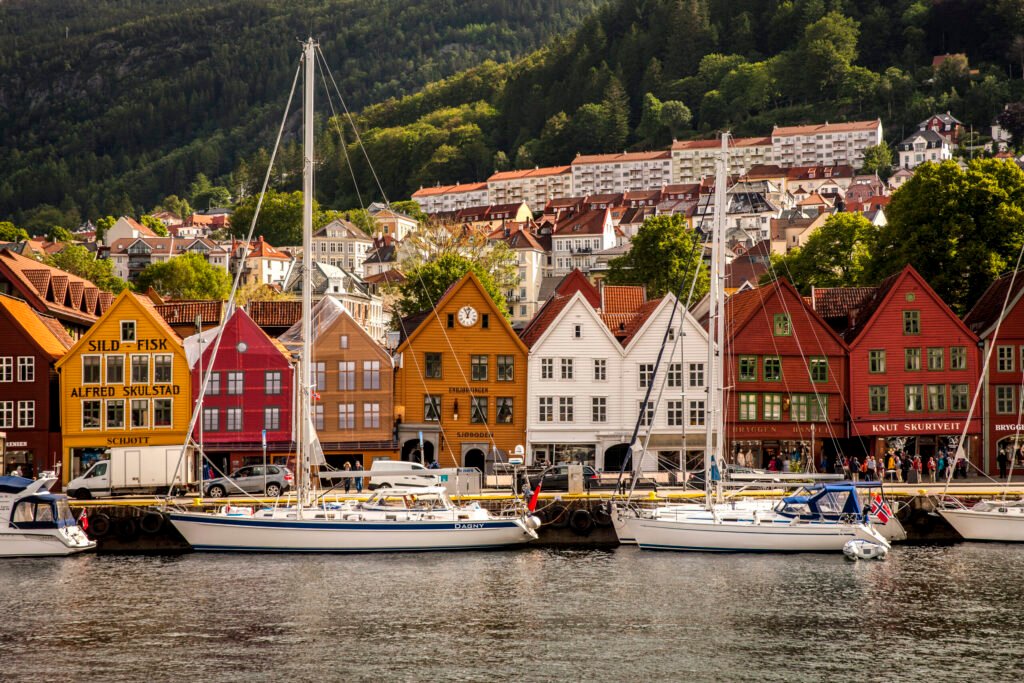
I imagine beginning in Bergen, where colourful wooden buildings line the harbour and mountains rise dramatically behind the rooftops. There is something wonderfully atmospheric about the city… the historic waterfront of Bryggen, narrow streets, little cafés and that unmistakable feeling of being surrounded by nature even when you’re firmly in the middle of a city. I would take the funicular up Mount Fløyen, linger over something warm, watch the harbour below and, ideally, resist the temptation to decide what comes next.
Because then Norway becomes wilder.
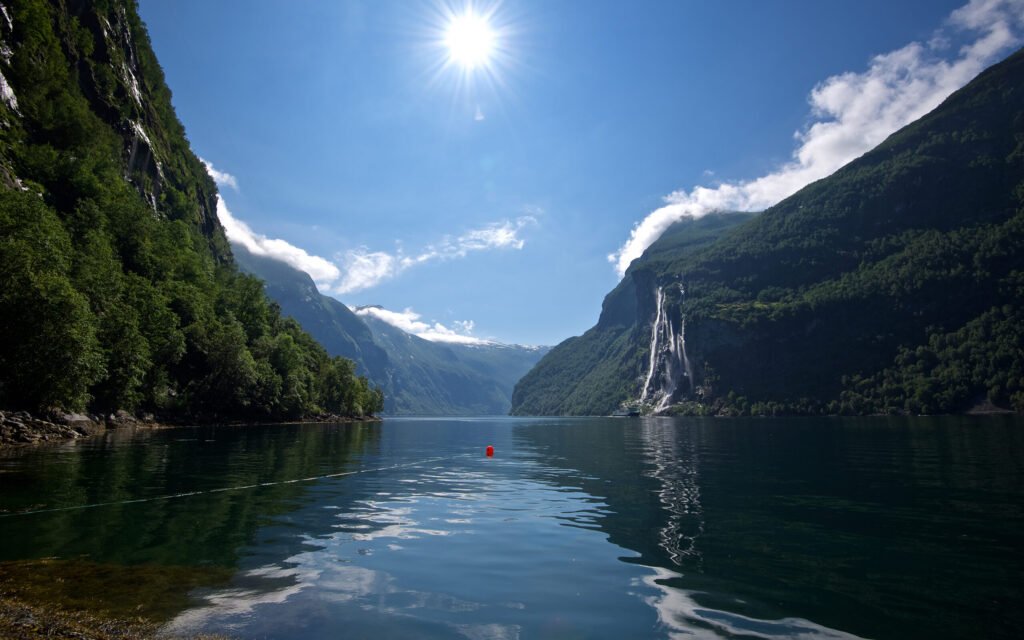
Geirangerfjord is the kind of landscape that seems almost exaggerated: mountains plunging into deep blue-green water, immense cliffs rising on either side and waterfalls threading their way down the rock face. From everything I have read, this is a place where the itinerary almost writes itself… take a boat, drive one of the winding mountain roads, find a viewpoint and simply stay there. No rushing on to the next attraction. No checking whether you’ve spent enough time. Just standing still while the landscape does all the talking.
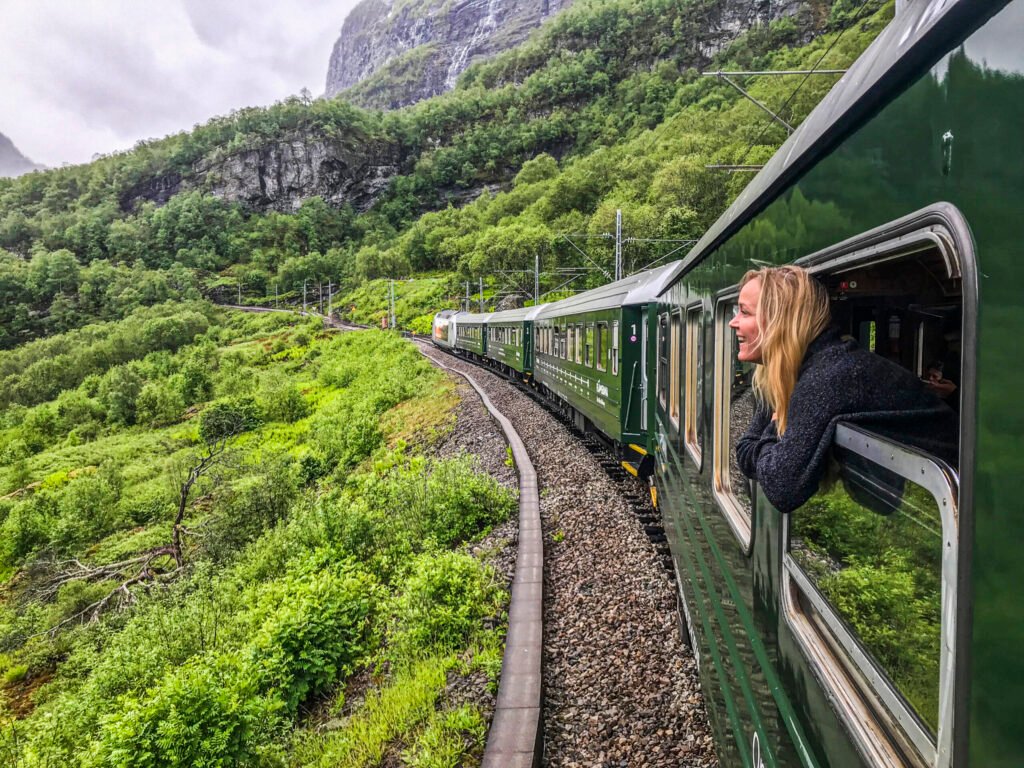
Then there is Flåm, where even the journey becomes part of the experience. The famous railway winds through mountains, valleys and waterfalls, turning a train ride into something closer to a moving film. It is precisely the kind of travel I find irresistible: when getting from A to B is not something to endure, but something to savour.
For the more adventurous version of the anti-itinerary, there are the Lofoten Islands… jagged mountains rising almost straight from the sea, tiny fishing villages scattered along rocky shores and those distinctive red cabins appearing against an extraordinary Arctic backdrop. I can imagine renting a car, choosing the scenic road rather than the fastest one and stopping whenever the landscape makes the decision for me.
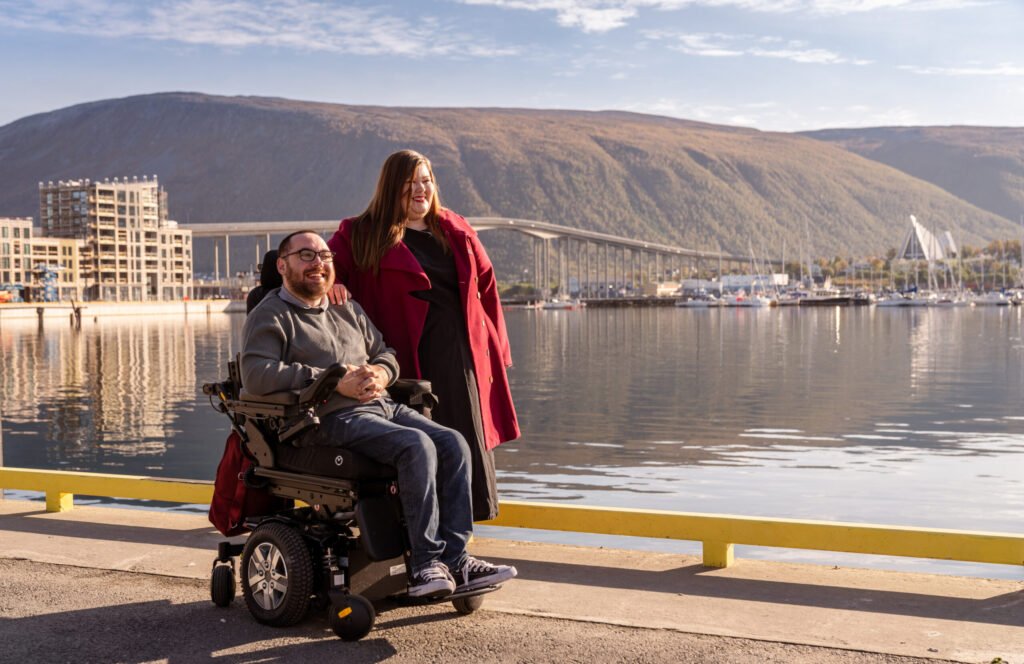
And then there is Tromsø, where the midnight sun turns the very idea of time upside down. When midnight looks suspiciously like afternoon, conventional schedules suddenly seem rather unnecessary. Perhaps you go for a walk at midnight. Perhaps you sit by the water with a coffee. Perhaps you simply stay outside because the light refuses to let the day end.
That, to me, is the real seduction of Norway. It is not simply about spectacular scenery. It is about space… the physical space between mountains and fjords, but also the mental space to breathe, wander and be gloriously unhurried.
I haven’t been to Norway yet. But perhaps that is precisely why it belongs in my anti-itinerary story. Some destinations you visit with a carefully researched list. Others you dream about long before you arrive, already knowing that when you finally do, the best thing you can possibly do is put the list away.
Norway, I suspect, is one of those places. A country where the road is not merely taking you somewhere. The road is the somewhere.
Belgium: Getting Lost in Bruges
Belgium offers a completely different kind of escape. If Finland taught me the pleasure of silence, Belgium reminded me of the delicious unpredictability of getting lost. And I mean that quite literally.
I got lost in Bruges on my very first day. Not charmingly lost, not “Oh, let’s see where this little lane takes us” lost — properly, hopelessly lost. It was my first international trip. To make matters worse, I couldn’t remember the name of my hotel. I had, however, retained one crucial piece of information: it was somewhere by the riverfront. Apparently, that was going to be my navigational strategy.
So I did what any sensible traveller without a functioning sense of direction would do: I walked.
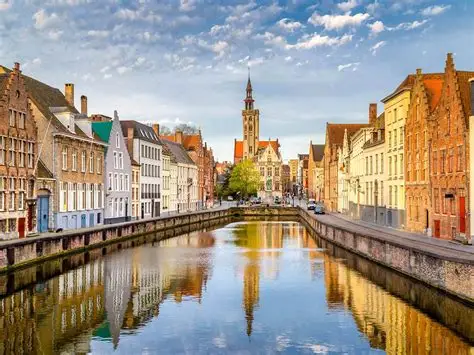
And what a wonderful city to be lost in. Bruges seemed to unfold one impossibly pretty street at a time… medieval façades rising above cobbled lanes, ornate gables catching the light, little bridges arching over quiet canals, bicycles gliding past and church spires appearing unexpectedly between buildings. I found myself walking with my eyes almost permanently tilted upwards, distracted by the architecture at every turn. The city was so beautiful that, for a while, being lost hardly seemed like a problem.
Eventually, however, beauty had to give way to logistics. I began asking strangers for directions, armed with my rather vague description of a “riverfront hotel.” Somehow, this became a wonderfully Belgian little adventure. Then I met a Spanish tourist who was equally happy to embrace the detour. We sat down for a beer… because when you’re lost in Bruges, there are worse places to pause and regroup… and, after a little conversation and a little laughter, he offered to walk me back towards the river.
And then, almost magically, I recognised it. My hotel. There it was, sitting rather innocently by the water, as though I hadn’t spent the better part of the afternoon wandering through half of Bruges trying to find it.
I still think about that afternoon whenever I talk about anti-itinerary travel. Had I remembered the hotel’s name, I would probably have walked straight back. I wouldn’t have noticed half the beautiful façades. I wouldn’t have asked strangers for help. I certainly wouldn’t have shared a beer with a Spanish traveller and been escorted home through the winding streets of Bruges.
Getting lost gave me the city.
And perhaps that is Bruges at its most seductive. It is not a city you need to conquer street by street. It is a city to wander through slowly, letting the canals, cobbles, bells and beautiful old buildings pull you in whichever direction they please. Leave the map in your bag. Follow the sound of a church bell. Turn down the lane that looks prettier than the one you’re on. Stop for a Belgian beer when the mood takes you.
Because sometimes, the finest travel stories begin with a very simple admission: “I have absolutely no idea where I am.”
Ghent: Where the Old City Has a Young Soul
After my Bruges ‘lost’ adventure, I headed to Ghent… and immediately noticed that this was a very different kind of Belgian beauty. Yes, there were the medieval façades, the Gothic towers and the beautiful old waterways, but Ghent felt younger, more spirited, almost a little rebellious beneath all that history.
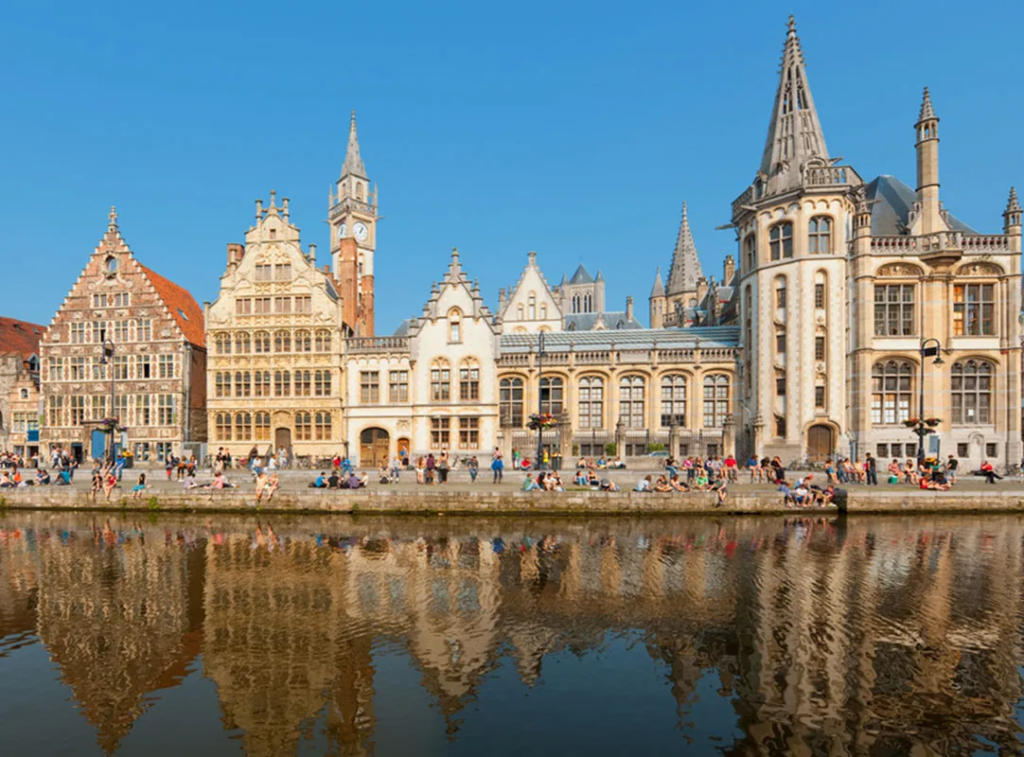
I found myself drawn towards Graslei and Korenlei, where the River Leie slips quietly between rows of impossibly picturesque historic buildings. By day, the waterfront is alive with people… students, cyclists, locals meeting for coffee, travellers lingering over a drink. There are cafés spilling onto the streets, galleries tucked into old buildings, design stores that make you want to wander in “just for a look” and lively little corners that seem to appear precisely when you stop searching for them.
And that, for me, was the pleasure of Ghent. I didn’t want to march from one landmark to another. After Bruges, where getting lost had already proved to be an unexpectedly rewarding travel strategy, I was quite happy to let Ghent lead.
I wandered down streets simply because they looked interesting, paused whenever a shop window caught my eye and even found myself joining a queue for mustard. I was almost tempted… until I remembered that in India, mustard is less a condiment than a way of life. With that small realisation, I laughed at myself and moved on, following the river whenever I wasn’t quite sure where I was going.
There is something wonderfully unselfconscious about Ghent. Its medieval architecture doesn’t feel like a museum backdrop; it is simply the setting for contemporary life. A centuries-old building might house a decidedly modern café. A grand Gothic silhouette might loom over a group of students laughing on the pavement. History and youth coexist here without either trying too hard to impress you.
Perhaps that is what makes Ghent such a perfect anti-itinerary city. You can arrive with a list of things to see, certainly. But the better way, I discovered, is to put the list away for a while. Walk along the Leie. Find a café. Browse a gallery. Cross a bridge. Turn down an unfamiliar street.
And see what happens next. …Because by now, I had begun to realise that getting somewhere was becoming far less interesting than discovering where I might end up.
Antwerp: Where Style Has a Street Address
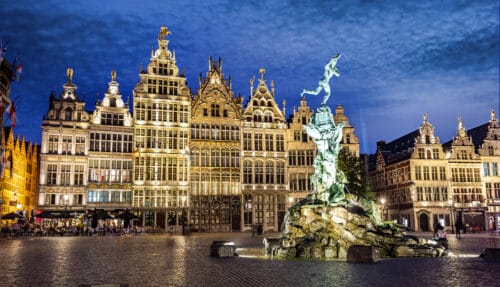
After Bruges and Ghent, Antwerp felt like someone had turned up the volume. The medieval charm gives way to something sharper, more cosmopolitan… a city where fashion, art, architecture and diamonds seem to share the same postcode.
Even my hotel room seemed to understand the mood. Its interiors reflected that distinctly European minimalism I had come to associate with the city… clean lines, understated colours, thoughtful details and nothing that felt unnecessarily decorative. It was elegant without trying too hard, the kind of space where everything seemed to have a reason for being there.
I decided not to approach Antwerp with a shopping list, which, in a city this fashionable, is probably a very sensible thing to do. Instead, I wandered. And, how! Past elegant façades and beautifully restored buildings, into independent boutiques and galleries, pausing whenever something caught my eye. Antwerp rewards that kind of curiosity. A discreet doorway can lead to a designer studio; a seemingly ordinary street can reveal a wonderful little gallery; an architectural detail can make you stop mid-stride and look twice.
And then, of course, there is fashion. Antwerp has long had an instinctive relationship with style… not the polished, predictable kind, but something more experimental and individual. You sense it on the streets as much as in the stores: in the way people dress, in the windows you pass, in the creative energy that seems to seep out of the city itself.
I particularly loved the feeling that I didn’t have to know exactly what I was looking for. There was something liberating about entering a shop simply because the window intrigued me, stepping into a gallery because I liked the façade, or taking a different street because it looked more interesting than the one marked on the map.
Perhaps that is Antwerp’s particular seduction. It doesn’t simply invite you to shop; it invites you to look. At clothes, buildings, art, people, details… at the city itself.
And once again, I found myself doing what this journey had taught me to do so well: putting away the plan and allowing the city to surprise me.
Brussels & Dinant: From Grand to Gloriously Eccentric
By the time I reached Brussels, I had learnt not to judge a city by its most photographed square. The Grand Place is, of course, spectacular… all ornate façades, gilded details and that slightly theatrical European grandeur that makes you instinctively look up. But I found myself more interested in what happened once I wandered away from it.
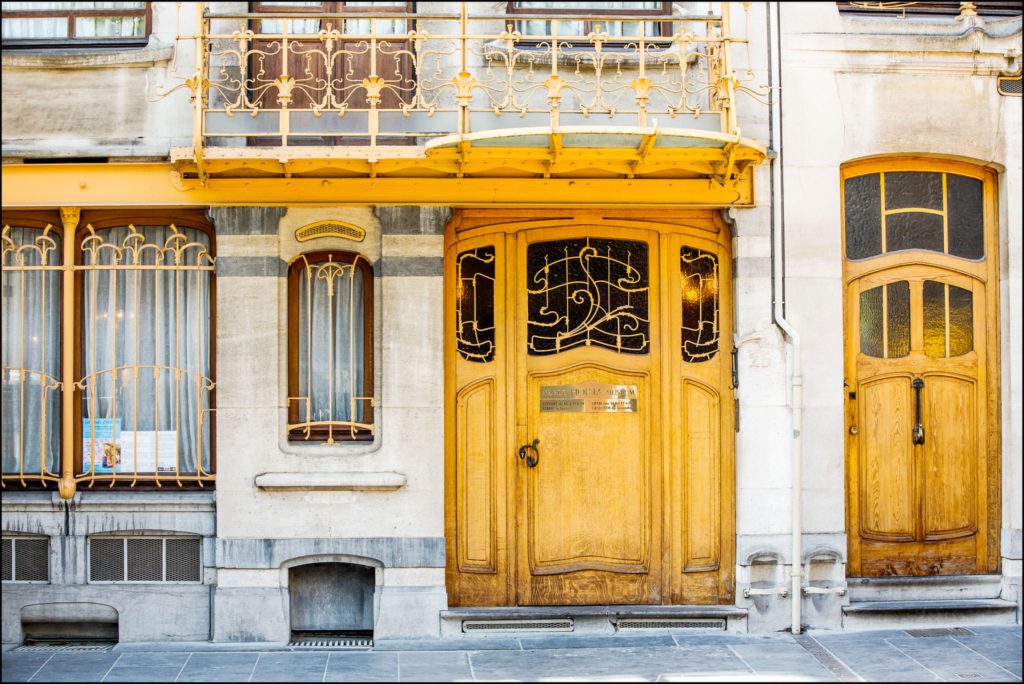
Brussels has a wonderfully eccentric personality beneath its grand exterior. Art Nouveau curves appear around unexpected corners; colourful comic-book murals turn otherwise ordinary walls into open-air galleries; neighbourhood cafés invite you to sit down for longer than planned.
And then there were the chocolatiers… my greatest weakness in Belgium. The chocolates were impossibly smooth, almost silken, with that delicate snap giving way to a rich, velvety centre that seemed to melt rather than disappear. I told myself I would buy just a few. Then a few became several boxes, and several boxes somehow became enough chocolate to make my luggage look suspiciously like a confectionery shipment.
By the time I was returning to India, even I had to admit I may have got slightly carried away. At customs, my bags were opened and inspected. For one slightly anxious moment, I wondered what exactly they had discovered. The answer, of course, was chocolate. Lots of it.
I could almost imagine the customs officer thinking: Madam, are you returning from Belgium or opening a chocolate shop?
I wasn’t. I was simply bringing home a little too much of Belgium’s sweetness.
But let’s get back to Brussels…I loved moving between these two sides of Brussels: the magnificent and the mischievous, the beautifully preserved and the wonderfully quirky. It is a city that seems happiest when you allow yourself to wander between worlds rather than follow a prescribed route.
And then came Dinant… an entirely different kind of Belgian surprise.
Set dramatically along the Meuse River, with sheer cliffs rising behind it, Dinant looked almost too perfectly composed to be real. Its colourful riverside houses, the river glinting in the light and the imposing citadel perched above the town gave it the atmosphere of a European film set… the sort of place where you half expect a camera crew to appear around the next corner.
I hadn’t come to Dinant with any grand plan. And perhaps that was precisely why I loved it. I walked along the river, stopped to take in the view, looked up at the citadel and simply let the landscape unfold. After the bustle of Brussels, there was something wonderfully calming about this little town tucked between water and rock.
Looking back at my Belgian journey… from getting hopelessly lost in Bruges, to wandering through youthful Ghent, discovering Antwerp’s effortless style, and stumbling upon Dinant… I realised that the places I remembered most vividly were rarely the ones I had planned most carefully.
Belgium had quietly taught me the pleasure of leaving room for the unexpected.
You don’t necessarily have to travel far to feel far away. Sometimes, all it takes is a wrong turn, an unfamiliar street or a little town you hadn’t planned on visiting at all.
The Joy of Not Knowing
Perhaps that is what these three countries have left me thinking about: how different places can teach us to travel differently.
Finland, with its forests, still lakes and long stretches of silence, seems to ask you to slow down until you can hear yourself think. Norway, with its vast fjords, mountain roads and enormous skies, reminds you that sometimes the journey is the landscape. Belgium, with its cobbled lanes, unexpected cafés, beautiful architecture and the occasional wrong turn, makes a rather convincing case for leaving room for serendipity.
Three countries, three very different moods… yet all three seem to whisper the same thing: you don’t have to see everything.
There is a particular pleasure in not knowing what the next hour will look like. In Porvoo, it might be a lane you hadn’t intended to take. In Finnish Lakeland, it might be a quiet stretch of water where you find yourself lingering far longer than planned. In Norway, perhaps it is a mountain road that makes you forget you were supposed to be somewhere else. In Bruges, it was quite literally getting lost… and discovering that being lost could be far more interesting than being on schedule.
Then there are the smaller moments that never make it onto an itinerary: a conversation with a stranger, a café discovered because you happened to smell coffee and cinnamon in the air, a shop window that makes you stop, a view so beautiful that you simply stand there instead of reaching for your phone.
These are the moments I increasingly find myself travelling for.
The anti-itinerary, I realise, isn’t about abandoning plans altogether. It is about loosening their grip. It is leaving a little white space on the page… enough room for a detour, a long lunch, a wrong turn, an unexpected conversation or simply the luxury of doing absolutely nothing.
Perhaps that is why the idea feels particularly seductive now. We live in a world that has become extraordinarily efficient at telling us where to go, what to see, what to photograph and how to make the most of every minute. Even travel, which once promised escape, can begin to feel like another performance of productivity. I confess I’m old-fashioned… I would rather wander.
I would rather take the beautiful road than the fastest one. Sit beside a lake until the light changes. Lose myself in an unfamiliar neighbourhood. Walk into a restaurant because it smells wonderful. Follow a river without checking where it leads. …Because the finest travel memories are rarely the ones we manufacture.
They are the ones that happen when we stop trying quite so hard to make them happen.
And perhaps, in an age of perfectly mapped journeys and meticulously planned experiences, getting beautifully, deliberately lost is the ultimate luxury.
TheGlitz Take
The most luxurious journey may not be the one with the grandest address, the most exclusive experience or the longest list of places conquered. Perhaps it is simply the journey that gives you back something increasingly precious: time that belongs entirely to you.
Finland offers the luxury of silence. Norway, the luxury of wilderness. Belgium, the luxury of serendipity. And somewhere between a quiet lakeside morning, a winding mountain road and a cobbled street taken in the wrong direction lies a rather wonderful reminder… sometimes, the best way to travel is to leave a little room for the unexpected.
After all, the destination may be beautiful. But the detour is often where the story begins.