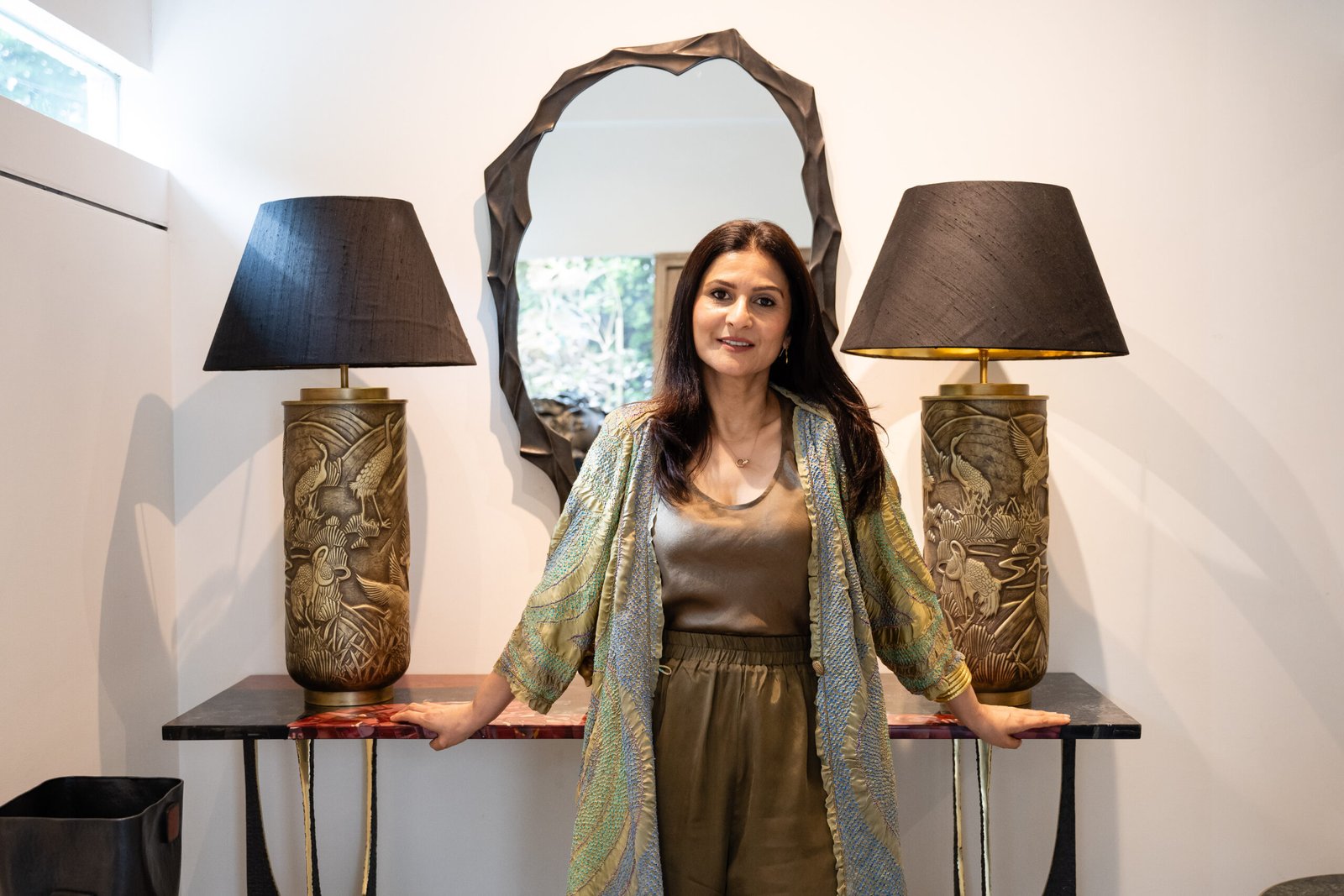
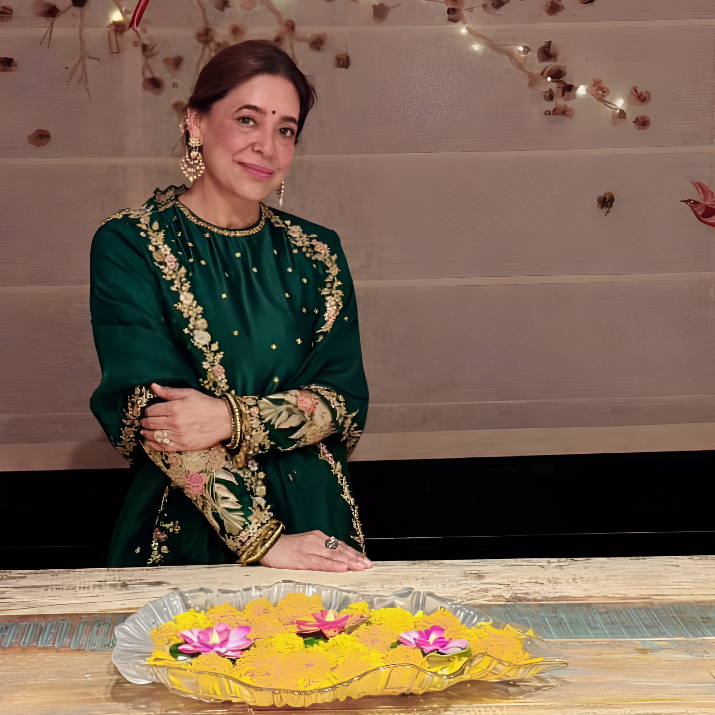
Some women find fashion. Niti Bothra let fashion find her and built from it a life of effortless elegance that owes nothing to a classroom. A Fauji childhood spent reading rooms and climates, eleven years at thirty thousand feet watching forty-two nationalities of women dress for every city, every mood, and every version of themselves. No design schools. No sketchbook. Just an uncommonly quiet eye and a memory that missed nothing.
She founded Label Niti Bothra in 2015 on one belief: that elegance is not decoration; it is intention. She once dreamed of being interviewed. That dream, like everything she has quietly worked towards, arrived. In an exclusive conversation with Co-Founder & Niche Content Strategist Rajeev Mokashi from TheGlitz Media, Niti Bothra opens up about craft, identity and her most personal collection yet.
A conversation with Niti Bothra
ORIGINS
Rajeev Mokashi: A Fauji childhood, flight crew, then a label, Niti Bothra. What were you actually running towards?
Niti Bothra: Honestly? I wasn’t running towards anything. I was simply moving, the way you learn to move when posting orders arrive before you’ve finished unpacking. A Fauji childhood teaches you things no classroom can: how to read a room, how to adapt without losing yourself, how to carry only what matters. And then the airline, forty-two nationalities under one roof. Forty-two different ways of being a woman in the world. I was collecting all of it without knowing I was.
Every city, every cantonment evening where the army wives dressed up in their chiffon saris and pearls, every woman I watched hold herself together at thirty thousand feet. I wasn’t running towards the label. The label was simply where everything I had gathered finally had somewhere to go.
THE EDUCATION
No design degree, no sketchbook – just eleven years watching women dress for every city, every climate, every mood. Was that the real design school?
I have always been deeply observant. I watched how a woman dressed for a meeting and how she dressed for a celebration and how she dressed for the quiet dignity of a Tuesday when no one was looking. I watched which fabrics held and which wilted. I didn’t need a classroom for that. I worked from memory rather than theory, from my childhood, my growing up, my adult life, three chapters of watching and absorbing.
My great-grandmother, my grandmother, my mother in her chiffon saris on those cantonment evenings, they were my first education. Everything else was simply paying attention.
THE BEGINNING
Fifteen pieces. Sold out in a day. To friends. What on earth did that moment feel like – relief, panic, or something you’d been quietly waiting for?
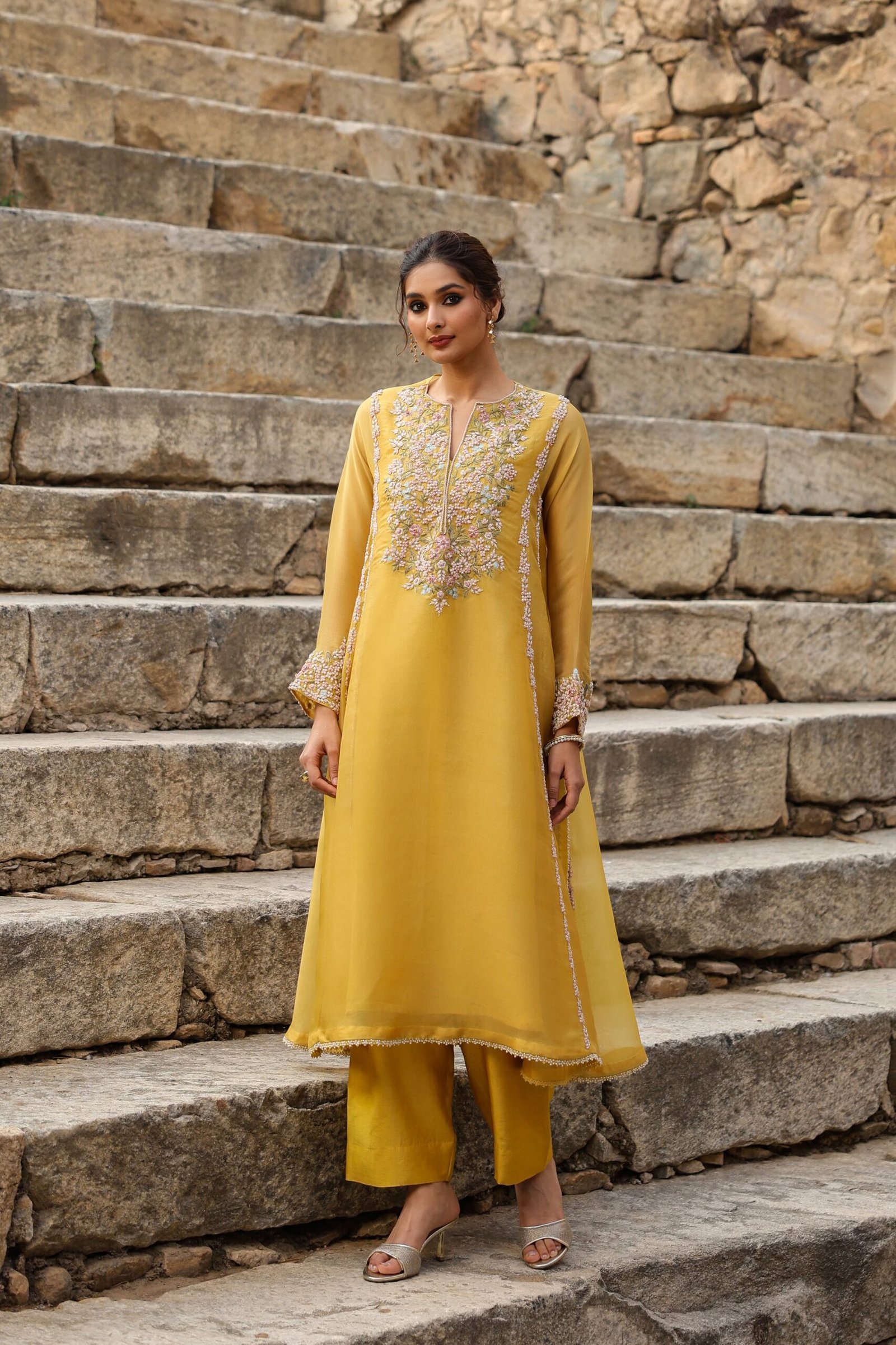
All three, arriving at once. There was relief, the deep shaky kind, that the pieces had sold. But underneath it, something more complicated. These were friends, yes, but they had chosen to buy, and that changed everything. It made it real. I had borrowed money, spent two and a half months figuring out fabric and tailors and embroiderers from scratch. I had no idea what I was doing. I even shot that first collection myself, wore every piece, modelled it. And in one day it was gone.
That collection still sells, nearly ten years later. No collection has ever gone like it did. It told me I had stepped onto the right path. I just hadn’t realised yet how long and how beautiful that path would be.
THE CRAFT
You couldn’t sketch. So how exactly does a garment go from inside your head to on someone’s body?
I should say, I am not a complete loss at sketching. I print out croquis, just figure outlines, and sketch onto those. But the real process begins somewhere quieter. It begins with a feeling, a texture, a memory of how light fell on a particular fabric. I stand before the mannequin for hours sometimes, draping, pinning, having a conversation with the cloth.
Then the pattern master takes what is in my head and gives it shape on paper. It is deeply collaborative. A good team does not just execute your vision, they protect it. The idea always begins here, she touches her chest briefly, and finds its way onto a woman I may never meet but who will feel, in it, more herself.
VAAYU THE COLLECTION
You named the collection after air — Is Vaayu the collection you’ve always been working towards, or did it arrive the way air does, without warning?
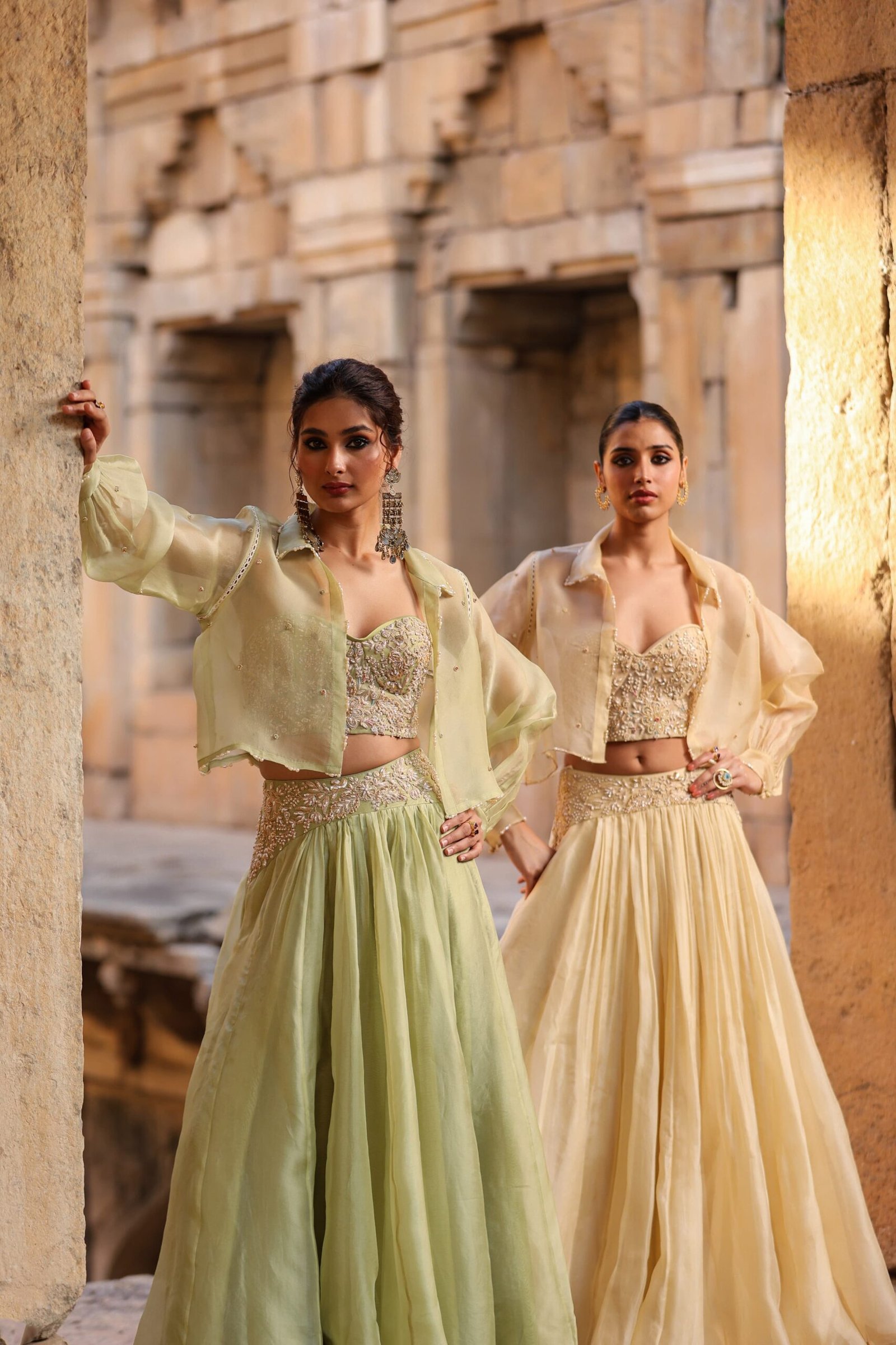
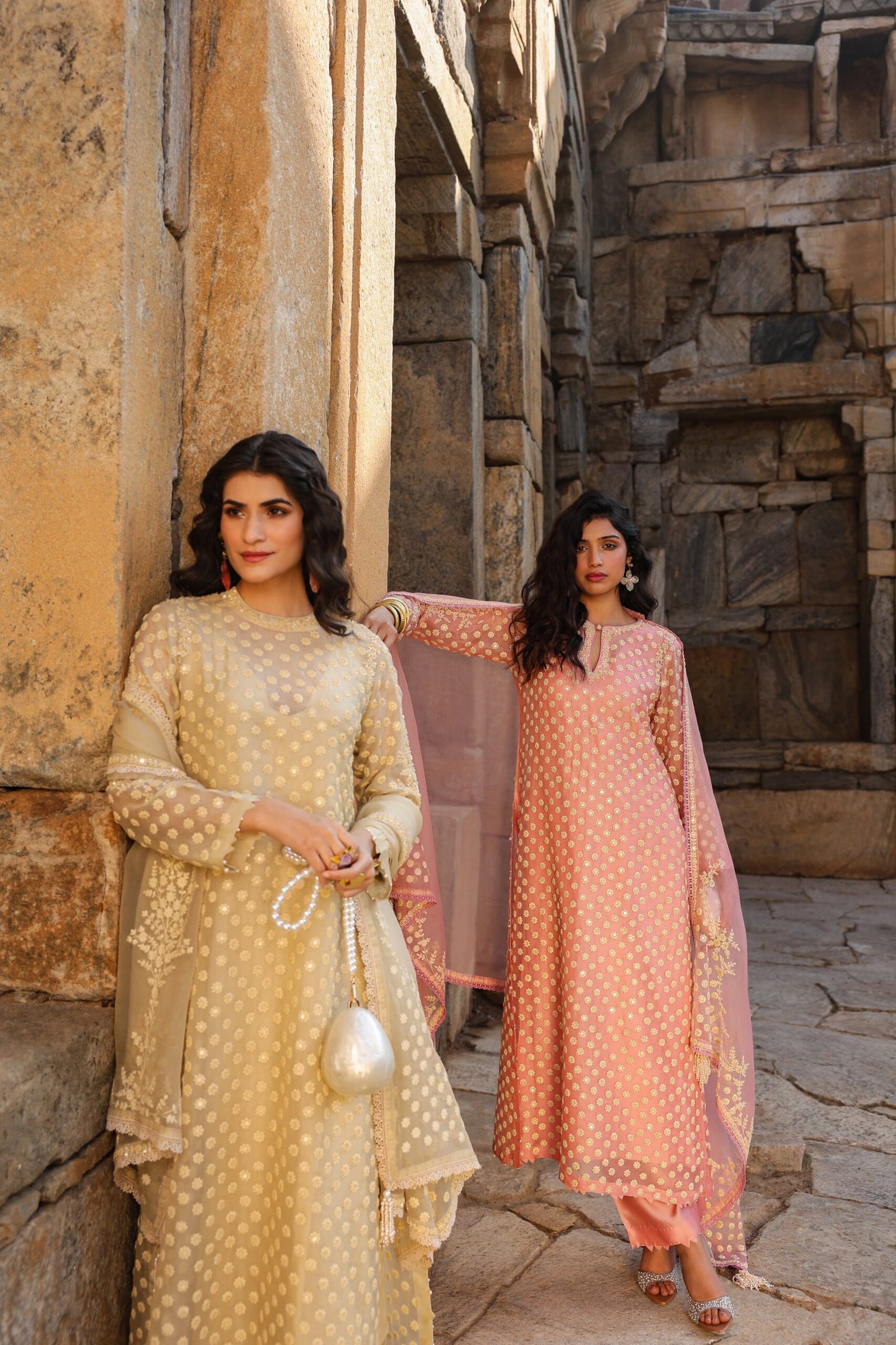
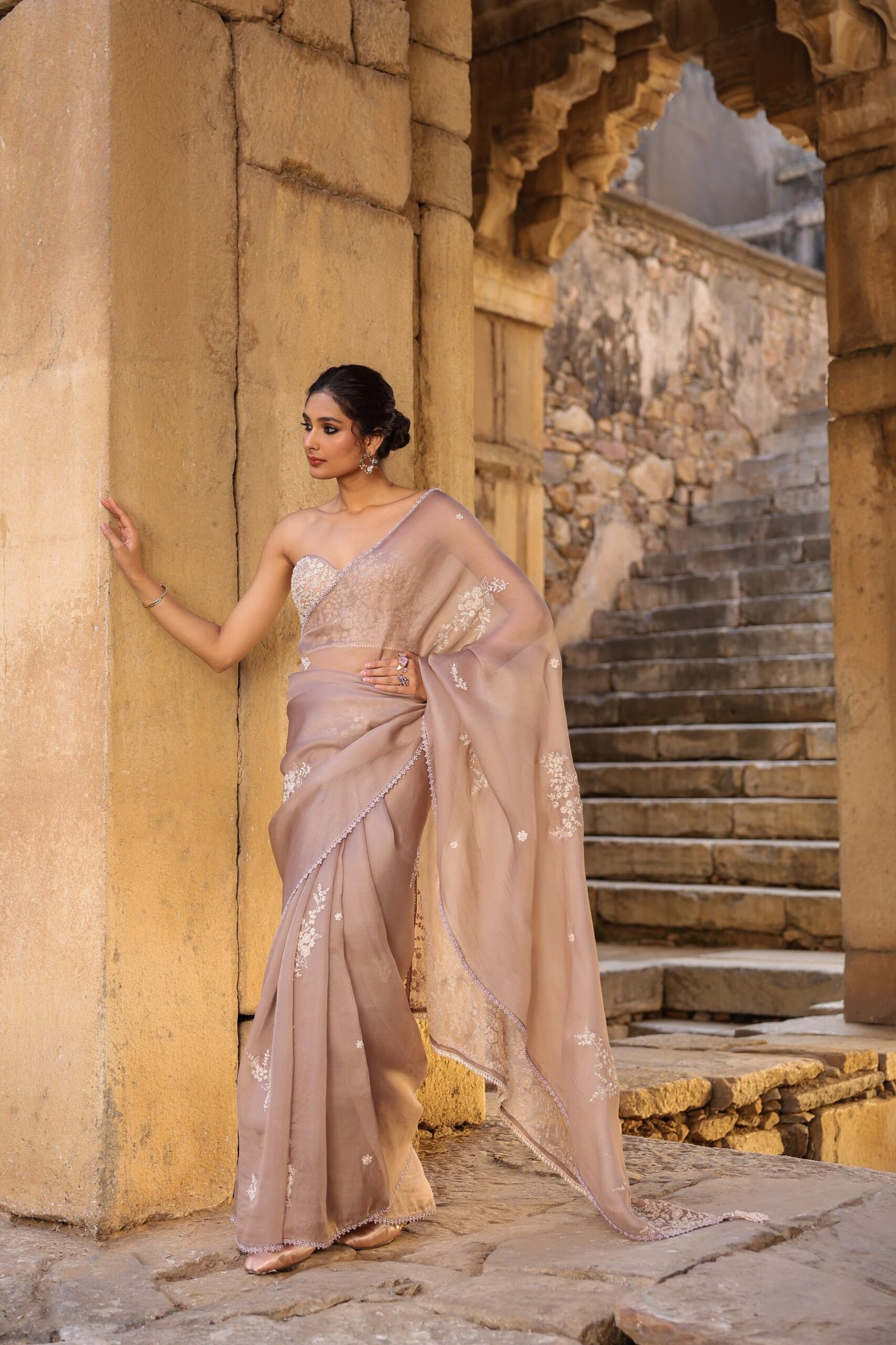
A little of both, I think. I have always been drawn to nature, to lightness, fluidity, the way certain fabrics move on a body as though they have a life of their own. I knew I wanted something that translated that feeling: a garment that felt essential the way air is essential. Something you cannot see, but you can feel the moment it touches you.
The name itself came from my husband. I was searching for the right word and he offered Vaayu, and I knew immediately it was right. It held everything I wanted to say. This collection is an amalgamation of all of that longing, for lightness, for movement, for cloth that does not demand anything of the woman wearing it but gives her everything.
THE CRAFT OF VAAYU
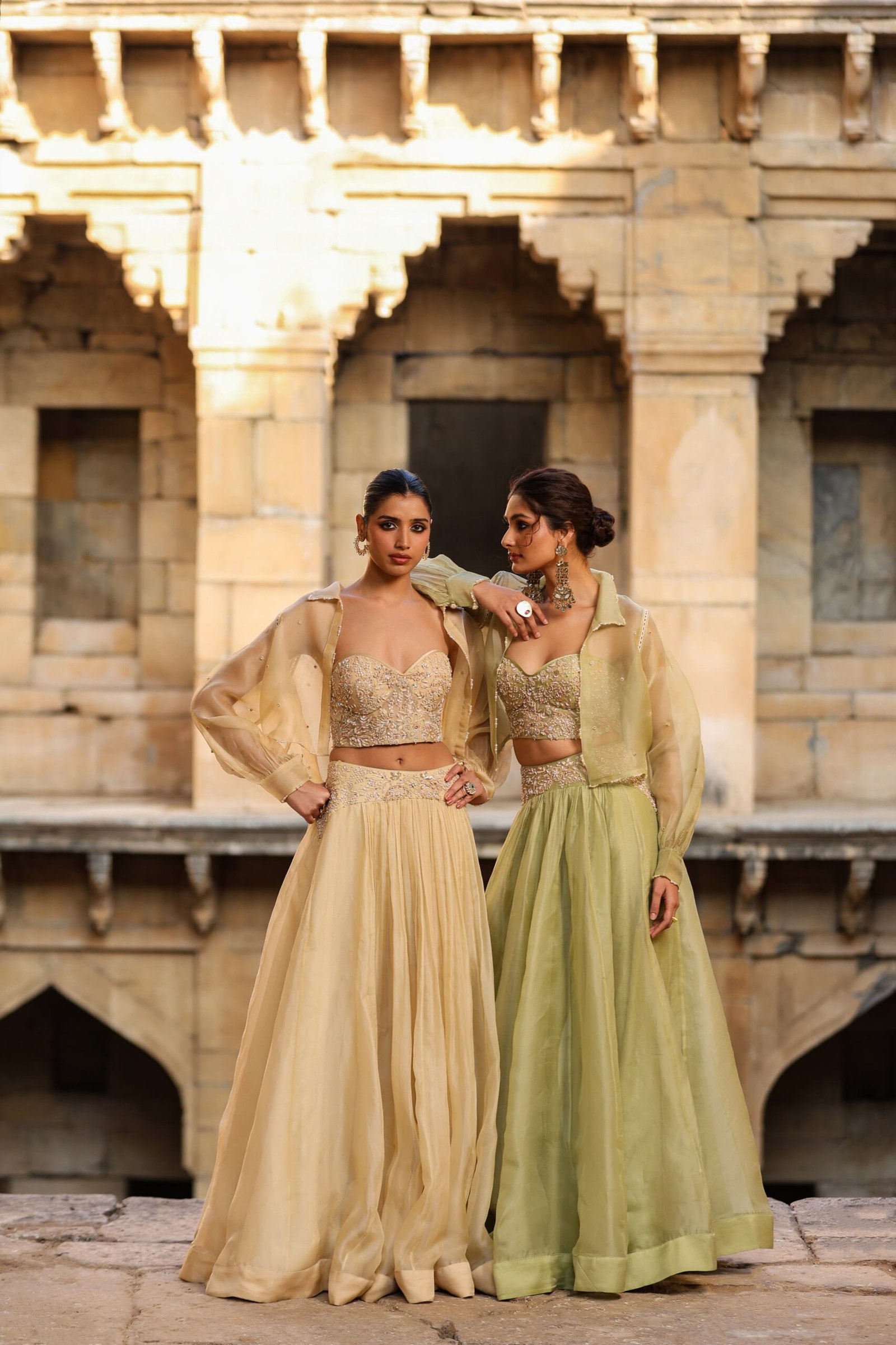
Zardosi without flash… pearl tones, muted luminosity, gold that doesn’t announce itself. Tell us more…
Luxury, for me, has never needed to raise its voice. It reveals itself slowly, on the third look, not the first. I wanted our zardosi to feel like that: present, deeply crafted, but restrained. Light on the body, not heavy with its own importance.
The fabrics carry the same sensibility, organzas, chanderis, silk weaves, and one fabric specially woven for Vaayu, an organza base with silk threads in a grid so fine it becomes its own quiet texture. The surface work enhances rather than overwhelms. You should feel the craft before you see it. That is the whole point.
THE MILESTONE
You walked into Ogaan as someone who only wished, and came back as someone who belongs there.
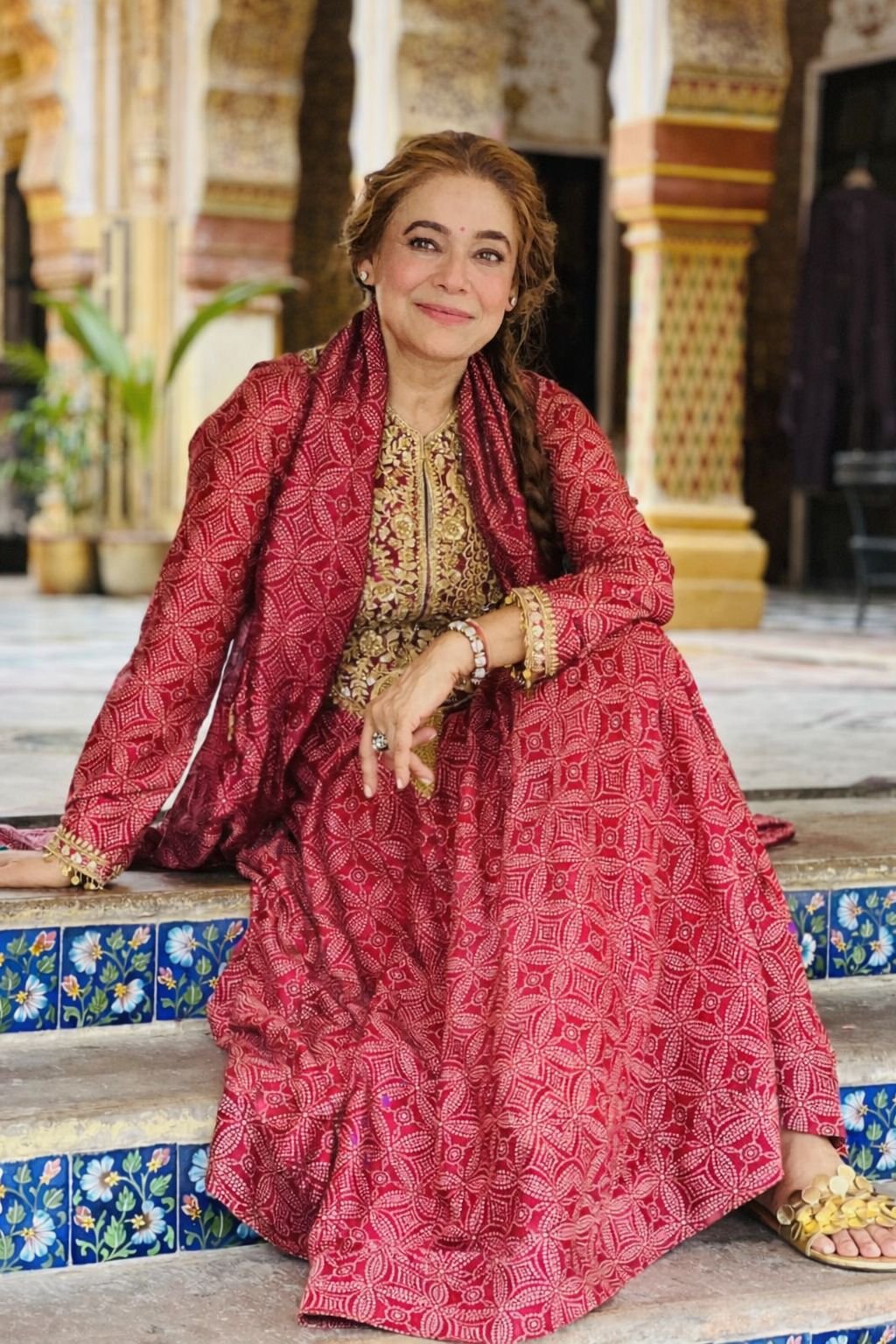
I used to go to Ogaan as a shopper, just a woman who loved beautiful things, who was drawn to the way they curated, the language they spoke, the restraint and refinement of everything they chose to carry. I used to stand in that store and think: if I ever build something real, how wonderful it would be to belong here. It was a private dream, the kind you hold carefully because you are not quite sure you are allowed to say it out loud.
And then, two or three years into the label, they called me. They said they loved what I was doing. Would I like to be there? I have been at Ogaan ever since. Now my friends walk in and see my latest collection on the floor where I once stood admiring someone else’s. There are no words for that, really. It is the dream, made real, made beautifully ordinary in the most extraordinary way.
THE HARD SEASONS
Twelve years, good calls and bad ones – what’s the one thing you know now that you wish you’d been rude enough to tell yourself at the start?
Trust yourself. Stay true. Do not let the noise of what everyone else is doing drown out the quieter, steadier voice of what you actually believe in. After that first collection sold, I panicked, and in that panic, I got swayed. I followed trends I had no business following. Silhouettes that were not mine. An aesthetic that belonged to someone else’s vision, not my own.
I was looking for validation outside when the only validation that ever held was already inside me. The strongest seasons, the ones I am most proud of, have always been the ones where I stayed close to my own aesthetic. To my heritage. To the women I have watched and admired my whole life. I wish I had found the courage to tell myself that earlier. But perhaps you have to lose your way once to understand, truly, where home is.
THE NEXT CHAPTER
What is the one thing Label Niti Bothra hasn’t done yet that keeps you up at night?
Paris. Not for the glamour of it, not for the city, though I love it, but for the platform. I want the world to see what our artisans can do. I want to take this craft, these embroideries, these hand-woven textiles, this very particular Indian intelligence about clothing, and place it on the global stage, on my own terms, in my own voice. People in India know us now.
We are growing, we are present, we are recognised. But I want more for the work. I want more for the craftspeople behind it. To stand at Paris Fashion Week and say: this is what we make, this is how we make it, and it belongs everywhere. That is the dream that keeps me awake. And I am working towards it. Quietly, the way I work towards everything. One season at a time.
Quick FIRESIDE
Fauji kid or flight crew — which one actually made you a designer? Fauji
Window seat or aisle — and think carefully, this says everything. Aisle
Packing light or packing right — which side are you on? Light
The one fabric you’d ban from existence if you could? Polyester
A wedding invitation arrives. First thing you look at — the date or the dress code? Dress code
You spot someone in a gorgeous outfit. Do you compliment them or quietly study it? Compliment
Impulse shopper or will-think-about-it-for-three-weeks? Impulse
The one city whose women dress best — no diplomacy allowed? Delhi
Heels or flats — and be honest, not aspirational? Heels
Last thing you notice when you walk into a room — the people or the curtains? People
You’re packing for a week. How many bags? Two. Maybe Three
Trend you wish would just die already? Drapes