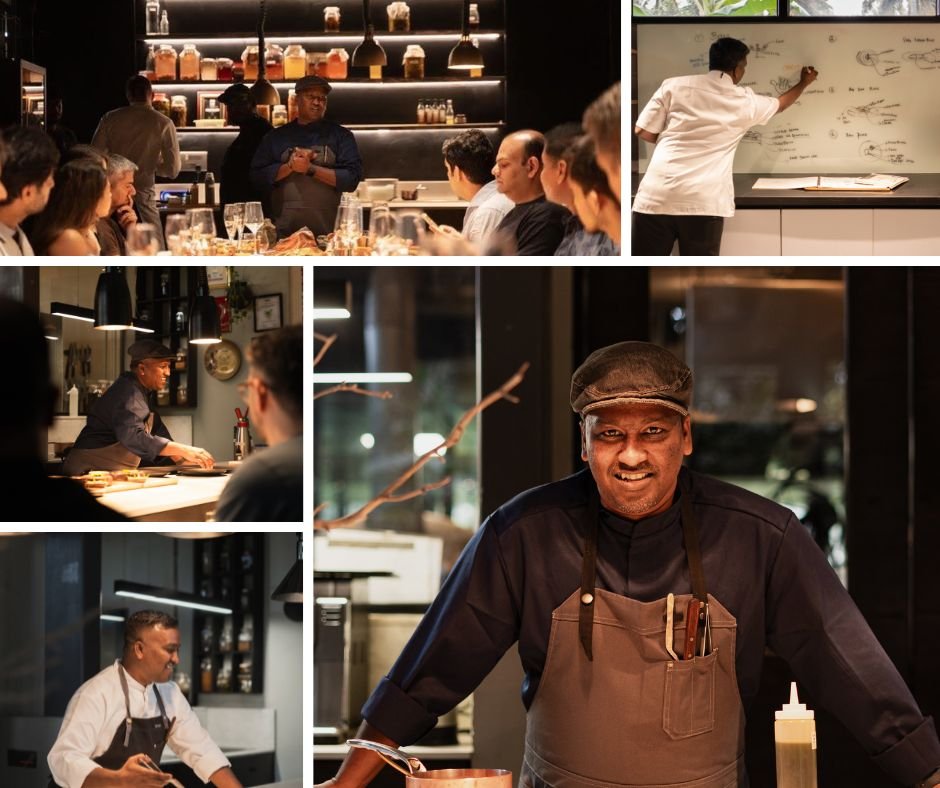
Chef Johnson Ebenzer, Farmlore’s Co-Founder & Chief Patron
At Farmlore, Co-Founder & Chef Patron Chef Johnson Ebenezer isn’t simply cooking what the land gives him. He is listening to it — through fire, fermentation, forgotten techniques and an ever-changing farm that refuses to follow a chef’s schedule.
I had seen my writer friends raving about the ultra-intimate Farmlore, the 18-seat culinary hideaway in Bengaluru for quite some time. And when food writers start talking about a restaurant in hushed, almost conspiratorial tones… describing dishes, ingredients and flavours as though they’ve stumbled upon a delicious secret… curiosity tends to get the better of you. And, Farmlore had clearly become one of those places.
Then came the accolades. Asia’s 50 Best One to Watch in 2025, followed by a place on the extended Asia’s 50 Best Restaurants 2026 list. So, I did what any food-obsessed writer worth her salt would do. I went looking for the man behind the menu.
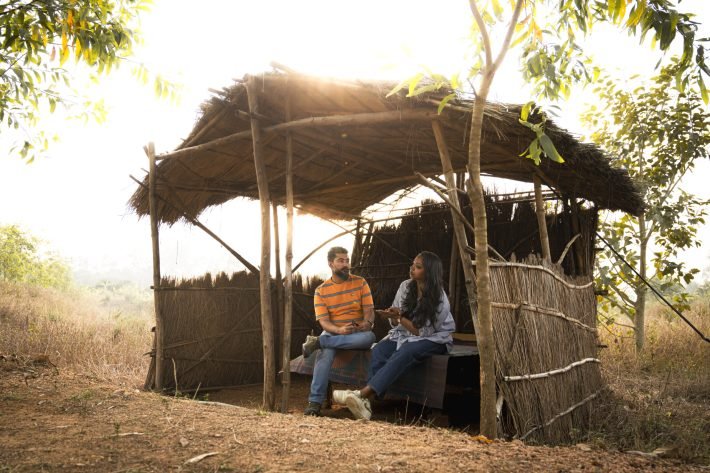
So in this exclusive interview with (me) Sumita Chakraborty, Founder & Editor-in-chief, TheGlitz, Co-Founder & Chef Patron Johnson Ebenezer takes us behind the scenes of the amazing Farmlore — where the chef may have a plan, but the farm has the final edit. …And, wow, what a deliciously unpredictable editor it is.
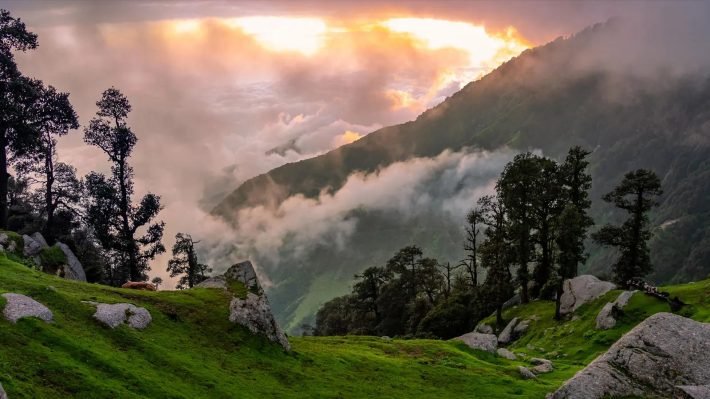
The farm, incidentally, is not merely the backdrop to Farmlore. It is its foundation. Spread across 33 acres, this living landscape shapes how the kitchen thinks, plans and cooks. Hydroponic systems sit alongside seasonal cultivation, while livestock, squirrels, rabbits and other fauna make the estate feel less like a conventional agricultural property and more like a constantly evolving ecosystem.
Under the careful stewardship of Kaushik Raju, the estate functions as both a productive farm and a space for learning. What grows here isn’t cultivated simply for yield; it becomes part of a larger living environment… one that extends beyond the kitchen, the plate and, ultimately, the restaurant itself.
Which explains why Farmlore’s idea of farm-to-table feels rather different. Because at Farmlore, a carefully conceived dish can be undone by a stubborn jackfruit tree. Rain can change the menu. The morning harvest can rewrite dinner. And apparently, the hens can decide whether you’re cooking for four people or forty. Here, the farm is a collaborator, a provocateur and occasionally, one suspects, the restaurant’s most demanding sous chef.
Chef Johnson’s own culinary journey is just as eclectic. Cruise liners taught him the discipline of feeding a thousand people a night. Hotels taught him structure and precision. His time at Nadodi in Kuala Lumpur opened up another world, where food could carry stories and cultures could meet on a plate without one having to apologise to the other. All those experiences eventually folded themselves into Farmlore.
At Farmlore, Chef Johnson isn’t trying to prove that Indian food belongs on the global fine-dining stage. He believes that argument is already settled. Instead, he is searching for something more elusive… a new vocabulary for Indian cuisine, one where farm, fire and fermentation aren’t fashionable techniques but simply part of the language.
So over a virtual conversation about soil, seasons, duck, gulkand, fermentation, recognition, risk… and the occasional rebellion of a chicken… Chef Johnson Ebenezer spills the lore behind Farmlore.
…And trust us, it’s one delicious story.
Over To Farmlore’s Co-Founder & Chief Patron Chef Johnson Ebenzer
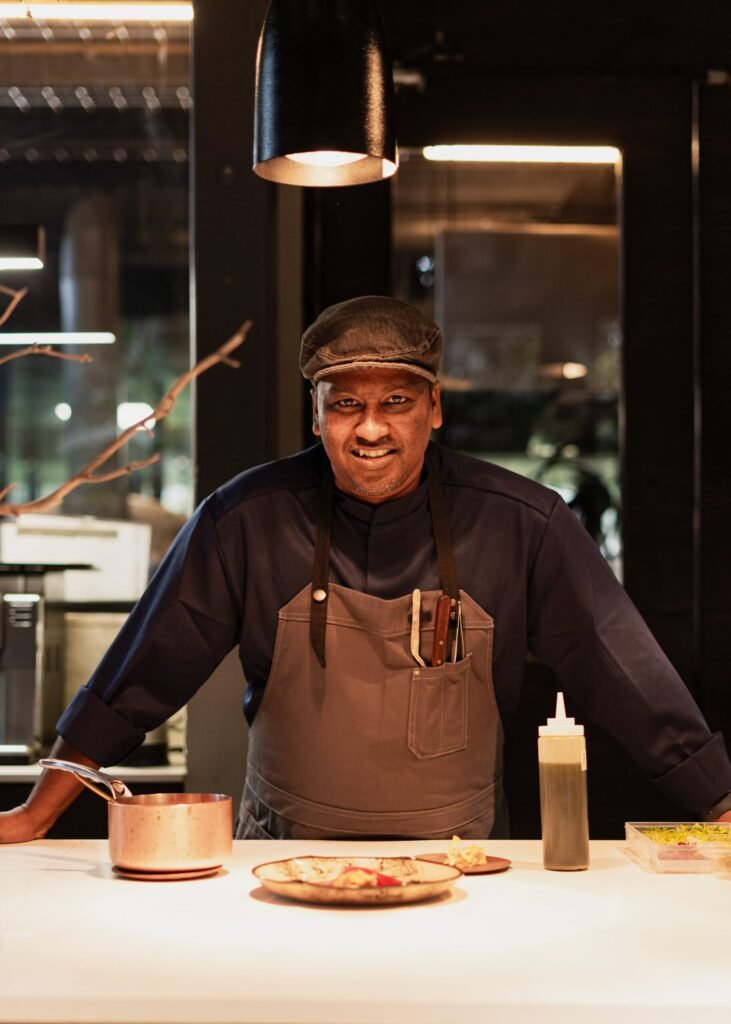
Farmlore began as “Lore” — an idea centred around storytelling through food — and eventually found its home on a farm. What did the land teach you about cooking that you could never have learnt in a conventional restaurant kitchen?
A restaurant kitchen teaches you control… timing, consistency, the tyranny of the reservation… The land teaches you the opposite: patience, and the humility to accept that some days it simply won’t give you what you asked for. I could plan a dish around jackfruit and wake up to find the tree wasn’t ready, that the rain came at the wrong hour, that the hens laid four eggs instead of forty. You learn to cook in conversation with something that doesn’t answer to a chef’s hierarchy. No walk-in fridge ever taught me that kind of listening… the major part of the narrative is strung around
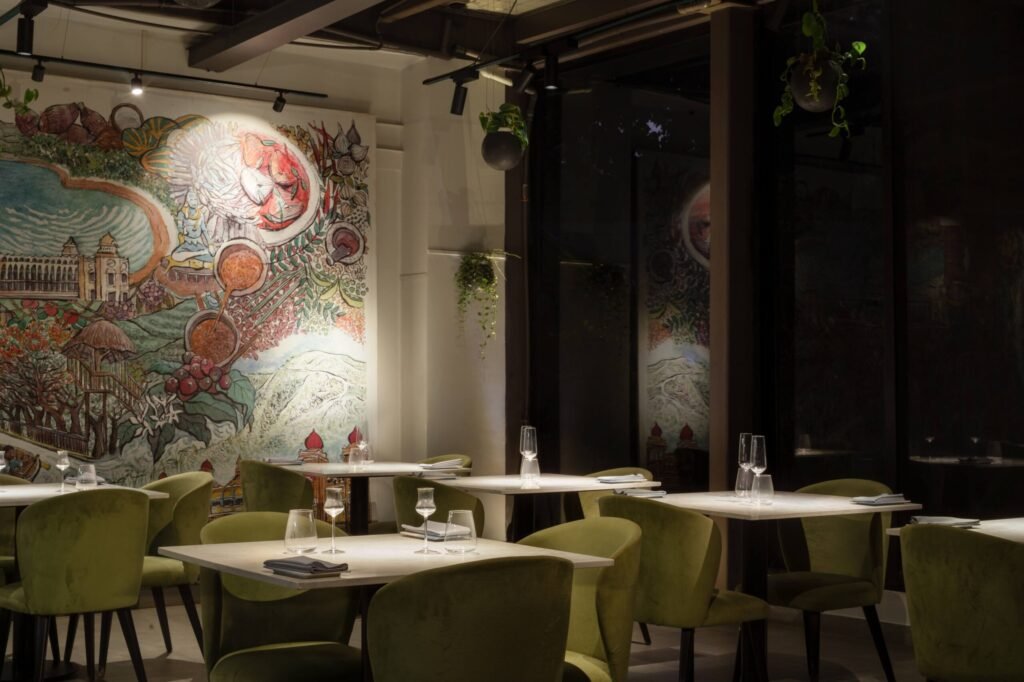
You have worked on cruise liners, in hotels and at Nadodi in Kuala Lumpur before returning to India. How did those very different experiences shape the culinary philosophy that eventually became Farmlore?
Cruise liners taught me volume and discipline — feeding a thousand people a night without losing your nerve. Hotels taught me structure, the invisible machinery behind a plate. And Nadodi taught me that a story and cuisine could be the spine of a menu, that Malaysia’s own layered, migrant food culture could sit next to Indian technique without either one apologising for itself. By the time I came home, I wasn’t trying to choose between those worlds. Lore was when we started telling stories through food and Farmlore is really all four of them, folded into the dynamism of a working farm where eclecticism with locavore sensibilities carved its path.
Farmlore goes beyond the conventional farm-to-table narrative. You work with local produce, ancestral techniques, fermentation and live fire, but also bring in global influences. Where, for you, is the line between celebrating Indian food and reinventing it?
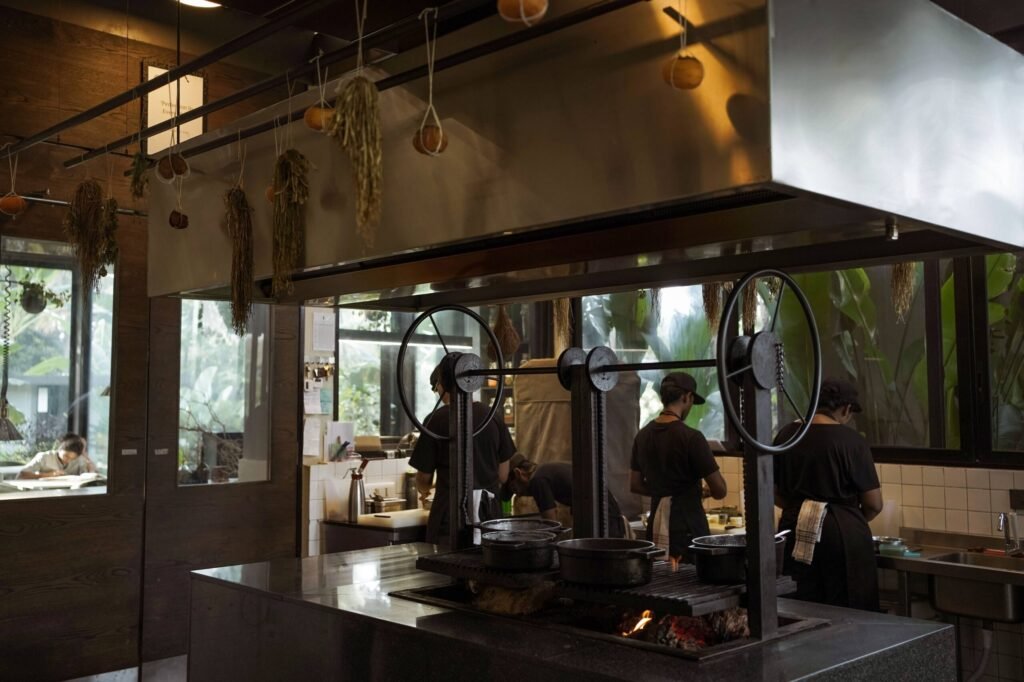
Fire is the key it draws in a character, the locavore sensibilities add in the depth be it flavours, or be it the narrative, an arc which each dish builds it self.
I don’t think there’s a clean line, and I’ve stopped looking for one. Celebration without curiosity sans becomes nostalgia. Reinvention without respect sans becomes spectacle. What I try to do is ask an old technique a new question — take a fermentation forefathers did out of necessity, I ask is it needed and only then i would step in and see what it does next to something it’s never met before, like duck and gulkund. If the dish still tastes like it remembers where it came from, I’ve stayed on the right side of that line
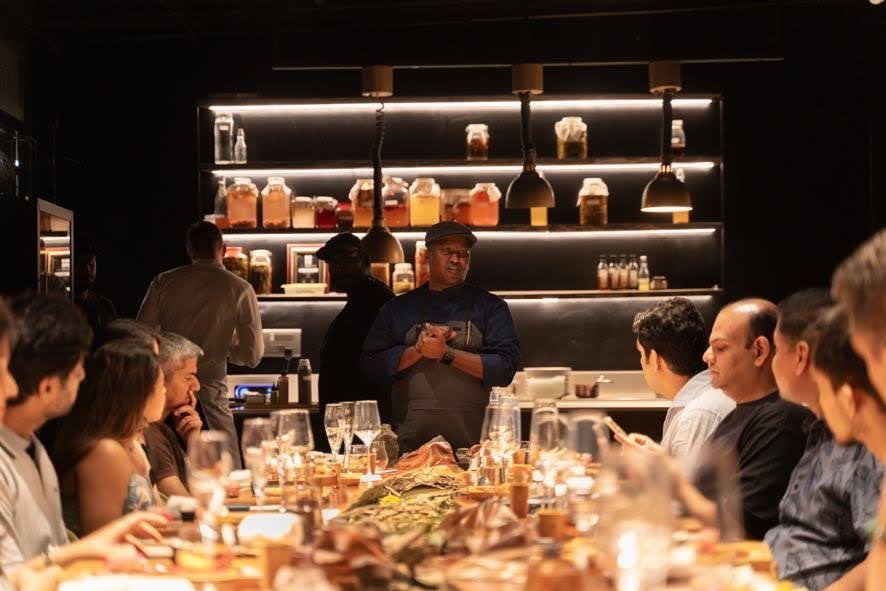
You deliberately keep Farmlore intimate, with an 18-seat format and a highly curated tasting experience. In an age when restaurants are chasing scale, visibility and social-media buzz, why was intimacy so important to you?
Scale asks you to repeat yourself. Intimacy asks you to stay awake. At 18 seats, I can watch a guest’s face when the lid comes off, I can still change tomorrow’s menu because of what today’s harvest gave me. The moment you’re built for volume, the farm becomes a supplier instead of a collaborator. I’d rather have fewer people leave changed than more people leave fed.
Your menus are constantly evolving with the farm and the seasons. How much of a dish is planned in advance and how much is dictated by what the land gives you that particular day?
It’s all about making peace with oneself
Maybe sixty percent is architecture — technique, pairing logic, the bones of a dish I’ve been circling for months. The rest belongs to the morning walk. Some days the roses are heavier with scent than usual, or the duck’s been aging a day longer than planned, and the dish shifts under my hands before service even begins. I’ve made peace with the fact that a Farmlore menu is never quite finished. It’s closer to a living document than a fixed one.
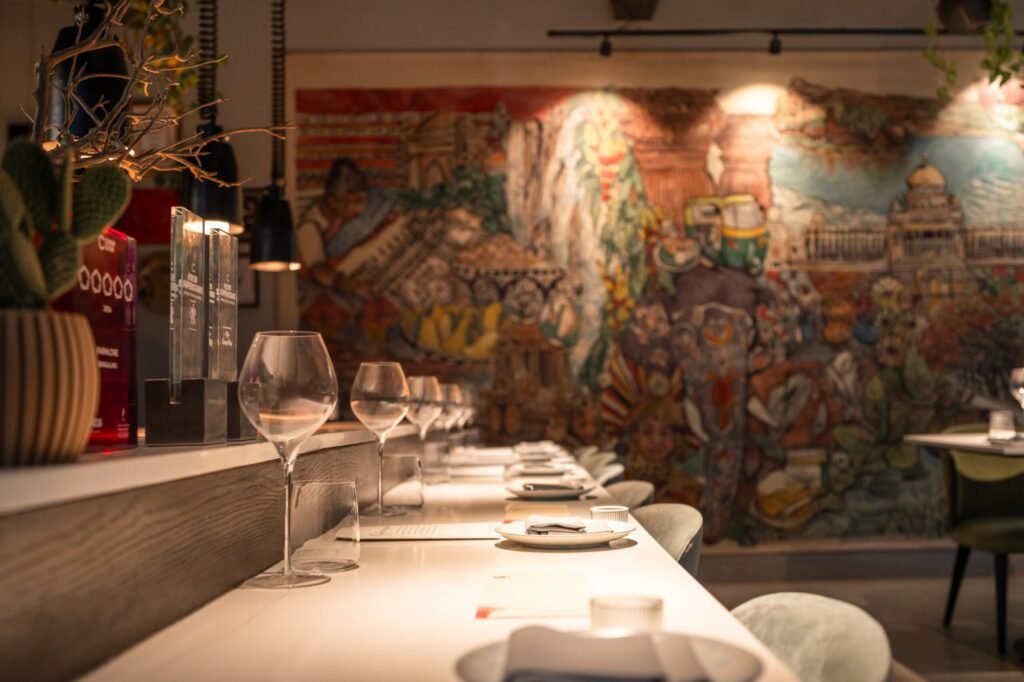
Farmlore has now received major international recognition, from the Asia’s 50 Best One to Watch honour to its 2026 appearance on the extended Asia’s 50 Best list. Has that recognition changed the way you cook — or has it made you even more determined to stay true to the original Farmlore philosophy?
Being named on Asia’s 50 Best One to Watch in 2025, and now on the extended list for 2026, is a strange kind of validation — you’re grateful, and then almost immediately suspicious of your own gratitude. Recognition can make a kitchen defensive, precious about repeating whatever earned it the applause. I’ve tried to let it do the opposite: it’s made me more willing to take the next risk, not less, because now there are more people watching to see whether the philosophy was ever real in the first place, and its nod for us to continuously be challenged.
After building Farmlore over the past five years, what is the next frontier for you? Are you still trying to prove something about Indian cuisine to the world, or are you now more interested in creating a completely new language of Indian fine dining?
Five years in, I don’t think I’m proving Indian cuisine belongs anywhere anymore — that argument feels settled to me. What I’m chasing now is a vocabulary. Not Indian food explained to the world, and not the world’s techniques borrowed by India, but something with its own grammar — where fermentation, fire, and farm aren’t a genre, they’re just how the sentence is built into a lore. I’m still curious what that language sounds like when it’s fully formed. I don’t think I’m there yet. I’m not sure I want to be.
THEGLITZ TAKE: 18 Seats, Amazing Bites!
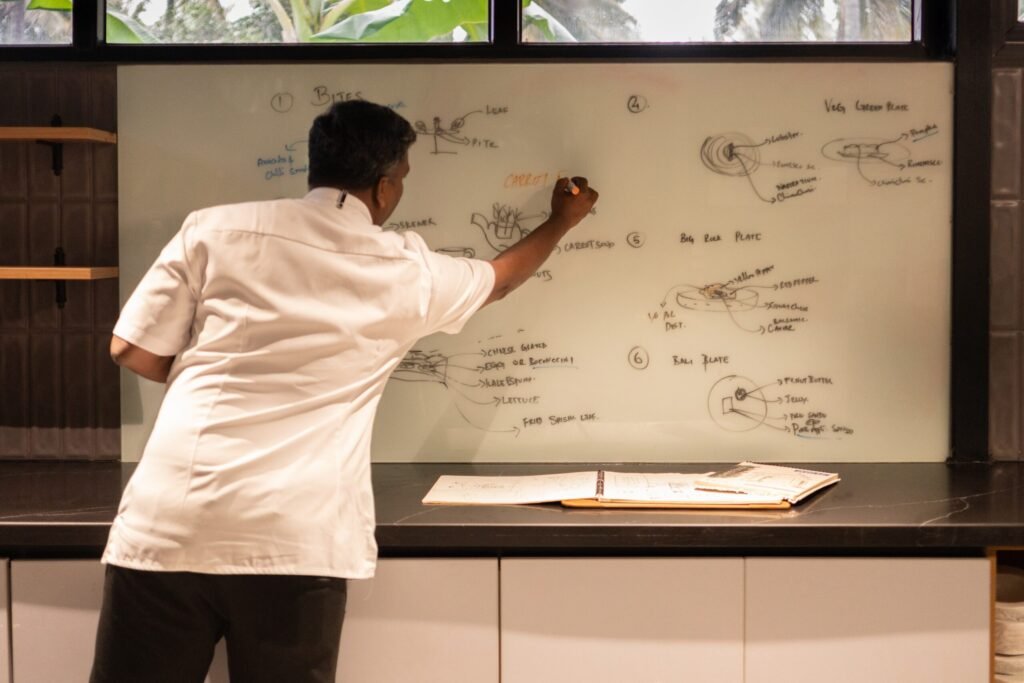
Farmlore proves that good food doesn’t always follow a recipe… sometimes, it follows the farm.
Here, the chef plans, the seasons improvise, and the hens apparently have editorial control.
With fire, fermentation and a whole lot of imagination, the dynamic Chef Johnson Ebenzer lets Indian cuisine wander off script. The result? Less “fine dining theatre,” more delicious culinary plot twist.
Our verdict: Forget predictable. Farmlore is where Indian cuisine gets deliciously adventurous.