

In this concrete jungle world that often talks sustainability but funds pollution, Vasudha Madhavan is a rare force of disruptive clarity; she is a woman who chose not just to fight for the planet, but to finance its future. As the Founder & CEO of Ostara Advisors, India’s first climate-tech specialist investment banking firm focused entirely on electric mobility and climate-tech, Vasudha is reshaping how capital flows into sustainability.
Where others saw climate-tech as risky or fringe, she saw potential. Where generalist banks hesitated, she built a focused powerhouse. Under her leadership, Ostara has become the financial engine room behind India’s clean-tech revolution… unlocking millions in strategic capital for companies electrifying transport, decarbonizing industries, and building scalable green solutions.
This isn’t just investment banking. This is frontline climate action, suit-and-briefcase style. Vasudha is TheGlitz Earth Warrior not for the noise she makes, but the impact she delivers, connecting visionary founders with purpose-driven capital, and proving that profit and planet are not adversaries, but allies.
This World Environment Day, we honour not just those who plant trees, but those who replant systems. Vasudha Madhavan is doing just that… bridging ambition with finance, vision with execution, and India with a cleaner, more resilient future.
Over To TheGlitz Earth Warrior Vasudha Madhavan, Founder & CEO, Ostara Advisors
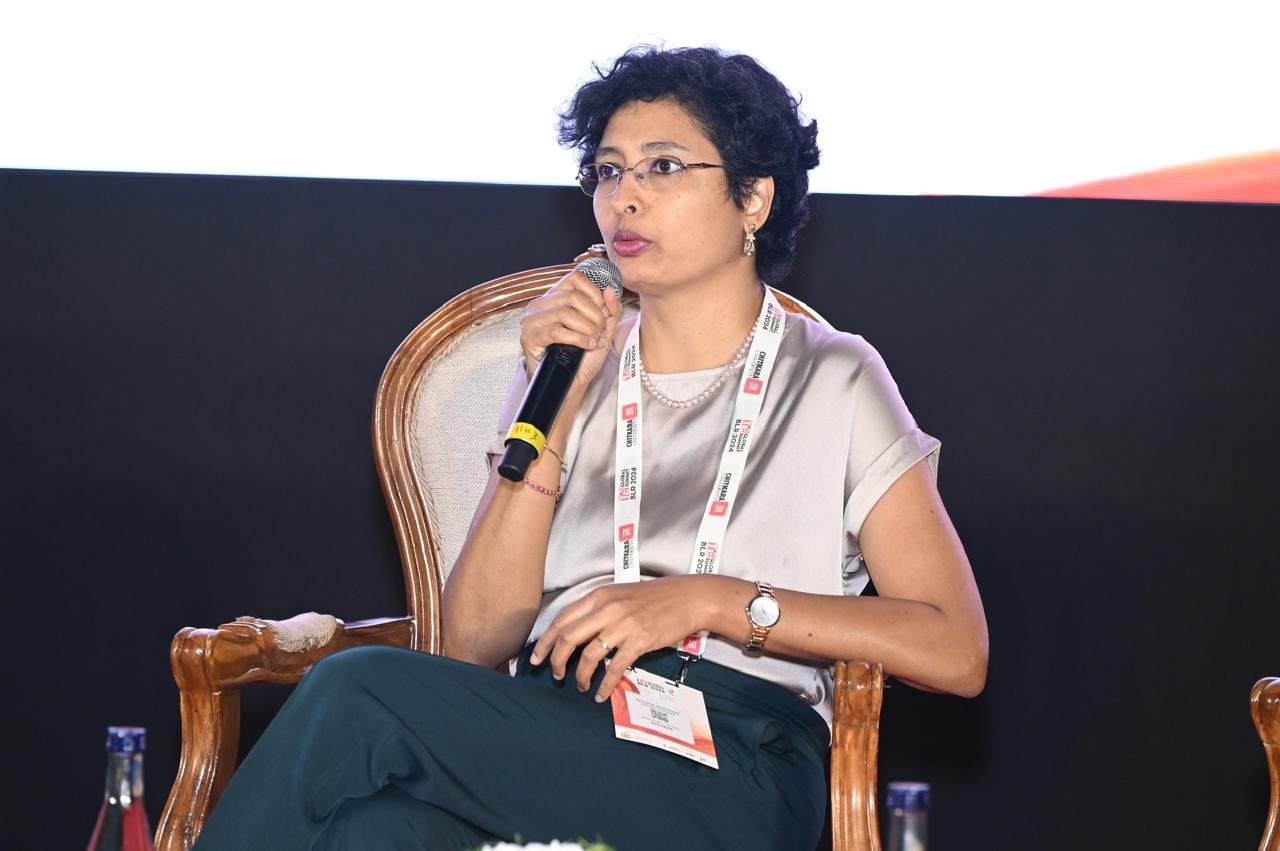
You launched Ostara Advisors as India’s first investment banking firm dedicated to clean-tech and e-mobility. What led you to make this bold and future-facing pivot?
My journey toward founding Ostara Advisors was both deeply intentional and serendipitous. I started my career in corporate and investment banking at institutions like ICICI Bank and Citibank and later led deal origination and execution at boutique IB firms, where I advised early-stage startups. That’s where I discovered my passion, working closely with mission-driven founders and helping them unlock capital and strategic growth. The real pivot came in 2017–2018, when I led India’s first electric two-wheeler M&A deal, Greaves Cotton’s acquisition of Ampere Vehicles. That deal was a watershed moment.
It opened my eyes to the transformative potential of clean mobility and the immense capital gap founders in this space faced. I saw that while innovation in electric mobility was accelerating, access to capital and strategic advisory remained limited, and generalist advisors weren’t equipped to bridge that divide.
So, I launched Ostara Advisors to fill that critical gap. We became India’s first and only investment banking firm dedicated exclusively to climate-tech and clean mobility. Our goal was clear: Catalyse global capital into innovative climate-tech businesses, enabled by deep sector expertise which is valued by both investors and founders.
Today, Ostara has grown into a sector leader, having closed marquee transactions across EVs, battery-tech, sustainable corporate mobility, and energy efficiency, while building India’s largest decarbonization-focused global investor network. The bold pivot was driven by a simple realization: If we’re serious about solving the climate crisis, we must first solve the capital gap holding back climate-tech. That is the gap Ostara has chosen to bridge.
Raising capital in the sustainability space often means balancing financial returns with long-term impact. How does Ostara bridge that gap for both founders and investors?
At Ostara, we bridge the gap between financial returns and climate impact by backing companies with strong fundamentals: solid unit economics, scalable models, and measurable sustainability outcomes.
Take our recent work with Routematic, India’s leading AI-enabled corporate mobility platform. In May 2025, we advised them on a $40 million Series C fundraise from climate-focused investors Fullerton Carbon Action Fund and Shift4Good, both making their first investments in India. This was India’s first climate capital raised by a fuel-agnostic corporate mobility player. With 10% of their fleet being EVs today, Routematic plans to electrify 60% of its fleet by FY29, helping corporate clients meet ESG and net-zero targets, and do so profitably.
To illustrate this alignment between profit and sustainability, we co-created an impact plan that demonstrated how emissions reduction would grow alongside financial performance, helping align investor expectations with long-term climate impact.
Clean-tech and electric mobility are evolving rapidly in India. What sectors or technologies are showing the most promise in terms of scalability and investment interest?
Clean-tech and electric mobility in India are evolving rapidly, with several sectors showing strong scalability and attracting increasing investor interest. Smart energy management platforms like Numocity, which enable load balancing based on grid demand, are critical for optimizing EV charging infrastructure. Battery storage solutions are essential for integrating renewable energy and ensuring reliability across mobility and power systems. In industrial decarbonization, technologies such as green hydrogen and green cement are gaining traction, while circular economy models are transforming waste into valuable resources. These sectors align well with India’s climate goals and infrastructure priorities, making them highly attractive for investment.
You’ve worked closely with both early-stage startups and established players. What are the key traits that make a sustainability-focused business investor-ready today?

To attract investment, a sustainability-focused business must demonstrate:
Tech Differentiation: Proprietary, globally competitive technology that solves a clear problem better than existing solutions.
Market Traction: Strong revenue growth, retention metrics, and conversion data proving product-market fit.
Scalable GTM Strategy: Data-backed customer segmentation and acquisition efficiency.
Sound Unit Economics: Gross margins, and a visible path to profitability.
Strong Finance Team: Robust forecasting, reporting, and internal controls to support growth and compliance.
Operational Resilience: Lean, tech-enabled operations that can scale without compromising
quality or margins.
Each function must be data-driven, signaling both innovation and execution strength.
How do you see the role of gender diversity—particularly women in climate finance and tech—shaping the future of sustainable innovation?
Gender diversity, especially the inclusion of women in climate finance and tech, is critical to shaping effective and inclusive climate solutions. Women are disproportionately affected by climate change yet remain underrepresented in leadership. India ranks 129th out of 146 countries in the Global Gender Gap Index 2024, and women hold just 17% of board seats in India, compared to 30% in the US and 37% in the UK.
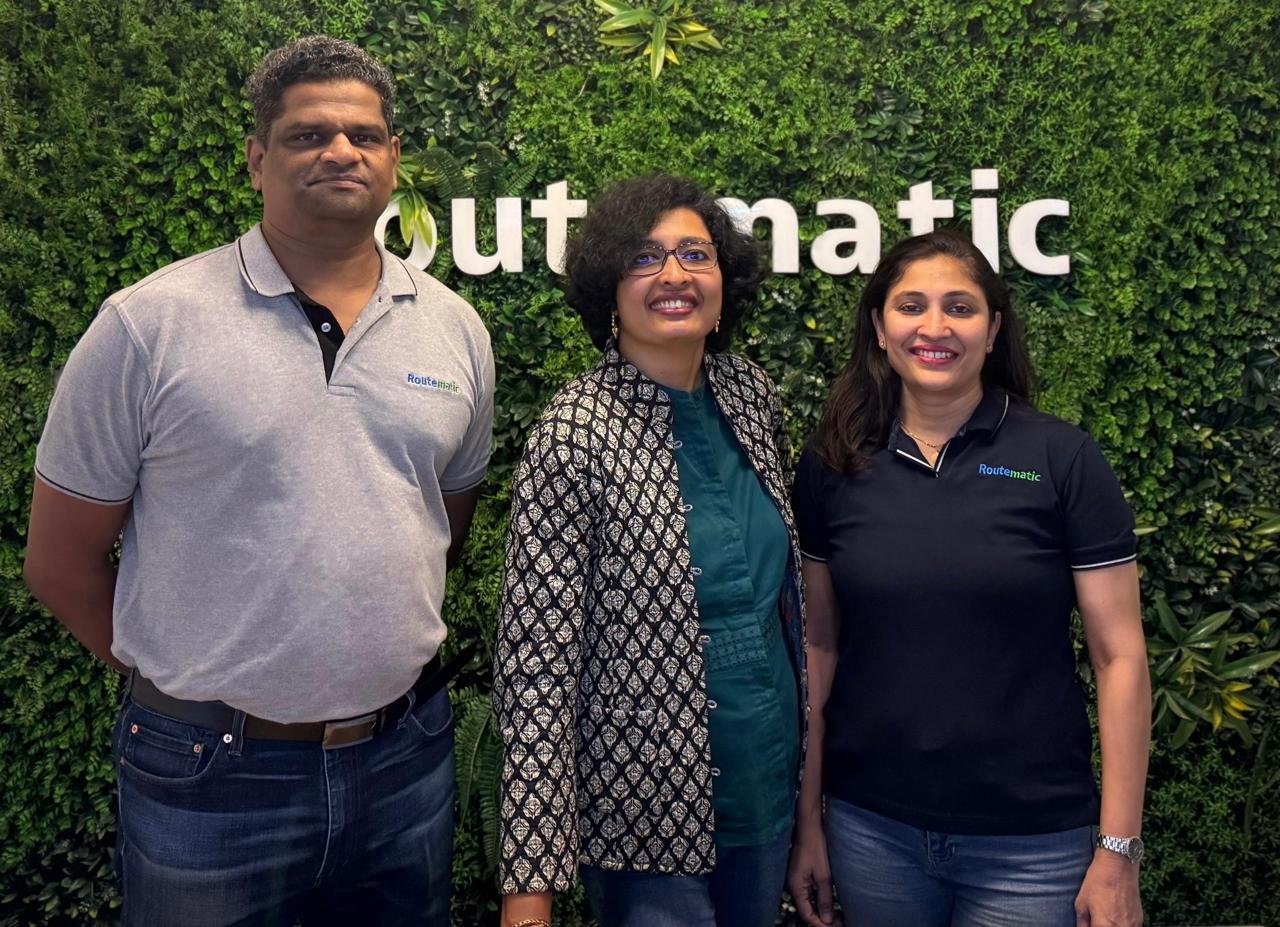
Despite this, women bring unique perspectives as consumers, entrepreneurs, and community leaders. Their involvement leads to more holistic, scalable, and equitable innovation. At Ostara Advisors, we are proud to have a women-majority team. The greatest fulfillment has come from working with inspiring female founders and leaders like Hemalatha Annamalai of Ampere Vehicles and Kavitha Ramachandragowda of Routematic, who are actively shaping India’s mobility and climate-tech landscape. I aim to do my part by mentoring aspiring women professionals through Aspire For Her, encouraging them to lead with confidence and challenge bias.
Looking ahead, what’s your vision for Ostara’s role in India’s green transition, and what kind of impact do you hope to make in the next five years?

Ostara Advisors aims to be a leading catalyst in India’s green transition—unlocking capital, accelerating innovation, and scaling transformative climate-tech from India for the world. We started with electric mobility and are now expanding into energy efficiency, industrial decarbonisation, circular economy, clean energy storage, and supply chain automation—becoming India’s first investment bank with a focused climate-tech mandate.
Beyond dealmaking, we’re building the climate ecosystem by bringing global, first-time investors into India and forging partnerships with aligned firms worldwide to ensure seamless access to capital and expertise. As India enters a critical phase in its climate journey, Ostara is committed to bridging the financing gap and empowering bold founders building a resilient, climate-smart future.