Abhay Sehgal, Art by Sehgal
What happens when ancient mythology walks into the contemporary world — and finds itself surrounded by Bollywood, streetwear, luxury, sport, pop culture and the endlessly shifting language of modern India?For contemporary artist Abhay Sehgal, it becomes a fascinating new visual universe.
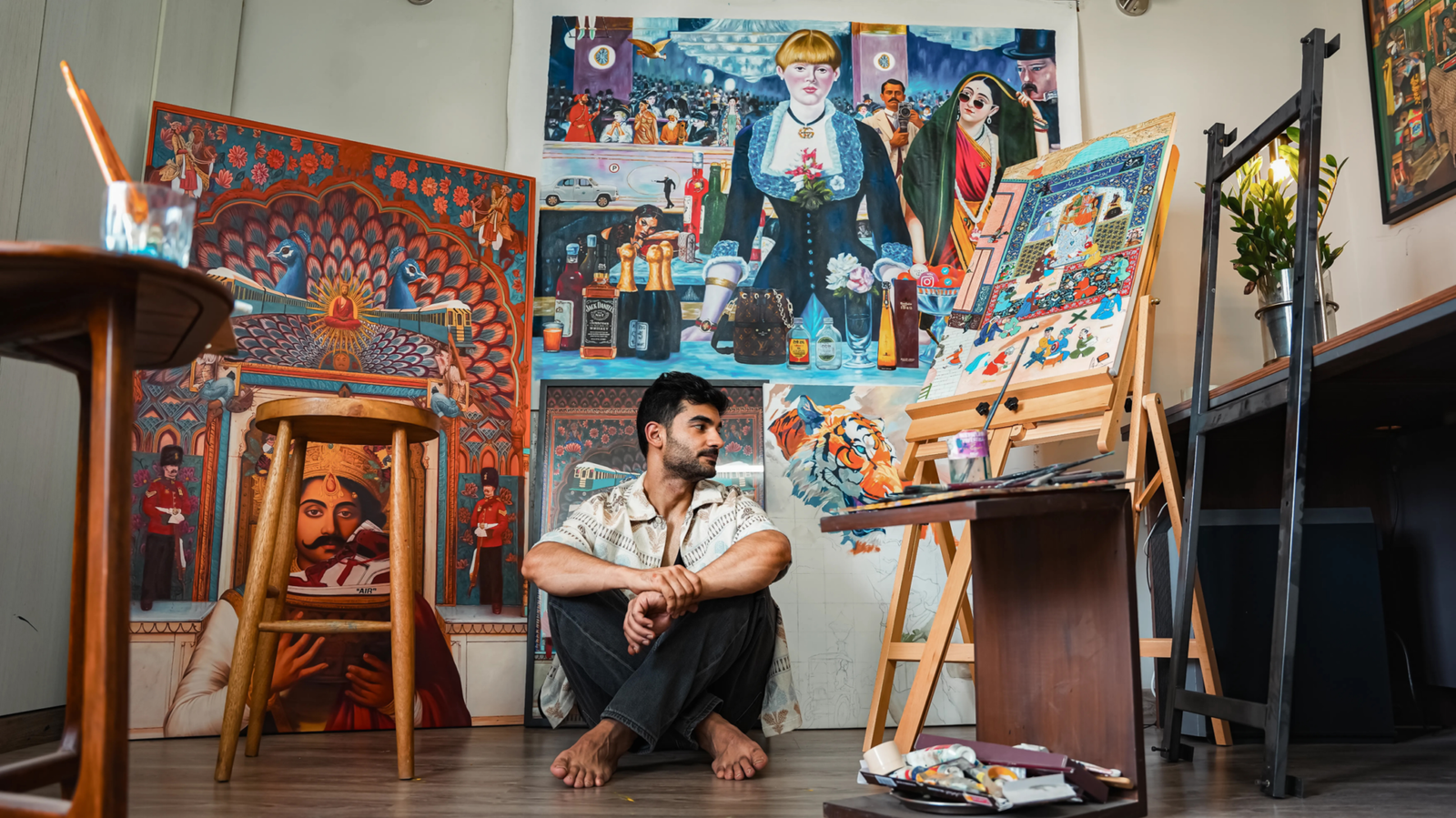
Founder and Contemporary Artist at Art by Sehgal, Abhay Sehgal has carved a distinctive space for himself by bringing together surrealism, Indian heritage, mythology and contemporary storytelling. But perhaps what makes his work particularly intriguing is his ability to look at familiar Indian imagery through what he calls his “Third Perspective” — stepping back from the culture he grew up with and seeing it almost as a stranger might.
His canvases don’t attempt to simply reinterpret mythology for the modern age. Instead, Abhay places mythology naturally within the India he knows — an India where ancient symbols can coexist with luxury, popular culture, contemporary fashion, cinema and the internet.
That instinct for storytelling has also made his work increasingly sought after for bespoke commissions. His artworks have found their way into the worlds of Ranbir Kapoor, cricketer Dinesh Karthik, actress Kalyani Priyadarshan, industrialist Govind Dholakia, entrepreneur Ashneer Grover and Michelin-starred chef Sujan Sarkar, among other prominent personalities. Yet Abhay sees these commissions as far more than celebrity associations. For him, a bespoke artwork is an intensely personal exercise — an attempt to translate someone’s memories, passions, experiences and identity into a visual world that could belong to no one else.
And therein lies an intriguing shift in the way we think about luxury.
In an age when almost everything can be bought instantly, Abhay believes time itself has become a luxury. A painting that takes months to create, built around one person’s story and carrying fragments of their life, possesses a value that goes far beyond its price tag. It becomes a personal heirloom, a visual memory and, perhaps, a piece of one’s identity made tangible.
In this conversation with Sumita Chakraborty, Founder & Editor-in-chief, TheGlitz, Abhay Sehgal talks about finding modernity in mythology, the art of creating deeply personal commissions, why no bespoke artwork should ever feel as though it could belong to anyone, and why the most meaningful luxury may be something that cannot be mass-produced — a story that is uniquely yours.
Over To Abhay Sehgal
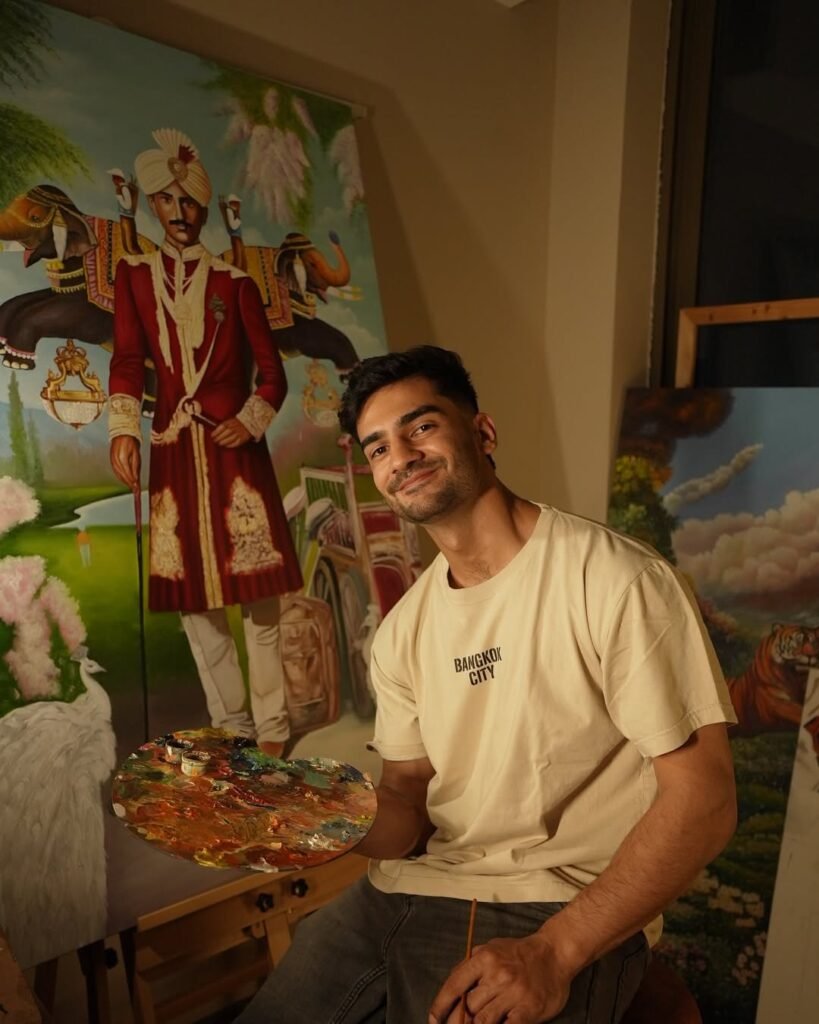
Your work brings together surrealism, Indian mythology and contemporary storytelling. What first drew you to this intersection, and how do you transform India’s ancient visual language into something that resonates with today’s audiences and collectors?
I think what drew me to it was actually the difference between how we see our own culture and how someone looking from the outside might see it.
I call this my “Third Perspective.” You take something that is completely normal to you because you grew up around it, and then you look at it almost like a stranger would. Suddenly, the same mythology, clothing, characters or symbols start looking completely different.
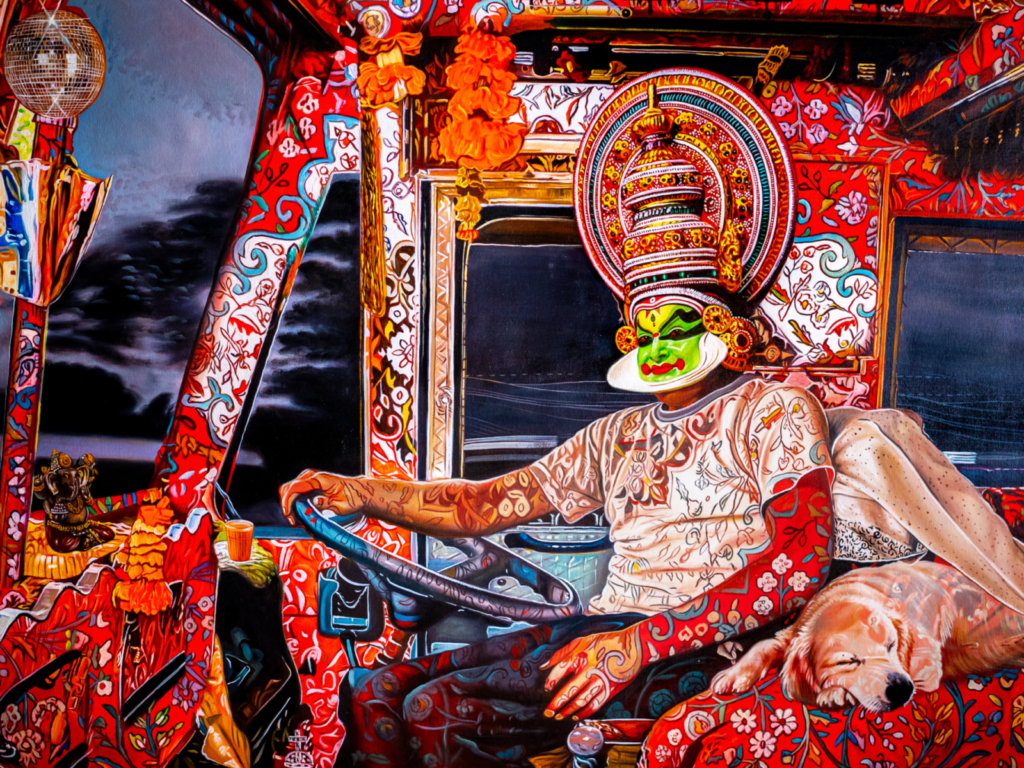
I imagine it what it would be like if those things meet the India we live in today. Indian mythology can exist in the same world as luxury brands, streetwear, Bollywood, internet culture and everything else that influences us.
I don’t try to modernise mythology deliberately. I just put it into the world I understand.
You have created bespoke works for personalities as diverse as Ranbir Kapoor, cricketer Dinesh Karthik, Kalyani Priyadarshan, Govind Dholakia, Ashneer Grover and Michelin-starred chef Sujan Sarkar. What do these high-profile commissions tell you about how celebrities, entrepreneurs and cultural figures are using art to express their personalities today?
So when personalities like them ask for a custom artwork. I think what they are actually looking for is something that cannot simply be bought off a shelf.
A celebrity, an entrepreneur and a chef will obviously have completely different lives, but they all have experiences that are specific to them. That becomes the interesting part of the commission.
For me, a bespoke artwork is almost like taking someone’s personality and building a visual world around it. And I think that is where personalised art becomes very different from simply buying a painting you like.
When someone like Ranbir Kapoor or Dinesh Karthik commissions a work from you, how much of the creative process begins with their personal story, interests or identity? Can you share an example of how a client’s personality fundamentally shaped the artwork you created for them?
The personal story is usually where I start.
I don’t like asking someone, “What do you want me to paint?” because most people don’t really know the answer to that.
I would rather understand what they are attached to. What they remember. Places they have lived in. Things they collect. Their interests. Sometimes even small things that they don’t think are important. Then I start connecting those things.
A lot of my own paintings work in exactly the same way. One triggering thought can lead to a hundred other thoughts, and eventually they all start finding their way into the work.
A commission works similarly. The difference is that the starting point is someone else’s life.I don’t want to make a literal portrait of the person. I want to make something where, when they look at it, they recognise themselves somewhere inside the story.
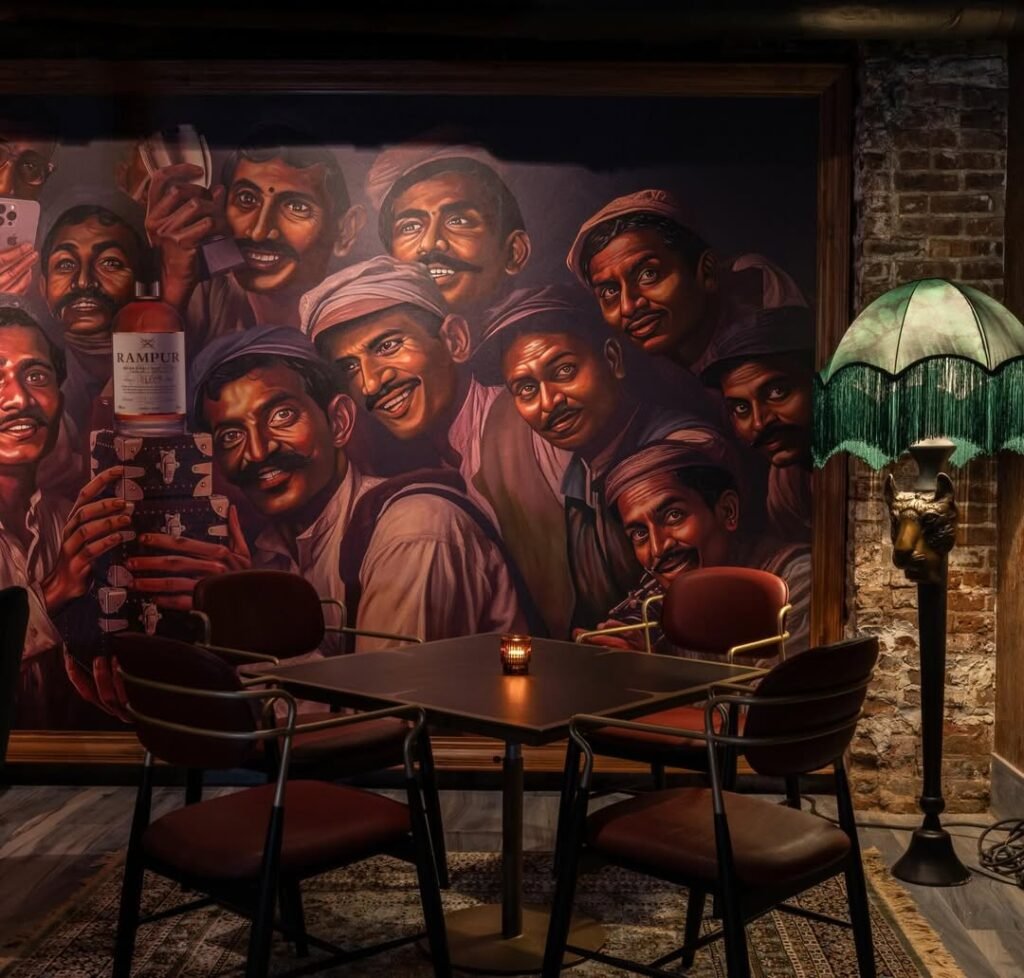
Your clientele spans entertainment, sport, business and hospitality. Do you notice a difference in what these different worlds look for in bespoke art, or is there a common desire for something deeply personal and exclusive?
The references change quite a lot.
Someone from sport might have a very strong relationship with movement, competition or a particular phase of their career. Someone from cinema naturally thinks more through characters and storytelling. Someone from business might connect more with ambition, a journey or a place they have built.
But I think there is one common thing.
Nobody wants something that could have been made for anybody. That’s probably the biggest difference with bespoke work.
If I make a painting for someone and another person could look at it and say, “That could have been made for me,” then I don’t think I’ve done my job properly.There should be something inside the work that belongs specifically to that person.
There is a growing appetite among India’s affluent and culturally influential for art that is made specifically for them. Do you believe bespoke art is becoming the new luxury — an antidote to the increasingly mass-produced world we live in?
I think the word luxury has changed quite a lot.
We live in a world where you can get almost anything instantly. You can see something online today and have it delivered tomorrow.
So I think time itself has become a luxury. A painting that takes four or five months to make, and is made around one person’s story, has a completely different value from something produced for a mass audience.
And there is also the fact that you cannot really separate the artwork from the person it was made for.
Maybe twenty years later, they won’t remember exactly what they paid for it. But they will remember why it was made.
For me, that’s much more interesting than simply making something expensive.
Celebrity commissions can bring an artist enormous visibility, but they can also create expectations around style and personalisation. How do you balance what a high-profile client wants with your own artistic voice and creative integrity?
I think this is probably the most important part of doing commissions. If I only make exactly what the client tells me to make, then I’m not really bringing anything to the table.
They could just hire a designer. The reason someone comes to an artist is because they want their story interpreted through that artist’s perspective.
So I listen very carefully to what the client wants. Sometimes a client will give me one idea, and while working on it I realise there is a much more interesting way of approaching it.
There has to be a little bit of tension between what they expect and what I want to explore.That’s usually where the artwork becomes interesting.
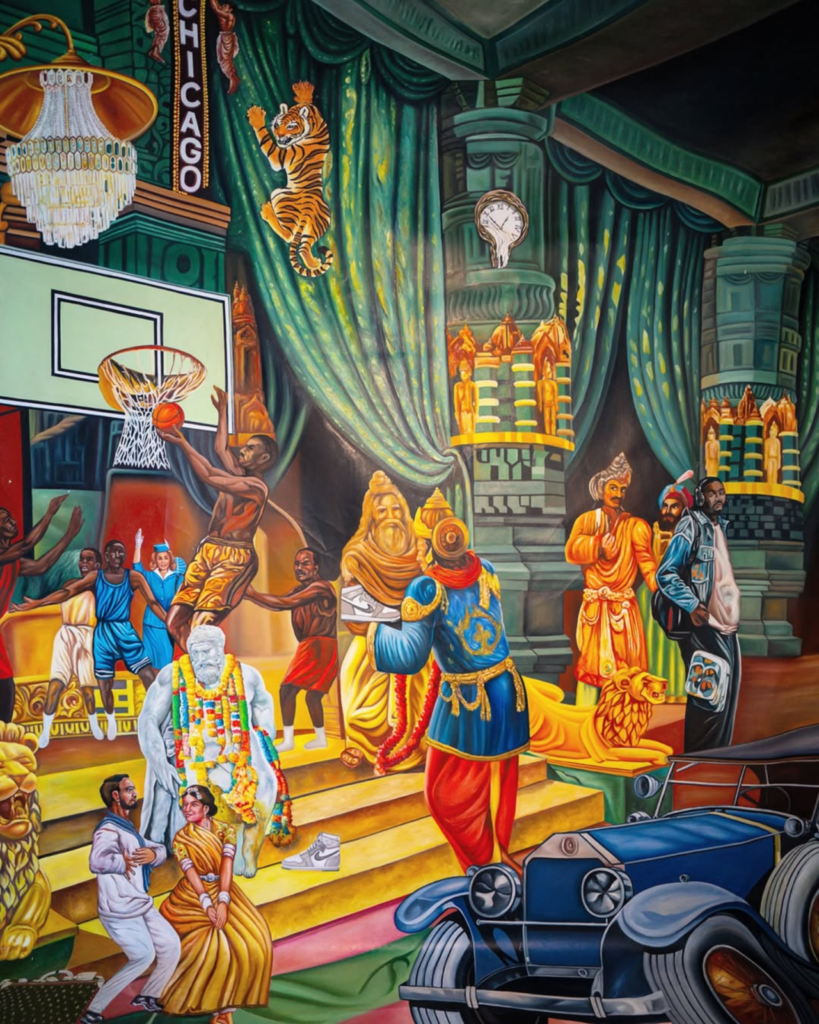
As India’s collector community becomes younger and increasingly global, where do you see the future of personalised art? Do you think the next generation will collect more art that reflects their mythology, memories and identity — rather than simply buying established names or investment pieces?
I think the younger collector is going to be much more emotionally driven. They have grown up seeing everything. They can discover an artist from India, Korea, London or New York in the same five minutes.
So I don’t think geography or just a big name is enough anymore.
What interests me is that this generation also has a very different relationship with Indian identity. They can be completely comfortable with mythology and traditional clothing while also being obsessed with streetwear, luxury brands, football, hip-hop or internet culture.
That’s the reality of modern Indian identity. people will increasingly collect work that reflects that.
Not necessarily because it is an investment, but because they see something of themselves in it. And personally, that’s the kind of collector I want to make work for.
TheGlitz Take
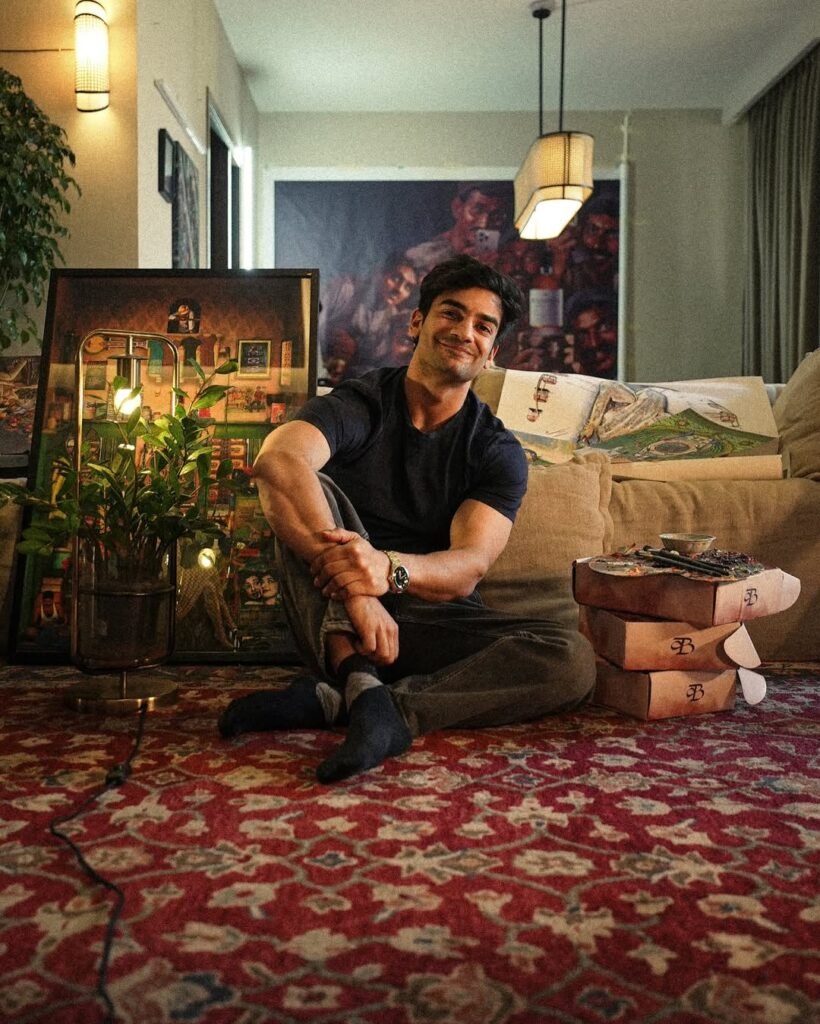
We truly believe that Abhay Sehgal is part of an exciting new generation of Indian artists who understand that contemporary art doesn’t have to abandon heritage to feel modern. His “Third Perspective” brings mythology, memory and modern Indian identity into an intriguing visual conversation, while his bespoke commissions reveal something even more compelling: in an increasingly mass-produced world, true luxury is becoming deeply personal. For us at TheGlitz, that is where Abhay’s art truly resonates — not merely in what it depicts, but in the stories, identities and emotions it makes uniquely one’s own.