Vreha Surya and Vrisha Surya, Founders, 2 Yards
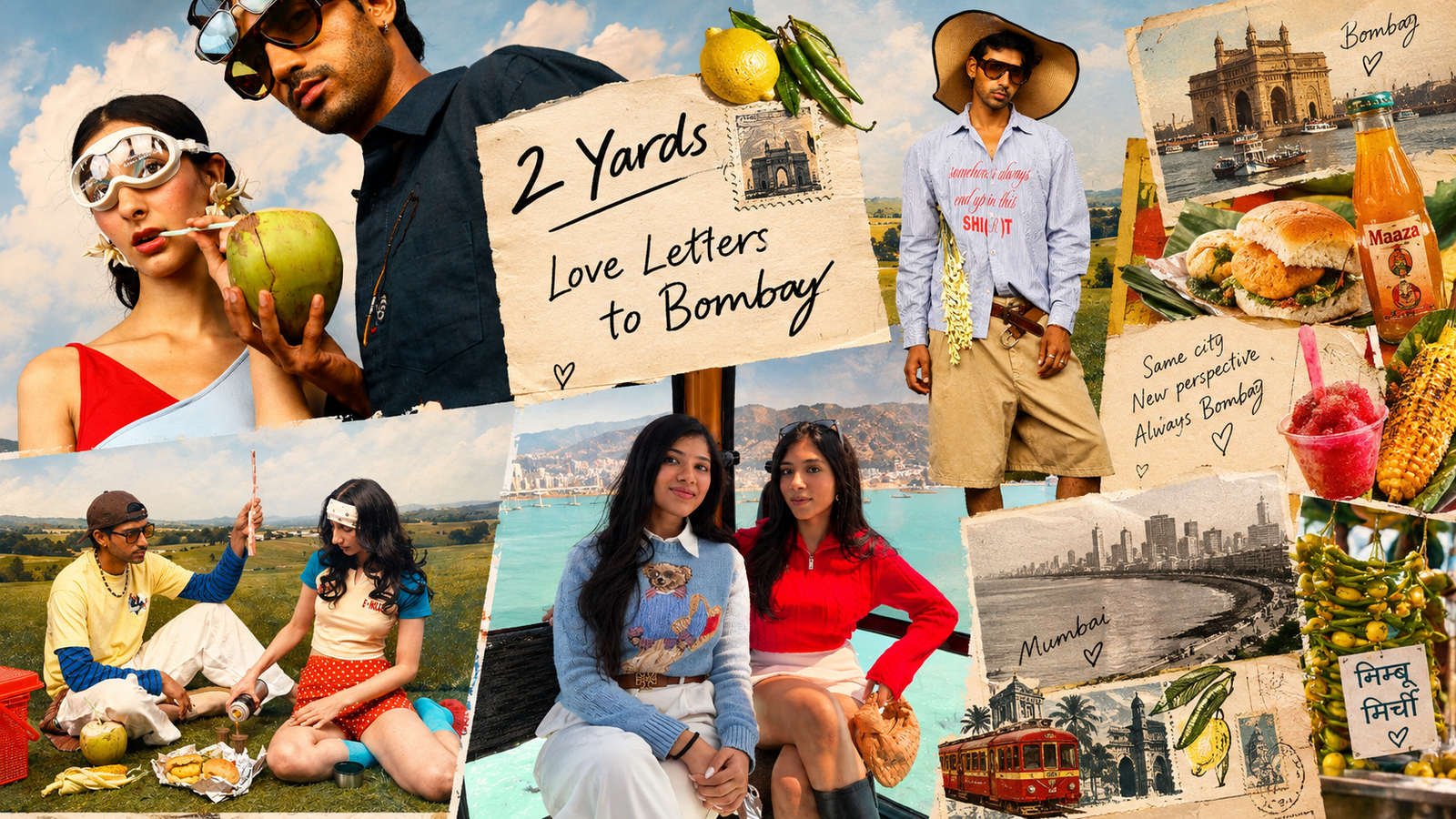
There are cities you wear, and then there are cities you carry under your skin. For sisters Vreha Surya and Vrisha Surya, Mumbai is not merely a backdrop to fashion… it is a memory bank of tastes, textures, rituals and tiny visual details that have quietly shaped who they are. With 2 Yards‘ latest collection Love Letters to Bombay, the founders take the things Mumbai barely notices anymore… nimbu mirchi, gola syrups, vada pav, roadside bhutta, Maaza bottles and old Bombay postcards… and turn them into an unexpectedly sophisticated fashion vocabulary.
What makes the collection compelling is not nostalgia alone, but the audacity of its translation: the everyday becomes design, the familiar becomes desirable, and Bombay’s wonderfully chaotic visual language finds a new life in contemporary silhouettes.
At the heart of 2 Yards is a philosophy that looks beyond the obvious. Just as the sisters have found beauty in overlooked objects such as safety pins, paper clips and cord stoppers, 2 Yards through Love Letters to Bombay looks at a city through the details we routinely pass by.
Their “Bombay” is not the postcard-perfect version; it is the city of cutting chai after college, gola at Juhu, bhutta with grandparents, Marine Drive at night, neighbourhood vendors and spontaneous acts of kindness. It is also a deeply personal story of home and distance… of one sister returning from New York while the other prepares to leave for it, and of discovering that sometimes you see home most clearly when you are standing just outside it.
More importantly, 2 Yards through Love Letters to Bombay questions an increasingly relevant idea in Indian fashion: why must something from our own culture acquire international approval before we recognise its value?
Vreha and Vrisha choose not to answer that question through traditional Indian clothing or familiar motifs. Instead, they make a case for an India that can be contemporary, playful, irreverent and deeply rooted all at once. Their collection suggests that being Indian doesn’t have to be performed through a sari, a kurta or an obvious heritage symbol. Sometimes it is a cutting chai, a fruit seller adding extra dhaniya, a childhood gola or the particular blue of a Maaza bottle… and sometimes, quite simply, it is the confidence to call these things beautiful without waiting for the world to agree.
In an exclusive interview with Sumita Chakraborty, Founder & Editor-in-Chief, TheGlitz, Vreha Surya and Vrisha Surya, Founders of 2 Yards, open up about their Love Letters to Bombay collection, the nostalgia and departures that inspired it, why everyday India deserves its own spotlight, and how they are translating the soul of Mumbai into contemporary fashion.
Over To Vreha Surya and Vrisha Surya, Founders 2 Yards & Love Letters to Bombay

2 Yards through Love Letters to Bombay takes things many of us see every day… nimbu mirchi, gola syrups, vada pav, bhutta, Maaza and old Bombay postcards… and turns them into fashion. What made you realise that these seemingly ordinary details could become the vocabulary of a contemporary fashion collection?
The collection came at a very particular time for us. I had just moved back to India, and my sister was preparing to leave for New York, so we decided to spend that time together doing all the things in Mumbai that we had grown up with and were nostalgic about. Revisiting those places and rituals made us realise how easily we overlook the things that once felt so familiar as we move ahead in life.
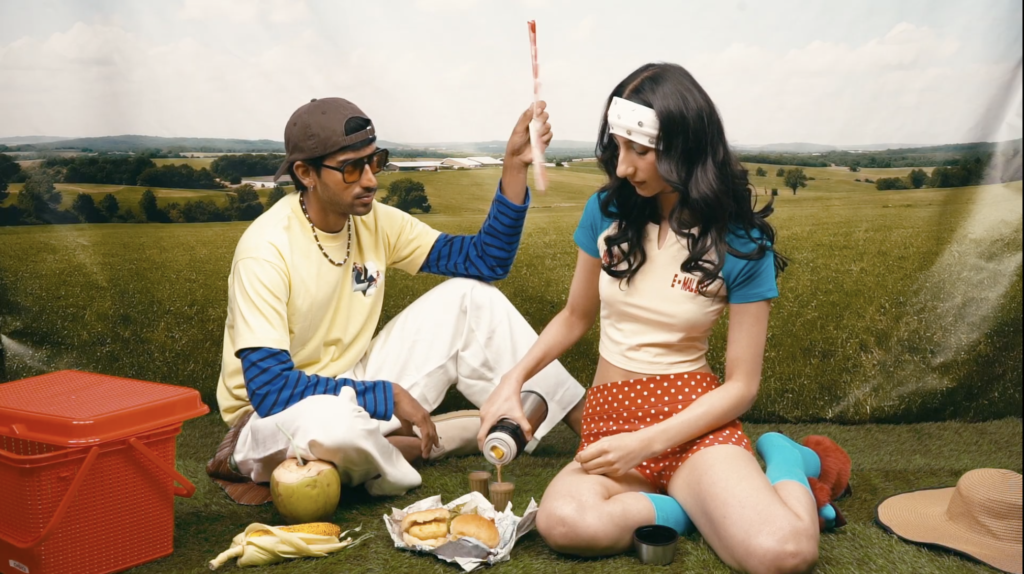
That actually connected very naturally with the design philosophy of 2 Yards. We’ve always been drawn to objects that exist in the background – safety pins, paper clips, and now the cord stopper- things that are usually treated purely as utility, but can become the starting point for an entire design idea. With Love Letters to Bombay, that same idea extended to the details of the city we had almost stopped noticing. The references live primarily in the world of the collection and the campaign, while the clothing itself remains contemporary.
There is a strong statement behind the collection: why does Indian culture so often seem to need “outside validation” before it is considered aspirational?
There was definitely a shift in perception that we noticed as Indian textiles and cultural references began receiving more attention globally. Things that had always been part of our everyday lives suddenly felt more desirable once they appeared in international fashion and design conversations.
It made us question why we should wait for that validation to appreciate our own culture. We wanted to celebrate being from Mumbai and from India on our own terms. And because we don’t make traditional Indian clothing, we chose to express that through the world of the collection : a Bombay summer, the objects, food and rituals we grew up with, while keeping the clothes distinctly contemporary.
You deliberately chose contemporary silhouettes rather than relying on traditional Indian wear to communicate Indianness. What does “deeply Indian” mean to you when it has nothing to do with a kurta, sari or traditional motif?
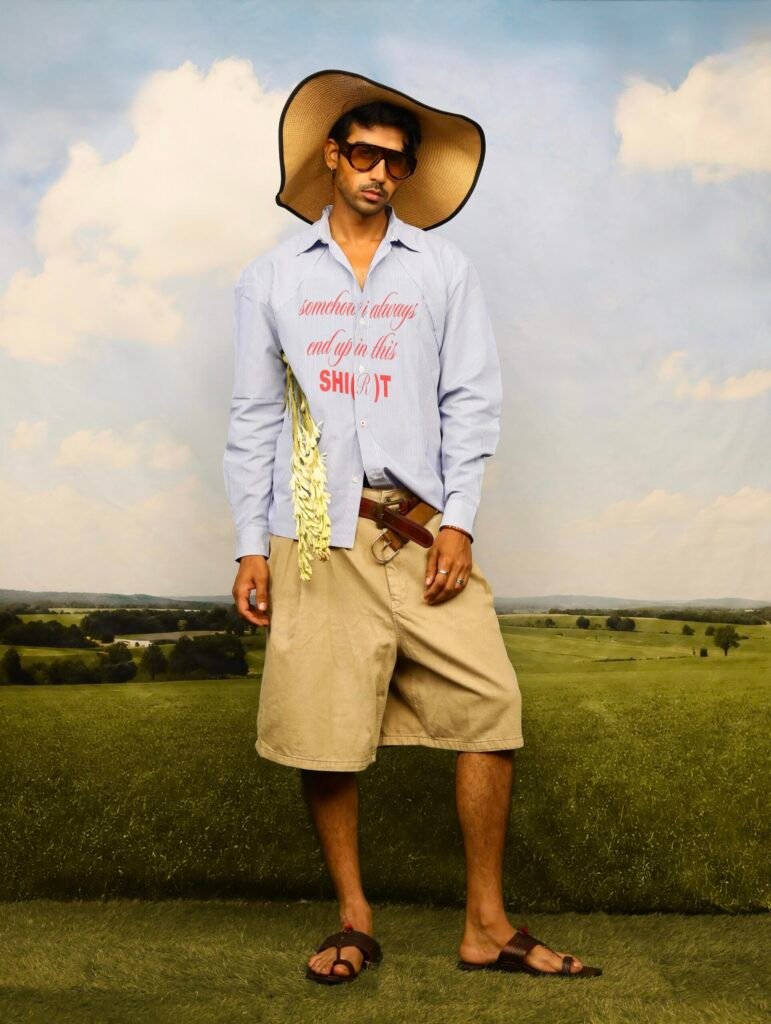
For us, it’s in the little things. It’s the fruit vendor adding a little extra dhaniya, the ritual of cutting chai, the way people help each other, and the fact that we are a country with so many different languages, cultures and traditions, yet constantly find ways to celebrate each other’s festivals, food and customs.
Being deeply Indian, to us, is really about embracing and celebrating those everyday details that make our culture what it is.
The collection comes at an interesting crossroads for the two of you… one returning from New York to build 2 Yards, while the other is preparing to leave for New York. How have departures, homecomings and seeing Mumbai from both inside and outside shaped your creative identity?
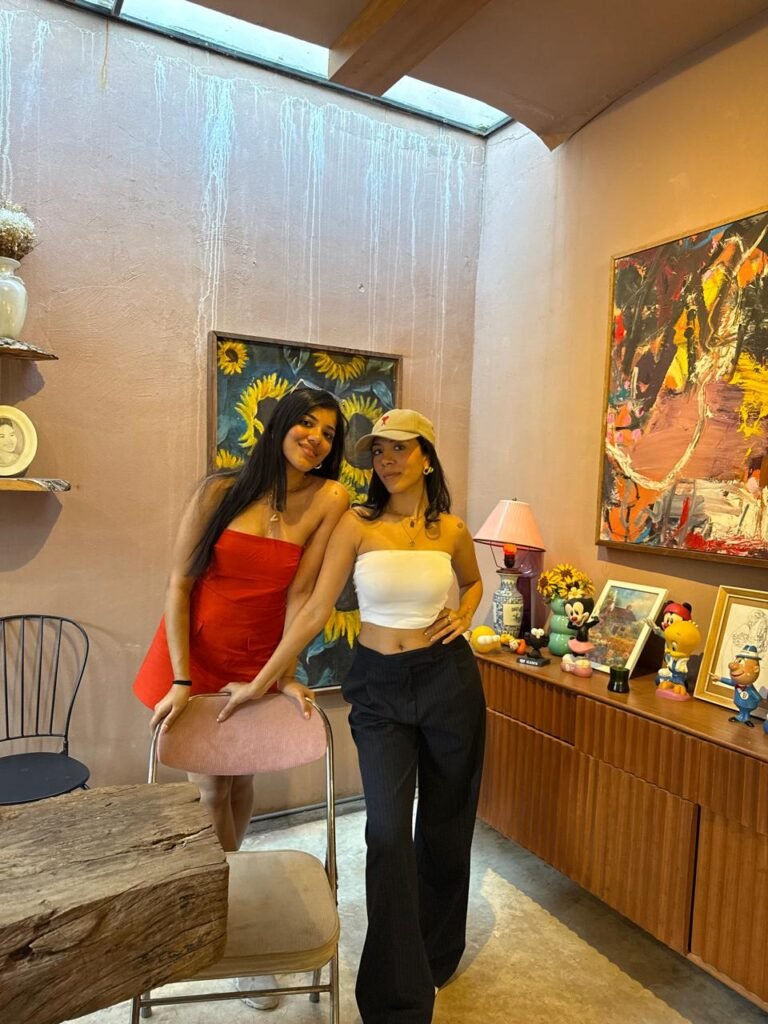
Being away from Mumbai made us realise how deeply it had shaped us. You notice things differently when you’re no longer surrounded by them every day. Coming back also made the city feel slightly unfamiliar at first, which gave us an opportunity to look at it with fresh eyes. Love Letters to Bombay came from that feeling of rediscovering a place we thought we knew completely.
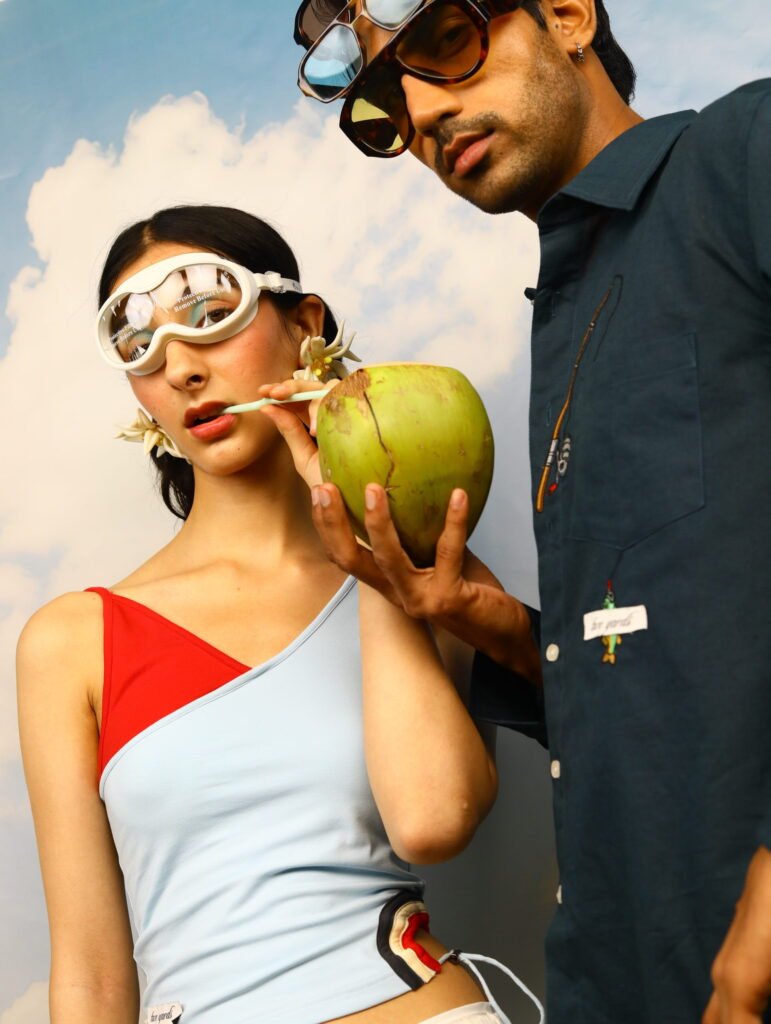
Mumbai has a very specific visual and emotional language… from seaside bhutta and street food to monsoon memories, vintage graphics and neighbourhood rituals. Which Mumbai memory is the most personal to you, and how did it find its way into the collection?
It’s difficult to isolate one particular memory because, for us, the feeling of Mumbai comes from a culmination of little moments. It’s sharing a cutting chai with friends after college, grabbing a gola at Juhu Beach as kids, eating bhutta with our grandparents while listening to stories about their childhood, or sitting at Marine Drive at night and feeling like anything is possible.
Mumbai is known as a city of ambition and dreams, but what has always felt particularly special to us is that even in a city where everyone is trying to make their own mark, there is still so much kindness and a willingness to help each other. That feeling is what we tried to capture through Love Letters to Bombay.
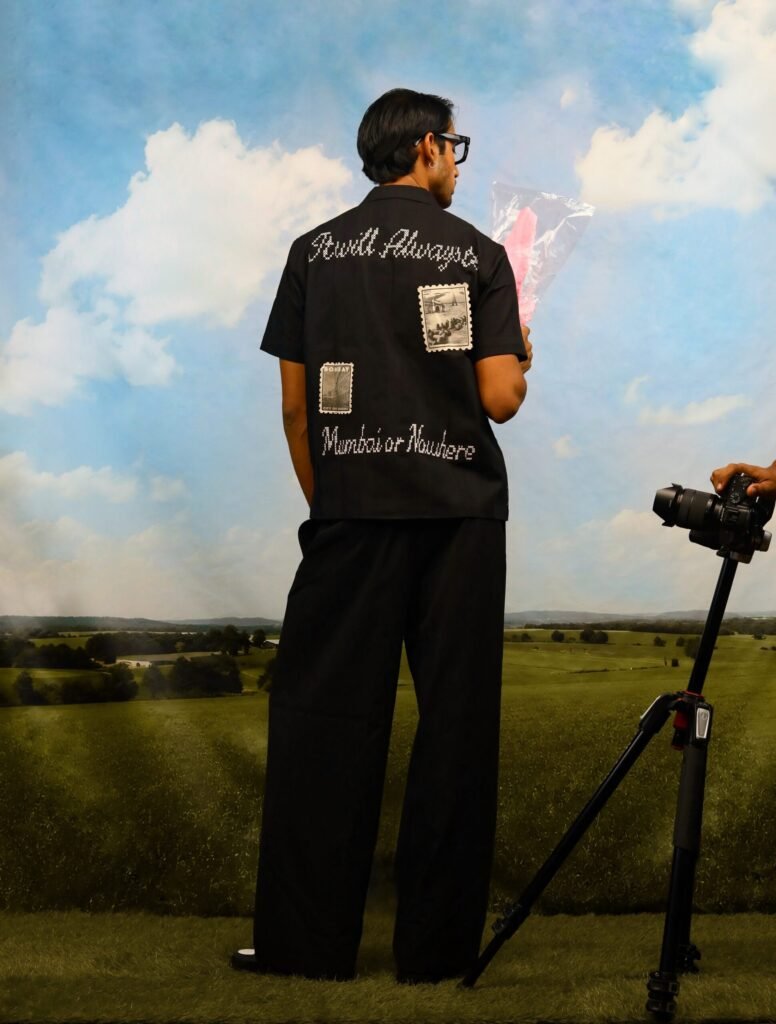
There is something wonderfully playful about turning everyday Indian references into fashion. How do you balance humour and nostalgia with the sophistication and wearability expected from a contemporary fashion label?
For us, the nostalgia and humour sit in the references and the way we build the world around the collection, while the clothes themselves remain contemporary and considered. We like taking something familiar and translating it through thoughtful silhouettes, fabrics, embroidery and details.
The reference should give you that little moment of recognition and familiarity, but the piece should still stand completely on its own. You should be able to appreciate the story behind it without needing to know the reference for the clothing to work.
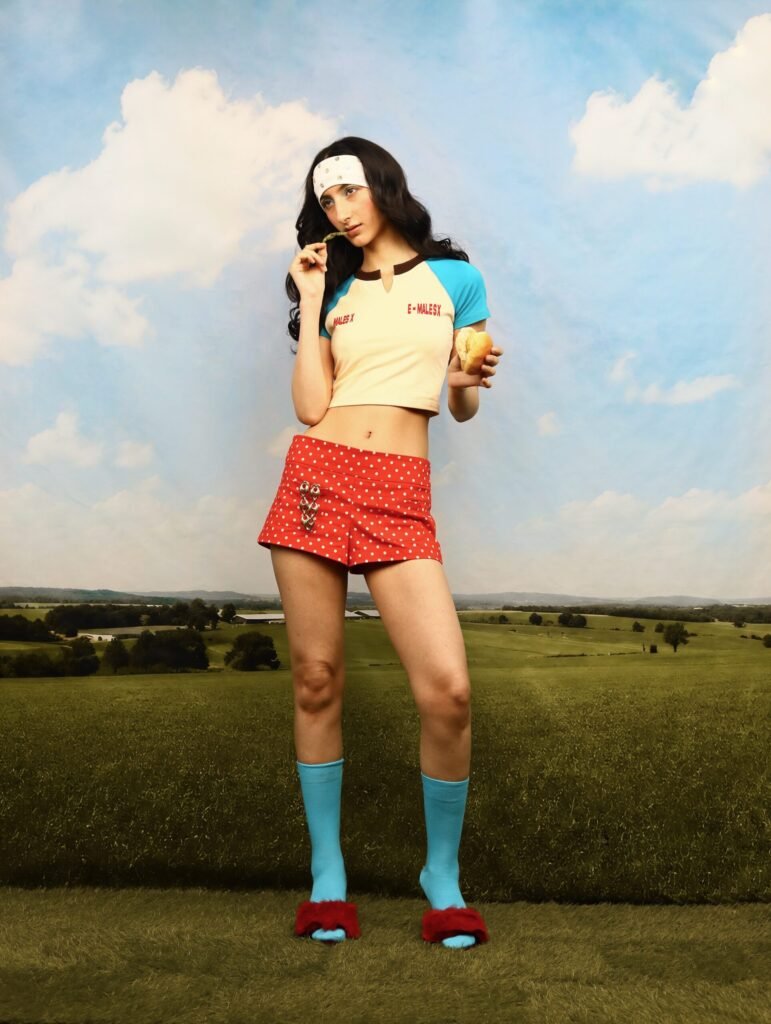
If Love Letters to Bombay succeeds in doing what you hope it will, what do you want someone wearing the collection to feel?
I think we want someone to feel a sense of familiarity and pride. That feeling of recognising something from your own childhood or your own city, but seeing it presented in a way that feels fresh.
More than anything, we want people to feel that you can carry where you come from with you without having to dress traditionally to do so. Being Indian can look like many different things, and we wanted Love Letters to Bombay to be one contemporary interpretation of that.
TheGlitz Take
2 Yards with their latest collection Love Letters to Bombay gets something beautifully right: Indian identity doesn’t need to arrive dressed in tradition. It takes the things we barely notice anymore… gola syrups, bhutta, nimbu mirchi, cutting chai, old postcards and gives them fashion currency without sanding away their everyday soul. The real statement is bigger than the clothes: why wait for the world to tell us that what is ours is beautiful? Vreha and Vrisha Surya turn nostalgia into contemporary design and in doing so, make a compelling case for an India that doesn’t seek validation, but creates its own vocabulary of cool.