
Craft Controversy
From Fendi’s ₹8.3-lakh mirror-and-bead Baguette to Ralph Lauren’s “hand-applied embellishments”, fashion’s latest controversies raise an uncomfortable question: why does Indian craft so often become global luxury without its provenance becoming equally visible… and when does inspiration become appropriation?
By Sumita Chakraborty | Founder & Editor-in-Chief, TheGlitz
There is something almost surreal about watching a craft that has lived for generations in Indian homes, bazaars and festive streets suddenly sashay down the runway with an acquired four-or five-figure luxury price tag when it enters the world of Milan, Paris or New York. But perhaps the bigger question isn’t the price tag, it is simply who borrowed what. Or to simplify it further: Who gets named when Indian craft enters the luxury conversation? Or does the name get lost in obscurity.
This week, that question has been thrown into sharp focus… first by Fendi and its spectacular mirror-and-bead Baguette, and then by Ralph Lauren and a heavily embellished gown that has prompted comparisons with Indian embroidery traditions.
And while the two cases are very different, they converge around one uncomfortable yet elementary subject: Credit.
Craft First – Fendi
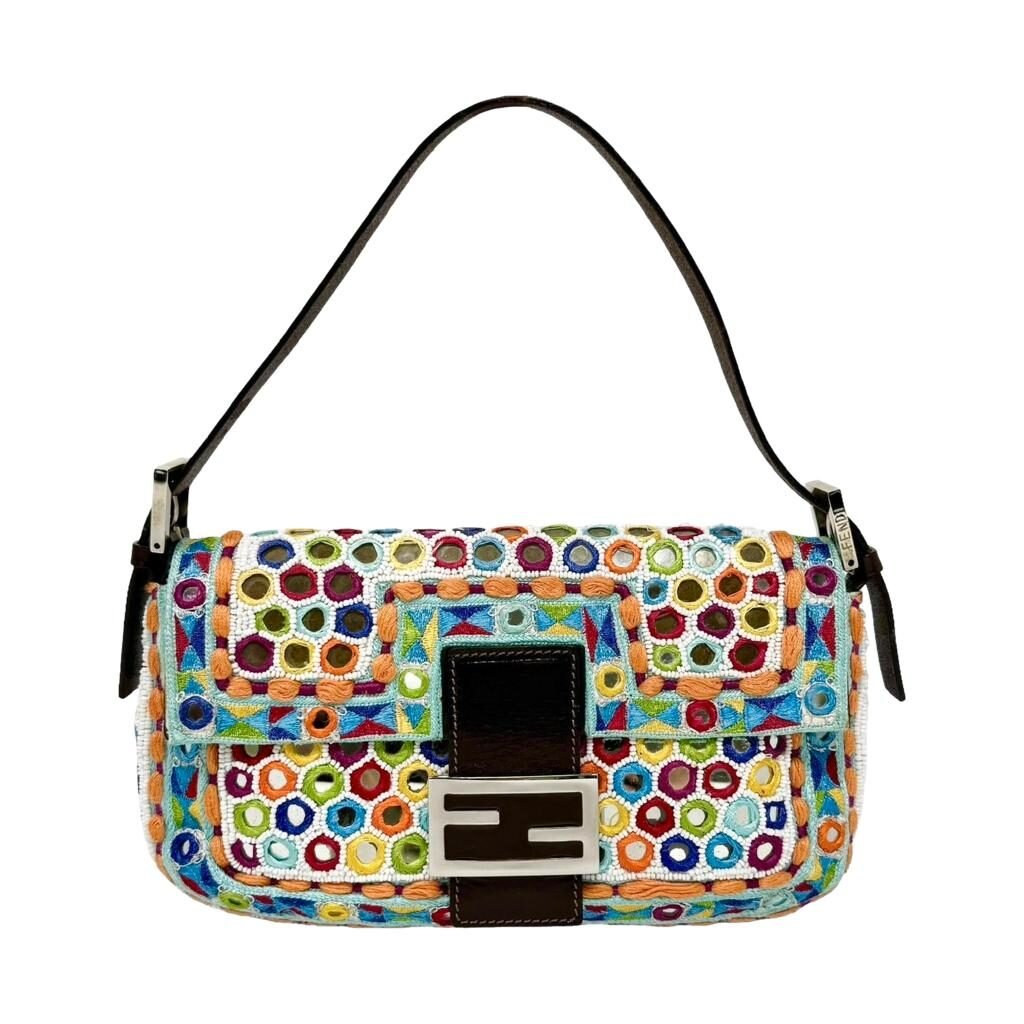
Fendi’s Baguette 26424… a riot of colour, beads, mirrors and embroidery… has triggered a heated debate in India. The Italian luxury house describes it as a re-edition of its 1997 Baguette, handcrafted with 39,500 beads and 475 mirrors, requiring more than 138 hours of craftsmanship. The bag is listed at US$10,000, approximately ₹8.3 lakh. Fendi’s product description identifies it as a Made-in-Italy piece.
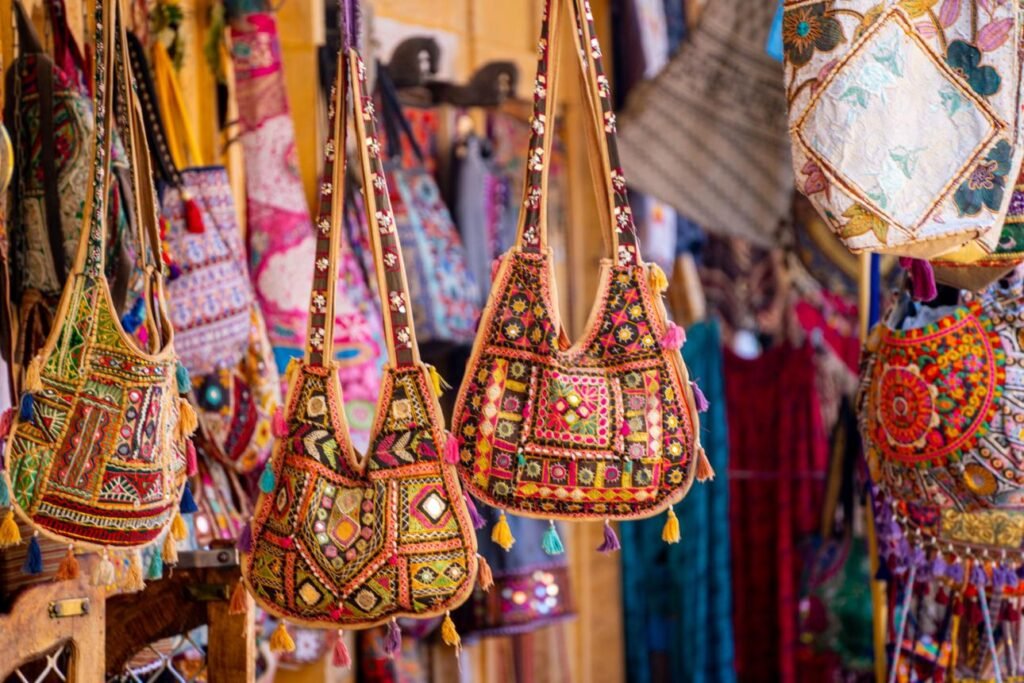
Indian social-media users, however, immediately spotted something familiar. They saw the mirror-and-bead aesthetic found in Indian craft traditions and in the colourful bags sold across Indian markets, particularly around festive occasions such as Navratri.
Harsh Goenka and Kiran Mazumdar-Shaw were among those who questioned the apparent disconnect between the luxury price and the inexpensive Indian versions familiar to consumers. Kiran Mazumdar-Shaw described the episode as cultural appropriation, while Harsh Goenka questioned why Indian artisans were not being visibly credited.
But here is where the story needs an important correction.
Fendi’s Indian connection matters
Fendi’s Baguette is not simply a case of a European luxury house discovering Indian mirror work and putting its logo on it. There is a deeper story. Reporting on the controversy has also highlighted Fendi’s relationship with Chanakya, the Mumbai-based embroidery house and craft institution led by Karishma Swali. Chanakya artisans have worked with international luxury houses, and the relationship with Fendi predates this latest social-media storm.
That changes the question. It is no longer accurate or fair to merely reduce the Fendi story to: “Fendi copied Indian artisans.” The perspective now is: If Indian craftsmanship and Indian artisans are part of the story, why isn’t that provenance more visible to the consumer?
That is a very different conversation. And, frankly, a much more important one. …Because perhaps the problem isn’t that Indian craft has entered global luxury. Perhaps the problem is that the artisan’s story hasn’t travelled with it.
India Does First
India has never needed a European fashion house to tell it that mirrors, beads, embroidery and colour can be beautiful. Our artisans have been doing that for generations. So when a global luxury brand uses a visual vocabulary that feels deeply familiar to Indian consumers, the question shouldn’t automatically be: “Did they copy us?” It should be: “How is the craft’s cultural provenance being acknowledged?”
As we all know luxury is exceptionally good at taking something familiar, placing it inside an elaborate ecosystem of design, craftsmanship, branding and storytelling… and making it aspirational. There is nothing inherently wrong with that. That is what luxury does. But there is a crucial difference between commercialising a craft and making the craft’s history visible. The artisan can be involved and still become invisible to the end consumer. And that is the paradox worth examining.
Then Ralph Lauren entered the conversation
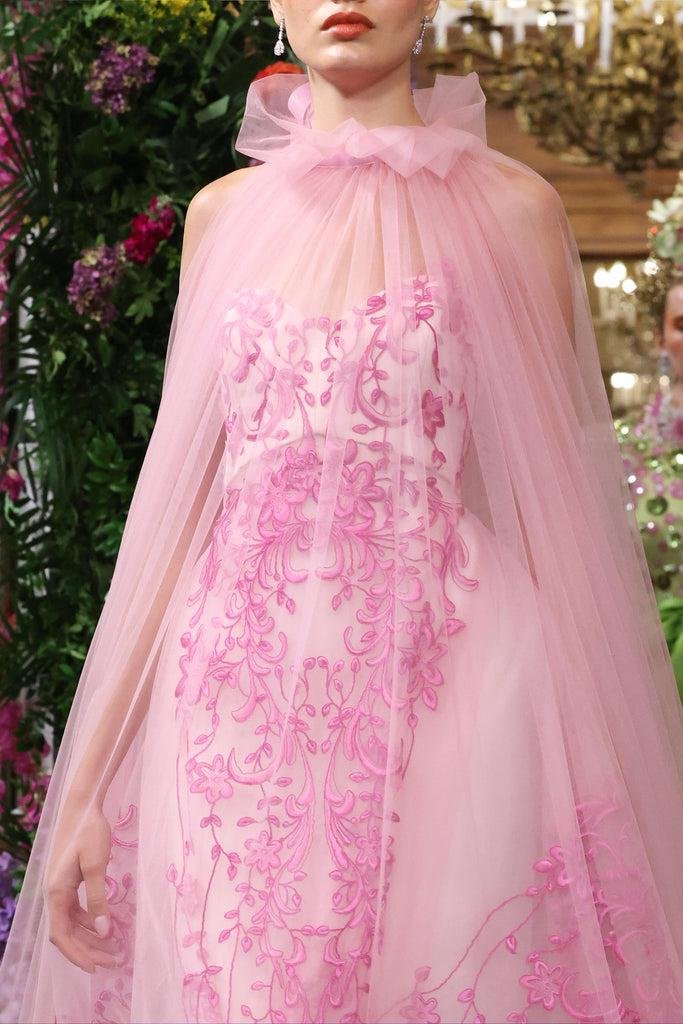
If Fendi has raised questions about provenance and visibility, Ralph Lauren has raised the question of attribution even more directly.
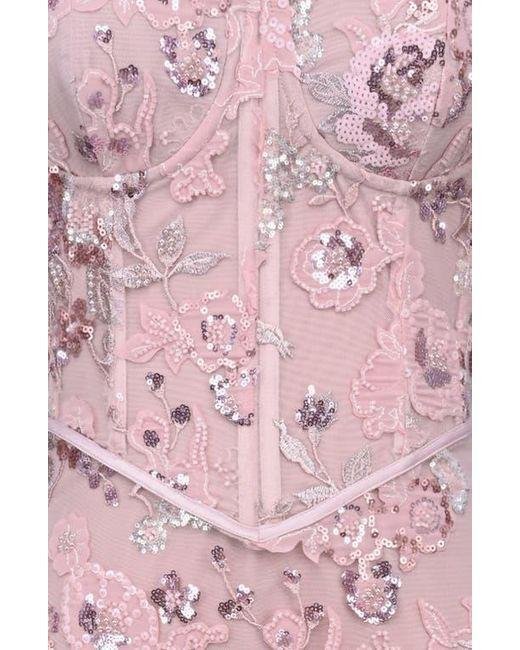
The American fashion house’s Spring/Summer 2027 collection included a deep-pink gown covered in elaborate metallic embroidery and beadwork. Indian designers and fashion observers have compared aspects of the work with Zardozi and Aari-style hand embroidery. Ralph Lauren’s own social-media description, however, referred to the detailing simply as “hand-applied embellishments.”
And that phrase has become the flashpoint. Because critics are asking a very simple question: If a craft has a name, why not use the name?
Of course, there is an important caveat. A photograph alone cannot definitively establish the exact embroidery technique used on the gown. Indian designers have debated whether the work should specifically be described as Zardozi, Aari or another form of hand embroidery.
That distinction matters. But so does the larger issue. Whether the exact technique is Zardozi, Aari or a combination, the debate asks why culturally recognisable craft is so often reduced to the generic language of “embellishment.” And that question deserves an answer.
“Embellishment” is not the whole story
An embellishment tells us what something does. A craft name can tell us where it comes from, how it evolved, who practises it and what cultural history it carries. That difference is enormous.
Zardozi itself has a complex history, with Persian roots and a long evolution across the Indian subcontinent. It would therefore be simplistic to claim that every use of Zardozi is exclusively “Indian-owned”.
But that makes attribution more important, not less. Because heritage doesn’t become irrelevant simply because a technique has travelled. Its story becomes richer when its journey is acknowledged.
Why is “inspiration” so often a one-way street?
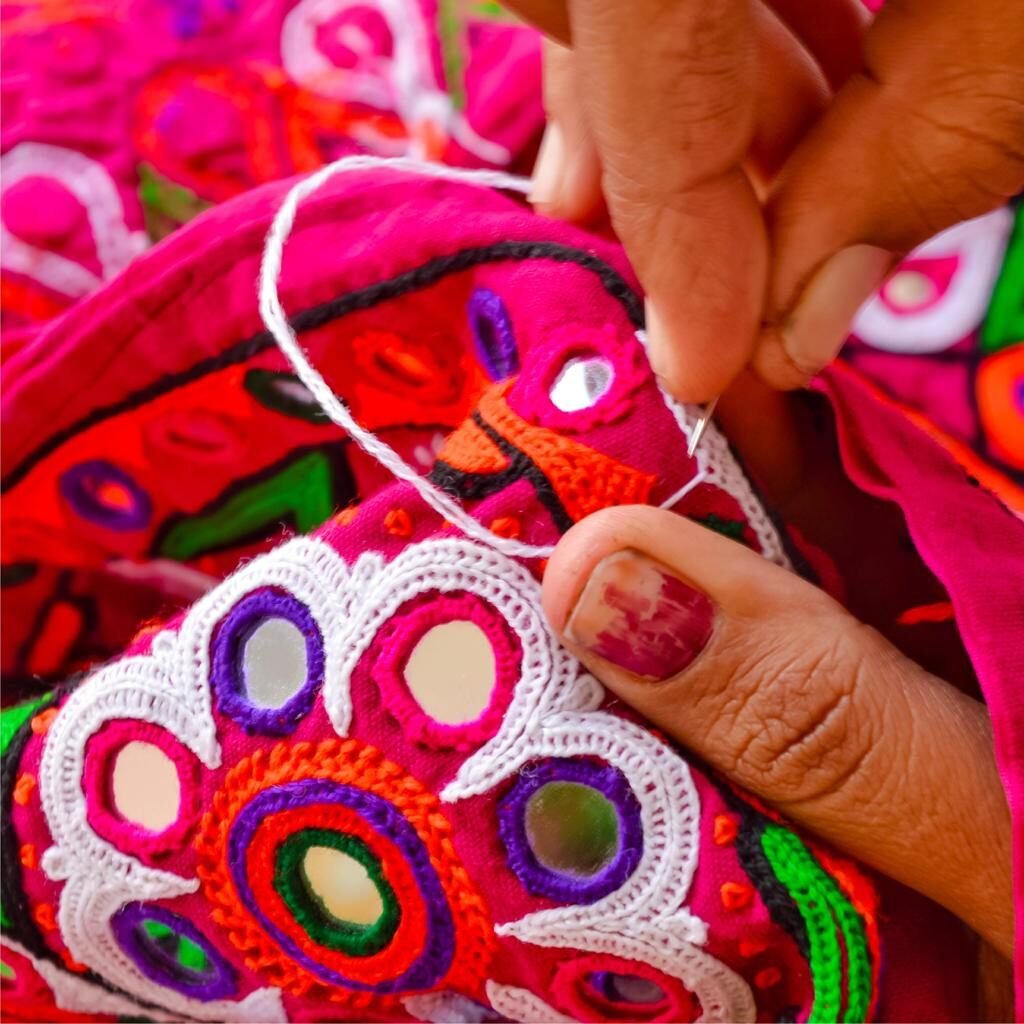
Fashion has always borrowed. India has borrowed too. Cultures have collided, exchanged, adapted and reinvented themselves for centuries. That isn’t the problem.
The problem begins when something becomes commercially valuable while the source of its visual language becomes commercially invisible. Imagine the difference between: “Hand-applied embellishments.” and: “Inspired by traditional Indian embroidery techniques.”
The second doesn’t make the garment less glamorous. It doesn’t make the designer less creative. It doesn’t reduce the price. It simply gives the consumer more information. And if the work was created with Indian artisans, then say that.
If a particular Indian craft tradition informed the design, name it. If there was collaboration, celebrate it. Why should provenance be considered a threat to luxury? In fact, shouldn’t provenance be part of luxury?
The luxury markup isn’t the villain
There is another argument worth making. Comparing an ₹8.3-lakh Fendi bag with a ₹500 or ₹1,000 Indian market bag makes for a spectacular headline. But it isn’t the entire story.
Fendi says its Baguette incorporates 39,500 beads and 475 mirrors and requires more than 138 hours of craftsmanship. It also involves the costs of luxury-brand design, materials, production, distribution, retail and global positioning.
So no, a luxury bag does not have to cost the same as a bazaar bag simply because the visual language looks similar.
Luxury pricing is not the issue. Cultural visibility is and that is an important distinction.
The artisan shouldn’t disappear when luxury arrives
This is where the fashion industry needs to look harder at itself. If a global luxury house is inspired by an Indian craft tradition or works directly with Indian artisans, there are so many ways to tell that story beautifully.
Name the craft. Name the region. Name the technique. Name the artisans or craft institution where appropriate. Document the process. Collaborate meaningfully. Invest in the craft ecosystem. Tell the consumer that what they’re buying has a history that may predate the luxury house itself.
That isn’t appropriation. That is cultural exchange with provenance. And it could make the luxury story more compelling as today’s luxury consumer increasingly wants to know the (BTS) Behind The Stories: Where was it made? Who made it? What is the story? What is the material? What is the craft?
The luxury industry has spent decades teaching consumers to care about provenance in watches, jewellery, wine and haute cuisine. Why should craft be any different?
India also needs to look in the mirror
And here is where we turn the lens back on ourselves. India cannot demand that international luxury houses respect our crafts while Indian fashion businesses themselves fail to properly credit, compensate or spotlight artisans. The standard has to apply to everyone.
The artisan shouldn’t receive respect only when a foreign luxury house uses Indian craft. The artisan deserves respect when an Indian designer uses it too. That means the conversation has to move beyond outrage. We need stronger documentation. Better artisan visibility. More meaningful collaborations. More commercial participation. And greater consumer awareness.
If we don’t know the names and histories of our own crafts, it becomes considerably easier for someone else to turn them into an aesthetic without explaining where they came from.
So, when does inspiration become appropriation?
Not every use of Indian craft by a global fashion brand is automatically appropriation. Not every similar-looking design is evidence of copying. And not every luxury interpretation needs to reproduce the original craft exactly.
But when a recognisable cultural tradition becomes commercially valuable while its origin, history and makers disappear from the narrative, we have a problem. Fendi may call its bag a re-edition. Ralph Lauren may call its embroidery embellishment. Those descriptions may be accurate from the brands’ own perspective.
But consumers are asking a bigger question: Where did the visual language come from? And perhaps the fashion industry needs to stop treating that question as an accusation. It is a question of provenance, transparency and credit.
TheGlitz Take
Indian craft does not become luxury because Fendi uses it. Zardozi does not become sophisticated because Ralph Lauren puts it on a runway. A mirror does not become valuable because it is attached to an ₹8.3-lakh handbag.
The craft was already valuable. The artisans were already skilled. The history was already there. What the luxury system did was add – visibility, storytelling, distribution, design interpretation and extraordinary commercial value. And there is nothing wrong with that.
In fact, when done responsibly, it can give traditional crafts an extraordinary new platform. But if luxury wants to borrow the beauty of a culture or collaborate with the people who carry that craft forward, perhaps it should also have the confidence to acknowledge them.
…Because credit is not a concession. It is not charity. It is not a favour to India. It is simply a fair fashion practice.
And if the world’s biggest luxury houses can spend millions creating stories around their products, surely they can spare a few words for the crafts, communities and artisans that form part of those stories.
Take the craft. Reimagine it. Make it luxurious. Make it global. But name it. …Because Indian craft isn’t waiting to be discovered. It is waiting to be seen, valued and credited.