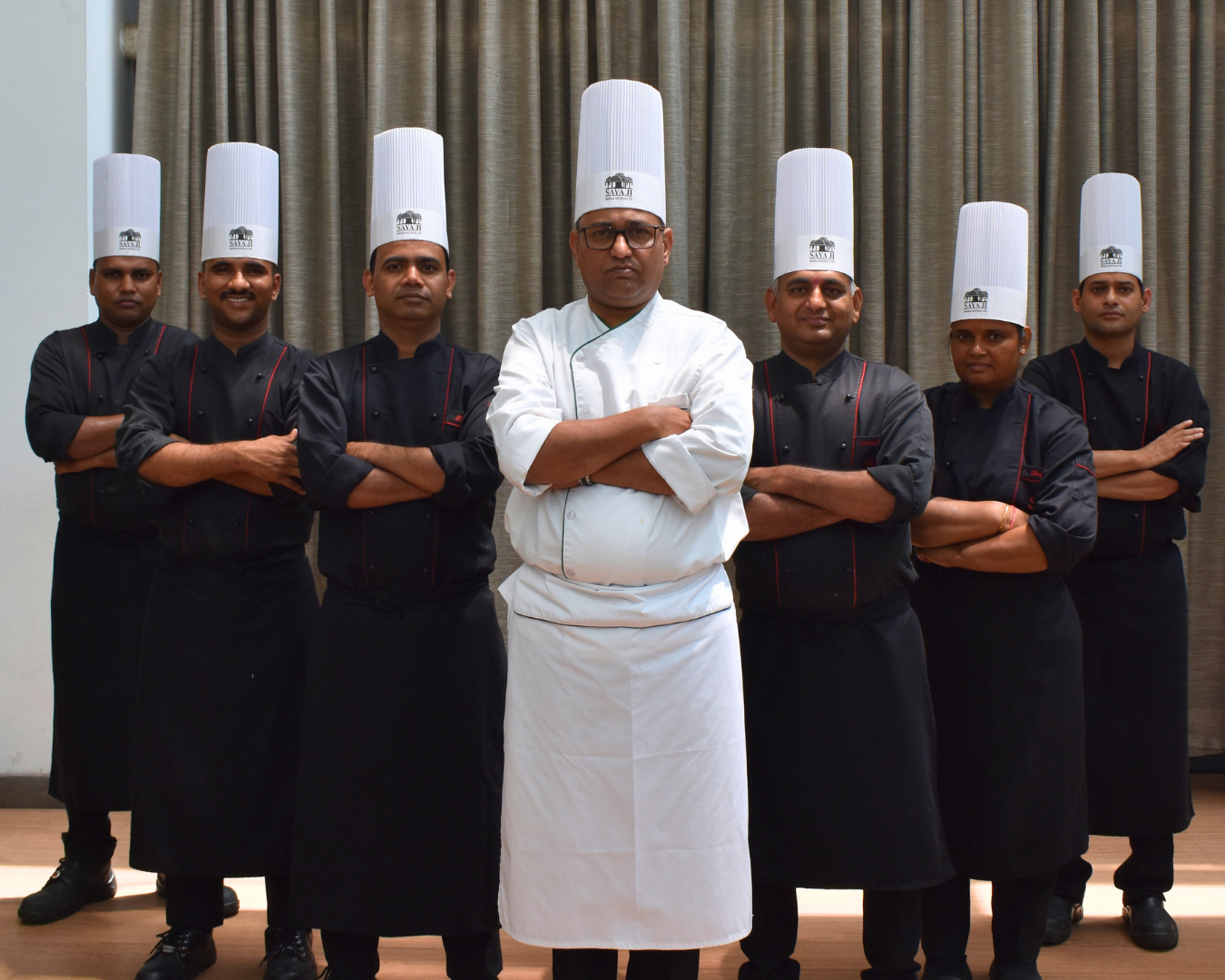
Executive Chef Bhuvanesh Kalburgi, Sayaji Hotel, Pune
What does 25 years in professional kitchens teach you? That great cooking isn’t about making food complicated. It’s about knowing what to add, what to leave out — and how to make people remember the experience.
For Chef Bhuvanesh Kalburgi, Executive Chef at Sayaji Hotel Pune, the journey from a young chef in the industry to leading the culinary operations of a large hospitality property has been one of relentless learning, reinvention and, above all, respect — for ingredients, for people and for the craft of hospitality.
Over the past quarter century, Chef Bhuvanesh has worked across diverse hospitality environments and pre-opening projects, learning that the magic guests see on the plate is built on thousands of invisible details: disciplined kitchens, meticulous sourcing, food-cost intelligence, rigorous systems, well-trained teams and the ability to deliver the same standard whether the chef is watching or not. His culinary philosophy is refreshingly clear: simplicity is mastery, consistency beats occasional brilliance, and a kitchen succeeds when its people can make excellence happen without depending on one person.
But his leadership philosophy may be even more compelling. For Chef Bhuvanesh, a designation can give you authority, but behaviour earns respect. He believes in maintaining discipline without compromising dignity, developing young chefs rather than merely directing them, and creating teams that understand not just what they are doing, but why they are doing it.
Now at Sayaji Hotel Pune, he sees an exciting culinary canvas — a city with a sophisticated, adventurous food culture and an extraordinary regional heritage waiting to be explored. His vision is not simply to follow food trends, but to create experiences that connect Pune’s culinary past with its future: celebrating Maharashtra’s flavours, championing local and seasonal ingredients, embracing innovation where it genuinely adds value, and creating dining experiences that guests remember long after the last plate is cleared.
In this exclusive conversation with Sumita Chakraborty, Founder & Editor-in-Chief, TheGlitz, Chef Bhuvanesh Kalburgi, Executive Chef, Sayaji Hotel Pune, talks about the lessons of a 25-year culinary journey, the invisible machinery behind a great kitchen, nurturing the next generation of chefs, the evolving food culture of Pune, and his ambitious culinary vision for Sayaji Hotel.
More power to Chef Bhuvanesh Kalburgi — a chef who believes that behind every memorable plate lies a team, a discipline and a story worth telling.
Over To Chef Bhuvanesh Kalburgi
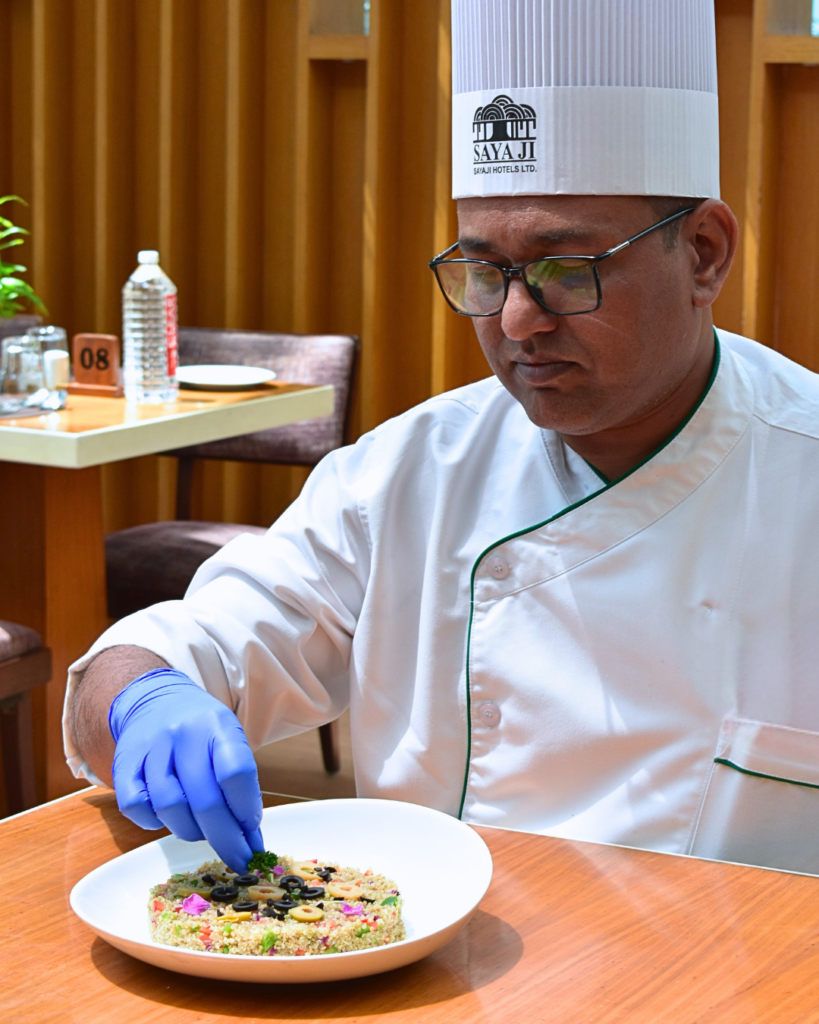
Executive Chef Bhuvanesh Kalburgi, Sayaji Hotel, Pune
You bring over 25 years of experience across different hospitality environments. Looking back, what are the biggest lessons those years have taught you about cooking, leadership and the business of hospitality?
Chef Bhuvanesh Kalburgi — Absolutely. After more than 25 years across different hospitality environments in India, I would say the biggest lessons are not just about food—they are about people, discipline, adaptability, and the understanding that hospitality is ultimately a business built on human experiences.
Cooking taught me that simplicity is a form of mastery
When I started, I believed a good chef was someone who could create complicated dishes. With experience, I learned that the real skill is knowing what not to add.
Good ingredients, correct technique, consistency and respect for the product matter more than unnecessary complexity. A perfectly cooked simple dish can create a stronger memory than an elaborate plate.
I also learned that Indian food demands a deep respect for its regionality. India is not one cuisine—it is hundreds of culinary traditions, ingredients and techniques. A chef must keep learning.
Hospitality taught me that consistency is more important than brilliance
One great dinner can impress a guest. But a hotel survives because it can deliver that experience every single day, across every shift, with different teams and different pressures.
The real test of a chef is not, “Can you create something exceptional?”
It is, “Can your team reproduce that standard when you are not standing in the kitchen?”
That changed the way I looked at systems, recipes, training and quality control.
Leadership taught me that people don’t follow positions—they follow people
Early in my career, I thought leadership came with a designation: Sous Chef, Chef de Cuisine.
Later, I understood that a title can give you authority, but your behaviour earns respect.
You have to be willing to stand with your team during a difficult service, accept responsibility when something goes wrong, give credit when something goes right, and sometimes make unpopular decisions for the larger good.
A chef who only gives orders manages a kitchen.
A chef who develops people builds a team.
I learned that every generation of chefs needs a different style of leadership
The way I was trained may not work with the younger generation today. Earlier, hierarchy and discipline were often enough. Today, people also want to understand why they are doing something, where their career is going and whether their contribution matters.
That doesn’t mean compromising standards.
It means learning how to maintain discipline without destroying dignity.
The business side taught me that food cost is not the enemy of creativity
One of the biggest transitions for a chef is understanding that a restaurant is not an art gallery.
You can create a beautiful dish—but if the food cost is uncontrolled, the portion is wrong, wastage is high or the selling price doesn’t make commercial sense, it isn’t a successful dish.
I gradually learned to look at food through three lenses:
Guest appeal + operational feasibility + commercial viability.
When all three come together, you have a genuinely successful menu item.
Hospitality taught me to respect every department
A kitchen cannot succeed alone.
I have learned to respect service, stewarding, housekeeping, engineering, front office, finance, HR, sales and security because the guest doesn’t experience a hotel department by department.
The guest experiences one hotel.
If the kitchen produces a perfect dish but the service is poor, the guest remembers a poor experience—not a perfect kitchen.
Mistakes are some of the best teachers
Over 25 years, there have obviously been decisions I would make differently today.
But I’ve learned not to hide from mistakes. A failed menu, a wrong hire, a difficult employee, a poor business decision or an unsuccessful concept can teach you something that a successful project sometimes cannot.
Experience is not the number of years you have worked. Experience is what you learn from those years.
The biggest lesson about hospitality is that the guest is buying an emotion
Ultimately, we don’t sell food, rooms or beverages.
We sell experiences.
A guest may forget exactly what they ate. They may forget the name of the server. But they will remember whether they felt welcomed, respected, special and cared for.
That is the essence of hospitality.
And perhaps my biggest lesson: never stop being a student
After 25 years, I actually feel there is more to learn now than when I started.
Ingredients change. Technology changes. Guests change. Business models change. Young chefs bring new ideas. Travel exposes us to new cultures. Social media changes how people discover restaurants.
The moment a chef says, “I know everything,” his growth has already stopped.
For me, the journey from a young chef entering a five-star kitchen to taking responsibility for an entire hotel’s culinary operation has taught me one simple truth:
A chef’s career is not measured by the number of dishes he creates, but by the people he develops, the standards he leaves behind, and the memories he creates for his guests. And after 25 years, that is what I consider my real achievement—not the positions I’ve held, but the people, kitchens and experiences I’ve helped build.
You have worked extensively across culinary operations and pre-opening projects. What does it take to build a successful kitchen from the ground up, and what are the details guests may never see but that ultimately define a great dining experience?
Chef Bhuvanesh Kalburgi — Absolutely. Having been involved in culinary operations as well as pre-opening projects, I have learned that building a successful kitchen from the ground up is far more than designing a beautiful kitchen and creating a menu. It is about building an ecosystem where people, processes, equipment, food and service work together seamlessly.
Start with the concept, not the equipment
The first question should never be, “What equipment should we buy?”
It should be: “What experience are we trying to create for the guest?”
Once the concept is clear, everything else follows—the menu, kitchen layout, equipment, staffing, storage, production methods, service style and even the purchasing strategy.
A kitchen designed without understanding the menu and business model can become expensive very quickly.
Kitchen design is about flow
One of the most important lessons from pre-openings is that a kitchen must be designed around movement.
You have to think about the entire journey:
Receiving → Storage → Preparation → Cooking → Plating → Service → Stewarding → Waste
The fewer unnecessary steps and crossovers, the more efficient the operation becomes.
Guests may never see this, but they feel the result through faster service, consistent food and fewer mistakes.
Build the team before you build the reputation
Equipment doesn’t run a kitchen—people do.
Recruiting the right chefs and supervisors early is critical. During a pre-opening, I prefer to involve key team members in trials, SOP development, menu testing and equipment familiarisation.
You are not simply hiring people to fill positions. You are creating a culture.
And that culture eventually reaches the guest’s table.
Menu engineering is as important as culinary creativity
A menu has to be exciting, but it also has to work operationally.
I look at every dish from several perspectives:
- Is it appealing to the guest?
- Can we produce it consistently?
- Can the kitchen handle the volume during peak hours?
- Is the food cost sustainable?
- Can the ingredients be sourced reliably?
- Does it fit the concept?
- Can the team execute it without unnecessary complexity?
A dish that looks fantastic on paper but collapses during a Saturday-night service is not a successful dish.
The details guests never see are actually what they experience
This is probably the most important part.
Guests don’t see the temperature logs, receiving standards, mise en place sheets, recipe cards, portion controls, HACCP practices, cleaning schedules, allergen controls, yield calculations, supplier evaluations or daily briefings.
They don’t see the chef checking whether the sauce has the right consistency before service.
They don’t see a steward polishing a plate.
They don’t see the team tasting food before it leaves the kitchen.
But all of those invisible details eventually appear in one visible moment:
The plate placed in front of the guest.
Consistency is engineered
A great restaurant cannot depend on one talented chef being present every day.
Recipes, specifications, photographs, portion sizes, preparation methods and plating standards need to be documented.
But SOPs should not become paperwork for the sake of paperwork.
They should make it easier for a team to deliver the right result every time.
Pre-opening is where you discover the problems before the guest does
One of the most valuable exercises in a pre-opening is the mock service.
You deliberately put the kitchen under pressure.
You test:
· 50–100 orders arriving together
· Breakfast rush
· Banquet production
· Room service
· Special dietary requirements
· Equipment failures
· Short supplies
· Communication between kitchen and service
· Ticket times
· Plating consistency
You find the weaknesses when there are no guests to disappoint.
A good pre-opening doesn’t prove that everything is perfect. It proves that you know where the problems are.
Finally, build a kitchen that can survive without the chef
For me, this is the ultimate test.
If the Executive Chef has to personally supervise every plate, every purchase and every decision, the kitchen hasn’t really been built—it is dependent on one person.
A successful kitchen has systems, trained people and accountability.
My role as a chef becomes less about controlling every plate and more about creating an environment where the team can consistently produce those plates to the expected standard.
And perhaps that is the biggest lesson from building kitchens over the years:
Guests see the plate. They don’t see the thousands of decisions, systems and people behind it. But those invisible details are what create the visible experience.
A great dining experience is not created when the guest walks into the restaurant. It is created weeks and months before—during planning, recruitment, sourcing, training, testing and preparation.
You’ve just taken on the role of Executive Chef at Sayaji Hotel Pune. What excites you most about this new chapter, and are there any culinary experiences or concepts you are particularly keen to introduce?
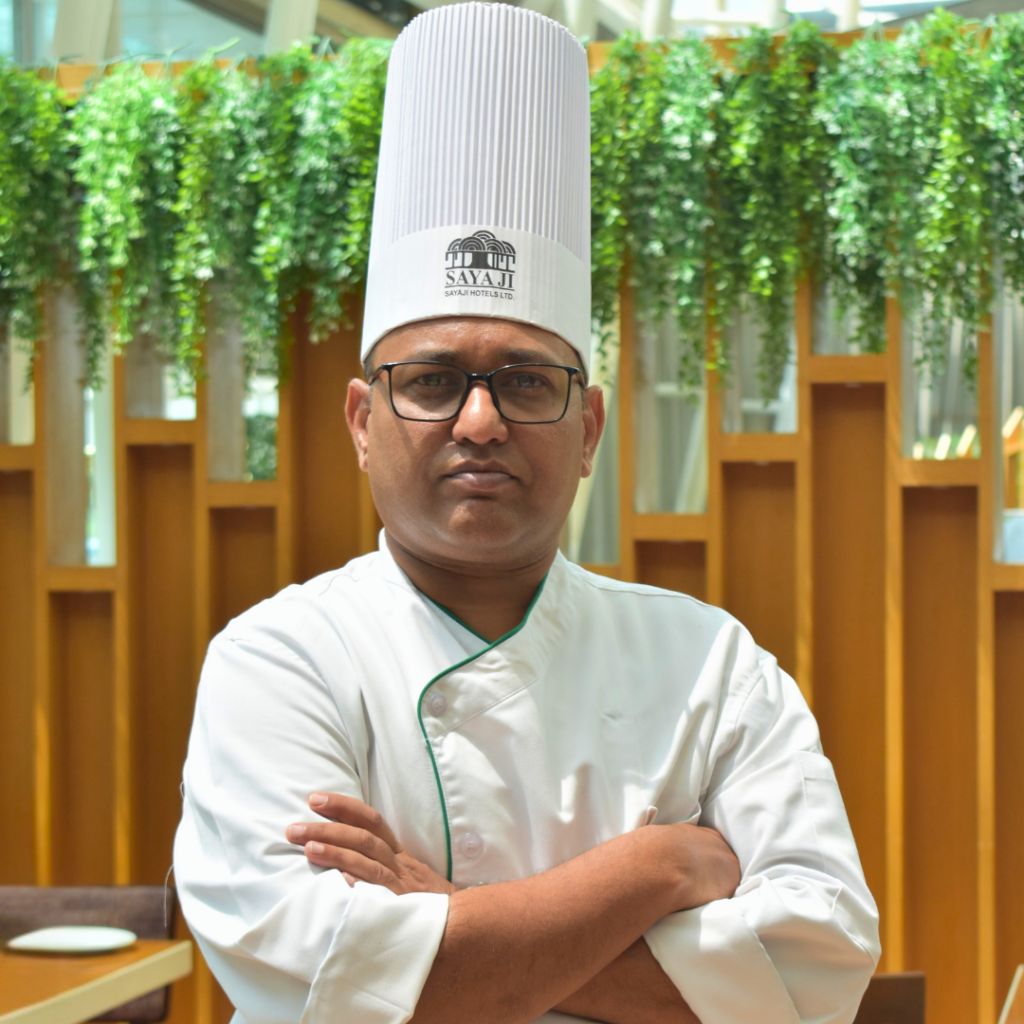
Chef Bhuvanesh Kalburgi — Certainly. Taking on the role of Executive Chef at Sayaji Hotel Pune is an exciting new chapter for me because it brings together experience, responsibility and an opportunity to create something meaningful.
What excites me most is the opportunity to look at the culinary identity of the hotel with fresh eyes. Pune is a very interesting market—it has a strong local food culture, a young and increasingly well-travelled audience, a significant corporate community and guests who are becoming more adventurous in their expectations.
I want to build on the strengths of Sayaji
My first objective is not to change everything. A successful hotel already has an identity, a loyal guest base and dishes that people associate with it.
I believe in understanding what is working, protecting what is loved, and then finding opportunities to evolve.
The aim is to create a culinary program that feels contemporary while still retaining the warmth and familiarity that guests expect from Sayaji.
I am particularly excited about putting Pune and Maharashtra on the plate
There is enormous potential in Maharashtra’s culinary heritage.
We often talk about global cuisines, but some of our most interesting ingredients and techniques are sitting right around us—bhakri, regional grains, Kolhapuri flavours, Malvani preparations, Pune’s traditional snacks, seasonal produce and lesser-known regional recipes with the modern touch to it.
I would like to explore these flavours in a more refined and contemporary way without losing their soul.
For me, it is not about taking a traditional dish and simply making it look fancy.
It is about asking:
“How can we preserve the memory of the dish while presenting it in a way today’s guest wants to experience it?”
I want to create experiences rather than simply add dishes
I am particularly interested in interactive and experiential dining.
For example, regional food experiences, chef-led counters, live cooking, curated tasting experiences, seasonal menus and storytelling around ingredients.
Today’s guest increasingly wants to know where something comes from, why it is prepared that way and what makes it special.
That gives chefs an opportunity to turn food into a story.
Sustainability will also be an important focus
I believe sustainability has to go beyond simply putting a “sustainable” label on a menu.
It starts in the kitchen—with responsible purchasing, local sourcing, seasonality, yield management, reducing food waste and using ingredients intelligently.
A chef should understand the value of every ingredient that enters the kitchen.
Sometimes the most sustainable ingredient is simply the one you don’t waste.
I also want to create a strong culinary culture within the team
For me, a new chapter isn’t successful simply because the food improves.
It is successful when the team improves with it.
I want to create an environment where young chefs are encouraged to experiment, learn techniques, understand ingredients and eventually develop their own culinary identity.
After 25 years in the industry, one of the things I value most is the opportunity to pass on what I have learned while continuing to learn from the next generation.
And ultimately…
I don’t want Sayaji Pune to simply be known for having a good restaurant.
I would like people to say:
“If you are in Pune and you want to experience something interesting, authentic and memorable, you should eat at Sayaji.”
That, for me, would be a meaningful measure of success.
This new chapter is not about starting from zero. It is about taking everything I have learned over the past 25 years and using that experience to create something that is relevant to Pune today—and hopefully leaves a culinary legacy for tomorrow.
Today’s diners are far more adventurous, informed and conscious about what they eat. How do you balance innovation and evolving food trends with the need to create food that is comforting, accessible and consistently enjoyable?
Chef Bhuvanesh Kalburgi — I think the key is to remember that innovation should enhance the guest experience, not confuse it. Today’s diners are certainly more adventurous and informed, but at the same time, they still look for something familiar, delicious and emotionally satisfying.
After 25 years in the industry, I have learned that the best innovation usually starts with something the guest already understands.
Start with familiarity, then introduce surprise
I don’t believe in innovation simply for the sake of being different.
If a guest understands the basic flavour profile of a dish, we can then introduce a new technique, ingredient or presentation.
For example, instead of completely reinventing a familiar Indian dish, I may retain its essential flavours and identity while changing the texture, presentation or cooking technique.
The guest should feel pleasantly surprised—not lost.
Trends should inspire us, not dictate our menus
There is always a new trend—fermentation, plant-based cuisine, global street food, superfoods, molecular techniques, zero-waste cooking and so on.
I keep an eye on these developments, but I don’t believe every trend belongs on every menu.
The real question is:
Does this make the food better, or are we doing it simply because it is fashionable?
If the trend doesn’t add flavour, value or experience, I would rather not use it.
Comfort food will always have a place
Food has an emotional connection.
A beautifully presented dish may attract attention, but sometimes a bowl of dal, a perfectly cooked biryani, Traditional nihari or a good roganjosh can create a stronger emotional response.
As chefs, we shouldn’t underestimate that.
Innovation and comfort are not opposites. You can modernise a dish while preserving the emotional memory associated with it.
Accessibility is equally important
In a hotel environment, we serve a very diverse audience.
One table may have a guest looking for an adventurous culinary experience, while another may simply want something familiar after a long day.
Therefore, I believe in creating layers of choice—classics that guests can rely on, contemporary interpretations for those looking for something new, and a few signature dishes that push the boundaries.
That gives the guest the freedom to choose their own level of adventure.
Conscious dining has to be practical
Today’s diners are also more conscious about health, sustainability, provenance and dietary preferences.
I see this as an opportunity rather than a restriction.
We can work with more seasonal ingredients, responsible sourcing, better portion control, plant-forward options and thoughtful cooking techniques without compromising flavour.
Healthy food should not feel like punishment.
And above everything—consistency
A creative dish is only successful if the guest enjoys it today, tomorrow and six months from now.
That’s where a chef’s discipline comes in.
Innovation happens during development.
Consistency happens through systems, training and standards.
The challenge is to achieve both.
For me, the perfect dish sits somewhere between memory and discovery—it should remind you of something you love, but give you a reason to experience it differently.
That is how I approach innovation: respect the past, understand the present, and create something that gives the guest a reason to come back.
Pune has developed a vibrant and increasingly sophisticated food culture. How do you see the city’s dining landscape evolving, and how would you like Sayaji Hotel Pune to contribute to that evolution?
Chef Bhuvanesh Kalburgi — Pune’s food culture has changed dramatically. It is no longer just a market where guests look for good food; it has become a city where people are curious about food, willing to experiment and increasingly knowledgeable about what they eat.
The combination of a strong local culinary heritage, a young population, a growing corporate community and travellers from across India has created a very interesting dining environment.
Pune is becoming more regional and global at the same time
What I find exciting is that diners are exploring international cuisines, but there is also a renewed interest in regional Indian food and local ingredients.
People are asking more questions: Where does the ingredient come from? Is it seasonal? Is the preparation authentic? What is the story behind the dish?
I believe this will become an even stronger part of Pune’s dining culture.
The next phase will be about experiences
Dining is increasingly becoming more than simply sitting down and ordering a meal.
Guests are looking for interaction, storytelling, theatre, live cooking, chef-led experiences and a sense of discovery.
I think hotels have a particularly important role here because we can bring together culinary experiences under one roof—from casual all-day dining to specialised restaurants, banquets, events and curated experiences.
There will also be a stronger focus on authenticity
I don’t think sophistication necessarily means making food complicated.
In fact, I believe Pune’s diners are becoming sophisticated enough to appreciate honest food done extremely well.
A perfectly made traditional dish, using the right ingredients and technique, can be as exciting as an elaborate contemporary creation.
That is something I would like to embrace at Sayaji.
My vision for Sayaji is to become part of Pune’s food conversation
I don’t want Sayaji Hotel Pune to be viewed only as a hotel where guests come because they are staying there.
I would like it to become a culinary destination for Pune itself.
That means developing experiences that attract local residents as much as hotel guests— whether through regional food festivals, chef’s tables, seasonal menus, innovative brunches, curated Indian experiences or collaborations with local producers and culinary talent.
Maharashtra’s culinary heritage is a tremendous opportunity
One area I am particularly passionate about is giving greater visibility to Maharashtrian and regional Indian cuisine.
There are so many ingredients, recipes and traditions that deserve a larger platform.
I would like to explore how we can present those flavours in a contemporary hotel environment while maintaining their authenticity.
The objective isn’t to change traditional food just to make it fashionable.
It is to make people curious about it again.
Finally, I see Sayaji as a bridge
For me, Sayaji can play a role in connecting Pune’s culinary heritage with its future.
We can respect traditional flavours while embracing modern techniques. We can offer comfort food alongside progressive cuisine. We can celebrate local ingredients while giving guests international experiences.
Pune doesn’t need another restaurant simply trying to follow the next food trend. It needs dining experiences that understand the city, respect its culinary heritage and are confident enough to create something new.
That is where I would like Sayaji Hotel Pune to contribute—to celebrate Pune’s food culture, participate in its evolution and create experiences that give both local guests and travellers a reason to keep coming back.
You have placed considerable emphasis on nurturing culinary talent and building strong teams. What qualities do you look for in a young chef today, and how has your approach to mentoring the next generation changed over the years?
Chef Bhuvanesh Kalburgi — For me, mentoring young chefs has become one of the most rewarding parts of my career. After 25 years in hospitality, I have realised that technical skills can be taught, but attitude, curiosity and character have to come from within.
I look for attitude before talent
When I meet a young chef, I don’t only look at how well they can cook. I look at whether they are willing to learn, listen, work hard and take responsibility.
A chef who knows everything at 22 has a much shorter journey ahead of him than a chef who is still curious.
Humility is one of the most important ingredients in a chef’s career.
Curiosity is essential
The culinary world is changing very quickly. I want young chefs who ask questions:
Why do we cook it this way?
Where does this ingredient come from?
Can we do it better?
What can we learn from another cuisine?
I don’t want young chefs who simply follow a recipe.
I want them to understand why the recipe works.
Discipline still matters
The industry may have changed, but some fundamentals never will.
Punctuality, hygiene, mise en place, knife skills, organisation, respect for ingredients and respect for colleagues are not old-fashioned concepts.
They are the foundation of professionalism.
Creativity without discipline creates chaos.
I look for resilience
Kitchen life can be demanding. There will be difficult services, mistakes, criticism, long hours and moments when things don’t go according to plan.
I tell young chefs:
Don’t be afraid of pressure. Learn from it.
A difficult service can teach you more about yourself as a chef than a comfortable one.
My approach to mentoring has changed significantly
Earlier in my career, mentoring was often based on “watch me, do what I do and eventually you will learn.”
Today, I believe in a more collaborative approach.
I still maintain standards and discipline, but I want young chefs to think, question and contribute.
If a commis comes to me with an idea, my first response shouldn’t be, “That’s not how we do it.”
It should be:
“Let’s understand your idea. Let’s test it. Let’s see if it works.”
Even if the idea fails, the young chef has learned something.
I also believe today’s chefs need business awareness
A young chef cannot afford to think only about cooking anymore.
They need to understand food cost, wastage, purchasing, menu engineering, sustainability, guest expectations, technology and profitability.
A great chef should know not only how to create a dish, but also whether the dish makes business sense.
Most importantly, I want to create future leaders—not followers
My responsibility as a senior chef is not to create younger versions of myself.
It is to help young chefs discover their own strengths and develop their own identity.
If someone I have mentored eventually becomes a better chef than I am, I consider that a success—not a threat.
The greatest legacy of a chef is not the menu he creates; it is the people he develops who go on to create their own menus, lead their own teams and influence the next generation.
After 25 years, I have learned that recipes can be passed down in books, but passion, discipline and leadership are passed down from person to person. And that, for me, is one of the most important responsibilities of being a chef today.
After 25 years in professional kitchens, what still excites you about cooking? Is there a particular cuisine, ingredient, technique or culinary challenge that you are yet to explore and would love to take on next?
Chef Bhuvanesh Kalburgi — After 25 years, what still excites me about cooking is actually quite simple: there is always something new to discover. The day cooking becomes routine is probably the day a chef should start worrying.
Ingredients still excite me
Even after working with thousands of ingredients, I still enjoy discovering something unfamiliar or looking at a familiar ingredient differently.
India is particularly exciting because we have such incredible biodiversity—different grains, millets, indigenous vegetables, spices, herbs, fruits and regional ingredients that are often underused in professional kitchens.
Sometimes the challenge isn’t finding a new ingredient; it is rediscovering an old one.
I am increasingly interested in regional Indian cuisine
If there is one area I would like to explore more deeply, it is India’s lesser-known regional cuisines.
We often represent Indian cuisine through a relatively small number of familiar dishes. But there is an enormous culinary world beyond that.
I would love to spend more time exploring traditional recipes, forgotten cooking techniques, indigenous ingredients and the stories behind them—and then understand how they can be presented in a contemporary hospitality environment without losing their authenticity.
Fermentation is an area I find particularly fascinating
Fermentation is both ancient and incredibly relevant to modern cooking.
There is so much depth in fermented foods—from Indian pickles, batters and regional preparations to global techniques involving vegetables, grains and dairy.
What fascinates me is that fermentation is not simply a technique. It is a relationship between time, temperature, microorganisms and ingredients.
There is an element of unpredictability, and that makes it exciting.
I want to explore the relationship between traditional and modern techniques
I am not interested in using modern techniques simply because they look impressive.
What interests me is taking a traditional flavour and asking:
“Can I use a contemporary technique to make the guest experience that flavour in a completely new way?”
That could mean working with fermentation, dehydration, smoking, slow cooking, preservation or modern plating techniques while keeping the soul of the original cuisine intact.
But my biggest culinary challenge is probably not a dish
After 25 years, my next challenge is creating something that has a lasting identity.
Anyone can create a new dish.
The real challenge is creating a culinary experience that people associate with a place and remember years later.
I would love to develop signature experiences at Sayaji Hotel Pune that become part of the hotel’s identity—something guests specifically come back to experience.
And I still enjoy the simplest test of all
Put a plate of food in front of me and ask:
“Would I order this again?”
If the answer is yes, we are on the right track.
Because ultimately, technique, presentation and innovation are tools.
The objective is still the same as it was when I started:
Make people happy through food.
After 25 years, I don’t feel that I have reached the end of my culinary journey. I feel I have reached a point where I understand the fundamentals well enough to explore more deeply.
And perhaps that is what excites me most about the next chapter: I am not trying to prove that I can cook. I am trying to discover what else I can create, what else I can learn, and what I can leave behind for the chefs who come after me.
TheGlitz Take
What makes Chef Bhuvanesh Kalburgi inspiring is that after 25 years, he is still curious. He has mastered the craft without becoming complacent, believing that great cooking is rooted in simplicity, consistency and respect — for ingredients, guests and, most importantly, people.
His greatest strength, however, may be his leadership philosophy: a chef’s legacy isn’t measured by the dishes he creates, but by the chefs he inspires and the standards he leaves behind. At Sayaji Hotel Pune, he brings that philosophy to a new culinary chapter, with a strong desire to celebrate regional Indian flavours while embracing contemporary possibilities.
For TheGlitz, Chef Bhuvanesh represents the beautiful evolution of a chef — from mastering the kitchen to nurturing the people who will shape its future.