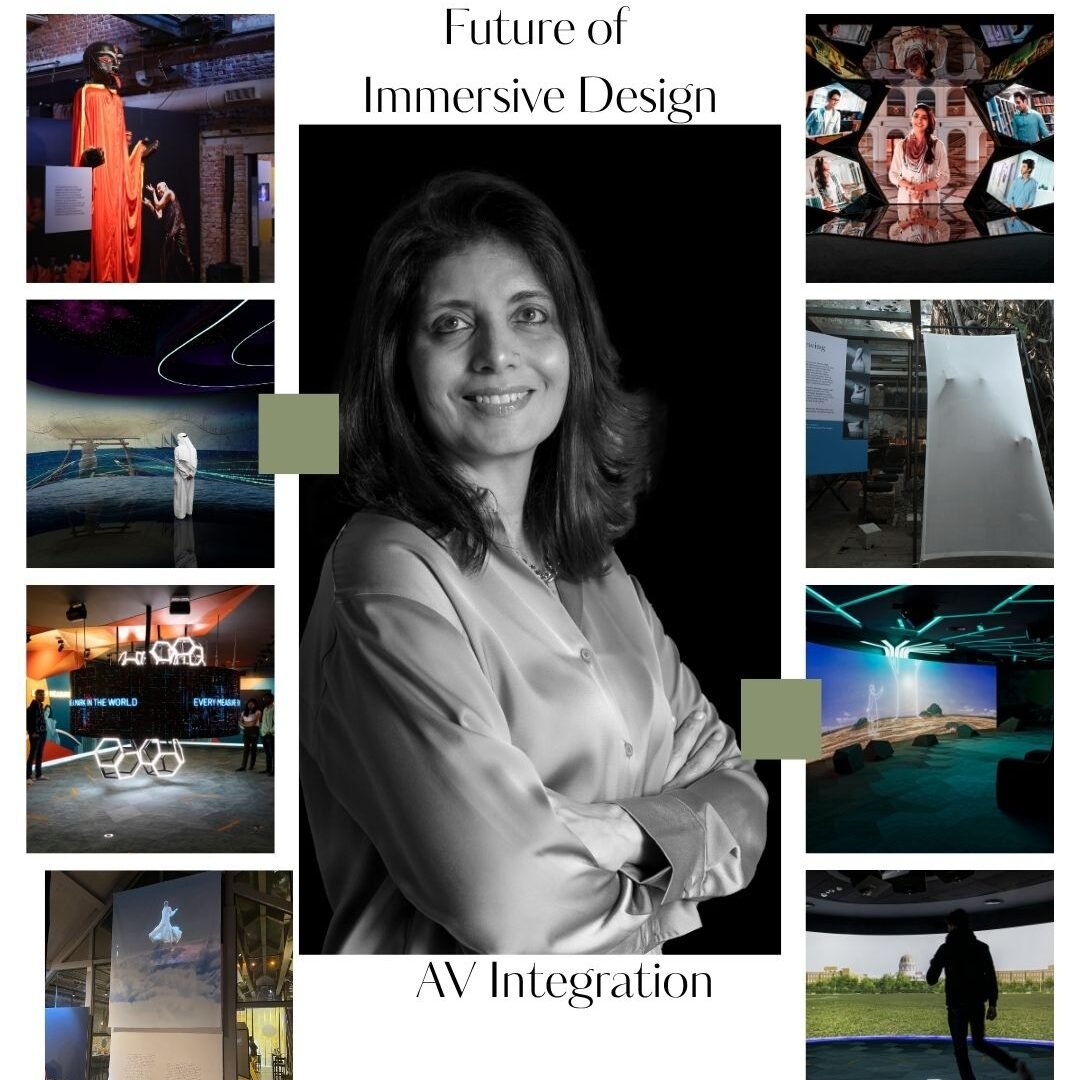
Shanoo Bhatia, Co-Founder and Creative Director, EuMo
In a world where a screen is always within reach, simply adding more screens no longer creates wonder. The next frontier of immersive design is not about bigger LEDs, louder sound or a greater density of technology — it is about creating spaces where technology becomes so seamlessly woven into architecture, storytelling and human emotion that it almost disappears.
Few understand this shift better than Shanoo Bhatia, Co-founder & Creative Director, EuMo (Eureka Moment) DesignIntelligence. With over three decades of experience in immersive technology and spatial design, Shanoo has watched the industry evolve from technology being treated as an impressive novelty to becoming an intelligent, integral part of the experience itself. For her, the real magic happens when audio, video, projection, lighting, interactivity, materials and architecture stop competing for attention and begin speaking as one.
Her philosophy is refreshingly simple yet remarkably powerful: start with human intent and let the space tell the story. Whether it is a museum, visitor centre, brand experience or luxury hospitality environment, Shanoo believes the question should never be “What technology can we put here?” but rather, “What should the visitor feel, understand and remember?”
In this conversation with Sumita Chakraborty, Founder & Editor-in-chief, TheGlitz, Shanoo Bhatia, Co-Founder and Creative Director, EuMo, takes us inside the rapidly evolving world of immersive experiences — from the pitfalls of technology-heavy spaces and the importance of multi-sensory storytelling to AI, spatial computing, adaptive environments and India’s opportunity to build world-class experience spaces through design intelligence rather than hardware alone.
Over To Shanoo Bhatia, Co-Founder and Creative Director, EuMo

You have spent over three decades working with immersive technology. What has changed most fundamentally in the way audiences experience technology today — and what do brands still get wrong when they try to create “immersive” spaces? Tell us a bit about EuMo and your journey here?
When I began working in design and spatial experiences thirty years ago, technology was largely treated as a novelty: an exotic standalone spectacle that was brought in at the tail end of a project. Today, audiences are digitally saturated. They live with high-resolution screens in their pockets so a big LED display on a wall does not guarantee awe. Audiences now seek more than visuals & audio and want tactile authenticity, emotional coherence and multi-sensory depth. This is a latent need, which means a need that they feel without being aware of it. The best innovations have happened because firms have identified these needs.
What brands frequently get wrong is confusing hardware density with true immersion. Many briefs I receive begin with a shopping list of equipment: “We want an anamorphic screen, four VR headsets, interactive touch tables, and so on.” When hardware decisions precede spatial storytelling, the result is a fragmented environment where disparate vendor displays compete for attention like three people shouting over one another.
I have seen equipment in experience centres that have no business being there because it does not help anyone, neither the brand nor the visitor. Genuine immersion begins with human intent: What should a visitor feel, understand and do differently after walking through those doors?
That philosophy is why Harkaran Singh Grewal (Gary) and I founded EuMo (Eureka Moment) DesignIntelligence twenty years ago in 2005. Both alumni of the National Institute of Design (NID), we set out to prove that design is a holistic, human-centred, strategic problem-solving discipline.
Over the past two decades, we have evolved EuMo into an integrated design intelligence practice spanning brand strategy, spatial storytelling, interpretive design and physical architecture.
From designing brand showcases for the Tata Group, Reliance Industries, ICICI Bank and Destination Manipal to creating multi-sensory environments and luxury hospitality camps across Ladakh and Nagaland in India and overseas, our goal has always been to move the world closer to its ambitions by building meaningful and lasting connections between brands and people. Our rule has remained the same: start with human intent and let the space tell the story.
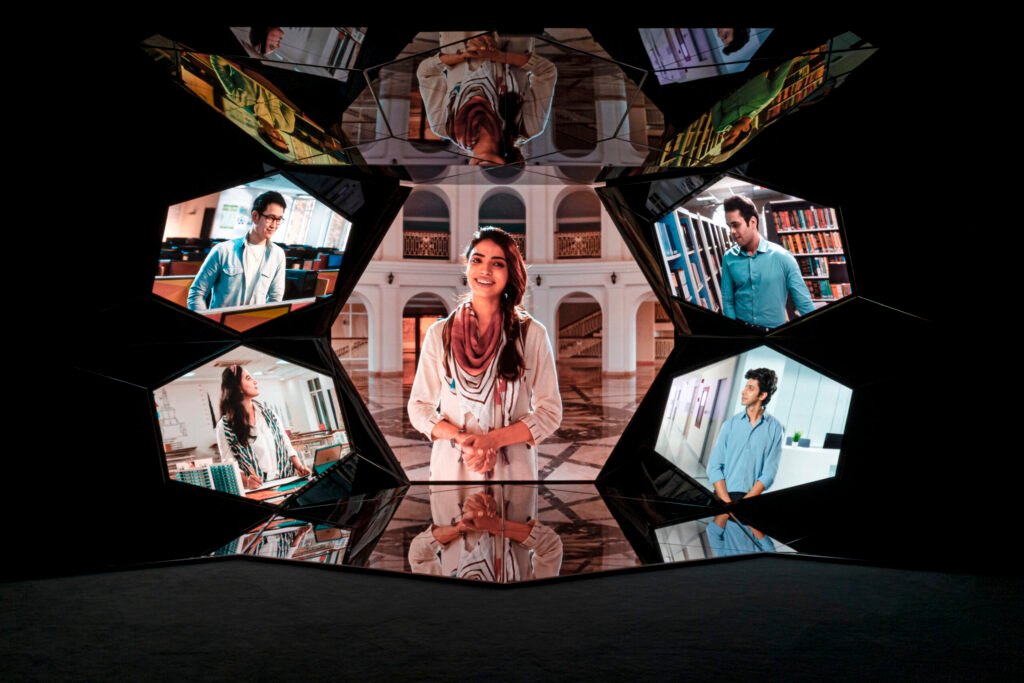
When we talk about immersive experiences, we often focus on spectacular screens, projection mapping or LED walls. Why is the integration of audio, video, lighting, interactivity and spatial design actually more important than any single technology?
Because immersion is not something you look at; it is something you step inside of. A visitor experiences a space with their entire body. Take their peripheral vision, the reverberation of sound against a wall, the warmth of the lighting and the texture of a surface under their hand. It’s multi-sensory.
To iterate, this is a latent need that the visitor may not be conscious of, but they can feel the uniqueness and connection to the space. Because immersion, in addition to a visual phenomenon, is also a cognitive and sensory one. This experience will make the memory last longer and create value in the short and long term for brands.
If you put a multi-crore LED wall in a room with harsh overhead light and poor acoustics where voices echo off glass, the immersion breaks within ten seconds. A projection surface is only as good as the ambient lux levels and the micro-texture of the wall it hits. Directional audio only works when acoustic dampening is physically built into the wall partitions; otherwise the story in Zone A pollutes the quiet moment in Zone B.
When lighting, acoustics, materials, sightlines and hardware are drawn together into one blueprint from the very first sketch, technology stops announcing itself. When audio-visual systems, lighting, and architecture operate in complete synchronicity, technology stops functioning as a decorative veneer and transforms the physical space into a coherent storytelling medium. It disappears into the walls, and the building itself becomes the storytelling medium. This means that these factors are interdependent and must be carried at the same time at the beginning of the project.
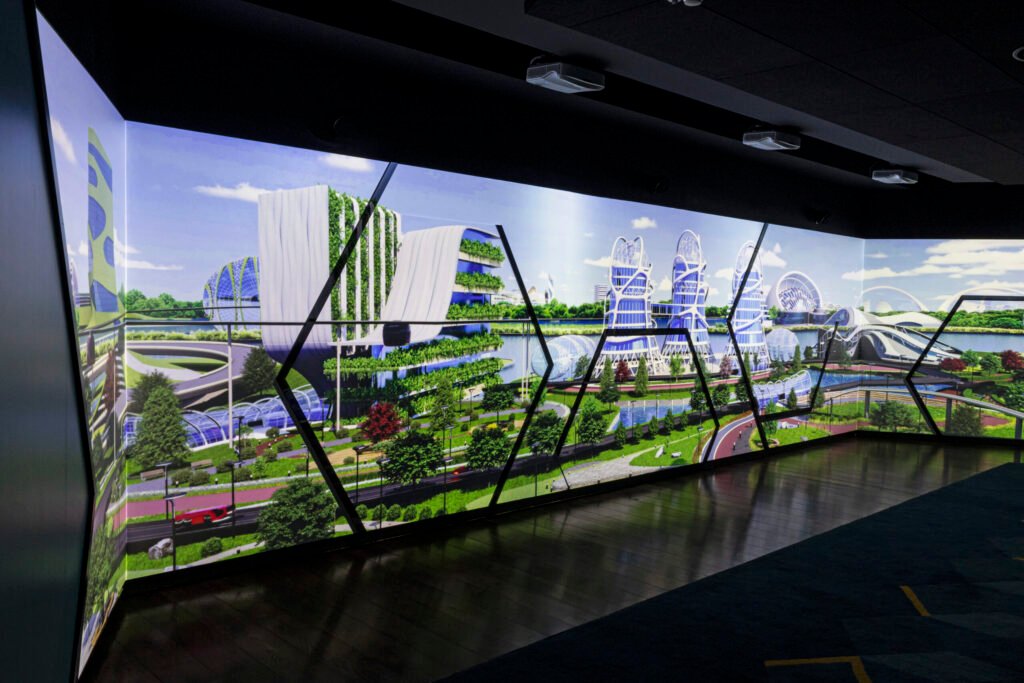
How do you ensure that technology serves the architecture and the story rather than becoming the story itself? What separates a genuinely immersive experience from an expensive technology showcase?
In the first briefing meeting, I ask the leadership team a simple question: “What do you want someone to understand here that they cannot find in a five-minute Google search and what should they do differently tomorrow because of it?” The pause that follows is where real design begins. An expensive showcase asks, “Look at what this technology can do.” A well-designed experience centre asks, “What is the most intuitive medium to communicate this specific story beat?”
The difference between an expensive tech showcase and a real experience is narrative restraint. A showcase asks you to admire the hardware. A thoughtful space uses the right medium for the right beat. Sometimes, a screen is the right tool to convey scale and global reach; other times, a tangible, handcrafted physical model explains complex construction far better.
In many cases, pairing a digital kiosk beside a tactile, physical exhibit offers tangible proof that visitors can literally touch and feel. A screen might show geographic scale, but a tangible physical model will explain engineering and construction far better.
To ensure technology serves the narrative, we run every design choice through a strict purpose filter. We map the visitor journey beat by beat, choreographing circulation corridors, transition zones and focal rooms so that comprehension advances with the visitor’s footsteps. If an interactive feature distracts from the core message rather than clarifying it, we take it out. Every single element on that floor plan must earn its place.
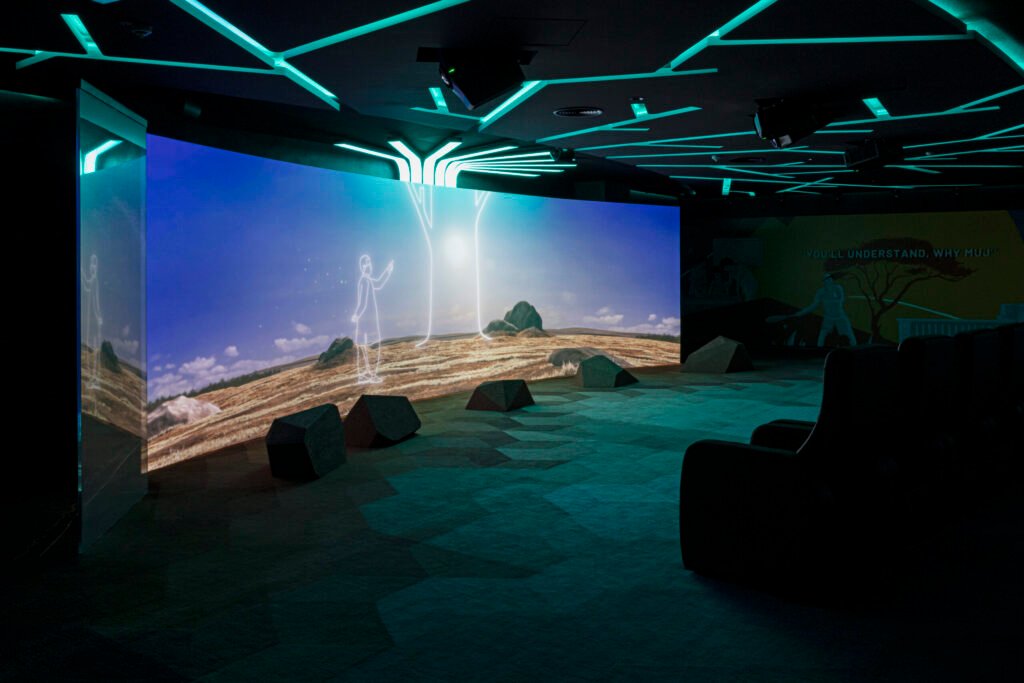
Visitor centres and brand experience spaces are becoming increasingly sophisticated. What are some of the biggest challenges involved in integrating multiple AV technologies into an existing physical environment — particularly when architecture, acoustics, lighting and technology all have to work seamlessly together?
When I walk into many existing centres across India, I can literally read the construction schedule off the walls. You see an LED wall from one vendor, a touch kiosk dropped in by another and a soundbar someone hastily wired in at the end.
The single biggest challenge is siloed execution. It’s hard breaking vendor silos and important to ensure that they work together towards one goal. The architect, the interior contractor, the AV integrator, the media producer and the software programmer all speak different dialects and operate on separate timelines.
This causes immense friction on-site that brands underestimate such as cables cut into finished surfaces, glare washing out projection walls or audio drowning out spoken presentations. If no one holds the whole vision, you end up cutting into finished drywalls to run overlooked cables or discovering that room glare makes a screen illegible.
Integrating these systems seamlessly requires systems thinking and unified project governance. We have to account for operational lifecycles from day one:
- How will ambient daylight shift throughout the day?
- Can this gallery transition from a high-energy morning client briefing to an intimate executive presentation in the evening without moving a physical wall?
- What happens when content needs a software update, or a projector reaches the end of its lamp life?
When multidisciplinary teams coordinate under a single narrative and technical vision, the final space functions reliably day in and day out while fulfilling its long-term communication objectives. When you design technology as architectural infrastructure rather than loose furniture, you get an environment that switches on reliably every morning and performs for years.
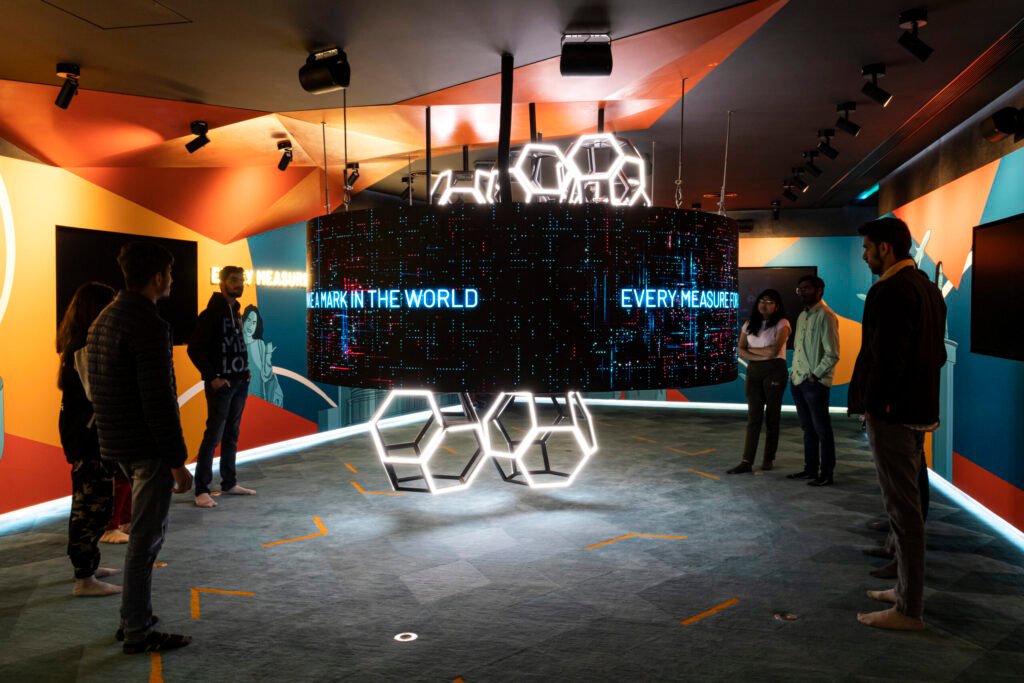
With AI, real-time content generation, spatial computing and increasingly sophisticated interactive technologies entering the experience-design space, what do you think the next generation of museums, visitor centres and brand spaces will look like five years from now?
Perhaps five years from now, experience centres will be far less rigid and far more responsive. What this means is they will be adaptive, multi-modal and deeply personalised. Spaces will move away from fixed and static exhibits toward responsive architecture. With real-time rendering and intelligent sensors, a single room will recognise who is walking in and modulate its environment. The lighting tone, acoustic warmth and content depth will automatically adjust whether it is welcoming a group of school students, a prospective foreign client or a board of directors.
Spatial computing and ambient intelligence will replace clunky manual touchscreens. We will see intuitive wayfinding, gesture-based interactions and ambient prompts that trigger seamlessly as visitors naturally pause along high-interest hotspots.
Inclusivity will be baked into the very first drawing. Designing with intuitive sightlines, wayfinding and tactile surfaces for children, seniors and differently-abled visitors will ensure that the narrative flow stays seamless for everyone. Next-generation centres will be engineered from the first sketch to make the journey intuitive, accessible and meaningful for everyone. When a space feels intuitive without demanding instruction, retention rises and the visit stays in the memory.
China has built an enormous ecosystem for designing, manufacturing and deploying large-scale AV and immersive technologies. From your experience, where does India currently stand in comparison — particularly when it comes to design, customisation, manufacturing, scalability and the ability to execute complex projects end-to-end?
There is a clear difference between manufacturing hardware components and designing the spatial intelligence that brings them alive. China’s electronics manufacturing depth is indisputably massive. According to data from the World Bank, India imported over US$10.6 billion of electronic integrated circuits and microassemblies from China in 2024. China has the scale and supply chain clustering.
What we must understand is experience centres are not off-the-shelf commodity rollouts. A cookie-cutter approach does not work here. These spaces are fundamentally bespoke, high-touch architectural environments that cannot be assembled from standardized, off-the-shelf kits. Standardised modular display units might work for a quick retail rollout but they erase originality.
This is where India’s true strength lies. When our architects, creative directors, software developers and precision fabricators collaborate early, we can engineer custom enclosures, acoustic treatments and physical-digital interfaces locally to international standards. In design intelligence, India is already world-class and we have great talent. When our design intelligence firms collaborate with engineering teams from the concept stage, we can design, engineer, and customise world-class environments that compete with international performance benchmarks.
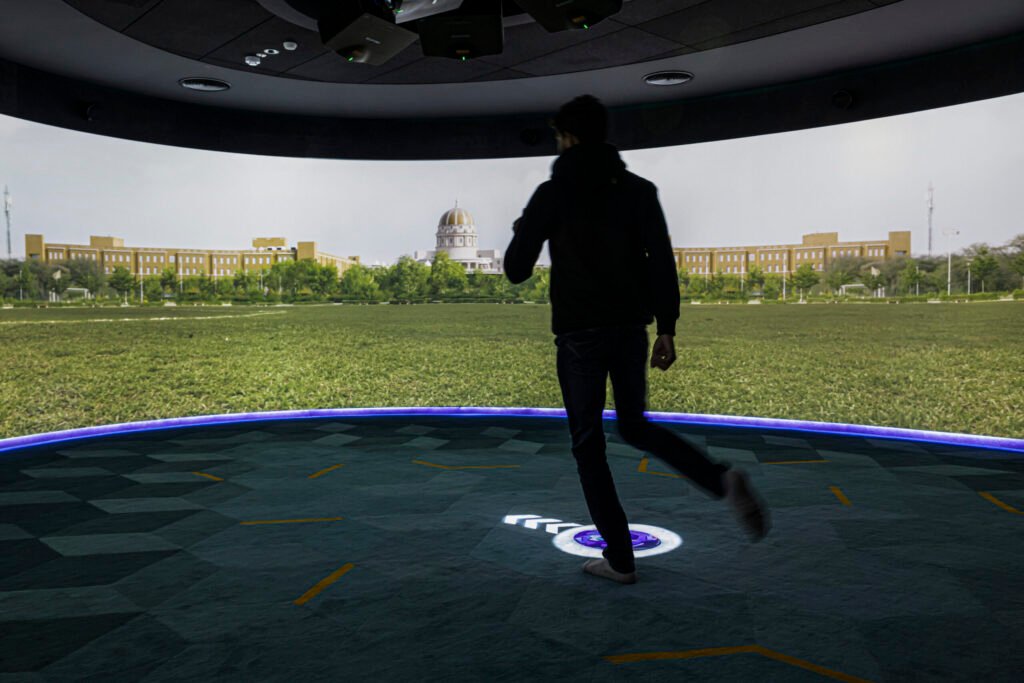
If India wants to compete with China in this space, what needs to change — in terms of manufacturing capabilities, skilled talent, R&D, investment and collaboration between technology companies, architects and creative designers — and where do you see the biggest opportunity for Indian companies like EuMo?
The biggest mistake would be waiting for India to manufacture every single microchip before we start creating world-class spaces. We do not need to clone China’s commodity manufacturing model to own the experience-design industry.
Our immediate opportunity is in high-value design integration and custom spatial engineering. That said, strengthening our domestic hardware ecosystem is vital when projects demand non-standard, custom hardware enclosures, specialised sensor arrays and precision mounting solutions.
Our immediate opportunity is integration and design intelligence. Policy initiatives like the Electronics Component Manufacturing Scheme are vital for building domestic component depth over time, especially when projects require specialised hardware that cannot be bought off a shelf.
What must change right now is industry habit:
- Dismantling Silos: We need the architect, technologist, software engineer and fabricator in the same room from day one, not brought in sequentially as vendors
- Backing Custom Prototyping: Investing in local design R&D to prototype bespoke interfaces, optical enclosures and tactile interactive mechanisms
- Elevating the Question: Clients must shift their focus from “What technology can we buy?” to “What experience do we want to create and what must we design to achieve it?”
As Indian enterprises and institutions expand globally, they need experience spaces that express their ambition with nuance, cultural depth and sophisticated design intelligence. That is a capability we can lead with today. We have the design heritage, creative talent and technological agility to set global benchmarks for how physical and digital worlds converge.
TheGlitz Take
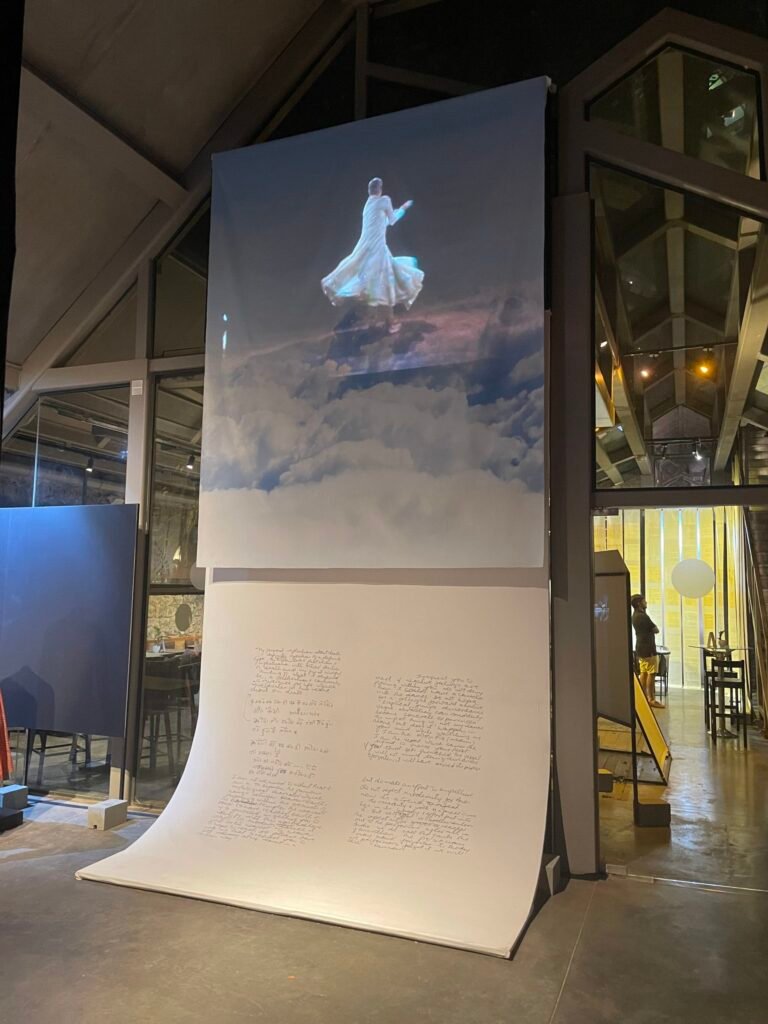
Shanoo Bhatia, Co-Founder and Creative Director, EuMo, makes a compelling case for a simple truth: great immersive experiences aren’t created by technology alone, but by how intelligently technology, design and human emotion come together. In a world overflowing with screens, the real luxury may well be an experience so beautifully orchestrated that you stop noticing the technology — and simply remember how it made you feel.