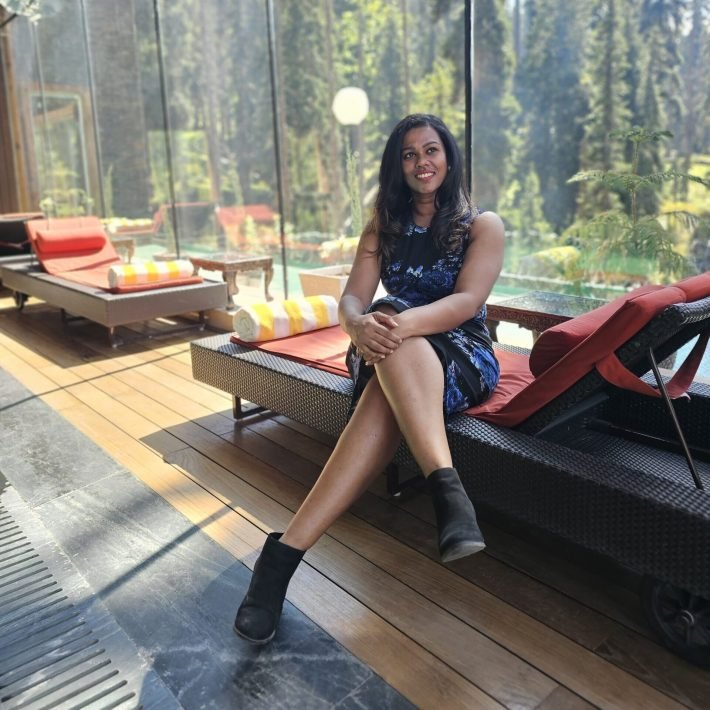
Aayush Raj, Co-Founder of Kalpnk AI Studio
What happens when filmmakers trade conventional cameras for artificial intelligence, storytelling meets cutting-edge technology, and imagination is no longer restricted by the limitations of production budgets? Enter Aayush Raj, Co-Founder of Kalpnk AI Studio, a new-age creative venture that is exploring the fascinating possibilities of AI-powered filmmaking.
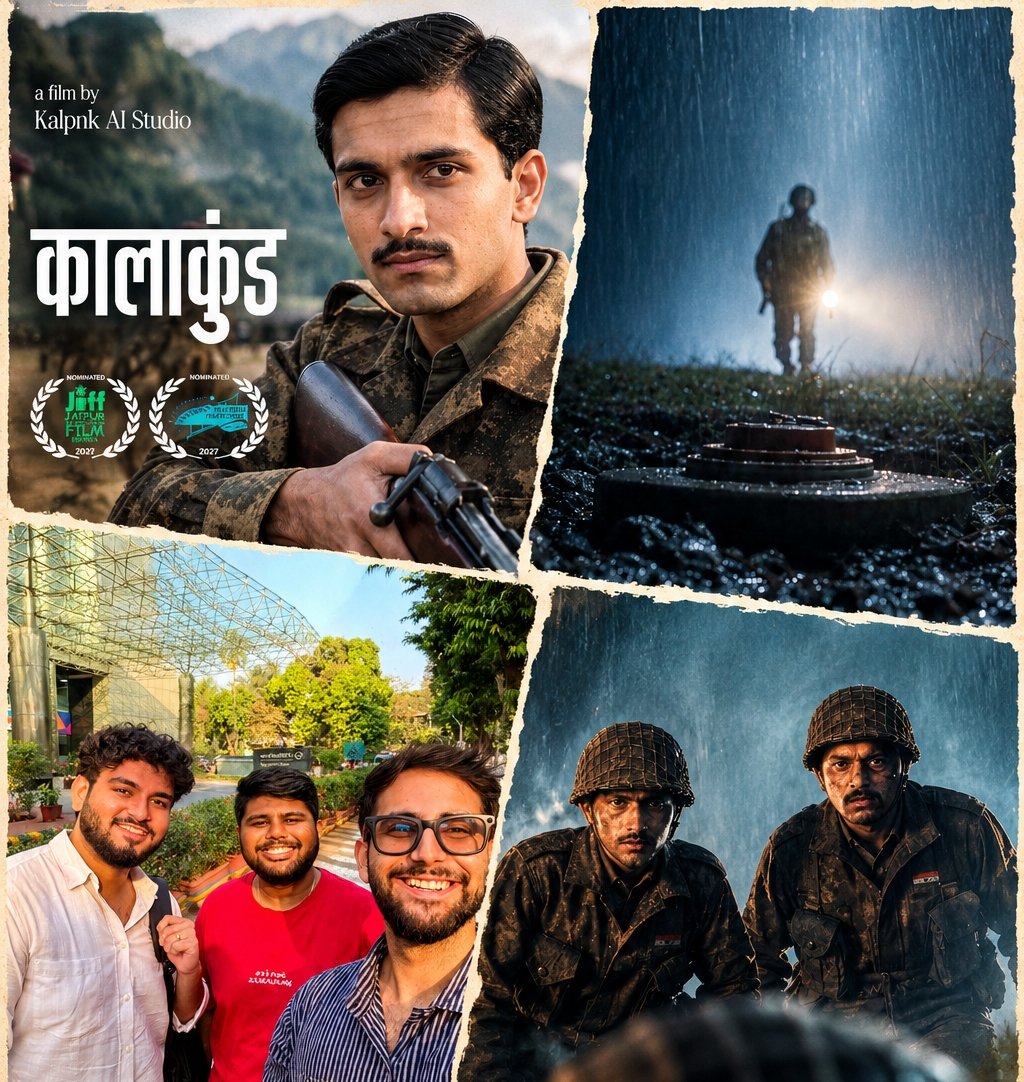
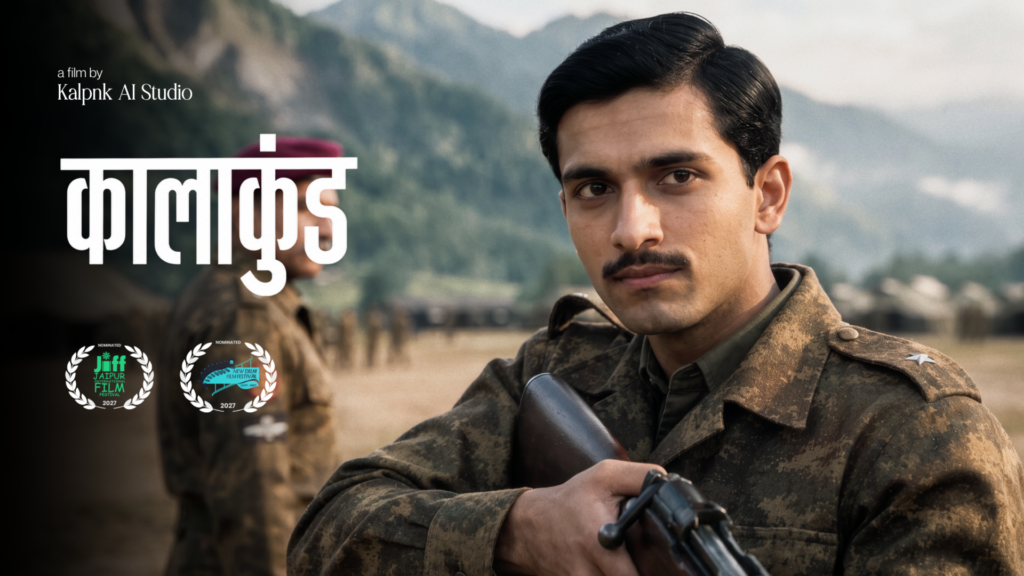
With its latest offering, Kaalakund, a Hindi AI-generated war-horror film set against the backdrop of the 1962 Sino-Indian War, the Mumbai-based studio is making an intriguing statement about the future of cinema.
But this isn’t simply another technology experiment dressed up as a film. It is an ambitious attempt to explore how artificial intelligence can become a storytelling tool, capable of building atmospheric worlds, creating cinematic imagery and bringing imaginative narratives to the screen.
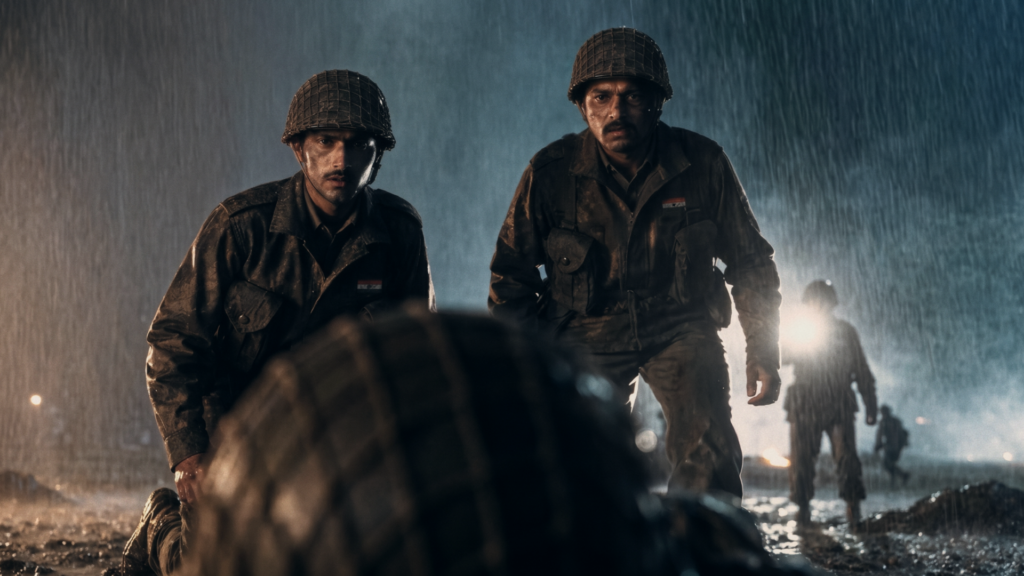
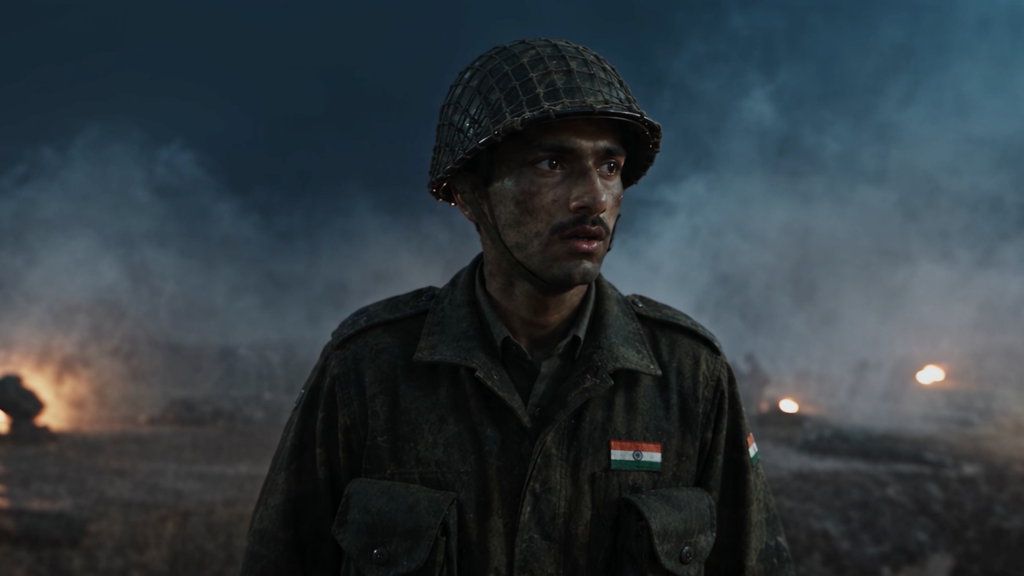
Blending the uncertainty of wartime with supernatural horror, Kaalakund follows Second Lieutenant Chinmay, a young officer whose eagerness to prove himself is tested during a dangerous mission. What begins as a military narrative gradually ventures into the mysterious and supernatural.
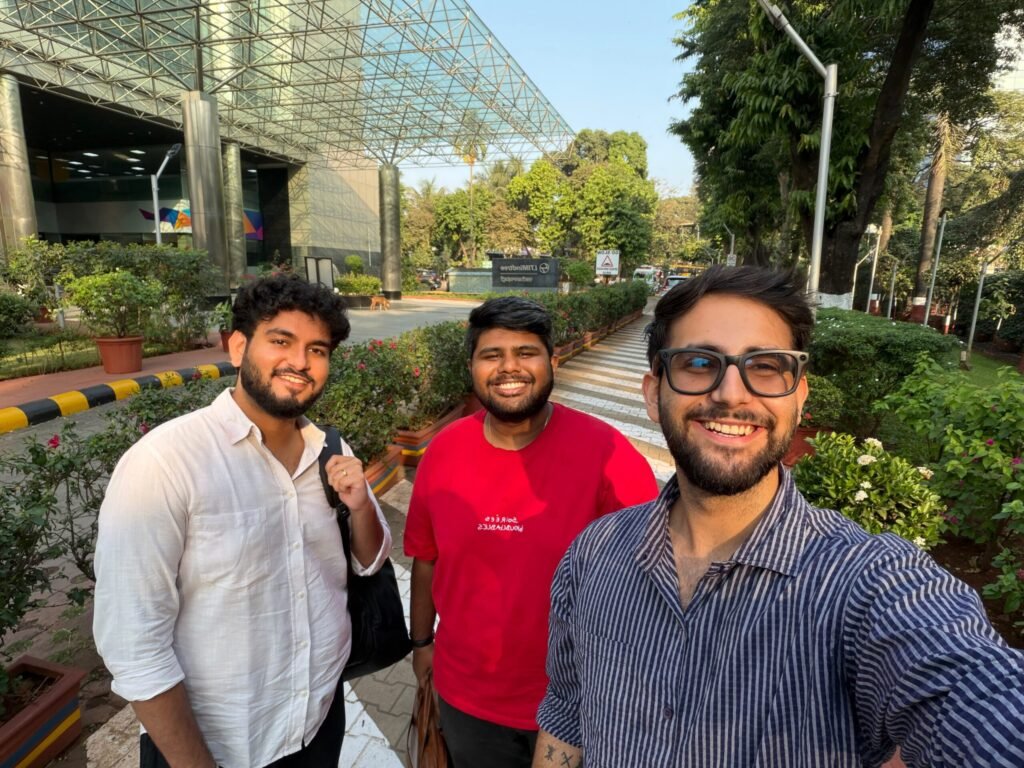
For Aayush and his co-founders, Manav Soni and Sameer Talawdekar, the journey into AI filmmaking began with a shared filmmaking background. Graduates of Whistling Woods International, the trio came from the worlds of cinematography, editing, writing and direction.
Rather than abandoning their filmmaking instincts, they chose to experiment with a technology that could expand their creative possibilities. Kalpnk AI Studio… pronounced ‘Kalpanik’, a name rooted in imagination… was born from the belief that compelling stories shouldn’t remain unrealised simply because conventional production resources are beyond reach.
Their creative journey has already gathered momentum. Their earlier films, My Red Crayon and Mumbai Standard Time, won Best AI Film at the Cinema AI Hackathon at IFFI Goa in 2025 and at MIFF in 2026 respectively. With Kaalakund, their third original film, the team takes a more ambitious leap into the intersection of genre filmmaking and generative technology. The film has also been selected for the 10th New Delhi Film Festival and the 19th Jaipur International Film Festival, both scheduled for 2027.
What makes Aayush’s approach particularly interesting is his insistence that AI does not replace the filmmaker’s imagination. From visual references and character consistency to camera decisions, editing, dialogue, sound design and colour grading, the creative process remains intensely human. In fact, the team prefers to describe its approach as having replaced the camera with AI… while retaining the storytelling discipline, artistic judgement and collaborative decisions that define filmmaking.
In this exclusive interaction with Sumita Chakraborty, Founder & Editor-in-Chief, TheGlitz, Aayush Raj, Co-Founder of Kalpnk AI Studio, discusses the creative vision behind Kaalakund, the challenges of directing performances through artificial intelligence, the evolving relationship between technology and human imagination, and why he believes AI could democratise filmmaking and open the doors of cinema to a new generation of storytellers.
Over To Aayush Raj, Co-founder, Kalpnk AI Studio
The concept and the courage
Kaalakund brings together war and horror against the backdrop of the 1962 Sino-Indian War. What inspired you to explore this unusual intersection of historical conflict and supernatural storytelling, that too through AI? Why AI? Was there a particular idea or incident that sparked this AI film? I am curious: how can you get artificial intelligence to create genuine human emotions?
Kaalakund had been sitting in our co-founder Sameer’s bank of ideas for a long time. He’s the writer and director, and when he pitched it to us, we were immediately excited. There was something about placing this mystical presence within the fear and uncertainty of war that stayed with us. We wanted to make it, but we hadn’t found a practical way to bring that world to the screen. AI gave us a way to finally attempt it.
The big question was exactly what you’ve asked: could we get the performances right? A striking image is one thing. Getting an audience to care about the person in that image is much harder. We needed hesitation, fear and vulnerability to feel believable, rather than simply asking for a ‘scared expression’.
I think we’re living through a beautiful, slightly overwhelming moment for filmmaking. These tools are developing so quickly. They aren’t perfect at emotion, but it is possible to shape performances that make an audience feel something. A look, the timing of a cut, a voice and the sound around it all contribute.
The emotion happens through the whole scene. And combining AI with live performance and other traditional techniques opens up even more possibilities.
AI as a filmmaker
AI-generated cinema is rapidly challenging conventional filmmaking. What tools and technologies did Kalpnk AI Studio use to bring Kaalakund to life, and which aspects of filmmaking were the most challenging to execute using AI?
We used a combination of generative image and video tools, with Higgsfield as part of the workflow, supported by character and location references. The generated footage then went through an edit in Premiere Pro, dialogue work, sound design and music, and colour finishing in DaVinci Resolve. There wasn’t one tool doing everything; it was a production process with different stages and people shaping each one.
For me, the two hardest parts were direction and sound. The difference between a random AI clip and something you want to keep watching is intention. You have to know what the character wants, where the camera belongs, when a pause should happen and how the shot will fit into the edit. A beautiful result can still be completely wrong for the scene.
Dialogue was particularly demanding. Some generated voices felt weak or lacked the weight the scene needed, so we reworked every dialogue line in post-production. In a film like this, a voice has to belong to someone who is actually frightened, exhausted or trying to stay in control. If that doesn’t land, the image can only do so much.
The beginning
How did your journey start in the AI field?
We came to AI as filmmakers. The three of us graduated from Whistling Woods International in 2023. After college, I was freelancing as a cinematographer, Manav was working as an editor, and Sameer was writing and directing. We were finding our feet in the industry.
In 2025, I started paying serious attention to what AI could do for filmmaking. I became excited enough to convince the other two to leave their jobs and start Kalpnk with me. It was a big leap for all of us, and we spent a lot of time experimenting and figuring things out together.
Then My Red Crayon won Best AI Film at the Cinema AI Hackathon at IFFI Goa in November 2025. Mumbai Standard Time followed with another win at MIFF in 2026. Those moments gave us the confidence to keep going. Kaalakund grew out of that momentum, and our desire to attempt something more ambitious each time.
The human behind the machine
There is a perception that AI-generated films are largely automated. How much human creativity, direction, storytelling and artistic decision-making went into Kaalakund? Where do you believe human imagination ends and AI’s contribution begins?
A lot of our work happens before we even type anything. We sit together as a director, cinematographer and editor and discuss how a shot should play out. What is the character feeling? Where do we need to be with the camera? What are we cutting to next? It would often take us an hour just to think through and write the instructions for a shot.
Then we generate, watch, discuss and revise. Sometimes a shot looks impressive, but the performance isn’t right. Sometimes it works on its own and falls apart in the edit. We keep working until it serves the film.
We often say we’ve replaced the camera with AI. That’s shorthand for how we approach it: the writing, direction, cinematography decisions, editing, music, sound and colour still need people making choices. I don’t think human imagination ends at the point where generation begins. You’re still directing afterwards, deciding what to keep, what to change and what to throw away. The tool can surprise you, but you’re responsible for what reaches the audience.
Creating fear through technology
War-horror requires atmosphere, tension, visual intensity and emotional depth. How did you use AI to create the film’s haunting imagery, battlefield environments and horror sequences? Was there a particular scene that pushed your creative or technological capabilities?
We try to push ourselves with every film at Kalpnk, and Kaalakund really tested that. Honestly, after the first version, we came close to giving up. There was a gap between the film we could imagine and what we were managing to get on screen. Working through that was a big part of making it.
The second half was especially difficult. Without giving away the reveal, the mystical element needed its own visual rules. We created reference sheets to establish what it was, how it moved and how its presence affected the space around it. Even something supernatural needs consistency, or the audience stops believing in it.
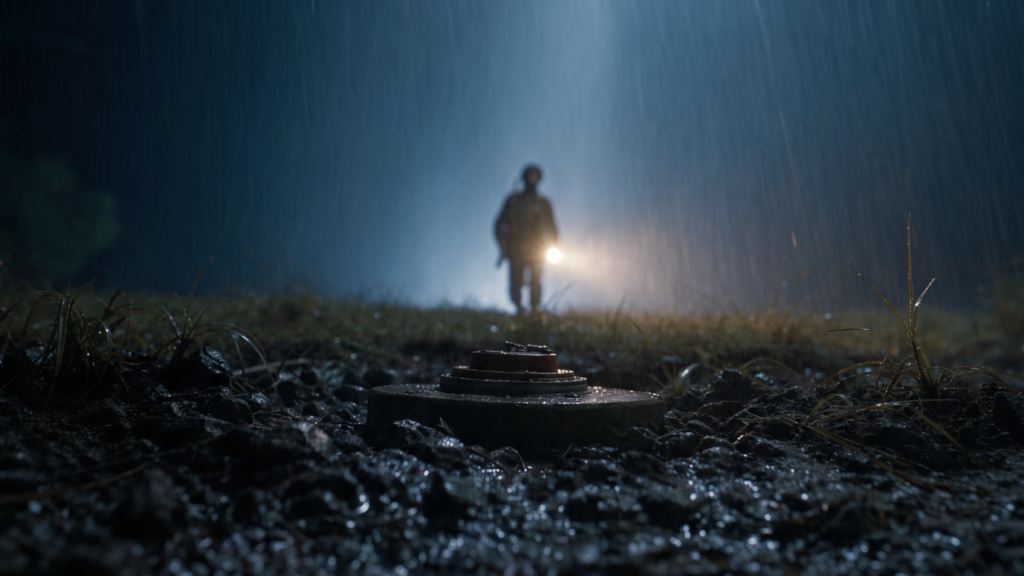
We also had to carry the same characters and environments through darkness, rain and smoke. And then there was the tension itself: how much to show, when to hold back, and what the audience should hear before they see anything. The imagery, edit and sound had to work together. Seeing that second half finally come together was particularly satisfying because we knew how close we’d come to abandoning it.
Taking Hindi AI cinema forward
With Kaalakund, you are exploring the possibilities of AI-generated storytelling in Hindi cinema. Do you see AI opening doors for independent filmmakers and smaller studios that may not have access to conventional film budgets? Could this technology fundamentally democratise filmmaking in India?
Yes, and that possibility is a big part of why we started. Kalpnk is pronounced ‘Kalpanik’, and the name comes from imagination. We wanted to build a studio where an idea could be explored even when we didn’t have the conventional resources to produce it.
For a small team, being able to attempt a period setting or an unfamiliar world is a meaningful shift. There are filmmakers across India with stories they haven’t been able to make because the scale is beyond their reach. I think AI can help more of those stories find a way to the screen, in Hindi and in other languages too.
What excites me most is that more filmmakers can now test an ambitious idea and see where it takes them. Their voice and the choices they make will shape what audiences connect with. I’m especially excited by hybrid filmmaking: combining live action, real performances, practical elements and AI wherever they serve the story. That gives filmmakers more choices about what to shoot, what to build and what to generate.
The future of Kalpnk AI Studio
Is Kaalakund a standalone creative experiment or the beginning of a larger cinematic vision for Kalpnk AI Studio? How do you see AI-generated films evolving in India over the coming years?
It’s very much part of a larger journey. Kaalakund is our third original film, following two award-winning projects, and it has already been selected for NDFF and JIFF 2027. That’s encouraging, but we’re still at the beginning of what we want to explore.
The three of us are passionate about making films, and we intend to keep doing that. We want to go deeper into the technology, try different kinds of stories and explore more ways of combining AI with traditional production.
I expect the novelty of ‘made with AI’ to become less important over time. Audiences will want characters they care about and films that stay with them. That’s the standard we want to work towards. With Kaalakund, I hope someone comes in curious about the technology and leaves wanting to talk about the story.
TheGlitz Take: AI May Replace the Camera, But Can It Replace Imagination?
Welcome to cinema’s brave new world, where artificial intelligence is rewriting the rules of filmmaking and imagination is getting a technological upgrade! With Kaalakund, Aayush Raj and Kalpnk AI Studio are exploring how far storytelling can travel when AI becomes a creative collaborator.
But here’s the plot twist: spectacular AI-generated visuals alone don’t make a great film. It takes human imagination, directorial vision, emotional intelligence, storytelling finesse and an almost obsessive attention to detail to make audiences feel something.
That’s where this experiment gets interesting. By pushing the boundaries of Hindi war-horror cinema, Aayush Raj of Kalpnk Studio is opening up an exciting conversation about accessibility, creative freedom and the democratisation of filmmaking. TheGlitz believes AI should not be viewed as the villain in cinema’s unfolding story, but as a potentially powerful new protagonist. After all, technology can generate the image, but it takes human imagination to give it a soul. And if Kaalakund is any indication, the future of filmmaking could be less about who owns the biggest camera and more about who dares to dream the biggest!
About the film
Kaalakund
Set during the 1962 Sino-Indian War, Kaalakund is a Hindi AI-generated war-horror film following Second Lieutenant Chinmay, a young officer whose eagerness to prove himself is tested on a dangerous mission. His relationship with his captain anchors a story that moves from the uncertainty of war into the supernatural.
Released on November 3, 2026, the film is available on YouTube in Hindi with English subtitles. It has been selected for the 10th New Delhi Film Festival (NDFF) 2027 and the 19th Jaipur International Film Festival (JIFF) 2027.
Credits
Production: Kalpnk AI Studio
Writing and direction: Sameer Talawdekar
AI production and creative direction: Aayush Raj and Manav Soni
Editing: Manav Soni
Sound design and music: Ugam Khetani
Colour: Karun S