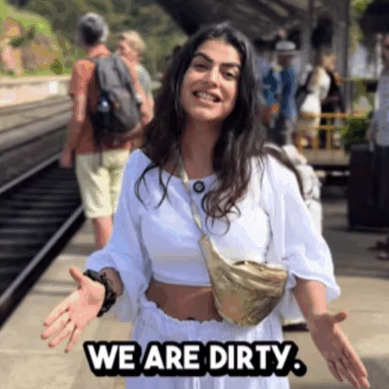
There’s a strange new Olympic sport flourishing among a section of Indian influencers and well-heeled travellers. It involves flying abroad, standing dramatically in front of impeccably clean European streets or in this case, Sri Lankan railway platforms, inhaling deeply as though they’ve personally discovered oxygen, and then loudly announcing to unsuspecting foreigners that India is “the filthiest country in the world.”
Ah yes. National pride but make it content.
“We are the Dirtiest Country in The World”, says Shenaz Treasury

Actor and travel vlogger Shenaz Treasury recently triggered a heated social media debate after a video from Sri Lanka went viral online. In the clip, filmed near Ella railway station, she praised the cleanliness of the surroundings before remarking, “We are the dirtiest country in the world.”
The reel instantly sparked strong reactions online — not merely because she pointed out India’s civic problems, but because of the manner in which it was expressed. Ironically, Shenaz is someone I had once interviewed for the cover of a leading women’s magazine, which perhaps made the moment feel even more jarring. In the now-viral video, she appeared to be passionately — almost theatrically — announcing our country’s flaws vociferously as foreign travellers look on.
This wasn’t nuanced commentary or thoughtful criticism about infrastructure, sanitation, or governance. It felt more like public self-flagellation delivered with the dramatic intensity of someone auditioning for the role of the country’s “Official International Apology Representative.”
And sadly, this mindset isn’t isolated. Increasingly, one notices a peculiar trend where some Indians travel abroad and suddenly begin treating their own country like an international embarrassment, they must publicly distance themselves from. Admiration for cleaner streets, efficient systems, and better infrastructure overseas is understandable — even necessary. But somewhere between appreciation and performative self-contempt, the conversation often spirals into loudly disparaging the homeland for validation, social media applause, or appearing “globally evolved.”
And sadly, this isn’t an isolated phenomenon.
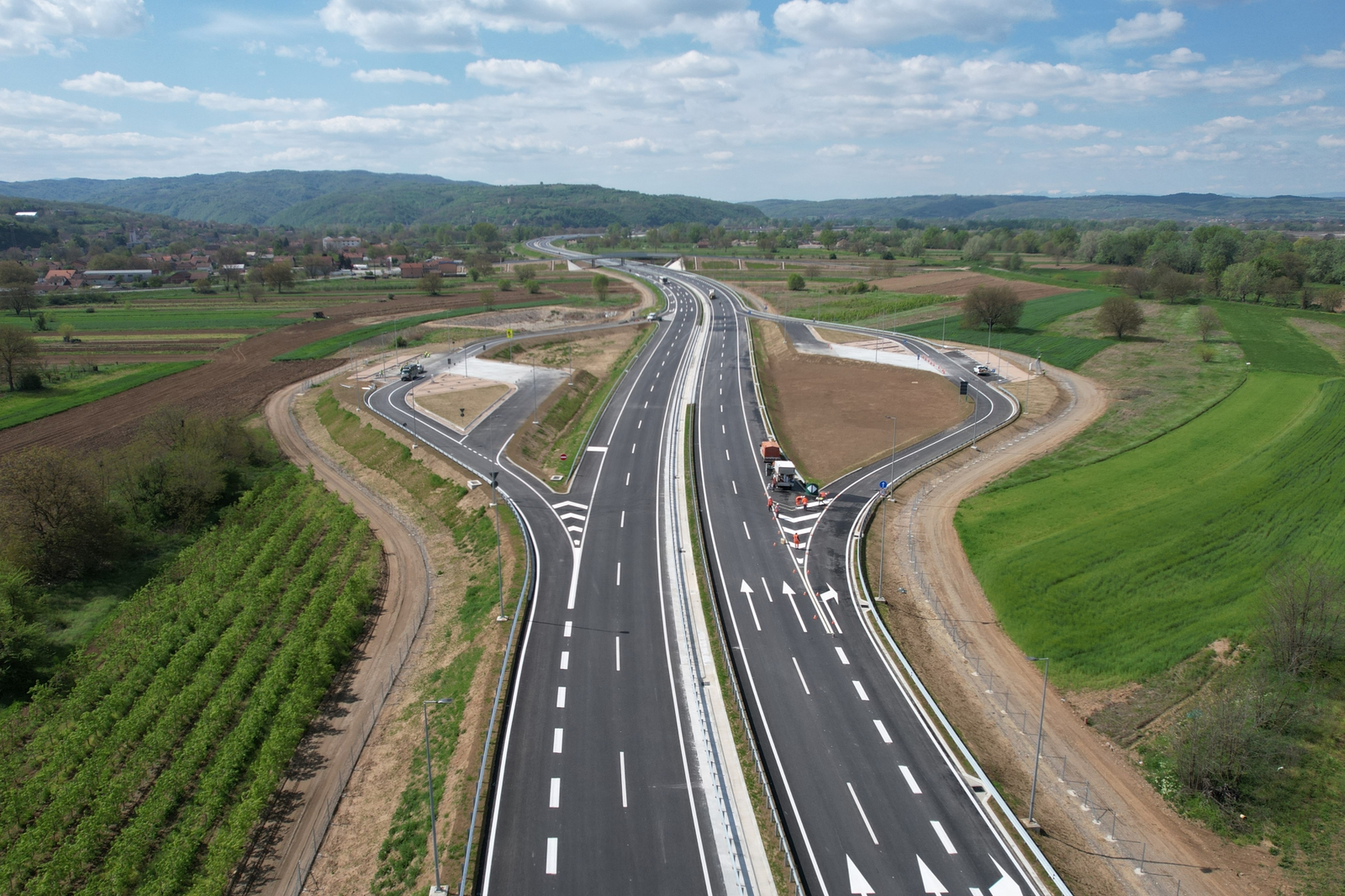
A few years ago, I was on a FAM trip to Serbia with fellow travel journalists. The roads were smooth, the public spaces spotless, the infrastructure efficient — all wonderful, admirable things. But somewhere between admiration and inferiority, the conversation took a nosedive. Suddenly, everyone around me was enthusiastically trashing India as though patriotism had become deeply unfashionable. “India could never.” “Everything there is dirty.”
And then, in the middle of this chorus of performative embarrassment, our guide quietly interrupted.
“Guys,” She said gently, “let’s not put our own country down.”
Imagine that.
Now let’s be clear. India has problems. Big ones. Garbage management, pollution, chaotic urban planning, overcrowding — none of this is fiction. And we are plumb in the midst of all this… at times, even adding to these great woes.
Of course, criticism is necessary. Accountability matters. But there’s a difference between constructive criticism and turning your homeland into a travelling stand-up routine for global approval.
Somewhere along the line, many influencers confused “global sophistication” with loudly dissing their own country.
What exactly is the flex here?
That Europe has cleaner pavements? Wonderful. It should. Many of these countries have smaller populations than Indian cities. Some have had centuries of uninterrupted infrastructure development, far lower population density, and significantly different economic histories. Comparing a tiny European town to Mumbai is like comparing a boutique café to a crowded railway station and then acting shocked that one is calmer.
But nuance rarely goes viral, does it?
What does go viral is the influencer standing beside Swiss mountains making tragic eye contact with the camera while saying, “Our country is so backward.”
Cue dramatic music. Cue comments section validation. Cue brand collaborations.
Ironically, these same influencers build entire careers monetising India — Veejaying in India, acting in India, Indian travel, weddings, food, Indian spirituality, Indian chaos, Indian colours, Indian culture. The same country that gives them stories, aesthetics, followers, relevance and income. But the minute they land abroad, they behave like they’ve escaped a third-world prison camp and must immediately alert the United Nations.
The desperation to seek validation from foreigners and some pseudo-Indians is indeed exhausting.
And frankly, embarrassing.
…Because while Indians abroad are busy apologising for our country, the rest of the world is increasingly fascinated by it. Yoga, Ayurveda, Indian cuisine, fashion, textiles, cinema, spirituality, entrepreneurship, technology — India’s cultural influence is exploding globally. International tourists aren’t coming here expecting Switzerland. They’re coming for India. The intensity. The contradictions. The madness. The beauty. The humanity.
No country grows by hating itself publicly for applause.
Because nothing looks uglier than performative self-contempt packaged as sophistication.
TheGlitz Says
At TheGlitz, we believe criticism should come from a place of responsibility, not performance. Every country has flaws. Yet, strangely, many Indians seem eager to amplify only the worst parts of the country the moment they land abroad, almost as though self-deprecation has become a passport to appearing “global” or sophisticated.
We are not perfect — and no thinking, aware citizen is claiming otherwise. Yes, we have overflowing garbage bins, chaotic traffic, pollution, overcrowded cities, and infrastructure challenges that desperately need attention. But there is a stark difference between wanting change and publicly humiliating your own country for validation, applause, or viral content.
Because in the end, confidence is not pretending problems don’t exist. Confidence is knowing your country is still evolving — and standing by it while it does.