Belfast, and the Beginning of the Journey
by Sumita Chakraborty, Founder & Editor-in-chief, TheGlitz
There is something wonderfully liberating about arriving in a city alone. You have no one else’s expectations to meet and no itinerary to explain. You can linger over breakfast, take the longer road, stop because a landscape catches your eye or simply sit by a window and watch a city unfold.
That is how I remember my journey through Northern Ireland — not as a perfectly mapped holiday, but as a delicious sequence of discoveries.
No Pickles, Missing Luggage & Welcome to Belfast
I arrived in Belfast around noon on a cool October day, and within minutes, Northern Ireland had already decided to give me a story.
As I walked into George Best Belfast City Airport, a rather serious-looking security dog began nosing around my luggage with the enthusiasm of a detective who had finally found his big case. His handler looked at me and, with a perfectly straight face, asked, “Are you carrying any pickles?”
Pickles? Really?
Apparently, somewhere in the global imagination, the Indian traveller arrives abroad carrying enough achar to feed a small village. Slightly affronted by this culinary stereotype, I replied rather haughtily, “Definitely not!” No pickle. Not even a suspicious-looking mango.
Feeling mildly vindicated, I marched into the small, cosy airport and headed towards the exit, peering around for the placard bearing my name. I had pre-booked a cab, so I was expecting the usual reassuring sight of a driver waiting patiently, holding up a piece of cardboard with my name on it.
Nothing.
Not a driver. Not a placard. Not even a sympathetic face.
I left my luggage for what I thought would be approximately thirty seconds and stepped outside the entrance to look for my taxi. The chilly Northern Irish wind promptly slapped me across the face with the enthusiasm of a policeman on a rampage.
I turned around.
My luggage was gone.
For one horrifying moment, my mind went into full international-travel panic mode. Here I was, alone in a strange country, and my luggage had vanished almost as efficiently as my confidence.
I rushed back inside and spotted the enquiry counter. “My luggage has disappeared!” I announced, probably sounding like the opening line of a crime thriller.
The lady behind the counter, however, was spectacularly calm. Clearly, luggage disappearing was not even remotely the most exciting thing that had happened to her that morning.
“It must be security,” she said.
She made a phone call. Ten minutes later, my luggage had been located, X-rayed, cleared and returned to me — apparently guilty of nothing more sinister than existing unattended in an airport… and yes, no pickles!
I sighed with relief, retrieved my belongings and finally found my taxi driver.
He turned out to be an Ethiopian student who was moonlighting as a taxi driver.
And so, with my luggage safely back, my imaginary pickle safely absent and my dignity only mildly bruised, I set off into Belfast — wondering what else Northern Ireland had planned for me.
A Fireplace, an Eyebrow Lady & One Slightly Awkward Introduction
The skies were a brooding grey, the kind that seem quintessentially Northern European, but Belfast itself had a surprising brightness. Christmas decorations were beginning to appear, adding little pockets of festive cheer to the city, as if Belfast had decided that if the weather was going to be gloomy, it might as well compensate with tinsel.
Then the city began to fall away.
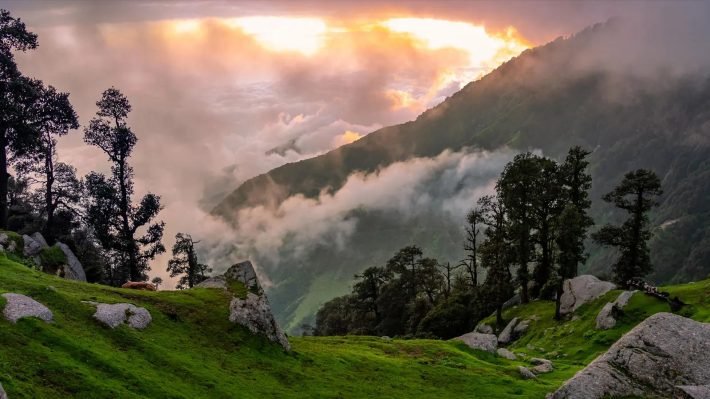
As my cab sped on the well-maintained tarmac towards the coast, the urban landscape gradually surrendered to stone walls, rolling green fields and great expanses of countryside. The green here was almost impossibly vivid — an emerald green, deep and luminous beneath the brooding skies, spreading across rolling fields, hedgerows and distant hills like a vast, living carpet. Patches of sunlight occasionally caught the grass, making the landscape shimmer, while the stone walls and winding country roads added texture to the picture. It was the kind of emerald countryside that seemed to stretch endlessly, changing subtly with every turn of the road. Northern Ireland doesn’t simply offer beautiful scenery; it makes you slow down and surrender to it.
The further I travelled, the slower everything seemed to become. There was no frantic rush to get anywhere. The road itself became part of the experience — winding through countryside that seemed to stretch endlessly, with sheep looking considerably more relaxed about life than I was.
Eventually, my cab dropped me at Hastings Slieve Donard Resort & Spa, and I stepped into what felt like another world: elegant, warm and gloriously cosy, with a magnificent fireplace that seemed to have been designed specifically for arriving travellers who had just survived an airport security interrogation involving pickles.
And there, in front of that fabulous fireplace, I met my guide Kate and her opening line was memorable.
“Oh, the lady who does my eyebrows is also an Indian!”
I paused. There are moments when your brain briefly calls an emergency meeting.
Was that meant to be a compliment? An observation? A conversation starter? Or had my Indian eyebrows somehow preceded me?
For a fleeting second, I wondered whether I should say something. I considered making a polite little noise of protest. Then I decided against it. Perhaps travel is also about allowing people their wonderfully unfiltered moments — and, occasionally, filing them away under “Things I Never Expected to Hear in Front of a Fireplace.”
Besides, I had just arrived. I wasn’t going to begin my Northern Ireland adventure by conducting a seminar on cultural sensitivity beside the roaring fire.
So I smiled. And carried on. Because sometimes the best travel stories begin not with the magnificent landscape or the perfectly planned itinerary, but with an eyebrow comment you absolutely didn’t see coming.
Hastings Slieve Donard: Castles, Coastlines, a Swedish Massage — and a Very Good Dinner
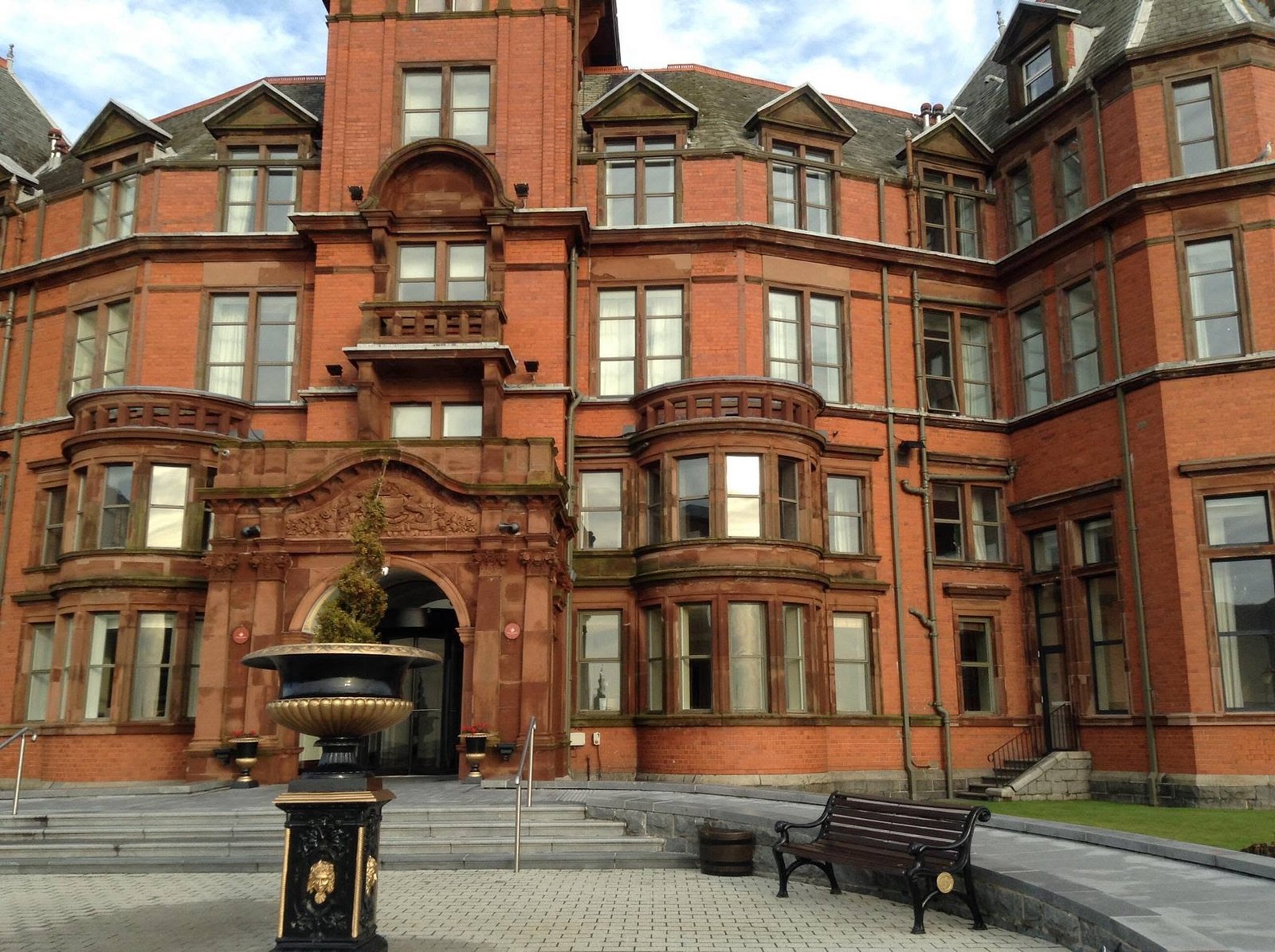
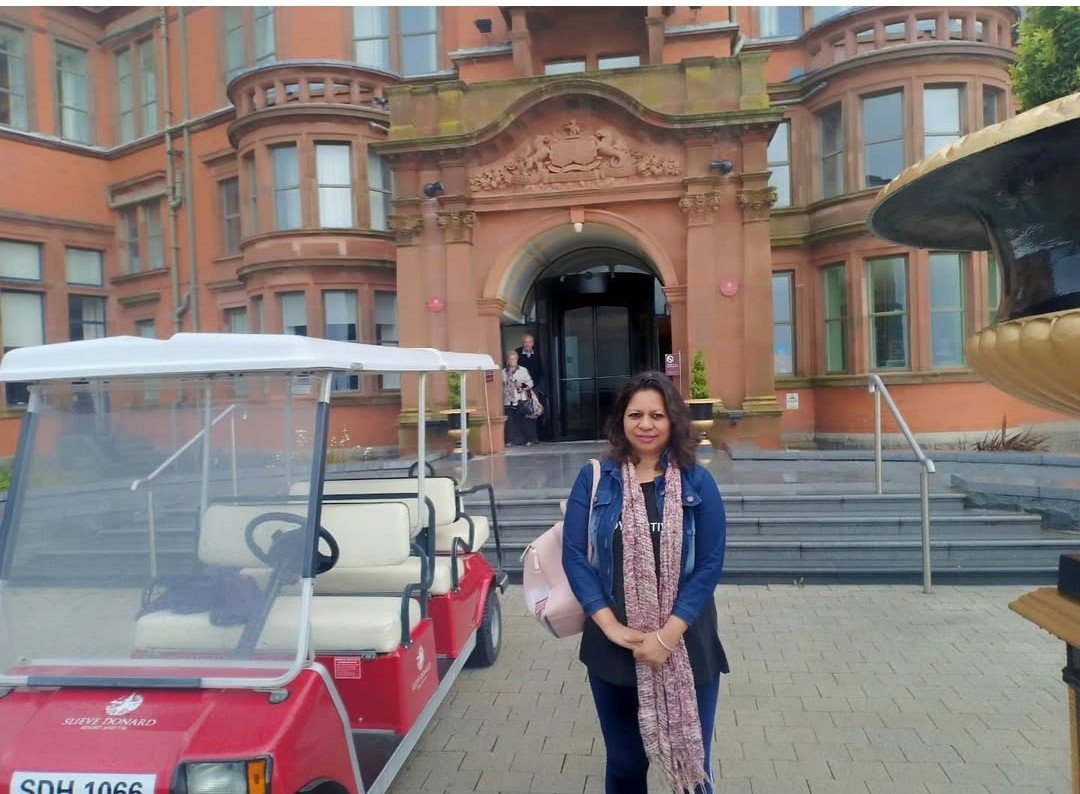
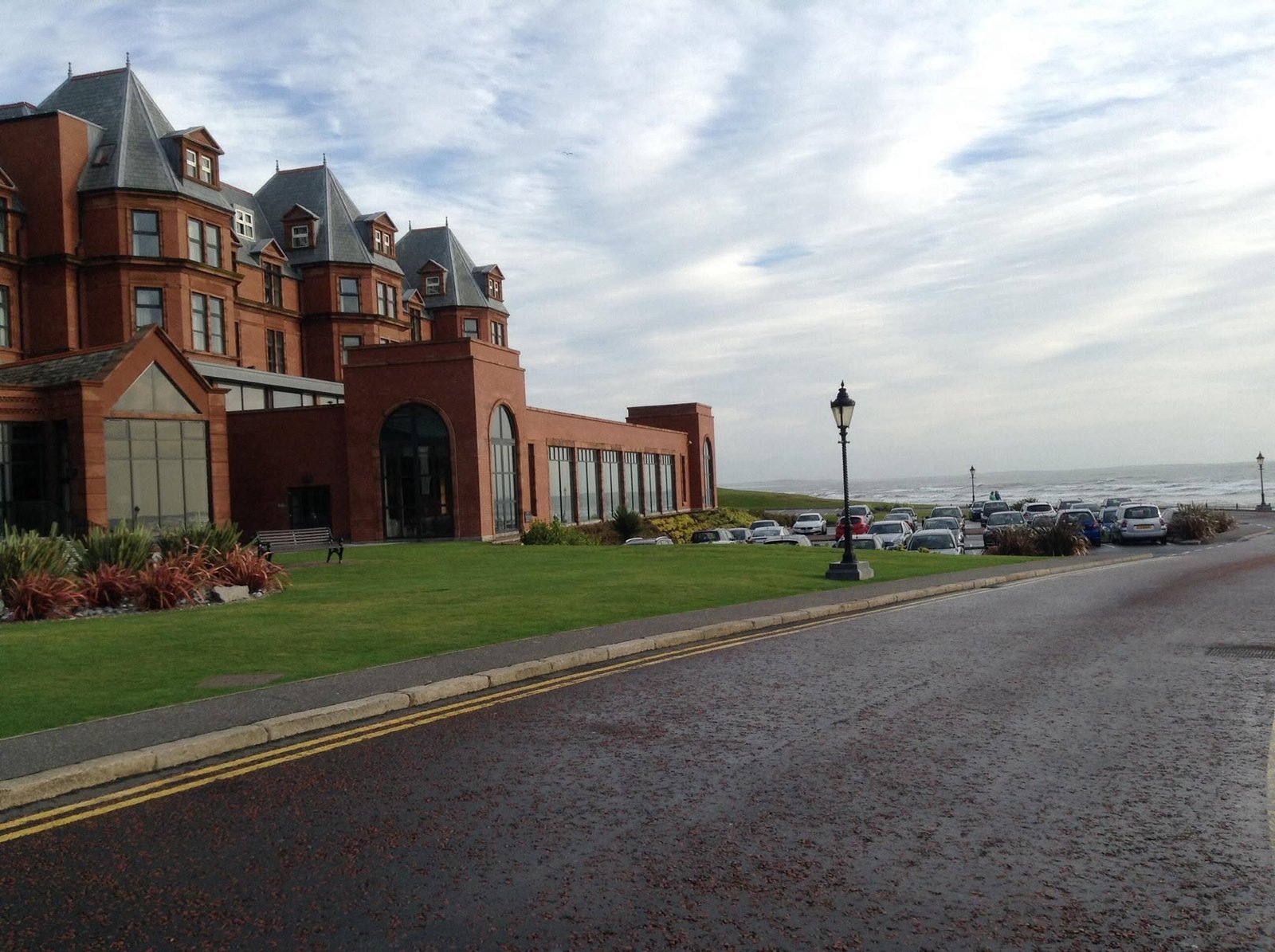
Hastings Slieve Donard Resort & Spa in Newcastle, County Down… and my first impression was that I had somehow arrived at a rather grand red-brick fortress by the sea. Set against the dramatic backdrop of the Mourne Mountains, the hotel has that wonderfully imposing Victorian presence — the kind of building that makes you instinctively lower your voice and wonder whether you should have packed something more regal. The resort sits right beside the Irish Sea, with the beach and promenade almost at its doorstep.
Outside, the scene was wonderfully windswept. Waves rolled in with considerable determination, crashing against the shore, while the beach — a beautiful stretch of pebbles and sand — seemed to disappear into the grey horizon. The gardens were another surprise: manicured lawns, mature trees and striking iron sculptures punctuating the greenery, giving the grounds an almost theatrical quality. Everywhere I looked, there was a collision of grandeur and wildness — a magnificent old hotel on one side, the untamed Irish Sea on the other.
Inside, Slieve Donard was even more spectacular. The Victorian architecture, soaring spaces, rich interiors and enormous fireplaces created the sort of atmosphere in which you could happily lose an afternoon with a book, a cup of tea and absolutely no intention of going anywhere. The hotel dates back to the late 19th century and retains much of that old-world character, while its contemporary comforts make it far more indulgent than intimidating.
And then there was the spa.
After travelling, sightseeing and generally behaving like a journalist who had been given too much to see and too little time to see it, I decided my body was entitled to a diplomatic intervention. I opted for a Swedish massage, and it was precisely what I needed — soothing, restorative and wonderfully unhurried. For that hour, Northern Ireland could have declared independence from my itinerary. I wasn’t moving.
By the time I emerged from the spa, evening had settled over Newcastle, the charming seaside town at the foot of the Mournes. The town is closely woven into the hotel experience, with restaurants, pubs and cafés within easy reach, and a food scene that leans beautifully into local produce and Irish comfort.
My guide and I walked into town, the cold air doing a very efficient job of reminding me that I was, in fact, in Northern Ireland. We eventually settled in at an inn, where the food turned out to be every bit as comforting as the setting.
There were the sort of dishes one hopes to encounter on a Northern Irish journey: seafood chowder, locally sourced roast meats, potatoes, hearty pub classics and beautifully fresh seafood. The region’s food culture is wonderfully rooted in its landscape — the sea providing its catch, the countryside its beef and game, and the farms its produce. Even a simple meal seemed to carry a sense of place.
And honestly, after a day that had involved emerald landscapes, a grand Victorian fortress, crashing waves, iron sculptures and a Swedish massage, I felt I had earned dinner.
Travel, I was discovering, isn’t always about ticking off monuments.
Sometimes it is about finding a beautiful old hotel by the sea, getting thoroughly pampered, walking into a little town at dusk and eating something delicious enough to make you forget just how cold your feet are.
The Mournes: Where Mountains Meet the Sea
I woke up the next morning and looked out of my balcony overlooking a huge golf course. It looked so gorgeous that I had to go out and soak in the ambience.
The mountains rose dramatically behind Newcastle, while the Irish Sea lapped its way gently to the shore. There is something wonderfully cinematic about standing between the two — mountain and ocean, permanence and movement.
I found myself slowing down here. Perhaps that is one of the great gifts of travelling alone. You don’t have to rush towards the next attraction. You can simply stop and look.
Dundrum: My First Oyster, or How I Discovered I Actually Like Eating the Sea
One of the things I love about travelling through a country rather than simply visiting its capital is discovering how geography influences what appears on the plate. At the Mourne Seafood Bar in Dundrum, that connection was immediate — and, for me, slightly terrifying.
This was my first-ever encounter with a raw oyster. Until that moment, oysters had always seemed like something sophisticated people ordered while I watched nervously, wondering whether they actually enjoyed them or were simply committed to the performance. But there they were, sitting on a bed of ice, looking completely innocent and yet vaguely threatening.
I took a deep breath, channelled my inner food writer, and slurped one down.
And then… nothing terrible happened.
In fact, it was delicious. Fresh, briny, almost tasting of the sea itself — which was rather appropriate considering the sea was practically on our doorstep. I looked at the empty shell and thought: Good grief, Sumita. All these years of travelling and you were unnecessarily frightened of an oyster.
There were also fresh mussels, a beautifully aromatic chowder and hake with crisp skin, all sourced locally from the farmers and fishermen of the region. This was not food attempting to be fashionable. It didn’t need to.
The Mourne coast had simply done what it does best: put the sea on a plate and let it speak for itself.
And somewhere between my first oyster and my last spoonful of chowder, I realised I had crossed another small frontier in travel — the kind that doesn’t show up on a map, but makes the journey infinitely more delicious.
A Farm, a Churn and a Golden Nugget of Butter
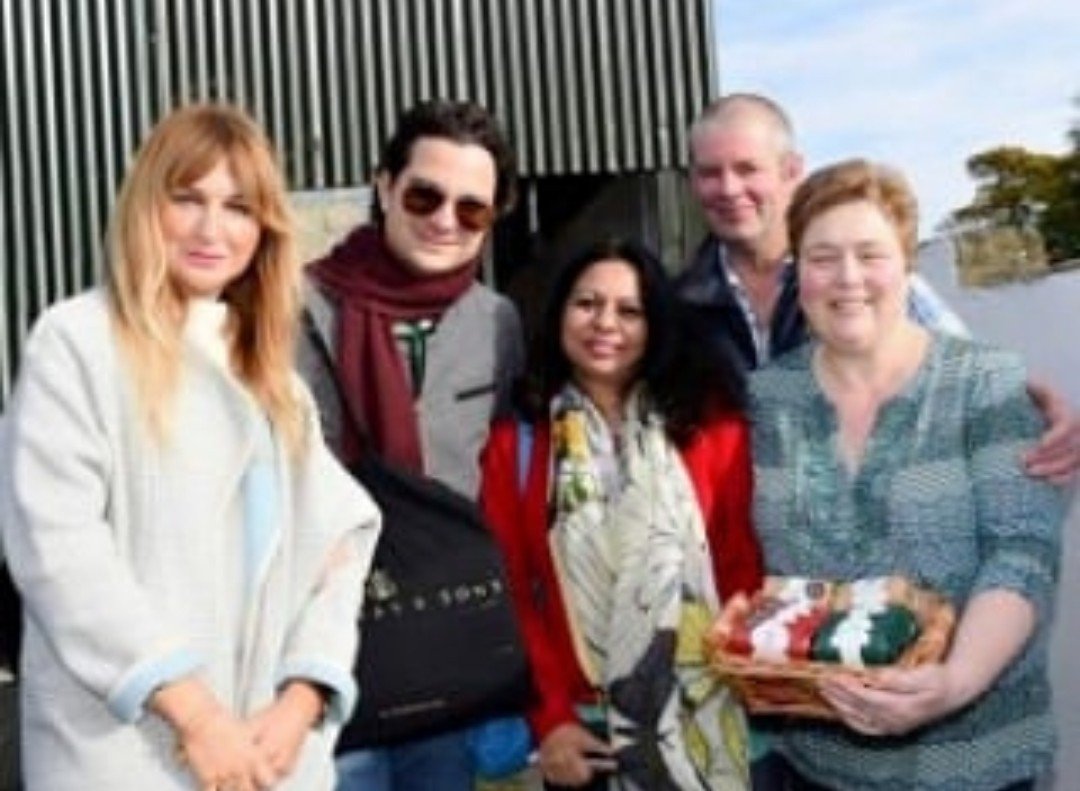
The next day, I joined a group of international writers and we headed out into the Northern Irish countryside, where the landscape seemed to become greener, quieter and considerably more photogenic with every passing mile. Our destination was Beech Tree Farm, where I met Allison and Will and discovered the wonderfully old-fashioned story behind their handmade Abernethy butter.
There was something almost magical about arriving at a working farm and seeing butter being made in the traditional way. No slick factory floors, no complicated machinery and certainly no glamorous food styling… just milk, cream, patience and plenty of good old-fashioned elbow grease.
And then I was invited to churn the butter myself.
This sounded charming in theory.
In practice, I quickly discovered that butter does not simply materialise because a food writer has arrived with a notebook.
I churned, stirred and worked away until, slowly, almost miraculously, the cream began transforming into beautiful golden butter. It was the most gorgeous shade of yellow — rich, glossy and almost jewel-like — and looked so delicious that I immediately understood why people get sentimental about butter.
There was something deeply satisfying about watching it come together. In our increasingly instant world, where practically everything arrives at the tap of a screen, here was a product that demanded time, effort and a little muscle.
And, naturally, I was happy to provide the muscle — although I suspect Allison and Will may have been politely grateful when I eventually handed the churn back.
What stayed with me wasn’t just the taste. It was the experience of seeing the entire story behind something so familiar. The butter wasn’t simply sitting anonymously on a supermarket shelf anymore. It had a farm, people, animals, weather, landscape and tradition attached to it.
There was also something wonderfully intimate about eating something made just a few miles from where you were standing. The countryside wasn’t merely the backdrop; it was part of the flavour.
This is what I love about travel — those unexpected encounters that never make it onto the standard sightseeing checklist. A conversation with a farmer. A glimpse into a working farm. A churn in your hands. And a small pat of golden butter that suddenly tastes infinitely more precious because you have seen where its story began.
Belfast: Bread, Chocolate and Old-World Charm
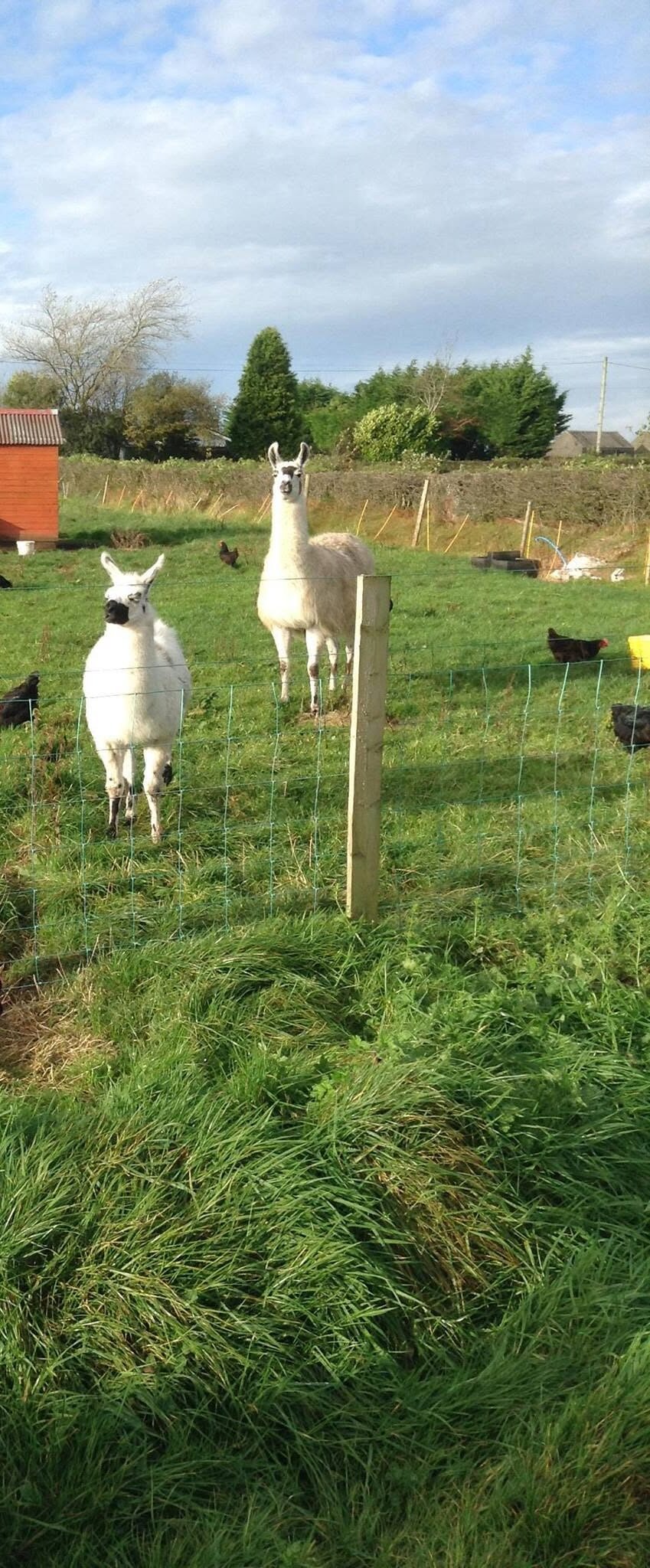
My Newcastle sojourne was over and I was returning to Belfast city. On the way, I stopped at a farm restaurant in Belfast, lunch came with an unexpected side attraction: llamas wandering around looking considerably more interested in life than I was.
Then came the “vegetarian” delicacy. I took a hopeful bite expecting something wholesome and green — only to discover what appeared to be a burger having a serious identity crisis, packed with meat and accompanied by a token sprinkling of vegetables. Vegetarian, apparently, was being interpreted rather creatively that day. I looked at the llamas. They looked back. I suspect they were judging the menu too.
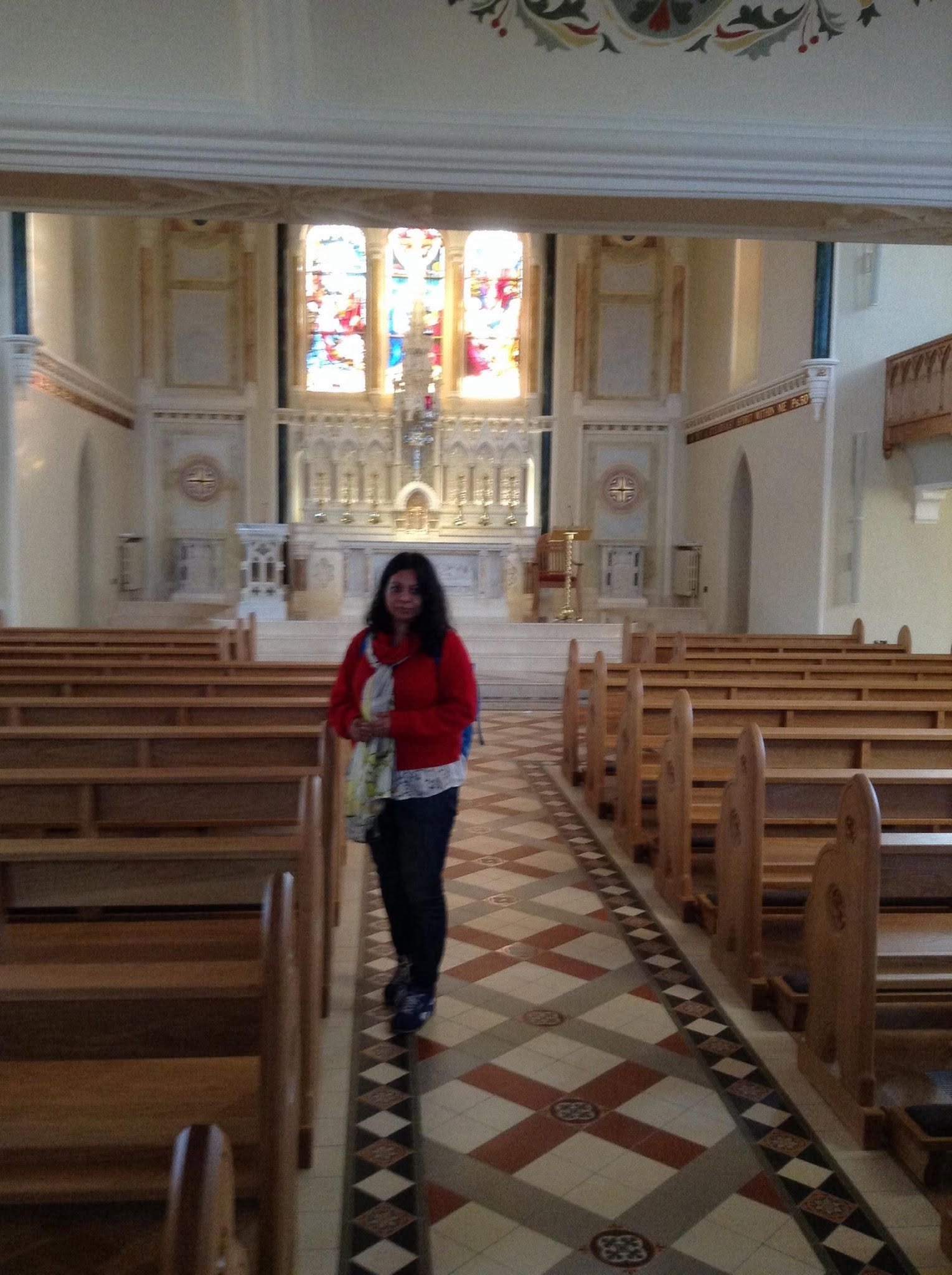
Close by, I discovered a 15th-century church, which felt like the perfect place to do a little penance for my earlier “vegetarian” burger indiscretion. I stood there admiring the ancient stone, reflecting on my culinary sins and wondering whether the Almighty might consider “I was misled by the menu” a valid defence. After all, I hadn’t exactly chosen the path of meat — the meat had chosen me. One quiet moment of contemplation later, I decided my penance was complete. I was, after all, still on holiday.
Back in Belfast city, I met Mark Douglas, the wonderfully eccentric “Crazy Baker”, who was giving traditional Northern Irish breads his own personality. Potato breads, soda farls with spiced apples and shortbread offered another window into the region’s culinary history.
Then came Sawers, one of Belfast’s oldest food stores, followed by Deane’s restaurant and Co Couture, a chocolate house where confectionery takes on an almost couture-like quality.
What I enjoyed most was moving between the old and the new.
Northern Ireland’s culinary identity isn’t locked inside a museum. Traditional recipes are being interpreted, reinvented and presented with contemporary flair.
St George’s Market: Belfast in Full Colour
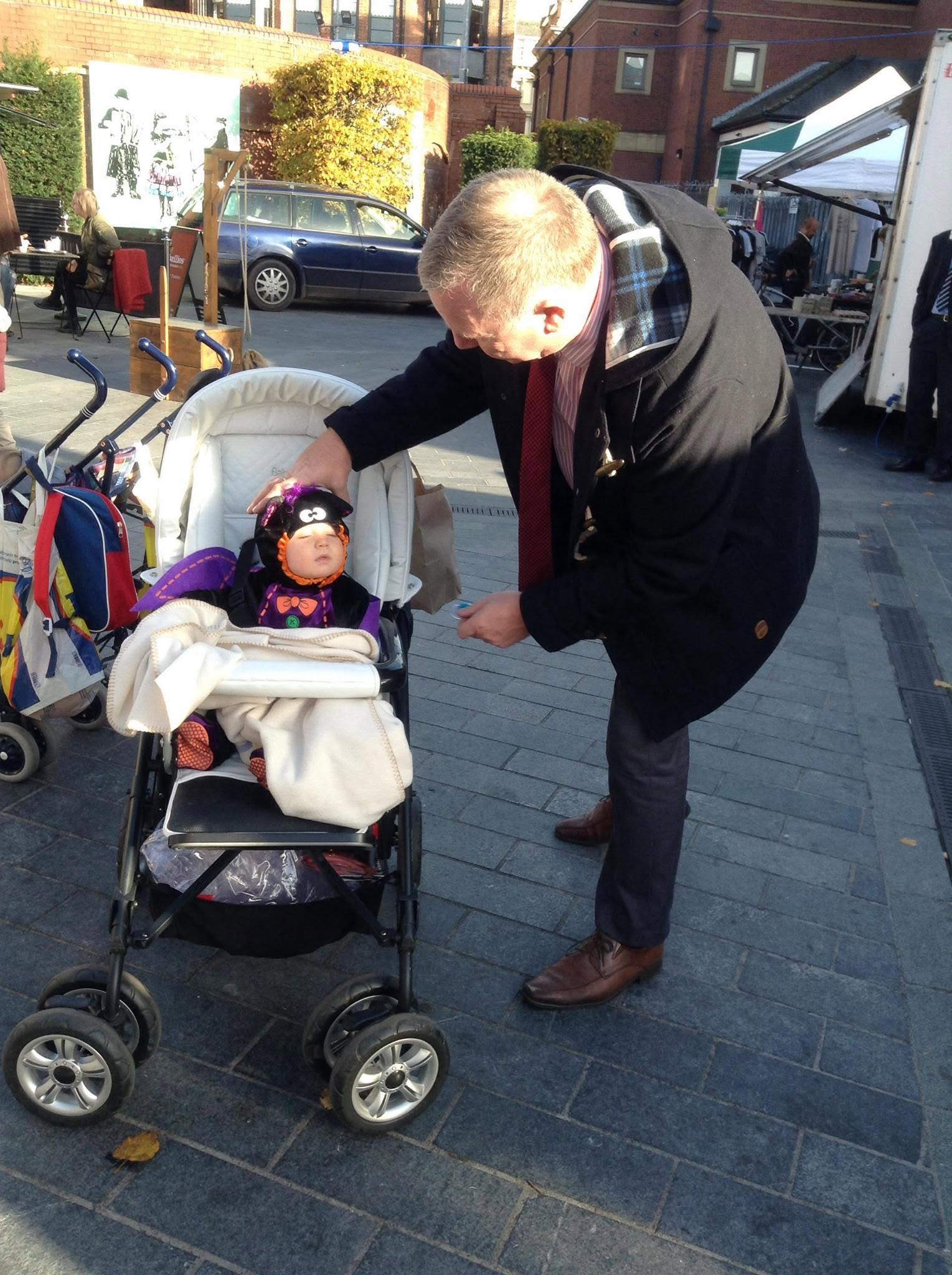
No visit to Belfast feels complete without wandering through St George’s Market — and when I visited, Halloween was very much in residence. Forget Christmas cheer; the market was dressed for ghosts, ghouls and everything deliciously spooky. There were pumpkins, eerie decorations, seasonal treats and enough visual drama to make me wonder whether I had wandered into a food market or accidentally auditioned for a Halloween movie.
Markets, for me, are among the best ways to understand a destination. They are wonderfully democratic spaces: you see what people eat, what they produce, what they buy, what they celebrate and, occasionally, what they are prepared to queue for.
I wandered from stall to stall, inhaling the aromas, admiring the colours and eavesdropping on conversations, while Halloween seemed to lurk cheerfully around every corner. It was Belfast without a filter — lively, local, slightly eccentric and completely itself.
And perhaps that was exactly why I loved it.
The Road Back, and the Luxury of Doing Nothing
Later, dinner at Brunel’s brought the day to a leisurely close. Slow-cooked roast meat, Strangford harvest mussels in cider, spring onion cream and dessert were accompanied by mellow wines. Afterwards, rather than rushing back, I went for a brisk walk in the cold.
There was something deeply satisfying about that simple walk.
No sightseeing list.
No “must-see” attraction.
Just cold air, unfamiliar streets and the pleasure of being somewhere else.
It reminded me that some of the finest moments in travel happen between the planned experiences.
Travelling Alone, Travelling Free
Looking back at that journey around India’s Independence Day, I realise that perhaps Northern Ireland taught me something about freedom too.
Not the grand, political definition of it, but the intimate one.
The freedom to take a train, car or road simply because you want to see where it leads.
The freedom to eat alone without feeling lonely.
The freedom to change your plans.
The freedom to stop.
The freedom to wander.
And perhaps most importantly, the freedom to meet a place on your own terms.
Northern Ireland gave me much more than a collection of beautiful photographs. It gave me winding roads through green countryside, the drama of the Mournes, the cold expanse of the Irish Sea, the warmth of country hospitality, markets filled with character, food rooted in the land and conversations with people who made the destination feel alive.
But what I remember most is the movement — leaving Belfast, heading towards the coast, watching the landscape change through the car window, stopping for food, meeting people, discovering little corners and eventually finding my way back.
Because sometimes travel isn’t about conquering a destination.
It is about giving yourself the freedom to get a little lost in it.
And travelling solo through Northern Ireland, I discovered that freedom can be every bit as exhilarating as the destination itself.