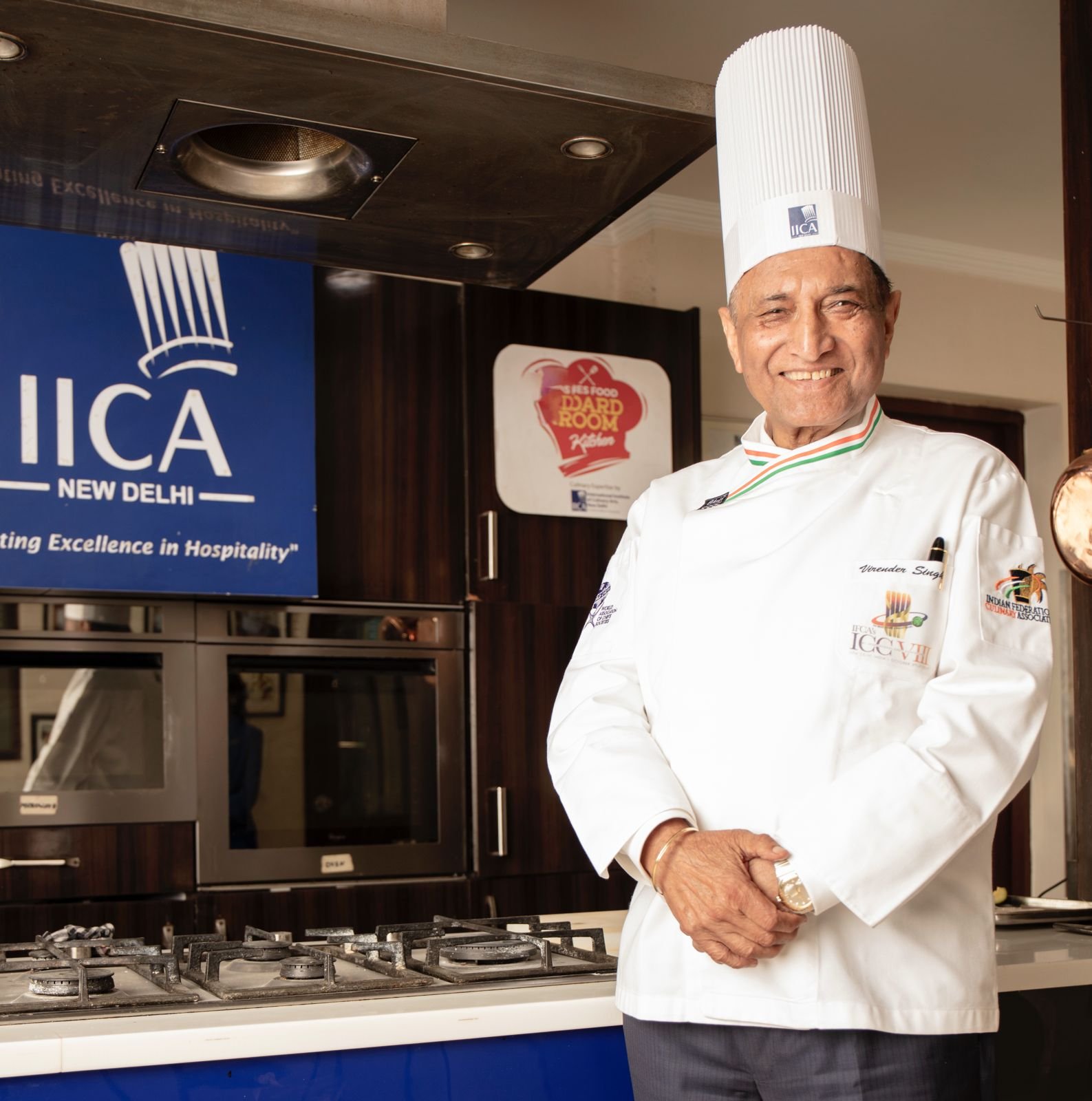
Founder/Chairman of IICA — International Institute of Culinary Arts, New Delhi — and President of DHMSS, Chef Datta has spent fifty years building India’s hospitality industry from the inside. Now he is giving it all back.
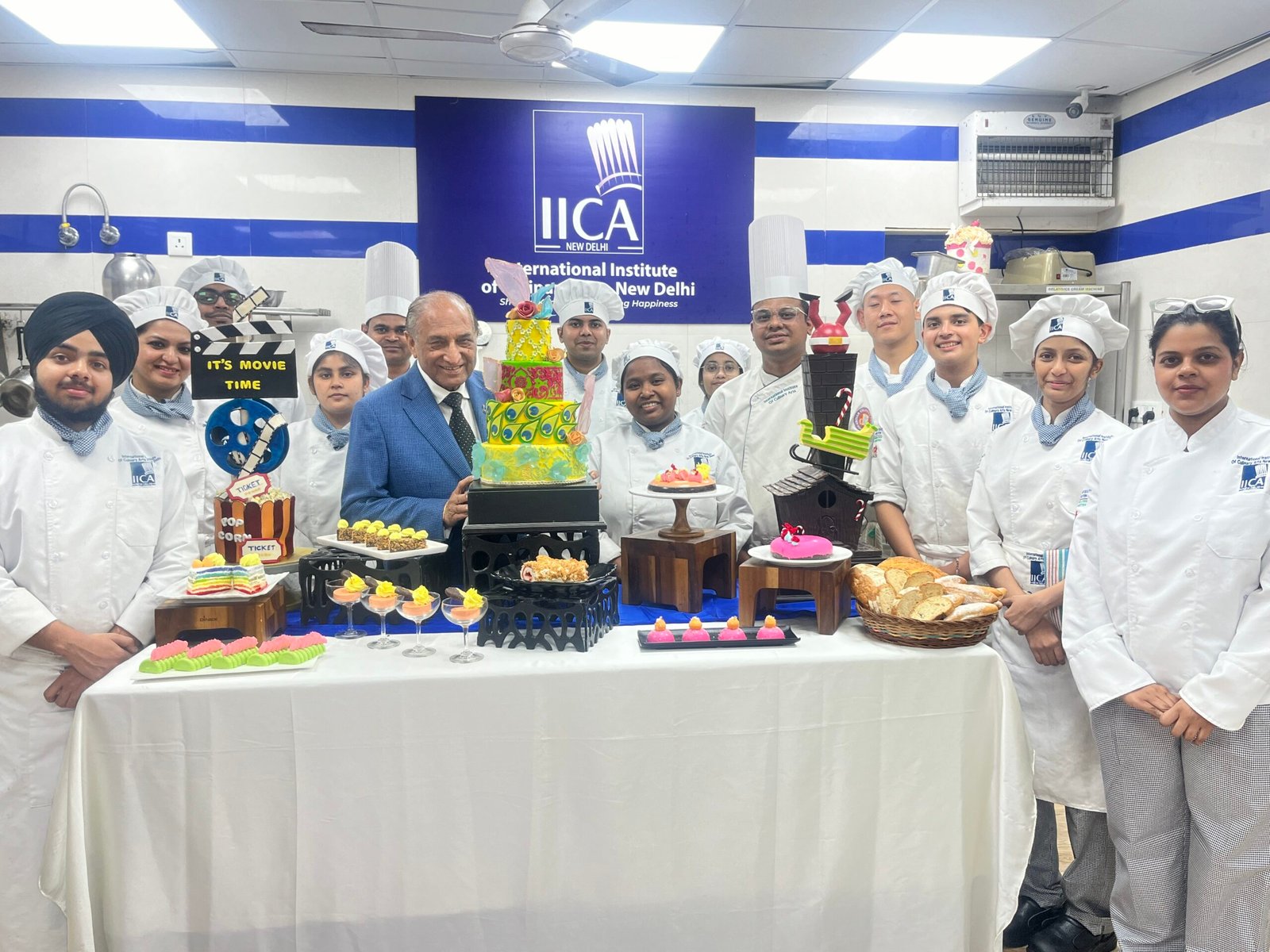
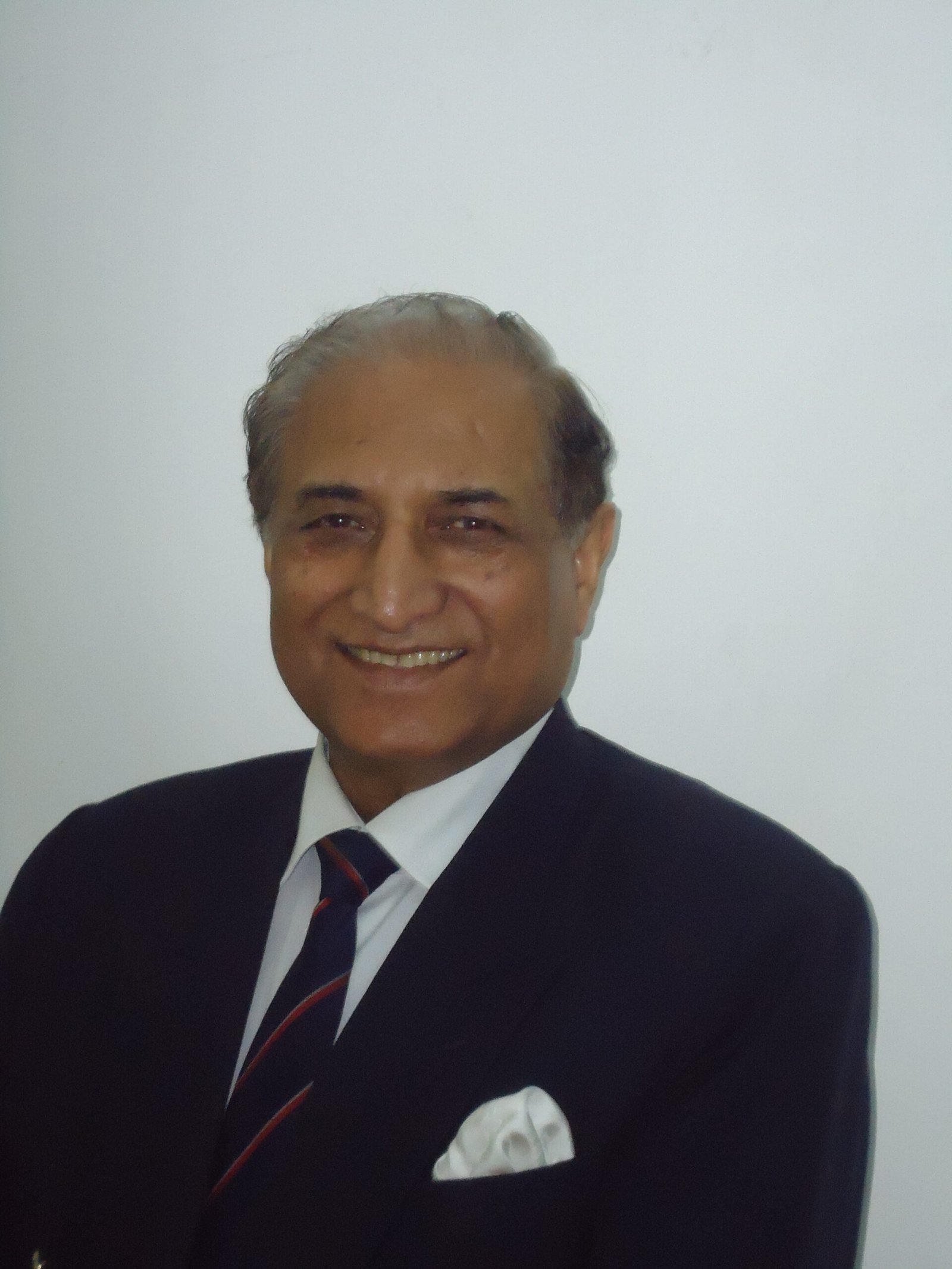
Delhi has a way of surprising you. On my last visit, I managed to carve out time for a sitting with Chef Virender Singh Datta — no small achievement given the man’s schedule. His office had that particular calm that you find around people who have spent a lifetime running kitchens: unhurried, precise, quietly attentive to everything in the room. The masala chai arrived before we’d properly settled. Then came the snacks and desserts — a thoughtful spread, prepared by the students of the institute itself, which said something eloquent about the place and about the man who founded it.
What struck me almost immediately was how completely the man inhabited his own presence. He spoke with the ease of someone who has long since stopped needing to perform, yet every sentence carried weight. There was extraordinary knowledge behind his words, the kind that comes not from reading but from having actually lived through the decades he was describing.
The charisma wasn’t loud or theatrical — it simply filled the room and drew you in. And the storytelling. I leaned forward twice in the first fifteen minutes alone. He had a way of placing you inside the moment he was recounting, whether it was a Paris kitchen in 1971 or a New York dining room in 1988, so that by the time the anecdote ended, you felt you had been there yourself.
Even at his age, there was nothing of the elder statesman about him — no performance of gravitas, no looking back. He was simply, completely present. The twinkle in his eye very much intact. And that slight, half-hidden smile — it concealed things, but it also said things. Most of that is a story for another sitting. He is working on an autobiography, and that deserves its own pages entirely.
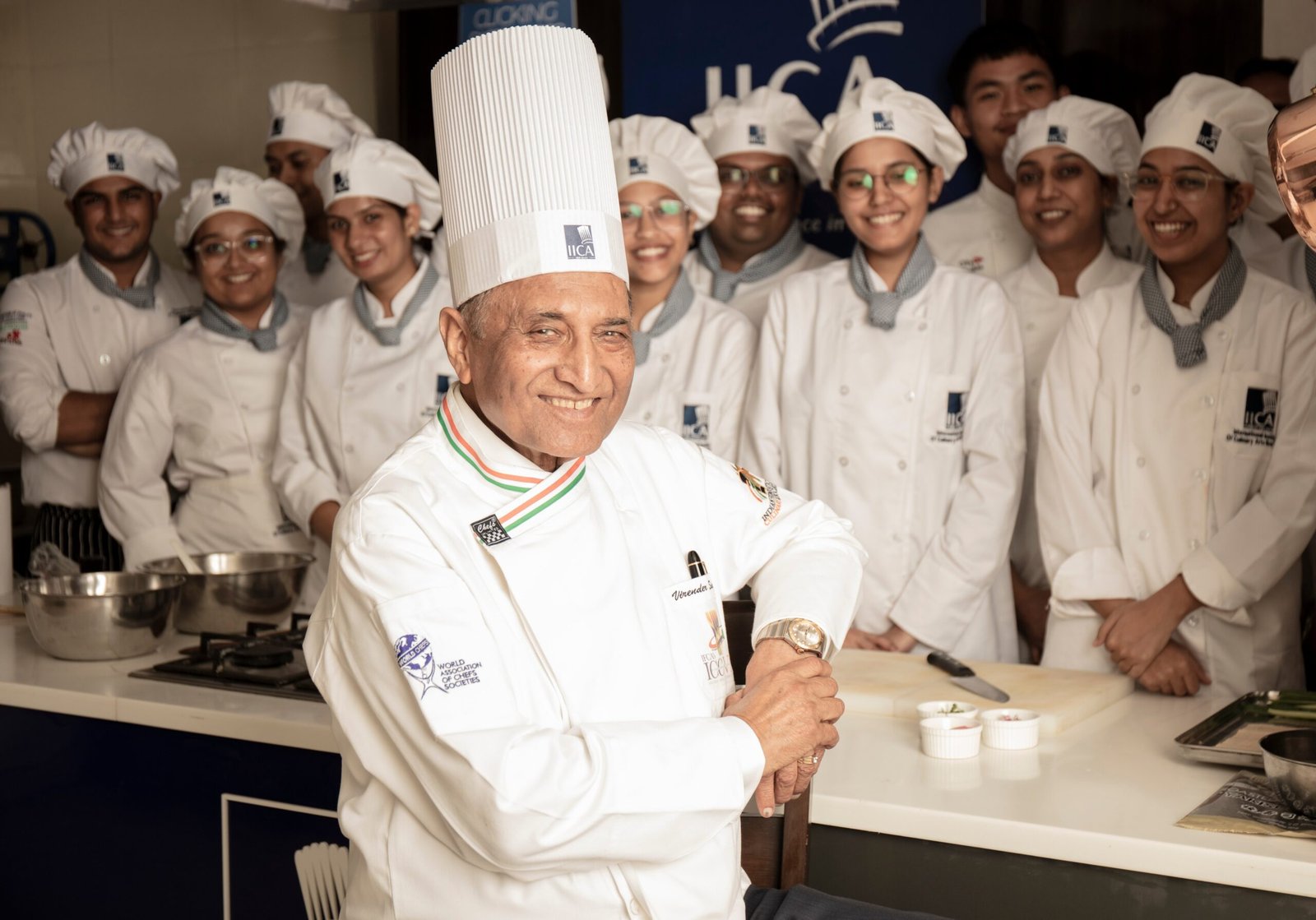
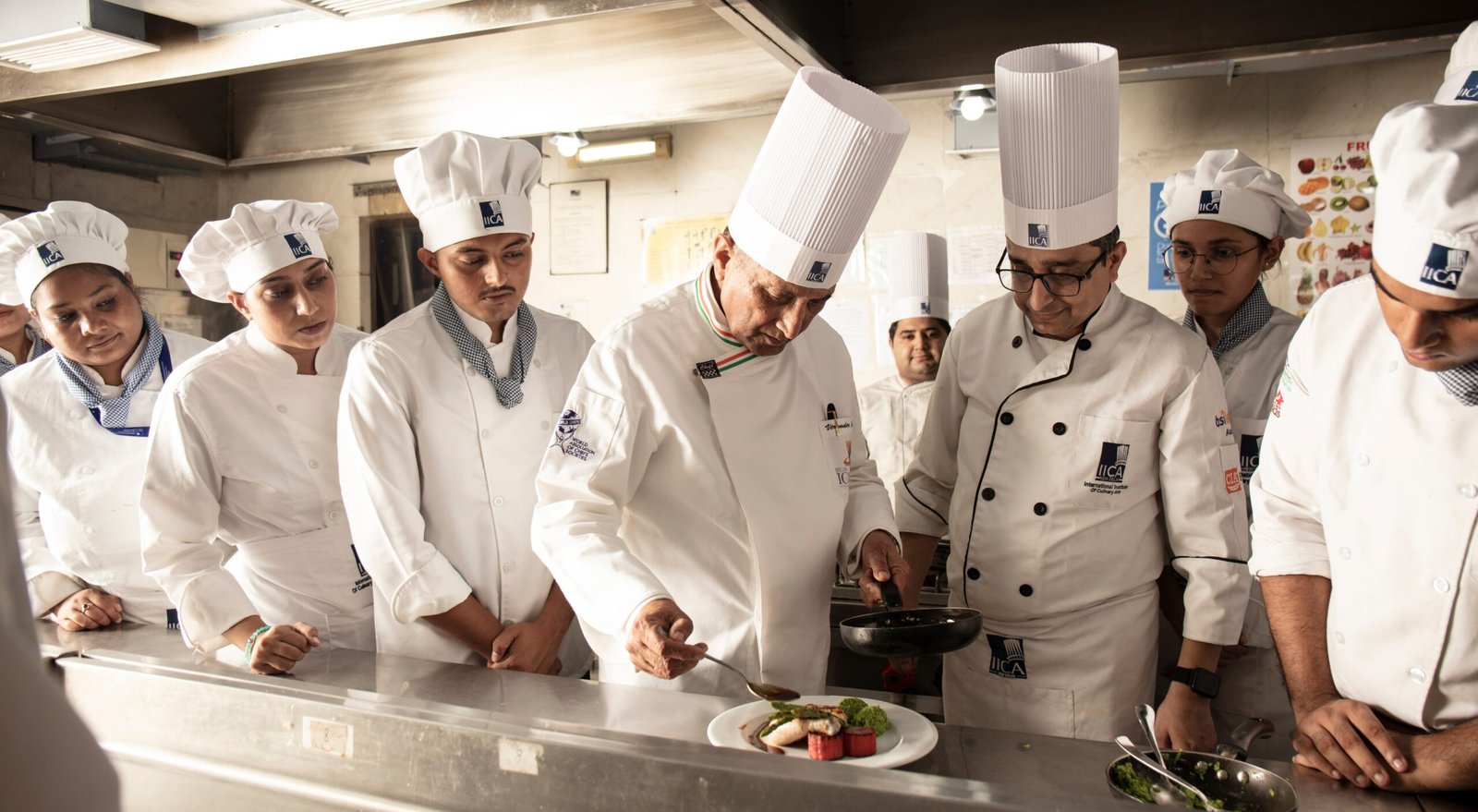
Today, the conversation was about IICA — the International Institute of Culinary Arts in New Delhi — the institution he founded as a deliberate act of giving back, a place built to train the next generation of culinary professionals in the full depth of the craft, from classical technique and authentic recipes to the standards and discipline that global kitchens actually demand.
Over to Chef Virender Singh Datta…
Rajeev Mokashi: Cloud kitchens and celebrity chefs on Instagram – after 50 years, do you think the profession has gained respect or just noise?
Chef Virender Singh Datta: The chef’s profession has always commanded respect — though for a long time, that respect was mostly reserved for expatriate chefs or for those who had come through years of hard kitchen experience rather than formal training. Home-grown chefs, without the benefit of structured education, were frequently undervalued by everyone except the owners astute enough to understand what a great chef actually contributed to their restaurant and their bottom line.
What changed was education, and then visibility. As formally trained chefs began entering the profession and could articulate their craft with confidence, the public’s understanding deepened considerably. Social media did the rest — it created the celebrity chef, and suddenly the profession became one of the most talked-about and, yes, genuinely rewarding careers a young person could choose.
Today’s chefs are not just exceptional cooks. They are researchers and artists in the truest sense.
Sustainability is the biggest conversation in kitchens today. What were you throwing away in 1970 that you’d never waste now?
Honestly — not very much. In the 1970s, we worked with whole raw materials rather than pre-cut produce, so using every part of what came through the kitchen door was not a philosophy; it was simply the job. Menus were designed with zero waste as a quiet, unspoken given.
Menus were intentionally designed to ensure zero waste. For instance, if a recipe called for egg yolks, the whites went straight into sorbets or macaroons. Prime cuts served as main courses; trimmings from a full carcass became kebabs and terrines. A whole fish was filleted in the kitchen, and the carcass was steamed to draw out the remaining flesh for koftas or ballotines. Herb stems and vegetable roots went directly into the stockpot.
Sustainability today is a subject of conversation. Back then, it was simply routine.
Indian chefs are running Michelin kitchens globally now. When you started, was that even imaginable?
Not remotely. In 1971, I was perhaps the first Indian chef to work in Michelin-starred restaurants in Paris, and even then I was working as Chef de Partie or Chef Cuisinière. We were there to learn Western techniques, not to redefine them. The ambition, at that point, was simply to become skilled cooks and truly master the craft as it was practised in the West. I had the privilege of working in some of the finest kitchens in Paris, but I was very much a student of that world.
Later, in 1988, I ran Bukhara in New York. The restaurant had every quality of a Michelin-starred establishment — the standards, the sourcing, the service — and received a generous and glowing tribute from New York Times food critic Bryan Miller. But an official Michelin star for Indian cuisine still felt, at that time, like a very distant dream.
What today’s chefs have achieved goes far beyond what any of us imagined from those Paris kitchens in the early seventies. They have not only mastered the craft — they have successfully placed Indian cuisine in its rightful position in the world, as a serious, Michelin-standard culinary art form on its own terms.
The journey from being students of Western technique to becoming masters who help define global culinary culture is a profound shift, and it is a testament to the resilience and creativity of Indian chefs that the distant dream of the 1980s has become the accepted standard of excellence today.
Hotel management degrees are now four years. Kitchens need cooks today. Are we over-educating and under-training?
Frankly, yes — we have placed too much emphasis on classroom theory at the expense of hands-on practice. Hospitality is, at its core, a skills industry. The primary purpose of any institution should be to produce job-ready professionals from the moment they graduate.
A strong theoretical foundation has its place, but students who aspire to general management or executive roles can pursue that layer of education later, once they’ve built real operational experience. At the entry level, what the industry needs are technically proficient cooks — and that proficiency only comes from doing, not from sitting in a lecture hall.
I believe that balancing our curriculum to prioritize hands-on training will better serve both our students and the industry at large.
What’s one skill you see missing in fresh culinary graduates that was non-negotiable in your training days?
Patience. And the willingness to master the craft before reaching for the title.
During my training, we were rotated through every section of the kitchen — not to tick boxes, but to genuinely understand each department until we could run it independently. The work demanded deep passion and a real investment of time. Nobody expected shortcuts, and nobody offered any.
Today, I often see talented young people eager to step into kitchen management before they have truly refined their skills as cooks. But you can only become an effective chef by first becoming an exceptional cook. That order of things matters, and the industry keeps forgetting it.
If you redesigned culinary education today, what would students spend less time on and what would you double down on?
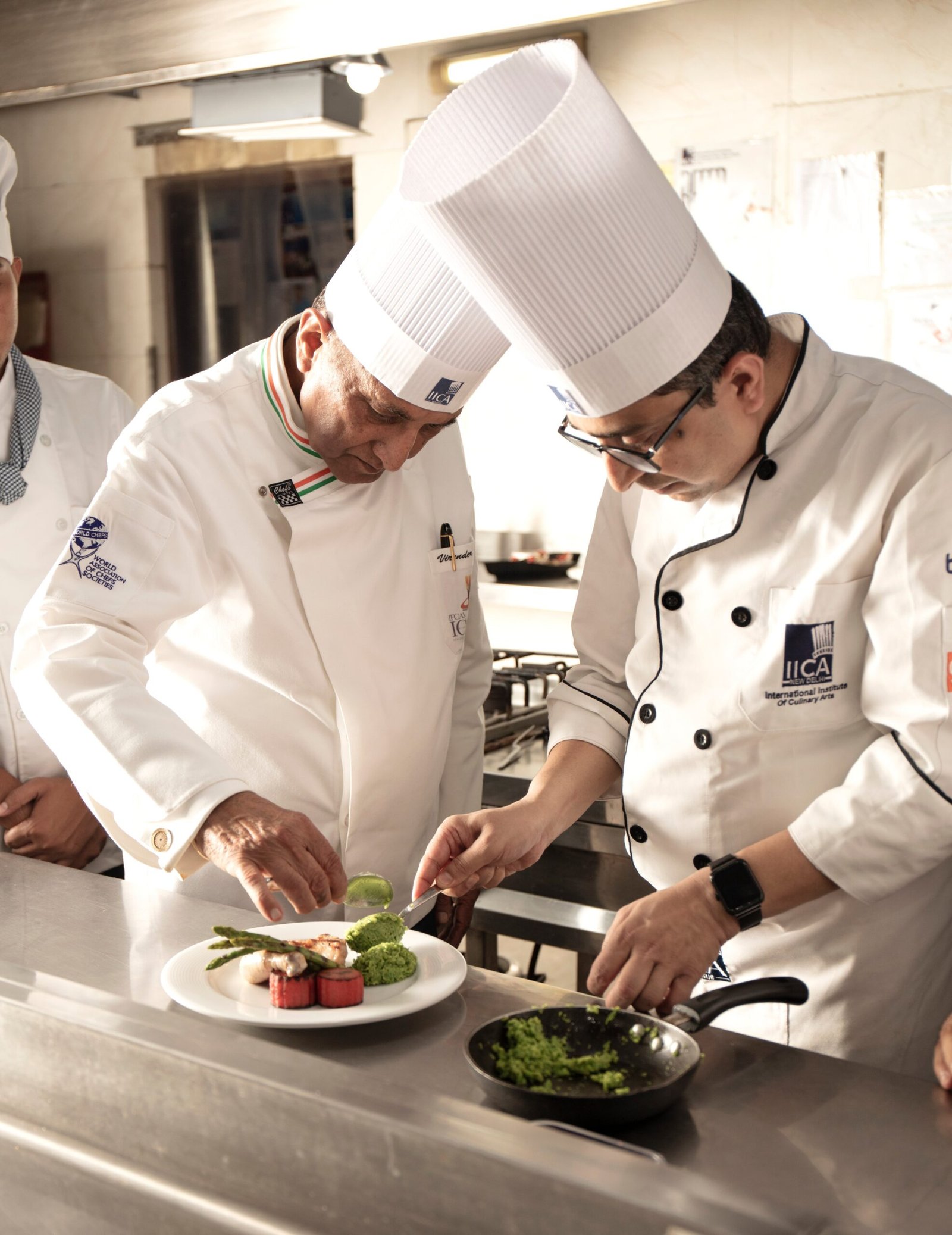
At our culinary Institute, it is essential to design our curriculum on the fundamental principles of our craft. While modern gastronomy offers many options, a successful training program must prioritize substance over style.
In my view, students, while in training at the Institute, should spend less time on the art of exotic presentation. While plating is important, it can wait until the foundational cooking techniques are mastered. We often see too much emphasis placed on how a dish looks before a student truly understands how it should taste.
At IICA, what we have doubled down on is straightforward:
- The art of cooking itself — knife skills, the understanding of ingredients, heat, flavour and their chemistry.
- The authenticity of a recipe and respect for its origins. A dish has a history, and that history matters.
- Sourcing and handling quality produce — understanding what is in your hands before it reaches the pan.
- Portion control and consistency — the unglamorous disciplines that separate a professional kitchen from an enthusiast’s.
The proof of the pudding is always in the taste. By refocusing on these essentials, we ensure our students leave IICA as masters of flavour, not merely decorators of plates.
You went from Executive Chef to founding Fortune Hotels. What’s harder: running a kitchen or running the business?
Both were genuinely exciting, and in each case the secret was thorough preparation before taking the chair. At the Oberoi Group, I received deep training in India followed by two years in Germany and France, working in the finest Michelin-starred kitchens in Europe, before I was ready to step into an executive kitchen role.
When I later decided to move out of the kitchen and into hotel administration after twelve years as a chef, ITC Hotels very generously invested in a full conversion programme. They sent me to England for a year to learn general management hands-on, working through every department I had missed while I had been cooking. Not a lecture course — an actual operational experience.
When the time came to launch Fortune Hotels, I was candid about what I did not yet know about mid-market hotel operations. Once again, the company supported me — a month-long working tour of comparable properties around the world, with time spent observing operations and speaking directly with General Managers and HR Directors to understand what actually makes those businesses succeed.
The honest answer is that neither is harder, if you have done the preparation first. Every transition in my career was made manageable by that foundation. The lesson is simple, and I teach it at IICA: before you lead, you must first truly know.
An Indian chef wants to work internationally. Beyond cooking skills, what’s the one thing that will make or break their success abroad?
Attitude. Everything else follows from that.
Technical proficiency is the entry ticket — without it, the door doesn’t open. But what determines whether you last, grow, earn genuine respect and eventually lead is how you carry yourself across cultures. Having served as Executive Chef in Muscat at thirty, I saw this play out first hand, and the lesson stayed with me for the rest of my career.
The chef who succeeds abroad stops thinking of himself as an Indian chef working in a foreign kitchen and starts functioning as a skilled professional who genuinely belongs to the team around him. That is a significant shift in how you see yourself, and it changes how everyone around you sees you as well.
In practical terms, it means several things:
- Respect for the local culture and a real, sincere effort to learn the local language. Not a few polite phrases — a genuine attempt. That bridges the gap between being an expatriate and being a true member of the team.
- Integration with the people around you. You are not an Indian chef on assignment; you are a highly skilled professional who is fully part of that kitchen and that team.
- A commitment to developing the people working under you. Success abroad is not only measured by what you cook — it is measured by how you mentor. A chef who becomes a dedicated teacher earns long-term respect and leaves a lasting legacy in every kitchen he has worked in.
These are the values I try to instil at IICA. We are not only training cooks. We are preparing professionals who can represent this country’s culinary culture with skill, with grace and with genuine humility wherever in the world they find themselves.
For more stories like this, stay tuned to TheGlitz